
Published: August 2025 | Last updated: May 2026 | Editorial review and quality control: Martina N.
From Aspen to Alamosa, Colorado's STD case numbers have been climbing for years, and the steepest increases sit in counties most people would describe as rural. State surveillance data shows chlamydia, gonorrhea, and syphilis trending upward across mountain towns, plains communities, and resort regions. Several rural counties post per-capita rates that match or exceed the Denver metro average. The reasons are not a mystery, and they upend a comfortable assumption that smaller populations mean smaller risk.
What follows walks through what Colorado's public-health surveillance actually shows, why distance and stigma turn easily-treated infections into long-running ones, and where at-home rapid testing fits into a gap that brick-and-mortar clinics cannot fully cover, especially in winter.
Key Takeaways
- Several rural Colorado counties now post chlamydia and syphilis rates that meet or exceed urban averages, driven by limited clinic access and overlapping social networks rather than higher individual risk.
- At-home rapid testing closes the access gap by removing travel time, scheduling friction, and small-town privacy concerns that keep many rural residents from getting screened on time.
When Distance Turns a Routine Screen Into a Skipped One
In mountain towns and high-plains communities, a quick trip to the doctor often means a full day off work, gas money, and a route that hinges on a weather report. Many people delay routine sexual-health screenings until they have symptoms. By the time they get tested, an infection may have caused complications and may have already passed to a partner.
Reduced access to timely testing is one of the strongest predictors of higher STD prevalence in rural areas, according to the U.S. Centers for Disease Control and Prevention's STI surveillance program. The longer the gap between exposure and diagnosis, the longer the window in which someone unknowingly transmits to others, and the higher the chance of complications like pelvic inflammatory disease, infertility, or, with syphilis, neurological damage.
Stigma compounds the geography. Sexual health remains a taboo topic in many small towns, which discourages contact tracing and partner notification. Public-health staff in rural counties report that they often hear about cases only after symptoms have driven someone to a clinic in a neighboring city.

What Colorado's Surveillance Data Actually Shows
The Colorado Department of Public Health and Environment publishes annual STI surveillance reports, and the recent reports tell a consistent story. Chlamydia remains the most reported infection statewide, with tens of thousands of cases each year. Gonorrhea cases have climbed for most of the past decade. Syphilis, including primary, secondary, and congenital forms, has risen sharply in regions that historically reported very few cases.
The pattern is not unique to Colorado. CDC's national STI surveillance shows that across the country, syphilis rates have hit their highest levels in decades, and rural counties account for an increasing share of new cases. The Mountain West has been a notable hotspot, and Colorado's data sit inside that broader trend.
Per-capita rates matter more than raw counts when comparing rural to urban areas. Denver County reports more total cases than Alamosa County simply because Denver has more people. Once you adjust for population, several Colorado counties with fewer than 25,000 residents post chlamydia and syphilis rates that meet or beat the metro average. That contradicts the folk assumption that smaller communities are inherently lower-risk.
State health officials also point to the share of cases caught through routine screening rather than symptoms. A large fraction of chlamydia diagnoses come from asymptomatic patients screened during routine visits, which means infections never caught during routine care can circulate in a community for many months before anyone notices.
Why are STD rates rising in rural Colorado?
Rural Colorado counties are seeing sharper increases in chlamydia, gonorrhea, and syphilis than the state average. The driving factors are limited clinic access (long drives, narrow hours, weather closures), tight overlapping sexual networks that accelerate spread once an infection enters, seasonal worker turnover that fuels transmission across communities, and small-town stigma that delays testing. At-home rapid tests are one tool that addresses the access and privacy parts of the problem.
The CDC reports that rates of reported STIs continue to rise across the country, with rural and underserved populations contributing a growing share of new cases. The agency identifies expanding access to screening and treatment outside traditional clinical settings as a public-health priority. Source: <a href="https://www.cdc.gov/sti-statistics/">CDC STI Surveillance.</a>
Why Smaller Communities Can See Faster Spread
The simple explanation is network density. Sexual networks in smaller communities can be tight and overlapping. If one person contracts an STD and is not tested or treated, the infection can move quickly through interconnected partners. Add seasonal tourism, ski workers in Aspen, hikers passing through Salida, festival crowds in Telluride, and the mix of locals and transient partners widens the network further.
Public-health researchers describe this with the concept of network reach. In a dense rural network, a single untreated case has fewer separation steps to most other people in the community than in a sprawling urban one. Once an infection enters that network, it spreads faster relative to population. In dense rural networks, infections can move through more of the community before anyone seeks testing.
Three other factors compound the speed. First, fewer providers screen routinely outside metro areas, so cases get caught later. Second, partner-notification programs are thinner in rural counties, so transmission chains do not get interrupted. Third, mobile workers who leave town between seasons take infections with them and bring new ones back, which keeps the chain moving even after a local outbreak appears to settle.
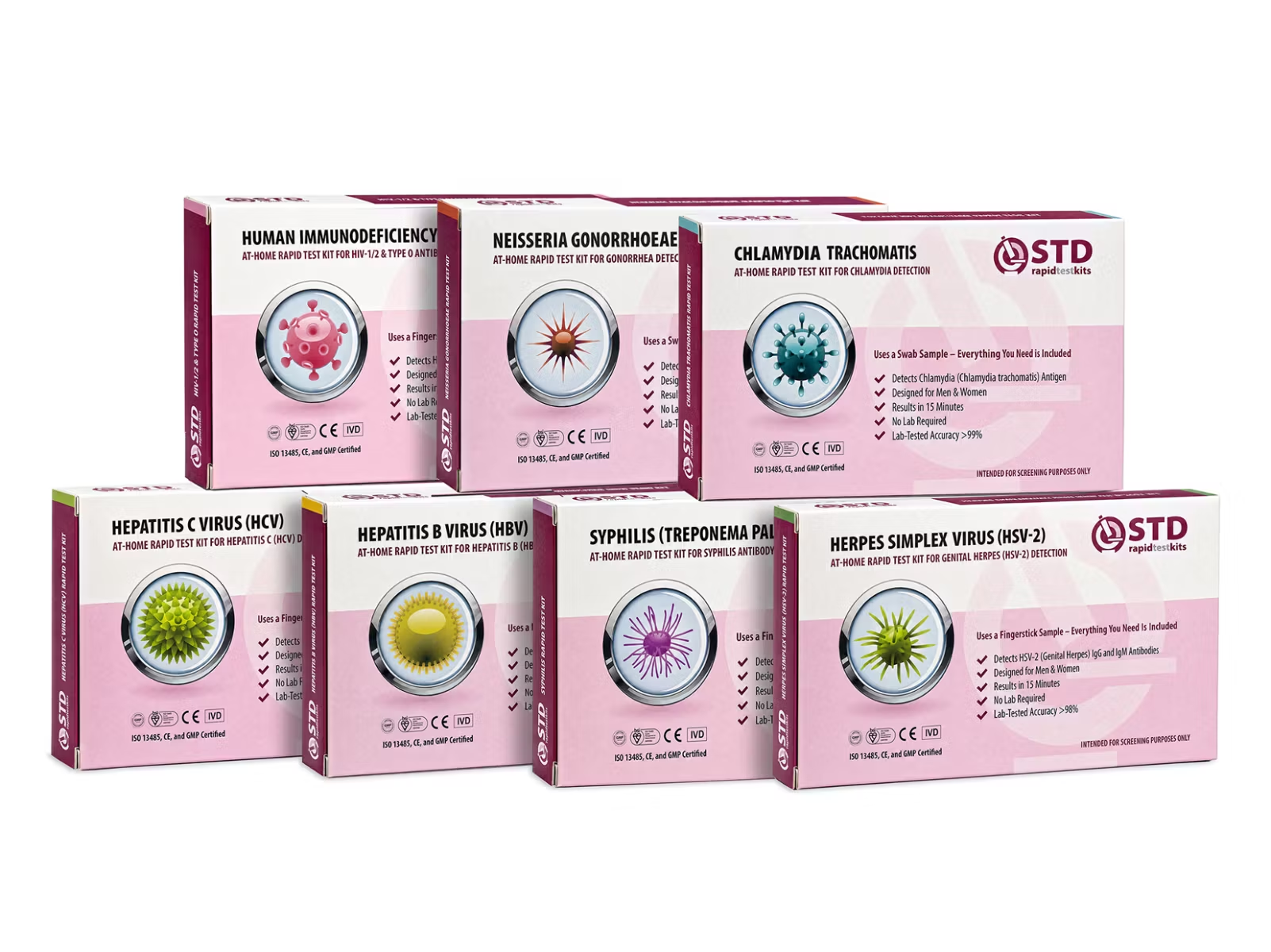
This article contains links to at-home STD test kits sold by stdrapidtestkits.com. Product recommendations are based on fit for the reader's concern, not commercial benefit.
Why Symptoms Often Look Like Something Else
Most chlamydia infections cause no symptoms at all. The CDC estimates the majority of cases in women, and a significant share in men, never produce noticeable signs (CDC chlamydia information). When symptoms do appear, they tend to be subtle: unusual discharge, mild burning during urination, lower abdominal twinges that get blamed on dehydration or a urinary tract infection.
Gonorrhea looks similar in many cases. Mild irritation during urination, slight discharge, occasional pelvic discomfort. Most people brush it off as a minor irritation or a yeast infection. Untreated, it can cause pelvic inflammatory disease, chronic pelvic pain, ectopic pregnancy, and infertility, and it is increasingly resistant to first-line antibiotics, which makes early diagnosis especially important (CDC gonorrhea information).
Syphilis has the most deceptive course of all. The first sign is often a single painless sore at the site of exposure, which heals on its own within a few weeks. Many people miss it entirely or assume the problem has resolved. The infection then moves into a secondary stage with rashes and flu-like symptoms, then into a latent phase where it sits silently for years, before a tertiary stage that can cause cardiovascular and neurological damage. The early stages, which are easiest to treat, are also the ones most often missed.
Herpes infections are another category that often goes unrecognized. HSV-1 and HSV-2 can cause occasional outbreaks of small sores in or around the genitals or mouth, but most carriers either have no symptoms or have outbreaks so mild they get attributed to friction or razor irritation. Antibody testing identifies prior exposure, which is useful for couples deciding how to manage transmission risk and for pregnant women planning delivery. Most people develop detectable herpes antibodies within 12 weeks of initial infection, but some individuals may take up to six months to seroconvert (CDC herpes information). Retesting at 16 weeks, and again at six months if any doubt remains, gives higher confidence in a negative result.
The pattern matters in rural settings because the milder the symptom, the easier it is to talk yourself out of a long drive to a clinic that may only be open one or two days a week.
Detection windows at a glance
- Chlamydia and gonorrhea: detectable on a self-collected swab roughly 1 to 2 weeks after exposure.
- Syphilis blood test: typically reliable 6 to 12 weeks after exposure; testing earlier risks a false negative.
- HIV antibody test: high confidence in a negative result at 12 weeks after exposure.
- Herpes antibodies: most people seroconvert within 12 weeks, with up to 6 months for late seroconverters.
Three Myths That Keep Rural Communities at Risk
Myth 1: STDs are a city problem. Variations of this idea circulate in many small towns. The thinking is that smaller populations and tighter social circles produce lower transmission. The data tells a different story. Several Colorado counties under 25,000 residents post chlamydia and syphilis rates that match or exceed the metro average once adjusted for population. Tight networks accelerate spread once an infection enters them.
Myth 2: If I feel fine, I don't need to test. Chlamydia stays silent in most cases. Gonorrhea may show only mild irritation before causing internal damage. Syphilis can sit latent for years. Routine screening, not symptoms, is what catches most cases according to the CDC's screening and treatment guidelines. People who rely on how they feel will miss most diagnoses.
Myth 3: At-home tests are less reliable than clinic tests. The reasoning behind this myth is outdated. Rapid at-home tests use the same lateral-flow chemistry validated against laboratory standards, and most kits report sensitivity and specificity figures broadly in line with point-of-care clinic testing. There is a real distinction worth knowing: laboratory NAAT (nucleic acid amplification) testing, the gold standard used for confirmatory diagnosis, has higher analytical sensitivity than rapid lateral-flow tests for certain infections, especially in early or asymptomatic cases. The two are complementary rather than interchangeable. A rapid at-home test is a strong screen, especially in places where the alternative is no test at all. A positive at-home result should always be followed up with confirmatory testing through a clinic or lab when possible.

Tourism, Seasonal Workers, and Why Rural Networks Are Not Closed
The Rockies draw millions of visitors each year, plus tens of thousands of seasonal workers who staff resorts, ranches, and festival circuits. Short-term relationships are common in those settings, and the social network in any given town can shift completely between seasons. That churn makes contact tracing nearly impossible when someone tests positive. By the time a case is identified, partners may be back in another state or country.
This transient effect adds fuel to rural STD trends because infections move through overlapping communities without staying in one place long enough for a coordinated public-health response. For people who live in resort towns year-round, the impact is real. They share housing, social spaces, and partners with a population that turns over multiple times a year. They are healthier when seasonal workers come in already screened and stay screened, which makes the case for accessible testing in worker housing and resort employee clinics, plus easy-to-use at-home options for everyone in between.
The same dynamics affect college towns. Gunnison, Durango, Alamosa, and Greeley each host several thousand students who arrive each fall, partner with locals and each other through the academic year, and disperse for the summer. Each cycle resets the network somewhat, and each cycle adds new exposure pathways the local clinic system has to absorb. Campus health services help, though they tend to focus on enrolled students and miss locals and seasonal workers entirely.
By the time local data shows a spike, the chains of transmission may have already moved to another town or another season's workforce. State surveillance lags real-world transmission, sometimes by months. The implication for individuals is straightforward: do not wait for a public-health alert to motivate a screen.
How At-Home Rapid Testing Closes the Rural Gap
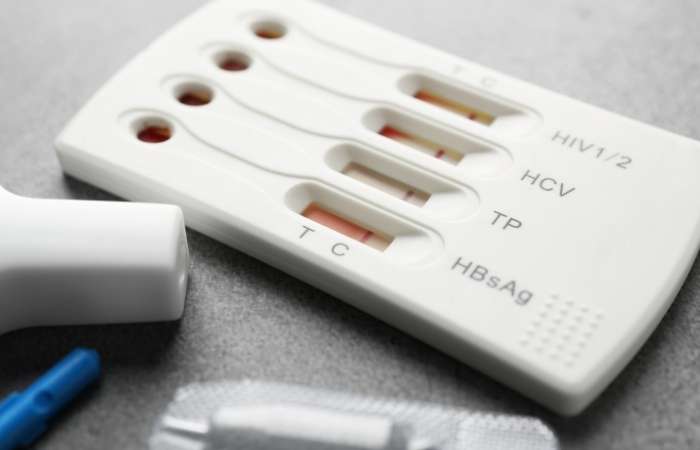
At-home rapid tests use lateral-flow strips, the same chemistry behind home pregnancy tests and over-the-counter COVID-19 antigen tests, validated for sexual-health markers. You collect the sample yourself: a self-collected vaginal or penile swab for chlamydia, gonorrhea, trichomoniasis, and HPV; a fingerstick blood drop for HIV, syphilis, hepatitis B, hepatitis C, and herpes antibodies. Results show up on the test cassette in about fifteen minutes.
For rural residents, this format solves several problems at once. There is no clinic appointment to schedule, no time off work, no drive across an icy pass, and no chance of being recognized in a small-town waiting room. Test kits ship in plain packaging. Results stay between you and the test strip until you decide otherwise.
Public-health advocates in Colorado have started highlighting at-home testing as one tool to close the rural access gap. It is not a complete substitute for clinical care, especially for confirmatory testing, partner treatment, or pelvic exam-dependent diagnoses. It is a screening tool that fits into a wider strategy. For people who would otherwise skip testing entirely because the clinic is sixty miles away, that is a meaningful improvement.
When the Weather Itself Becomes a Health Risk
Snowstorms, road closures, and wildfire detours are not just inconveniences in mountain Colorado. They can derail access to time-sensitive medical care for days at a stretch. A syphilis test delayed by a week can mean a partner goes untreated and unknowingly passes the infection to someone else. A gonorrhea infection that worsens during a closure can move from mild irritation to pelvic inflammatory disease before the next clinic appointment is even possible.
This is why at-home testing matters most as a resilience tool. Keeping a rapid kit at home means the next time a question comes up, the test happens that night rather than nine days later. For people who live above 8,000 feet, where winter storms regularly close the only road into a town for a day or more, that on-hand option is the difference between testing on time and waiting weeks for the next chance.
The same logic applies in summer wildfire season. Evacuations and air-quality closures move communities around the state with little notice. Keeping a test kit at home or in an emergency bag means the option to screen does not move with the road conditions.
How to Get Tested Privately, Step by Step
Pick a kit that matches the exposure scenario. For someone with no symptoms looking to do an annual screen, a six- or seven-infection panel covers the most common bases. For a specific concern, a single-infection kit costs less and gets a faster answer. Combination kits include both swab-based and fingerstick blood components for broader coverage.
Read the timing instructions carefully. Different infections have different window periods between exposure and a reliable result. HIV antibody tests typically require waiting until at least three months after exposure for high confidence in a negative result. Syphilis blood tests typically become reliable around six to twelve weeks after exposure; testing within the first few weeks of a suspected exposure may produce a false negative, and a negative result before twelve weeks should be repeated (CDC STI Treatment Guidelines). Bacterial infections like chlamydia and gonorrhea become detectable on a swab within one to two weeks of exposure. Testing too early produces false negatives that need to be repeated, which defeats the purpose.
Collect the sample exactly as the instructions describe. Swab tests need contact with the right tissue area for long enough to pick up bacterial cells. Blood tests need a clean fingerstick and the correct number of drops on the test strip. The kit usually includes a buffer solution, a result-reading window, and a timing guide. Follow each step in order.
Read the result at the time the kit specifies, neither before nor much later. Reading too early can miss a developing positive line; reading too late can produce a false positive from drying. If a result is positive or ambiguous, follow up with a clinic for confirmatory testing and treatment. A positive result means getting a confirmatory test at a clinic and starting treatment, which for most bacterial STIs is a single antibiotic course; viral infections such as HIV or herpes are managed with antiviral therapy that reduces transmission risk.
Four steps to a clean at-home test
- Pick the right kit. Match the panel to the exposure scenario or annual-screen need.
- Check the window period. Test only after enough time has passed for the chosen infection to become detectable.
- Collect the sample correctly. Follow the instructions for swab contact or fingerstick blood drops exactly.
- Read the result at the specified time. Neither earlier nor later than the kit's instructions.
Talking to a Partner About Testing
Bringing up testing with a new or existing partner does not have to be a confrontation. Public-health communication research suggests the conversations that go well share a few traits. They happen before sex, not in response to a problem. They frame testing as something both people are doing rather than an accusation. They mention specifics, like a recent test date or a planned annual screen, rather than hedging in vague terms.
For couples, an at-home kit can be a shared exercise. Two people testing on the same morning normalizes the act and removes the dynamic where one partner asks the other to prove something. For new relationships, mentioning that you tested before the relationship started, and that you test annually, sets an expectation without requiring the other person to disclose first.
Partner notification matters when a positive result comes in. Public-health departments in Colorado offer anonymous notification services that contact partners without revealing the source. Several smartphone-based partner-notification tools also exist. The CDC's STI information hub links out to current guidance for talking with partners and accessing notification support. Telling a partner about a positive result is part of the treatment process for them and a step in slowing transmission overall.
Bring it up before sex, not after. Frame it as something both people are doing, not an accusation. Mention a specific test date or planned annual screen rather than vague reassurance.
Closing the Gap Without Losing Privacy
The surge in STD rates outside Denver is not inevitable. It reflects access gaps that public-health agencies and at-home testing tools can both work to close. Better screening, broader at-home options, and frank conversation can shift the curve. The goal is giving people practical tools to live well, stay screened, and manage their health without unnecessary risk, in places where the alternative has been silence and a sixty-mile drive.
Whether you live in a mountain cabin, work a ski season, run a farm in the San Luis Valley, or pass through for a weekend, your sexual-health screening matters as much as anyone's in the metro. Access should not depend on a ZIP code, and knowing your status should not cost you your privacy. An at-home rapid kit is one practical option that addresses both at once.
FAQs
- Are STD rates really rising in rural Colorado?
- Several Colorado counties under 25,000 residents now post per-capita chlamydia and syphilis rates that match or exceed the Denver metro average, according to state surveillance data. The trend is consistent across mountain towns, plains communities, and resort regions, not concentrated in one area.
- Why are rates rising outside Denver?
- Four factors drive most of the increase: (1) limited clinic access from long drives, narrow hours, and weather closures; (2) tight overlapping social and sexual networks that accelerate spread once an infection enters; (3) seasonal worker turnover that adds new exposure pathways each season; and (4) small-town stigma that delays testing.
- How accurate are at-home rapid STD tests?
- Rapid lateral-flow tests report sensitivity and specificity figures broadly in line with point-of-care clinic testing. They are slightly less analytically sensitive than laboratory NAAT testing for some infections, especially in early or asymptomatic cases. A positive at-home result should be confirmed at a clinic or lab.
- What if I have no symptoms?
- Most chlamydia and many gonorrhea and syphilis infections are asymptomatic for long periods. The CDC recommends routine annual screening for sexually active adults, and more often for people with new or multiple partners. Testing without symptoms is the only reliable way to catch these infections early.
- How private is at-home testing in a small town?
- At-home kits ship in plain packaging without product names on the outside. You collect the sample, run the test, and read the result yourself. No appointment, no waiting room, and no clinic record unless you choose to share the result with a provider for follow-up care.
- How does tourism affect rural STD rates?
- Seasonal workers and tourists expand local sexual networks every season. When someone tests positive, partners may have already left the region, which makes contact tracing difficult and helps infections circulate through overlapping communities across multiple towns.
- How often should I get tested?
- CDC guidance is at least annually for sexually active adults, with more frequent testing (every three to six months) for people with new or multiple partners, those whose partners have other partners, and pregnant women during prenatal care.
- Do at-home kits cover every STI?
- Most rapid combination kits cover the most common infections (HIV, syphilis, hepatitis B and C, chlamydia, gonorrhea, herpes). Less common infections such as Mycoplasma genitalium, lymphogranuloma venereum, and pharyngeal or rectal site infections typically require clinic testing for accurate diagnosis.
- U.S. Centers for Disease Control and Prevention. National STI surveillance program, with annual reports on chlamydia, gonorrhea, and syphilis trends including rural and regional breakdowns.
- Colorado Department of Public Health and Environment. State STI surveillance data and county-level reporting on chlamydia, gonorrhea, and syphilis.
- U.S. Centers for Disease Control and Prevention. Chlamydia information page, including symptoms, complications, and screening recommendations.
- U.S. Centers for Disease Control and Prevention. Gonorrhea information page, including antibiotic-resistance trends and treatment guidance.
- U.S. Centers for Disease Control and Prevention. Genital herpes information page, including antibody seroconversion timing and testing guidance.
- U.S. Centers for Disease Control and Prevention. STI Treatment Guidelines including syphilis testing windows and screening recommendations for sexually active adults.
