
Published: September 2025 | Last updated: May 2026 | Editorial review and quality control: Martina N.
Living with HIV in 2026 looks very different from living with HIV in the 1990s. Effective antiretroviral therapy (ART) has shifted the condition from a once-fatal illness to a chronic infection that, for most people who can access and stay on treatment, allows a near-normal lifespan. The U.S. Centers for Disease Control and Prevention now describes HIV as a long-term, manageable condition when diagnosed early and treated consistently (CDC: About HIV).
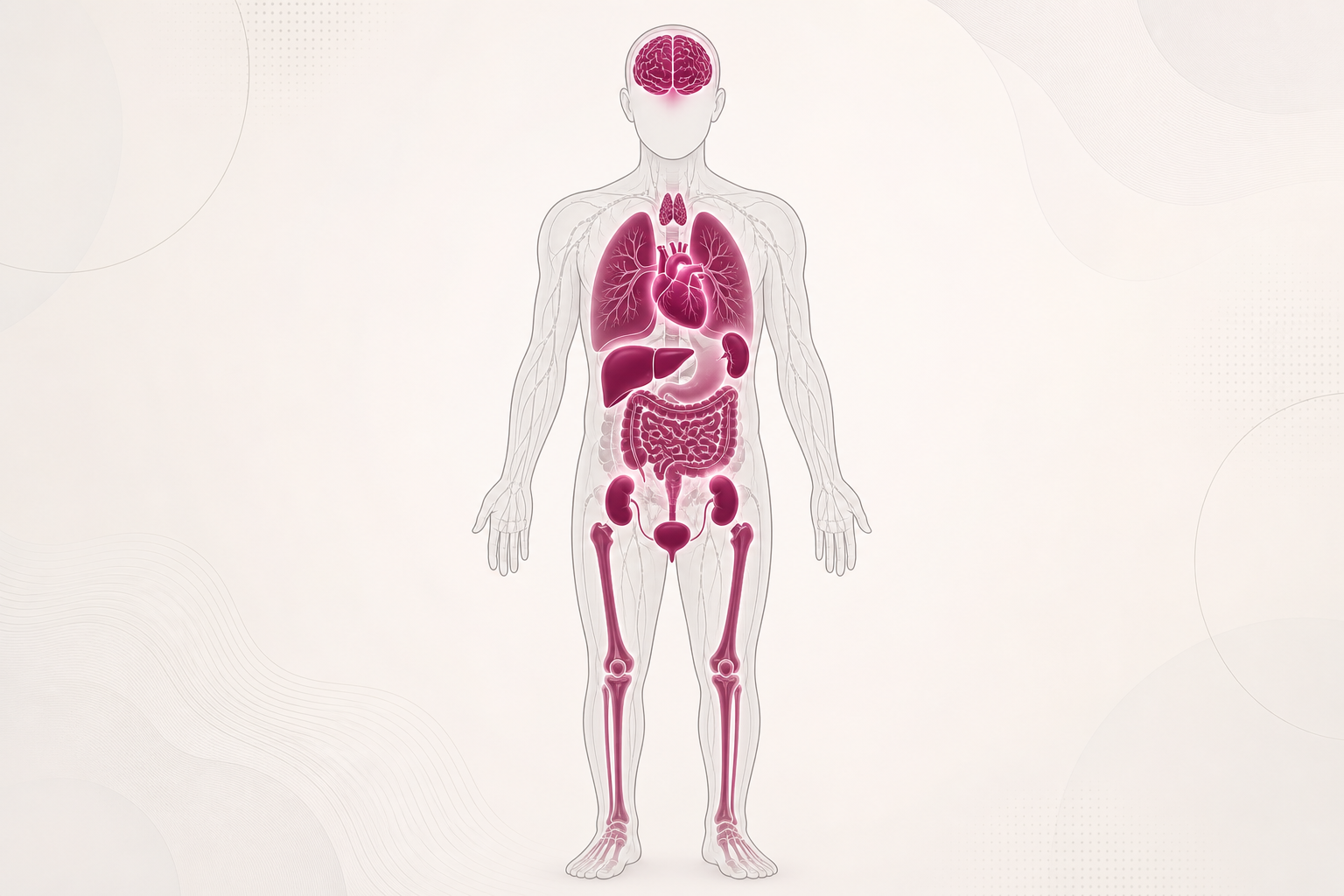
Even so, HIV is not a single-organ disease. The virus directly attacks CD4 T-cells in the immune system, but its downstream effects show up across the brain, heart, gut, skin, kidneys, bones, and mental health. Some of those effects come from the virus itself. Some come from chronic immune activation that persists even when viral load is undetectable. Some come from antiretroviral medications. The mix is what makes HIV care a whole-body project, not just a viral-load number.
This article walks through what HIV does to each major body system, how treatment changes the picture, and which symptoms are worth bringing to a clinician. It is not a diagnostic tool. It is a framework for reading your body honestly and acting on what you notice early, when most complications are easier to prevent or reverse.
Key takeaways
- HIV affects the immune system first, but its effects show up across the brain, heart, gut, skin, bones, and mental health. Early treatment dramatically reduces those effects.
- Effective antiretroviral therapy can suppress HIV to undetectable levels in the blood, which protects the body from most long-term damage and means the virus is not sexually transmitted (Undetectable = Untransmittable).
How HIV affects the immune system
HIV's primary target is the CD4 T-cell, a white blood cell that helps coordinate the body's response to infections. The virus enters CD4 cells, copies itself inside them, and destroys them. As CD4 numbers fall, the immune system loses its ability to recognize and clear infections that a healthy body would normally control.
Healthcare providers track this with two numbers. The CD4 count measures how many CD4 cells are circulating per cubic millimeter of blood (typical range in an uninfected adult is roughly 500 to 1,500). The viral load measures how many copies of HIV are in the blood. Effective treatment pushes viral load down toward undetectable and lets the CD4 count recover. A CD4 count below 200, or the presence of specific opportunistic infections, is the threshold for an AIDS diagnosis (CDC: About HIV).
When CD4 counts drop, the kinds of infections that become possible change. Tuberculosis, pneumocystis pneumonia (PCP), oral and esophageal candidiasis (thrush), toxoplasmosis, cytomegalovirus (CMV) reactivation, and cryptococcal meningitis are all classic AIDS-defining opportunistic infections. The risk of certain cancers also rises, particularly Kaposi sarcoma and non-Hodgkin lymphoma, because the immune system is less able to suppress the viruses (HHV-8, Epstein-Barr) and abnormal cell growth they drive.
The clinically important point: a person on consistent ART with a suppressed viral load and a recovered CD4 count is rarely the person who shows up with opportunistic infections. Those complications cluster in people who are undiagnosed, who have not started treatment, or who have struggled with treatment access or adherence.
CD4 count. How many CD4 cells are circulating per cubic millimeter of blood. A healthy adult range is roughly 500 to 1,500. Below 200 is the AIDS threshold.
Viral load. How many copies of HIV are in the blood. The treatment goal is to push this below the lab's limit of detection and keep it there.
People on care typically have both checked every 3 to 6 months. Stable, suppressed viral load and a recovered CD4 count are the signs treatment is working.
The brain and nervous system
HIV crosses the blood-brain barrier early in infection, which means the nervous system is exposed to the virus even when symptoms are absent. The clinical picture has several distinct parts.
HIV-associated neurocognitive disorder (HAND) is a spectrum, ranging from mild trouble with concentration, word-finding, and short-term memory at one end to severe dementia at the other. Severe forms are now uncommon in people on effective ART, but milder forms of cognitive slowing are still reported in people living with HIV, partly because chronic immune activation persists in nervous tissue even when blood viral load is suppressed.
Peripheral neuropathy is nerve damage that typically appears as burning, tingling, or numbness in the feet (and sometimes hands), often starting symmetrically. It can be caused by the virus itself or by older antiretroviral drugs. Newer regimens are much less likely to cause it, but people who lived through earlier eras of treatment may still carry the effects.
Mood disorders, particularly depression and anxiety, are more common in people living with HIV than in the general population. Some of this reflects the stress of diagnosis, stigma, and chronic illness. Some appears to be biological, driven by the same inflammatory pathways that affect cognition. Either way, mood symptoms are not a personality failing; they are a treatable part of HIV care that deserves its own clinical attention.
- Persistent forgetfulness that is new for you, or new trouble following conversations
- New numbness, tingling, or burning in the feet
- A low or depressive mood that lasts more than two weeks
- Any thoughts of self-harm, at any time, without waiting
The cardiovascular system
People living with HIV have a higher risk of cardiovascular disease than the general population, even after adjusting for traditional risk factors like smoking and cholesterol. The mechanism is chronic inflammation. The virus, even when suppressed, leaves the immune system in a low-grade activated state. That activation accelerates the same atherosclerotic process that causes heart attacks and strokes in the general population, but it starts earlier and progresses faster.
Some antiretroviral drugs also affect lipid profiles or body fat distribution. Older regimens were the worst offenders here; modern integrase-inhibitor-based regimens are much gentler on lipids but may be associated with weight gain in some people. Clinicians treating HIV today screen lipids, blood pressure, and diabetes risk routinely, and start statins or blood-pressure medicines earlier than they would in someone without HIV.
Practical takeaway: HIV does not give you a pass on the standard cardiovascular risk factors. Smoking cessation, blood pressure control, lipid management, weight management, and physical activity all matter, arguably more than they do for the average patient (NHS: HIV and AIDS).
The skin
Skin and mucous membranes often show what is happening in the immune system before deeper symptoms appear. The dermatological signs that cluster in people living with HIV fall into a few buckets.
Conditions that flare more aggressively. Seborrheic dermatitis (flaky, greasy patches on the scalp and face), psoriasis, and eczema can all become harder to control when CD4 counts drop. Recurrent herpes simplex outbreaks, including cold sores and genital herpes, may become more frequent and slower to heal.
Conditions that signal advanced immune suppression. Oral hairy leukoplakia (white, ridged patches on the side of the tongue, caused by Epstein-Barr virus), molluscum contagiosum (small pearly bumps, often more numerous and persistent than in immunocompetent people), and Kaposi sarcoma (purple, brown, or red patches on skin and mucous membranes). Any of these in an adult should prompt at least a conversation about HIV testing.
Acute retroviral syndrome rash. In the first weeks after HIV infection, some people develop a generalized maculopapular rash, often on the trunk, alongside fever, swollen lymph nodes, and sore throat. It looks similar to other viral exanthems, which is part of why early HIV is so often missed.
Persistent unexplained rashes, recurrent thrush in an adult, or recurrent herpes outbreaks that suddenly become more severe are reasonable triggers to test, even if you don't think you have a recent exposure.
- Flare patterns. Seborrheic dermatitis, psoriasis, eczema, recurrent herpes simplex, all of these may become harder to control.
- Advanced-immunosuppression patterns. Oral hairy leukoplakia, persistent molluscum contagiosum, and Kaposi sarcoma. Any of these in an adult warrants HIV testing.
- Early-infection pattern. A generalized maculopapular rash on the trunk in the first weeks after exposure, often with fever and swollen lymph nodes.
The gut and gastrointestinal tract
The gut is one of HIV's earliest battlegrounds. A large fraction of the body's CD4 cells live in gut-associated lymphoid tissue (GALT), and HIV depletes them rapidly in the first weeks of infection. That early damage to the gut lining is part of why chronic immune activation persists even after ART suppresses the blood viral load: gut bacteria and bacterial products can leak into circulation through a less-tight intestinal barrier, keeping the immune system on alert.
Practically, the symptoms patients notice are diarrhea (acute or chronic), nausea, weight loss, and sometimes painful swallowing from esophageal thrush. Some of these are direct effects of HIV; some are side effects of antiretroviral medications, particularly older regimens; and some are caused by opportunistic infections (cytomegalovirus colitis, cryptosporidiosis, Mycobacterium avium complex) that appear only at advanced immune suppression.
Significant unintended weight loss, chronic diarrhea lasting more than a couple of weeks, or new trouble swallowing all merit medical attention. They can usually be sorted out with stool studies, endoscopy if needed, and a review of the medication list.
- Diarrhea lasting more than two weeks, or returning repeatedly
- Unintended weight loss of 5 percent or more of your body weight
- New pain or difficulty swallowing (a sign that thrush may have reached the esophagus)
- Persistent nausea or vomiting that is interfering with eating or with taking your medication
Bones, kidneys, and metabolic changes
People living with HIV experience higher rates of osteopenia and osteoporosis than age-matched peers without HIV. The mechanism is partly the virus, partly chronic inflammation, partly some antiretroviral drugs (tenofovir disoproxil fumarate, in particular, is associated with bone density loss), and partly the standard risk factors that affect everyone. Bone mineral density tends to drop modestly when ART is first started, then stabilize.
The kidneys are also vulnerable. HIV-associated nephropathy (HIVAN) is a specific glomerular disease driven by direct viral infection of kidney cells; it is much rarer in the ART era but still occurs in untreated infection. Some antiretrovirals can also affect kidney function, which is why creatinine and urine protein get checked regularly.
Metabolic effects, including changes in cholesterol, triglycerides, glucose handling, and body fat distribution, are part of long-term HIV care. Modern regimens are kinder than older ones, but routine bloodwork still tracks lipids, glucose, and kidney and liver function. Standard cardiovascular and metabolic prevention (statins, blood-pressure control, diet, exercise, smoking cessation) does most of the heavy lifting here.
| Effect | Driven by the virus | Driven by chronic inflammation | Driven by ART |
|---|---|---|---|
| Bone density loss | Modest direct effect | Yes, ongoing low-grade activation | Yes, particularly older tenofovir disoproxil fumarate regimens |
| HIV-associated nephropathy (HIVAN) | Yes, direct infection of kidney cells | Contributing | Rare with modern regimens; some drugs require kidney monitoring |
| Lipid changes (cholesterol, triglycerides) | Modest | Yes | Yes, varies by regimen |
| Glucose and body-fat changes | Modest | Yes | Yes, varies by regimen |
Mental health
Depression, anxiety, post-traumatic stress symptoms, and substance use disorders are all more common in people living with HIV than in matched controls. The reasons are layered: the biological effects of the virus and inflammation on the brain, the experience of stigma and disclosure, the burden of chronic daily medication, and the disproportionate impact of HIV on communities that already face structural disadvantage.
What this means clinically is that mental health care is part of HIV care, not optional. Psychotherapy, antidepressants when appropriate, peer support, and connection with HIV community resources all measurably improve both quality of life and adherence to medication, which in turn improves physical outcomes. The two systems are not separate.
If you are living with HIV and notice persistent low mood, loss of interest, sleep disturbance, intrusive thoughts about the diagnosis, or any thoughts of self-harm, please tell the clinician managing your HIV care. These symptoms are treatable, common, and not a sign of weakness or failure.
With ongoing medical care, HIV can be controlled. People with HIV who get effective HIV treatment can live long, healthy lives and protect their partners.
How antiretroviral therapy changes the picture
Most of what is in this article describes what HIV can do. What it can do, and what it does in a person on consistent modern treatment, are different things.
Antiretroviral therapy works by blocking specific steps in the HIV replication cycle. Modern regimens are typically one or two pills taken once a day, often a single combination tablet that bundles three drugs. The goal is to suppress viral load to undetectable, which generally happens within a few months of starting effective therapy and which is preserved as long as the regimen is taken consistently (CDC on HIV treatment).
Two consequences follow. First, the immune system recovers. CD4 counts rise, often substantially, and the risk of opportunistic infections falls back toward baseline. Second, HIV is not transmitted sexually from a person whose viral load has been undetectable. This is the basis of the public health message Undetectable = Untransmittable, or U=U, which is endorsed by the CDC and major HIV research bodies (WHO HIV/AIDS fact sheet).
Modern ART also carries fewer side effects than older regimens. Common side effects include mild gastrointestinal upset early on, sleep disturbance with some drugs, headache, and (with some regimens) modest weight gain. Serious side effects are rare and reversible when caught. The risk of staying off treatment is, in nearly every case, much greater than the risk of being on it.
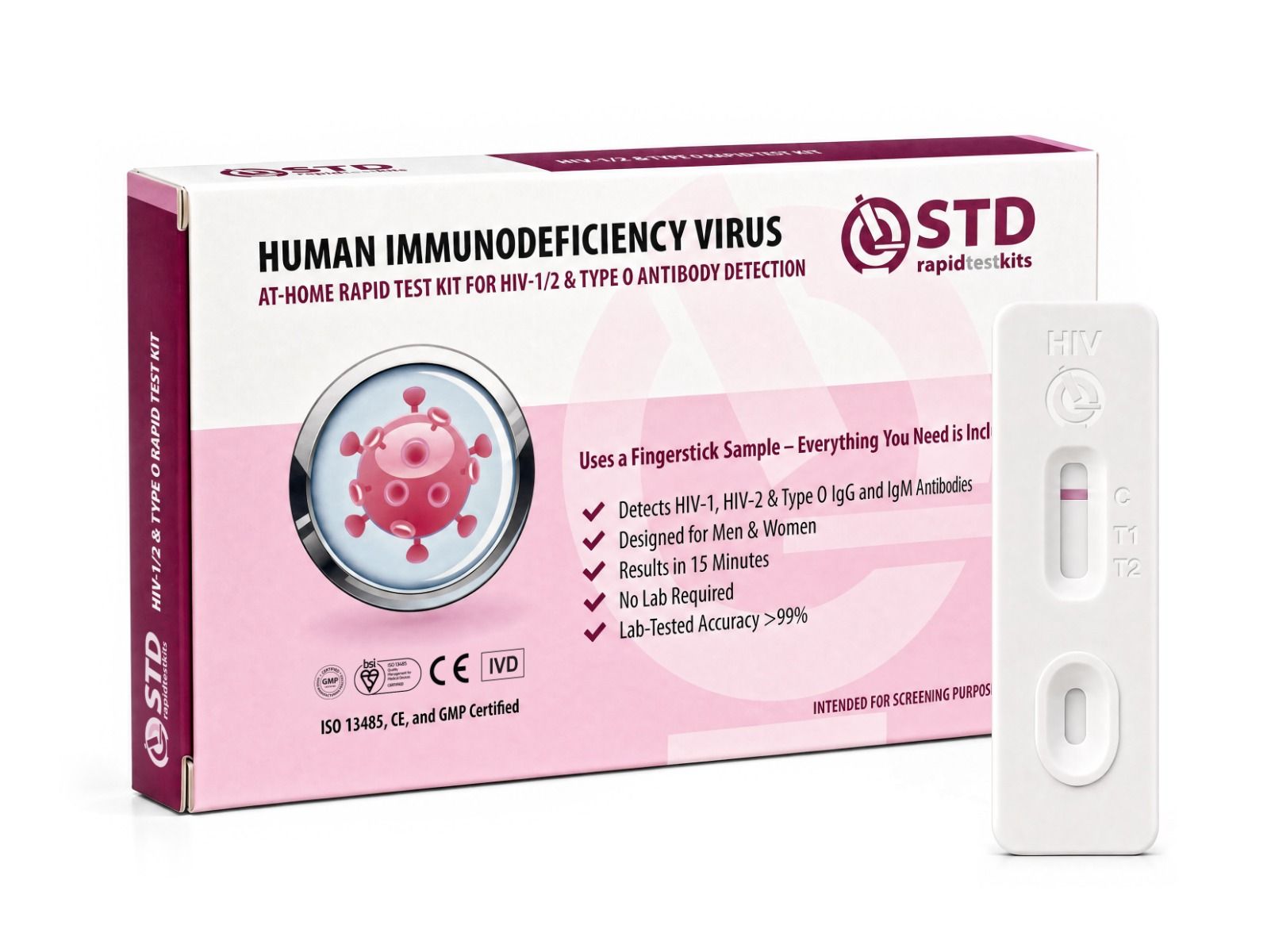
Disclosure: stdrapidtestkits.com publishes this article and sells the at-home HIV and STI tests linked below. We link to our own products in the sections where they fit the reader's question.
When to test and what to monitor
Testing is the entry point to everything described above. The CDC recommends that every adult be tested for HIV at least once as a routine part of medical care, and more frequently for people with ongoing risk factors (multiple sexual partners, condomless sex outside a mutually monogamous tested relationship, sharing injection equipment, or a partner with HIV) (CDC HIV Testing).
Window periods matter. Different test technologies detect HIV at different points after exposure:
- Nucleic acid tests (NAT, lab-based): can detect HIV from about 10 to 33 days after exposure.
- Fourth-generation antigen/antibody lab tests: typically reliable from about 18 to 45 days.
- Rapid antibody tests (including most at-home tests): typically reliable from about 23 to 90 days, depending on the specific test.
A negative result from a rapid antibody test taken too soon after a possible exposure does not rule out infection. Retesting at the end of the window is part of using these tools responsibly. A positive result from any at-home test is a screening signal that should be confirmed by a laboratory test before treatment decisions are made.
If you are already diagnosed and on care, the things worth monitoring at home are: medication adherence (missed doses are the main driver of treatment failure), new or unusual fatigue, new neurological symptoms (numbness, memory change, mood change), unintended weight loss, new skin lesions, persistent gastrointestinal symptoms, and any signs of opportunistic infection (persistent fever, night sweats, drenching cough). Anything in that list is worth a clinic call rather than a watch-and-wait.

Common questions
- Can someone have HIV and still feel completely fine?
- Yes, and this is common. After the initial weeks of infection (when some people get a flu-like illness called acute retroviral syndrome), HIV often enters a clinical latency phase that can last years with no obvious symptoms. The virus is still replicating and damaging the immune system during this time. Feeling fine is not a substitute for testing.
- What is the difference between HIV and AIDS?
- HIV is the virus. AIDS is the most advanced stage of untreated HIV infection, defined by a CD4 count under 200 or the presence of specific opportunistic infections or cancers. With effective antiretroviral therapy, most people living with HIV never progress to AIDS.
- Does undetectable really mean untransmittable?
- Yes, for sexual transmission. Multiple large studies (the PARTNER and Opposites Attract studies, among others) found zero linked sexual transmissions from people with a sustained undetectable viral load on ART. The CDC and WHO both endorse the Undetectable = Untransmittable message. It applies specifically to sustained viral suppression, not a single low reading.
- How long can someone live with HIV today?
- Modeling studies and clinical cohorts now show that a person diagnosed early, started on ART promptly, and supported in staying on treatment can expect a lifespan close to that of an HIV-negative peer. The remaining gap is mostly driven by late diagnosis, treatment interruption, and co-morbidities like cardiovascular disease and smoking, all of which can be addressed.
- Can HIV medications themselves cause side effects?
- Yes, though modern regimens are much better tolerated than the ones used in the 1990s and early 2000s. Common side effects include mild gastrointestinal upset, sleep changes, headache, and (with some regimens) weight gain. Serious side effects are uncommon and usually reversible by switching regimens. Side effects are a reason to talk to a clinician, not a reason to stop treatment unilaterally.
- Is weight loss a sign of HIV?
- Significant unintended weight loss can be a sign of advanced or untreated HIV (sometimes called wasting syndrome), but it is not specific to HIV; many other conditions cause it too. If you have lost weight you can't explain, particularly alongside fatigue, fevers, night sweats, or persistent diarrhea, that combination is worth investigating, and HIV testing is part of a reasonable workup.
- Does being on HIV treatment protect me from other STIs?
- No. Antiretroviral therapy controls HIV but does not protect against chlamydia, gonorrhea, syphilis, hepatitis B or C, or herpes. Routine STI screening is recommended for sexually active people regardless of HIV status, and HIV care guidelines specifically include periodic STI testing.
- How soon after a possible exposure can I test for HIV at home?
- Most at-home rapid antibody tests are most reliable from about 3 months after exposure, with some tests becoming useful from around 23 days (roughly 3 weeks), though reliability increases through 90 days. A negative result earlier than the window for the specific test does not rule out infection. If you are within a few days of a possible high-risk exposure, post-exposure prophylaxis (PEP) at a clinic or emergency department is the right first step, not waiting for a home test.
- U.S. Centers for Disease Control and Prevention. About HIV: definitions of HIV and AIDS, CD4 thresholds, and overview of opportunistic infections.
- U.S. Centers for Disease Control and Prevention. HIV Treatment: antiretroviral therapy goals, viral suppression, and Undetectable = Untransmittable.
- U.S. Centers for Disease Control and Prevention. HIV Testing: screening recommendations, test types, and window periods.
- World Health Organization. HIV/AIDS fact sheet: global epidemiology, treatment, and prevention guidance.
- U.K. National Health Service. HIV and AIDS: overview of effects on the body, transmission, treatment, and risk-factor management.
- U.S. National Institutes of Health, HIVinfo. Patient-facing fact sheets on HIV medication side effects and opportunistic infections.
