
Published: August 2025 | Last updated: May 2026 | Editorial review and quality control: Martina N.
Most sex education stops at one rule for oral sex: watch out for cold sores. The rule is true, and incomplete. Five other infections regularly take hold in the mouth, throat, or tonsils after oral contact, and several show no early symptom at all. A persistent sore throat, a painless ulcer that comes and goes, white patches near the tonsils, or nothing visible whatsoever can each signal something a routine genital test would miss.
This guide walks through how gonorrhea, chlamydia, syphilis, HPV and HIV behave in oral tissue, what is testable at home today, and what still needs a clinic visit. Sourcing comes from current CDC, WHO and peer-reviewed clinical guidance.
Key Takeaways
- Five infections beyond herpes routinely cause oral or throat findings: gonorrhea, chlamydia, syphilis, HPV and HIV. Most begin without obvious symptoms, which is why pharyngeal screening gets skipped.
- At-home rapid kits cover the blood-detectable systemic STIs that follow oral exposure (HIV, syphilis, herpes antibodies). A pharyngeal swab for gonorrhea or chlamydia in the throat still needs a clinic or a clinician-supervised mail-in service.
Why Oral STIs Get Missed
Sex education usually treats oral contact as low risk or barely risk at all. The framing is wrong, and it costs people years of undetected exposure. Every mucous membrane in the body, including the lining of the mouth, the gums, the back of the throat and the tonsillar pillars, can absorb pathogens from genital fluids or from direct contact with an active genital lesion. The mucosa is thin, well-vascularized, and frequently broken in microscopic ways from brushing, chewing or recent dental work. Pathogens have a route in.
Routine STI panels reinforce the blind spot. Most clinic protocols swab urine or genital sites by default. Pharyngeal swabs only happen when the patient asks for them or the clinician asks the right exposure-history question. People walk out of a negative panel believing they are clear, when in fact the throat was never tested. Per the CDC's STI screening recommendations, men who have sex with men, and anyone reporting oral exposure to a partner with a known STI, should be screened at the throat as well as the genitals. The recommendation exists precisely because pharyngeal infection is common and frequently silent.
Low symptom burden is the second reason oral STIs slip past. Many infections in the throat cause no detectable irritation. Noticing nothing is not the same as having nothing.

Chlamydia and Gonorrhea Can Live in Your Throat
Pharyngeal gonorrhea, the term for gonorrhea infection in the throat, is common in people who give unprotected oral sex. The CDC's gonorrhea page notes that gonorrhea can infect the throat through oral sex and that most pharyngeal infections produce no symptoms. When symptoms appear, they tend to look like a stubborn sore throat, sometimes with a low-grade fever or visible white or yellow exudate on the tonsils. Untreated pharyngeal gonorrhea acts as a reservoir that can pass back to a partner's genitals during the next oral exposure.
Pharyngeal gonorrhea is also a leading concern for antibiotic resistance. The throat environment selects for resistance more readily than genital sites do. Current treatment guidelines reflect this with intramuscular ceftriaxone as the first-line regimen, and a test of cure 7 to 14 days post-treatment.
Pharyngeal chlamydia is less common than its gonorrheal cousin but still real. It tends to be more silent than symptomatic, occasionally producing throat irritation, hoarseness or swollen cervical lymph nodes. Both infections can ping-pong between partners if the throat carrier never gets tested or treated.
This site does not sell at-home pharyngeal swab tests. The lateral-flow swab kits offered for chlamydia and gonorrhea are validated for genital self-collection (vaginal or penile), not for the throat. If pharyngeal infection is the real concern after a recent oral exposure, a clinic visit for a NAAT throat swab is the right tool. The at-home swab kits below cover the second risk: many people exposed orally are also exposed genitally during the same encounter.
Syphilis and Its Painless Mouth Sores
Primary oral syphilis usually announces itself as a single firm, painless ulcer at the site of contact, called a chancre. It can sit on the lip, the tongue, the inside of the cheek, the soft palate or the tonsil. Because it does not hurt, it gets mistaken for a canker sore, a bite or an irritation from food. Many resolve on their own within three to six weeks, and that is the part that catches people off guard.
The healed chancre does not mean the infection is gone. The bacterium Treponema pallidum is in the bloodstream by then, and the disease moves through stages whether the original sore was noticed or not. Secondary syphilis can show up weeks to months later as a non-itchy rash (often on the palms and soles), patchy hair loss, swollen lymph nodes and fatigue. Late-stage syphilis, if untreated for years, can damage the cardiovascular system and the central nervous system.
Two practical points for oral exposure. First, a chancre on the lip or tongue is highly contagious. A kiss or shared utensil with someone who has an active oral chancre can transmit the infection. Second, the diagnostic shift between stages matters for testing. Direct sampling of the chancre catches stage one. Once it heals, blood antibody testing, the same chemistry used by at-home rapid kits, takes over and remains the standard from secondary syphilis onward, per the CDC's syphilis page. Early treatment is straightforward: a single dose of long-acting benzathine penicillin G clears primary and early secondary infections.
For syphilis, the diagnostic tool changes as the disease progresses. During the primary stage, a clinician can swab fluid from the visible chancre and confirm the infection directly. Once the chancre heals and the infection enters the secondary stage, blood antibody testing takes over. Most rapid at-home syphilis kits use the same antibody chemistry that clinics rely on from the secondary stage onward.
Oral HPV and Oropharyngeal Cancer
HPV is the most common STI in the world, and a subset of strains, especially HPV-16, can persist in the oropharynx and cause cancer of the base of the tongue, the tonsils or the throat lining. The CDC's oropharyngeal cancer page attributes 60 to 70 percent of oropharyngeal cancers in the United States to HPV. Per the CDC's annual HPV-attributable cancer figures for 2018-2022, roughly 13,600 oropharyngeal cancers in men and 2,400 in women each year are attributed to HPV. Men are diagnosed with HPV-related oropharyngeal cancer at about five to six times the rate of women.
Oral HPV itself is mostly silent. Most infections clear on their own within two years. The minority that persist are the ones that drive cancer risk decades later. There is no FDA-approved at-home or clinic test for asymptomatic oral HPV. Our HPV swab kit is validated for vaginal self-collection in women only and does not screen the throat or oropharynx; for any reader concerned about oral HPV specifically, dental and ENT exams of persistent lesions are the current detection path.
The protective lever is vaccination. The Gardasil 9 series prevents the high-risk HPV types responsible for most HPV-related cancers, including oropharyngeal. Per the CDC's Advisory Committee on Immunization Practices guidance, vaccination is routinely recommended through age 26 and available through shared clinical decision-making up to age 45. Barrier protection during oral sex (external condoms during fellatio, dental dams during cunnilingus or rimming) reduces, but does not eliminate, transmission risk.
Many STDs, as well as other infections, can be spread through oral sex. Anyone exposed to an infected partner can get an STD in the mouth, throat, genitals or rectum.
HIV From Oral Sex: The Actual Risk Math
The short answer is yes, HIV transmission through oral sex is possible. The longer, more accurate answer is that the per-act risk is very low compared with vaginal or anal exposure. The CDC's HIV resources note that receptive oral sex carries a low but documented transmission risk, while insertive oral sex is effectively negligible. WHO surveillance places oral HIV transmission at well under 1 in 10,000 per exposure, with most documented cases involving aggravating factors.
Risk rises materially when:
- The HIV-positive partner has a high (unsuppressed) viral load.
- Bleeding gums, oral ulcers, recent dental work, or active periodontal disease are present in the receptive partner's mouth.
- Another STI (oral herpes, syphilis chancre, gonococcal pharyngitis) is causing tissue inflammation that breaks the mucosal barrier.
- Ejaculation occurs in the mouth.
The single largest protective factor is the positive partner's viral load. People with HIV on consistent antiretroviral therapy who maintain an undetectable viral load do not transmit HIV sexually. This is the U=U principle (undetectable equals untransmittable), now backed by multiple large prospective cohort studies including PARTNER, PARTNER2 and Opposites Attract.
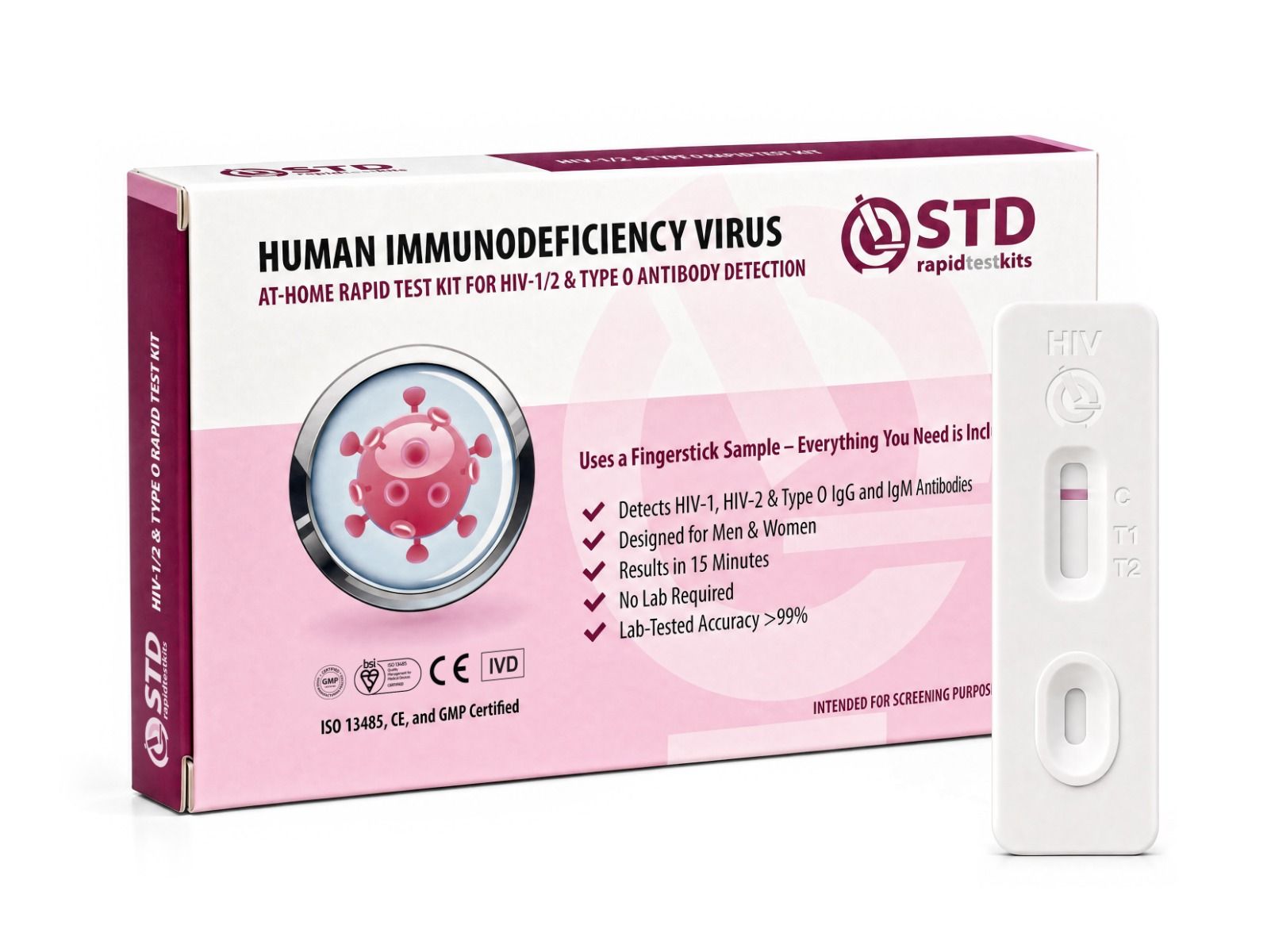
For testing windows, fourth-generation antigen-antibody blood tests (the standard at-home rapid lateral-flow chemistry) reliably detect HIV from about 23 to 90 days after exposure, with most infections detectable by day 45. Testing earlier than three weeks risks a false negative; testing at three months gives effectively definitive results for a low-risk exposure. A clinical RNA NAAT can detect earlier but is not available as an at-home rapid test.
Mouth-to-Genital vs Genital-to-Mouth: Which Direction Carries More Risk?
Both partners can acquire infections during oral sex, and the direction of risk depends on the specific pathogen. For most bacterial STIs (gonorrhea, chlamydia), the mouth is more often the receiving site. The pathogen lives in the giver's throat after they perform oral sex on an infected genital partner, and the giver may carry it for weeks before noticing anything.
For HIV, the lower-risk side is the giver's mouth, with risk rising sharply if the giver has bleeding gums or oral lesions, or if the receiving partner has a high viral load and ejaculates in the mouth. For HSV-1, the more common direction in modern epidemiology is mouth-to-genital. Genital herpes increasingly comes from oral HSV-1 transmission rather than genital HSV-2. People with cold sores who give oral sex during an active or even an asymptomatic shedding episode can transmit HSV-1 to a partner's genitals, where it causes recurrent genital herpes.
Receptive and insertive oral sex both carry risk, with different risk profiles for different infections. Reducing exposure across the board (barriers, testing, treatment of any active infection) is the only consistent answer.
| Pathogen | Higher-risk role | Why |
|---|---|---|
| Gonorrhea or chlamydia | Giver's throat | The pharynx becomes a bacterial reservoir after oral on an infected partner. |
| HIV | Receiver's mouth, with ejaculation or oral lesions | Tissue breaks and bleeding gums raise mucosal absorption of fluids. |
| HSV-1 (oral herpes) | Giver's mouth, infecting partner's genitals | Asymptomatic lip shedding can seed genital mucosa during oral sex. |
Can You Catch an STI From Kissing?
Most STIs do not spread through saliva alone, though a few can:
- Herpes simplex virus (HSV-1): spreads readily through direct contact with cold sores, and asymptomatic viral shedding from the lips happens even without a visible sore.
- Syphilis: if a chancre is present anywhere on the lips, tongue or inside the mouth, kissing can transmit it directly. The chancre is highly contagious during the few weeks it persists.
- Cytomegalovirus (CMV): spreads through saliva and is sexually transmitted, though it rarely causes recognized illness in healthy adults.
- Mononucleosis (Epstein-Barr virus): spreads through deep kissing and is not classified as an STI. A mono infection can temporarily lower immune defenses, which may amplify the impact of a concurrent STI.
Deep kissing, and especially open-mouth contact when one partner has bleeding gums, a fresh dental procedure or visible oral lesions, raises the bar. Casual closed-mouth kissing of a healthy mouth is low risk for STI transmission, which is the part the popular framing usually gets right. The exception is herpes, which can transmit even between two clean-looking mouths.
Testing Oral STIs: What Is At Home, What Is Clinic
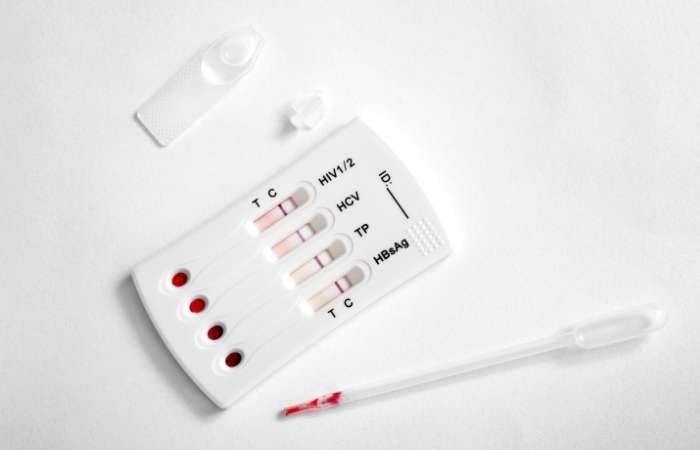
The current at-home market does not cover every oral STI. The table below maps which infections have a reliable home test, what sample type is needed, and the earliest reliable detection window for each of the five infections discussed above.
A home throat-swab test for pharyngeal STIs is not part of our catalog. If the real concern after a recent oral exposure is pharyngeal gonorrhea or chlamydia, a clinic appointment is the right tool. The at-home rapid blood panels covered below are useful for the systemic STIs (HIV, syphilis, herpes antibodies) that the same exposure event can also seed in the bloodstream.
| Infection | Home test available? | Sample type | Earliest reliable window |
|---|---|---|---|
| Pharyngeal gonorrhea or chlamydia | No (clinic NAAT only) | Throat swab | 1 to 2 weeks post-exposure |
| Oral HPV | No FDA-approved screening | ENT or dental exam of persistent lesion | Not applicable |
| Syphilis (after oral exposure) | Yes | Fingerstick blood antibody | 2 to 6 weeks post-chancre |
| HIV (after oral exposure) | Yes | Fingerstick blood antigen-antibody | 23 to 90 days post-exposure |
| HSV-1 antibody status | Yes | Fingerstick blood antibody | 8 to 12 weeks post-exposure |

What Happens if You Don't Treat an Oral STI
Untreated pharyngeal gonorrhea or chlamydia can pass back to a partner's genitals during the next oral encounter, restarting the chain. Pharyngeal gonorrhea also raises the regional risk profile for disseminated gonococcal infection in rare cases (joint inflammation, skin lesions, fever).
Untreated syphilis follows the disease's classic four-stage pattern. The primary chancre resolves on its own. Secondary syphilis (rash, fatigue, lymphadenopathy) appears weeks to months later and also resolves on its own. The pathogen then enters latency, sometimes for years. Tertiary syphilis can damage the cardiovascular and central nervous systems, including the aorta, the brain and the spinal cord. The path from oral chancre to neurosyphilis is long but real.
Persistent oral HPV infection drives the late risk of oropharyngeal cancer, typically diagnosed decades after initial infection. Most clearance happens within two years; persistent infection beyond that timeframe is the concerning subset.
HIV remains transmissible at any stage, and untreated infection progresses to AIDS over an average of 8 to 10 years without antiretroviral therapy, with much wider individual variation. Modern treatment converts HIV from a terminal illness into a manageable chronic condition while also preventing onward sexual transmission via U=U.
Treatment: What to Expect
Pharyngeal gonorrhea is treated with intramuscular ceftriaxone (a single 500 mg dose for most adults) per the CDC's 2021 STI treatment guidelines. A test of cure 7 to 14 days post-treatment is recommended for pharyngeal cases due to the higher resistance profile. Pharyngeal chlamydia is treated with oral doxycycline (100 mg twice daily for seven days) in most adults.
Primary and early secondary syphilis is treated with a single intramuscular dose of benzathine penicillin G. Late latent or unknown-duration syphilis requires three weekly doses. Penicillin allergy management is handled in clinic with desensitization or alternative regimens.
HSV-1 and HSV-2 are not curable. Antivirals (acyclovir, valacyclovir, famciclovir) reduce outbreak frequency and viral shedding, and daily suppressive therapy lowers transmission risk to partners.
HIV treatment is lifelong antiretroviral therapy. Modern regimens are usually one pill once a day. Treatment lowers viral load to undetectable for the great majority of people on consistent therapy, prevents clinical disease progression, and prevents onward sexual transmission.
Oral HPV does not have a direct antiviral treatment. Persistent lesions are managed by ENT or oral-medicine specialists with biopsy, surgical excision or radiation, depending on stage if cancer develops.
Some situations should not wait for a routine appointment. A visible chancre on the lips or in the mouth, persistent throat exudate after unprotected oral sex, or a high-risk HIV exposure within the last 72 hours all warrant same-day clinical evaluation. HIV post-exposure prophylaxis (PEP) is most effective when started within 72 hours of exposure and is freely available through urgent care, sexual health clinics and many emergency departments.
Prevention: What Actually Helps
Barrier protection during oral sex is the most accessible starting point. External (penile) condoms during fellatio and dental dams during cunnilingus or rimming reduce fluid contact with mucosa. Dental dams sit awkwardly in popular culture but are still the best fluid barrier for oral-vaginal and oral-anal contact. A condom cut lengthwise into a flat sheet works as a substitute, and so does non-microwavable plastic wrap.
Vaccination matters next. Gardasil 9 covers the high-risk HPV strains responsible for most HPV-related oropharyngeal cancers. The CDC recommends routine vaccination through age 26, and shared clinical decision-making up to age 45. Hepatitis B vaccination protects against the bloodborne HBV that can transmit through oral exposure to blood.
Regular testing on a real schedule fills the gap that genital-only screening leaves. Sexually active adults with new or multiple partners should follow site-aware screening cadence, which means asking specifically for pharyngeal swabs if oral sex is part of the exposure history. Annual genital-only screening misses oral infections by design.
For people with ongoing high-risk exposure to partners of unknown HIV status, PrEP (pre-exposure prophylaxis) reduces HIV acquisition risk by over 99 percent when taken consistently. Discuss it with a primary care provider or sexual health clinic.
Avoid oral sex during a visible cold sore, a known active herpes outbreak (oral or genital), an in-progress pharyngeal gonorrhea or chlamydia treatment course, or while a syphilis chancre is healing. Antiseptic mouthwash after oral sex sometimes gets mentioned as a preventive. Australian trial data on mouthwash for pharyngeal gonorrhea showed a small reduction in viable organism load but did not demonstrate prevention of acquisition. Treat it as a possible marginal helper, not a reliable barrier.
Talking to Your Partner
Conversations about STI testing and oral risk are awkward by default and useful anyway. Some practical framing that lowers friction:
- Bring it up outside the bedroom. A weekday conversation over coffee or text lands better than a same-moment negotiation.
- Lead with your own routine. Saying when you last tested and what for invites the same in return without putting the partner on a witness stand.
- Be specific about oral. The phrase “I tested negative on a panel” usually means urine or genital. If oral exposure is part of the relationship, the right question is whether the panel included pharyngeal swabs.
- Disclose recent positive results to recent partners. Most local health departments offer anonymous partner notification if the conversation feels too direct.
None of this guarantees outcomes. It does shift sexual health from one person tracking and worrying alone to a shared structure between adults who are choosing each other.
The Bottom Line
The mouth is a sexual surface in the same way the genitals are. Five infections beyond herpes can take hold there after oral contact, and most begin without obvious symptoms. The home-test market reliably covers the systemic STIs (HIV, syphilis, herpes antibodies) that follow oral exposure into the bloodstream. Pharyngeal swab testing for gonorrhea and chlamydia, and any workup of oral HPV, still belong in a clinic. Match the test to the question, and the answer you get back actually means something.
FAQs
- Can you really get chlamydia in your mouth?
- Yes. Pharyngeal chlamydia is less common than genital chlamydia and usually causes no symptoms. It requires a throat swab to detect; standard urine or genital swabs miss it. Ask specifically for a pharyngeal NAAT swab if oral exposure is part of your history.
- Is oral gonorrhea curable?
- Yes. The CDC's first-line treatment is a single 500 mg intramuscular dose of ceftriaxone. Pharyngeal gonorrhea has higher resistance rates than genital, so a test of cure 7 to 14 days after treatment is recommended. Symptoms persisting after treatment should be reported back to your provider.
- How long after oral exposure should I test?
- Different STIs have different windows. HIV: 23 to 90 days for fourth-generation antigen-antibody tests, with most infections detectable by day 45. Syphilis blood antibody: as early as two to three weeks after the primary chancre appears in some assays, with most people seroconverting within six weeks. Pharyngeal gonorrhea or chlamydia NAAT: 1 to 2 weeks. HSV-1 antibody: 8 to 12 weeks for full seroconversion.
- What does an oral STI sore look like?
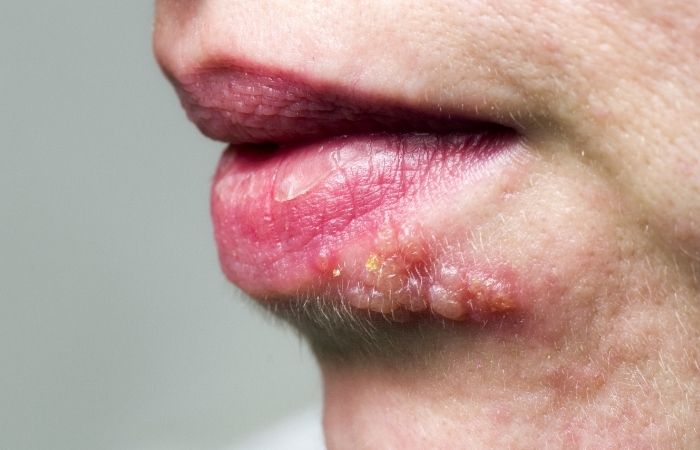
- It depends on the cause. A primary syphilis chancre is a single firm, painless ulcer 1 to 2 cm wide, often on the lip, tongue or tonsillar pillar. An oral herpes sore is a small fluid-filled blister on or near the lips that crusts as it heals, painful and recurrent. Pharyngeal gonorrhea may show as white or yellow exudate on the tonsils. Persistent oral HPV usually has no visible findings.
- Can HPV cause throat cancer?
- Yes, and HPV-16 drives most cases. The CDC attributes 60 to 70 percent of US oropharyngeal cancers to HPV, with men affected at roughly five to six times the rate of women. Gardasil 9 vaccination before exposure prevents most HPV-related oropharyngeal cancers.
- Can I pass oral herpes (HSV-1) to a partner's genitals through oral sex?
- Yes. Genital herpes increasingly comes from oral HSV-1 transmission rather than genital HSV-2. Asymptomatic shedding from the lips can transmit even without a visible sore. Antivirals reduce shedding, and barriers during oral sex reduce contact.
- Should I stop oral sex when I have a sore throat?
- Yes, until you know the cause. A persistent sore throat after a recent oral exposure could be viral, strep, or pharyngeal gonorrhea. Pause oral sex until tested and cleared by a provider, and disclose the symptom to recent partners so they can test as well.
- Does mouthwash after oral sex prevent STIs?
- Mostly no. Australian trial data on antiseptic mouthwash for pharyngeal gonorrhea showed a small reduction in viable organism load but did not demonstrate prevention of acquisition. Treat mouthwash as a possible marginal helper, not a barrier. Condoms, dental dams, vaccination and testing remain the evidence-based prevention stack.
- U.S. Centers for Disease Control and Prevention. STI Treatment Guidelines, 2021, including site-aware screening recommendations for pharyngeal infection.
- U.S. Centers for Disease Control and Prevention. Gonorrhea: how it spreads through oral sex and why pharyngeal infection is often asymptomatic.
- U.S. Centers for Disease Control and Prevention. Syphilis: stages, oral chancre presentation, and serologic testing pathway.
- U.S. Centers for Disease Control and Prevention. HPV and Oropharyngeal Cancer: facts about HPV-attributable head and neck cancers.
- U.S. Centers for Disease Control and Prevention. Cancers Linked With HPV Each Year: oropharyngeal cancer incidence by sex, 2018-2022 dataset.
- U.S. Centers for Disease Control and Prevention. HIV resources: per-route transmission risk and prevention guidance.
- World Health Organization. Sexually transmitted infections (STIs) fact sheet: global epidemiology and oral transmission context.
- NHS. Sexually transmitted infections (STIs): symptoms, testing pathways and clinical screening cadence in the UK system.
