
Published: July 2025 | Last updated: April 2026 | Editorial review and quality control: Martina N.
Yes, syphilis can affect the mouth. The infection is caused by the bacterium Treponema pallidum, and it produces an ulcer called a chancre wherever it first enters the body. When the entry point is the mouth (typically through oral sex with a partner who has an active sore), the chancre can appear on the lip, the tongue, the soft palate, or the tonsil.
Most people who land on this page after noticing a sore in their mouth do not have syphilis. The mouth is a busy place. Cold sores from herpes simplex type 1, canker sores (aphthous ulcers), accidental cheek bites, geographic tongue, and viral pharyngitis are all far more common than oral syphilis. If your sore is painful, recurring, came on with a fever and runny nose, or has been there for years, syphilis is unlikely.
The smaller group of readers who do need to take this seriously usually share one risk profile: oral contact with a partner who had a syphilis sore on their genitals, anus, or mouth, followed by a single round, firm, painless ulcer that appeared 2 to 12 weeks later. This article walks through how to tell those two scenarios apart, when to test, and what treatment looks like.
Can syphilis cause sores in the mouth?
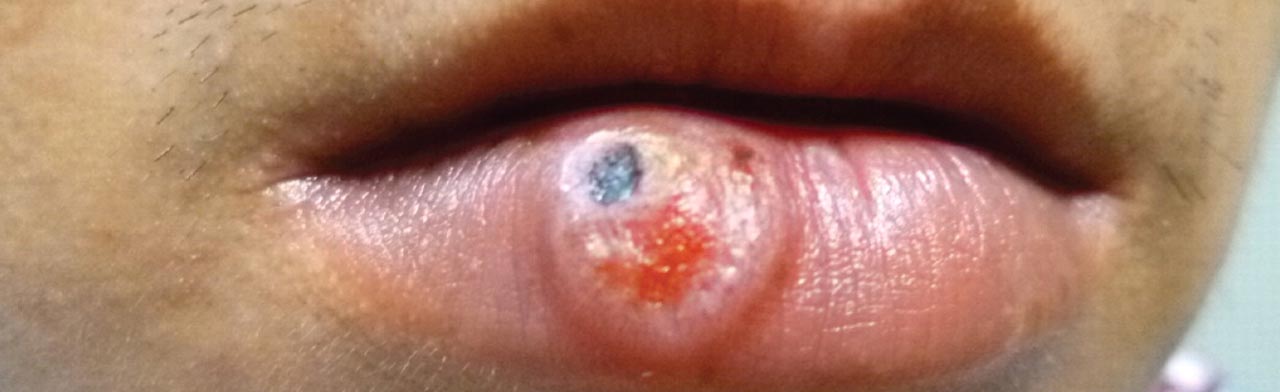
Yes. When syphilis is contracted through oral sex, the first sign is usually a painless, firm, round ulcer (a chancre) on the lip, tongue, soft palate, or tonsil. It typically appears 2 to 12 weeks after exposure and heals on its own in 3 to 6 weeks even without treatment. The chancre clears, but the infection does not, and untreated syphilis progresses through later stages with potentially serious complications. A blood antibody test confirms the diagnosis once enough time has passed for seroconversion (3 weeks at the earliest, ideally 6 weeks or later).
Key Takeaways
- Oral syphilis chancres are usually single, firm, round, and painless. If your sore is painful or part of a cluster of small blisters, herpes or a canker sore is far more likely than syphilis.
- A fingerstick blood antibody test detects syphilis from any exposure route (oral, genital, anal). The window period is roughly 3 to 12 weeks after exposure, with most people seroconverting by 6 weeks.
What an oral syphilis chancre actually looks like
The classic primary lesion has four features that distinguish it from a cold sore or a canker. It is solitary (not a cluster), round or oval with a clean, raised, indurated border, painless to the touch, and persistent for several weeks. Most chancres are 1 to 2 centimeters across when fully formed, with a smooth base that may weep clear or slightly cloudy fluid.
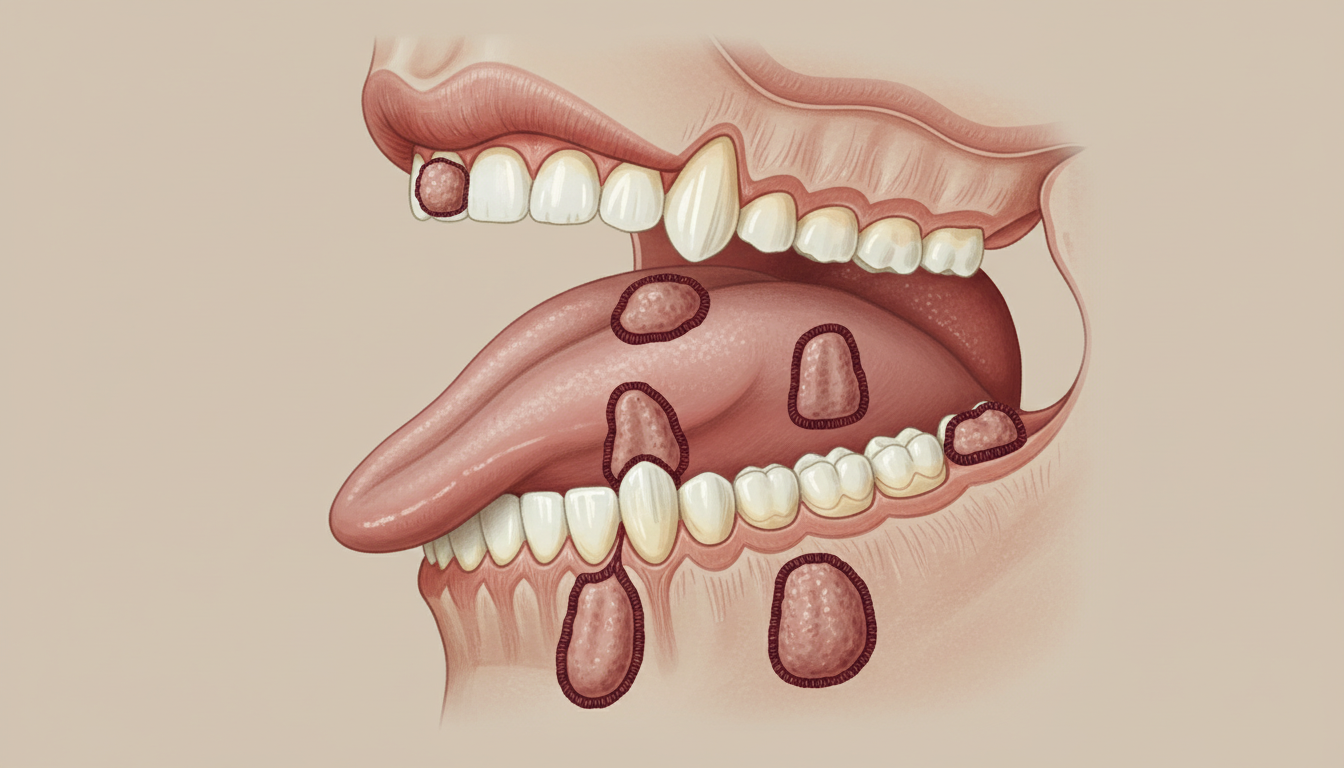
Location matters too. On the lip, oral chancres usually sit on the vermillion border or on the inner surface of the lower or upper lip. On the tongue, they tend to appear on the lateral edge or the undersurface. On the tonsil, the chancre can look like a deep, punched-out ulcer with a raised border, sometimes mistaken for strep throat. On the soft palate or back of the pharynx, the lesion is easy to miss entirely on a quick mirror check.
What it is not: a cluster of small fluid-filled blisters that come and go (that pattern points to herpes simplex), a small white-centered ulcer with a red halo that hurts to eat or talk through (canker sore), a coated white patch that brushes off (oral candidiasis), or a hard painless lump that has been growing for months (a possible oral cancer that needs urgent in-person evaluation regardless of cause).
The painless quality is the single most important clue, since painful sores in the mouth are common and almost never syphilis. A genuinely painless ulcer that you only notice when you look in the mirror, or when your dentist points it out, deserves clinical attention.
The CDC notes that primary chancres "usually last 3 to 6 weeks and heal regardless of whether you receive treatment" (CDC syphilis overview). This is the trap of primary syphilis: the lesion resolves on its own without treatment, while the infection itself continues to spread through the bloodstream. A self-healed sore at week 4 to 6 does not mean you dodged the diagnosis. By then, the bacterium is already systemic.
How syphilis spreads through oral sex
Syphilis spreads through direct contact with an active sore. The infectious bacteria live in the lesion itself, in the surrounding tissue, and in any clear fluid the sore produces. Skin-to-mucosa contact is sufficient; you do not need to exchange semen, vaginal fluid, or blood for transmission to happen.
Three oral acts can transmit syphilis when one partner has an active chancre or a moist secondary-stage lesion:
- Fellatio: oral contact with a penis that has a chancre or a secondary mucous patch.
- Cunnilingus: oral contact with a vulva or vagina that has a chancre, often hidden inside the labia or on the cervix.
- Anilingus: oral contact with the anus, which is one of the most commonly missed chancre sites because most people never inspect it.
Direction goes both ways. A person with an oral chancre can pass syphilis to a partner's genitals or anus during oral sex. A person with a genital or anal chancre can pass syphilis to a partner's mouth. Kissing transmission is rare in adults but has been documented when one partner has a visible primary chancre or secondary mucous patch on the lip or in the mouth.
Condoms reduce but do not eliminate syphilis risk during oral sex. The reason is straightforward: a chancre can sit on a part of the body the condom does not cover (scrotum, base of the penis, labia, perianal skin, the partner's lip). The NHS recommends barrier methods including condoms for fellatio and dental dams for cunnilingus and anilingus, while acknowledging that a sore outside the barrier zone can still transmit (NHS syphilis guidance).
Globally, syphilis is rising. The World Health Organization estimates that 8 million adults aged 15 to 49 acquired syphilis in 2022 (WHO syphilis fact sheet). In the United States, CDC provisional data for 2024 show 190,242 reported cases across all stages, with 41,496 of those in the most contagious primary and secondary stages (CDC STI annual statistics). That total is roughly five times what it was a decade earlier, which is why oral syphilis is being seen more often in dental and primary-care settings than it was in the early 2010s.
Many people with syphilis do not notice any symptoms. They can also go unnoticed by healthcare providers.
Stage by stage: how oral syphilis presents over time
Syphilis progresses through four stages, each with distinct oral manifestations.
Primary syphilis is the chancre stage. The single, painless ulcer described above appears 2 to 12 weeks after exposure (most often around the 3-week mark) and heals in 3 to 6 weeks even without treatment. If the chancre is in a mouth location the person cannot easily see (back of the tongue, tonsil, soft palate), it is regularly missed entirely.
Secondary syphilis usually arrives 4 to 10 weeks after the chancre first appears, sometimes overlapping with a healing primary lesion. The classic sign is a non-itchy rash on the palms of the hands and the soles of the feet. In the mouth, secondary syphilis can produce mucous patches, which are flat, gray-white, slightly raised lesions with a slick surface and high infectivity. Other secondary signs include patchy hair loss, swollen lymph nodes, sore throat, fatigue, weight loss, and low-grade fever. Like primary chancres, secondary lesions resolve spontaneously while the infection persists.
Latent syphilis is asymptomatic, with the bacterium in the bloodstream but no visible signs on the skin or mucous membranes. Latency can last for decades, and there is no oral sign to look for during this period. The only way to detect latent syphilis is a blood test.
Tertiary syphilis is rare in the antibiotic era but still occurs in untreated people 10 to 30 years after the original infection. Oral involvement at this stage can include gummatous lesions on the hard palate or tongue (large, soft, painless masses that can erode through bone) and neurosyphilis-related changes. Tertiary syphilis is the stage every prevention message is trying to avert.
| Stage | Timing after exposure | Typical oral signs | Infectious to others? |
|---|---|---|---|
| Primary | 2 to 12 weeks | Single painless chancre on lip, tongue, palate, or tonsil. Heals in 3 to 6 weeks. | Yes, highly |
| Secondary | 4 to 10 weeks after chancre | Mucous patches: flat gray-white lesions. Body rash on palms and soles. | Yes, highly |
| Latent | Months to years | No oral signs. Asymptomatic. | Reduced, especially in late latent |
| Tertiary | 10 to 30 years if untreated | Gummatous lesions on palate or tongue. Cardiovascular and neurological complications. | Generally not contagious |
How risky is a single oral sex act for syphilis?
Per-act transmission risk for syphilis through oral sex is harder to pin down than the equivalent number for HIV. HIV has decades of cohort data behind its per-act risk numbers; syphilis has been studied less systematically. A few things are clear.
Syphilis is one of the more efficiently transmitted bacterial sexually transmitted infections. A single exposure to an active chancre or a secondary mucous patch carries a substantial probability of transmission, much higher than the per-act risk for HIV (which sits well under 1% for most exposures). The exact percentage depends on the stage of the source partner's infection and the type of contact, with primary and secondary syphilis being the most contagious because both stages produce visible, antibody-rich lesions.
The risk is highest when:
- The partner has a visible primary chancre or a secondary mucous patch.
- The exposure involved direct contact between the receiving partner's mucosa and the sore.
- The receiving partner has small breaks in the oral mucosa (recent dental work, gum bleeding, an open canker sore).
The risk is lower (but not zero) when:
- The exposure happened during the latent stage, where infectious lesions are absent.
- A condom or dental dam was used and covered the sore site.
- The exposure was brief and did not involve direct sore contact.
Untreated syphilis remains transmissible to other partners for the duration of primary and secondary stages, and intermittently during early latent. Anyone diagnosed with primary or secondary syphilis should have partners from the past 90 days (for primary) or 6 to 12 months (for secondary or early latent) notified and tested.
Most painful mouth sores resolve in under two weeks (canker sores, viral ulcers, traumatic ulcers from cheek bites). A single, painless ulcer that has been there for more than three weeks fits the syphilis pattern, but it can also be early oral cancer, an autoimmune ulcer, or a deep fungal infection. None of those diagnoses self-resolve safely, and all of them benefit from earlier intervention. See a clinician for a direct examination if you have a non-healing painless sore, regardless of suspected cause.
When and how to test for syphilis after oral exposure
Syphilis testing is a blood test. This is true regardless of where the original chancre was. The bacterium triggers the same systemic antibody response whether the entry point was the lip, the genitals, or the rectum, so a fingerstick or venous blood draw detects the infection from any acquisition route.
Two kinds of antibody test exist. Treponemal tests (such as TP-PA and EIA) detect antibodies specific to Treponema pallidum and remain positive for life after infection, even after successful treatment. Non-treponemal tests (RPR and VDRL) detect antibodies to substances released during active infection, and titers fall after successful treatment. Labs typically run both, in either order, to confirm a result and to track response to therapy. The at-home rapid kit uses treponemal chemistry, which is why a positive result on an at-home test always warrants clinic confirmation rather than relying solely on the strip.
The window period for the first reliable positive is 3 to 12 weeks after exposure, with most people seroconverting by 6 weeks. Testing earlier than 3 weeks can miss an early infection. If the most recent risk event was within the past 3 weeks, the safest plan is repeat testing at 6 and 12 weeks to be confident in a negative result.
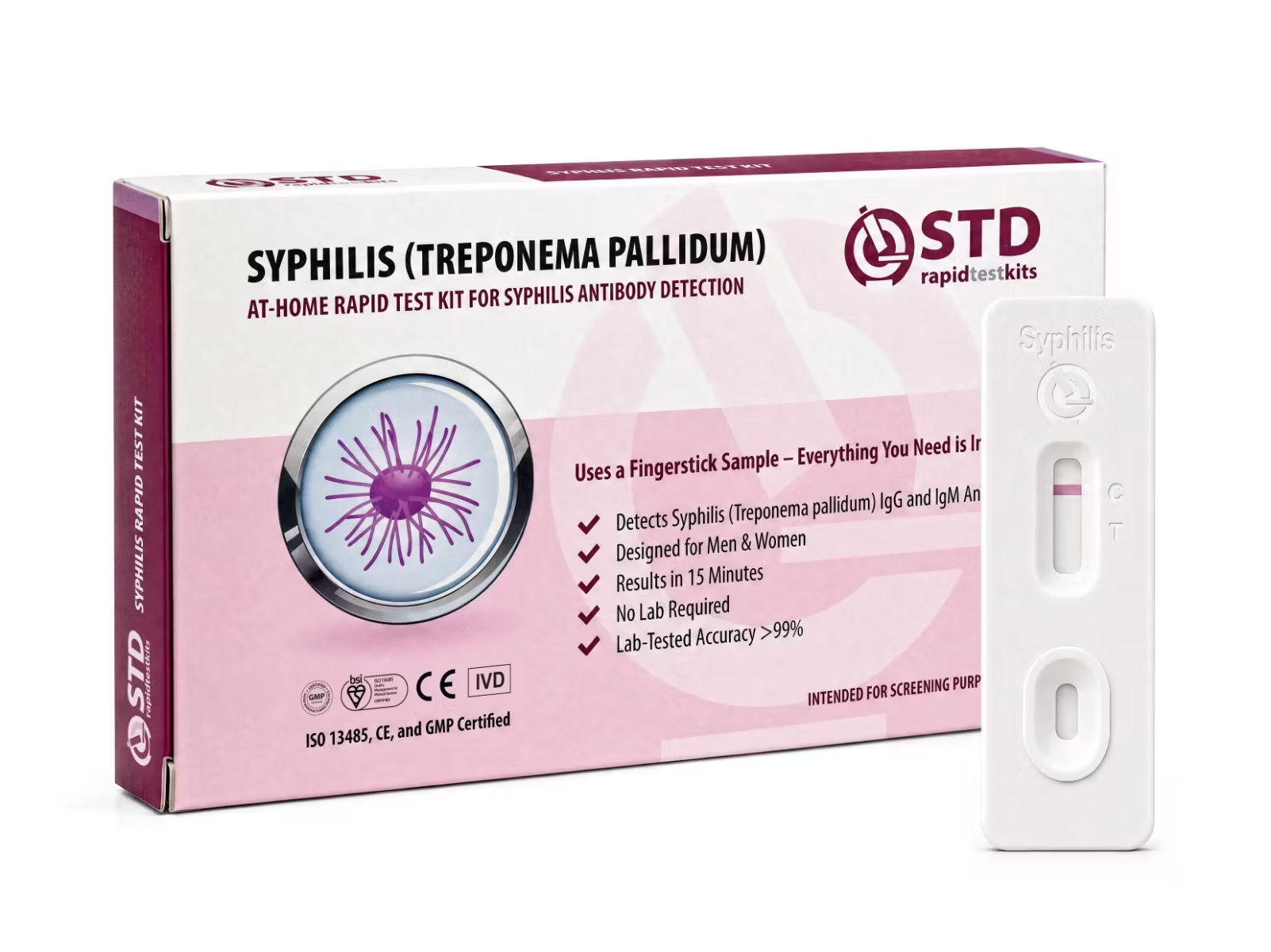
At-home rapid syphilis tests use lateral-flow chemistry on a fingerstick blood sample. They detect the same treponemal antibodies that lab assays detect, just on a strip instead of in an analyzer. Lateral-flow rapid tests are screening tools; a positive result should be confirmed at a clinic or laboratory with a second method, because a small number of conditions (lupus, certain pregnancies, other treponemal infections) can cross-react. CDC notes that "most of the time, healthcare providers will use a blood test to test for syphilis" (CDC syphilis overview).
If your concern is a specific oral lesion that has not healed in three weeks, a clinician should evaluate the sore directly. Darkfield microscopy on a swab from a fresh chancre is one of the most specific tests available for primary syphilis, but it requires the sore to still be active and a clinic with that capability. We do not sell pharyngeal swab tests; that part of the workup belongs in a clinic. A blood antibody test, however, you can do at home once enough time has passed to seroconvert. The same kit covers any-route exposure. If you also had unprotected genital or anal exposure in the same risk event, a multi-STI panel makes more sense than a single-infection kit. We sell a rapid at-home syphilis blood test; the guidance in this section applies regardless of which test you choose.
Treatment: what penicillin does and why it still works
Syphilis is curable. The CDC's sexually transmitted infections treatment guidelines state that "Penicillin G, administered parenterally, is the preferred drug for treating patients in all stages of syphilis" (CDC STI treatment guidelines). The specific regimen depends on the stage:
- Primary, secondary, or early latent syphilis (less than 1 year of infection): one intramuscular injection of long-acting benzathine penicillin G (2.4 million units). Most people are non-contagious within a day or two of the injection.
- Late latent syphilis or syphilis of unknown duration: three injections of benzathine penicillin G, given one week apart.
- Tertiary or neurological syphilis: intravenous penicillin in a hospital setting, given over 10 to 14 days.
Penicillin remains effective because Treponema pallidum has been remarkably stable. Unlike gonorrhea, which has developed widespread antibiotic resistance, syphilis has not developed clinically meaningful penicillin resistance after more than 80 years of use. Doxycycline can substitute for penicillin in non-pregnant adults with severe penicillin allergy. Pregnancy is the high-stakes exception: untreated maternal syphilis causes severe congenital syphilis in the fetus, so the standard practice is penicillin desensitization in the hospital rather than substitution.
Two practical points are worth knowing. First, the Jarisch-Herxheimer reaction (fever, chills, muscle aches in the first 24 hours after the injection) is not an allergic reaction. It is the immune system responding to dying bacteria. It resolves on its own and does not signal treatment failure. Acetaminophen or ibuprofen helps. Second, follow-up testing is essential. Non-treponemal titers (RPR or VDRL) should fall fourfold by 6 to 12 months after treatment for primary or secondary syphilis. A flat or rising titer means treatment failure or reinfection, both of which require re-evaluation.
Over-the-counter remedies, herbs, mouthwashes, and topical applications do not cure syphilis. The oral chancre will heal on its own, the bacterium will continue to circulate, and the infection will progress. Only prescription antibiotics under clinical supervision clear the underlying disease.
For primary or secondary syphilis treated with one penicillin shot, the standard follow-up schedule is non-treponemal titer checks (RPR or VDRL) at 6 and 12 months. A fourfold drop in titer indicates successful treatment. People living with HIV, pregnant patients, and anyone with a high baseline titer may have additional follow-up at 3 months. Avoid sex (oral, vaginal, anal) for 2 weeks after you and any partners have completed treatment, per NHS guidance.
Preventing syphilis when oral sex is part of your life
Most prevention advice for syphilis is the same as for any other bacterial sexually transmitted infection. The combination of barrier use, regular screening, partner communication, and timely treatment of any positive result is what keeps community transmission low.
Routine screening matters because oral chancres are easy to miss, secondary lesions can be subtle, and latent syphilis has no symptoms at all. Pregnancy is the highest-stakes screening scenario; the CDC recommends syphilis testing at the first prenatal visit, again in the third trimester, and at delivery, because untreated maternal syphilis is the leading sexually transmitted cause of preventable stillbirth and infant death.
If you live in a community with rising syphilis rates, your local health department may offer free or low-cost screening. Most large U.S. cities maintain public health clinics that provide rapid syphilis testing without insurance.
Practical prevention checklist
- Use condoms for fellatio and dental dams for cunnilingus and anilingus, knowing that a chancre outside the barrier zone can still transmit.
- Inspect your partner's mouth, lips, and visible skin before contact; skip if you see an active sore or unfamiliar ulcer.
- Test routinely if you have multiple partners, are sexually active with men who have sex with men, are HIV-positive or on PrEP, or have a partner with a recent positive result.
- Avoid all sex for two weeks after you and your partners finish syphilis treatment, then retest at the 6 and 12 month follow-up points.
Frequently asked questions about oral syphilis
- Can I get syphilis from kissing?
- Possible but uncommon in adults. Syphilis transmits through direct contact with an active chancre or moist secondary lesion. If a partner has a visible sore on the lip or in the mouth and you kiss the affected area, transmission can happen. Casual social kissing on a partner without active oral lesions does not transmit syphilis. Most kissing-transmission cases on record involved deep or prolonged contact with a visible primary chancre or a secondary mucous patch.
- How long after exposure can syphilis be detected by a blood test?
- Test at 6 weeks for a high-confidence result. The window technically opens at 3 weeks, but sensitivity is lower that early, so a negative before 3 weeks does not rule out infection. Retest at 12 weeks for a definitive all-clear if you tested negative at 6. Darkfield microscopy of an active chancre can confirm primary syphilis sooner, but only during a clinic visit while the sore is still present.
- Will an at-home blood test detect syphilis from oral sex?
- Yes. Syphilis triggers the same systemic antibody response whether the entry point was the lip, the genitals, or the rectum. A fingerstick blood test detects treponemal antibodies regardless of original exposure route, so the same kit covers oral, vaginal, and anal exposure events. The only caveat is timing: testing must happen at least 3 weeks after exposure and ideally at 6 weeks or later for the most reliable result.
- How is an oral syphilis chancre different from a herpes mouth sore?
- A primary syphilis chancre is typically a single, firm, round, painless ulcer with a raised border that lasts 3 to 6 weeks. A herpes (cold) sore is a cluster of small fluid-filled blisters that hurt or itch, scab over within a week, and recur in roughly the same spot every few weeks or months. Pain plus recurrence points strongly to herpes. Painlessness plus persistence points toward syphilis, with oral cancer as a less common alternative that also needs ruling out.
- Does penicillin clear oral syphilis the same as genital syphilis?
- Yes. The treatment regimen depends on stage, not on chancre location. One intramuscular dose of benzathine penicillin G (2.4 million units) cures primary, secondary, or early latent syphilis at any anatomical site. Late latent or tertiary syphilis requires a longer course. The chancre itself usually heals within 1 to 2 weeks of treatment, although in primary disease it would have healed on its own anyway.
- Can untreated oral syphilis affect organs other than the mouth?
- Yes. Untreated syphilis is a systemic infection that can involve the heart, blood vessels, brain, nerves, eyes, and ears regardless of where the original chancre was. The bacterium enters the bloodstream within hours of inoculation and can cause neurological, cardiovascular, ocular, or auditory complications years later. Treatment at any stage prevents these long-term consequences, which is why testing and prompt antibiotic therapy matter even when the visible sore is already healing.
- I have a sore in my mouth that has not healed in a month. Should I assume syphilis?
- A mouth sore that has not healed in three weeks deserves clinical evaluation regardless of suspected cause. Syphilis is one item on a longer differential that also includes traumatic ulcer, recurrent canker sore, oral cancer, autoimmune ulceration, and fungal infection. A clinician can examine the lesion, take a swab if indicated, and order blood testing. At-home rapid syphilis testing covers the bloodwork side; the lesion examination requires in-person assessment.
If you also had genital or anal exposure, screen for the rest
A single risk event rarely involves only one type of contact. If oral contact was part of an evening that also included unprotected genital or anal sex with a partner you do not have a confirmed clean test result for, the practical move is a multi-infection screen rather than a syphilis-only test. The most common partner pathogens to add are HIV (blood antibody test), chlamydia and gonorrhea (swab tests), hepatitis B and C (blood antibody tests), and herpes type 2 (blood antibody test). A combined panel covers all of these in a single shipment, with sample-collection instructions for each.
The window periods differ slightly. Chlamydia and gonorrhea are detectable as early as a few days after exposure on swab. HIV fourth-generation tests reach reliable results around 45 days. Syphilis settles into a reliable positive by 6 to 12 weeks. Hepatitis B and C antibodies typically appear within 8 to 12 weeks. The 6-week mark is a reasonable single time point for most antibody tests; the 12-week mark is the conservative all-clear for any negative result that still feels uncertain.

- U.S. Centers for Disease Control and Prevention. About Syphilis. Stages, signs and symptoms, transmission routes including oral sex, treatment overview.
- U.S. Centers for Disease Control and Prevention. Sexually Transmitted Infections Treatment Guidelines: Syphilis. Penicillin G as preferred drug for all stages.
- U.S. Centers for Disease Control and Prevention. Sexually Transmitted Infections Annual Statistics. 2024 provisional data: 190,242 reported syphilis cases across all stages, 41,496 primary and secondary cases.
- World Health Organization. Syphilis Fact Sheet. Global incidence: 8 million adults aged 15 to 49 acquired syphilis in 2022. Asymptomatic-presentation guidance.
- National Health Service (UK). Syphilis: Symptoms and Treatment. Patient guidance on oral symptoms, barrier prevention for oral sex, and post-treatment abstinence period.
- U.S. Centers for Disease Control and Prevention. Sexually Transmitted Infections category page. Background context on STI screening recommendations.
