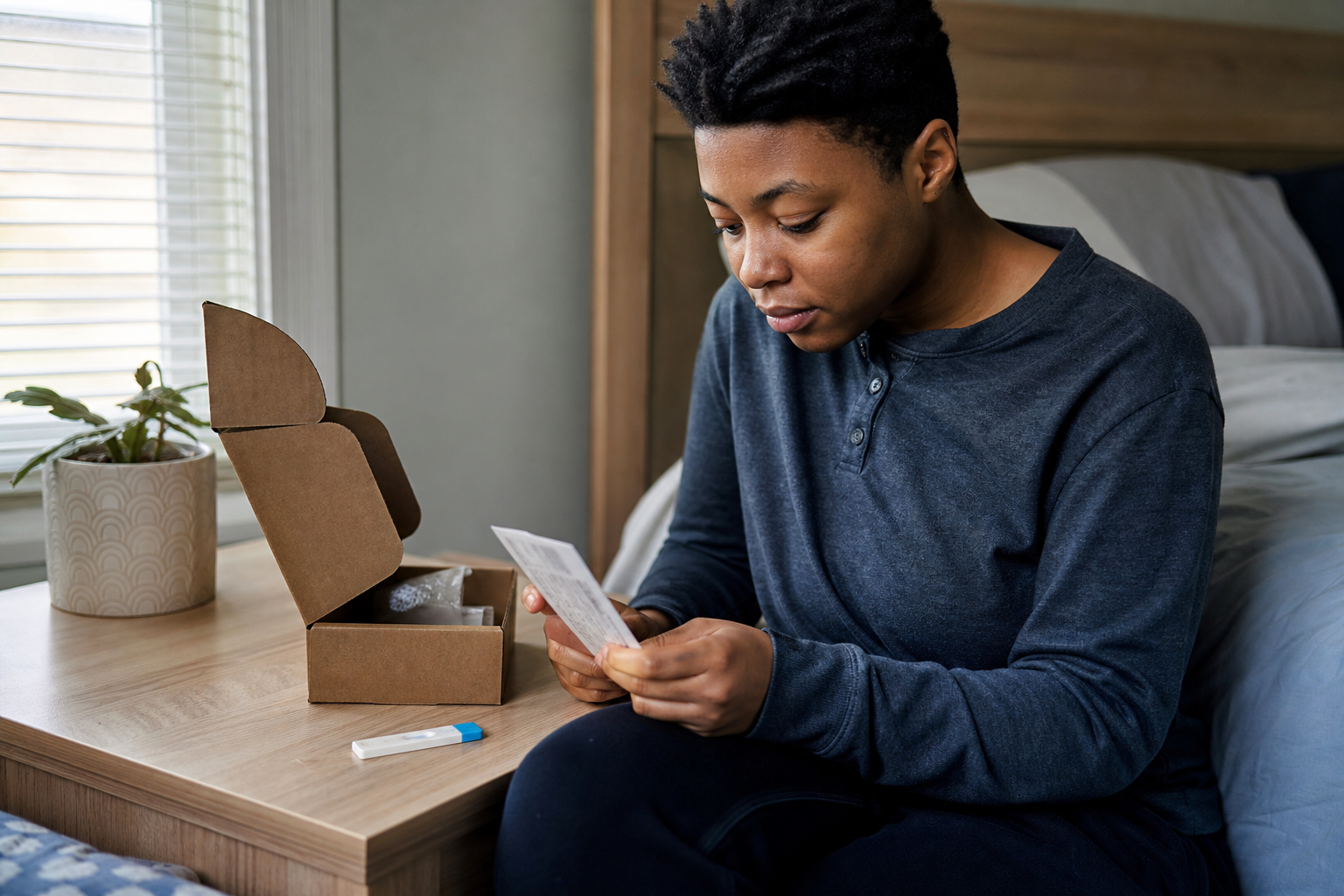
Privacy is no longer a nice-to-have in sexual health. More people are choosing rapid at-home STI tests so they can check their status without a clinic visit, without paperwork, and without anyone else in the loop. This guide explains how the kits actually work, what they reliably cover, and when a clinic visit is still the right call.
Published: August 2025 | Last updated: May 2026 | Editorial review and quality control: Martina N.
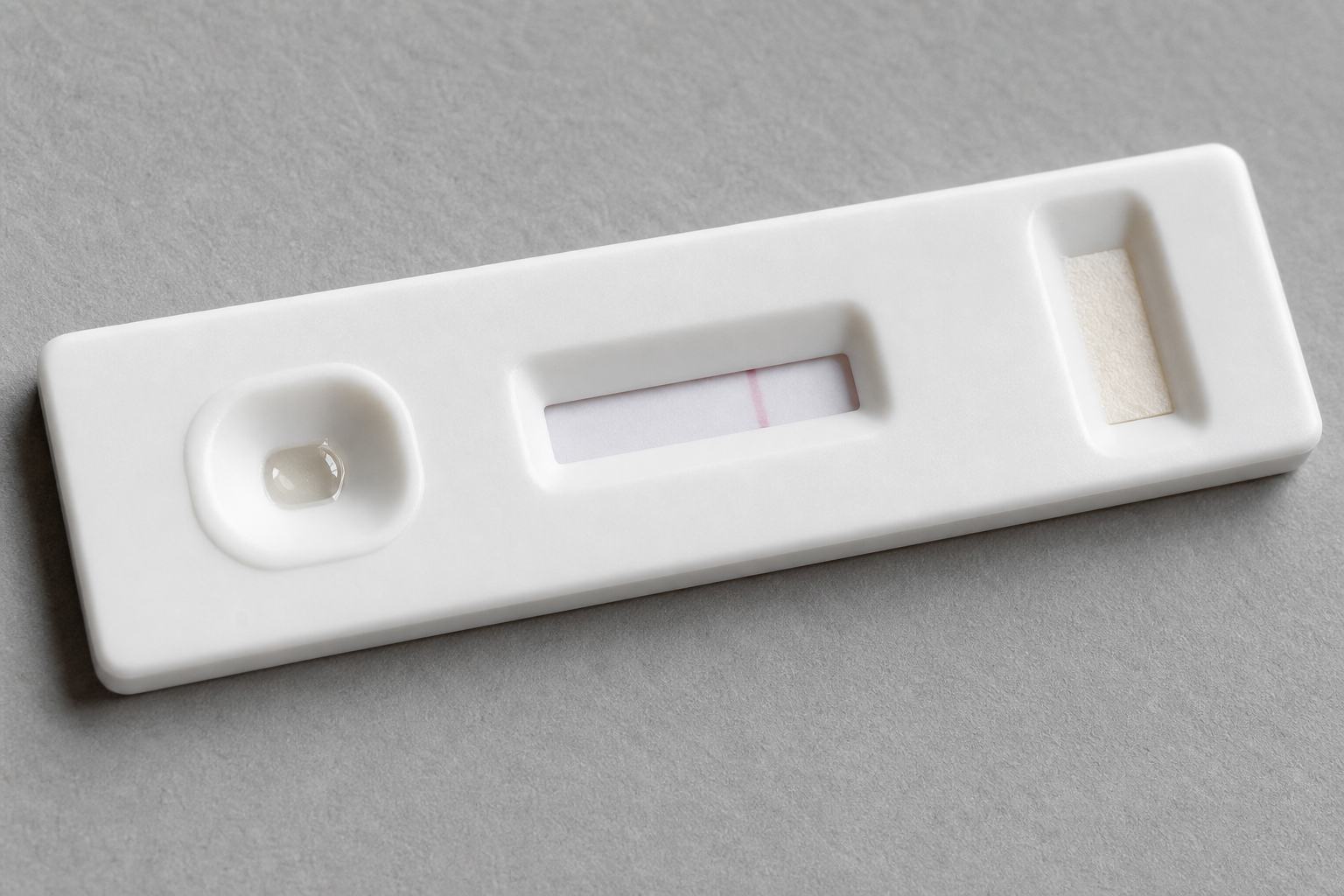
Privacy is the single biggest reason readers tell us they avoid sexual-health clinics, even when they suspect they should test. They worry about who is in the waiting room, what ends up in their insurance file, and whether a routine screening becomes part of a record they cannot fully control. The at-home rapid testing market grew up around that exact gap. Lateral-flow cassettes that once lived only in clinic supply rooms now arrive in plain packaging, return a result in roughly 15 minutes for blood-based tests, and require nothing more than a self-collected swab or a fingerstick drop of blood for the most common screenings.
Demand is not slowing. The World Health Organization estimates that more than 1 million curable sexually transmitted infections are acquired every day globally, and the majority are asymptomatic (WHO STI fact sheet). The math is simple: a lot of people need to test, and most of them would rather do it from a bathroom than a clinic.
Why is private at-home STD testing in higher demand?
Privacy from clinic records, faster turnaround, and no stigma at the front desk. Modern rapid lateral-flow kits return a result in about 15 minutes for blood-based tests (HIV, syphilis, hepatitis, herpes antibodies) and screen the most common bacterial STIs (chlamydia, gonorrhea) from a self-collected swab. Sensitivity is high when the kit is used after the correct window period; a positive at-home result should still be confirmed by a lab NAAT or a clinician.
Key Takeaways
- Privacy is the dominant driver: at-home rapid kits remove the clinic visit, the waiting room, and the paperwork that can show up in insurance or employer records.
- Rapid lateral-flow kits give a screening result in roughly 15 minutes for blood-based tests; positives should always be confirmed by a lab NAAT or clinician follow-up.
stdrapidtestkits.com sells at-home rapid lateral-flow STI tests. We recommend the kit that fits the reader's specific concern, not the most expensive one. We do not sell pharyngeal (throat), rectal, or urine-based tests; for those sample types a clinic visit is the right answer.
Why privacy keeps driving the shift
People do not avoid testing because they think it is unimportant. They avoid it because the path to a clinic carries social cost. Surveys repeatedly find the same handful of barriers, and at-home testing chips away at all of them.
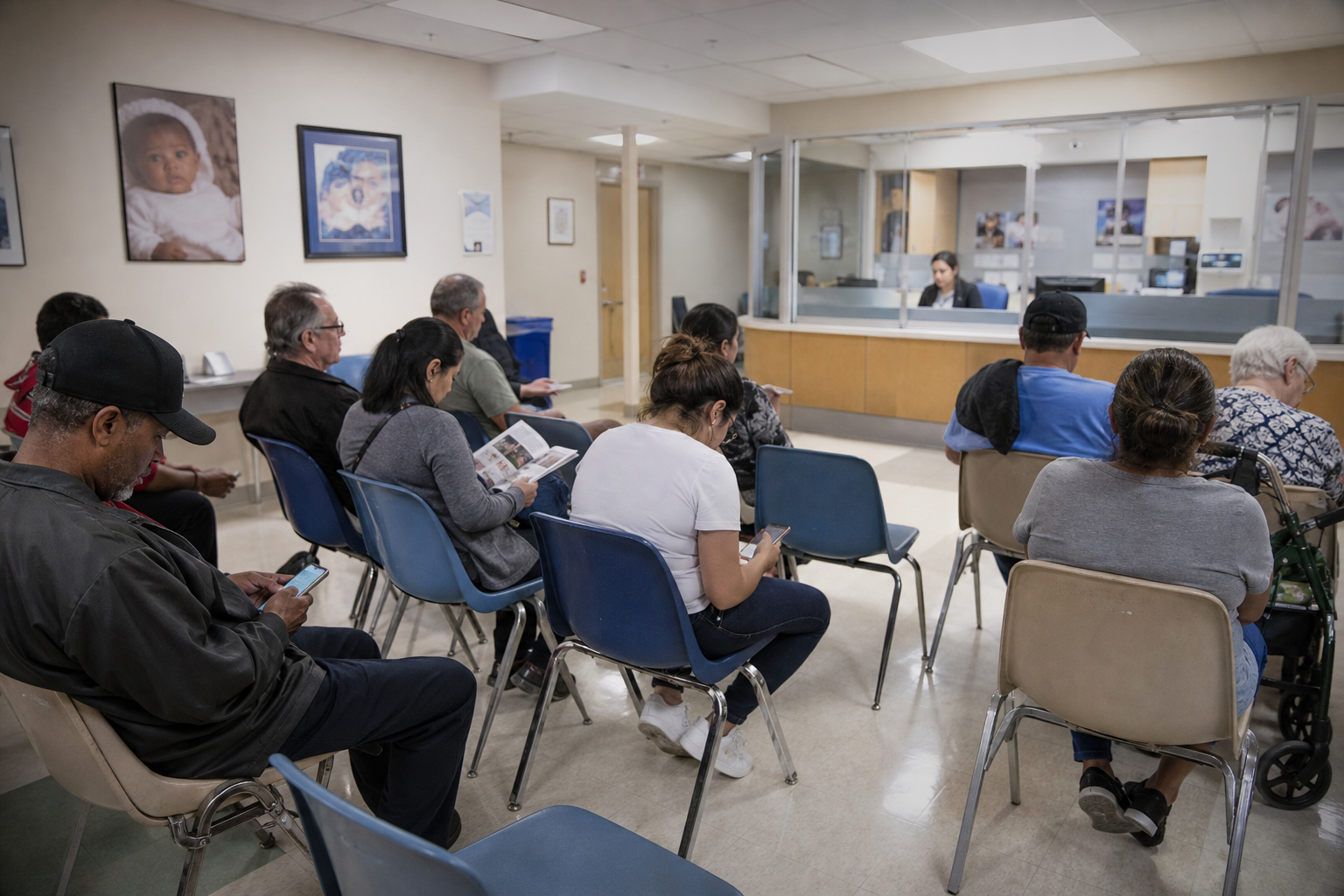
Embarrassment at the front desk. STI testing is one of the few medical errands that asks a person to stand in a public waiting room and signal exactly what they are there for. For some readers, that one moment is enough to put off testing for months.
Worry about what ends up in records. Even when clinics protect privacy under HIPAA, an STI screening can still surface in insurance claims, on an explanation-of-benefits letter mailed home, or in employer-linked health plans. At-home kits paid for out of pocket leave no such trail.
Access and cost. Many counties have no walk-in sexual-health clinic. For uninsured patients, a single clinic STI panel can run into hundreds of dollars before any treatment. A rapid home kit is typically a fraction of that, and it ships to the door.
Time-to-result anxiety. Lab-processed clinic tests can take days. For someone who already feels anxious about a recent exposure, a 15-minute rapid result is often the difference between testing and not testing at all.
None of this means clinics are bad. It means the at-home kit is the on-ramp that gets people testing in the first place.
Four drivers show up over and over in the literature: the embarrassment of the waiting room, worry about records and insurance trails, real access and cost barriers, and the anxiety of waiting days for a lab result. Removing any one of these makes a person more likely to test; removing all four is what at-home rapid kits actually do.
What at-home rapid tests can and cannot do
This is where most consumer guides get sloppy, and it matters because the technology choices behind the kit determine what a result actually means. Our kits, and most rapid at-home kits on the market, are lateral-flow immunoassays. They are not NAAT (nucleic acid amplification tests) and they are not PCR. Lab clinics use NAAT/PCR as a confirmatory standard because those technologies amplify tiny amounts of DNA or RNA from the pathogen and can detect infection earlier and at lower viral loads. Rapid lateral-flow kits use antibody binding or antigen capture on a strip, which is why a result appears in minutes.
The two technologies are complementary, not interchangeable. Here is a clean way to think about it.
| Test goal | At-home rapid lateral-flow | Clinic NAAT or PCR |
|---|---|---|
| Speed | About 15 minutes for blood-based tests; a few days for swabs sent to a lab | Hours to days, depending on the lab |
| Privacy | Done at home, paid out of pocket, no clinic record | On medical record; may surface in insurance EOB |
| Best use | Routine screening, peace-of-mind testing, post-window confirmation | Diagnostic confirmation after a positive screen, asymptomatic risk in early window |
| Sensitivity in early window | Lower than NAAT for very recent exposure | Highest available; can detect infection earlier |
| Cost without insurance | Lower; single-test or combo kits | Often higher; lab fees plus clinic visit |
Sample types: swab versus fingerstick blood
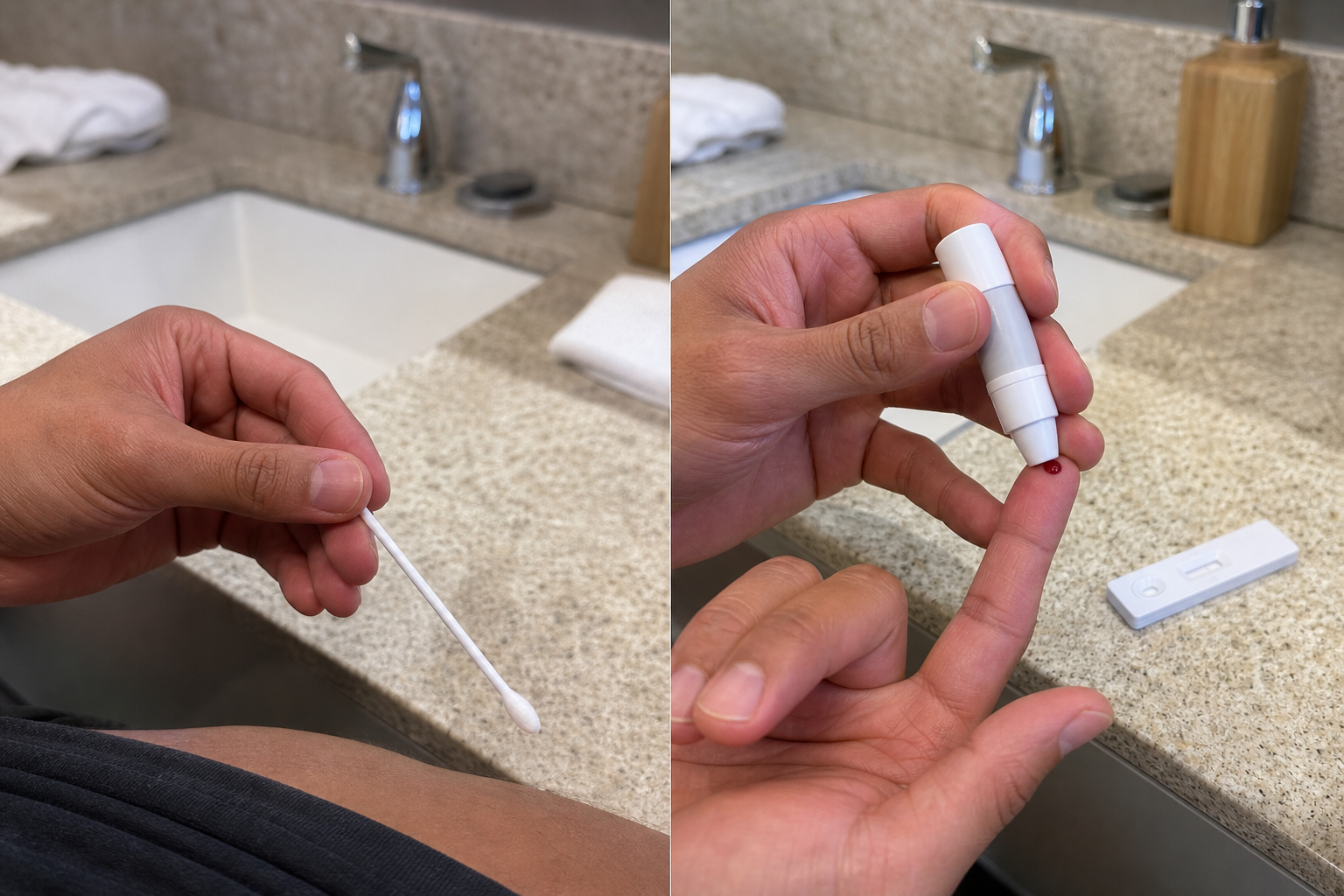
The kit you need depends on the infection you are testing for. The split is straightforward once you see it laid out, and it is also where the previous version of this article was inaccurate. Our at-home kits do not use urine samples, throat swabs, or rectal swabs.
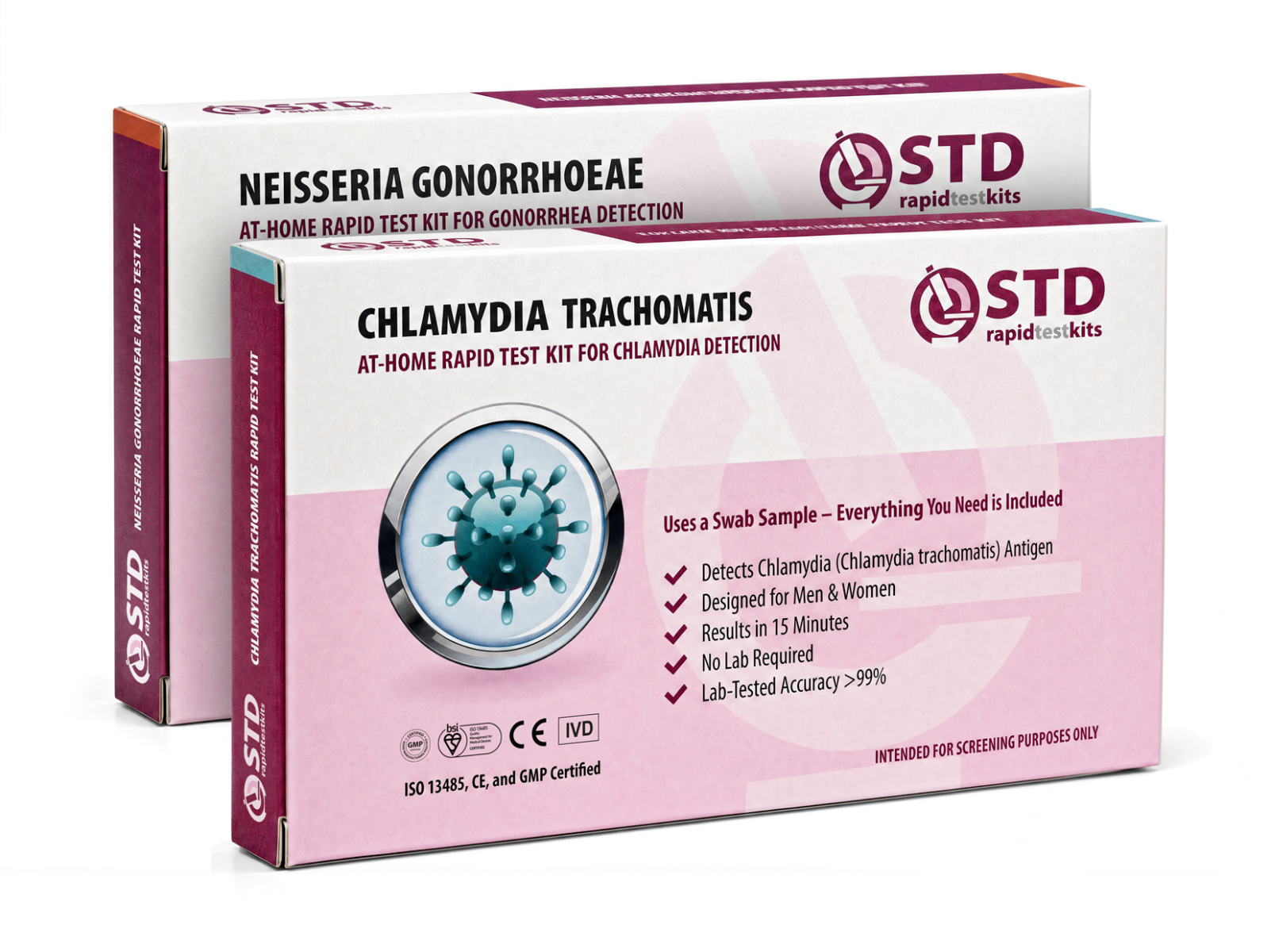
Self-collected genital swabs are used for the bacterial STIs that live on mucosal surfaces: chlamydia and gonorrhea (any-gender), and trichomoniasis and HPV (validated for vaginal self-swab; we do not offer a male-compatible trichomoniasis or HPV home test). The user collects a sample with a small swab and either reads the cassette directly or returns the sample.
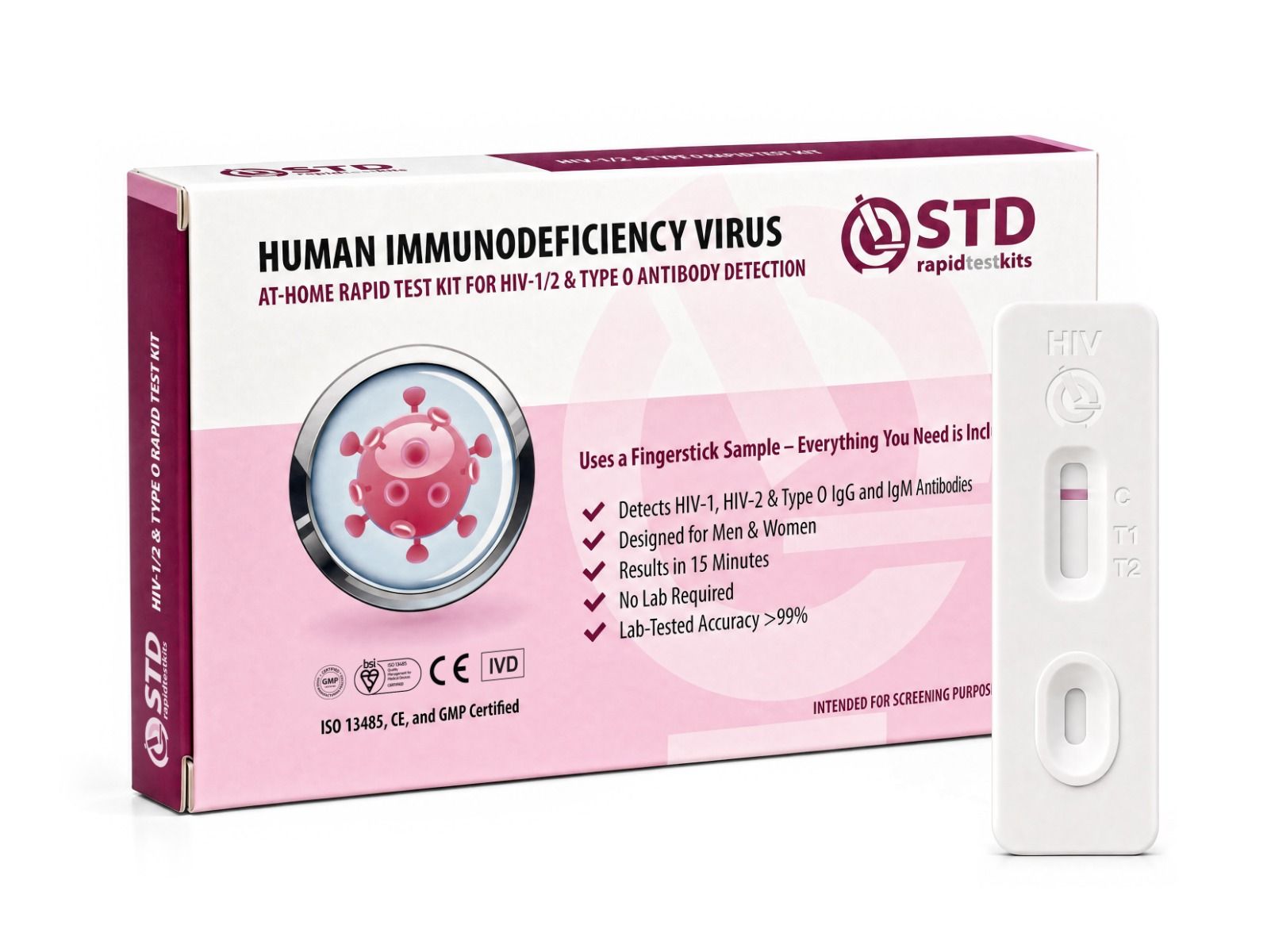
Fingerstick blood is used for tests that look for systemic immune response or viral antigens: HIV, syphilis, hepatitis B, hepatitis C, and herpes antibodies (HSV-1, HSV-2). A small lancet pricks the fingertip; a few drops of blood go onto the cassette; the strip develops in roughly 15 minutes.
One important consequence: a herpes blood antibody test cannot tell you whether a current sore on your lip or genitals is HSV. It tells you whether you have ever seroconverted to the virus. Lesion identification needs a clinician swab and PCR. Same idea for HPV: the home swab screens for high-risk HPV strains in cervical cells, but cervical cancer screening still requires a clinician for follow-up colposcopy and Pap if an HPV strain is detected.
Window periods: when each test is meaningful
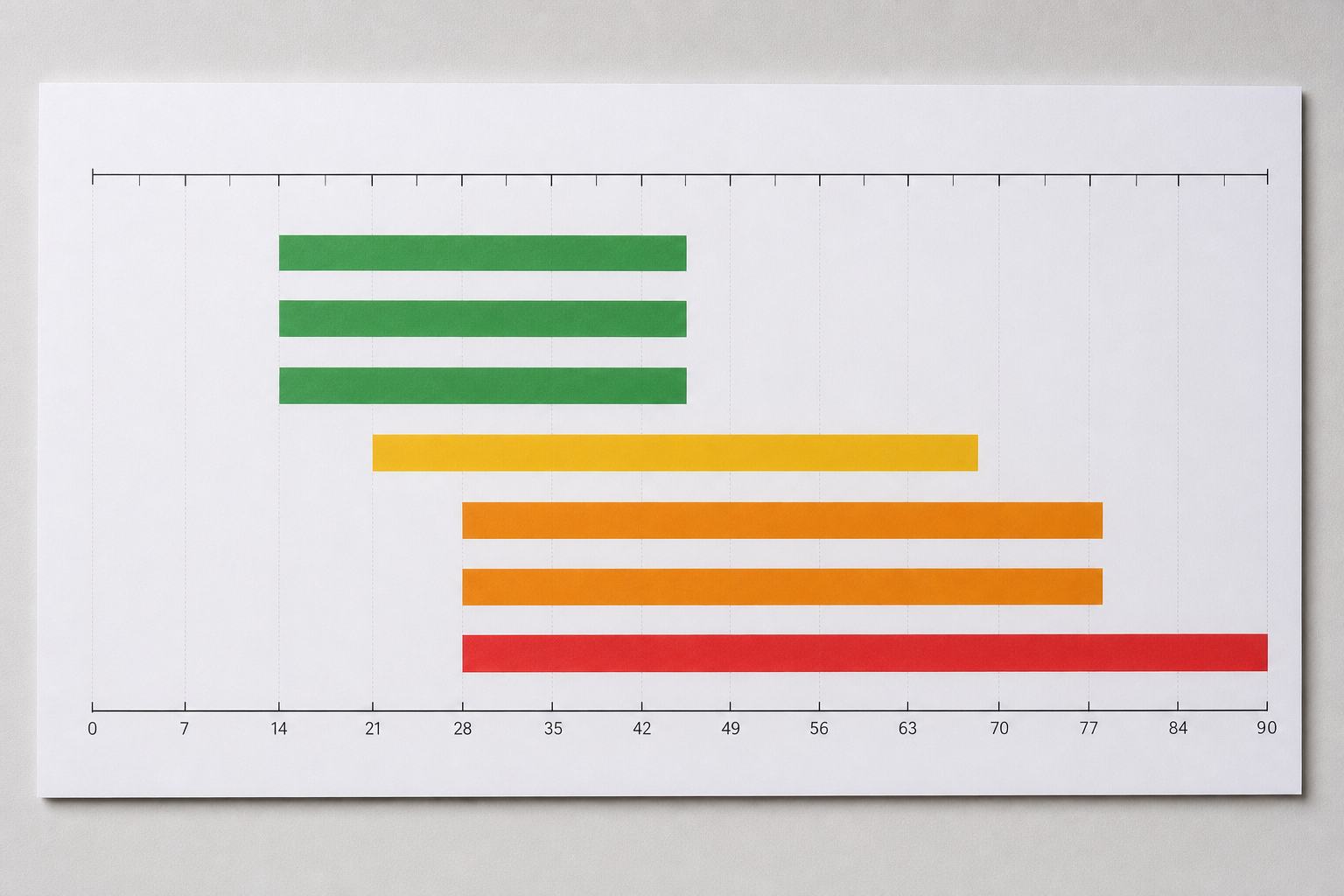
The single biggest reason at-home tests return a false negative is being used too early. Every infection has a window period: the time between exposure and the moment the test can reliably detect the immune response or pathogen. Test before the window closes and a real infection can read negative.
The figures below are drawn from CDC HIV testing guidance and standard infectious-disease windows. Window periods vary by individual immune response and by the specific assay; the ranges below are conservative for at-home rapid tests.
| Infection | Earliest reliable rapid test | Recommended retest |
|---|---|---|
| Chlamydia (swab) | About 14 days post-exposure | 90 days if exposure risk continues |
| Gonorrhea (swab) | About 14 days post-exposure | 90 days if exposure risk continues |
| HIV (rapid antibody) | 23 to 90 days post-exposure | 90 days for a definitive result |
| Syphilis (rapid antibody) | About 3 to 12 weeks post-exposure | 12 weeks for full antibody response |
| HSV-2 (rapid antibody) | 6 to 12 weeks post-exposure | Up to 16 weeks for full seroconversion |
| Hepatitis B (HBsAg) | About 4 to 10 weeks post-exposure | 6 months for the complete picture |
| Hepatitis C (antibody) | About 8 to 11 weeks post-exposure | 6 months for full antibody response |
Picking the kit that matches your concern
The right kit depends on what kind of exposure or symptom is driving the test. A person with a specific bacterial concern (recent unprotected vaginal or anal sex with a new partner, mild dysuria) is asking a different question than a person doing routine annual screening of a long-term partner. The kit should match the question.
Symptom-led testing. If symptoms point at one infection (a swollen testicle, abnormal discharge, a single ulcer), test for that infection first with a single-target kit. The result comes faster and is easier to interpret.
Recent-exposure testing. If a specific encounter is the reason for testing, time your kit to the window period in the table above. A bacterial swab kit at day 14 is meaningful; a rapid HIV test at day 7 is not.
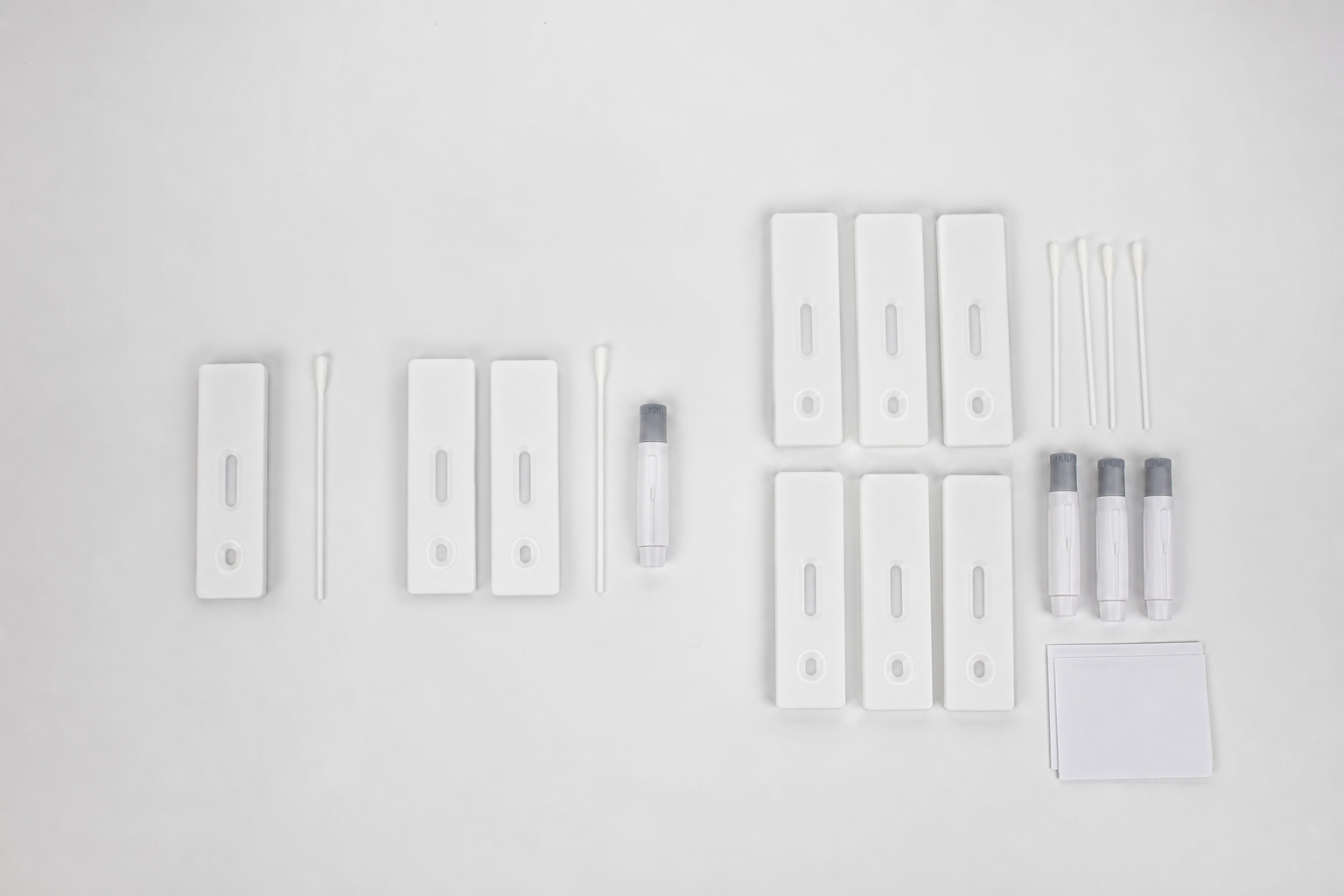
Routine screening. If there is no specific concern but it has been a year and the reader is sexually active, a multi-infection combo kit is the most efficient choice. The 6-in-1 and 7-in-1 panels combine a swab and a fingerstick into one shipment.
Female-anatomy-only kits. Our trichomoniasis and HPV home swabs are validated for vaginal self-collection only. Male readers needing a trich or HPV check should see a clinic; we do not currently offer a male-compatible home kit for either.
Reading a positive result: next steps that matter
A positive at-home screening result is not a final diagnosis. Lateral-flow tests can produce false positives, particularly for low-prevalence infections in the general population, because the math of any screening test means a small false-positive rate produces a meaningful number of incorrect positives when the true rate of infection in the tested group is also small. The correct response to a positive at-home test is the same regardless of infection: get a confirmatory test from a clinician.
What that looks like in practice:
- HIV positive at home: contact a clinic or your primary care provider that day. Confirmation is done with a lab antigen-antibody test plus a Western blot or HIV-1/2 differentiation assay. Treatment can start the same week. Modern HIV care turns the diagnosis into a manageable chronic condition; early treatment also reduces transmission risk to undetectable.
- Bacterial STI (chlamydia, gonorrhea, syphilis) positive at home: a clinic NAAT confirms; antibiotics treat. Most cases are cured with a short course. Partner notification matters because reinfection from an untreated partner is the most common reason a treated infection returns.
- Hepatitis B or C positive at home: a clinician orders viral load and liver function tests. Both infections have effective treatments now; hepatitis C is curable in most cases with direct-acting antivirals.
What at-home tests do not cover
There are real concerns where a home kit is the wrong tool, and the reader is better served by a clinic referral than by a sales pitch.
- Pharyngeal (throat) and rectal STIs. Oral and anal sex can transmit chlamydia and gonorrhea, but these infections require a swab of the throat or rectum that is processed by a lab NAAT. We do not sell pharyngeal or rectal swab kits. If your exposure was oral or anal and you want a complete check, a clinic appointment is the right next step.
- Active herpes lesion identification. Our HSV tests measure blood antibodies. They cannot identify whether a current sore is HSV, and they cannot distinguish a brand-new infection from a years-old asymptomatic one. A clinician swab plus PCR of an active lesion is the only way to identify the virus and the strain.
- Pregnancy-related screening. Pregnancy adds infections that need clinician-level testing (group B strep, congenital syphilis screening with confirmatory titers). Routine prenatal STI screening should run through a prenatal provider.
- Treatment. A home kit screens; it does not treat. Antibiotics for bacterial STIs and antivirals for HIV require a prescription. Plan for a clinician contact alongside any positive result.
The stigma problem and why it still hurts public health
The reason at-home testing keeps growing has less to do with technology and more to do with how STI care is delivered. Stigma raises the cost of clinic-based screening: emotional cost in the waiting room, social cost in disclosure, financial cost in records that may surface later. The aggregate effect is that infections go undetected for longer, which means more transmission and more downstream complications.
The CDC's most recent provisional surveillance numbers point to declines in chlamydia, gonorrhea, and primary and secondary syphilis case counts in 2024 compared with 2023, while congenital syphilis continued to rise (CDC STI surveillance, annual provisional data). Even with those declines, the absolute case counts remain in the millions, and screening that meets people where they actually live, including at home, is part of the response.
This is also why the 80 percent of readers who land on this page worried about a recent exposure and turn out to be fine still benefit. The reassurance of a negative test, taken at the right window, ends the cycle of low-grade anxiety that otherwise causes people to delay future testing.
More than 1 million sexually transmitted infections are acquired every day worldwide, the majority of which are asymptomatic.
What the next few years of at-home testing look like
The product category is improving in several practical ways at once, and none of them are speculative; all are already in pilot or recently launched in adjacent markets.
Multi-infection consolidation. Single-cassette panels that test for several infections at once are becoming more common. The convenience matters less than the public-health effect: a person testing for one infection often has risk for several, and a combo kit catches what a single-target kit would miss.
Faster confirmatory pathways. Some at-home services now bundle a clinician phone consult with a positive result, which closes the gap between screen and treatment. This is closer to how at-home pregnancy testing matured: from a strip in a box to an integrated service that includes the next step.
Better packaging and reading aids. Smartphone apps that read a lateral-flow strip with the phone camera are shipping in HIV self-test pilot programs. They reduce reader error and provide a digital record the user can choose to share with a clinician or keep private. Rapid lateral-flow kits will continue to be screening tools rather than replacements for lab NAAT, with the home kit's strength being access and the lab's strength being analytical sensitivity.
If you are doing routine annual screening rather than chasing a specific exposure, the multi-infection combo is the most efficient choice.
FAQs
- How accurate are at-home rapid STI tests compared to clinic tests?
- Each product page lists the kit's specific sensitivity and specificity figures, which generally fall in the 95-99% sensitivity range and above 99% specificity when the kit is used after the correct window period. Clinic NAAT remains more sensitive in the early window of an infection, which is why a positive at-home result should be confirmed at a clinic and a recent-exposure negative may need a retest at the full window date. Check the data sheet on the individual kit page for the exact figures, since they vary by infection and assay.
- Do I still need a clinic if my home test is positive?
- Yes. Treat a positive at-home result as a screen, not a diagnosis. A clinician confirms with a lab test and starts treatment if needed. Do not retest the same cassette hoping for a different result and do not self-treat with leftover medication.
- How quickly after exposure can I test?
- The earliest meaningful test is roughly two weeks for chlamydia and gonorrhea swabs. HIV antibodies typically need at least 23 days, and 90 days for a confidently negative result. Herpes and syphilis antibodies can take up to 12 weeks. If you tested before the relevant window closed and got a negative, retest at the full window date before acting on the result.
- Are at-home test results legally confidential?
- An at-home kit purchased and used privately leaves no medical record. The result is yours alone. The moment you bring the result to a clinician for confirmation or treatment, that becomes a medical-record event under standard HIPAA rules. Many readers value the option to keep a negative result entirely off the record.
- Do these kits cover throat or rectal infections?
- No. Our at-home kits are validated for self-collected genital swabs and fingerstick blood. Pharyngeal (throat) and rectal STI testing requires sample collection at a clinic and a lab NAAT. If your exposure was oral or anal and you want a complete check, a clinic visit is the right next step.
- Can men use the same kits as women?
- Most kits are any-gender: chlamydia, gonorrhea, HIV, syphilis, hepatitis B, hepatitis C, and herpes tests are validated for both. Two are female-only: our trichomoniasis and HPV swabs are validated for vaginal self-collection. We do not currently offer a male-compatible home kit for either of those infections.
- Do I need a prescription to buy a kit?
- No. The kits sold here are over-the-counter at-home rapid tests. You order online, the kit ships in plain packaging, you self-collect, you read the result. No prescription, no clinician visit, no insurance involvement required.
- What happens if my test is invalid or unclear?
- An invalid lateral-flow result usually means the control line did not appear, which points to a sample-collection or buffer issue rather than a real positive or negative. Repeat with a fresh kit, following the instructions step by step. If a second kit is also invalid, go to a clinic; do not assume the result one way or the other.
- U.S. Centers for Disease Control and Prevention. Annual provisional STI surveillance data, including 2024 case-count trends for chlamydia, gonorrhea, and syphilis.
- World Health Organization. Sexually transmitted infections fact sheet, including the 1-million-per-day global incidence figure and asymptomatic-rate estimates.
- U.S. Centers for Disease Control and Prevention. HIV testing guidance, including window periods for antibody and antigen-antibody assays and self-test guidance.
- UK National Health Service. Patient-facing guidance on STI symptoms, testing options, and clinic versus home-test decision points.
- U.S. Food and Drug Administration. Home-use in-vitro diagnostic tests are regulated as medical devices under FDA oversight.
