How Dating Apps Affect STI Risk: What the Data Shows
Public-health researchers have spent a decade trying to figure out what dating apps mean for STI rates. Apps did not invent new infection routes; what they changed is the speed and volume of partner connections, plus the social context in which testing and disclosure conversations get had. Here is what the CDC data shows, what cohort research can and cannot say about app users, and a practical playbook for staying healthy if dating apps are part of your social life.




- Total reported cases of chlamydia, gonorrhea, and syphilis fell roughly 9% from 2023 to 2024 according to CDC surveillance data, with each of the three infections posting year-over-year declines simultaneously.
- Frequent app users with multiple partners benefit from STI testing every 3 to 6 months per CDC screening guidance, the same cadence recommended for anyone with multiple recent partners regardless of how they meet.
Published: November 2025 | Last updated: April 2026 | Editorial review and quality control: Martina N.
Dating apps reshaped how people meet sexual partners over the past decade, and public-health researchers have spent that same decade trying to figure out what the shift means for STI rates. Apps did not invent new infection routes; what they changed is the speed and volume of partner connections, plus the social context in which testing and disclosure conversations get had (or skipped). They are not single-handedly driving the surge in chlamydia, gonorrhea, and syphilis cases that the CDC tracked through the late 2010s and into the early 2020s, and they are not innocent bystanders either. This piece walks through what the research shows, separates the real risks from the exaggerated ones, and gives you a practical framework for staying healthy if dating apps are part of your social life.
Do dating apps increase your STI risk?
Apps themselves do not transmit infections. The behavior pattern they sometimes encourage (more partners, faster meetings, fewer condom conversations) is what raises exposure odds. The CDC's 2024 STI surveillance data shows total cases of chlamydia, gonorrhea, and syphilis falling about 9% year over year, while app usage has not collapsed in the same period, which weakens the simple "apps equal more STIs" story. What matters most: regular testing on a 3-to-6-month cadence if you have multiple partners, consistent condom use, and direct conversations about status before sex.
Key Takeaways
- Total reported cases of chlamydia, gonorrhea, and syphilis fell roughly 9% from 2023 to 2024 according to CDC surveillance data, with each of the three infections posting year-over-year declines simultaneously.
- Frequent app users with multiple partners benefit from STI testing every 3 to 6 months per CDC screening guidance, the same cadence recommended for anyone with multiple recent partners regardless of how they meet.
How dating apps changed the math of sexual networking
When researchers talk about the link between apps and STIs, the underlying mechanism they care about is network density. Sexually transmitted infections spread through partner networks, and the speed at which an infection moves through a population depends on how connected the network is and how quickly partners change.
Apps changed three things about that network. First, they expanded the candidate pool by removing geographic and social barriers; a Tinder user in a mid-sized city sees thousands of potential partners that pre-app dating could not have surfaced. Second, they shortened the time from first contact to first meeting; geo-matching apps like Grindr and Tinder are explicitly built for fast, local connections. Third, they normalized casual hookups as a category of dating activity, which previously required more in-person social work to arrange.
None of these changes is dangerous on its own. They become risk factors only when paired with specific behaviors: meeting partners faster than you can have a status conversation, having more concurrent partners than you can keep testing aligned with, or skipping condoms because the app context felt low-stakes.
Three network shifts apps introduced
- Bigger candidate pool: a single user can see thousands of potential partners that pre-app dating never surfaced.
- Faster match-to-meeting: geo-based apps compress the time from first contact to first encounter, sometimes to hours.
- Normalized casual hookups: a dating mode that previously required in-person social work is now a swipe and a chat away.
What the research shows about app users and STI risk
The cleanest research on this question comes from cohort studies that compare app users to non-app users while controlling for other risk factors. A widely cited 2020 cohort study published in BMJ Open reported that dating-app users were more likely to have multiple recent partners and to engage in inconsistent condom use compared with peers who met partners offline. That study was careful to note that people who choose to use apps may already have been more sexually active than people who do not, which makes it hard to attribute elevated risk behaviors to the platform itself rather than to who self-selects into using it.
CDC surveillance data tells a parallel story. Reported cases of chlamydia, gonorrhea, and syphilis rose roughly through the 2010s and into the early 2020s, peaking around 2022. The 2024 surveillance report shows the trend reversed: the combined total fell about 9% year over year, with chlamydia down 8%, gonorrhea down 10%, and primary and secondary syphilis down 22% from 2023. App usage did not collapse during that same window, which complicates any clean "more apps equals more STIs" narrative.
What the data supports is more modest. App use correlates with risk patterns that, in turn, raise STI exposure odds. The platform is a context, not the underlying cause.
Provisional 2024 figures reported by the CDC: about 1.5 million chlamydia cases (down 8% from 2023), 543,409 gonorrhea cases (down 10%), and a 22% drop in primary and secondary syphilis. Congenital syphilis is the one outlier, rising for the 12th consecutive year. App-era STI rates are coming down, not up, in absolute terms, which is consistent with broader expansion of testing and treatment access.
Which behaviors drive STI risk
Public-health research consistently identifies four behaviors that move the dial on STI exposure regardless of how partners are met. Number of recent partners is the strongest single predictor; each additional partner in the past 12 months raises exposure odds in a roughly linear way for the bacterial STIs (chlamydia, gonorrhea, syphilis) and somewhat less so for the viral ones (HIV, HSV-2, HPV). Condom consistency is the next biggest lever; the CDC notes that condoms used correctly and consistently substantially reduce transmission risk for HIV and the bacterial STIs, and partially for herpes and HPV.
Testing frequency matters because most STIs are asymptomatic for long stretches, so people transmit while undiagnosed. The WHO estimates that more than a million curable STIs are acquired worldwide every day, the vast majority of them silently (WHO STI fact sheet). Treatment delays following a positive test allow continued transmission to subsequent partners, which is why prompt diagnosis and treatment are public-health priorities, not just personal ones.
HIV deserves a sentence of context here because it is the fear most app daters bring to the conversation. Per-act HIV transmission risk in receptive vaginal intercourse without a condom is estimated at about 0.08% (roughly 1 in 1,250) per CDC modelling, with insertive vaginal exposure lower and receptive anal intercourse the highest single-act route at around 1.4%. PEP (post-exposure prophylaxis) needs to start within 72 hours of a possible exposure to be effective and reduces transmission substantially when taken as prescribed. Modern fourth-generation antigen-antibody HIV tests typically detect infection between 18 and 45 days after exposure, with the exact window depending on the specific assay.
App use can amplify any of these levers. Faster matching can mean more partners. The casual framing of some apps can mean fewer condom conversations. Reliance on profile self-disclosure of testing status can mean fewer formal tests.
The reassurance most app users do not hear
Most people who use dating apps will not contract an STI. That is worth stating plainly because the public-health framing of risk can read as if every app user is one swipe away from a diagnosis. National surveillance data puts the annual incidence of new chlamydia and gonorrhea cases combined at roughly 0.6% of the U.S. population (CDC 2024 surveillance). HIV incidence is far lower in absolute terms, and primary or secondary syphilis is rarer still in the general population.
The risk concentrates among specific behavior patterns and specific subpopulations. If you use apps to find a small number of partners over time, communicate openly about testing, and use condoms with new partners, your statistical exposure picture looks roughly like that of any sexually active adult dating offline. The reason public-health agencies still recommend the screening cadence below is not because app dating is uniquely dangerous; it is because asymptomatic STIs spread silently, and a routine test catches them early enough to treat before complications or onward transmission.
Combined annual incidence of new chlamydia and gonorrhea cases sits at roughly 0.6% of the U.S. population per CDC 2024 surveillance. HIV runs far lower in absolute terms, and primary or secondary syphilis is rarer still in the general population. Most app users, dating with reasonable care, will not have an STI diagnosis in any given year.
A practical safer-dating playbook
If dating apps are part of your social life, the steps that materially reduce your STI exposure are the same ones public-health agencies have recommended for decades, applied with a little more discipline because the partner pace can run higher. The checklist below is the version frequent app daters tend to land on after a few testing cycles.
Your safer-dating checklist
- Have the testing conversation before sex, not after. "When was your last full STI panel and what did it cover?" is a normal grown-up question, and most app daters appreciate the directness.
- Use condoms with new partners every time, until you have aligned testing histories. The CDC continues to list consistent condom use as one of the most effective single interventions against HIV and the bacterial STIs.
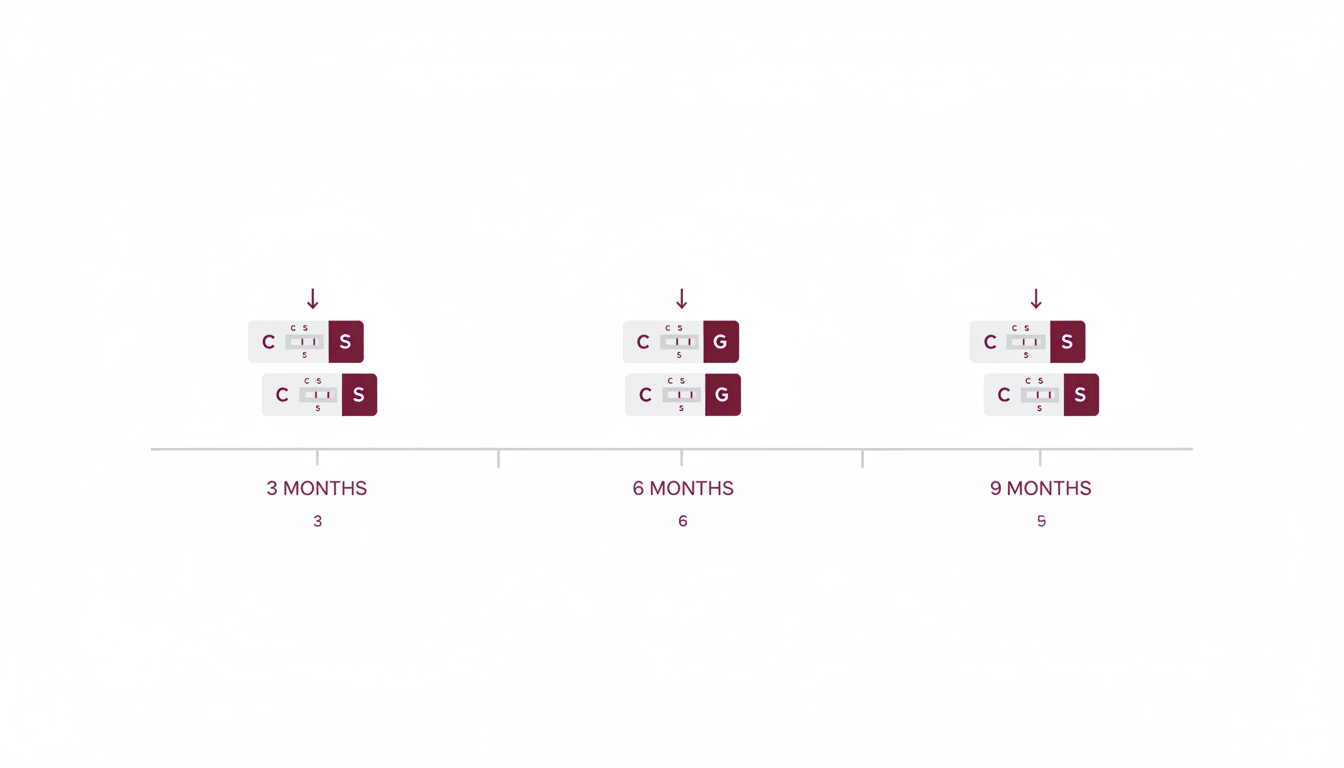
- Test on a 3-to-6-month cadence if you have multiple recent partners. Stretch to 12 months if your partner count is low and stable.
- Get treated promptly if anything tests positive. Bacterial STIs (chlamydia, gonorrhea, syphilis) are typically curable with a short antibiotic course; treatment delay is what allows continued transmission and complications.
- Tell recent partners if you test positive. Local health departments offer anonymous notification when a direct conversation feels impossible, and following through is what breaks transmission chains.
Testing cadence for active app users
The CDC's screening recommendations for adults with multiple recent or new partners are concrete. For sexually active women under 25, annual chlamydia and gonorrhea screening is the baseline; women 25 and older with new or multiple partners should also get annual screening. For men who have sex with men, the cadence tightens to every 3 to 6 months for chlamydia, gonorrhea, syphilis, and HIV when partners are multiple or anonymous. Heterosexual men currently fall outside routine CDC chlamydia and gonorrhea screening guidance, though many clinicians recommend annual testing for men with multiple partners regardless.
HIV testing applies to everyone aged 13 to 64 at least once in a lifetime, with annual testing for anyone with multiple partners since the last test or who has been diagnosed with another STI (CDC HIV testing recommendations). Hepatitis C screening is recommended at least once for all adults 18 and older, regardless of partner count.
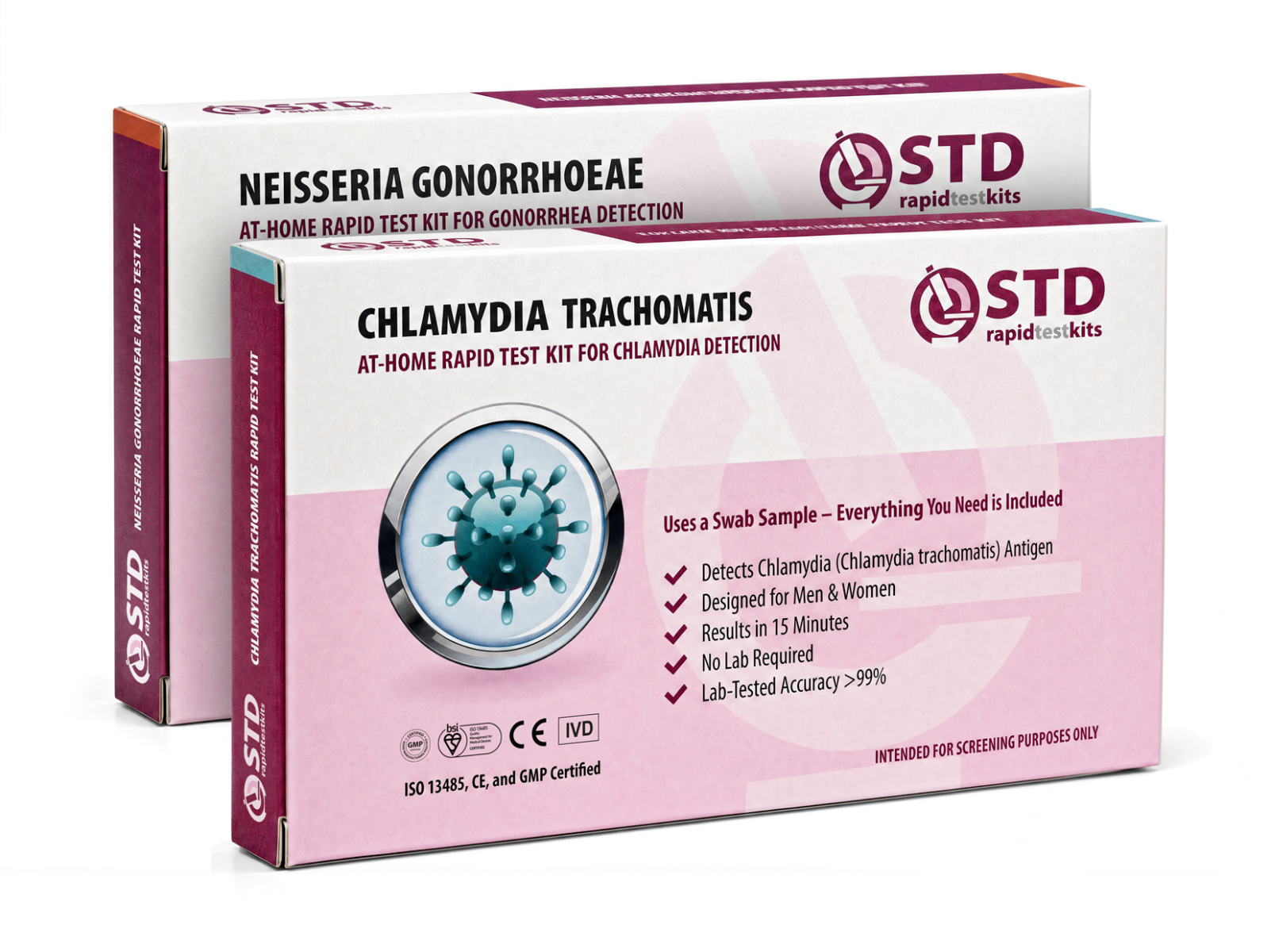
What to test for at each cycle if you are app-active depends on the type of partner contact. A standard four-panel covers chlamydia, gonorrhea, syphilis, and HIV. Adding hepatitis B, hepatitis C, herpes (HSV-2 antibodies), and trichomoniasis or HPV (for women) gives a broader screen that aligns with what at-home multi-STI kits cover.
Anyone who is sexually active can get an STI. Testing is the only way to know for sure if you have one. Many STIs do not have symptoms, so testing is important even if you feel fine.
The kits referenced below are sold by stdrapidtestkits.com, the publisher of this article. We recommend products based on fit-for-purpose for the reader's concern, not commercial benefit.

When at-home testing fits and when to see a clinic
At-home rapid kits work well for routine screening between clinic visits, for the privacy of an asymptomatic check after a new encounter, and for the convenience of testing without the friction of a clinic appointment. They are lateral-flow immunoassays (the same chemistry as a rapid pregnancy test) and they are designed to flag whether you should follow up, not to replace lab-based confirmation. A positive home result is worth a confirmatory NAAT (nucleic acid amplification test, the lab molecular method) or culture at a clinic before treatment.
A clinic remains the right call in three situations. First, if you have symptoms (unusual discharge, sores, painful urination, swollen lymph nodes), see a clinician for both confirmatory testing and treatment in the same visit. Second, if you test positive at home, a lab confirmation and a treatment prescription typically come from a clinic. Third, if you need a sample type our home kits do not cover (throat swab for pharyngeal gonorrhea, rectal swab, urine NAAT, lab molecular testing for very early HIV), a clinic or mail-in lab service is what you want.
At-home kits and clinic visits work together. Home kits handle frequent, low-friction screening for asymptomatic exposure; clinics handle symptoms, confirmation, and treatment.
| Use a home kit when | Go to a clinic when |
|---|---|
| You are asymptomatic and want a routine screen between clinic visits | You have symptoms (unusual discharge, sores, painful urination, swollen lymph nodes) |
| You want privacy and a 15-minute result without a clinic appointment | A home test came back positive and you need lab confirmation plus a treatment prescription |
| A standard four-panel or multi-STI screen covers your concern | You need a sample type we do not sell (throat or rectal swab, urine NAAT, very-early HIV molecular testing) |
Frequently asked questions
- Do dating apps cause STIs?
- No. Apps are a way of meeting people; they do not transmit infections. What they sometimes change is the partner-network density and the speed of encounters, which can amplify risk from underlying behaviors like inconsistent condom use or multiple concurrent partners. CDC surveillance data tracks total STI cases that rose during the app era and have started declining recently, with no clean correlation to app adoption itself.
- How often should I get tested if I date through apps?
- If you have multiple recent partners, the CDC recommends testing every 3 to 6 months for chlamydia, gonorrhea, syphilis, and HIV. Annual testing is the baseline for any sexually active adult under 25 or anyone over 25 with new or multiple partners. Frequent app users with active dating lives generally fall into the every-3-to-6-month group.
- Are some apps higher-risk than others?
- The platform itself does not change risk; the user pool and use patterns do. Apps optimized for fast geo-based hookups tend to pair with users seeking casual encounters, which correlates with the risk behaviors public health tracks. Apps oriented to longer dating arcs see less of that pattern.
- Do I have to tell a partner about an STI before sex?
- In many U.S. states, yes. Knowingly transmitting certain STIs without disclosure is a legal offense, and the specific list and standard varies by state. Beyond the legal question, disclosing is the ethical baseline: it lets partners make informed consent decisions and take precautions. State health departments offer anonymous partner-notification services if direct conversation is too difficult.
- How accurate are at-home rapid STI test kits?
- Sensitivity runs in the mid-90% range and specificity above 99% when used correctly within the recommended window period. A positive result should be confirmed with a lab NAAT before treatment; these kits screen, they do not diagnose. Test before the window period closes for a given infection and you risk a false negative, so check each kit's data sheet for its specific window.
- I had unprotected sex with someone I met on an app. What should I do?
- First, find out within 72 hours whether HIV PEP (post-exposure prophylaxis) is appropriate; PEP needs to start inside that window to be effective. Then schedule testing for chlamydia, gonorrhea, syphilis, and HIV at the appropriate window for each (typically 1 to 3 weeks for the bacterial infections, 18 to 45 days for HIV depending on test generation). Until you have results, use condoms with any new partners.
- Can I use dating apps if I have an STI?
- Yes. STIs are common, treatable in many cases, and manageable in the rest, and a diagnosis is not a reason to step back from dating. What is required is honest disclosure to partners before sex, ongoing treatment if applicable, and consistent condom use, which reduces but does not eliminate transmission risk for many STIs.
- Does a dating app's STI-status disclosure feature replace testing?
- No. Profile self-disclosure depends entirely on the partner having been tested recently and being honest about the result. It is a useful conversation starter, not a substitute for asking when their last test was and what it covered.
- U.S. Centers for Disease Control and Prevention. Annual STI Surveillance Report (2024 provisional data) covering chlamydia, gonorrhea, and syphilis case counts and year-over-year trends.
- U.S. Centers for Disease Control and Prevention. STI Treatment Guidelines: Screening Recommendations and Considerations for sexually active adults including men who have sex with men and adults with multiple partners.
- U.S. Centers for Disease Control and Prevention. HIV Testing recommendations covering general-population and high-risk testing intervals.
- U.S. Centers for Disease Control and Prevention. STI Prevention guidance covering condom use, partner conversations, and routine testing.
- World Health Organization. Sexually Transmitted Infections (STIs) fact sheet covering global incidence, prevention, and asymptomatic transmission.
- BMJ Open. Cohort research on dating-app users and sexual-behaviour correlates including partner counts, condom use, and self-selection considerations.
- U.S. Centers for Disease Control and Prevention. Post-Exposure Prophylaxis (PEP) for HIV: eligibility window, regimen, and effectiveness.