
Published: July 2025 | Last updated: May 2026 | Editorial review and quality control: Martina N.
Syphilis is back in the United States, and the trend lines tell a complicated story. Federal data put primary and secondary syphilis at the highest levels seen in seven decades during 2023, with men who have sex with men (MSM) carrying a disproportionate share of new diagnoses (CDC STI Surveillance data). Cases dipped 22% in 2024 for a second annual decline (CDC 2024 STI surveillance summary), but absolute numbers remain stubbornly high, and heterosexual transmission keeps rising, particularly among women and during pregnancy.
The reasons are tangled: faster, more anonymous sexual networks, fewer routine STI screenings, less access to LGBTQ+-affirming primary care in many regions, and a disease that hides exceptionally well in its early stages. This guide walks through what the surge looked like at its peak, what each clinical stage actually looks like, why hookup apps changed the math, and how to test for syphilis from home if going to a clinic feels out of reach.
Key Takeaways
- Reported syphilis cases in the United States are still near their highest levels in roughly 70 years despite a recent two-year decline, with MSM carrying a disproportionate share of new primary and secondary diagnoses.
- Early syphilis often shows up as a single painless sore that heals on its own in 3 to 6 weeks. The infection stays in the body and is fully curable with the right antibiotics when caught early.
This Isn't Just a Comeback. It's Still a Crisis.
In 2000, US syphilis rates were near record lows. Public health officials were openly discussing elimination as a goal. Twenty-five years later, the picture has flipped. CDC STI surveillance data document more than 209,000 syphilis cases of all stages in 2023, the highest annual count in decades, with primary and secondary cases at levels not seen in roughly 70 years. 2024 brought the second consecutive annual decline, with 190,242 total cases reported and primary and secondary syphilis down 22% from 2023 (CDC 2024 STI surveillance summary). The progress is real, but the floor is still uncomfortably high.
Globally, the World Health Organization estimates that 8 million adults between 15 and 49 acquired syphilis in 2022 (WHO syphilis fact sheet). The American resurgence is not happening in isolation; it sits inside a worldwide bacterial-STI rebound that public-health agencies have been flagging since the late 2010s.
Within the US pattern, gay and bisexual men and other men who have sex with men account for the majority of male primary and secondary syphilis diagnoses. In some metropolitan jurisdictions, MSM make up over three quarters of reported cases. Public-health researchers at Johns Hopkins Bloomberg School of Public Health and elsewhere point to a mix of drivers: high biological efficiency of transmission per sexual contact, dense sexual networks in some cities, ongoing gaps in LGBTQ+-affirming primary care, and a multi-year drop in routine in-person screening that started during the pandemic and never fully recovered.
More than 209,000 syphilis cases of all stages were reported in the US in 2023, the highest annual count since the 1950s. 2024 brought 190,242 cases, a 22% decline in primary and secondary syphilis from 2023, with the absolute baseline still close to the 70-year peak.
What a Syphilis Sore Really Looks Like (And Why You'll Probably Miss It)
Primary syphilis is the first visible stage of the infection, and it is built to be missed. The classic sign is a chancre: a single, firm, round ulcer that appears at the exact site where the bacterium Treponema pallidum (the organism that causes syphilis) first entered the body. That site can be the penis, scrotum, vulva, vagina, anus, rectum, lips, tongue, tonsils, or pharynx. Whatever skin or mucous membrane was in contact with the infectious lesion of a partner is fair territory.
The textbook chancre has a distinct profile, according to the CDC syphilis information page:
- Painless. Genital herpes hurts and itches. A syphilis chancre does not. If you push on the lesion and it does not hurt, that is a meaningful signal.
- Round and firm. The classic chancre is roughly 1 to 2 cm across, with a clean rolled edge and a smooth indurated (rubbery firm) base.
- Usually solitary. Most people get a single sore. Multiple chancres do happen, especially in immunocompromised people or those co-infected with HIV.
- Self-healing. The chancre lasts 3 to 6 weeks and then disappears with or without treatment.
The incubation window from exposure to chancre is typically about 21 days, but the clinical range extends from 10 to 90 days. That variability matters: someone with a one-night exposure who sees no sore at 4 weeks is not yet in the clear. Even when people notice the sore, it can look so unremarkable that it gets dismissed as an ingrown hair, a friction sore, or a minor break in the skin from rough sex. Chancres on the rectum or inside the foreskin frequently go unseen entirely, which is one reason men who have receptive anal sex are advised to test on schedule rather than wait for symptoms.
Healing on its own is the infection's most effective disguise. The bacterium is still in the body once the sore fades, and the person remains contagious during this stage and the secondary stage that follows. Self-collected swab tests are not used for syphilis at home; the standard at-home approach is a fingerstick blood antibody test, which becomes reliably reactive a few weeks into infection.
How Hookup Apps Reshaped the Math
Hookup apps did not invent casual sex, and they are not the cause of the syphilis surge in any direct biological sense. What they changed is the speed of connection. Geolocation matching collapses the time between desire and meeting from days to minutes. The number of partners a sexually active user can plausibly meet in a given month is meaningfully higher than it was in the pre-app era, and the conversation that surrounds those meetings is often shorter.
Public-health researchers studying app-based meeting and STI epidemiology have consistently found higher rates of bacterial STIs among MSM who use hookup apps compared with those who do not, even after controlling for partner count. The mechanism is mostly about network density rather than the apps themselves: people who meet partners through apps are also more likely to share a sexual network with someone who has an undiagnosed STI in the same week. When syphilis is circulating, that overlap is enough.
Some advocacy groups and health departments are pushing apps to integrate proactive features: testing reminders, profile badges for recent negative results, in-app links to home test kits, and co-promoted PrEP education. The Pan American Health Organization and Grindr have publicly partnered on syphilis-prevention messaging in the Americas (PAHO, June 2025).
People who meet partners through apps are more likely to share a sexual network with someone who has an undiagnosed STI in the same week. The risk multiplier is the network shape, not any single sexual behavior.
Yes, Oral Sex Transmits Syphilis
One of the most common assumptions clinicians have to correct is that oral sex is "safer" for syphilis. It is not. Syphilis is transmitted by direct contact with an infectious lesion, and the lining of the mouth, lips, tongue, and pharynx is fully capable of harboring a chancre that the person carrying it does not feel. The CDC explicitly lists oral sex as a route of transmission and identifies pharyngeal syphilis as part of the rising MSM caseload.
Oral transmission is unusually efficient at the population level for a combination of practical reasons. Oral chancres can tuck behind the tonsils or on the soft palate where neither partner can see them. Routine STI panels at most clinics do not automatically include a pharyngeal swab unless you specifically ask for one; pharyngeal screening for syphilis is not standard, and many MSM with throat exposure are screened only by blood test. Microabrasions from flossing, brushing, dental work, or rougher oral sex create entry points that raise the per-contact transmission probability for the receptive partner.
For anyone whose recent exposures were mostly oral, the CDC's screening guidance still applies: routine testing every 3 to 6 months for sexually active MSM with new or multiple partners (CDC STI screening recommendations).
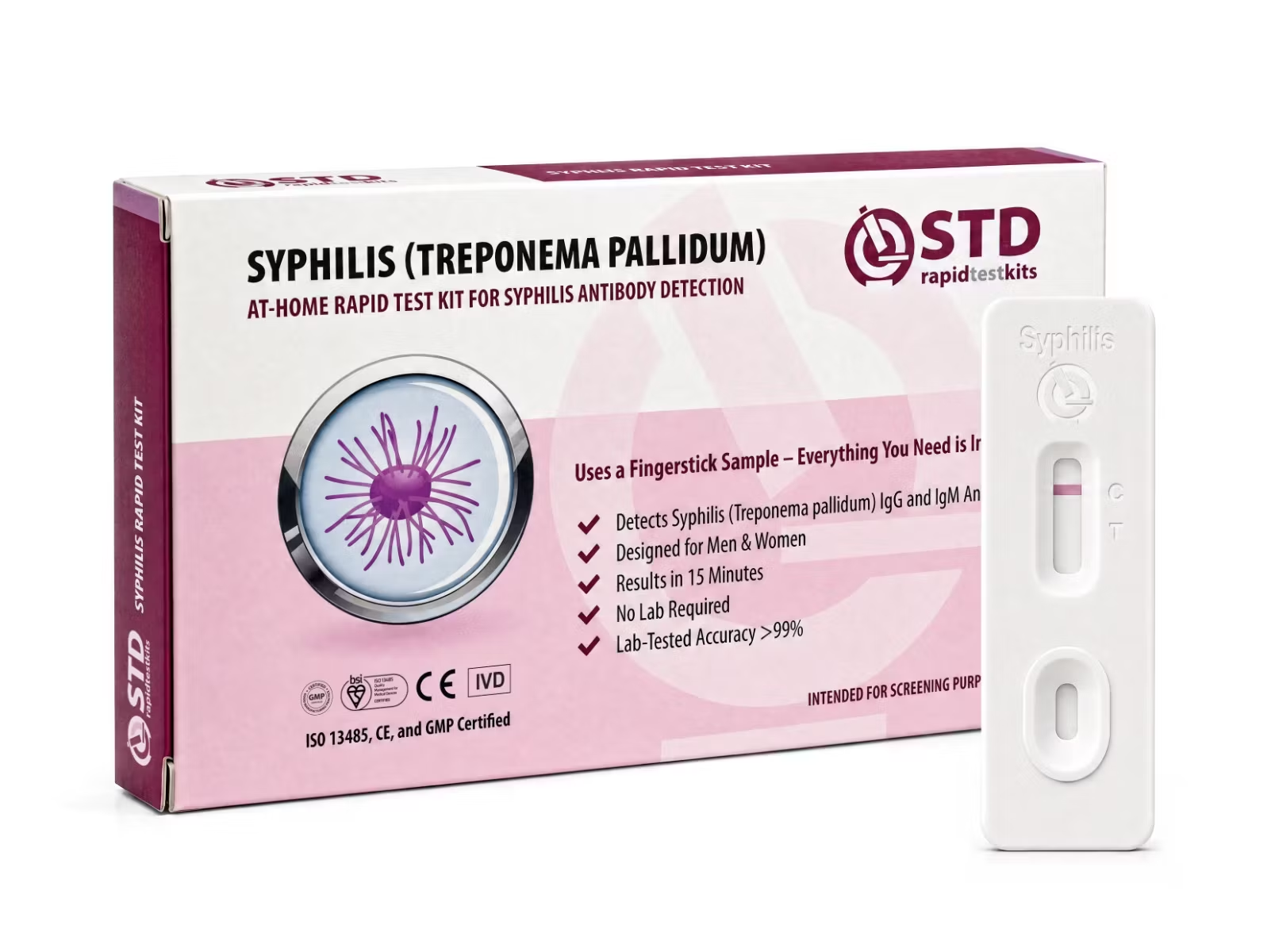
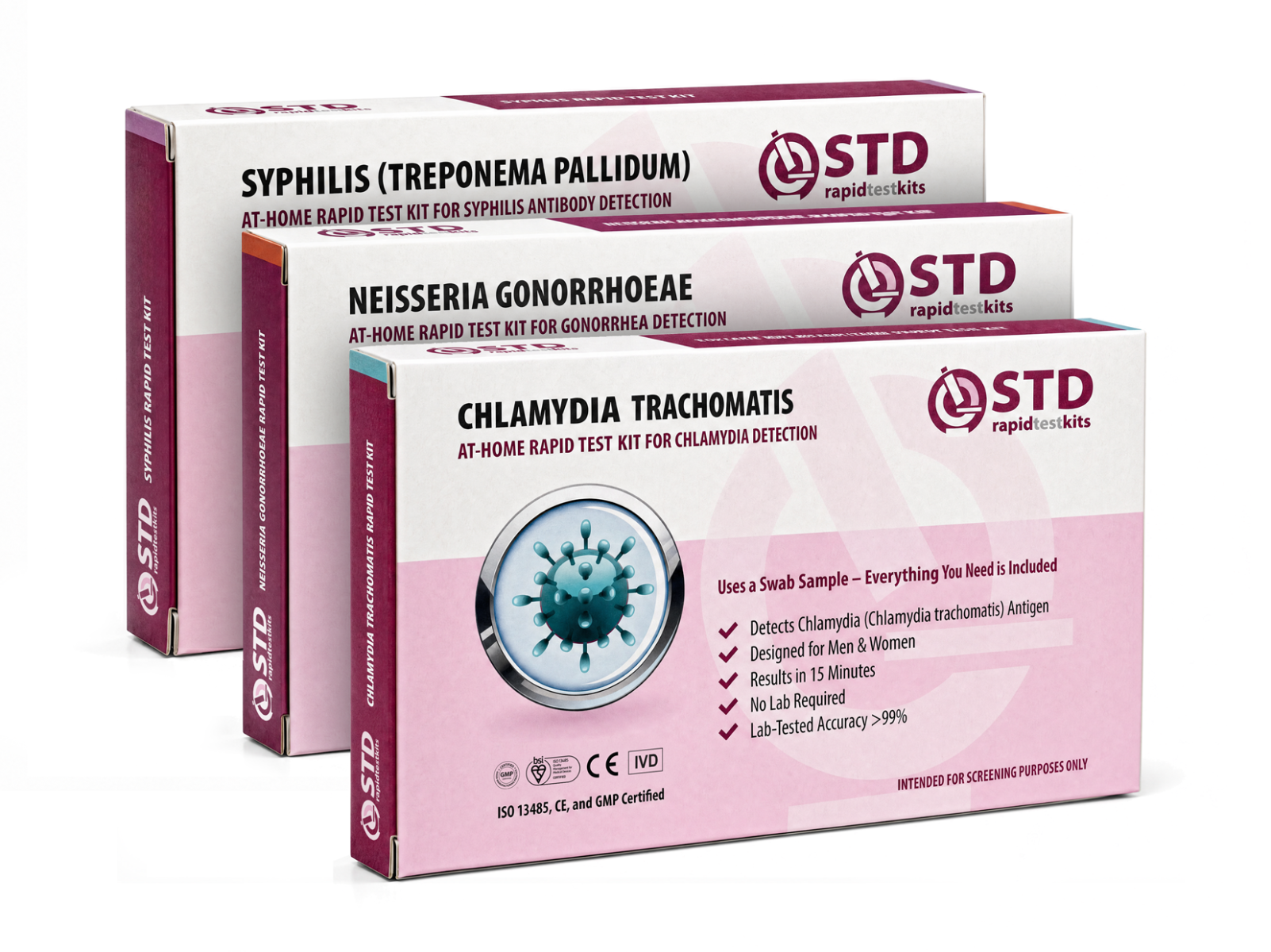
Our rapid syphilis kit and our 3-in-1 chlamydia, gonorrhea, and syphilis kit are fingerstick blood tests, not throat swabs. Blood antibody testing detects systemic syphilis infection regardless of where the chancre was, which is the right tool for after-the-fact screening. If a clinician needs to confirm a suspected oral lesion specifically, they will collect a separate pharyngeal swab. We do not sell pharyngeal swabs as an at-home product. For visible mouth or throat sores, a clinic visit is the right next step.
Can you get syphilis from oral sex?
Yes. Syphilis spreads by direct contact with an infectious sore, and chancres can develop on the lips, tongue, tonsils, or back of the throat. Oral exposure is a common transmission route, even when neither partner sees a sore. Screening every 3 to 6 months is the CDC recommendation for sexually active MSM with new or multiple partners.
When the Disease Goes Quiet: Latent Syphilis
After the secondary stage (the rash phase, which we cover below), syphilis enters a long quiet period called latent syphilis. The bacterium is still present and still detectable on a blood antibody test. There are no symptoms. The infection can remain latent for years, sometimes for the rest of a person's life.
The CDC divides latent syphilis into two periods, and the distinction matters for both contagion and treatment. Early latent syphilis (within 12 months of infection) is still sexually transmissible even without sores or rash, and is treatable with a single intramuscular penicillin injection. Late latent syphilis (more than 12 months in, or of unknown duration) becomes much less likely to transmit sexually, but the bacteria can still cause organ damage, and treatment requires three weekly injections rather than one. The clock starts at the time of first infection, not at diagnosis, which is why an honest exposure history matters when a clinician is staging the disease.
A meaningful share of syphilis diagnoses among MSM happen during the latent stage, picked up on a blood test ordered for an unrelated reason or a regular STI panel. The person feels completely fine, recalls no rash, cannot name an exposure, and yet the blood test comes back reactive. Many late-latent diagnoses are genuinely incidental, surfacing on a life-insurance physical, a military intake panel, a pre-surgical workup, or a prenatal partner screen. Scheduled blood-test screening, rather than symptom-watching, is what catches those cases before treatment options narrow (NHS guidance on syphilis).

The Four Stages of Syphilis
Syphilis progresses through four clinical stages if it is not treated. Each stage looks different, and the gap between them can be months or years of feeling completely well. Understanding which stage a positive result corresponds to is what determines how long the antibiotic course needs to be and whether any tissue damage is already in motion.
| Stage | Timing after exposure | What it looks like | Contagious? |
|---|---|---|---|
| Primary | 10 to 90 days after exposure (typically about 3 weeks) | Single firm painless chancre at the site of infection. Heals on its own in 3 to 6 weeks. | Yes, very |
| Secondary | Weeks to about 6 months after primary heals | Non-itchy reddish-brown rash often on palms and soles, mucous patches, fever, swollen lymph nodes, patchy hair loss. | Yes |
| Latent | Begins after secondary symptoms fade. Can last years to decades. | No symptoms. Detectable only by blood antibody test. | Early latent (within 12 months): yes. Late latent: much less so. |
| Tertiary | Years to decades later in a minority of untreated cases | Damage to heart, large vessels, brain, nerves, eyes, ears. Includes neurosyphilis and ocular syphilis. | Generally not directly contagious by sex at this stage |
Secondary Stage: The Body-Wide Rash and Flu-Like Phase
If primary syphilis is not treated, the bacteria spread through the bloodstream and the secondary stage shows up anywhere from a few weeks to about 6 months after the chancre fades. This is the stage with the most distinctive systemic findings, and the one most likely to send someone to a clinician (or to convince them they just have the flu).
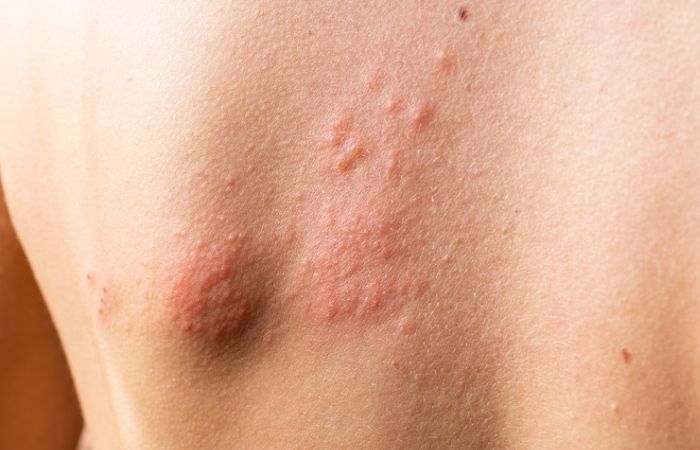
The classic secondary syphilis rash is non-itchy, rough, and reddish-brown. Its most identifying feature is the location: the palms of the hands and the soles of the feet. Most rashes do not appear there. When a non-itchy rash shows up on the palms and soles in a sexually active adult, secondary syphilis is at the top of the differential. The WHO syphilis fact sheet specifically describes this as the typical secondary presentation.
Two specific traits make this rash easy to miss. It is non-itchy, which is unusual for a rash, and the spots can be faint pinkish-brown rather than a dramatic red. Combined with the flu-like symptoms, people often write it off as a viral exanthem and a coincidence. Other secondary findings include:
- Flu-like illness: low-grade fever, sore throat, swollen lymph nodes (especially in the groin, armpits, and neck), muscle aches, and fatigue. These often get blamed on a passing virus.
- Patchy hair loss: the so-called moth-eaten alopecia, often on the scalp, beard, or eyebrows.
- Mucous patches: gray-white painless patches on the inside of the mouth, lips, or genitals. Highly contagious through contact.
- Condyloma lata: moist, raised, wart-like plaques in skin folds, especially the groin and around the anus. These are not HPV genital warts, although they can be mistaken for them.
Like the primary chancre, the secondary rash and symptoms resolve on their own within a few weeks. The bacterium continues circulating during that apparent recovery, and the latent phase has already started by the time the visible signs fade.
The sore throat, swollen lymph nodes, low-grade fever, and fatigue of secondary syphilis are frequently chalked up to a passing virus. The single most distinguishing feature is the location of the rash: non-itchy reddish-brown spots on the palms of the hands and the soles of the feet are uncommon in most viral exanthems, and should prompt an STI workup in any sexually active adult.
Tertiary Stage: Long-Term Organ Damage
Tertiary syphilis is the late-stage outcome of decades of untreated infection. Most people with untreated syphilis do not develop tertiary syphilis, but a meaningful minority do, and the damage is largely irreversible by the time it shows up. The classic tertiary presentations include:
- Neurosyphilis. Bacteria have invaded the central nervous system. Symptoms range from chronic headache and personality change to memory loss, difficulty walking, vision changes, and tabes dorsalis (a specific spinal cord syndrome causing sharp shooting pains and gait instability). Neurosyphilis can also occur earlier in the disease and is not exclusive to the late stage.
- Cardiovascular syphilis. Damage to the wall of the aorta, the body's main artery. The classic finding is a thoracic aortic aneurysm, sometimes years before symptoms.
- Gummas. Soft tissue growths that can form in skin, bone, liver, or other organs, eroding tissue locally. They respond well to antibiotics if caught, and the destruction they have already caused is what tends to be permanent.
Dementia, blindness, hearing loss, and (rarely) sudden cardiovascular death from aneurysm rupture are also associated with tertiary disease.
Antibiotics will stop active infection at any stage, including tertiary. What antibiotics cannot do is reverse the structural damage already inflicted on the brain, heart, or aorta. That is why CDC and WHO consistently emphasize early testing and early treatment over waiting for symptoms to declare themselves.
How Doctors Diagnose Syphilis
Syphilis testing is unusual among STI tests in that the standard diagnostic tool is a blood antibody test, not a swab. The bacteria are difficult to culture, and antibodies appear reliably within weeks of infection.
In standard clinical practice, a non-treponemal test (RPR or VDRL) screens for active infection and tracks treatment response, while a treponemal test (TP-PA, EIA, or CIA) confirms exposure. Modern labs typically run a reverse-sequence algorithm starting with the treponemal test. Rapid lateral-flow blood antibody tests, including at-home kits, use the same antibody-detection principle as the lab treponemal test, with somewhat lower sensitivity. A reactive home test result needs lab confirmation before treatment decisions.
Dark-field microscopy offers a direct method when an active sore is present: a clinician scrapes fluid from a fresh chancre and examines it under a special microscope to see live T. pallidum spirochetes. Lumbar puncture and cerebrospinal fluid analysis is reserved for suspected neurosyphilis or atypical late-stage presentations.
Antibodies typically become detectable around 3 weeks after exposure, reach reliable sensitivity by 6 weeks, and are very rarely missed at 12 weeks. A test taken in the first week after exposure is not informative. Plan two tests, one at 6 weeks and one at 90 days if the first is negative.
The Testing Gap Among MSM
Even with the surge well documented and screening guidance unambiguous, a meaningful share of MSM in the United States are not testing on the schedule public-health authorities recommend. CDC and academic surveillance work has consistently shown that a sizeable minority of sexually active MSM go a year or more without a syphilis test, including many with multiple partners or recent app-based meetings. Among MSM living with HIV, the screening rate is higher, but still falls short of the every-3-to-6-month standard.
The reasons people give for delaying screening have not changed much over the years:
- Fear of a positive result. The thought of seeing a reactive line is the single most common reason people put off testing. The data does not validate that fear: syphilis caught early is fully curable, and most positive results lead to a single visit and a short course of treatment.
- Worry about clinician judgment. Some patients describe avoiding clinics because they do not want to disclose partner counts or specific sexual practices to a provider who has not signaled affirming care.
- Time and access. Clinic hours, insurance hassles, and travel time all add friction. For people working hourly schedules or living far from an LGBTQ+-affirming clinic, the friction is not trivial.
At-home rapid antibody testing was built specifically for the third bucket and quietly helps with the first two. It removes the in-person disclosure conversation entirely and produces a result in about 15 minutes from a fingerstick sample.
Without prompt diagnosis and treatment, syphilis can cause serious health problems, including damage to the heart and brain, blindness, deafness, paralysis, and death.
Why Syphilis Isn't a "Gay Disease"
Although MSM make up the largest single share of US primary and secondary syphilis cases, syphilis is not a gay disease and never has been. The infection moves through every sexual network it touches. CDC surveillance has documented sharp recent increases in syphilis among heterosexual men and women, congenital syphilis cases (transmission during pregnancy), and infections among women of color in particular. Congenital syphilis cases roughly tripled in the last several years, a trend driven by gaps in prenatal screening rather than by any change in the bacterium itself.
The framing matters because stigma is part of how syphilis stays in circulation. Hookup-app profiles that joke about "clean only" or insist a partner is "DDF" reinforce the idea that testing is a judgment call rather than a routine health practice. That cultural pressure is one reason people who do test sometimes never disclose a positive result to past partners, and it is one reason many heterosexual women in their twenties and thirties go years between syphilis tests despite multiple new partners.
Routine testing fits in the same maintenance bucket as a regular dental check-up.
US congenital syphilis cases have roughly tripled over the past several years, driven by gaps in prenatal screening rather than any change in the bacterium. Pregnant patients are screened at the first prenatal visit and again later in pregnancy in higher-prevalence areas.
Treatment: Curable at Every Stage
Syphilis is one of the few STIs with a clean, decades-old, single-class cure: penicillin. For most early infections, the standard of care is a single intramuscular injection of long-acting benzathine penicillin G. Late latent and tertiary infections require a longer course, and tissue damage from tertiary syphilis is sometimes only partly reversible. For people with a documented penicillin allergy, doxycycline is the most common alternative for early-stage disease, although penicillin desensitization is generally preferred for late-stage and neurosyphilis.
Treatment success is measured by repeat non-treponemal blood tests at 6, 12, and 24 months. Sexual contact should be avoided until the chancre or rash has fully healed and a clinician confirms the infection is treated. One detail worth knowing if you ask for an STI panel at a primary-care office: not every panel includes syphilis automatically. In some workflows it is bundled with HIV screening; in others it is opt-in. If you want syphilis included, say so explicitly. Do not assume a generic "STD test" covered it.
| Stage | Standard antibiotic regimen |
|---|---|
| Primary, secondary, or early latent syphilis | Single intramuscular injection of long-acting benzathine penicillin G, 2.4 million units |
| Late latent syphilis or tertiary syphilis (excluding neurosyphilis) | Three weekly intramuscular injections of benzathine penicillin G, 2.4 million units each |
| Neurosyphilis or ocular syphilis | Intravenous aqueous crystalline penicillin G for 10 to 14 days, given in hospital |
How to Prevent Syphilis (and Reinfection)
Past infection does not produce protective immunity. Someone treated successfully for syphilis can be reinfected on the next exposure, which is why follow-up screening is recommended for anyone who continues to be sexually active after a first diagnosis. The practical preventive steps are the same ones that work for other STIs, with one important caveat about coverage area:
- Condoms. Reduce risk substantially but do not eliminate it. Syphilis chancres can sit on skin not covered by a condom (the base of the penis, scrotum, perineum, around the anus), and skin-to-skin contact with the sore is enough to transmit. Use them anyway; partial protection is far better than none.
- Doxycycline post-exposure prophylaxis (DoxyPEP). A 200 mg dose of doxycycline within 72 hours of unprotected sex has been shown to reduce the risk of bacterial STIs including syphilis in MSM, per CDC clinical guidance on DoxyPEP. Discuss with a clinician whether it fits your situation.
- Routine screening. The single most effective public-health lever, because it identifies the early-latent people who are still contagious and feel completely well.
- Mutual screening with a regular partner. Both partners get tested, then re-test on the same cadence. Practical when both parties commit to it.
- Partner notification and treatment. If you test positive, recent partners need testing and presumptive treatment. Most local health departments offer confidential partner-notification services.
Syphilis produces no lasting immunity. A successfully treated infection clears the current disease but does nothing to prevent the next one. Anyone who continues to be sexually active after a first diagnosis should keep testing on the same cadence recommended for their risk profile, because reinfection is fully possible on the next unprotected exposure.
Building Your Own Testing Routine
The point of routine is to remove decision-making in the moment. The CDC recommends syphilis screening at least annually for sexually active MSM, and every 3 to 6 months for MSM with multiple partners, anonymous partners, or partners met through hookup apps. People living with HIV are screened on the same shorter cadence. Pregnant patients are screened at the first prenatal visit and again later in pregnancy in higher-prevalence areas.
A practical routine that fits how people actually live in 2026 looks roughly like this:
A workable quarterly routine
- Set a recurring quarterly calendar reminder. Tie it to the first day of every season if dates are easier than "every three months."
- Test about 3 to 6 weeks after any exposure that involved a new partner, an unprotected encounter, or known exposure to syphilis. Repeat at 90 days if the first test is negative and the exposure was significant.
- If you have a regular partner or partners, tell them you test on a schedule and ask them to do the same. Disclosing the schedule is a different conversation from disclosing a result, and it lowers the friction of both.
- If you use PrEP, syphilis screening is already included in your routine PrEP follow-up. Show up to those visits.
How to Test for Syphilis at Home
At-home rapid syphilis tests use a small fingerstick blood sample to detect Treponema pallidum antibodies on a lateral-flow strip (the same test-card format used in COVID home tests). They are screening tests, not laboratory NAAT-grade confirmation. A positive result on a rapid antibody strip is medically significant and should be confirmed at a clinic with a treponemal and non-treponemal blood panel (two complementary lab tests that together confirm active infection and which stage), which establishes whether the infection is active and how to treat it. A negative result on a screening test taken inside the window period (the first few weeks after exposure) should be repeated.
The window math for syphilis blood antibody screening:
- Reliable detection generally starts around 3 to 6 weeks post-exposure.
- By 90 days post-exposure, sensitivity is high enough that a negative test can effectively rule out infection from that exposure.
- Antibody tests do not distinguish past treated infection from current infection on their own. Confirmatory clinic panels, a treponemal plus non-treponemal pair, separate past treated infection from active disease, which the rapid strip alone cannot do.
If you test negative but the exposure was recent, retest at 90 days. If symptoms appear in the meantime (a sore, a rash on palms or soles, unexplained fever), do not wait for the retest window: see a clinician.
Do not treat yourself and do not panic. Save a photo of the result. Book a same-week appointment with a sexual-health clinic, primary-care provider, or your local health department. Treatment is typically a single injection for early-stage disease, and cost is often covered at public-health clinics. Recent partners should also be tested and presumptively treated.
You Deserve Answers, Not Assumptions
The current syphilis wave reflects a system-level testing gap colliding with faster sexual networks. The single highest-leverage thing any sexually active adult can do, especially MSM in metropolitan areas, is move from reactive testing ("I feel weird, let me check") to scheduled testing ("It is the first week of the season, time to retest").
Frequently asked questions
- Can you get syphilis from oral sex?
- Yes. Syphilis spreads through direct contact with an infectious lesion. Chancres can form on the lips, tongue, tonsils, and pharynx, and these sites are routinely involved in MSM oral exposures. Many oral chancres are not visible to either partner.
- Can you get syphilis from kissing?
- It is possible if the partner has an active oral chancre or mucous patch on the lips, in the mouth, or on the tongue. It is far less common than transmission through oral or genital sex, but it has been documented.
- What does a syphilis chancre look like?
- Picture a single round ulcer roughly 1 to 2 cm across that does not hurt and does not bleed. It is firm with a clean base and a raised rolled edge, and it appears at the exact entry point of the infection (genitals, anus, mouth, or throat). The chancre heals on its own in 3 to 6 weeks even without treatment, which is why most people miss it entirely.
- How soon after exposure can I test for syphilis?
- Rapid blood antibody tests become reliably reactive around 3 to 6 weeks post-exposure; by 12 weeks, a negative result can effectively rule out infection from that exposure. Retest at 90 days if the first test is negative and the exposure was significant.
- Is syphilis curable?
- Yes. One antibiotic injection clears most early infections in a single clinic visit. Late-latent syphilis needs a longer course of penicillin (three weekly injections), and damage from tertiary-stage disease (heart, brain, nerve) may not fully reverse even after the bacteria are gone.
- Can you get syphilis more than once?
- Yes. Treatment cures the current infection but does not produce protective immunity. Reinfection is possible at the next unprotected exposure, which is why follow-up screening is recommended for anyone who continues to be sexually active after a first diagnosis.
- Does syphilis cause infertility in men?
- Syphilis itself does not directly cause male infertility in most cases. Untreated late-stage syphilis can damage the central nervous system, heart, and other organs, which can secondarily affect sexual and reproductive function. Bacterial co-infections like chlamydia and gonorrhea are more frequent direct causes of male fertility issues, which is one reason a combined screening kit can be a practical choice after a known exposure.
- Do hookup apps actually increase STI risk?
- Apps do not transmit infection on their own, but multiple studies have found higher rates of bacterial STIs among MSM who use them, primarily because of denser, faster-turnover sexual networks. The mitigation is regular self-initiated screening, not abandoning the apps.
- Can I test for syphilis at home?
- Yes, with a fingerstick blood test that uses the same test-card format as a COVID home test. Results land in about 15 minutes. A reactive result is a screening signal that should be confirmed at a clinic with a full lab blood panel before any treatment decision.
- U.S. Centers for Disease Control and Prevention. 2024 Annual STI Surveillance Report, including the 22% year-over-year decline in primary and secondary syphilis and 190,242 total reported cases.
- U.S. Centers for Disease Control and Prevention. Syphilis information page covering chancre presentation, stage definitions, transmission, diagnosis, and treatment.
- U.S. Centers for Disease Control and Prevention. STI screening recommendations, including syphilis screening cadence of every 3 to 6 months for sexually active MSM with multiple partners.
- U.S. Centers for Disease Control and Prevention. Doxycycline post-exposure prophylaxis (DoxyPEP) clinical guidance for bacterial STI prevention, including reduction of syphilis incidence in MSM.
- World Health Organization. Syphilis fact sheet covering global epidemiology (8 million adults 15-49 acquired syphilis in 2022), transmission, the four-stage clinical description, and treatment.
- NHS. Overview of syphilis: symptoms, transmission, testing, and treatment under the UK National Health Service.
