
Published: October 2025 | Last updated: May 2026 | Editorial review and quality control: Martina N.
The phrase “deadliest STDs” carries a lot of weight, and a lot of misinformation along with it. The sexually transmitted infections that cause severe long-term harm are not rare or exotic. They are common infections that stayed quiet long enough to do damage. Surveillance from the U.S. Centers for Disease Control and Prevention and the World Health Organization keeps pointing at the same handful of conditions year after year: HIV, syphilis, HPV, hepatitis B, and increasingly antibiotic-resistant gonorrhea.
The reason these infections matter is rarely how they feel in week one. It is what happens during the months or years between exposure and diagnosis. The cancers, infertility, organ damage, and neurological complications that make these conditions serious almost always develop in that silent stretch. Routine testing is what closes the window before damage accumulates. The point of this article is not to alarm anyone. It is to lay out which infections public-health agencies treat as high-risk, what the realistic complications look like when treatment is delayed, and where at-home testing fits into a sensible response.
Key Takeaways
- Public-health agencies consistently flag five sexually transmitted infections as the highest-risk for long-term harm: HIV, syphilis, HPV, hepatitis B, and antibiotic-resistant gonorrhea.
- Most of the severe complications associated with these infections are preventable when testing happens early, before the infection has time to damage organs, fertility, or the immune system.
What Makes an STD Dangerous
Not every sexually transmitted infection causes severe harm. Chlamydia and trichomoniasis, for example, are highly treatable when caught early and rarely cause lasting damage with prompt treatment. The infections public-health agencies treat as high-risk are different. The danger with them is rarely the moment of infection. It is how long they can stay hidden.
Three patterns explain why specific infections sit at the top of the watchlist:
- Silent progression. Many of the most dangerous STDs cause few or no symptoms in their early stages.
- Permanent complications. Some infections cause irreversible damage to organs, fertility, or the immune system.
- Life-threatening outcomes. Left untreated, certain infections can eventually cause cancer, neurological damage, or immune failure.
Catching infections early matters more than the specific pathogen. What turns a manageable infection into a dangerous one is almost always the months or years it spent undetected, which is the part of the story a reader can actually do something about.
Doctors and public-health agencies rarely classify an STD as dangerous because of how it feels in the first week. The classification reflects what the infection can do across months or years of being undetected: silent organ damage, cellular changes that progress to cancer, scarring that ends up causing infertility, or an immune system that gradually loses ground. Each of those outcomes has a long lead time, which is exactly why testing on a regular schedule, rather than only when something feels wrong, makes such a large difference.
The Infections Public-Health Bodies Watch Most Closely
When infectious-disease specialists, the CDC, and the WHO discuss the highest-risk sexually transmitted infections, the list is short and consistent. The five conditions below are not always the most common in any given region. Each one carries enough capacity for severe medical consequences that public-health agencies monitor them closely, fund prevention programs around them, and recommend regular screening for sexually active adults.
| Infection | Primary long-term risks | Treatment status |
|---|---|---|
| HIV | Immune system destruction, AIDS-defining illnesses | Manageable for life with antiretroviral therapy |
| Syphilis | Brain, nerve, eye, and cardiovascular damage | Curable with penicillin when caught early |
| HPV (high-risk strains) | Cervical, anal, throat, vulvar, and penile cancers | No antiviral cure; preventable through vaccination and screening |
| Hepatitis B | Liver cirrhosis, liver failure, liver cancer | Manageable; vaccine widely available |
| Gonorrhea | Pelvic inflammatory disease, infertility, disseminated infection | Treatable but increasingly antibiotic-resistant |
HIV: The Infection That Reshaped Sexual Health
No conversation about the deadliest STDs is complete without HIV. Before antiretroviral therapy became widely available in the mid-1990s, the virus was almost universally fatal. Today, modern medicine has converted HIV into a manageable chronic condition for people who are diagnosed and treated, which makes early detection the single most important factor in the outlook for anyone infected (CDC HIV basics).
HIV works by infecting and gradually destroying CD4 cells, a type of immune cell the body uses to coordinate its defense against pathogens. Without treatment, the immune system progressively weakens. Common infections that a healthy person clears in a few days become life-threatening once the CD4 count falls below a critical threshold. That stage is the clinical definition of AIDS.
Modern antiretroviral therapy interrupts that trajectory entirely. People living with HIV who take their medication consistently can suppress the virus to undetectable levels, live full lifespans, and not transmit the virus to sexual partners. The CDC summarizes the concept as U=U: undetectable equals untransmittable. None of this works, however, until the infection is identified. Late diagnoses, often years after initial exposure, remain a major driver of HIV-related illness in the U.S.
That is why the CDC recommends at least one HIV test for every adult between the ages of 13 and 64, with more frequent testing for anyone with ongoing risk factors. People who are unsure about a recent exposure can test discreetly through services like STD Rapid Test Kits, which offer private at-home options that do not require a clinic visit.
When antiretroviral therapy suppresses HIV to undetectable levels in the blood, the virus cannot be sexually transmitted to a partner. The CDC reports this finding consistently across large clinical studies. The whole concept depends on the infection being diagnosed in the first place, which is why HIV is one of the few conditions where a single rapid test can change the trajectory of someone's life.
Syphilis: The Great Imitator
Few sexually transmitted infections demonstrate the cost of delayed treatment as clearly as syphilis. Clinicians have called it “the great imitator” for over a century because its symptoms resemble dozens of other illnesses, and they often disappear on their own well before the infection itself does.
Syphilis progresses in stages (CDC syphilis fact sheet). The first stage typically presents as a single painless sore, called a chancre, at the site of infection. The sore heals on its own within a few weeks, which many people interpret as the body clearing the infection. The bacteria, however, remain active and progress to the secondary stage, which can include a rash that often appears on the palms and soles, fever, and swollen lymph nodes. After secondary symptoms resolve, syphilis enters a latent stage in which it produces no symptoms at all and can stay that way for years.
The tertiary stage is where the damage shows up. Late syphilis can affect the brain, nerves, eyes, heart, and major blood vessels. Neurosyphilis can produce memory loss, personality changes, and severe neurological impairment. Treponema pallidum, the bacterium responsible for syphilis, remains exquisitely sensitive to penicillin even today. A short course of antibiotics in the primary or secondary stage cures the infection completely.
| Stage | Typical features | Untreated outcome |
|---|---|---|
| Primary | Single painless sore (chancre) at site of infection | Heals on its own; bacteria persist |
| Secondary | Rash (often palms and soles), fever, swollen lymph nodes | Symptoms resolve; infection continues |
| Latent | No symptoms, can last years | Silent progression toward tertiary |
| Tertiary | Neurological, cardiovascular, ocular damage | Permanent organ injury, possible death |
HPV: The Virus That Quietly Drives Cancer
HPV often surprises people on a list of the deadliest STDs. Many associate it primarily with genital warts, which are caused by low-risk strains that rarely lead to serious complications. The infections public-health bodies worry about are different: high-risk strains, particularly HPV-16 and HPV-18, that can persist in cells for years and cause the kind of cellular changes that eventually become cancer.
HPV is the most common sexually transmitted infection. Most sexually active adults will encounter it at some point in their lives. The majority of infections clear on their own within a year or two as the immune system handles the virus. The minority that persist are the dangerous ones. According to the National Cancer Institute, persistent infection with high-risk HPV types is responsible for nearly all cases of cervical cancer worldwide, along with significant proportions of anal, penile, vaginal, vulvar, and oropharyngeal cancers.
HPV-driven cancers typically take years or even decades to develop, which is the reason regular cervical screening is so effective. Pap tests and HPV DNA testing identify abnormal cellular changes long before they become cancer, when treatment is straightforward and curative. HPV vaccination further reduces risk by preventing the infections most commonly responsible for cancer in the first place. The U.S. Advisory Committee on Immunization Practices recommends routine HPV vaccination through age 26, with shared clinical decision-making through age 45 (CDC HPV prevention overview).
Almost all cases of cervical cancer are caused by infection with oncogenic types of human papillomavirus (HPV).
Hepatitis B: The STD That Targets the Liver
Most people associate hepatitis with contaminated food or water, but the hepatitis B virus also spreads efficiently through sexual contact, sharing of injection equipment, and from mother to child at birth. It is one of the most serious sexually transmitted infections public-health agencies track, in part because chronic infection can quietly damage the liver for years before symptoms appear (CDC hepatitis B information).
The hepatitis B virus targets the liver, the organ responsible for filtering toxins, processing nutrients, and producing essential proteins. Acute infections often resolve on their own in healthy adults. Chronic infections, which are more common when transmission occurs in infancy or early childhood, can progress over years to cause:
- Cirrhosis, the scarring of liver tissue
- Liver failure
- Hepatocellular carcinoma, the most common form of liver cancer
Chronic hepatitis B can sit undetected for decades while damage gradually accumulates. Prevention is the most encouraging part of the hepatitis B story. A safe, effective vaccine has existed since the 1980s and is part of routine childhood immunization schedules in most countries. Adults who were not vaccinated as children can still get the vaccine, and several countries have moved toward universal adult catch-up programs. Testing is the second leg of prevention, especially for adults who are unsure of their vaccination status or who may have been exposed through unprotected sex with a partner whose status is unknown.
Gonorrhea: When Antibiotic Resistance Catches Up
On the surface, gonorrhea looks less menacing than HIV or hepatitis. It is a bacterial infection, traditionally treated with a short course of antibiotics. The reason public-health agencies have been raising the alarm in recent years is the same reason hospitals worry about MRSA or drug-resistant tuberculosis. The bacterium responsible for gonorrhea, Neisseria gonorrhoeae, has evolved resistance to almost every class of antibiotics ever used against it.
The CDC's current sexually transmitted infections treatment guidelines recommend a single first-line regimen for uncomplicated gonorrhea, a high-dose intramuscular injection of ceftriaxone, because alternative options have lost reliability one by one (CDC STI treatment guidelines). Strains with reduced susceptibility to ceftriaxone have already been documented in several countries, and the WHO has flagged drug-resistant gonorrhea as a global public-health priority.
Resistance matters most when treatment is delayed. Untreated gonorrhea can spread from its initial site into the reproductive organs, leading to pelvic inflammatory disease in women, epididymitis in men, and infertility in both. In rare cases the bacteria enter the bloodstream and cause disseminated gonococcal infection, which can produce joint and skin involvement. Many people with gonorrhea have no symptoms at all, particularly when the infection involves the throat or rectum, which makes routine screening the only reliable way to catch it before it does damage.
Neisseria gonorrhoeae has worked through almost every antibiotic class doctors once used against it: sulfa drugs, penicillin, tetracyclines, fluoroquinolones, and most recently the oral cephalosporins. Only one reliable first-line option remains in U.S. guidelines, and resistance to it has already been reported abroad. The WHO lists drug-resistant gonorrhea as one of its priority pathogens for new-antibiotic research, which is part of why early screening matters more now than it did a decade ago.
The Real Risk Is Untreated Infections
One of the most persistent misconceptions about sexually transmitted infections is that danger is purely a function of which infection it is. In practice, the line between treatable and devastating usually runs through time rather than pathogen. Most of the severe complications below could have been prevented at an earlier stage:
- Tubal infertility from untreated chlamydia or gonorrhea
- Neurological and cardiovascular damage from late-stage syphilis
- Cervical, anal, or oropharyngeal cancer from persistent high-risk HPV
- Liver cirrhosis or liver cancer from chronic hepatitis B
- AIDS-defining illnesses from late-diagnosed HIV
This is the practical reason routine screening sits at the center of sexual-health care. People who feel completely healthy can carry an infection for months or years without knowing it. The only reliable way to interrupt that trajectory is to test, especially after a new partner, after unprotected sex, or after any unexplained symptoms that follow a possible exposure.
The list above isn't theoretical. Each of those complication categories, tubal infertility, neurosyphilis, HPV-driven cancers, hepatitis B liver disease, and late-stage HIV, has decades of clinical evidence behind it AND a well-validated screening pathway that catches the underlying infection long before the complication appears. The medical literature on each one is large and consistent: early diagnosis turns severe outcomes into manageable ones.
Warning Signs That Push Doctors Toward STD Testing
Many infections become dangerous because the early warning signs were dismissed. Patients commonly attribute a sore that healed on its own, a rash that faded within a week, or an unexplained spell of fatigue to a stressful schedule or a passing virus. Clinicians recognize the pattern and almost always recommend testing when those signs follow recent sexual contact.
A painless sore that healed on its own, a rash specifically on the palms and soles, or a flu-like illness with swollen lymph nodes a few weeks after a new partner are the cues that prompt a sexual-health doctor to recommend syphilis or HIV testing even when the patient considers the episode resolved.
Symptoms that typically prompt further testing include:
- Unexplained genital sores, ulcers, or persistent warts
- Persistent fatigue with swollen lymph nodes
- A rash on the palms or soles, especially alongside other systemic symptoms
- Unusual discharge or pelvic pain
- Pain or burning during urination
- Bleeding between menstrual periods or after intercourse
None of these symptoms guarantee an STD, but each is common enough among infected patients that clinicians treat them as a strong reason to test. Just as important, the absence of symptoms does not mean an infection is harmless. Many of the highest-risk infections cause no symptoms at all in their early stages.

How Doctors Weigh Risk After Exposure
Not every sexual encounter carries the same risk, and clinicians evaluate exposure using a small set of practical factors. Understanding these can help explain why testing recommendations vary from person to person and why some encounters warrant more aggressive follow-up than others.
| Risk factor | Why it matters |
|---|---|
| New sexual partner | Unknown infection history raises uncertainty about possible exposures |
| Unprotected sex | Direct fluid or skin-to-skin contact increases transmission probability |
| Multiple partners in the same period | Larger exposure network multiplies probability of an infected contact |
| Symptoms appearing after sex | Possible early sign of an active infection |
| Prior STD diagnosis | Prior infection is correlated with higher probability of future exposure |
| Partner with known positive status | Direct, quantifiable exposure event that warrants targeted testing |
Why Early Testing Changes the Outcome
When public-health agencies talk about “dangerous STDs,” they are rarely trying to scare anyone. The point is almost always the same. Most of the severe complications associated with these infections, including organ damage, infertility, neurological injury, and cancer, depend on the infection going undetected for a long time. Routine testing shifts the timeline, which is the single biggest lever in the entire conversation.
Modern STD testing is faster, cheaper, and more accessible than it has been at any point in the past three decades. Most rapid screening tests use a fingerstick blood sample or a self-collected swab and deliver results in roughly fifteen minutes. At-home rapid tests use lateral-flow chemistry rather than the molecular NAAT methods that labs run, which means they are excellent for screening but a reactive result is worth confirming with a laboratory test. The two are complementary, not interchangeable, and the right pairing depends on the question someone is trying to answer.
What matters most is timing. The earlier an infection is detected, the easier it is to treat and the less time it has to cause long-term damage.
Common Myths About “Deadly” STDs
People searching for the deadliest STDs often imagine rare or dramatic infections. In practice, the infections that cause the most harm are usually common ones that went undiagnosed for too long. The table below catches the most common misconceptions clinicians hear.
| Myth | Reality |
|---|---|
| Only HIV is dangerous | Several infections can cause severe complications if untreated, including HPV-driven cancers and late-stage syphilis |
| You would know if you had an STD | Many infections cause no symptoms for long stretches; chlamydia, gonorrhea, HPV, and early HIV are commonly silent |
| Testing is only necessary after symptoms appear | Routine screening often detects infections well before symptoms develop, when treatment is simplest |
| Young or healthy people do not need testing | Sexually active people of any age can be exposed; the CDC recommends regular screening through every adult age group with risk factors |
FAQs
- Which STDs do public-health agencies worry about the most?
- HIV, syphilis, HPV, hepatitis B, and drug-resistant gonorrhea top public-health watchlists because each one can progress silently to irreversible organ damage, cancer, or immune failure. The severity is what earns the watchlist spot, not the everyday prevalence. Almost all of that long-term harm is preventable when routine testing catches the infection in its early stages.
- Can an STD actually kill you?
- Several can, but rarely suddenly. Untreated HIV can weaken the immune system over years until AIDS-defining illnesses become life-threatening. Late-stage syphilis can damage the brain, heart, and major blood vessels. Chronic hepatitis B can progress to liver failure or liver cancer. Persistent high-risk HPV is responsible for nearly all cervical cancer worldwide. Each of these outcomes is largely preventable with early diagnosis.
- Which STD causes the most long-term damage to the body?
- There is no single answer, but persistent infections tend to do the most harm. HPV is responsible for almost all cervical cancer cases and a significant share of anal, penile, vaginal, vulvar, and throat cancers. Untreated chlamydia and gonorrhea can damage reproductive organs and cause infertility years after the original infection. Untreated syphilis can permanently injure the brain and nervous system.
- Why do clinicians describe some STDs as “silent” infections?
- Because they can sit in the body without producing noticeable symptoms. Many people imagine infections always come with clear signs, but a large share of STD diagnoses happen in people who felt completely fine. Someone can carry HPV, early HIV, or syphilis for months without realizing it. That silence is precisely why routine screening matters.
- If I feel completely healthy, can I still have an STD?
- Yes. Many infections are routinely diagnosed in people who feel normal. A common scenario is someone testing during an annual checkup, before starting a new relationship, or after a partner discloses an exposure. Feeling healthy does not rule out an asymptomatic infection. The CDC specifically recommends screening on a schedule for sexually active adults, not only when symptoms appear.
- What symptoms make clinicians immediately consider STD testing?
- A few specific cues raise immediate suspicion: unexplained genital sores or ulcers, a rash on the palms or soles, unusual discharge, burning during urination, persistent fatigue with swollen lymph nodes, or bleeding between periods. None of these guarantee an STD, but each is common enough among infected patients that clinicians almost always recommend testing rather than waiting to see what happens.
- How soon should someone test after a possible exposure?
- It depends on the infection. Bacterial infections like chlamydia and gonorrhea can usually be detected within one to two weeks. HIV antibody tests typically need three to twelve weeks for reliable results, depending on the test generation. Syphilis can take three to six weeks to become detectable. A common approach is to test once shortly after an exposure to establish a baseline and then again later to clear the window period.
- Are at-home STD tests reliable?
- Reputable at-home rapid tests perform well as screening tools when instructions are followed carefully. They use lateral-flow chemistry rather than the molecular NAAT methods labs use, so a reactive result is worth confirming with a laboratory test. For an initial screen, particularly when privacy matters or a clinic visit is inconvenient, a quality at-home kit is a reasonable starting point.
Clarity Beats Uncertainty
The phrase “deadliest STDs” sounds dramatic, but what public-health agencies actually worry about is delay. Most of the serious complications linked to HIV, syphilis, HPV, hepatitis B, and antibiotic-resistant gonorrhea unfold slowly, often after years of silence. The infection itself is rarely the problem in week one. The problem is that nobody knew it was there.
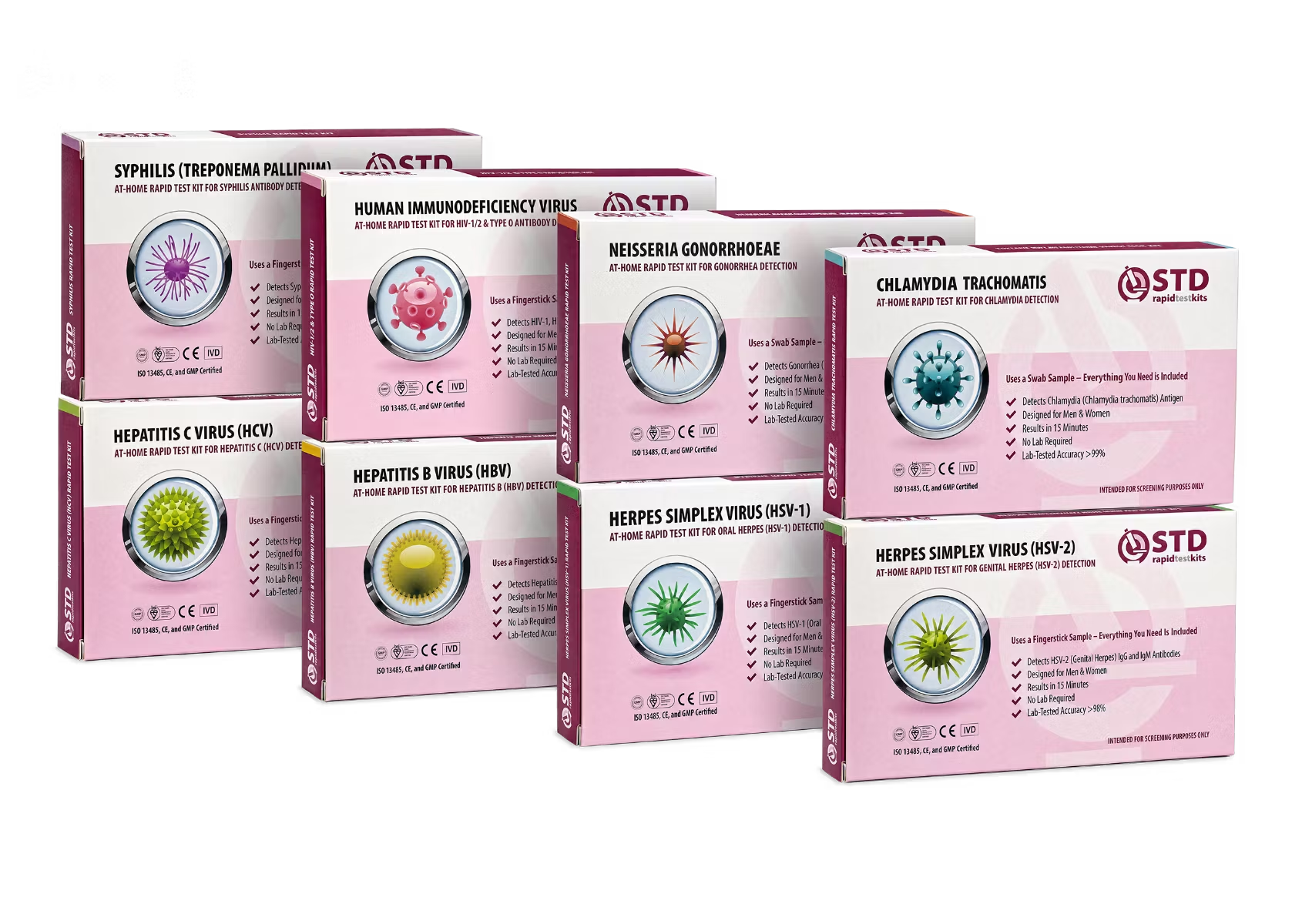
The way out is straightforward. If symptoms appear, test. If a new partner has entered the picture, test. If everything comes back negative, that is a real result worth having. If something does turn up, catching it early almost always means simpler treatment and fewer long-term complications. For a private starting point, an at-home option like the Combo STD Home Test Kits category covers several of the most common infections in one screening run, with the option to confirm any reactive result through a clinic.
- U.S. Centers for Disease Control and Prevention. Sexually transmitted diseases topic hub with surveillance, prevention, and screening guidance.
- World Health Organization. Fact sheet on sexually transmitted infections, including global burden and transmission information.
- U.S. Centers for Disease Control and Prevention. HIV basics including transmission, testing, and treatment.
- U.S. Centers for Disease Control and Prevention. Syphilis fact sheet covering stages, symptoms, and treatment.
- U.S. National Cancer Institute. HPV and cancer overview, including persistent infection and cancer risk.
- World Health Organization. Cervical cancer fact sheet, including the HPV link and prevention.
- U.S. Centers for Disease Control and Prevention. Hepatitis B information including transmission, complications, and vaccination.
- U.S. Centers for Disease Control and Prevention. STI treatment guidelines including current first-line regimens for gonorrhea.
