Published: December 2025 | Last updated: May 2026 | Editorial review and quality control: Martina N.
Finishing an STI treatment course should feel like the end of the story. For many people, it is. But for those who go on to try to conceive and wait longer than expected, a quieter question begins to surface: did the infection leave something behind? The bacteria are gone, but inflammation and scarring may have already done their work. Whether that work is reversible depends on which infection it was, how long it went undetected, and whether pelvic inflammatory disease (PID) developed before treatment began.
Current CDC and Mayo Clinic guidance offers a clearer answer than most people expect, and so does an honest look at what at-home testing can and cannot rule out.
Key Takeaways
- Successful treatment clears the bacteria but cannot reverse scarring already caused by pelvic inflammatory disease. The CDC reports that roughly 1 in 8 women with a history of PID experience difficulty getting pregnant.
- Fertility damage is rarely all-or-nothing. Most people with one open fallopian tube can still conceive naturally, and IVF bypasses the tubes entirely when both are blocked. The first step is honest current testing, not silent worry.
What Treatment Fixes, and What It Doesn't
Antibiotics for chlamydia and gonorrhea reliably clear the active infection when the prescribed course is completed and reinfection is avoided in the weeks that follow. Eliminating the bacteria is what the treatment is designed to do, and it does that job well.
What treatment cannot do is reverse structural damage that was already in motion before the prescription started. If a cervical infection had already moved into the uterus or fallopian tubes by the time it was caught, the inflammation it triggered there does not undo itself when the bacteria die. Scar tissue, once laid down, stays.
This is the gap that creates the post-treatment fertility worry. Many people never know exactly when an STI started. Chlamydia is famously asymptomatic in people with vaginas, which is part of why the CDC treats annual screening as the standard rather than waiting for symptoms to appear (CDC chlamydia overview). By the time a positive test arrives, the infection may have been present for weeks or months.
That asymptomatic window is also why a follow-up test roughly three months after treatment is part of CDC guidance. The retest is not about whether the antibiotics worked. It is about catching the very common reinfection that can restart the inflammatory clock. For someone planning a pregnancy after treatment, knowing whether a new infection has crept in is its own piece of the picture.
Treatment clears the bacteria reliably when the full course is completed. It does not reverse scar tissue already laid down in the fallopian tubes or epididymis before the prescription began. Two different jobs, one of which medicine cannot redo after the fact.
How Chlamydia and Gonorrhea Quietly Damage Fertility
The same biology that lets these infections persist undetected is what gives them time to do harm. Without a fever, an obvious change in discharge, or sharp pelvic pain, an infection can sit in the cervix or urethra for weeks. From there it can ascend.
In the fallopian tubes, the immune response to the bacteria does the damage. The tubes are lined with delicate hair-like cilia whose job is to sweep an egg from the ovary toward the uterus. Inflammation injures those cilia. Repeated or prolonged inflammation produces scar tissue and adhesions that narrow the tube or block it entirely. A blocked tube cannot perform its job, no matter how healthy the egg or sperm involved.
In men, gonorrhea can cause epididymitis, an inflammation of the coiled tube that stores and matures sperm at the back of the testicle. Epididymitis often presents with testicular pain and swelling that drives a clinic visit, but it can run quieter. Mayo Clinic notes that complications of untreated gonorrhea include infertility for both men and women (Mayo Clinic gonorrhea overview).
Several factors raise the risk of fertility-affecting damage. None of them guarantees permanent damage; they shift the odds toward needing closer follow-up.
An infection undetected for more than a few weeks. Repeated infections in the same person over time. Co-infection with both chlamydia and gonorrhea at the same time. Any of these is reasonable basis to ask a clinician about earlier-than-standard fertility imaging when conception attempts begin.
PID: The Bridge to Lasting Fertility Effects
Pelvic inflammatory disease is the bridge between a treated STI and a lasting fertility question. PID is the clinical term for inflammation of the upper reproductive tract, usually starting when an untreated cervical infection moves upward into the uterus, fallopian tubes, or ovaries.
The CDC reports that approximately 1 in 8 women with a history of PID go on to experience difficulty getting pregnant, and notes that PID can leave scar tissue in and around the fallopian tubes that interferes with the path an egg takes to the uterus (CDC pelvic inflammatory disease overview). The same upper-tract mechanism applies to untreated gonorrhea.
PID is not always loud. Some cases produce sharp pelvic pain, fever, abnormal vaginal bleeding, and pain during sex. Those cases usually get to a clinician quickly because the symptoms force the issue. Other cases run quieter, with mild cramping that feels like a difficult period and gets dismissed as such. Mayo Clinic notes that even mild PID can leave behind tubal scarring detectable only later, on imaging or during a fertility workup (Mayo Clinic PID overview).
For someone planning pregnancy after a chlamydia or gonorrhea diagnosis, the practical move is to mention any past pelvic pain, abnormal bleeding, or hospital visits in the months around the original infection. Even uncertain history is useful context for a clinician deciding whether earlier fertility imaging makes sense.
The table below summarizes which common STIs carry the highest fertility risk and how reversible their effects tend to be after treatment.
| STI | Often asymptomatic? | Can it cause infertility? | Reversibility after treatment |
|---|---|---|---|
| Chlamydia | Yes, especially in women | Yes, via PID and tubal damage | Partial; depends on whether scarring occurred |
| Gonorrhea | Often | Yes, in both sexes | Depends on how soon treatment began |
| Trichomoniasis | Sometimes | Rarely | Usually full after treatment |
| HPV | Yes | No direct effect on tubes | Not applicable; may affect pregnancy course |
| Syphilis | Stage-dependent | No direct tubal effect | Treatment fully clears the infection |
About 1 in 8 women with a history of PID experience difficulty getting pregnant. Scar tissue and adhesions from PID can block or damage the fallopian tubes.
What At-Home STI Testing Can and Cannot Answer
Being clear about what at-home rapid STI tests do, and do not, is part of using them well.
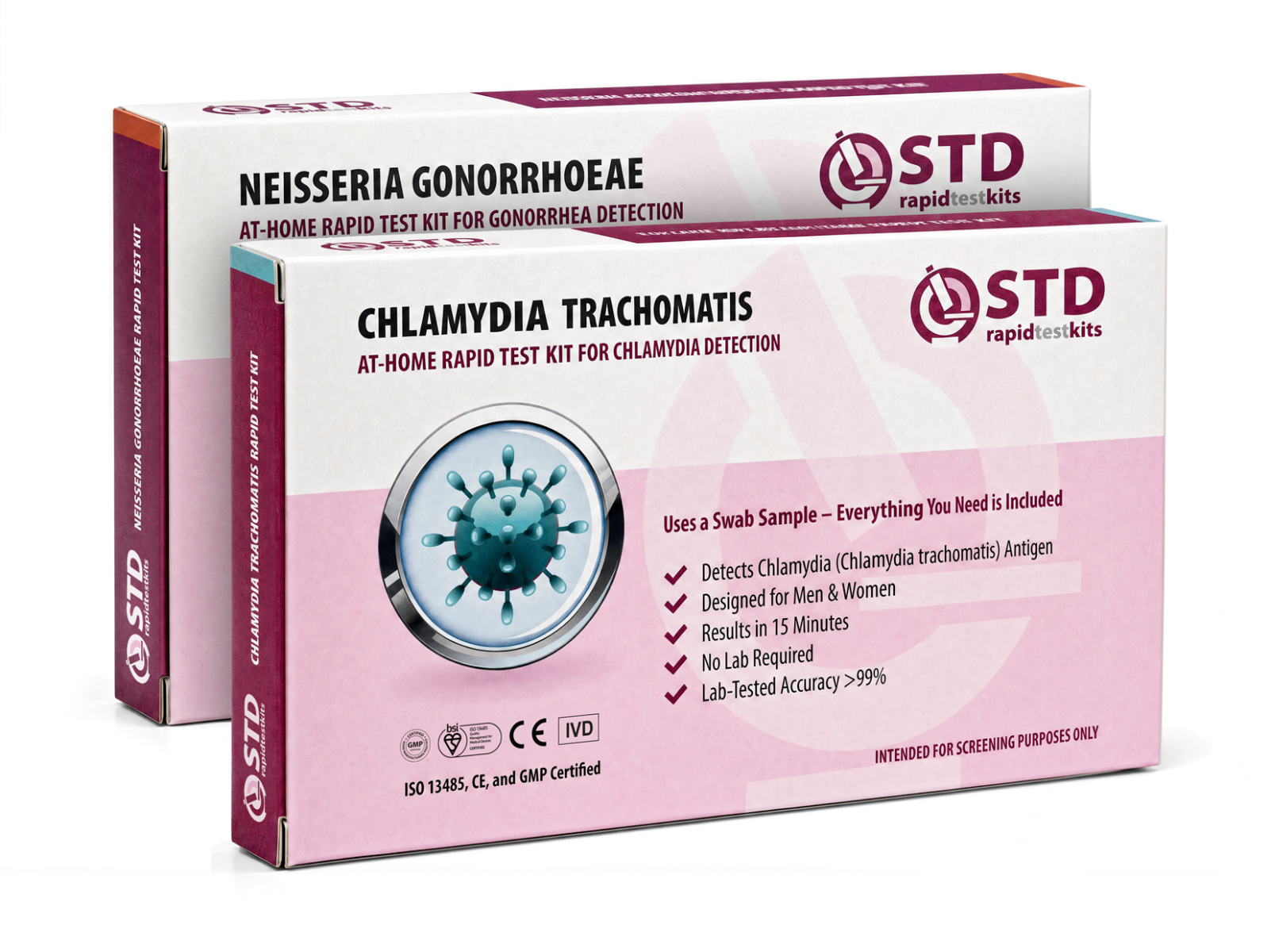
At-home rapid kits are screening tools for active infection. They use lateral-flow chemistry to detect markers of current chlamydia, gonorrhea, HIV, syphilis, herpes, or hepatitis, depending on the kit. They cannot measure tubal patency, ovarian reserve, sperm quality, or the structural state of the reproductive tract. None of those questions belongs to a lateral-flow strip.
The screening tools are complementary to clinic-based fertility testing, not interchangeable with it. Lab NAATs and rapid lateral-flow tests differ on analytical sensitivity, and clinic-administered NAAT remains the gold standard for diagnosis. A positive at-home result is worth confirming through a clinician. A negative result during a known window of recent exposure is worth retesting after the kit's stated window period.
If the question is whether your fallopian tubes are open, only an HSG or saline infusion sonography ordered by a clinician can answer that. If the question is whether a current infection is adding noise to the picture, an at-home rapid screen is a reasonable starting point.
Whether a current infection is present (catching reinfection before it does new damage). Whether a partner's status is clear before unprotected sex. Whether routine screening between fertility-specialist visits is up to date. Whether a recent symptom is consistent with a new exposure that needs a clinic-level workup. Tubal patency, ovarian reserve, and sperm quality are clinic-only questions; rapid kits do not address them.
When to Ask for a Fertility Workup
Standard fertility evaluation begins after twelve months of regular unprotected sex without conception for those under 35, and after six months for those 35 and over (Mayo Clinic female infertility overview). Those windows are designed for the general population.
A history of treated chlamydia or gonorrhea, especially with documented or suspected PID, is reasonable basis to ask for earlier evaluation. Six months of trying without conception is a defensible point to request fertility imaging when there is a meaningful pelvic-inflammatory history in the chart. Three months is reasonable when both partners are 35 or older.
A standard post-STI fertility workup typically combines tests targeting different parts of the reproductive process.
| Test | What it measures | What it answers after an STI | How it works |
|---|---|---|---|
| HSG (hysterosalpingogram) | Fallopian tube patency | Whether tubes are open after PID | Contrast dye injected through the cervix, viewed on x-ray |
| Transvaginal ultrasound | Uterus, ovaries, lining | Visible structural changes or cysts | Internal probe-based imaging |
| Semen analysis | Sperm count, motility, shape | Post-infection sperm effects | Lab analysis of an ejaculate sample |
| AMH blood test | Ovarian reserve estimate | Egg-supply estimate post-infection | Single hormone level via blood draw |
What an HSG Actually Looks At
The HSG specifically targets the question that matters most after PID: are the fallopian tubes still open? It involves injecting a contrast dye through the cervix and watching, on x-ray imaging, whether the dye flows freely through both tubes and spills into the abdominal cavity. A blocked or partially blocked tube is visible on the image.
For the partner with testicles, semen analysis assesses count, motility, and morphology. Even infections treated years ago can leave subtle effects, especially when gonorrhea caused symptomatic epididymitis at the time. Skipping the male-factor workup is a common reason couples stay in diagnostic limbo longer than they need to.
The procedure itself takes a few minutes. Most patients describe brief moderate cramping during the dye injection, comparable to severe period cramping, fading quickly afterward. Many clinicians recommend taking ibuprofen an hour beforehand. The information returned, whether both tubes are open, is among the most consequential answers in a post-STI fertility workup.
What Recovery Looks Like
Recovery sits on a spectrum. At one end are people who finish treatment with no detectable fertility impact. At the other end are people whose tubes are bilaterally blocked. Between those ends lies most of the population that asks this question.
Two facts often surprise people in the middle. First, one open fallopian tube is enough for natural conception in the majority of cycles. The per-cycle probability is lower than with two functioning tubes, but the path is real. Second, when both tubes are blocked or non-functional, in vitro fertilization (IVF) bypasses the tubes entirely. IVF places retrieved eggs and sperm in a lab, fertilizes them outside the body, and transfers a resulting embryo directly into the uterus. Tubal status becomes irrelevant.
For male-factor effects after gonorrhea or other STI-related epididymitis, options range from lifestyle and supplementation strategies for borderline cases to assisted reproduction techniques such as intrauterine insemination (IUI) or intracytoplasmic sperm injection (ICSI), depending on what the semen analysis shows.
For someone already treated, the first concrete step is confirming current infection status and then requesting fertility imaging if the history warrants it. Emotional recovery moves on its own clock. Feeling betrayed by your body, ashamed of a past diagnosis, or scared to hope is common, and worth addressing alongside the medical pieces. Fertility-specific therapists and support groups exist for exactly this set of feelings.
A single patent fallopian tube is enough for natural conception in most cycles. Per-cycle probability is lower than with two functioning tubes, but conception happens routinely with one. When neither tube is functional, IVF bypasses them entirely by placing fertilization in the lab and transferring an embryo directly to the uterus.
Talking to a Partner Without Blame
A past STI is a medical history, not a moral verdict. Framing matters when bringing it into a fertility conversation. The version that helps couples most: this is shared planning information, not a confession.
What a partner needs to know: what was diagnosed, when treatment happened, whether PID was mentioned by the clinician, and what current screening status looks like. A partner does not need a sexual history audit. They need the medical context that affects shared decisions about timing, testing, and when to involve a fertility specialist.
For couples already trying to conceive, mutual testing is the most useful early step. Even when one partner has a documented STI history, the other partner often has independent factors that show up in basic testing. Sequential evaluation (one partner now, the other later) takes longer than parallel evaluation.
Reinfection is the practical reason to keep both partners current. CDC retest guidance after chlamydia or gonorrhea treatment exists because reinfection rates are high enough to matter for both relationship and reproductive planning.
A direct opener that works: "I want to share something from my health history that might affect how we plan testing. It was treated, but I want us to be on the same page about what that means now." That sentence carries the medical relevance without inviting blame.
Lead with planning, not with the diagnosis. "I want us on the same page about screening as we plan a pregnancy" lands differently than "I have something to confess." The medical information a partner needs is what was treated, when, whether PID was mentioned, and current status. The rest is private history.
If Pregnancy Still Has Not Happened
When months turn into a year or more without pregnancy, three concrete moves help. The action steps below are designed to be worked through in order, not all at once.
Three concrete moves when pregnancy has not happened
- Confirm the workup is structurally complete: tubal evaluation and ovarian reserve testing for the partner with ovaries, semen analysis for the partner with testicles, and current STI screening for both. Skipping the male-factor side is a common gap that delays answers.
- Treat current infection status as its own variable. An at-home rapid screen or clinic test before fertility-specific evaluation rules out reinfection that could complicate the picture.
- Do not assume the issue is one-sided. Even when one partner has the STI history, the other partner's testing often surfaces unrelated factors. Shared evaluation produces clearer answers faster than sequential evaluation.
Where At-Home Testing Fits In
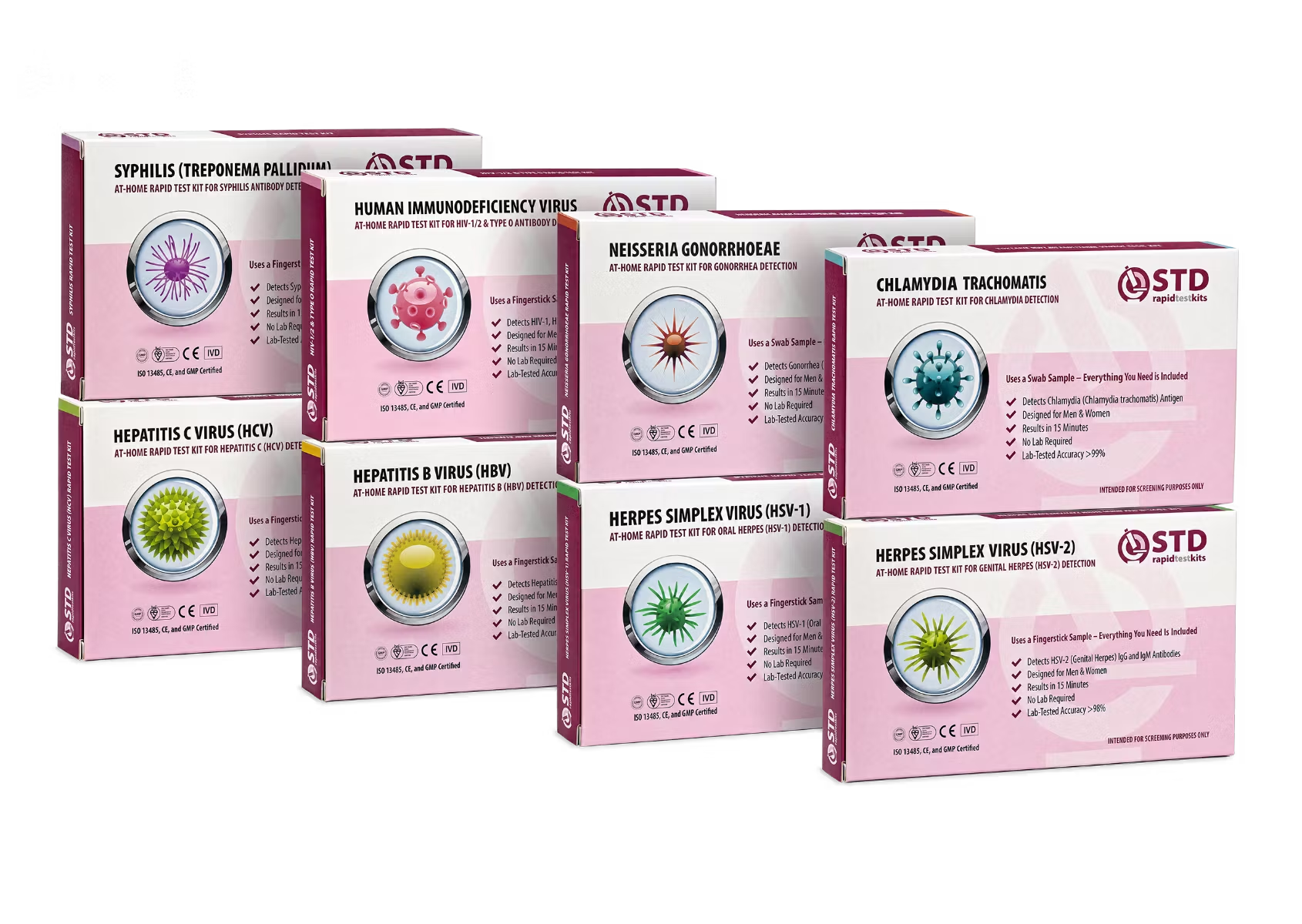
For couples not yet ready for a fertility-specialist consultation, an at-home broad STI screen is a useful first step toward clearing the variables that can be cleared at home. It rules out current infection, leaves the structural questions to the imaging only a clinician can order, and shortens the workup that follows.
A broader rapid screen makes sense when fertility planning involves more than one possible exposure history, when a partner has not been recently tested, or when several months have passed since the last clinic visit. It does not replace fertility imaging or hormone testing, but it does answer the one question those clinic tests cannot answer at the same visit: is anything currently active.
FAQs
- Can I still get pregnant after chlamydia treatment?
- Yes, in most cases. Treatment clears the active infection, and most people who finish a course of antibiotics for chlamydia go on to conceive without difficulty. The risk to fertility comes from infections that lasted long enough to develop pelvic inflammatory disease before treatment, particularly when both fallopian tubes were affected. A clinician can assess that risk based on your history, and an HSG can confirm whether tubes are open.
- How long should I wait after treatment before trying to conceive?
- For straightforward chlamydia or gonorrhea treatment without complications, most clinicians clear conception attempts after the antibiotic course is complete and a follow-up retest at three months is negative. If pelvic inflammatory disease was diagnosed or strongly suspected, ask about an HSG before active trying so you start with information about tubal status rather than waiting six to twelve months to find out.
- What tests check fertility after an STI?
- For the partner with ovaries, common tests include a transvaginal ultrasound, an HSG to check whether fallopian tubes are open, and an AMH blood test to estimate ovarian reserve. For the partner with testicles, a semen analysis assesses sperm count, motility, and shape. Both partners should also confirm there is no current STI active, since reinfection can complicate the rest of the evaluation.
- Can STIs damage sperm or just female fertility?
- Both. Chlamydia and gonorrhea can cause epididymitis in men, an inflammation of the tube that stores sperm. Even after the infection itself is treated, that inflammation can affect sperm count, movement, or shape. Mayo Clinic lists infertility as a possible complication of gonorrhea for both men and women. Semen analysis is the standard way to check whether male-factor issues are part of the picture.
- Can fertility recover after pelvic inflammatory disease?
- Sometimes fully, sometimes partially, sometimes not at all without medical assistance. Mild PID often resolves with no detectable lasting effects. Moderate cases may leave one tube affected. Severe or repeated PID can cause bilateral tubal damage that requires IVF for pregnancy. The variable that matters most is how quickly the original infection was treated. Clinical imaging is the only reliable way to know where you stand.
- What does an HSG feel like, and is it worth it?
- The hysterosalpingogram is a brief x-ray procedure during which a clinician injects contrast dye through the cervix to see whether both fallopian tubes are open. It typically takes a few minutes. Most patients describe brief moderate cramping during the dye injection, comparable to severe period cramping, fading quickly afterward. For someone with a PID history trying to conceive, it answers the most consequential structural question directly.
- Should I get retested before trying to conceive?
- Yes, if there is any chance of reinfection since the original treatment. Current CDC guidance recommends retesting roughly three months after chlamydia or gonorrhea treatment specifically because reinfection rates are high enough to matter. Before stopping contraception or starting active conception attempts, an at-home rapid screen or clinic test confirms the slate is clean. A missed reinfection can undo the benefit of treatment and add new inflammatory damage before fertility evaluation even begins.
How we sourced this article: We synthesized current guidance from the U.S. Centers for Disease Control and Prevention, Mayo Clinic, and the UK National Health Service on chlamydia, gonorrhea, pelvic inflammatory disease, and post-infection fertility evaluation. Where the article cites a specific number or risk window, the linked page in the source list contains that figure. Alejandra M. C. drafted the editorial; Aikaterini Maragkou, MD, reviewed the medical content for alignment with current public-health and clinical guidance.
- U.S. Centers for Disease Control and Prevention. About chlamydia, including transmission, complications, and screening recommendations.
- U.S. Centers for Disease Control and Prevention. About pelvic inflammatory disease, including the 1-in-8 difficulty-getting-pregnant figure for women with a PID history.
- Mayo Clinic. Pelvic inflammatory disease: symptoms, causes, and the role of mild PID in later tubal scarring.
- Mayo Clinic. Female infertility: the 12-month and 6-month evaluation thresholds for under-35 and 35-and-over couples.
- Mayo Clinic. Gonorrhea: symptoms, causes, and infertility as a complication for both men and women.
- UK National Health Service. Pelvic inflammatory disease overview, including symptoms and long-term fertility implications.
