
Published: February 2026 | Last updated: May 2026 | Editorial review and quality control: Martina N.
How soon after vacation sex can I get a reliable STD test result?
Chlamydia and gonorrhea NAATs are generally reliable from about day 7, with day 14 the more dependable window. HIV 4th-generation antigen/antibody lab tests detect most infections by 18 to 45 days (<a href="https://www.cdc.gov/hiv/testing/index.html" target="_blank" rel="noopener noreferrer">CDC HIV testing</a>). Syphilis blood tests reach peak accuracy at 6 to 12 weeks. With symptoms, test now and retest at each window.
Sex while traveling is common, and so is the worry that follows. Whether the encounter happened on a beach vacation, a business trip, or a weekend getaway, the question afterward is the same: should I get tested, and when? This guide walks through when each STD becomes detectable, which infections to consider based on the type of contact, and how to test privately with at-home STI test kits or at a clinic.
Every infection has a window period during which testing cannot reliably detect it. A negative result 3 days after exposure does not rule anything out; the pathogen simply has not reached detectable levels yet. The practical approach is to match test timing to each infection's detection window, factor in the type of contact, and plan a retest if the first test came back too early.
Key Takeaways
- Each STD has its own detection window: chlamydia and gonorrhea NAATs are reliable from about day 7 to 14, HIV 4th-generation tests from 18 to 45 days, and syphilis blood tests begin detecting around 3 weeks and reach peak accuracy at 6 to 12 weeks.
- A single early negative does not rule out infection. Retest at each infection's proper window, and test sooner if symptoms like unusual discharge, sores, or burning urination appear.
Why Testing After Vacation Sex Needs a Plan
The instinct after a vacation hookup is to test immediately. The impulse is understandable, but the biology of STD testing rewards patience over speed. Most tests look for either the genetic material of the pathogen (NAAT or PCR) or for antibodies the immune system produces in response to infection. Both need time to reach detectable levels in the body.
Standard STD panels screen for chlamydia, gonorrhea, syphilis, and HIV. Some panels add herpes, trichomoniasis, and hepatitis B or C. Sample type depends on the infection: self-collected vaginal or penile swabs for chlamydia and gonorrhea, fingerstick blood for HIV, syphilis, hepatitis, and herpes antibody screening. Rapid lateral-flow home tests return a result in 15 to 20 minutes; lab-processed NAAT/PCR takes longer but offers higher analytical sensitivity, especially very early in infection.
Where you were and what kind of sex you had also shape the plan. Some regions carry higher background rates of antibiotic-resistant gonorrhea (WHO STI fact sheet), which may change how a positive result is treated. Oral, vaginal, anal, and skin-to-skin contact each carry different risk profiles and may call for different sample types. Casual sex while traveling is common, so post-vacation testing is a routine concern rather than an unusual one.
Testing within 3 to 4 days of exposure will not detect most STIs, regardless of which test you use. The body has not yet produced enough viral load or antibody response for any test to register. An early negative is expected biology, not a clean bill of health.
Window Periods: When Each STD Becomes Detectable
Every STD has a window period: the gap between exposure and the point a test can reliably pick up the infection. Testing inside that window can return a false negative even when infection is present, because the pathogen has not yet reached detectable levels.
For chlamydia and gonorrhea, NAAT testing on a self-collected swab is widely accepted in clinical practice to become reliable from about day 7, with day 14 the more dependable detection window; this aligns with CDC chlamydia testing guidance, while UK public-health advice is more cautious, with the NHS suggesting people without symptoms wait up to 7 weeks for full reliability across all STIs. Syphilis blood antibody tests need around 3 weeks to begin detecting infection and reach peak accuracy between 6 and 12 weeks. According to the CDC's HIV testing page, 4th-generation antigen/antibody lab tests detect HIV in 18 to 45 days after exposure, with NAATs catching it earlier (10 to 33 days). Antibody-only rapid tests have a wider window of 23 to 90 days. Trichomoniasis NAATs become reliable around day 5 to 7. For herpes (HSV-2), a blood antibody test is typically reliable at 12 weeks after exposure; a swab PCR of an active lesion can detect infection at lesion onset.
The practical takeaway: a test taken 3 to 4 days after vacation will not detect most infections. At day 14, you are inside the reliable window for the common bacterial STDs and trichomoniasis. For HIV and syphilis, the more dependable result is still weeks away. If you tested early and got a negative, plan one follow-up at the appropriate window for each infection, with HIV and syphilis getting the highest retesting priority.
How the Type of Exposure Changes the Plan
The type of sexual contact on vacation shapes which infections to test for and which sample types are appropriate.
Oral sex (giving or receiving) carries risk for gonorrhea, chlamydia, syphilis, and herpes when no barrier was used. Pharyngeal gonorrhea, the infection in the throat, is often symptomless but can serve as a reservoir for transmission, including antibiotic-resistant strains. A throat swab is the appropriate sample for pharyngeal infection and is done at a clinic, not at home. For systemic infections like HIV, syphilis, and HSV antibody screening, a fingerstick blood test covers the at-home testing need.
Vaginal sex without a condom carries combined risk for chlamydia, gonorrhea, trichomoniasis, HIV, and herpes, frequently with no symptoms at all. The CDC recommends annual screening for sexually active women under 25 regardless of symptoms, and for anyone with new partners since their last screen.
Receptive anal sex has the highest per-act transmission risk for HIV and syphilis. If no barrier was used or one broke, plan at least one early test plus a follow-up between weeks 4 and 6, with HIV retesting at 12 weeks if the initial result was negative. Rectal swabs for gonorrhea and chlamydia are done at a clinic; our at-home kits do not cover that sample type.
Skin-to-skin contact alone (kissing, mutual touching) can transmit HSV-1 and HPV. These infections are often not on standard panels and may need separate consideration. Our at-home trichomoniasis and HPV swab kits are validated for vaginal self-swab only; male readers needing those tests should see a clinic.
Pharyngeal (throat) and rectal swabs need a clinic. Our at-home kits cover genital swabs (chlamydia and gonorrhea for all genders; trichomoniasis and HPV for women) and fingerstick blood tests (HIV, syphilis, hepatitis, herpes). For a throat or rectal exposure, see a clinic for the matching swab.
Symptoms That Warrant Testing vs. Travel Stress
Travel puts the body through a lot: jet lag, dehydration, unfamiliar bedsheets, disrupted hygiene routines, and long hours in damp swimwear. Vague fatigue, a transient rash, or mild irritation after a long flight often resolves on its own and may have nothing to do with an STD. Itchy thighs from walking in heat, or a slight rash from a new detergent at the hostel, are usually benign.
Certain symptoms, however, are worth acting on promptly. Painful or burning urination, unusual discharge from the penis or vagina, blisters or open sores near the genitals or mouth, a painless sore that appeared and then healed on its own (a possible syphilis chancre), a rash on the palms or soles, and persistent flu-like symptoms within 2 to 4 weeks of exposure all warrant testing regardless of how recently the encounter happened. Vaginal irritation that feels more internal than external could point to trichomoniasis. A tingling or burning sensation followed by blisters could point to herpes.
Many STIs are entirely asymptomatic. The absence of symptoms alone is not reassurance, especially after unprotected contact with a new partner. If symptoms appear while you are still traveling, test with whatever is available and plan a retest at the proper window once you are home.
Symptoms That Warrant STD Testing After Travel
Having one or more does not confirm infection; only a test can do that. Asymptomatic infection is also common.
- Painful or burning urination Common
- Unusual discharge from the penis, vagina, or rectum Common
- Blisters, sores, or ulcers on or near the genitals, mouth, or rectum Common
- A painless sore that appeared and healed on its own (possible syphilis chancre) Less common
- Rash on the palms of the hands or soles of the feet Less common
- Persistent sore throat lasting more than a week after oral contact Less common
- Flu-like symptoms (fever, body aches, swollen lymph nodes) within 2 to 4 weeks of exposure Less common
At-Home Rapid Tests, Clinics, and Mail-in Kits
There are three main testing routes after vacation sex, and each fits a different situation. This article is published by stdrapidtestkits.com, which sells at-home STI testing kits. We recommend products based on fit for the reader's concern, not commercial benefit.
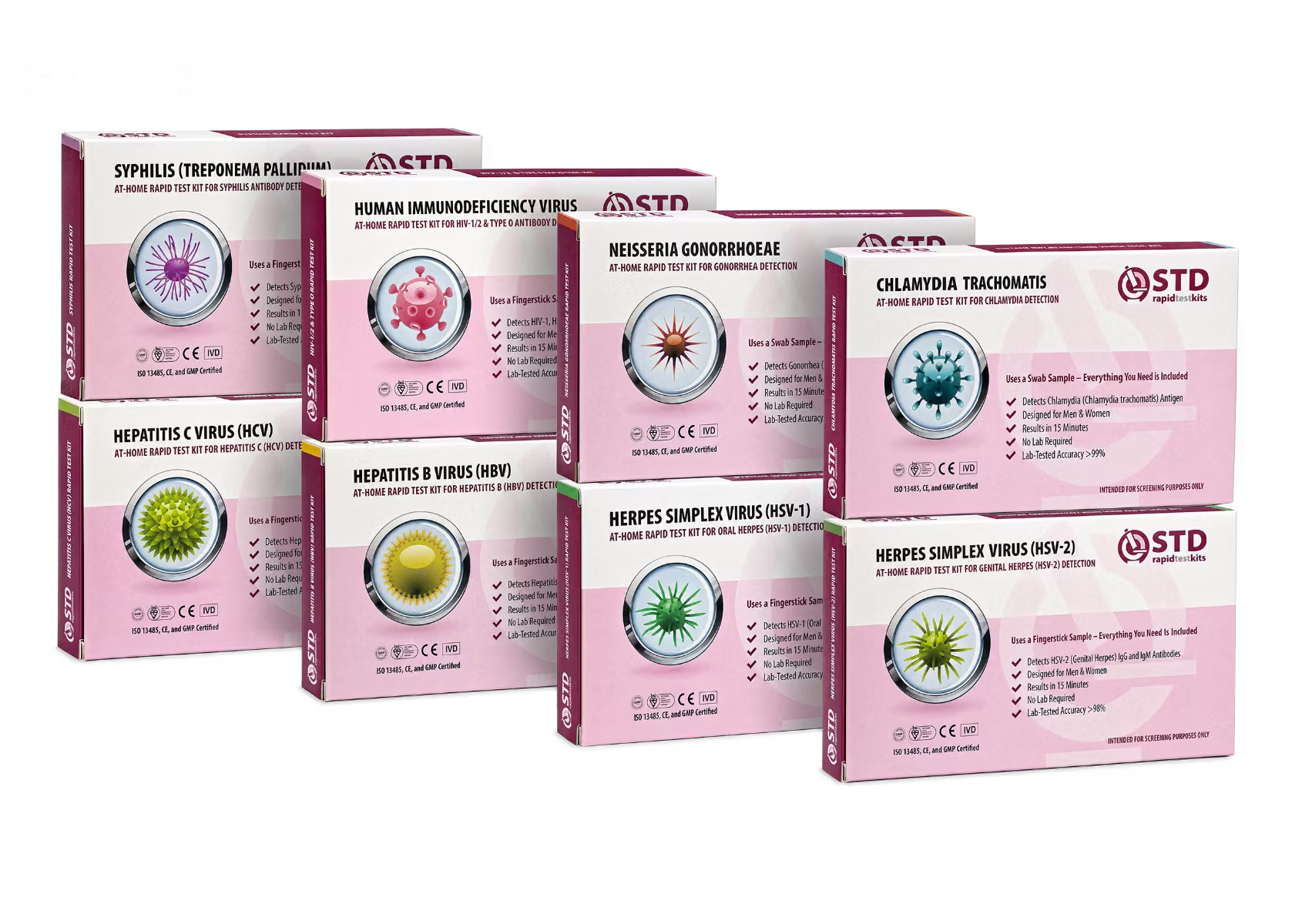
At-home rapid tests are lateral-flow immunoassays that deliver a result in 15 to 20 minutes from a fingerstick blood sample or a self-collected swab. They are private, require no appointment, and cost a flat upfront price with no insurance claim, copay, or separate lab fee. A multi-infection at-home rapid panel covers the most common STIs in a single pass. The trade-off: lateral-flow sensitivity is generally lower than laboratory NAAT/PCR, especially very early in infection. A positive rapid result is worth confirming with a lab test, and a negative result taken inside the window period should be repeated later.
Clinic-based testing offers the broadest panel and the highest analytical sensitivity. It is the right choice when symptoms are present, when an at-home result needs confirmation, when pharyngeal or rectal swabs are needed (sample types home kits do not cover), or when same-day treatment is necessary.
Mail-in lab kits use a self-collected sample at home, then send it to a laboratory for NAAT or PCR analysis. Turnaround is typically 2 to 5 days after the lab receives the sample. Analytical sensitivity is higher than lateral-flow, making mail-in the more reliable option once the window period has fully closed.
The NHS STI overview notes that STIs can take up to 7 weeks after unprotected sex to show up on a test, meaning asymptomatic individuals benefit from waiting for the fuller picture before concluding they are clear. A practical two-step approach works well: an at-home rapid test for an immediate read, followed by a planned retest at the right window using a mail-in kit or a clinic visit.
| Option | Turnaround | Privacy | Sensitivity | Best for |
|---|---|---|---|---|
| At-home rapid test | 15 to 20 minutes | Very high | Moderate to high | Immediate screening once in window; no appointment needed |
| Mail-in lab kit | 2 to 5 days after lab receives sample | High | High (lab NAAT/PCR) | Most reliable detection after window closes |
| Clinic-based test | Same day to about 1 week | Low to moderate | Very high | Symptoms, confirmation, pharyngeal/rectal swabs, same-day treatment |
Why One Negative Test Is Rarely the Final Word
A negative test inside the window period is exactly what biology predicts even when infection is present. The pathogen has not yet reached detectable levels, so no test of any kind could find it at that stage. This is how infections develop, not a flaw in the test.
The CDC's HIV testing page puts the most reliable result from a 4th-generation antigen/antibody lab test at about 45 days after exposure, with NAAT pushing detection earlier in some cases. Antibody-only rapid tests may need 23 to 90 days. For syphilis, antibody tests reach peak sensitivity between 6 and 12 weeks. For chlamydia and gonorrhea, NAAT is generally reliable from day 7 to 14.
Common retesting scenarios after vacation: if you tested at day 3 to 5 with no symptoms, retest at day 14 to 21 for chlamydia and gonorrhea, and again at 6 weeks for HIV. If the first test was negative but symptoms developed since, retest immediately or see a clinician regardless of timing. If the exposure was high-risk (no condom, multiple partners, receptive anal sex), plan retests at 3 weeks and again at 6 weeks, with HIV retesting at 12 weeks. If you tested positive abroad with a rapid test, confirm with a lab-grade NAAT or clinic test once you are home.
Persistent symptoms (burning when urinating, unusual discharge, a sore that does not heal, a rash that spreads) outweigh a single negative test and warrant evaluation by a clinician. The same applies after treatment received abroad, where antibiotic regimens vary and gonorrhea resistance means a test-of-cure at 3 to 4 weeks is the only reliable way to confirm the infection cleared.
Geography and Antibiotic Resistance
Geography does not determine who is or is not carrying an infection, and assumptions about people based on where they live are clinically wrong. What geography does affect is the local pattern of specific infections and the resistance profiles of common bacterial pathogens.
Gonorrhea is the clearest example. The World Health Organization flags rising drug resistance in Neisseria gonorrhoeae, including resistance to quinolones, azithromycin, and extended-spectrum cephalosporins (a last-line treatment option). Several regions, including parts of Western Europe and Southeast Asia, have elevated rates of resistant strains. A positive gonorrhea test from a returning traveler looks the same as any other positive in the lab. However, the treating clinician may want to know where the exposure happened so susceptibility testing can be ordered before choosing an antibiotic.
HIV prevalence also varies regionally. In some countries, access to PrEP and consistent antiretroviral coverage is lower than in the United States or Western Europe. The test mechanics are the same everywhere; what changes is how urgently to prioritize retesting when the exposure occurred in a region with elevated HIV or gonorrhea rates.
If your exposure was in a region with elevated gonorrhea resistance rates, mention the location when you see a clinician. Susceptibility testing before starting antibiotics may be warranted, and a test-of-cure at 3 to 4 weeks is the standard way to confirm treatment worked.
What to Do if a Result Is Positive
A positive test is information you can act on. Most STDs are treatable; for the chronic ones (HIV, herpes), modern management means a normal life expectancy and dramatically reduced transmission risk.
Chlamydia, gonorrhea, and trichomoniasis are bacterial or protozoal and respond to antibiotic treatment. Confirm with a clinician, take the prescribed course (doxycycline for chlamydia, ceftriaxone for gonorrhea, metronidazole for trichomoniasis per the current CDC STI Treatment Guidelines), avoid sex for 7 days after completing treatment, and ensure any recent partners are tested and treated. A test-of-cure at 3 to 4 weeks is standard for pharyngeal gonorrhea and recommended for chlamydia in pregnancy. Untreated chlamydia or gonorrhea can progress to pelvic inflammatory disease and affect fertility over time; catching and treating both early avoids that risk entirely.
Syphilis is confirmed with a follow-up treponemal test and treated with benzathine penicillin G in most cases, with retesting at 6 and 12 months to confirm titers fall.
HIV requires a confirmatory second-line test (often an HIV-1/HIV-2 differentiation immunoassay or NAAT). Modern antiretroviral therapy started early leads to undetectable viral load, which means the virus becomes untransmittable: the U=U principle confirmed by large-scale clinical trials. The window between a reactive home test and a confirmed diagnosis is anxious, but the prognosis with early treatment is excellent.
If you tested positive while still abroad, many countries have walk-in clinics or telehealth services that can guide treatment. Bacterial and parasitic STIs respond to antibiotics, while viral infections are managed with antiviral medication (MedlinePlus: sexually transmitted infections). For syphilis or HIV, finding a local clinician or contacting a travel-medicine service is safer than waiting until you are home, especially if symptoms are worsening.
Letting partners know breaks the transmission chain. Most countries have anonymous partner-notification services for those who would rather not reach out directly.
More than 1 million curable sexually transmitted infections (STIs) are acquired every day worldwide in people 15 to 49 years old, the majority of which are asymptomatic.
Privacy and How At-Home Testing Works
For travelers who do not want to explain a vacation hookup to a primary care doctor, or who live somewhere without convenient clinic access, at-home testing is often the most realistic first step. Discreet packaging is standard: shipping is in plain boxes with no infection-related branding on the outside, and billing descriptors on reputable retailers are equally generic.
The test process depends on the kit. For a blood antibody test (HIV, syphilis, hepatitis, HSV), prick your fingertip with the lancet provided, apply blood drops to the cassette, add buffer solution, and read the result at 15 to 20 minutes. For a swab-based test (chlamydia, gonorrhea, trichomoniasis, HPV), collect a vaginal or penile sample with the provided swab, transfer it to the cassette, and follow the same read window. Our at-home trichomoniasis and HPV swab kits are validated for female anatomy only (vaginal self-swab); male readers needing those tests should see a clinic. The blood-based kits and the chlamydia and gonorrhea swab kits work for all genders.
If you are still abroad and want to test before flying home, a rapid kit you packed in your luggage works the same way it would at home. Most rapid test kits are small, sealed, and perfectly legal to carry in hand luggage. If you plan to order a kit shipped to your hotel, check local import rules first; not all countries allow medical testing supplies delivered across borders. As a backup, many local pharmacies and clinics abroad stock rapid kits for HIV, syphilis, and hepatitis B.
Results from at-home kits are read at home with no online account required and no result sent to an external database. Shipping within the US is typically 2 to 5 business days.
Taking the Next Step
Getting tested is a practical decision, the same kind you make for any other health concern. If you had sex while traveling and something feels off, or even if nothing does, matching your test timing to each infection's window is the most reliable path to clarity. A test ordered today gives you a result in 15 to 20 minutes at home, or a confirmed answer within about a week from a clinic or mail-in lab.
Should You Test Now, and When to Retest?
Do you have symptoms now, such as unusual discharge, a sore, burning urination, or a spreading rash?
Yes: Test now and see a clinician. Symptoms outweigh a single negative result, and earlier treatment leads to better outcomes.
Has it been at least 14 days since the exposure?
Yes: Test now for chlamydia and gonorrhea, then plan an HIV test at 18 to 45 days and a syphilis test at 6 to 12 weeks.
Did an early test come back negative before its window closed?
Yes: Schedule one follow-up at each infection's proper window before concluding you are clear, and confirm any positive result with a clinician.
No: You are likely clear for the infections you tested for at the right window, but retest if new symptoms appear.
Guidance only; a clinician can advise based on your specific situation.
FAQs
- Can I test the day after my trip?
- You can, but most tests will not detect anything that early. The window period between exposure and detectability is real biology, not a test flaw. If it has been less than a week, an at-home test is mostly for peace of mind; plan a retest at the proper window for each infection (day 7 to 14 for chlamydia and gonorrhea, 18 to 45 days for HIV, 6 to 12 weeks for syphilis).
- I used a condom. Do I still need to test?
- Condoms substantially reduce risk for fluid-transmitted infections like chlamydia, gonorrhea, and HIV. They do not eliminate risk for skin-to-skin infections like herpes (HSV) or HPV, which can transmit from areas the condom does not cover. If something felt off (slip, breakage, missed coverage during oral sex), testing at the proper window is reasonable even with consistent condom use.
- How do I know whether a symptom is travel stress or an STD?
- Travel changes sleep, diet, hydration, and hygiene routines all at once. Vague fatigue or a transient rash often resolves on its own. Symptoms that warrant testing include painful urination, unusual discharge or odor, blisters or sores, a rash on palms or soles, and a sore throat that lingers more than a week after oral contact. Many STIs are also asymptomatic, so the absence of symptoms is not reassurance on its own.
- Can I get herpes from kissing?
- Yes. HSV-1 (the more common oral herpes virus) transmits through skin-to-skin contact and can be shed by an infected person even with no visible cold sore. HSV-1 can also cause genital infection if oral sex was involved. A blood antibody test for HSV is typically reliable 12 weeks after exposure; an active lesion can be PCR-tested at a clinic at lesion onset.
- When should I retest, and what triggers an earlier retest?
- Two situations call for retesting. The first is a scheduled retest after an early negative: follow the window for each infection (14 days for chlamydia and gonorrhea, 45 days for HIV, 6 to 12 weeks for syphilis). The second is a symptom-driven retest: if burning, discharge, a sore, or a new rash appears or worsens at any point, retest immediately or see a clinician regardless of how recent the last test was. Retesting after treatment is different; a test-of-cure at 3 to 4 weeks confirms the infection cleared.
- I was treated for an STD abroad. Do I still need to retest?
- Yes, in most cases. Antibiotic regimens vary by country, gonorrhea resistance is rising in several regions, and not every overseas clinic confirms cure. A test-of-cure roughly 3 to 4 weeks after treatment is the standard way to confirm the infection cleared. If symptoms persist after the treatment course, see a clinician sooner.
- What is the most discreet way to test at home?
- Order from a retailer that ships in plain packaging with neutral billing descriptors. At-home rapid tests can be completed in your own bathroom in 15 to 20 minutes with no clinician visit and no patient record outside your own household. Most rapid kits are small enough to carry in hand luggage if you want to test while still traveling.
- Is it ever too late to test?
- No. For long-incubation infections like HIV and syphilis, later testing is actually more accurate than testing too early. If something has been weighing on you from a trip months ago, a current test today still tells you where you stand and opens the door to treatment if needed.
- U.S. Centers for Disease Control and Prevention. HIV testing: detection windows for 4th-generation antigen/antibody (18 to 45 days), NAAT (10 to 33 days), and antibody-only rapid tests (23 to 90 days).
- U.S. Centers for Disease Control and Prevention. About chlamydia: testing and annual screening recommendations for sexually active women under 25 and other at-risk groups, plus retesting guidance after treatment.
- World Health Organization. Sexually transmitted infections (STIs) fact sheet: global incidence (over 1 million curable STIs daily), asymptomatic transmission, and antibiotic-resistance trends in Neisseria gonorrhoeae.
- U.K. National Health Service. Sexually transmitted infections (STIs): overview, symptoms, testing options, and guidance that STIs can take up to 7 weeks after unprotected sex to show on a test.
- U.S. Centers for Disease Control and Prevention. Sexually Transmitted Infections Treatment Guidelines, 2021: first-line antibiotic regimens for chlamydia (doxycycline), gonorrhea (ceftriaxone), and trichomoniasis (metronidazole), plus test-of-cure guidance.
- U.S. National Library of Medicine, MedlinePlus. Sexually transmitted infections: overview of testing and treatment, including antibiotics for bacterial and parasitic STIs and antivirals for viral infections.
