
Published: December 2025 | Last updated: May 2026 | Editorial review and quality control: Martina N.
Years of abstinence, or simply a long gap without a new partner, feels like it should hand you a clean slate. It often doesn't. Some sexually transmitted infections settle in quietly, stay below the symptom threshold for months or years, and only surface when a routine screening, a fertility workup, or a blood-donation panel finally catches them. That gap between exposure and detection is the entire reason this article exists.
Whether your last partner was six months ago or six years ago, and whether you got tested back then or never did, the worthwhile question is simple: what could still be sitting in your system that screening would catch right now? The answer is more interesting, and a lot less alarming, than internet panic-Googling makes it sound. Most STIs that linger this way are treatable. Some are manageable for life with no major impact. Knowing which one you might have, if any, is the only practical way to move forward.
Key Takeaways
- Bacterial STIs (chlamydia, gonorrhea, syphilis) do not self-resolve when you stop having sex. If you were never treated, the infection can persist for months or years.
- Antibody-based tests for HIV, syphilis, and herpes stay reliable indefinitely after the window period closes, so a test done years after exposure is just as diagnostic as one done weeks after.
What "Dormant" Really Means for STIs
The terms "dormant" and "asymptomatic" get used interchangeably online, but they describe different biology. Some infections are genuinely latent, meaning the organism is present but inactive, and may reactivate later. Others are continuously active in your body but produce no symptoms severe enough to send you to a doctor. From the outside both look the same: you feel fine. The testing implications, however, are not the same.
The CDC's chlamydia overview states that "chlamydia often has no symptoms, but it can cause serious health problems, even without symptoms." The infection is detected mainly through routine screening, partner notification, or workup of complications such as pelvic inflammatory disease and tubal-factor infertility, all of which can show up years after the original exposure.
Here is a quick reference for how long common STIs can stay quiet, and what "quiet" actually means for each one:
| Infection | Symptom-free state common? | How long it can persist | Late-emerging risk |
|---|---|---|---|
| Chlamydia | Yes, especially in women | Months to years if untreated | Pelvic inflammatory disease, tubal factor infertility |
| Gonorrhea | Yes, particularly rectal and pharyngeal sites | Months; some sites clear, some persist | Disseminated infection, joint involvement (rare) |
| Syphilis | Yes, after primary chancre heals | Years (latent stage) | Cardiovascular and neurological damage in tertiary stage |
| HSV-1 / HSV-2 | Yes, primary outbreak often unnoticed | Lifelong (latent in nerve ganglia) | Recurrent outbreaks, neonatal transmission risk |
| HPV | Yes, most clear within 1-2 years | Months to decades for high-risk strains | Cervical, anal, oropharyngeal cancer (high-risk types) |
| HIV | Yes, after acute phase | Lifelong without treatment | Immune system damage, AIDS-defining illnesses |
| Hepatitis B / C | Often, especially Hep C | Years to decades chronic | Cirrhosis, liver cancer if untreated |
Bacterial STIs Don't Clear Themselves
This is where the assumption that time equals healing breaks down. Untreated bacterial infections persist until antibiotics interrupt them. Time alone does not.
Chlamydia is the clearest example. The CDC's chlamydia information page emphasizes that the infection is most reliably caught through routine screening rather than symptom-driven testing. Untreated cervical chlamydia can ascend to the fallopian tubes, causing scarring that increases the risk of ectopic pregnancy and tubal factor infertility, and these complications often emerge years after the original exposure.
Syphilis is the more dramatic case. After the painless primary chancre heals (usually within three to six weeks even without treatment), the infection enters a secondary phase, then a long latent stage that can last for years. During latent syphilis you have no visible signs, but treponemal antibodies are detectable in blood and the bacterium can still cause cardiovascular and neurological damage if it eventually progresses. Per the CDC's syphilis information page, latent syphilis is detected by routine antibody testing, not by waiting for symptoms.
Gonorrhea behaves a little differently. Many genital infections do clear without treatment over weeks to months, but rectal and pharyngeal gonorrhea are far more likely to persist asymptomatically than urethral or cervical infections. The CDC recommends extragenital screening for at-risk individuals because symptoms are unreliable in those locations.
If a bacterial STI was never treated, time has not erased it. The bacteria are either gone (cleared by your immune system or by an unrelated antibiotic course) or still present, and current testing is the practical way to tell the difference.
"Chlamydia often has no symptoms, but it can cause serious health problems, even without symptoms. Even when chlamydia has no symptoms, it can damage a woman's reproductive system." Routine screening, not symptom-watching, is how it gets caught.
Viral STIs and the Long Tail
Viral STIs are an entirely different shape of problem. Once the virus is inside you, your immune system contains it but rarely eliminates it.
Herpes simplex (HSV-1 and HSV-2) establishes lifelong latency in nerve ganglia after the initial infection. Many people seroconvert without ever noticing a primary outbreak, then experience reactivations triggered by stress, illness, or hormonal shifts, sometimes years later. The CDC herpes testing page notes that blood tests can detect a past HSV infection when no active lesion is present.
HPV is the wild card. The CDC's HPV information page notes that nearly all sexually active people will acquire HPV at some point, and most infections clear within one to two years. A small fraction of persistent high-risk infections progress to cervical, anal, or oropharyngeal cancers years or decades later. Cervical Pap and HPV co-testing is the standard surveillance method in people with cervixes; there is no FDA-approved screening test for HPV in penises or throats outside research settings.
HIV is the largest "I never knew" case. Acute HIV infection produces flu-like symptoms in roughly half of people, but those symptoms are easily dismissed as a passing illness. Without treatment, HIV continues replicating and damaging the immune system silently for years. According to the CDC HIV testing overview, modern fourth-generation antigen-antibody tests detect HIV reliably from about 18 to 45 days post-exposure, and rapid antibody tests close the window from roughly 23 to 90 days. After those windows, a negative test is highly reliable, even if the exposure was years ago.
Window Periods Don't Expire
A common misconception sounds like this: "I waited too long, the test won't pick it up anymore." That has the biology backwards. Window periods describe how soon you can test reliably after exposure. Once you are past the window, test reliability stays high for as long as the infection itself remains detectable, and for chronic STIs that means years.
Antibody-based tests work especially well for old exposures. Your immune system produces persistent antibodies against HSV, HIV, syphilis, hepatitis B, and hepatitis C; once those antibodies are present in your blood they remain detectable indefinitely (or for many years, in the case of treated hepatitis C with sustained virologic response). A test done five years after exposure has the same diagnostic sensitivity as one done five months after, for these conditions.
Two specific cases where "too late" actually does mean something:
- Self-cleared HPV. If your immune system cleared an HPV infection three years ago, current screening is looking at the cervix today, not at antibody traces. A clear test reflects current state, not whether you were ever exposed.
- Inadvertent antibiotic clearance. Asymptomatic chlamydia infections occasionally get cleared by antibiotic courses prescribed for unrelated reasons (a tooth abscess, a respiratory infection, a UTI). You cannot test backward to detect this, and clinically it does not matter. What matters is that current testing is negative.
Is it too late to test if my last exposure was years ago?
No. For HIV, syphilis, herpes, and hepatitis B and C, antibody-based tests stay reliable indefinitely once the window period closes. Per the CDC HIV testing page, that window is roughly 23 to 90 days for rapid antibody tests, and as few as 18 to 45 days for fourth-generation antigen-antibody lab tests. A test you take today will detect a long-standing infection just as accurately as one taken months after exposure. The only catch is that self-cleared HPV infections leave no detectable trace in standard screening, so a clean current result reflects today's status rather than your full history.
Choosing a Test After a Long Gap
When you have been away from sex for a while, the test selection logic shifts. You are less worried about new exposures and more focused on ruling out anything that might have persisted from your last partner. The goal is comprehensive coverage of chronic infections, with particular attention to anything bacterial that needs treatment.
At-home rapid tests use lateral-flow immunoassay chemistry, the same general approach as a pregnancy test or a rapid antigen COVID test. They are screening tools, complementary to laboratory NAAT (nucleic acid amplification tests) rather than equivalent. For someone with no current symptoms and no recent risk, a negative lateral-flow result combined with a clear exposure history is solid reassurance. If anything comes back positive, or if you have unexplained symptoms, confirmation with a lab NAAT is the standard next step.
Three reasonable options, depending on what fits your situation:
| Option | Best for | Privacy | What it covers well |
|---|---|---|---|
| At-home rapid lateral-flow kit | Quick reassurance, comprehensive baseline | Very high | Persistent antibody-detectable infections (HIV, syphilis, HSV, hepatitis B and C); swab-based screen for chlamydia and gonorrhea |
| Mail-in lab kit | Full panel without a clinic visit | High | NAAT-grade detection of chlamydia and gonorrhea; broader serology |
| Clinic or telehealth lab order | Symptoms present, complications suspected, or confirmation needed | Moderate | Gold-standard NAAT testing, follow-up imaging, prescription treatment if positive |
Many people who have STIs do not have symptoms. Without testing, STIs can go undetected, leading to missed opportunities for prevention, treatment, and partner notification.
If You Test Positive After a Long Gap
This is the scenario most people are quietly afraid of, and it is worth flattening the panic before it spirals. A positive after years of abstinence almost always means an old exposure that was never caught. Treatment options are the same regardless of how long the infection has been there:
- Bacterial STIs (chlamydia, gonorrhea, syphilis) are treated with antibiotics. A single appropriate course typically clears the infection. Latent syphilis usually requires a longer benzathine penicillin G regimen per CDC guidelines.
- HSV is managed, not cured. Suppressive antiviral medication (acyclovir, valacyclovir, famciclovir) reduces outbreak frequency and lowers transmission risk to partners substantially.
- HIV is treatable as a chronic condition. The CDC notes that people on consistent antiretroviral therapy who reach undetectable viral load do not transmit HIV sexually, and life expectancy on modern treatment approaches that of the general population.
- HPV is monitored, not treated directly. High-risk strains in the cervix are tracked with follow-up Pap and HPV co-testing, and colposcopy if abnormal findings appear.
- Hepatitis B and C are now both treatable, and hepatitis C is curable in over 95% of cases through direct-acting antiviral regimens.
The hardest part of a positive result is usually the partner-notification conversation, not the medical treatment. There is no good way to assign blame for an infection you have been carrying for years, and there is rarely any benefit in trying. The practical question is what comes next, and the answer is almost always treatment, retesting after the recommended interval, and protection going forward.
Resetting Before a New Partner
Closing a long abstinent period and entering a new relationship is the moment when testing pays the highest dividend. Two things are true at the same time: you are statistically less likely to have acquired anything new during your time away from sex, and you may be carrying something old that was never caught. A clean baseline now makes the next chapter much easier to navigate.
A pre-relationship testing conversation that goes well usually has three parts:
- Both partners get tested independently before becoming sexually active together.
- Both share actual results from a recent test, not vague reassurances like "I think I'm clean."
- Both agree on the contraception and barrier-method plan going forward, including the catches around partial protection (HPV transmission is not fully blocked by condoms, HSV transmission can occur during asymptomatic shedding).
This is also a good moment to consider a broader panel than you might otherwise. The CDC's STI testing guidance recommends at least annual screening for several risk categories, including sexually active women under 25, gay and bisexual men, and people who inject drugs, with more frequent testing for some groups. Resetting that clock with a comprehensive baseline before a new relationship is the cleanest way to start.
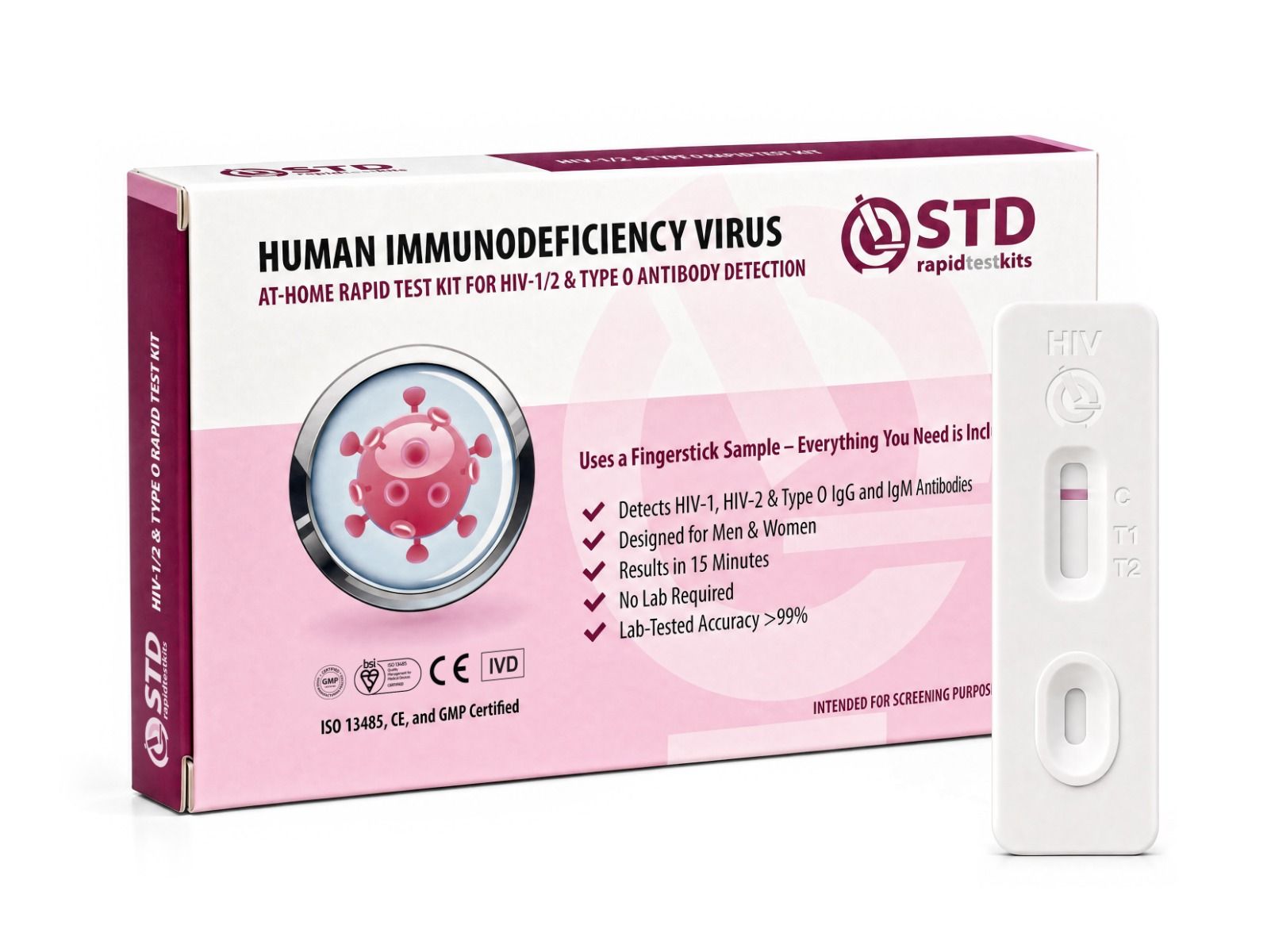
If your concern is specifically HIV (the test most commonly skipped because of stigma rather than logistics), the dedicated rapid antibody test detects HIV reliably from about three months post-exposure, which covers anyone whose last potential exposure was longer ago than that.
What to Actually Do This Week
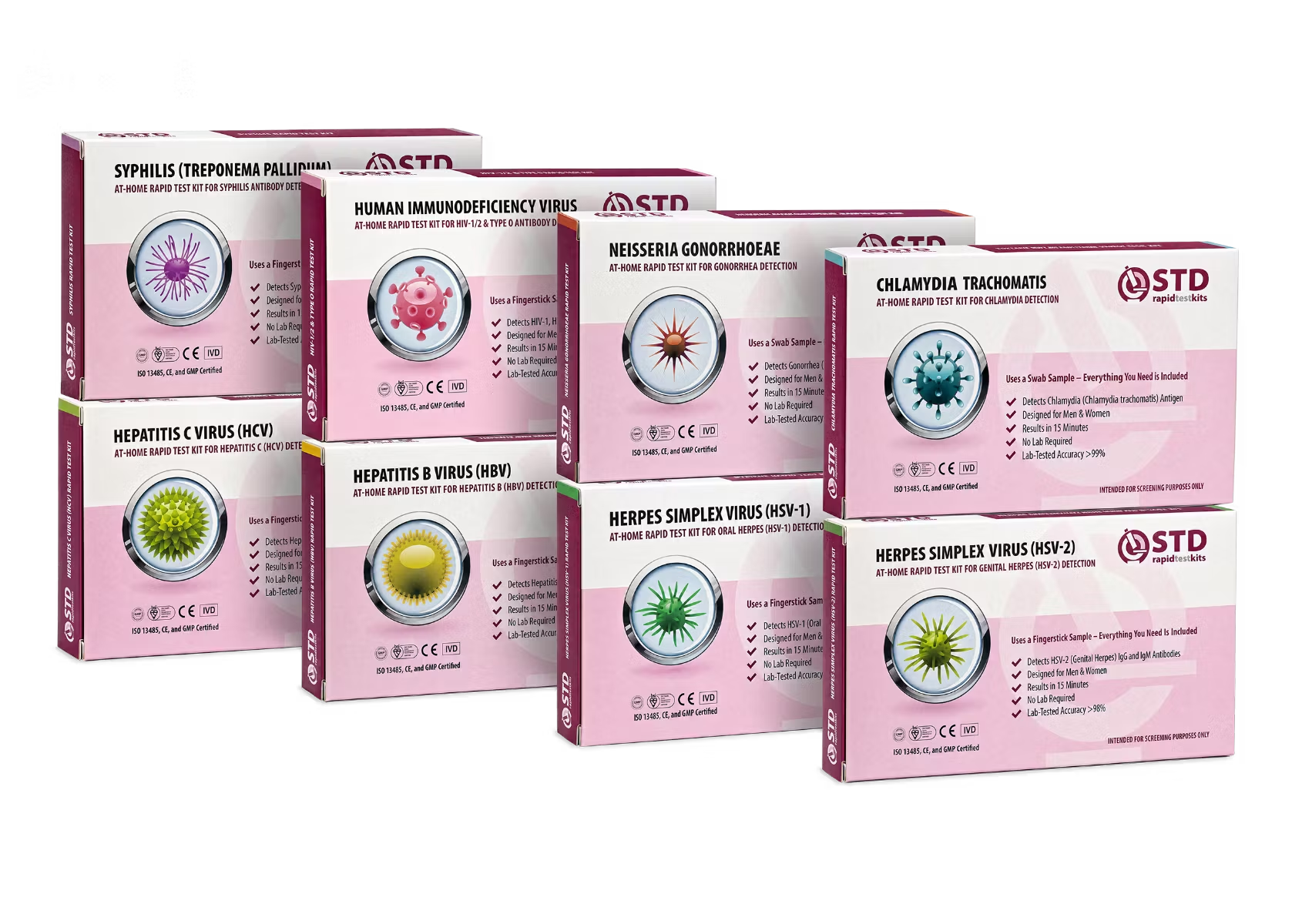
If you have been sitting on this question for a while, here is the short, practical version. Pick a test that covers the chronic infections most likely to have persisted from your last partner. A multi-infection rapid panel covers the typical concerns; a dedicated HIV test plus a chlamydia and gonorrhea swab covers the bare minimum. Take the test. If it is negative, you have a real, current baseline you can carry into your next chapter. If it is positive, you have a treatable problem with a clear medical path, not a verdict.
Years of no sex do lower your risk of acquiring something new. They do not retroactively treat anything you may have been carrying. Those are two different questions, and only testing answers the second one.
- Pick a panel that fits your concern. Multi-infection rapid kit for a comprehensive baseline; HIV plus chlamydia/gonorrhea swab if you want the bare minimum.
- Take the test. Follow the instructions exactly; rapid lateral-flow tests are sensitive to user error.
- Confirm any positive with a lab NAAT. Rapid kits are screening tools; a confirmatory lab test is the standard next step before treatment.
Frequently asked questions
- I haven't had sex in years. Why would I still need to test?
- Because some STIs can persist for months or years without obvious symptoms. If you were never tested after your last sexual encounter, an untreated chlamydia, gonorrhea, syphilis, HSV, HPV, HIV, hepatitis B, or hepatitis C infection could still be detectable now. Testing is about your last known exposure, not your current behavior.
- How long after my last partner is too long to test?
- If your last sexual encounter was more than 90 days ago, every standard window period for the antibody-based tests has closed. Test now and the result is your current baseline, no expiry date and no need to wait further.
- Can a long-dormant STI still be treated effectively?
- Yes for most. Bacterial infections (chlamydia, gonorrhea, syphilis) are cured by appropriate antibiotics regardless of how long they have been present, though latent syphilis requires a longer regimen than primary syphilis. HIV is treatable as a chronic condition. Hepatitis C is now curable in over 95% of cases. HSV and HPV are managed rather than cured, but knowing your status changes how you make future decisions.
- Are at-home rapid tests accurate for old exposures?
- For chronic, antibody-detectable infections (HIV, syphilis, HSV, hepatitis B and C), yes. Lateral-flow rapid tests detect persistent antibodies just as well years after exposure as months after. For chlamydia and gonorrhea, the at-home swab tests detect current bacterial presence rather than antibodies, so they reflect today's state. Positive rapid results should be confirmed with a lab NAAT.
- What's the difference between a window period and dormancy?
- A window period is the time between exposure and when a test can reliably detect the infection (your immune response or the pathogen itself takes time to reach detectable levels). Dormancy describes a phase after the active infection where the pathogen is present but not actively causing symptoms. The two concepts are independent: an infection can be past its window period and still be dormant, which is exactly the scenario this article is about.
- If I test negative, do I need to retest before a new partner?
- If your negative result is from after your relevant window periods closed and you have had no exposures since, no. The result is a real current baseline. Both you and your new partner getting tested before becoming sexually active is the standard recommendation, and re-testing three to six months into a new relationship is good practice if either of you has had recent risk.
- I was in a monogamous relationship for years and never tested. What should I do?
- Test now, even if the relationship has ended. Mutual monogamy only protects both partners if both partners actually were monogamous and both started the relationship STI-free. If you never tested at the start, you genuinely don't know your baseline. A single comprehensive panel resolves the question and gives you a clean record for whatever comes next.
- What if I can't remember when my last possible exposure was?
- Pick the most conservative scenario (your earliest plausible exposure) and check whether you are past the window periods for the infections you are most concerned about. If your earliest possible exposure is more than three months ago, you are past every standard window period for HIV, HSV, syphilis, and hepatitis serology. Test now and take the result as your current baseline.
How we sourced this article: We synthesized current STI screening recommendations and infection-specific guidance from the U.S. Centers for Disease Control and Prevention, alongside CDC fact sheets for chlamydia, syphilis, herpes, HPV, and HIV. Window-period figures for HIV antigen-antibody and antibody tests come from the CDC HIV testing overview. Where the at-home rapid test technology differs from laboratory NAAT, we said so explicitly. We did not cite individual peer-reviewed papers behind paywalls; the public-health guidance pages we link incorporate that primary literature.
- U.S. Centers for Disease Control and Prevention. About Chlamydia. Symptoms, complications including PID and tubal-factor infertility, and screening recommendations.
- U.S. Centers for Disease Control and Prevention. About Syphilis. Primary, secondary, latent, and tertiary stages.
- U.S. Centers for Disease Control and Prevention. Genital Herpes Testing. Blood-test detection of past HSV infection.
- U.S. Centers for Disease Control and Prevention. About HPV. Lifetime acquisition rates and progression to cancer.
- U.S. Centers for Disease Control and Prevention. HIV Testing overview, including window periods for antibody and antigen-antibody assays.
- U.S. Centers for Disease Control and Prevention. Getting Tested for STIs. Annual-screening guidance by risk category.
