Published: October 2025 | Last updated: May 2026 | Editorial review and quality control: Martina N.
How can I tell if my symptoms are from an STI or anxiety?
Anxiety-driven sensations usually appear within hours of sex, shift with mood, and lack visible signs like sores or discharge. Real STI symptoms take days to weeks to emerge, often follow a predictable pattern, and persist regardless of distraction. Testing at the right window period is the only way to be sure.
A few hours after sex, you feel a tingle, an itch, or a faint burning, and your mind jumps to the worst place. Did you catch something? Should you panic? Why does it feel worse the longer you think about it?
Take a breath. The body produces small sensations all the time, and the brain has a habit of amplifying whatever it focuses on, especially after a sexual encounter that felt uncertain. Most sexually transmitted infections (STIs) do not announce themselves within hours of exposure; they need days or weeks of biology to play out. What feels like an emergency is often the nervous system reacting to stress, not an infection growing in real time.
This guide walks through what real STI symptoms look like, what anxiety-driven sensations feel like, and how to tell them apart. Understanding the difference starts with knowing how real infections behave versus how anxiety amplifies sensations.
Key Takeaways
- Sensations that appear within hours of sex are usually anxiety, friction, or hyper-awareness, not infection. Most STIs need days to weeks before any symptoms emerge.
- Symptom-watching alone cannot rule out an STI. Testing during the correct window period is the only reliable way to know your status.
Why the Body Feels “Symptoms” That Aren’t Infections
The nervous system is wired to react quickly when it senses danger. When you start worrying about an STI, your brain releases adrenaline and cortisol, priming the body for action. One side effect of that stress response is heightened nerve sensitivity. Areas of the body with many nerve endings, including the genitals, can suddenly feel amplified. Signals you normally tune out can become loud, sharp, or uncomfortable.
Clinicians call this process somatic amplification. Anxiety does not simply live in your thoughts; it shows up physically. A faint itch starts to feel persistent. Mild friction reads as burning. A small muscle twitch feels like something worse. The phenomenon is well described in standard clinical descriptions of somatic symptom disorder and in the Mayo Clinic’s overview of illness anxiety disorder, a persistent worry about having a serious medical condition that drives repeated checking and reassurance-seeking.
For someone already worried about STIs, that physical awareness is easy to misread as infection. The brain starts searching for confirmation, and the search itself makes the sensations louder.
Adrenaline and cortisol heighten nerve sensitivity. The stress response sharpens signals from skin and mucous membranes, including the genital area.
Somatic amplification turns up the volume. Once attention is on the area, ordinary background sensations register as significant and persistent.
Pelvic muscle tension adds physical sensation. Stress tightens the muscles around the bladder and genitals, producing tingling, pressure, or a dull ache that has nothing to do with infection.
What Real STD Symptoms Typically Look Like
While anxiety can produce a wide range of sensations, sexually transmitted infections follow a fairly predictable biological schedule. Bacteria and viruses need time to multiply inside the body before they create noticeable symptoms, which is why most STIs do not appear immediately after sex. The CDC’s STI treatment guidelines describe these incubation windows in detail.
This timing difference is one of the most useful clues when distinguishing anxiety-driven sensations from genuine infection. Symptoms that appear within hours of sex are rarely caused by STIs. When they do appear, they tend to be persistent and to progress, rather than coming and going with attention.
| STI | Common Early Symptoms | Typical Time Before Symptoms Appear | Notes |
|---|---|---|---|
| Chlamydia | Burning urination, discharge, pelvic pain | 1–3 weeks | Many infections produce no symptoms at all |
| Gonorrhea | Discharge, painful urination, pelvic discomfort | 2–10 days | Symptoms often mild or absent |
| Herpes | Painful blisters or sores at the exposure site | 2–12 days | Often accompanied by flu-like feelings |
| Syphilis | Painless sore at infection site | 3 weeks (range 10–90 days) | Early sore is easily missed |
| Trichomoniasis | Itching, discharge, irritation | 5–28 days | Symptoms vary widely; many cases asymptomatic |
Signs That Should Prompt a Test
Many STIs are asymptomatic. Having none of these does not rule out infection. Only a test can do that.
- Unusual discharge from the penis, vagina, or rectum Common
- Burning or pain when urinating Common
- Painful blisters or open sores at the exposure site Common
- Painless sore (chancre) at the infection site Less common
- Pelvic pain or swelling of the testicles Less common
- Flu-like symptoms (fever, body aches, swollen lymph nodes) Less common
How Anxiety Creates Real Physical Sensations
People worried about an STI often pay close attention to their bodies. That increased awareness changes the way the brain interprets ordinary nerve signals. Sensations that normally fade in the background suddenly feel important.
Imagine noticing your heartbeat after climbing stairs. Once you focus on it, the sensation becomes louder and harder to ignore. The same process happens with genital sensations during periods of anxiety. The signals were always there; the brain is just turning the volume up.
Stress also tightens muscles throughout the pelvic region. That tension can produce tingling, pressure, or a dull ache. The effect is similar to how anxiety can produce headaches or stomach pain (Cleveland Clinic on anxiety and physical symptoms). For many people, these sensations begin shortly after the moment they start worrying.
The cycle is self-reinforcing: worry → stress hormones → heightened nerve sensitivity → physical sensations → more worry. Breaking the loop often starts with recognizing that the sensations, while real, have a psychological trigger rather than an infectious cause.
Common Anxiety-Related Genital Sensations
Sexual health clinicians frequently see people experiencing symptoms that feel alarming but turn out to be linked to stress rather than infection. The sensations are genuine, but the cause lies in the nervous system, not a virus or bacterium. These are some of the most common patterns reported.
| Sensation | How Anxiety Can Trigger It | How It Usually Behaves |
|---|---|---|
| Tingling | Nerve sensitivity increases during stress | Often comes and goes throughout the day |
| Burning feeling | Muscle tension or mild friction read as irritation | Usually mild and not accompanied by discharge or sores |
| Itching | Dry skin, sweat, or awareness of normal sensations | Improves when attention shifts elsewhere |
| Pelvic pressure | Stress-related muscle tightening | Often worsens when focusing on the area |
| Frequent urge to urinate | Anxiety increases bladder sensitivity | Common during stress episodes |
The “STD Anxiety Loop” That Many People Experience
Sexual health counselors sometimes describe a pattern known informally as the STD anxiety loop. It starts with a moment of uncertainty: a new partner, a condom slipping, or not knowing someone’s testing status. The worry triggers a stress response. The person starts checking the body repeatedly, looking for signs of infection in every sensation. That constant checking amplifies nerve signals, which makes the sensations feel stronger.
Each new feeling reinforces the fear that something is wrong. The cycle repeats, and the impression grows that symptoms are getting worse, even when no infection is present. Breaking this cycle usually requires reassurance through accurate information and, when appropriate, testing.
Stage 1: Uncertainty triggers the stress response. A risky encounter, a slipped condom, or an unknown partner status releases adrenaline and cortisol.
Stage 2: Stress triggers body-checking. You start scanning the genital area for evidence of infection, often several times an hour.
Stage 3: Body-checking amplifies nerve signals. Hyper-aware monitoring turns up the volume on ordinary sensations, which feeds back into stage 1 and keeps the loop going.
| Trigger | Thought | Body response | Behavior |
|---|---|---|---|
| Unprotected sex or new partner | What if I caught something? | Rapid heartbeat, genital tingling, dry mouth | Search symptoms online, test immediately |
| A negative test result | What if I tested too early? | Muscle tension, stomach upset, insomnia | More searching, schedule a retest |
| No clear symptoms, or only mild ones | Herpes can be asymptomatic, what if it is hiding? | Phantom itch, low-grade burning, hypervigilance | Check the body repeatedly, cancel intimacy |
When Testing Is the Smart Next Step
Even though anxiety can mimic many symptoms, testing remains the most reliable way to confirm sexual health status. According to the World Health Organization’s STI fact sheet, the majority of STIs cause no symptoms or only mild symptoms that may not be recognized, and more than one million curable STIs are acquired every day worldwide. That means relying on what you feel, or do not feel, is never enough on its own.
Testing provides clarity. Instead of interpreting sensations and timelines, a diagnostic test looks directly for evidence of infection. That clarity can stop the anxiety loop in its tracks, especially when the test is taken during the appropriate window period.
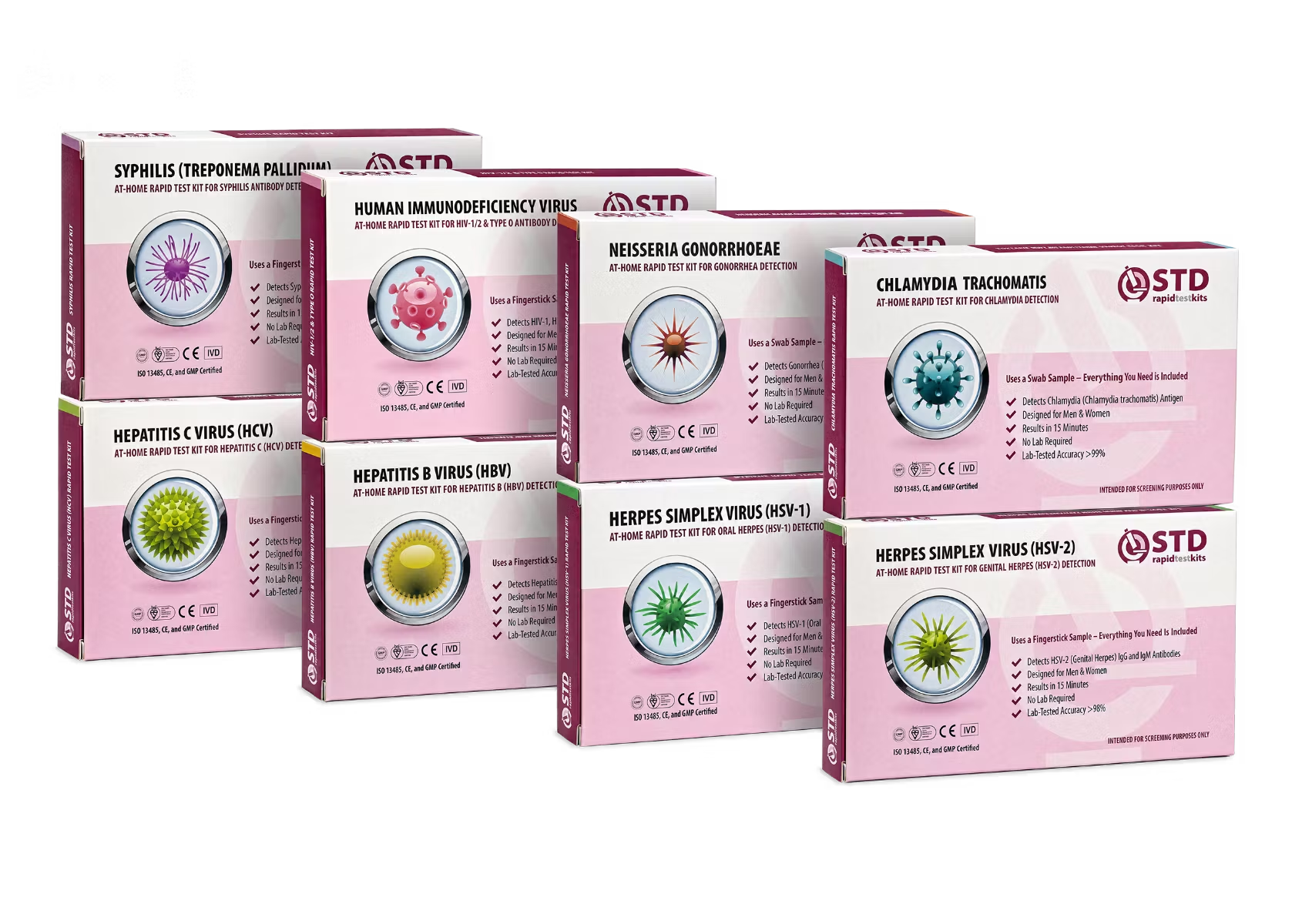
Discreet at-home testing makes this step easier for many people. Rapid lateral-flow kits allow you to check for common infections privately, often without scheduling a clinic visit. They are designed for fast, private first-line screening, and any positive result should be confirmed by a clinic NAAT or blood test before treatment.
This article is published by stdrapidtestkits.com, which sells at-home STI testing kits. We recommend products based on fit-for-purpose for the reader’s concern, not commercial benefit.

What People Often Feel in the First 24 Hours After Sex
One of the most important clues when separating anxiety from an STI is timing. Many people begin feeling strange sensations very soon after a sexual encounter, sometimes within hours. That rapid appearance can feel alarming, but biologically, infections rarely behave that way.
Most sexually transmitted infections need time to replicate in the body before symptoms appear. Bacteria must multiply, viruses must invade cells, and the immune system needs time to react. That process typically takes days or weeks, not hours. The NHS STI overview consistently describes these incubation windows in days to weeks for the major infections.
When sensations show up the same night or the next morning, the cause is almost always something other than a new infection.
- Friction or mechanical irritation from sex itself, especially without enough lubricant.
- Mild allergic or chemical reaction to condoms, lubricants, spermicides, or new soaps.
- Dehydration, which concentrates urine and can make urination feel stinging or sharp.
- Heightened body awareness: noticing normal nerve activity that you usually tune out.
- Anxiety-driven nerve sensitivity and pelvic muscle tension from the stress response.
A Scenario Many Readers Will Recognize
Daniel, 27 (a composite drawing on presentations that sexual health clinicians commonly describe), illustrates the pattern. The night after a hookup, he noticed a faint tingling sensation around his groin while lying in bed scrolling his phone. Within minutes he had convinced himself something was wrong.
“I Googled one symptom and suddenly everything felt worse,” he said. “The more I checked, the more I noticed things: tingling, itching, even a weird warmth. I was sure I had caught something.”
Over the next two days he examined the area repeatedly and continued searching for symptoms online. Each new article introduced another possibility: herpes, chlamydia, gonorrhea. The anxiety intensified the sensations he was already experiencing.
A week later he took a test. The result came back negative. Within days, the sensations disappeared. What he experienced was not an infection but the body reacting to stress and constant monitoring.
More than 1 million curable sexually transmitted infections (STIs) are acquired every day worldwide in people aged 15–49 years, the majority of which are asymptomatic.
How to Compare What You’re Feeling With Typical Infection Signs
Anxiety sensations fluctuate and shift depending on stress levels. Infections tend to follow more consistent patterns. They usually produce symptoms that advance or persist, rather than appearing briefly and resolving. The contrast is not perfect, but the overall pattern can offer useful clues while you wait for the right testing window.
One useful technique borrowed from cognitive-behavioral therapy: when a sensation appears, name it as a sensation, not a diagnosis. Saying “I am noticing tingling in the groin area” stays close to what the body is actually reporting. Saying “I have an infection” is a story the brain has written on top. Caffeine, alcohol, and poor sleep can also amplify sensations, so tracking when they worsen and what was happening right before can surface patterns within a couple of weeks.
| Feature | Anxiety-Related Sensations | Possible Infection Symptoms |
|---|---|---|
| Timing after sex | Often within hours or the same day | Usually several days or weeks later |
| Consistency | Comes and goes, changes with attention | Gradually worsens or persists |
| Visible signs | Often none | Sores, discharge, rash, swelling |
| Effect of distraction | Sensations may fade when attention shifts | Symptoms remain regardless of focus |
| Response to reassurance | Improves after testing or medical advice | Continues until treated |
Why Googling Symptoms Often Makes Everything Feel Worse
Searching for symptoms online can feel like a responsible step, but it often fuels the anxiety cycle. Many articles focus on worst-case scenarios because those topics attract attention. When someone already feels worried, reading those descriptions intensifies fear.
Fear changes how the brain monitors the body. You suddenly notice things you normally wouldn’t, like how clothing feels against skin, small temperature changes, or even routine nerve activity. Psychologists call this state hypervigilance: when the brain thinks danger may be present, it scans the body for confirmation. Ironically, that monitoring can produce the exact sensations someone fears.
This is why many people report symptoms appearing or worsening during late-night searches. A few hours of doom-scrolling can leave you feeling more certain of an infection than you did at the start, without any change in the underlying biology.
How Long to Wait Before Testing After a Possible Exposure
Even when anxiety is the most likely explanation for symptoms, testing can still provide reassurance. The key is understanding that every infection has a testing window: the period between exposure and when a test can reliably detect the infection.
Testing too early can produce false negatives because the infection may not yet be detectable. This is one reason people sometimes panic after feeling symptoms right away. They assume something must be wrong, when in reality infections do not develop that quickly. Knowing the right testing timeline lets you stop guessing and make a plan: test at the right time, get a reliable result, and move on.
| STI | Earliest Testing Window | Most Reliable Testing Time | Typical Lab Test Method |
|---|---|---|---|
| Chlamydia | 7 days | 14 days after exposure | Swab or urine NAAT (lab) |
| Gonorrhea | 7 days | 14 days after exposure | Swab or urine NAAT (lab) |
| Syphilis | 3 weeks | 6 weeks | Blood antibody test |
| HIV | 10–14 days (NAAT) | 4–6 weeks (antigen/antibody) | Blood antigen/antibody or NAAT |
| HSV-2 (antibody) | About 6 weeks | 12 weeks; up to 16 in some individuals | Blood IgG antibody test |
| Trichomoniasis | 5–7 days | 2–4 weeks | Swab or urine NAAT (lab) |
Practical Ways to Calm STD Anxiety While Waiting to Test
Waiting for the right testing window can be the hardest part for someone anxious about a recent encounter. During that time, the mind may return repeatedly to worst-case scenarios. A few practical steps can reduce the pressure.
Five strategies that take the edge off the wait
- Redirect attention away from constant body monitoring. Exercise, your usual routine, and time with friends gradually dial down the hyper-awareness.
- Limit symptom searches to once or twice in total. Repeated late-night searches feed anxiety rather than relieve it.
- Set a concrete testing date on the calendar. Replacing uncertainty with a scheduled action restores a sense of control.
- Keep a brief symptom diary. Note when a sensation appears, what was happening immediately before it appeared, and what shifts it. Patterns surface within a couple of weeks.
- Name a sensation as a sensation, not a diagnosis. “I am noticing tingling in the groin area” stays close to what the body is reporting; “I have an infection” is a story the brain has written on top.
| Trigger | What it feels like | Reframe or tool |
|---|---|---|
| An itch a few days after a sexual encounter | I am infected, I knew it | Friction and stress also itch. Note it, set the window-period date, and resist acting before then. |
| Waiting for a test result | Endless googling and insomnia | Limit symptom searches to the CDC, NHS, or Mayo Clinic. Use a paced-breathing app for the wait. |
| A partner asks about your status | I am doomed, they will leave | Use the script. Practice out loud. Their reaction tells you about them rather than about you. |
| A positive result arrives | Shame, panic, the room narrowing | Text a trusted person. Read the treatment plan once, then put the phone down for an hour. |
When to Bring in a Clinician
Self-management goes a long way for STD anxiety, especially in the first few weeks after an exposure or a test result. There are signs, though, that point toward bringing in professional support sooner rather than later. The first is duration. Anxiety that has been running the show for more than a few weeks despite negative testing is a candidate for clinical attention, and often fits the pattern the Mayo Clinic calls illness anxiety disorder: a persistent worry about having a serious medical condition that drives repeated checking and reassurance-seeking.
The second is impact. If the worry is interrupting sleep, work, relationships, or sex over an extended stretch, that has crossed from a hard week into something that benefits from treatment. The third is escalation. If your testing cadence keeps increasing, body-scanning is intensifying, or the reassurance from each negative test fades faster than the one before, the loop is tightening rather than loosening.
For the medical side, a primary care clinician, a sexual health clinic, or a telemedicine consultation can review your test history and rule out an actual concern. For the anxiety side, a therapist with experience in health anxiety, OCD, or somatic-focused care is the most useful contact. If you find that anxiety about your sexual health is persistent or interferes with daily life, that is a legitimate reason to seek help (MedlinePlus on anxiety). Cognitive-behavioral therapy is the most studied approach for health anxiety and produces meaningful improvement for most people who try it, often within six to twelve sessions.
Three signs to bring in professional support
- Duration: anxiety has been running for more than a few weeks despite negative testing.
- Impact: worry is interrupting sleep, work, relationships, or sex over an extended period.
- Escalation: your testing cadence keeps increasing, body-scanning is intensifying, or reassurance from each negative test fades faster than the one before.
When the Diagnosis Is Real, and Anxiety Stays
Many readers of this guide are testing into uncertainty. Others have already had a positive result, sometimes for a curable infection like chlamydia or syphilis, sometimes for a long-term one like HSV-2 or HPV. The treatment is usually straightforward. The fear that follows is the harder problem.
For curable STIs, the anxiety often settles into a checking habit that includes re-examining the area, retesting after the recommended interval, and watching for any return of symptoms. For lifelong infections, anxiety can spike around outbreaks, around dating, and around the conversation you know is coming with a new partner. None of this is irrational. It is the brain trying to protect you from a future hurt by rehearsing it now.
What helps, evidence-based, is education plus exposure. Knowing the actual transmission risk numbers, the real frequency of recurrences, and the management options available reduces the size of the fear. Practicing the disclosure conversation in a low-stakes setting (a therapist’s office, a trusted friend’s living room) makes the high-stakes version less paralyzing. Therapy with a clinician who works with health anxiety is one of the highest-leverage tools available, and the evidence base behind cognitive-behavioral therapy for this kind of presentation is strong.
A positive STI result is not a verdict on your worth, hygiene, or sexual future. The infections that the public worries most about are common across every demographic, and most are either curable with a short antibiotic course or manageable with effective long-term care.
Whatever the relationship, keep the same shape. Name the infection. Name the precautions you take. Explain why you are sharing. Three sentences cover it; everything else can come up in the conversation that follows.
STIs appear across every demographic, income level, and relationship history. The diagnosis is medical information, not a verdict on character or worth.
You Deserve Clarity, Not Constant Worry
Caring about your sexual health is not overreacting. It shows that you take your body and your partners seriously. But when stress is running the show, the body produces sensations that feel convincing without being signs of infection. Infections follow biological rules: incubation periods, specific symptoms, and patterns that testing can confirm or rule out.
When you understand those patterns and test at the right time, the mystery usually clears up quickly. If you would rather replace guessing with a result, an at-home rapid screen is a reasonable first step, and a clinic visit remains the right move whenever symptoms are persistent, visible, or worsening.
If the diagnosis is real, the same principles apply. Anxiety thrives on what you do not know, and testing plus accurate information puts the unknowns on the table where you can manage them. Recovery from STD anxiety means thinking about STIs less often, with less heat, and being able to act on a plan rather than a panic. Body sensations might still arrive sometimes, especially after a new exposure or a difficult disclosure. The difference is what happens next.
Three habits compound over time:
- Use the calendar to schedule retests, and resist the urge to squeeze in earlier ones. If a recommended retest date is six weeks out, mark it and let the weeks pass.
- Learn the real numbers for whatever infection is in question. Real transmission probabilities and real treatment efficacies are usually less alarming than the version anxiety serves up at 3am.
- Treat the anxiety as its own clinical question. A clinician who works with health anxiety can shorten this whole arc by months.
What Should I Do Next?
Do you have visible symptoms (sores, discharge, rash, swelling) that are persisting or worsening?
Yes: See a clinician for in-person evaluation. This is the right move when symptoms are visible, persistent, or worsening.
No: Continue to the next question.
Did you have a recent exposure (within the past few weeks) and you haven’t tested yet within the appropriate window period?
Yes: Wait for the correct testing window for the infection(s) you’re concerned about, then test once with an at-home rapid kit or clinic test. Refer to the testing-window table above for the right timing.
No: Continue to the final question.
Have you already tested at the appropriate window and received negative results, but anxiety or sensations persist?
Yes: Consider speaking with a therapist who specializes in health anxiety. Six to twelve sessions of cognitive-behavioral therapy often produce meaningful improvement. The anxiety itself is now the clinical question.
No: You may be in a low-risk situation. Continue self-monitoring and periodic testing as recommended, and shift attention away from constant body scanning.
Use the paths below to decide your next action.
FAQs
- I felt tingling a few hours after sex. Did I catch something?
- Probably not from an STI in that timeframe. Almost every STI we know of needs time to incubate before symptoms appear. Bacteria and viruses need days or weeks to multiply inside the body before they cause noticeable changes. Tingling the same night or the next morning is far more often a nervous-system reaction to stress, friction from sex, or simply paying very close attention to the area. If the sensation persists or visible signs appear later, then testing during the right window is the next step.
- Why do symptoms seem to get stronger the more I think about them?
- Because the brain is an enthusiastic detective. When it suspects danger, it starts scanning for clues. You suddenly notice tiny sensations you would normally ignore: the way fabric rubs, the warmth of skin, a muscle twitch you have probably had a thousand times before. The more attention you give the area, the louder those nerve signals feel. That does not mean you are imagining things. It means your brain has the volume knob turned up.
- My test came back negative, but I still feel something. What now?
- First, make sure the test was taken during the correct window period for the infection you were worried about. If the timing was right, a negative result is very reassuring. What many people notice after testing is that the sensations fade once the fear fades. Anxiety can keep the body in alert mode even after the threat has been ruled out. Give your nervous system a little time to calm down. If symptoms are visible or persistent, see a clinician for in-person evaluation.
- Can stress really cause itching or burning down there?
- Yes. Stress increases nerve sensitivity and tightens muscles throughout the body, including the pelvic area. Anxiety can produce headaches, racing hearts, and stomach aches; it can produce tingling, itching, or mild burning sensations around the genitals through the same mechanism. The sensations are real, even when the cause is not infection.
- How do I know when a symptom is actually concerning?
- A few signs deserve real attention: sores that do not heal, visible blisters, abnormal or strong-smelling discharge, pain that keeps getting worse, or symptoms that persist over several days without fluctuating. Those tend to behave differently from anxiety sensations, which usually come and go or shift depending on how much attention you give them. If any of those signs appear, see a clinician.
- I have tested negative more than once. Why does my body still feel wrong?
- This is a hallmark of health anxiety. The brain dislikes uncertainty so much that it fills in the gap with worst-case scenarios, especially in people who grew up with fear-based sex education or had a previous scare. Repeated negative tests are evidence you can trust. The path forward is usually treating the anxiety itself rather than collecting more tests; a therapist with experience in health anxiety can shorten that arc considerably.
- Why does STI anxiety hit so hard after sex?
- Because sex combines biology, vulnerability, and social stigma in one moment. Even people who are normally calm can find themselves spiraling afterward. The brain is trying to protect you; it sometimes overshoots. The good news is that accurate information and timely testing usually shut that spiral down quickly.
- Is it possible to test too early after a possible STI exposure?
- Yes. Every STI has a window period, the interval between exposure and when a test can reliably detect the infection. Test before that window closes and a true infection can still come back negative because the body has not produced enough viral material or antibodies for the test to pick up. That is why a single early negative result is not the last word. Use the testing-window table above to pick the right date, then test once at the reliable window rather than running early tests that drive more anxiety than reassurance.
How we sourced this article: This guide is based on current public health guidance from the U.S. Centers for Disease Control and Prevention, the World Health Organization, and the U.K. National Health Service on STI incubation windows and testing recommendations. To address the anxiety component, we drew on standard clinical descriptions of somatic symptom amplification, illness anxiety disorder, and hypervigilance from the Mayo Clinic, Cleveland Clinic, and MedlinePlus. We do not provide medical advice; for persistent or visible symptoms, see a licensed clinician.
- U.S. Centers for Disease Control and Prevention. Sexually Transmitted Infections Treatment Guidelines, used here for STI incubation windows, herpes serology timing, and the role of testing when symptoms are absent or ambiguous.
- Cleveland Clinic. Somatic Symptom Disorder and Anxiety Disorders, used here for descriptions of how anxiety amplifies physical sensations, including muscle tension, nerve sensitivity, and the body’s stress response.
- Mayo Clinic. Illness Anxiety Disorder symptoms and causes, used here for the clinical pattern behind compulsive checking and reassurance-seeking after a sexual health scare.
- U.K. National Health Service. Sexually Transmitted Infections Overview, used here for general STI symptom patterns and incubation timing in days to weeks.
- World Health Organization. Sexually Transmitted Infections Fact Sheet, used here for the statement that the majority of curable STIs are asymptomatic and the global daily incidence figure for curable STIs in people aged 15–49.
- MedlinePlus. Anxiety, used here for guidance on when anxiety symptoms warrant clinical evaluation.
