
Published: August 2025 | Last updated: May 2026 | Editorial review and quality control: Martina N.
Most sexually transmitted infections don't announce themselves with dramatic symptoms. They pass through the body quietly, or wear the disguise of a yeast infection, a urinary tract infection, an allergy flare, even a mild cold. That's why so many infections get caught months or years late, after they've already caused damage that earlier testing would have prevented.
This guide walks through six symptom patterns that look like everyday issues but can be the body's way of asking for an STI screen. Most readers who land here will not have an STI. Many will have a yeast imbalance, contact irritation, a hormonal shift, or a viral cold. Testing isn't about confirming fear; it's about removing uncertainty so you can act on what's actually happening.
If a pattern below sounds like yours and you've had unprotected sex, a new partner, or a condom slip in the last two to four weeks, treat that as a signal worth checking. The CDC's overview of sexually transmitted infections notes that many STIs cause no symptoms or only mild ones, which is why so many infections go undetected. Silence is not the same as safety.
Key Takeaways
- Six symptom patterns get mistaken for non-STI conditions every day: a persistent itch, low-grade burning, new discharge, between-period spotting, a lingering sore throat, and a vague flu-like fatigue. Any one of them after a recent exposure is a reasonable reason to test.
- Most STIs become detectable about 2 weeks after exposure for chlamydia and gonorrhea, 3 to 6 weeks for syphilis, and around 4 weeks for HIV with a fourth-generation antigen-antibody test. If your first test was earlier than that, retest before you assume you're clear.
Red Flag #1: An Itch That Won't Go Away
Itching alone doesn't mean herpes or any other STI. Most genital itching is caused by yeast overgrowth, contact dermatitis from soaps or lubricants, latex friction, shaving irritation, or pubic lice. What usually points elsewhere is timing and persistence: itching that started a few days after unprotected sex, or that doesn't ease with the usual fixes, deserves a closer look.
Several STIs can show up as irritation rather than visible sores. Trichomoniasis, often missed because it doesn't get screened on a routine pap, commonly causes a deep, under-the-skin itch along with frothy discharge. Chlamydia and gonorrhea can produce a low-grade itch at the urethral opening or vaginal entrance. Genital herpes sometimes presents as itching or tingling well before any blister appears, and during many recurrences it never produces a visible lesion at all.
Which home test fits depends on what you can rule out. If you've already treated yeast and the itch is still there a week later, an STI panel is the next reasonable step. The CDC's testing guidance recommends screening anyone with a new symptom that follows a recent unprotected exposure, regardless of how mild it feels.
Red Flag #2: Burning During or After Sex
Burning isn't always sharp. It often shows up as a small pinch when you urinate, a raw feeling after sex that fades by morning, or a faint sting that you blame on lube friction. Because it's mild, it gets dismissed. Many chlamydia and gonorrhea infections surface only at a routine clinic screen rather than when burning first appeared, because the burning was mild enough to write off.
Burning is also the classic symptom of a urinary tract infection, and that overlap is where things go wrong. Antibiotics for a UTI use a different drug class than the ones that clear chlamydia or gonorrhea. Treating the wrong condition lets the STI keep spreading silently, and over weeks it can climb into the upper reproductive tract and cause pelvic inflammatory disease in women or epididymitis in men. The CDC's about-chlamydia page notes that untreated chlamydia can damage a woman's reproductive system in ways that lead to long-term complications including infertility and ectopic pregnancy.
If burning showed up within two to three weeks of a new partner or a condom that slipped, don't guess between UTI and STI. A urine culture from a clinic and an STI panel can run in parallel, or an at-home swab kit can answer the STI side first. Either way, the goal is to know which infection you're treating before you start any antibiotic.
Run a urine culture and an STI panel at the same time rather than guessing which infection is causing the burning. UTI antibiotics use a different drug class than chlamydia or gonorrhea antibiotics, so treating the wrong one lets the other infection keep spreading.
Red Flag #3: Discharge That's Different or New
Discharge varies normally with the menstrual cycle, hydration, sexual arousal, and birth control method. What matters is a noticeable shift from your usual baseline: a smell that wasn't there before, a color change, a thicker or thinner texture, or a new irritation that comes with it. Discharge itself is normal; an unexpected change is what's worth checking.
A few patterns line up with specific causes often enough to be worth knowing. The table below is a starting framework, not a diagnosis. Yeast and bacterial vaginosis are not STIs but are easy to confuse with them, which is why a swab test that screens for trichomoniasis, chlamydia, and gonorrhea at the same time is more useful than guessing.
| Discharge pattern | Most likely cause | Test that confirms |
|---|---|---|
| Thick, white, no smell, with itch | Yeast (candida) overgrowth | Vaginal pH and microscopy at clinic, or empirical antifungal trial |
| Gray, thin, fishy smell | Bacterial vaginosis | Vaginal pH and microscopy at clinic |
| Frothy, yellow-green, foul smell | Trichomoniasis | Vaginal swab (NAAT or rapid antigen) |
| Cloudy or pus-like, mild burning | Chlamydia or gonorrhea | Vaginal or penile swab (NAAT or rapid) |
| Bloody or rust-tinged outside menstruation | Cervical inflammation, possibly chlamydia or gonorrhea | Pelvic exam plus STI swab |
Red Flag #4: Bleeding Between Periods or After Sex
Spotting outside your normal period, or bleeding after intercourse when pregnancy is not the cause, is one of the most under-reported STI signals. Cervical inflammation from untreated chlamydia or gonorrhea makes the cervix friable, meaning it bleeds with mild contact. The bleed itself can be a few drops of pink on toilet paper or a brown smear that lasts a day. It's easy to attribute to a new IUD, hormonal contraception, vigorous sex, or a missed pill.
The reason this matters is that asymptomatic cervicitis is the entry point for pelvic inflammatory disease (PID). PID develops when an untreated lower-tract infection ascends into the uterus and fallopian tubes, and even one episode can scar the tubes enough to cause infertility or ectopic pregnancy. The CDC notes that PID is largely preventable with timely STI treatment, which is the practical reason post-sex spotting deserves a test rather than a wait-and-see week.
If you've recently had unprotected sex or a new partner, a swab-based panel that covers chlamydia, gonorrhea, and syphilis at the same time is a reasonable first step. A normal pap smear does not rule out an STI; pap tests look for cervical cell changes, not for active infection.
Red Flag #5: A Sore Throat That Doesn't Feel Like a Cold
Pharyngeal STIs are real and surprisingly common. Gonorrhea, chlamydia, and herpes can all infect the back of the throat after oral sex. Most pharyngeal infections cause no symptoms, which is exactly why they go undetected and continue to be transmitted. When they do cause something, it's usually a dry, scratchy throat that lingers past the usual one-week cold, sometimes with mildly swollen tonsils or one or two small ulcers.
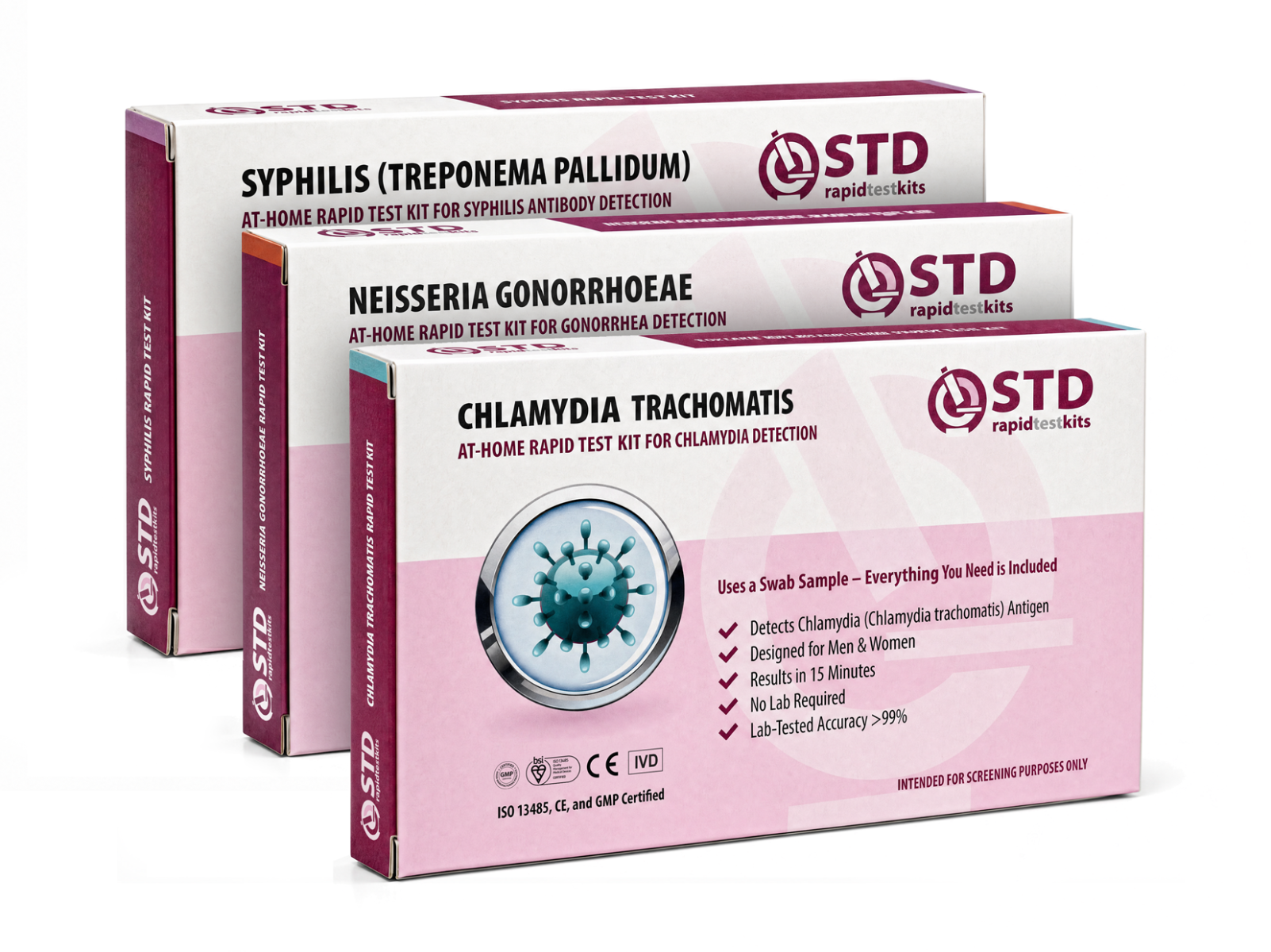
The sample type for confirming throat infections is different from what at-home rapid kits use. CDC clinical guidance describes throat (pharyngeal) gonorrhea and chlamydia testing as a clinic-collected pharyngeal swab processed by NAAT (nucleic acid amplification testing). Rapid lateral-flow at-home tests are validated for genital swabs and blood samples, not for the throat. If your concern is specifically a throat exposure, a clinic visit for a pharyngeal swab is the accurate path.
What an at-home panel can answer is the parallel question of whether the same exposure event also transmitted infection at the genital or systemic level, which is common when oral sex was part of a longer encounter. Below is the symptom-to-cause map for what people typically notice with oral STIs.
| Oral or throat symptom | Possible cause | Where to test |
|---|---|---|
| Persistent dry, scratchy sore throat (over 1 week) | Pharyngeal gonorrhea or chlamydia | Clinic pharyngeal swab (NAAT) |
| Small clear or yellow ulcers on lips, gums, or tongue | HSV-1 or HSV-2 oral infection | Clinic swab of active lesion (PCR), or at-home blood antibody test 12+ weeks after exposure |
| Painless ulcer on lip or tongue, single, well-defined edge | Primary syphilis chancre | Clinic swab of lesion plus blood test |
| Swollen glands or tonsils with fatigue | Possible systemic infection (HIV seroconversion, mononucleosis, or pharyngeal STI) | Clinic exam plus blood panel |
Red Flag #6: A Vague Off Feeling, Fatigue, Aches, or Low-Grade Fever
Some of the most consequential STIs first present as a flu that doesn't quite fit. Acute HIV infection causes a seroconversion illness in many people, typically two to four weeks after exposure: fever, headache, sore throat, swollen lymph nodes, and a feeling of being heavy or foggy that lasts a week or two. Acute HIV is also when viral load is highest and onward transmission risk is elevated, which is why early testing matters for the person and any partners. The CDC's HIV testing guidance recommends a fourth-generation antigen-antibody test starting around four weeks after a possible exposure.
Secondary syphilis can produce a similarly non-specific picture about six weeks to six months after the initial chancre. Body aches, low-grade fever, fatigue, and a faint copper-toned rash on the palms or soles are classic, but the rash is so subtle that many people never notice it. Hepatitis B can show up as nausea, fatigue, and dull right-upper-quadrant abdominal discomfort, sometimes with mild jaundice that's easier to see in daylight than under bathroom lighting.
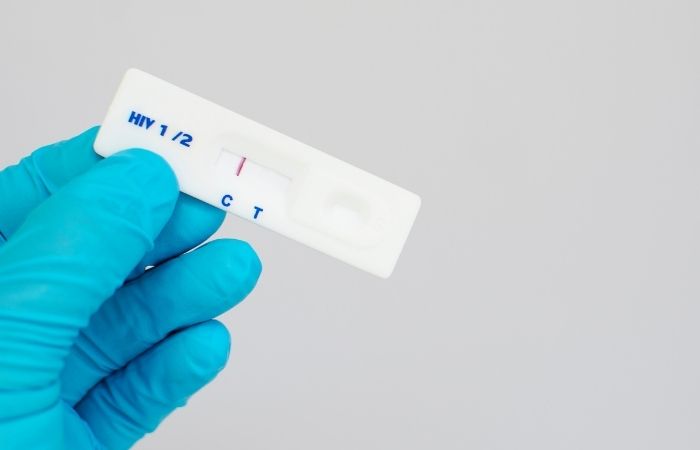
What separates these episodes from a regular viral cold is context, not severity. A flu-like episode in the weeks following a new sexual partner or a known exposure is worth a fourth-generation HIV antigen-antibody test, a syphilis blood test, and a hepatitis B surface antigen test. None of these are dramatic to run; the lateral-flow versions take 15 minutes, and a positive result in any of them changes treatment from "rest and fluids" to "start a specific therapy now."
If I'm not sure whether to test, what's the threshold?
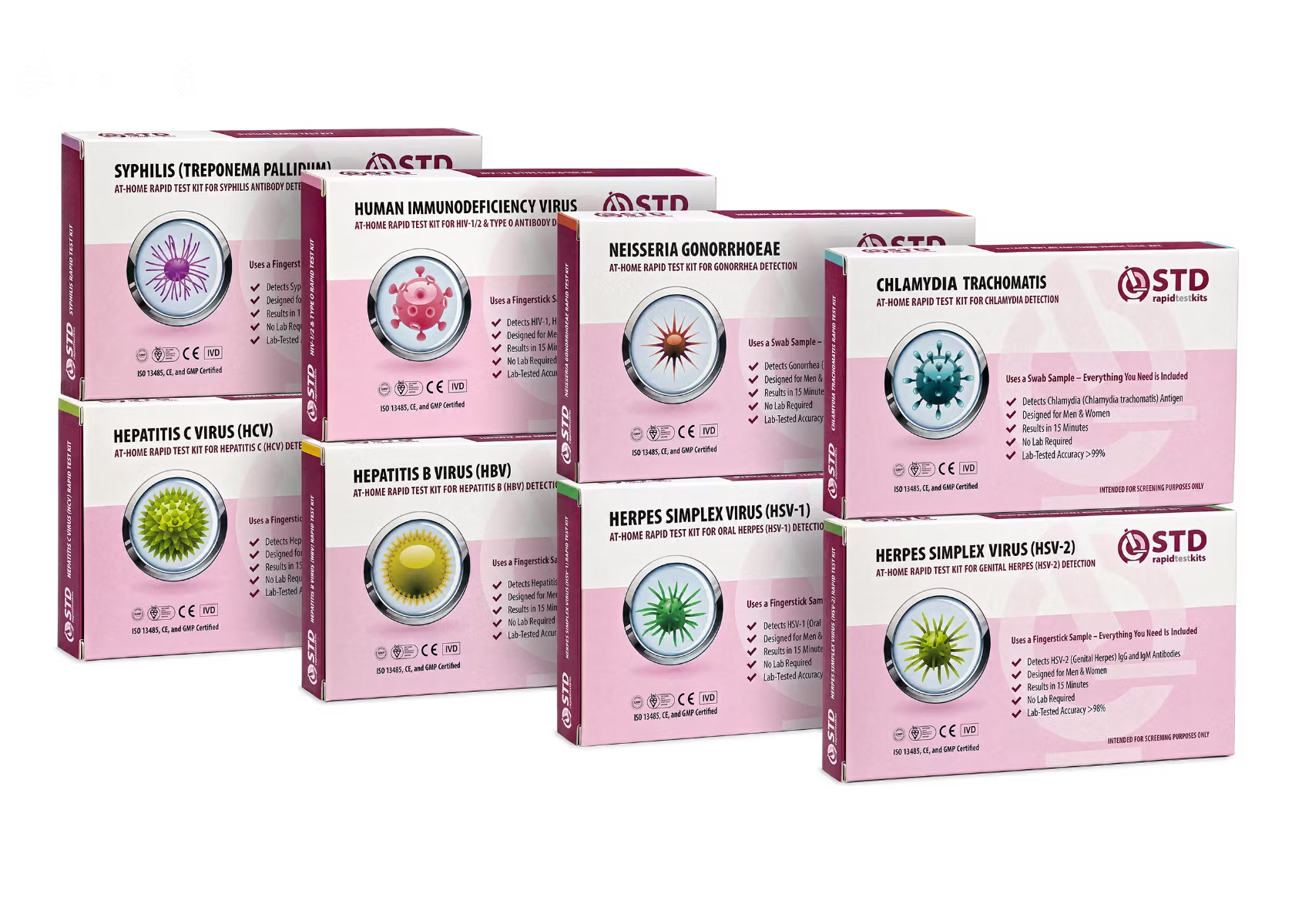
If any of the six patterns above showed up in the two to six weeks following unprotected sex, a new partner, or a condom slip, the answer is to test. Reported sensitivity for our home rapid kits sits in the 95 to 99% range with specificity above 99% once you're past the window period for that infection (see the <a href="https://www.stdrapidtestkits.com/the-8-most-common-std-complete-at-home-self-test-kit-for-men-and-women" target="_blank" rel="noopener">8-in-1 panel accuracy specs</a>), and the kits cost less than the antibiotics you'd take if you guessed wrong. The timing chart below shows when each test becomes accurate.
What If I Already Tested and It Came Back Negative?
Timing is what makes a negative result trustworthy. Every STI has a window period, the time between exposure and when the infection becomes detectable by a given test. Test before that window closes and you can get a false negative even when you're infected. Retesting after the window has fully passed is the only way to convert "probably negative" into "actually negative."
The chart below summarizes the windows that matter most for at-home rapid testing. Earliest test time is when a positive can be picked up if the viral or bacterial load is high. Best test time is when sensitivity is at its peak and a negative can be relied on.
| Infection | Earliest accurate test | Best test window | Sample type at home |
|---|---|---|---|
| Chlamydia | 5 to 7 days post-exposure | 14 days and after | Genital swab |
| Gonorrhea | 5 to 7 days post-exposure | 14 days and after | Genital swab |
| Trichomoniasis (women) | 1 week | 14 days and after | Vaginal swab |
| Syphilis | 3 weeks | 6 to 12 weeks | Fingerstick blood |
| HIV (4th-gen Ag/Ab) | 2 weeks | 4 to 12 weeks | Fingerstick blood |
| Hepatitis B | 3 to 6 weeks | 6 to 12 weeks | Fingerstick blood |
| HSV-2 antibodies | 3 to 6 weeks | 12 to 16 weeks | Fingerstick blood |
What If You're Just Scared to Know?
If you're reading this, the worry is already taking up real space in your day. The voice that says "maybe it'll go away if I wait" is a common one, and it's usually fear of the result rather than disinterest in your health. Fear is a reasonable response to uncertainty. It just isn't a useful one to act on.
What helps most people move past it is the small, concrete step of taking the test before the imagined version of the result has time to grow. The result itself is a single line on a piece of plastic. If it's negative, you've answered the question and you can stop carrying it. If it's positive, the most common STIs are also the most treatable: chlamydia, gonorrhea, trichomoniasis, and syphilis are cured with a single course of antibiotics, and HIV management has progressed to the point where early diagnosis means an essentially normal life expectancy on antiretroviral therapy.
The cost of waiting is mostly to other people, including future partners, and to the version of you who has to carry an answered question for an extra month. Testing earlier doesn't fix the worry by erasing the possibility of a positive. It fixes it by replacing fear with information. The window-period chart in the section above shows exactly when to test for the exposure you had.
Many STIs have no symptoms or may only cause mild symptoms, so people can have an infection but not know it.
Frequently asked questions
- Can I really have an STI and not feel anything at all?
- Yes, and it's the rule rather than the exception for chlamydia and gonorrhea. The CDC notes that many STIs cause no symptoms or only mild ones, which is why routine screening is recommended for sexually active people under 25 and for anyone with a new partner, regardless of how they feel. A complete absence of symptoms is not evidence that nothing is happening.
- How long should I wait to test after a hookup?
- It depends on the infection. For chlamydia and gonorrhea, wait at least 14 days for the most reliable result, though a positive can show as early as day 5 to 7. Syphilis is best tested at 6 weeks. HIV with a fourth-generation antigen-antibody test is reliable from 4 weeks onward, and definitive at 12 weeks. If you test before these windows close and get a negative, plan a retest at the right point rather than assuming you're clear.
- I'm itchy but my STI test came back negative. What's going on?
- A negative result doesn't mean nothing is wrong; it means the specific infections on the panel weren't detected. Persistent itching is more often caused by yeast, bacterial vaginosis, contact dermatitis from a new soap or lubricant, or skin conditions like lichen sclerosus. If symptoms persist for more than a week after using an over-the-counter antifungal, a clinic visit can sort out which non-STI cause is at play.
- Can I get an STI from oral sex?
- Yes. Gonorrhea, chlamydia, herpes (HSV-1 and HSV-2), and syphilis can all transmit through oral sex, in either direction. Pharyngeal infections are usually asymptomatic, and when they do produce symptoms they often look like a lingering sore throat. Throat-sample testing for gonorrhea and chlamydia is done at a clinic with a pharyngeal swab; at-home rapid kits are designed for genital and blood samples.
- What if we used a condom?
- Condoms substantially reduce risk for fluid-borne infections like HIV, gonorrhea, chlamydia, and hepatitis B, but they don't eliminate it, and they offer less protection against skin-to-skin infections like herpes, HPV, and syphilis when those affect areas the condom doesn't cover. A used condom also represents real risk reduction even if it slipped at the end. If symptoms develop, the condom doesn't change the case for testing.
- Do at-home STI tests actually work?
- Modern lateral-flow rapid tests are reliable when used inside their validated window period and according to the kit's instructions. Reported sensitivity for the major rapid kits sits in the sensitivity range cited above, comparable to clinic point-of-care tests. The two failure modes are testing too early (before the infection is detectable) and skipping the buffer or timing steps. A positive result on any rapid test should be confirmed with a lab NAAT for definitive diagnosis.
- I feel fine, but my partner tested positive. Should I still test?
- Yes, without exception. Most STIs spend most of their course asymptomatic in most people, and partner notification is precisely the situation where testing has the highest yield. Test as soon as you're past the window period for the infection your partner has, and follow up with a retest if the first test was inside the window.
- Does discharge always mean an STI?
- No. Cyclic discharge changes are normal, and yeast or bacterial vaginosis cause far more discharge complaints than STIs do. The features that raise the index of suspicion are a new smell, a green or yellow color, frothiness, or onset within a few weeks of a new partner. When in doubt, a swab panel that covers trichomoniasis, chlamydia, and gonorrhea answers the question quickly.
How we sourced this article: Symptom and window-period guidance was drawn from the U.S. Centers for Disease Control and Prevention and MedlinePlus (a service of the U.S. National Library of Medicine), which are the public-health authorities that primary care clinicians cite to patients in the United States. Every external link was verified to resolve to a current authority page on the date of publication. We do not cite social media posts, anonymous forum threads, or commercial blog content for any clinical claim. Where the symptom evidence is genuinely uncertain, the article says so plainly rather than picking the most alarming framing.
- U.S. Centers for Disease Control and Prevention. About Sexually Transmitted Infections. Background on prevalence, asymptomatic infection rates, and the rationale for routine screening.
- U.S. Centers for Disease Control and Prevention. Getting Tested for STIs. Window periods, sample-type recommendations, and clinical screening guidance.
- U.S. Centers for Disease Control and Prevention. How to Prevent STIs. Risk-reduction guidance covering condoms, vaccination, and partner-notification protocols.
- U.S. Centers for Disease Control and Prevention. HIV Testing. Acute HIV infection symptoms, fourth-generation antigen-antibody test windows, and follow-up retesting recommendations.
- U.S. Centers for Disease Control and Prevention. About Chlamydia. Long-term complications of untreated chlamydia, including pelvic inflammatory disease, infertility, and ectopic pregnancy.
- MedlinePlus, U.S. National Library of Medicine. Sexually Transmitted Infections Overview. Patient-facing summary of common STIs and the importance of testing when symptoms or exposures occur.
