
Published: August 2025 | Last updated: April 2026 | Editorial review and quality control: Martina N.
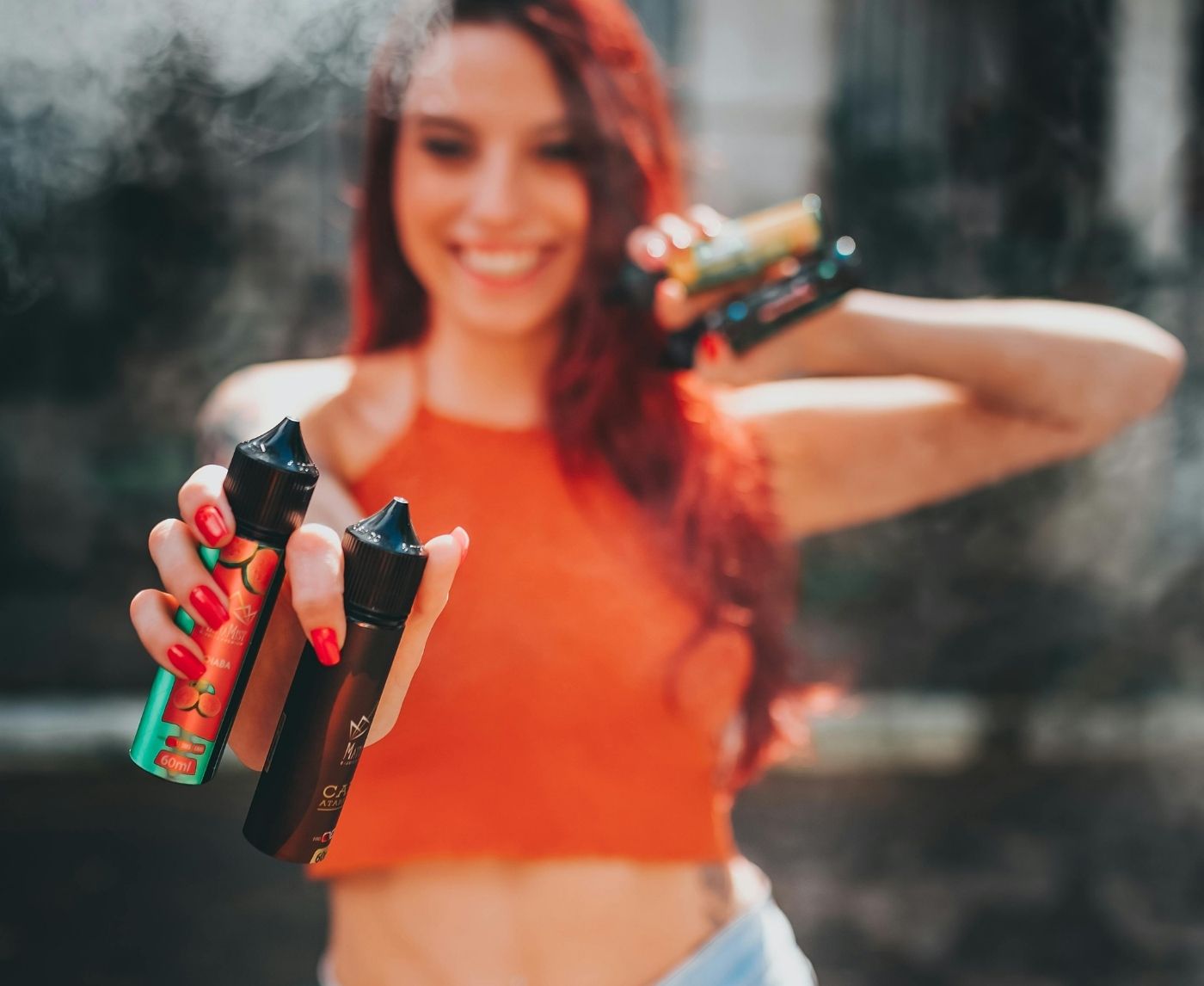
Sharing a vape feels casual until your throat aches the next morning and Google starts whispering worst-case scenarios. Public-health research is fairly clear that the classic STIs people fear most (HIV, syphilis, chlamydia, gonorrhea) almost never travel through a shared mouthpiece. A short list of mouth-borne infections, especially oral herpes (HSV-1) and the mononucleosis virus, can. Knowing which is which lets you stop spiraling and decide what, if anything, deserves a test.
Can sharing a vape actually give you an STD?
Most STIs people worry about (HIV, gonorrhea, chlamydia, syphilis) need mucosal or blood-to-blood contact and essentially do not transmit through a vape. Oral herpes (HSV-1) and Epstein-Barr (the mono virus) can transfer through saliva on a freshly used mouthpiece, especially right after someone with an active sore or shedding virus has used it. If a sore, ulcer, or one-sided throat pain shows up days later, that is the signal to consider testing.
Key Takeaways
- Saliva-borne infections like oral herpes (HSV-1) and mononucleosis can plausibly travel between people on a vape mouthpiece. The four big STIs (HIV, gonorrhea, chlamydia, syphilis) essentially do not.
- If sore throat, mouth ulcer, swollen glands, or one-sided pain lasts longer than four to five days after sharing a vape, it is worth ruling out HSV-1 and (if oral sex was also part of the night) pharyngeal gonorrhea.
Why this question keeps trending in 2026
The search surge has less to do with vapes themselves and more to do with three behaviors stacking on top of each other. Disposable vapes circulate freely at parties, festivals, and dorms, often passed between people who do not know each other well. Oral sex remains common, and barrier use during oral sex remains rare. And U.S. STI rates have climbed for several years, with the CDC's STD surveillance reports showing reported gonorrhea cases up substantially since 2020. So when a sore throat or lip blister appears the morning after a party, the question writes itself.
More accurately, the vape is rarely the actual vector for a sexually transmitted infection. The same evening that included passing a vape often included open-mouth kissing, oral sex, or other close mucosal contact. When an oral STI does turn up after that kind of night, the saliva-on-vape pathway is far less likely than what happened with the same person ten minutes before or after the puff.
The distinction matters because the right next step looks different in each case. If your real concern is the vape itself, you are mostly thinking about oral herpes and mono. If your concern is everything else that happened that night, the testing list expands.
Reported gonorrhea cases in the United States rose substantially between 2020 and 2024, per CDC STD surveillance data. Vaping is not a driver of that trend. The overlap of oral sex and shared devices at the same social events is what makes saliva-borne questions feel newly urgent.
What can realistically transfer through saliva on a mouthpiece
A short list of pathogens lives well in saliva, survives briefly on a moist surface, and can transmit through quick mouth-to-mouthpiece-to-mouth chains. None of them are the headline STIs, but two are extremely common.
Oral herpes (HSV-1) is the dominant concern. The herpes simplex virus type 1 is responsible for most cold sores and is the virus most likely to ride a freshly wet mouthpiece between users. Per the World Health Organization's herpes fact sheet, an estimated 3.8 billion people under age 50 globally have HSV-1, and most have no idea. Transmission happens through direct oral contact and through contact with virus-containing saliva, which is why even people with no visible sore can shed virus and pass it on. The window where infectious virus survives on a plastic mouthpiece is short (likely minutes, not hours), but a quickly passed vape lands inside that window.
Mononucleosis, caused mainly by Epstein-Barr virus (EBV), is the other realistic candidate. The CDC's Epstein-Barr page describes EBV as spreading primarily through saliva, which is why it earned its old reputation as a kissing-related illness. Symptoms (fatigue that lingers for weeks, sore throat, swollen glands) typically appear several weeks to over a month after exposure, well after most people have forgotten which vape went around at which party. The NHS glandular fever page covers the broader symptom and recovery picture.
Common bacterial throat infections can ride along on shared saliva too. Group A streptococcus (the bacteria behind strep throat), oral thrush in immunocompromised people, and run-of-the-mill respiratory bugs are all far more likely to appear after a saliva-sharing night than any classic STI. They feel awful, though they are not sexually transmitted in the way the panic-Googling crowd is worried about.
Oral HPV sits in a gray zone. Saliva can contain HPV DNA, and oral HPV is associated with deep kissing and oral sex. The vape-mouthpiece pathway is theoretically possible but has not been documented as a meaningful transmission route in published research. Repeated, high-dose exposure (deep open-mouth kissing or oral sex) drives essentially all known oral HPV transmission, rather than single passes of a vape.
| Pathogen | Saliva-on-mouthpiece risk | What it actually causes |
|---|---|---|
| HSV-1 (oral herpes) | Yes, the main saliva-borne concern | Cold sores; tingling, blistering, then crusting on or near the lip |
| Epstein-Barr virus (mono) | Yes, well-documented saliva transmission | Mononucleosis: weeks of fatigue, sore throat, swollen glands |
| Group A streptococcus | Yes, common after saliva sharing | Strep throat: sudden severe sore throat, fever, no cough |
| Oral HPV | Theoretical only, no documented vape cases | Persistent infection that rarely progresses to oropharyngeal cancers over years |
Why HIV, gonorrhea, chlamydia, and syphilis essentially do not spread this way
The four infections people most often picture when they think "STD test" each have transmission requirements that a shared vape simply does not meet.
HIV requires direct exposure of the bloodstream or specific mucosal tissues to certain body fluids (blood, semen, vaginal or rectal fluids, breast milk). Saliva, per the CDC's How HIV Spreads page, is not infectious in everyday contact. The virus does not survive well outside the body, and even if a tiny amount of saliva from an HIV-positive person reached your mouth via a vape mouthpiece, the dose and route would not support transmission. Sharing a vape has never been documented as an HIV transmission event.
Gonorrhea and chlamydia need direct mucosal contact with infected tissue, almost always genital, anal, or pharyngeal mucosa. The CDC's gonorrhea treatment guidelines recognize pharyngeal gonorrhea as a distinct clinical entity acquired through oral sex with an infected partner; casual saliva contact on a vape mouthpiece is not the same exposure. Pharyngeal gonorrhea is real and increasingly recognized in young adults, but it is reliably picked up through oral sex, not through a passed vape. Chlamydia in the throat behaves similarly.
Syphilis spreads through direct contact with a syphilis sore (chancre), which appears at the site of contact: the lips, mouth, genitals, or anus. The bacterium does not survive on dry surfaces. A vape mouthpiece touched by someone with an active oral chancre is theoretically a contact surface, though the realistic transmission route remains direct skin-to-skin or mucosa-to-mucosa contact during sex or open-mouth kissing.
An estimated 3.8 billion people under age 50 (64%) globally have herpes simplex virus type 1 (HSV-1) infection, the main cause of oral herpes.
Vape burn versus an actual warning sign
Vaping itself does a number on the mouth. The aerosol dries oral tissues, the high-frequency draws crack lip skin, and the flavoring agents irritate gums and tonsils. Most "is this an STI?" panic spirals start with garden-variety vape side effects layered on top of dehydration and a late-night kebab.
Common vape-related findings that resolve on their own within a few days: cracked or chapped lips, mild redness in the corners of the mouth (angular cheilitis from saliva pooling on dry skin), generalized throat soreness from aerosol irritation, mild gum tenderness, and a coated-feeling tongue.
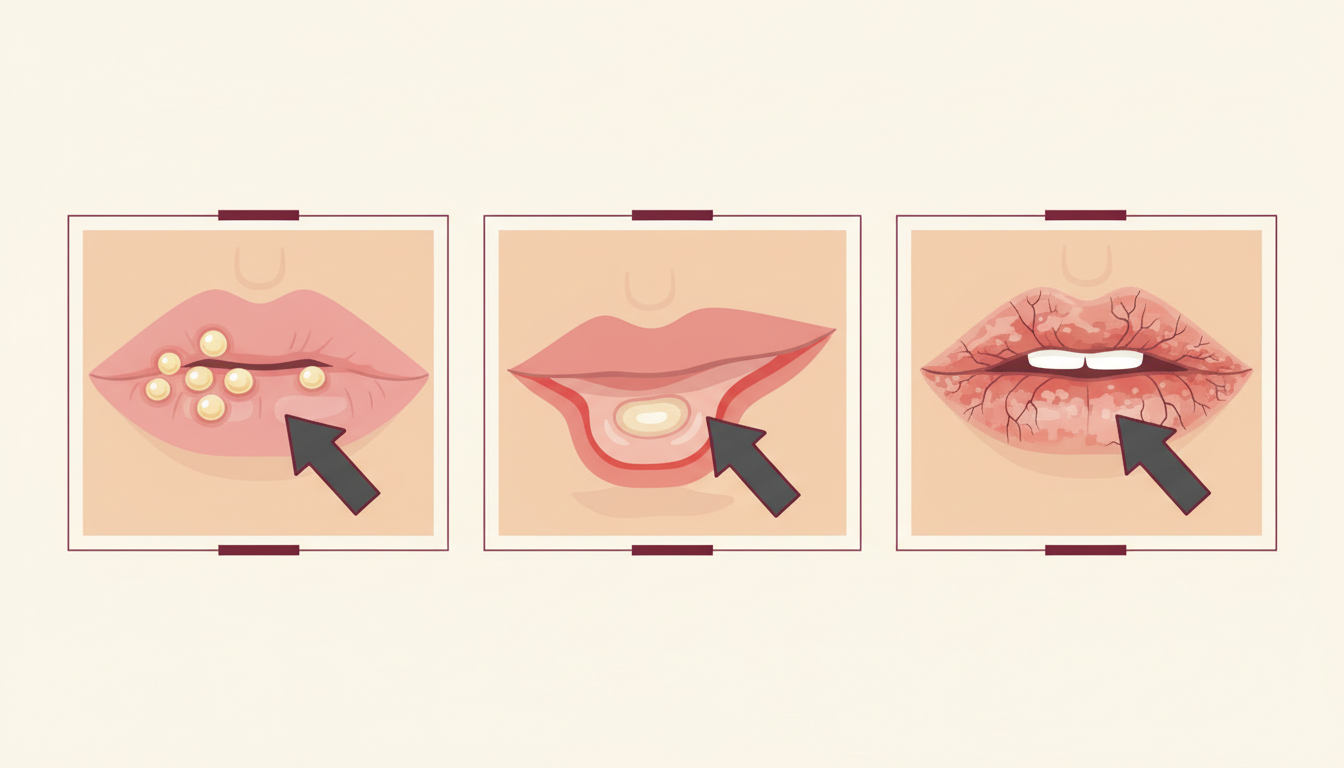
The visual differential is what most people are doing on the bathroom floor at 1 a.m. with their phone flashlight. A cold sore typically tingles or burns before it becomes visible, develops into a fluid-filled vesicle, weeps, and begins healing within about 10 days, per the NHS cold sores page. A canker sore (aphthous ulcer) sits inside the mouth on soft tissue, has a yellowish-white center with a red rim, hurts more than its size suggests, and is not contagious. Angular cheilitis sits at the corners of the mouth, looks raw and cracked, and is usually fungal or bacterial rather than viral. Reading these patterns from a single phone photo is hard, even for clinicians.
Findings that warrant closer attention:
- A single small fluid-filled blister or cluster of blisters on the lip border that scabs over (classic cold sore pattern).
- A painless ulcer with raised firm borders that lasts more than seven days (atypical and worth a clinic visit).
- One-sided throat pain with swollen glands on the same side.
- White patches on a tonsil that do not respond to hydration and rest.
- Fatigue that lingers for two-plus weeks after a saliva-sharing event (a mononucleosis pattern).
When testing makes sense, and what we sell vs. what we do not
If a symptom is local to your mouth or throat and you have not had recent oral sex, the realistic differential is HSV-1, mono, a bacterial sore throat, or vape-related irritation. If your concern includes oral or genital sex from the same window of exposure, the testing list expands.
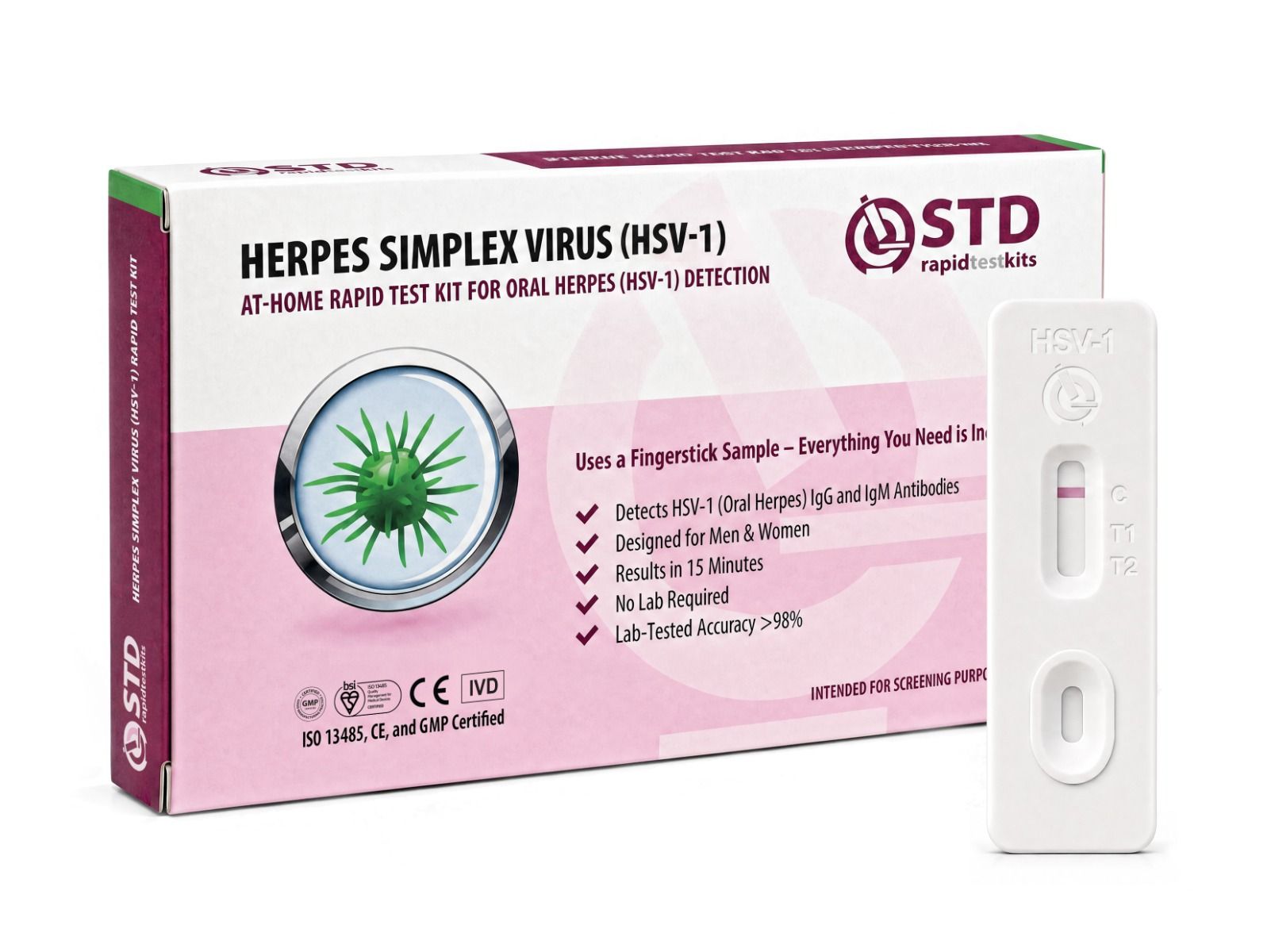
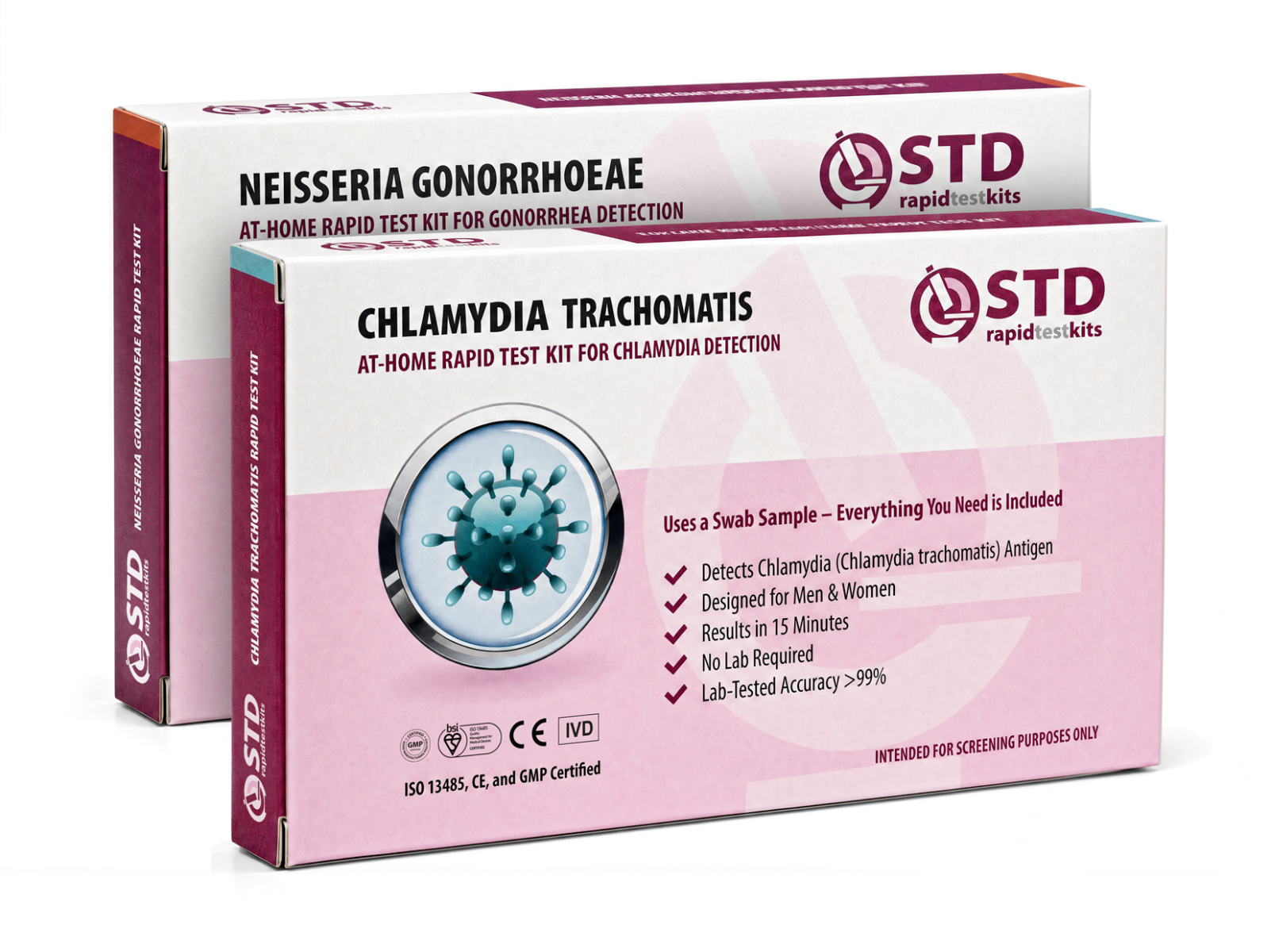
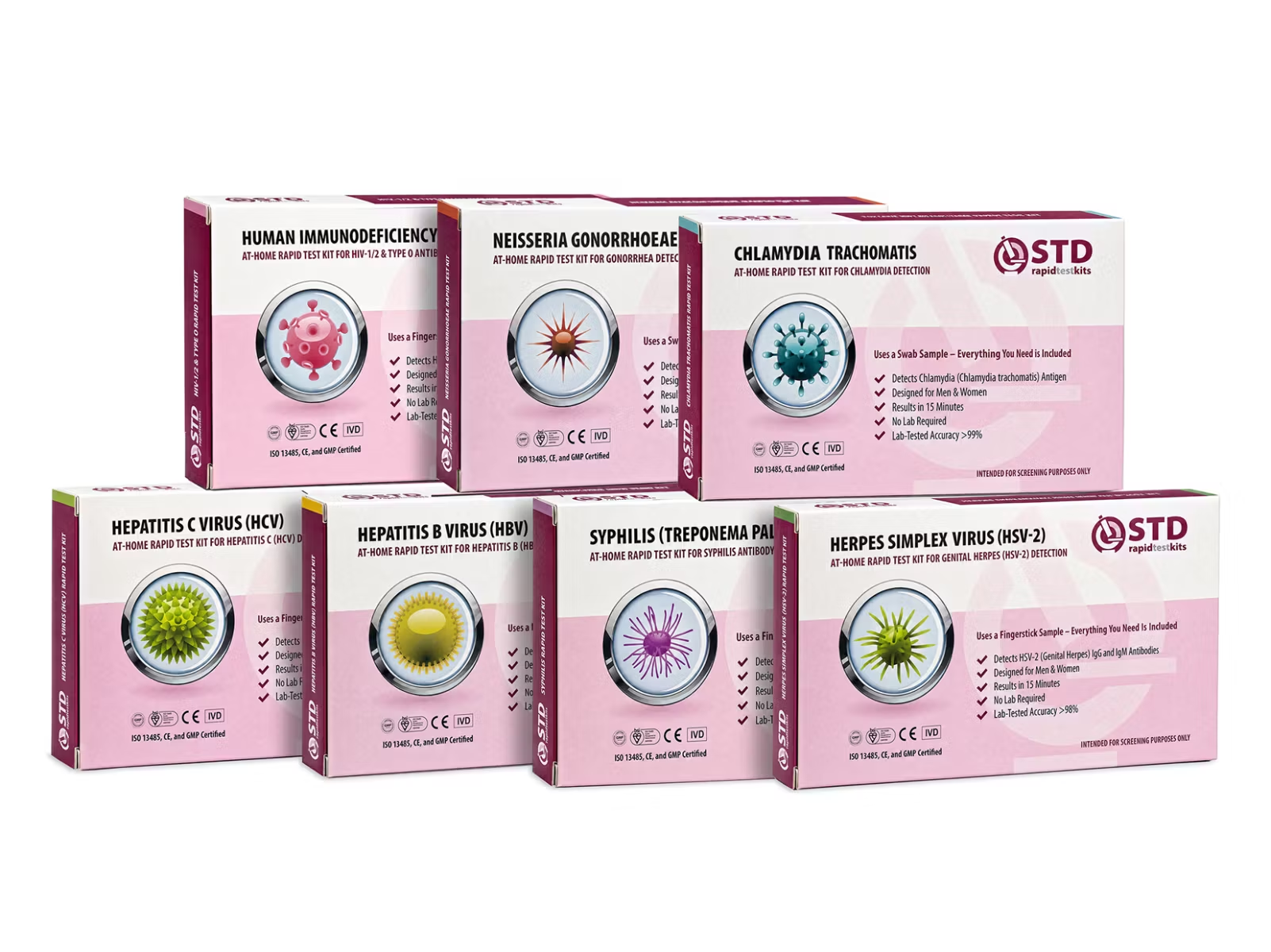
stdrapidtestkits.com sells rapid lateral-flow tests using either self-collected genital swabs (for chlamydia, gonorrhea, trichomoniasis, HPV) or fingerprick blood (for HIV, syphilis, hepatitis B, hepatitis C, HSV-1, HSV-2). We do not sell throat or pharyngeal swab tests. If a clinician needs to rule out pharyngeal gonorrhea or pharyngeal chlamydia specifically, that requires an in-clinic throat swab processed by a lab NAAT. Our products cover the adjacent risks from the same exposure event, and they are useful when the question is "what about everything else that happened that night."
Reasonable testing windows matter as much as which test you pick. Testing too early gives a false sense of reassurance, so timing is part of the strategy.
The general flow most people land on after a low-risk vape-sharing event:
- If a cold-sore-pattern lesion appears on the lip and you have never had one before, an HSV-1 swab from a clinic is the most definitive test (the lesion has to be active for swab PCR to work).
- If symptoms are vague or no lesion appears but anxiety is real, an HSV-1 fingerstick blood antibody test taken at the appropriate window after exposure clarifies whether you carry the virus.
- If oral sex was also part of the night, a routine STI panel covering HIV, syphilis, chlamydia, and gonorrhea (genital swab plus fingerprick) at the appropriate time window is the more comprehensive answer.
Testing converts vague worry into a clear answer at the right window.
| Test | Reliable from | Sample |
|---|---|---|
| HSV-1 IgG antibody (blood) | Roughly six weeks to a few months after a new infection; window is assay-specific (see product IFU) | Fingerprick blood |
| HIV antibody / antigen-antibody | Roughly 23 to 90 days post-exposure, depending on assay generation (see product IFU) | Fingerprick blood |
| Chlamydia and gonorrhea (genital swab) | About 1 to 2 weeks after exposure | Self-collected genital swab |
| Syphilis (blood) | Typically reliable by 6 weeks | Fingerprick blood |
Sharing smarter, without the panic spiral
Most people who get a fright after a shared vape do not stop sharing vapes. The realistic question is how to reduce risk without becoming the person at the party with the alcohol wipes. A few moves cover most of it.
- Skip the puff if there is a visible sore. A crusted lesion on someone's lip, a tongue ulcer, bleeding gums, or fresh oral wounds (recent piercings, dental work) raise the risk meaningfully. A polite pass costs nothing.
- Bring your own mouthpiece. Silicone or disposable plastic mouthpieces are inexpensive and remove the surface-sharing pathway entirely. Friends usually find them clever rather than weird.
- Wipe down a wet mouthpiece. An alcohol swab (the kind that comes in glucose-test packs) removes most surface contamination without fully sterilizing the device. A useful precaution on a wet tip.
- Hydrate and treat your lips. Cracked, chapped lips are micro-portals for both viruses and bacteria. Lip balm and water are unglamorous though useful.
- Get the HPV vaccine if you are eligible. Per ACIP guidance, routine HPV vaccination is recommended through age 26, with shared clinical decision-making available through age 45. The vaccine prevents the strains responsible for most cervical, anal, and oropharyngeal cancers and is the single most effective tool against oral HPV transmission.
Behavioral risk reduction matters more during oral sex than during a vape pass. If oral sex is part of your social life, a barrier (condom or dental dam) used some of the time meaningfully changes the cumulative risk picture for pharyngeal gonorrhea and HSV-1 acquisition. The WHO STI fact sheet covers the broader prevention framework if you want the full picture.
What this means in practice
If your throat hurts after sharing a vape, the most likely answers are dehydration, vape-aerosol irritation, a regular viral cold, or strep. Oral herpes and mono are real possibilities if a saliva-sharing event happened in the past few days. HIV, gonorrhea, chlamydia, and syphilis essentially do not show up via this route, though anything else that happened during the same evening with the same person matters more for the broader STI question.
Symptoms that resolve in three to five days with rest and fluids almost never end up being an STI. Symptoms that linger past a week, return repeatedly, or come with systemic signs (fever, swollen glands, weight loss, persistent fatigue) deserve a clinic visit or a relevant home test.
Three decision branches after a shared-vape worry
- Throat symptom only, no other exposure: hydrate, rest, and watch for four to five days. Most resolve as ordinary irritation. If it lingers, see a clinician for a strep swab and oral exam.
- Vague symptoms with vape sharing as the only saliva exposure: an HSV-1 antibody test at the appropriate window settles the cold-sore question; a clinic visit settles a suspected mono case.
- Oral or genital sex was part of the same night: book or order a broader STI panel covering HIV, syphilis, chlamydia, and gonorrhea at the assay-appropriate time window. The vape itself is the smallest piece of the picture.
FAQs
- Can sharing a vape give me an STD?
- For most STIs, no. HIV, syphilis, gonorrhea, and chlamydia all require direct mucosal or blood-to-blood contact that a vape mouthpiece does not provide. The two genuine exceptions are oral herpes (HSV-1) and Epstein-Barr virus (the mono virus), both of which spread through saliva. A quickly-passed wet mouthpiece falls inside that transmission window, especially if the previous user has an active sore or is shedding virus.
- How long can the herpes virus survive on a vape mouthpiece?
- Once a mouthpiece dries out, the risk drops sharply. On a freshly wet tip passed quickly between people, the virus may still be transferable; saliva on hard plastic typically dries within a few minutes. The faster the consecutive pass, the higher the relative risk: a device that sits on a table for ten minutes before the next person picks it up is far lower risk than one passed hand-to-hand in seconds.
- Can someone pass HSV-1 through a vape without a visible cold sore?
- Yes, in principle. HSV-1 sheds from oral tissues intermittently even when no sore is visible, a phenomenon called asymptomatic viral shedding. Most transmission still happens during outbreaks, but a fraction of new HSV-1 infections come from contact with a person who had no symptoms at the time. This is one reason oral herpes is so common: most carriers genuinely do not know they have it.
- What does an oral STI actually look like?
- Three findings come up most often after oral saliva sharing: a cluster of small blisters on the lip border that scab within about ten days (oral HSV-1), a painless single ulcer with raised firm edges that lasts beyond a week (atypical, see a clinician), or white patches on a tonsil with one-sided throat pain (could be pharyngeal gonorrhea from oral sex, not from a vape). Many oral infections have no visible sign at all, which is why testing matters more than visual self-diagnosis.
- If my throat hurts after vaping, do I need an STD test?
- Most likely no. Vaping itself causes throat irritation, dehydration, and minor mucosal injury. If the soreness resolves within four to five days with hydration and rest, it is almost always benign. If it lasts longer, becomes one-sided, or comes with swollen glands or visible sores, that is when testing makes sense.
- Can I get pharyngeal gonorrhea from sharing a vape?
- Practically, no. Pharyngeal (throat) gonorrhea is well documented as an outcome of oral sex with an infected partner. It has not been documented as a meaningful outcome of sharing a vape. If pharyngeal gonorrhea is the concern, the cause is usually elsewhere in the night.
- Do at-home rapid tests cover throat infections?
- Our at-home lateral-flow tests use self-collected genital swabs (for chlamydia, gonorrhea, trichomoniasis, HPV) or fingerprick blood (for HIV, syphilis, hepatitis B, hepatitis C, and herpes). They do not test pharyngeal samples. If a clinician needs to rule out a throat infection specifically, that requires an in-clinic throat swab. Our kits remain useful for the genital and bloodwork side of the same exposure event.
- How common is oral herpes (HSV-1) really?
- Very common. The World Health Organization estimates roughly 3.8 billion people under age 50 carry HSV-1 globally (about 64% of that age group), and most do not know. Many people acquire it during childhood through ordinary contact like a parent's kiss, not through any sexual activity. Carrying HSV-1 is not a moral verdict, and it does not always cause noticeable symptoms.
- When should I actually see a doctor?
- Book an appointment if a sore in or around your mouth lasts longer than 7 to 10 days, comes back repeatedly, is accompanied by fever or significant swelling of glands, presents as a painless ulcer with raised borders, or makes swallowing very painful. Persistent fatigue lasting two-plus weeks after a saliva-sharing event also deserves a check for mononucleosis.
- U.S. Centers for Disease Control and Prevention. STD surveillance reports and rising gonorrhea case counts since 2020.
- U.S. Centers for Disease Control and Prevention. Sexually Transmitted Infections Treatment Guidelines for gonococcal infections in adolescents and adults; pharyngeal gonorrhea as a distinct clinical entity acquired through oral sex.
- U.S. Centers for Disease Control and Prevention. How HIV Spreads; saliva and casual contact are not HIV transmission routes.
- U.S. Centers for Disease Control and Prevention. About Epstein-Barr Virus (EBV); saliva as the primary route of transmission for mononucleosis.
- World Health Organization. Herpes simplex virus fact sheet; current global HSV-1 prevalence estimate of 3.8 billion people under age 50 (about 64%).
- World Health Organization. Sexually transmitted infections (STIs) fact sheet; transmission and prevention framework including barrier use during oral sex.
- U.K. National Health Service. Cold sores: symptom progression, contagion, and the roughly 10-day self-care timeline.
- U.K. National Health Service. Glandular fever (mononucleosis): symptoms, recovery, and self-care for EBV infection.
