
Published: December 2025 | Last updated: May 2026 | Editorial review and quality control: Martina N.
Pregnancy is full of body changes that, on a bad day, can look a lot like the symptoms of a sexually transmitted infection: a small shift in discharge, a dull pelvic ache, or spotting that doesn't match your cycle. Chlamydia is one of the infections most likely to blend in, because most people who have it feel nothing at all.
This guide walks through what to watch for, when prenatal screening is supposed to catch chlamydia, how at-home rapid tests fit alongside the lab work your OB already runs, and what treatment looks like if a test comes back positive. The aim is calm, concrete information for the decision you are actually facing.
Key Takeaways
- Chlamydia infections in women often cause no noticeable symptoms, which is why the CDC and USPSTF recommend routine screening at the first prenatal visit and a retest in the third trimester for people under 25 or with ongoing risk factors.
- Chlamydia treats easily during pregnancy with a single oral antibiotic dose. The standard follow-up is a test of cure approximately four weeks later to confirm the infection cleared before delivery.
How chlamydia symptoms hide inside normal pregnancy changes
Pregnancy hormones raise blood flow to the pelvis, soften the cervix, and increase the amount of clear or milky cervical mucus you produce. Mild cramping, low backache, and breast tenderness sit comfortably inside the normal range. None of that is wrong. The trouble is that chlamydia, when it does cause symptoms at all, produces almost exactly the same short list.
The overlap looks like this:
- A change in vaginal discharge, sometimes slightly yellow, greenish, or stronger smelling than usual
- Mild pain or pressure low in the abdomen
- Burning during urination
- Light bleeding or spotting between periods or after sex
- Pain during intercourse
None of these are specific to chlamydia. Yeast infections, bacterial vaginosis, urinary tract infections, and the cervix becoming more vascular during pregnancy can each produce one or more of them. That is exactly why the U.S. Preventive Services Task Force and the CDC recommend routine screening rather than waiting for symptoms.
According to the CDC's chlamydia overview, chlamydia often has no symptoms, which means the only reliable way to know is a lab swab or a self-collected at-home test. Provider vigilance and your own willingness to mention small changes close that gap together.
One more useful detail: pregnancy can mildly alter how your immune system responds to infections, sometimes flattening the symptoms that would have shown up before you were pregnant. If you had chlamydia symptoms previously, do not assume they will look identical now. Trust the screening schedule and bring up anything that feels new or different at your prenatal visit.
When prenatal screening should catch chlamydia, and when retesting matters
Most prenatal care plans include a chlamydia and gonorrhea screen at the first prenatal visit. The USPSTF recommends screening all sexually active people under age 25 and anyone older with risk factors such as a new partner, multiple partners, or a partner with another STI. The CDC adds a routine retest in the third trimester for the same groups, since infections acquired mid-pregnancy will not show up on a first-trimester screen.
The catch is the window period. Chlamydia testing is generally reliable from about one to two weeks after exposure, with a positive result possible sooner in some people and slightly later in others. If your first prenatal visit happens at week 8 and your possible exposure was a month earlier, the screen is well-timed. If exposure happened a few days before that visit, retesting two weeks later is the safer call.
| When to test | Who | Why this timing |
|---|---|---|
| First prenatal visit | All pregnant people under 25; older if risk factors | Catches existing infections early enough for safe treatment |
| 1 to 2 weeks after a possible exposure | Anyone with a specific recent exposure event | Allows the window period to close so the test is reliable |
| Third trimester (around 28 to 36 weeks) | Under 25, new partner mid-pregnancy, or ongoing risk | Catches infections acquired during pregnancy before delivery |
| Approximately 4 weeks after treatment | Anyone treated for chlamydia during pregnancy | Test of cure to confirm the antibiotics cleared the infection |
Why the schedule matters for the baby
Chlamydia present at delivery can pass to the baby during birth, leading to eye infections (conjunctivitis) or pneumonia in the first weeks of life. These outcomes are uncommon when prenatal screening happens on time, which is the entire reason third-trimester retesting exists.
If you skipped or postponed early prenatal care for any reason, including financial or access barriers, mention it at your first visit so your provider knows to add a screening swab. The window for safe treatment in pregnancy is wide. Catching the infection in week 24 still allows treatment, test of cure, and a healthy delivery.

At-home rapid test vs. clinic NAAT: what each one actually is
Lab testing for chlamydia uses a method called NAAT (nucleic acid amplification testing), which the CDC describes as the most sensitive option for detecting Chlamydia trachomatis. NAAT is the standard your OB will use on the swab or urine sample collected at your prenatal appointment, and it is the test of record for both initial screening and the test of cure.
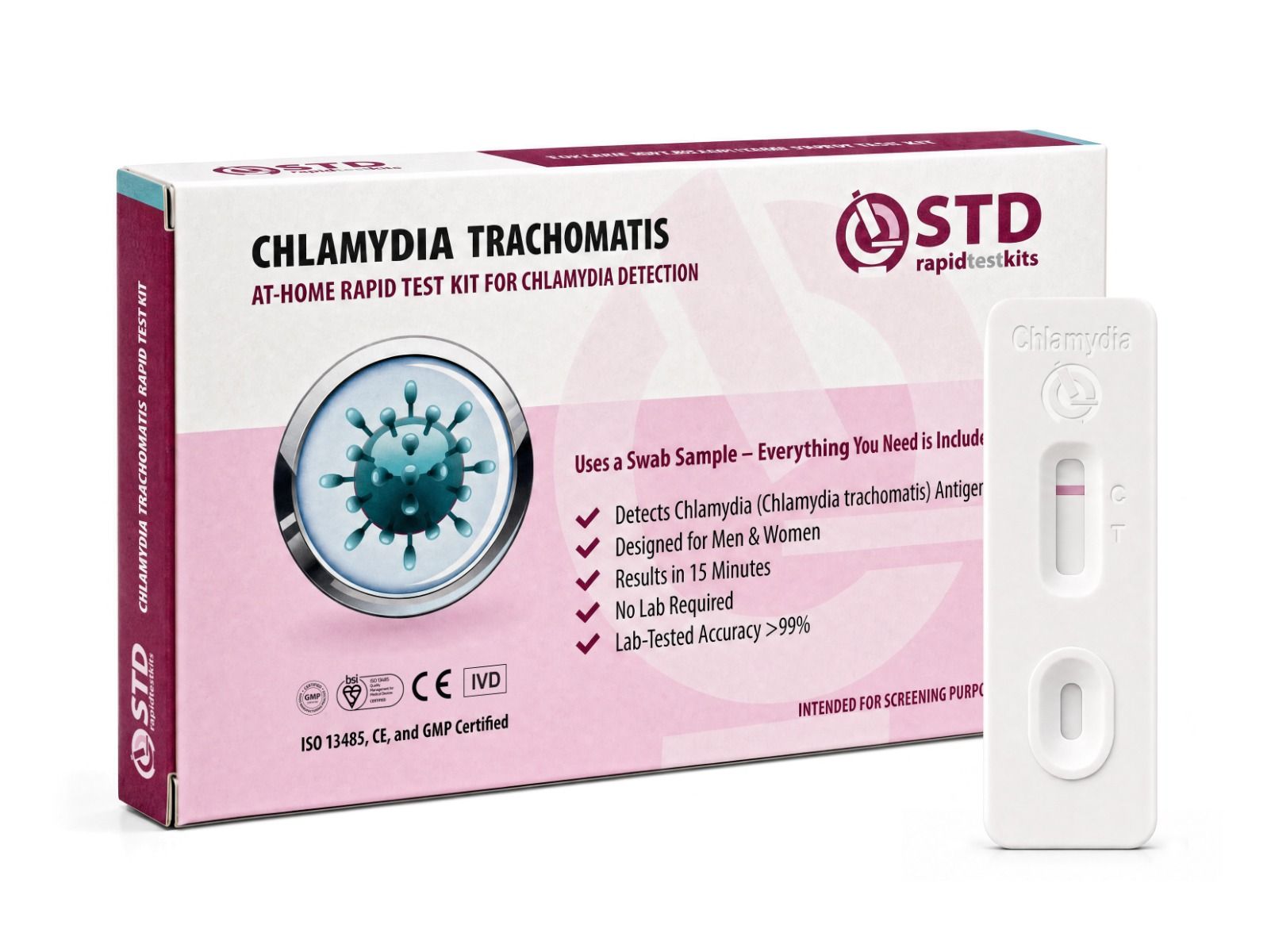
At-home rapid tests use a different technology called lateral-flow immunoassay, the same chemistry used in at-home pregnancy and COVID tests. They detect chlamydia antigens on a self-collected vaginal swab and produce a result in about 15 minutes. They are useful, but they are not equivalent in sensitivity to lab NAAT. Lateral-flow rapid tests trade some sensitivity for speed, privacy, and immediate access.
An at-home rapid test fits well when:
- You want a quick screening answer between scheduled prenatal visits
- Clinic access is limited by distance, time, or insurance
- You want a result you can bring to your OB to prompt earlier lab confirmation
Treat any at-home rapid test during pregnancy as a screening tool, not a final diagnosis. A positive at-home result needs lab confirmation and treatment from your provider. A negative result is reassuring within the test's sensitivity limits, but the most reliable confirmation in pregnancy is still the lab swab your OB runs. Bring the at-home result to your next OB appointment so it can inform the decision to run a confirmatory NAAT.
Disclosure: this site sells at-home rapid tests, including the chlamydia kit described below.
What treatment looks like if you test positive while pregnant
A positive result during pregnancy lands hard. The number that helps most: people who test positive for chlamydia and complete treatment go on to have healthy pregnancies and healthy babies in the large majority of cases. The risk to the baby comes from infections that go undetected through delivery, not from infections caught and treated.
The current CDC STI Treatment Guidelines list azithromycin 1 gram orally as a single dose as the recommended chlamydia treatment in pregnancy. Amoxicillin 500 mg three times daily for seven days is the listed alternative. Both have long safety records in prenatal use. Doxycycline, which is the first-line option in non-pregnant adults, is avoided in pregnancy because of effects on developing teeth and bone. Your provider chooses based on your medical history and any other medications you are taking.
Two follow-up pieces are important:
- Test of cure. The CDC specifically recommends a repeat NAAT approximately four weeks after treatment for pregnant people, to confirm the infection cleared before delivery. The CDC sets this at approximately four weeks to avoid false positives from residual bacterial DNA the body is still clearing.
- Partner treatment. Partners from the previous 60 days should be tested and treated (per CDC STI Treatment Guidelines) to prevent reinfection. Many U.S. states allow expedited partner therapy (EPT), where your provider can prescribe treatment for your partner without a separate visit. Ask whether EPT is available in your state.
Symptoms, if you had any, typically improve within a few days of starting antibiotics. Finishing the full course matters even when you feel better. Treatment failure is uncommon, and when it happens it is usually traced to either incomplete dosing or reinfection from an untreated partner.
Untreated chlamydia in pregnancy can cause preterm labor and can be passed to the infant during delivery, resulting in eye infections or pneumonia. Treatment during pregnancy prevents transmission to the infant.
Talking with your partner and screening for the rest of the panel
Few conversations during pregnancy feel as heavy as telling a partner about a positive STI result. What helps most people is leading with the present rather than the timeline. Chlamydia can sit in someone's system for months without symptoms, so a positive test does not automatically point to recent infidelity. Framing the conversation around treatment and the baby's safety usually lowers the temperature.
One phrasing that tends to land: "My screening test came back positive. The doctor says it is common and very treatable, and we both need treatment so the baby stays safe." That puts the action on the table without putting a timeline on the table.
Partners need to be tested and treated at the same time. Without that step, reinfection is common, and the test of cure approximately four weeks later may come back positive again. The CDC's clinical guidance on chlamydia is explicit that partner management is part of treatment, not an optional follow-up.
Because chlamydia often travels alongside other infections, many people screen for gonorrhea, syphilis, and HIV at the same prenatal visit. A combination at-home kit can cover the most common infections in a single panel when you want a broader screen between scheduled appointments. As with the single-infection kit, treat any positive result as a signal to confirm with your OB and start treatment.

You handled this the right way by checking
The infections that hurt pregnancies are the ones nobody tests for. By thinking about screening, window periods, and follow-up testing, you have already done the part that protects you and the pregnancy. Most chlamydia infections in pregnancy are caught by routine screening, treated with a single course of antibiotics, and never affect the baby.
If you take one thing from this guide: bring questions to your prenatal visit, ask about a third-trimester retest if you have ongoing risk, and treat any at-home positive result as a prompt to confirm with your OB rather than a verdict on you. Your next step is to confirm your third-trimester retest date with your OB and to follow up on any at-home positive result the same week you see it.
- Confirm your first prenatal chlamydia screen happened (or schedule it now if you are still booking initial prenatal care).
- Ask your OB at your next visit about a third-trimester retest if you are under 25 or have ongoing risk factors.
- If an at-home rapid test comes back positive, call your OB the same week to arrange a confirmatory NAAT and start treatment.
FAQs
- Can I have chlamydia in pregnancy and feel completely normal?
- Yes. Chlamydia infections in women often cause no symptoms, and pregnancy makes that even harder to spot because normal pregnancy changes (more discharge, mild cramping, pelvic pressure) overlap with the mild symptoms chlamydia sometimes causes. This is the reason prenatal screening is automatic rather than symptom-triggered.
- How soon after a possible exposure can I test reliably?
- Chlamydia testing is generally reliable from about one to two weeks after exposure. Testing earlier than that can return a false negative because the bacterial load is too low to detect. If exposure was very recent and your first test is negative, retesting two weeks later gives a more confident answer.
- Are the antibiotics safe during pregnancy?
- Yes, and the treatment is simple. Your provider will most likely prescribe a single 1-gram oral dose of azithromycin; if that doesn't suit your history, amoxicillin for seven days is an established alternative. The antibiotic used in non-pregnant adults (doxycycline) is avoided in pregnancy, so your provider will always choose a pregnancy-safe option.
- Why retest approximately four weeks after treatment?
- The CDC recommends a test of cure for pregnant people specifically, to confirm the infection cleared before delivery. The CDC sets the timing at approximately four weeks to avoid false positives from residual bacterial DNA that the body is still clearing. Four weeks is the timing where a negative result is meaningful.
- What if my partner refuses to get tested or treated?
- Reinfection is the main risk. If your partner is not treated, you can clear the infection and then catch it again before delivery. Many U.S. states allow expedited partner therapy (EPT), where your provider writes a prescription for your partner without a separate visit. Ask your OB if EPT is available where you are.
- Can untreated chlamydia cause a miscarriage?
- Untreated chlamydia is linked to preterm labor, preterm rupture of membranes, and low birth weight, and some studies have shown an association with second-trimester pregnancy loss. The clearer picture is that treating it during pregnancy substantially reduces those risks, which is why routine prenatal screening exists in the first place.
- Is an at-home rapid test reliable enough during pregnancy?
- At-home rapid tests use lateral-flow chemistry and are less sensitive than the lab NAAT your OB runs, but they are useful as a screening tool between prenatal visits or when clinic access is limited. Treat a positive result as a strong signal to confirm with your OB and start treatment. Treat a negative result as reassurance within the test's limits, not a guarantee.
- U.S. Centers for Disease Control and Prevention. About Chlamydia: clinical overview, asymptomatic infection rates in women, and complications in pregnancy.
- U.S. Centers for Disease Control and Prevention. STI Treatment Guidelines: chlamydia treatment regimens in pregnancy (azithromycin and amoxicillin), test of cure timing at approximately four weeks, and partner management within the previous 60 days.
- U.S. Preventive Services Task Force. Chlamydia and Gonorrhea Screening Recommendation: screening criteria for pregnant people and people under 25.
- U.S. Centers for Disease Control and Prevention. About STIs and Pregnancy: routine prenatal STI screening recommendations and risks of untreated infection at delivery.
- World Health Organization. Sexually transmitted infections (STIs) fact sheet: chlamydia prevalence, transmission, and treatment globally.
- NHS. Chlamydia: overview of symptoms, testing, and treatment in the UK National Health Service context.
