Published: November 2025 | Last updated: May 2026 | Editorial review and quality control: Martina N.
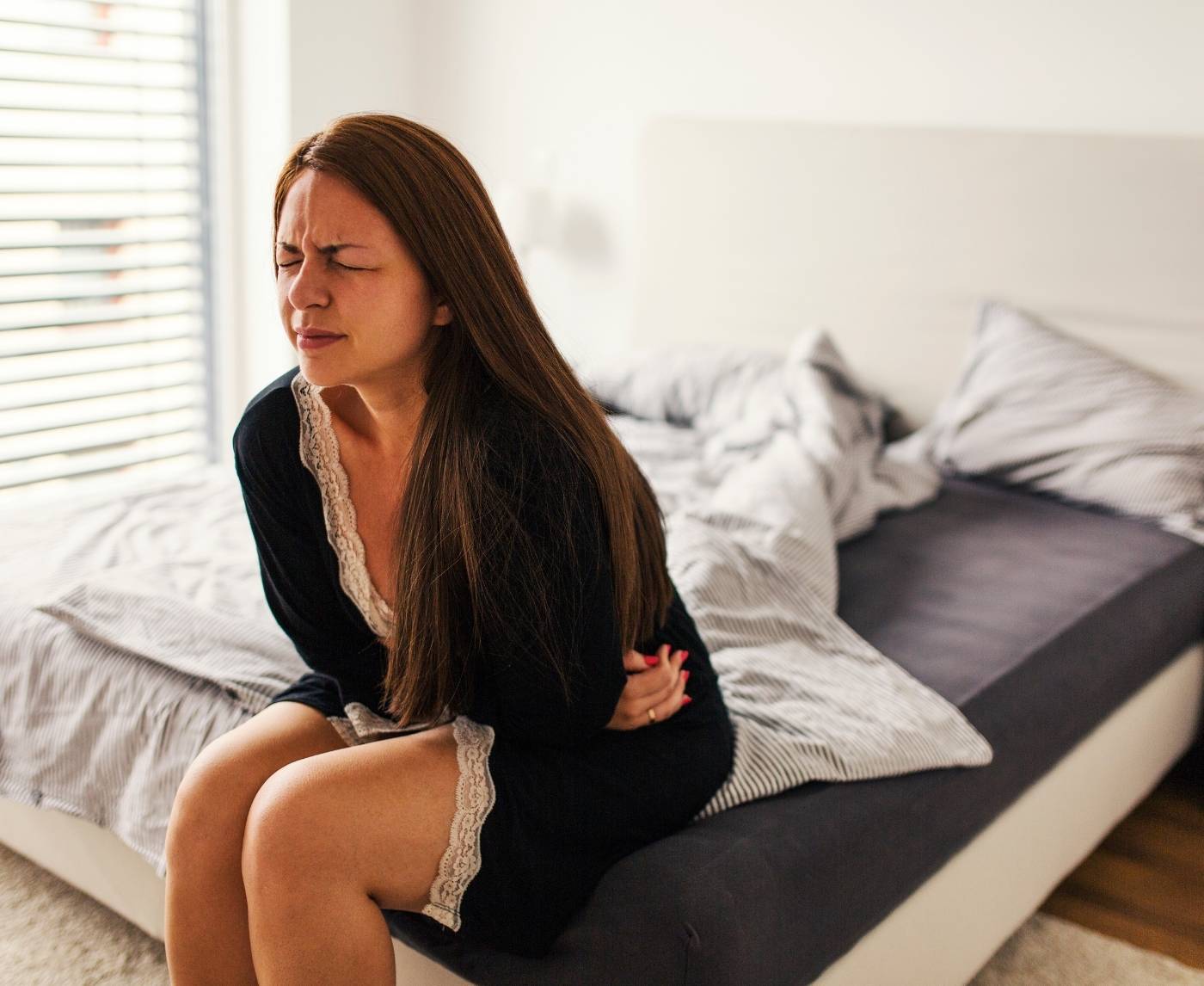
Pain during sex without any other obvious sign, no discharge, no itching, no sores, can feel like a mystery your body keeps refusing to explain. Just a deep ache, a sharp sting during certain positions, or a soreness that lingers afterward. The default reassurance, that 'it's probably nothing,' can be wrong in a quiet, important way.
Some sexually transmitted infections cause inflammation deep enough to hurt without ever producing the textbook signs a quick internet check might tell you to look for. Others mimic infection while having nothing to do with it. This guide walks through what painful sex without discharge can actually mean, what to do when tests come back negative, and how to know whether testing yourself at home is the right next step.
Key Takeaways
- Most chlamydia infections produce no obvious symptoms (CDC), so pain during sex without discharge can be the only signal an infection gives.
- If pain is new, persistent, or hard to explain, testing about 14 days after the most recent unprotected exposure gives the most reliable answer; an at-home rapid test is one private way to start.
What Pain Without Discharge Can Actually Signal
Discomfort during sex is often dismissed when there are no obvious signs like discharge, sores, or visible irritation. But internal symptoms are still symptoms. The cervix, uterus, and urethra don't have to leak fluid to be inflamed. Some sexually transmitted infections specifically cause that quieter inflammation, and the only thing you notice from it is pain.
For people with a vagina, chlamydia and trichomoniasis often show up as discomfort with deeper penetration, a dull ache during or after sex, or a pinch-like soreness that lingers. For people with a penis, the same infections may cause an aching feeling in the testicles or a faint burning after ejaculation, again with no discharge. None of these need to be loud to matter.
What makes these signs easy to miss is how they overlap with mundane explanations: dryness, tension, a new position, a long week. All of those are reasonable on their own. They can also coexist with an infection your body is reacting to in the only way it knows how.
Painful sex without discharge has both infection and non-infection causes, and the surface signs often look identical. This guide walks through the STIs most likely to cause silent pelvic inflammation (chlamydia, trichomoniasis, sometimes gonorrhea), the non-STI conditions that can mimic them (vaginismus, endometriosis, interstitial cystitis, cervicitis), and how to tell which path of evaluation to take first.
Could It Be Chlamydia With No Other Symptoms?
Chlamydia is the most common bacterial STI in the U.S. and one of the most likely culprits when sex hurts for no obvious reason. According to the CDC's chlamydia overview, most chlamydial infections produce no symptoms at all. When symptoms do appear, they often arrive as a vague sense that something is wrong rather than the textbook discharge-and-burning pattern.
Chlamydia trachomatis infects the cells lining the cervix, urethra, or rectum and triggers an immune response there. That inflammation, sometimes called cervicitis when it affects the cervix, can be tender to pressure. Sex, especially deep penetration, presses on the inflamed tissue and the body interprets it as pain.
Inflammation can also climb upward. Untreated chlamydia is a leading cause of pelvic inflammatory disease (PID), where the infection reaches the uterus and fallopian tubes. The CDC's PID overview notes that PID can cause lasting pelvic pain, ectopic pregnancy, and infertility, often after symptoms that started out subtle. Catching infection early matters precisely because the early signs are easy to brush off.
| Possible Sign | Appears in Chlamydia? | How Common |
|---|---|---|
| Vaginal or penile discharge | Yes | Common in symptomatic cases |
| Pain during sex | Yes | Less common, but a meaningful signal when it appears |
| Burning with urination | Yes | Common in symptomatic cases |
| Pelvic or testicular ache without discharge | Yes | Less common |
| No symptoms at all | Yes | Most cases (CDC) |
Can painful sex with no discharge be an STD?
Yes. Chlamydia, trichomoniasis, and (less commonly) gonorrhea can cause pelvic inflammation that hurts during sex without producing visible discharge. The CDC reports that most chlamydia infections are asymptomatic, so pain may be the first or only sign. If you've had unprotected sex in the past 2 to 6 weeks, testing about 14 days after exposure gives the most reliable result; you can use a clinic or a validated at-home rapid test.
When It's Not an STD (But Still Needs Attention)
Plenty of physical, non-infection causes of painful sex exist. Pelvic floor tension. Vaginal dryness from low estrogen, breastfeeding, certain birth control pills, or perimenopause. Hormonal shifts that change tissue elasticity. Past trauma the body remembers as guarding during intimacy. Endometriosis, vaginismus, and interstitial cystitis sit on the same list. Each one is real, each one is treatable, and each one is sometimes mistaken for an STD because pain is the only signal it gives.
The trap is that these causes overlap with early infection symptoms. Both vaginal atrophy and chlamydia can produce a stinging sensation during penetration. Both pelvic floor spasm and PID can present as a 'hitting a wall' feeling. Without testing, the surface signs can look identical. Testing rules infection in or out; from there, the path branches into the next layer of evaluation.
One assumption to avoid: 'it doesn't look like an STD, so it isn't one.' Silent STIs are still STIs. The longer untreated chlamydia or gonorrhea sits, the higher the chance of complications like PID, which can affect future fertility or cause long-term pelvic pain.
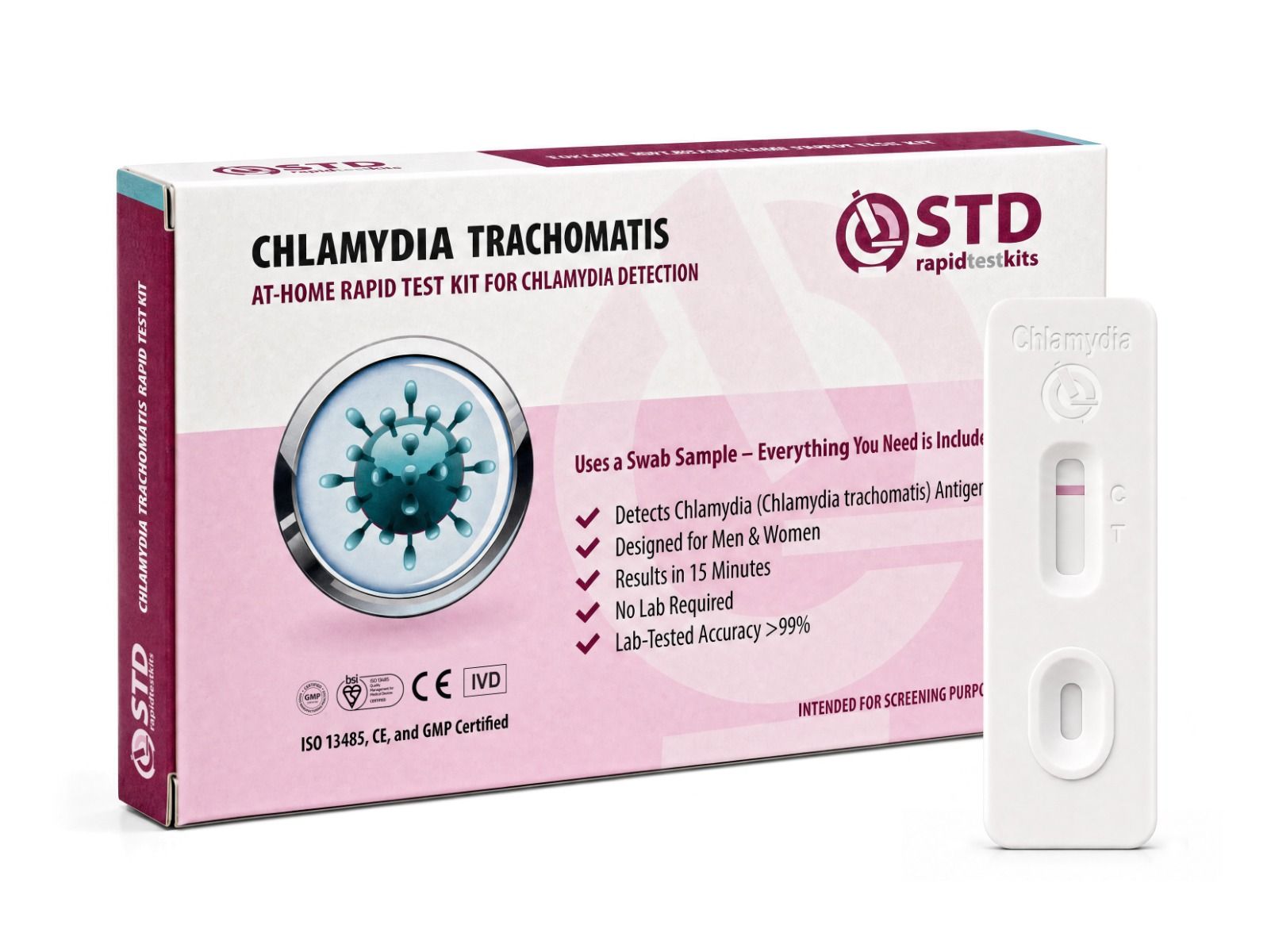
This site sells rapid at-home STI tests; we recommend testing where it is genuinely indicated, and a positive rapid result should be confirmed with a clinic NAAT.
So, When Should You Test?
The CDC's screening guidance, summarized on its chlamydia overview, recommends annual screening for all sexually active women under 25 and for older women with new or multiple partners. Broader CDC guidance recommends screening for any person with new or multiple partners regardless of gender. On top of that baseline, any new unexplained symptom is a reason to test, including pain during sex.
Timing matters. Testing within the first 7 days after exposure is more likely to return a false negative because bacterial DNA may not yet be detectable in collected samples. The most reliable window for most chlamydia and gonorrhea tests is around 14 days post-exposure. Testing earlier is still useful when symptoms are urgent or to establish a baseline, with the plan to retest at 2 weeks if the first result is negative and pain continues.
| Timing After Exposure | Risk of False Negative | Action Recommended |
|---|---|---|
| 0 to 7 days | High | Test now if symptoms are severe, but plan to retest at 14 days |
| 7 to 14 days | Medium | Initial testing is reasonable; retest if symptoms persist |
| 14+ days | Low | Best accuracy window for chlamydia and gonorrhea |
What If Your Tests Come Back Negative?
A negative result when pain continues is one of the more frustrating outcomes in sexual health. When pain continues after a clean result, the first reaction is usually to question the test. Sometimes that's justified, but the explanation is often more specific.
Several mechanisms can produce a false-negative on chlamydia or gonorrhea testing:
- Test too early. Inside the 7-to-14-day window, results may not reflect a recent infection yet.
- Wrong sample site. A urine or vaginal-swab test can miss chlamydia that's living in the throat (from oral sex) or rectum (from receptive anal sex). The CDC recommends extragenital testing for anyone who has had oral or anal exposure. We don't sell pharyngeal or rectal swab kits; clinic testing is the right path for those sites.
- Sample collection issues. An incomplete swab or diluted urine specimen can lower test sensitivity.
- Persistent inflammation, not active infection. Pain can outlast a cleared infection if the cervix or urethra is still healing, or if a different cause has taken over.
If pain persists despite a clean test, the next step is usually a clinician visit for a pelvic exam and, where appropriate, a multi-site screen. If at-home testing is the only option, choose a kit that's CE-marked or FDA-cleared, follow the instructions exactly, and retest if the result and symptoms don't line up.
Most people with chlamydia have no symptoms. If you do not get tested or treated, chlamydia can cause serious health problems, including pelvic inflammatory disease, infertility, and ectopic pregnancy.
The Invisible Load: Doubt and Being Dismissed
Research and patient-advocacy reports consistently document a gap between when people first report painful sex and when they receive a thorough workup. Women, LGBTQ+ patients, and survivors of sexual trauma are most likely to be told the pain is psychological, dryness-related, or 'not serious enough' for testing. Sometimes those explanations are correct. Often they coexist with infection or other physical causes the visit didn't investigate.
Whether the source is infection, hormonal change, pelvic floor dysfunction, endometriosis, or something else, pain is a signal worth a real workup rather than a brush-off. At-home testing can be useful here as a starting point, particularly for ruling chlamydia, gonorrhea, and trichomoniasis in or out before a clinic visit that's been hard to get or hard to face.
At-home testing offers a way to rule out the most common silent STIs before a clinic visit, particularly when getting an appointment has been difficult or intimidating. It is a starting point, not a substitute for follow-up care if results are positive or pain continues.
Non-STD Causes That Mimic Infection
Vaginismus, endometriosis, and interstitial cystitis account for most painful-sex cases that aren't infections. Each one is treatable, each one is physical, and each one can present as deep, sharp, or aching pain with no visible symptoms.
- Vaginismus. The pelvic floor muscles involuntarily tighten or spasm, making penetration feel like hitting a wall. The cause is physical, not psychological, although stress can trigger it. Pelvic floor exercises and specialist-guided therapy are the primary treatment approaches (NHS).
- Endometriosis. Tissue similar to the uterine lining grows outside the uterus, causing inflammation behind the uterus or along the vaginal wall. Deep pain during sex, especially during certain positions or at specific times in the menstrual cycle, is a classic sign.
- Interstitial cystitis (painful bladder syndrome). Chronic bladder sensitivity that radiates into the pelvis during sex. Often misdiagnosed as recurrent UTI even when urine cultures come back negative.
Cervicitis, separate from these, deserves its own mention. Cervical inflammation can come from infection (chlamydia, gonorrhea, trichomoniasis, herpes), from chemical irritants like spermicides, or from physical trauma. Mayo Clinic's cervicitis overview lists pain during sex as a common symptom, often without much else.
Working through these possibilities is typically layered: rule out infection first with an at-home test or clinic STI screen, then move into pelvic floor, hormonal, or gynecological evaluation if testing comes back clean and pain continues.
What If It's Not You, But Your Partner?
STIs don't always show up evenly in both partners. The CDC's chlamydia overview notes that most chlamydia infections have no symptoms at all. Trichomoniasis is often carried without any noticeable symptoms, too; one partner can carry it silently for months while the other develops the only sign, which might be exactly what's happening when sex starts hurting.
This is part of why partner testing matters when symptoms appear on only one side of the relationship. Two bodies can react differently to the same infection; that's biology, and it explains why symptoms can show up on only one side. Asking a partner to test is health maintenance, the same way periodic dental cleanings are.
For monogamous couples where neither has tested in a while, testing together for a common panel of STIs is a reasonable step. An at-home kit that covers multiple infections in a single sample collection makes this easier when clinic access is limited or appointments are hard to coordinate.
How to Start the Testing Conversation
The conversation is often the hardest part. New relationships make testing requests feel like accusations. Long-term relationships make them feel like rocking the boat. There are low-stakes ways to open the topic without either of those edges.
One framing puts the focus on a shared experience rather than blame, and presents testing as practical rather than diagnostic of a person's character. Another framing leans on routine maintenance, less specific to symptoms, more about being on the same page. Either works; what matters is that the request lands as care, not suspicion.
At-home tests help here as well. Testing privately on your own schedule removes the clinic-visit friction and the awkward intake conversation with a stranger.
Two ways to bring up testing
- Symptom-led: 'I've been feeling some discomfort during sex and I want to figure out what's going on. I'd like us both to test, probably nothing, but I want to be sure.'
- Routine-led: 'I'm due for my regular STI screen, want to do it together?'
- If the conversation feels too charged, take the at-home route first and share results once you have them in hand.
Frequently Asked Questions
- Can chlamydia cause pain during sex without any discharge?
- Yes. The CDC reports that most chlamydia infections are asymptomatic, and when symptoms do appear, they often arrive as pain or burning rather than discharge. Cervical inflammation from chlamydia can cause a deep ache or sharp sensation during deeper penetration even without producing visible discharge.
- What kind of pain during sex should make me consider testing?
- New, persistent, or worsening pain is the strongest signal. Sharp pressure on the cervix, a dull ache that lingers after sex, soreness the next morning, or a pinch-like sensation deep inside are all worth investigating. Pain that's new compared to your baseline matters more than the specific quality of the pain.
- I've only had one partner. Do I still need to test?
- Possibly. STIs don't track to relationship timelines; a partner can carry an infection from before the relationship began without knowing. Testing once at the start of a partnership, and again if symptoms appear, is a reasonable baseline regardless of how monogamous the relationship feels.
- I tested negative but the pain hasn't gone away. What's next?
- A negative result when pain continues usually has a specific cause behind it. Testing before the 14-day window can return a false negative even when infection is present, so retesting at 14+ days post-exposure is often the first move. A vaginal swab or urine test won't detect chlamydia in the throat or rectum, which means clinic-based extragenital testing is needed for anyone with oral or anal exposure. Sample collection issues like an incomplete swab or diluted urine can also lower sensitivity. And sometimes pain outlasts a cleared infection, or has a non-infection cause like vaginismus, endometriosis, or interstitial cystitis. A clinician visit for a pelvic exam is the next reasonable step when a clean test result and ongoing pain don't add up.
- Can an STD cause pain even if we used condoms?
- Yes. Condoms substantially lower the risk of most STIs but don't eliminate it. Herpes and HPV can spread through skin contact in areas a condom doesn't cover, and trichomoniasis can transmit through fluid contact at the edges. If pain is new and recent, testing is still reasonable even with consistent condom use.
- What if my partner has no symptoms and I do?
- Most chlamydia infections produce no symptoms at all (CDC), so one partner can carry an infection silently while the other develops noticeable signs. Both partners testing is the cleanest way to sort it out, and treating both at the same time prevents reinfection after one person finishes antibiotics.
- How soon after exposure can I test?
- Most chlamydia and gonorrhea tests give the most reliable result at about 14 days after exposure. Earlier testing is still possible if symptoms are urgent; the result is just more likely to be a false negative. Standard guidance is to test now if you need to, and retest at 14 days if symptoms continue.
- Can I really do this at home, or should I just go to a clinic?
- At-home rapid tests are useful for an initial screen and for private repeat testing on your own schedule. Look for CE-marked or FDA-cleared kits, follow the instructions exactly, and treat a positive at-home result as a strong signal to follow up with a clinic for confirmation and treatment. For pelvic pain that's severe, sudden, or coupled with fever, skip home testing and see a clinician.
How We Sourced This Article: Our article was constructed based on current advice from the CDC, Mayo Clinic, and NHS, then molded into plain-English explanations for at-home health decisions. Where reader experience matters (testing timing, the emotional load of being dismissed), we drew on published patient-advocacy literature rather than individual anecdotes.
- U.S. Centers for Disease Control and Prevention. About Chlamydia: prevalence, asymptomatic presentation, and complications including pelvic inflammatory disease.
- U.S. Centers for Disease Control and Prevention. About Pelvic Inflammatory Disease (PID): symptoms, long-term complications, and the link to untreated chlamydia and gonorrhea.
- World Health Organization. Sexually Transmitted Infections (STIs) fact sheet: global STI overview and screening guidance.
- Mayo Clinic. Cervicitis: symptoms and causes, including pain during sex as a common presenting symptom.
- NHS. Vaginismus: overview, causes, and treatment options including pelvic floor exercises, psychosexual therapy, and vaginal trainers.
- NHS. Endometriosis: overview, symptoms, and the link between endometriotic lesions and deep painful sex.
