
Published: October 2025 | Last updated: May 2026 | Editorial review and quality control: Martina N.
Living off the grid in Colorado means doing more for yourself: stacking firewood before the snow, hauling water in spring, fixing a truck axle at 9,000 feet with no service. Sexual health rarely makes that self-reliance list. It should. Rural Coloradans are no more or less likely to be exposed to sexually transmitted infections than anyone else; they are simply far less likely to have a same-week clinic appointment within driving distance.
The Colorado Department of Public Health and Environment (CDPHE) coordinates STI services across the state, but counties west of the Continental Divide and across the San Luis Valley run thin on coverage (CDPHE STI and HIV Resource Center). For someone living near Creede, Paonia, Rico, or Norwood, the closest sexual health clinic can be 80 miles each way, plus an unpaid day off. At-home rapid lateral-flow tests close that gap: results visible on a cassette window in about fifteen minutes at your kitchen table, with no mail-in step and no waiting room.
This guide covers what you can reliably test for at home, what still requires a clinic, why window-period timing matters more than your zip code, and how to connect a self-test result with follow-up care from a rural Colorado address. We are stdrapidtestkits.com, and we sell at-home rapid lateral-flow STI tests, so we want to be precise about what that category actually does, and what it doesn't.
Key Takeaways
- Rapid lateral-flow at-home tests run in about fifteen minutes on a self-collected swab or fingerstick blood sample, with the result read on the cassette window. There is no mailing step and no lab turnaround.
- A positive rapid result is a screening signal, not a diagnosis. It still needs a confirmatory lab test from a clinician or a telehealth visit before treatment starts.
Why rural Colorado is a special case for STI testing
The barriers people in mountain and West Slope communities run into aren't unique to STI care, but they hit harder here. They cluster into distance, privacy, and cost:
- Distance. Public health departments and Title X clinics cluster along the Front Range and in regional hubs like Grand Junction or Pueblo. The CDPHE-maintained directory of partner clinics (CDPHE STI testing locations) shows full coverage in Denver, Boulder, and Fort Collins, with much sparser representation in Mineral, Hinsdale, Costilla, Conejos, and Saguache counties. Routine drives over an hour to reach a clinic that can swab for chlamydia or draw blood for syphilis are normal there.
- Privacy. In a county of 1,500 residents, the person at the front desk of the public health office is often someone you know from the feed store, the school board, or last Saturday's potluck. CDPHE's anonymous testing programs and partnered initiatives like the imaware mail-in program exist specifically because privacy is a documented barrier in small communities, not because the testing itself is different.
- Time and money. Seasonal work, no employer-provided insurance, and gas costs stack up. CDPHE notes that even when testing is free, the cost of getting there isn't. At-home rapid kits sidestep all three barriers at once: shipped to a PO box or general delivery address, run in private, no drive required.
How rapid lateral-flow at-home tests actually work
This is the part where the existing rural-testing literature usually blurs categories, so it's worth being precise. There are two completely different at-home testing types on the market, and they don't work the same way:
- Mail-in lab tests. You collect a sample (urine, swab, or dried blood spot), pack it in a prepaid envelope, and mail it to a laboratory that runs a nucleic acid amplification test (NAAT) or other lab assay. Results appear online in roughly 1 to 5 business days. Useful, but still lab-based, with the same mail dependency as any other postal service.
- Rapid lateral-flow tests. You collect the sample, apply it to a test cassette with a buffer drop, and read the colored band result through the cassette window in about fifteen minutes. Same immunoassay chemistry used in pregnancy tests and rapid COVID antigen tests. No lab, no mail, no waiting period beyond the run time.
This guide focuses on the rapid lateral-flow category, since that is what works without postal access, without a stable mailing address, and without waiting days for an online portal to update. A van parked at a Silverton trailhead with no cell signal can run a rapid test and have a readable result before sunset. A mail-in test from the same location depends on whatever week the mail carrier next passes through.
The trade-off is real and worth stating plainly. Lateral-flow rapid tests are screening tools. Lab NAATs run by certified clinical labs are more analytically sensitive, especially for asymptomatic infections caught very early in the window period (CDC STI Information). A negative rapid test late in the window period is reassuring. A positive rapid test still warrants a confirmatory lab test before treatment starts. We come back to that section below.
Rapid lateral-flow vs mail-in lab tests
- Rapid lateral-flow: result visible on the cassette in about fifteen minutes; no postal step; sample collected and read at home.
- Mail-in NAAT or lab assay: 1 to 5 business days after the lab receives the sample; depends on reliable mail service; analytically more sensitive at the very early end of the window period.
- Use the rapid kit for fast, private screening; use a lab NAAT (via clinic or telehealth) for confirmation after a positive rapid result.
What you can test for at home, and what you can't
Sample type matters more than brand. Here is what the rapid at-home category covers and where it stops:
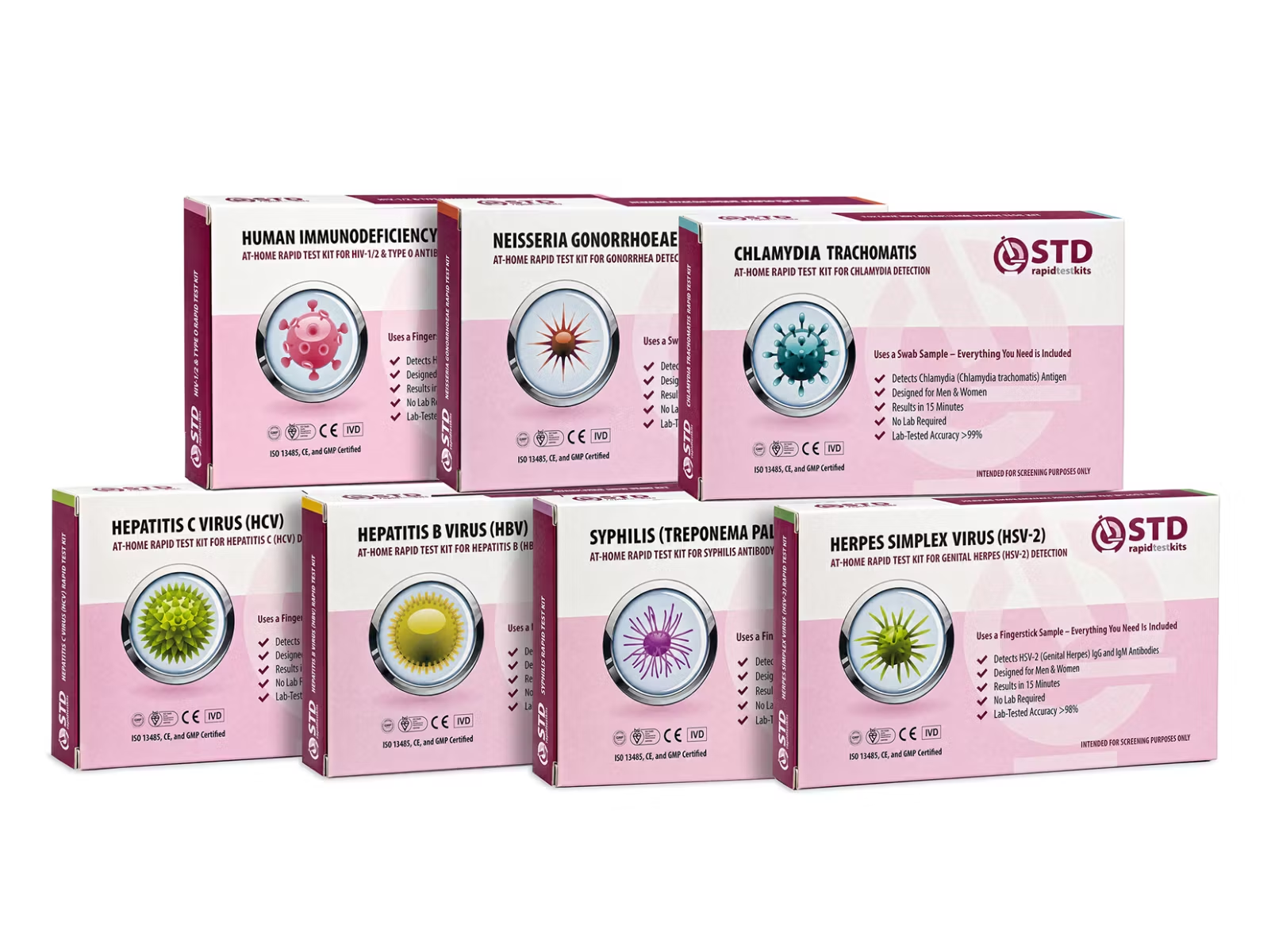
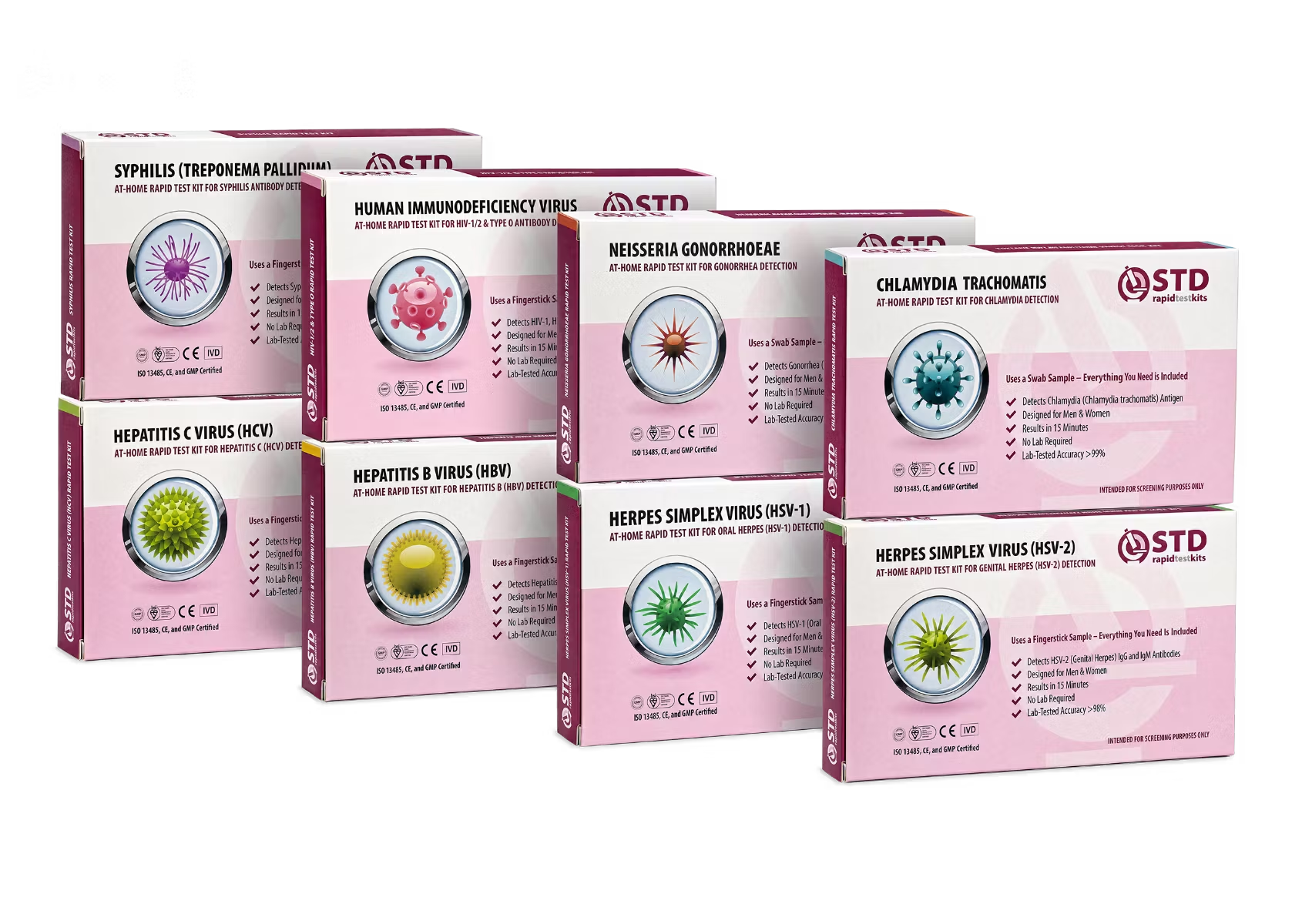
Self-collected vaginal or penile swab (rapid lateral-flow): chlamydia and gonorrhea, available for any-gender use. Trichomoniasis and HPV are also available as rapid swabs, but our kits are validated for vaginal self-swab only. These detect bacterial or viral antigens at the site of infection.
Fingerstick blood (rapid lateral-flow): HIV, syphilis, hepatitis B, hepatitis C, HSV-1, HSV-2, and combined herpes panels. These detect antibodies (or, for newer HIV tests, antigen plus antibody) circulating in your blood.
Several things the at-home rapid category does not cover, and where a clinic visit is the right move:
- Pharyngeal (throat) gonorrhea or chlamydia. If your exposure was oral, the swab needs to come from the back of your throat and be processed in a lab. We don't sell a pharyngeal swab kit; a CDPHE-listed clinic does, and that's the correct route.
- Rectal swab testing. Same situation. Rectal exposures need a clinic-collected swab plus lab processing.
- Confirmatory testing after a positive rapid result. Always handled at a clinic or via telehealth that can order lab work. Rapid is screening, not diagnostic confirmation.
Our at-home rapid HPV and trichomoniasis kits are validated for vaginal self-swab only. If you have a penis and want HPV or trich screening, that is a clinic conversation rather than a kit conversation. Many CDPHE-listed clinics handle it routinely.
Can I really test for STIs from a cabin in the San Juan mountains?
Yes for the rapid lateral-flow category: chlamydia, gonorrhea, trichomoniasis, HPV (vaginal swab), HIV, syphilis, hepatitis B, hepatitis C, and herpes are all testable at home with a kit shipped to a PO box or general delivery address. Each test runs in about fifteen minutes and you read the result on the cassette. Exceptions: throat-swab and rectal testing still need a clinic. A positive home result needs a confirmatory lab test before any treatment begins.
Window periods: timing matters more than geography
The single biggest reason a home test gives a misleading result is not faulty chemistry. It is testing too soon after exposure. Every STI has a window period: the time between exposure and when the infection becomes detectable by a given test type.
Approximate windows for the rapid at-home category, drawn from CDC and manufacturer instructions for use (always check the specific kit's documentation, since assays vary):
- Chlamydia and gonorrhea swab: useful from about 14 days post-exposure onward.
- HIV rapid antibody fingerstick: useful from about 23 to 90 days post-exposure, with the long end accounting for slower seroconverters.
- Syphilis rapid: typically 3 to 12 weeks for treponemal antibody to be detectable.
- Hepatitis B and C rapid: 3 to 12 weeks for surface antigen or antibody to register, depending on the specific assay.
- Herpes (HSV-1 / HSV-2 IgG antibody): 12 weeks for most people, with some outliers taking longer. Always check the kit's specific instructions for use.
If you are testing because of a specific exposure event and the timing is short, the practical move is often two tests: one at the early end of the window-period range, one again at the upper end, to catch slow seroconverters. CDPHE's testing resources walk through the same general timing guidance (CDPHE STI testing options).
Geography doesn't change biology. You can run a fingerstick rapid test in a yurt in Creede, but if you are 10 days post a possible HIV exposure, the test will likely read negative regardless of your actual status. Plan around the window period, not just around the kit's arrival date.
Hot springs, hammocks, and other myths
A few things rural Coloradans ask routinely, with honest answers:
“Can I catch an STI from a hot spring?” Not from soaking. Chlorinated and naturally hot mineral water deactivates most pathogens quickly, and the dilution alone makes water-borne transmission of bacterial STIs effectively zero. But hot springs are also places where people have sex, and direct skin-to-skin contact or fluid-to-mucous-membrane contact transmits infection the same way it would on dry land. Sexual contact with another person carries the risk, whether that contact happens in the water or anywhere else.
“Can I get herpes from sharing a towel?” Vanishingly rare in normal circumstances. HSV doesn't survive long on dry fabric. Shared razors used while an active lesion is present and shared damp washcloths can transfer virus particles, and pubic lice (sometimes called crabs) absolutely can move via shared bedding or clothing. The fix is the same as the rest of off-grid hygiene: your own towel, your own razor, washed regularly.
“I'd know if I had something.” Mostly false for the most common at-home-testable infections. The CDC notes that chlamydia and gonorrhea are asymptomatic in the majority of infected people, trichomoniasis is asymptomatic in roughly 70% of cases, and HIV has no specific symptoms in the first weeks beyond a possible mild flu-like episode (CDC STI Information). “I'd know” is the single most common reason people skip testing, and a major contributor to undiagnosed transmission.
“I've only been with one partner.” That changes the math but doesn't eliminate the question. If your partner hasn't tested since their last partner, you are sharing whatever their status is. Mutual testing once early in a relationship clears the question for both of you.
The cost picture in mountain towns
Even when you can find a clinic, the financial picture isn't simple. The barriers that show up most often:
- No insurance. Many seasonal workers, raft and ski guides, ranch hands, and self-employed artists work without employer-provided health coverage. Without insurance, a single STI panel at urgent care can run $150 to $400 depending on what's tested and where.
- Medicaid coverage that varies clinic-by-clinic. Colorado Medicaid (Health First Colorado) covers STI testing as a preventive service, but not every rural clinic is contracted, and some county health offices run dedicated STI clinics only on designated days each month.
- Explanation of Benefits letters. Even when insurance pays, the EOB usually lists the service by name and mails to the policyholder's address. For young adults still on a parent's plan, a partner's plan, or a shared rural mailbox, that's a privacy concern that often translates to “I'd rather not test.”
At-home rapid kits sidestep all three. They're a one-time upfront cost. No paperwork, no surprise bills, no EOB sent to anyone. The kit ships in plain packaging that looks like a routine online order, not a clinical delivery.
If your at-home rapid test reads positive
A positive rapid test result is information, not a diagnosis. The immediate next step is getting confirmation. Rapid lateral-flow tests are screening tools designed for high sensitivity in the late window period, but a positive result needs to be confirmed by a lab-run NAAT (for chlamydia, gonorrhea, trichomoniasis) or a confirmatory antibody/antigen panel (for HIV, syphilis, hepatitis, herpes) before treatment starts. This usually means a clinic visit or a telehealth appointment that can order lab work to a nearby Quest or LabCorp draw site.
Treatment follows confirmation. For the most common bacterial infections (chlamydia, gonorrhea, syphilis, trichomoniasis), treatment is a course of antibiotics or a single antibiotic dose, with post-treatment retesting at 3 months to confirm clearance. For viral infections (HIV, herpes, hepatitis B and C), treatment is ongoing management with antivirals and the support of an infectious-disease-aware provider. Either way, the at-home rapid result lets you start the clinician conversation already informed, instead of starting from “I'm worried but I don't know what.”
Partner notification often gets skipped, but it matters. CDPHE and the CDC support anonymous partner-notification services that let you inform a past partner without revealing your identity (CDC HIV Resources; CDPHE STI Resource Center linked above). It is the part that breaks the transmission chain for everyone else exposed.
Many sexually transmitted infections have no symptoms. The only way to know your STI status is to get tested.
Connecting at-home testing with follow-up care from a rural address
The home test is step one. Whether your result is positive or negative, here is what step two looks like from rural Colorado:
- CDPHE-listed partner clinics. The CDPHE STI testing locations directory covers every county-supported testing site in the state, with hours, contact information, and which infections each site treats. Most rural Coloradans live within driving distance of at least one, even when “driving distance” is generous.
- Telehealth with infectious-disease coverage. Several telehealth services accept Health First Colorado (Medicaid) and private insurance, and can order labs to a nearby draw site. Most towns with 5,000+ residents have a Quest or LabCorp draw site within reasonable distance.
- The CDPHE imaware partnership. For specific infections the state-funded program ships free or low-cost lab tests directly to Colorado residents (CDPHE imaware program). Useful as a complement to rapid at-home screening when you want lab-grade confirmation without a clinic trip.
- Title X clinics. Colorado's Title X-funded clinic network offers sliding-scale STI testing and treatment regardless of insurance status (CDPHE resource center). Worth a call before assuming you can't afford care.
- University-affiliated student health. Colorado State, the University of Colorado, Fort Lewis, and several other state universities offer sexual and reproductive health services to enrolled students (Colorado State University sexual and reproductive health). If you are a student or recent graduate, worth a call to your campus health network.
The honest framing: at-home rapid tests work best as the first step of a two-step process. They give you a fast, private answer in your kitchen. The follow-up (confirmatory test if positive, repeat test at the right window-period interval if negative) connects you back to traditional care, often via telehealth so you still skip the drive.
Off-grid doesn't mean off the hook
The framing of the original version of this article holds up: rural Coloradans are already used to handling things their own way. Sourcing your own water, splitting your own wood, fixing your own truck. Adding sexual health screening to that list isn't an exception to self-reliance; it's part of it.
The two things this update tries to fix that the older write-up got wrong: at-home rapid lateral-flow tests are not the same as mail-in lab tests, and a positive rapid result is not a final answer (it's the start of a conversation with a clinician). Used correctly, with attention to the right test for your exposure, the right window-period timing, and a confirmatory follow-up if positive, the rapid at-home category closes a real access gap for residents of Mineral, Hinsdale, Saguache, San Miguel, Costilla, and the dozens of other Colorado counties where the nearest sexual health clinic is a planned trip rather than a same-day appointment.
If you've been putting off testing because the clinic isn't realistic, the rapid at-home category was built for exactly your situation. Browse the full kit catalog and pick the panel that matches your specific concern, your window-period timing, and your privacy needs.
FAQs
- Can I really run a rapid STI test from a cabin in the Rockies?
- Yes. If the mail can reach you, the kit can. People have run rapid lateral-flow kits from yurts in Creede, vans parked at Silverton trailheads, and PO boxes in Paonia. The lateral-flow chemistry doesn't care where you are, and there is no mail-back step: the result reads on the cassette window in about fifteen minutes from when you apply the sample.
- I'm itchy after a week of backcountry hiking. Could it just be gear rash?
- Plausible. Sweat, friction, and harsh laundry detergent can all cause genital-area irritation. But if the itch comes with burning during urination, unusual discharge, or bumps that don't heal in 5 to 7 days, that's a signal to test rather than wait. Hiker's rash clears with rest and gentler clothing; bacterial and viral STIs do not.
- What if my exposure was oral? Can I test for throat gonorrhea or chlamydia at home?
- Not with our rapid kits. Pharyngeal gonorrhea and chlamydia require a back-of-throat swab processed in a lab, which is a clinic-administered service. We don't sell a throat-swab kit, and we don't recommend substituting a genital swab for one. The right path is a CDPHE-listed clinic or a telehealth visit that can order lab work to a nearby draw site.
- How private is the shipping?
- Plain outer packaging with no clinical branding on the box, no test name on the shipping label, and a generic billing descriptor on the credit-card statement. To anyone seeing the package on your porch or in your mailroom, it looks like a routine online order. The contents stay private unless you choose to share them.
- What if I don't have health insurance?
- Not an issue for the rapid at-home category. The kit is a one-time upfront cost paid at checkout. No insurance claim is filed, no Explanation of Benefits letter goes to a policyholder, and no provider is billed. If you do have insurance and want to use it for any follow-up confirmatory testing, that's a separate decision you can make after a positive result.
- How long until I get a result?
- About fifteen minutes from sample application to readable result on the cassette. The exact timing varies slightly by infection (the kit's instructions for use list the read window precisely), but rapid lateral-flow tests are all in the 10-to-20-minute range. There is no lab to wait for and no online portal to log into.
- What happens if my rapid test reads positive?
- Treat it as a screening signal that calls for confirmation, not as a final diagnosis. The next step is a clinic visit or a telehealth appointment that can order a confirmatory lab test (a NAAT for bacterial infections, a confirmatory antibody panel for viral ones). For most common infections, treatment is straightforward once confirmed: oral antibiotics for chlamydia, gonorrhea, syphilis, and trichomoniasis; ongoing antiviral management for HIV, herpes, and hepatitis B or C.
- Can you actually catch an STI from a hot spring or shared bunkhouse?
- From the water itself, effectively never. Heat and dilution deactivate the relevant pathogens too quickly for water-borne transmission to be a realistic concern. From sex in the water or from sharing damp items like razors or washcloths during an active outbreak, yes, the same transmission routes that apply on dry land still apply. Pubic lice are the one exception that moves readily on shared bedding.
- U.S. Centers for Disease Control and Prevention. Sexually transmitted infections information, testing recommendations, and asymptomatic-infection prevalence guidance.
- U.S. Centers for Disease Control and Prevention. HIV testing window periods, transmission, and follow-up resources.
- Colorado Department of Public Health and Environment. STI and HIV Resource Center: clinic locator, anonymous testing programs, and partner notification.
- Colorado Department of Public Health and Environment. STI testing options page: types of test available, where to get tested, and what to expect.
- Colorado Department of Public Health and Environment, in partnership with imaware. At-home mail-in STI testing program available to Colorado residents.
- Colorado State University Health Network. Sexual and reproductive health services available to enrolled students.
