Does Early HIV Treatment Fully Restore Immunity? New Study Says No
Why HIV testing windows still matter, even with early treatment.
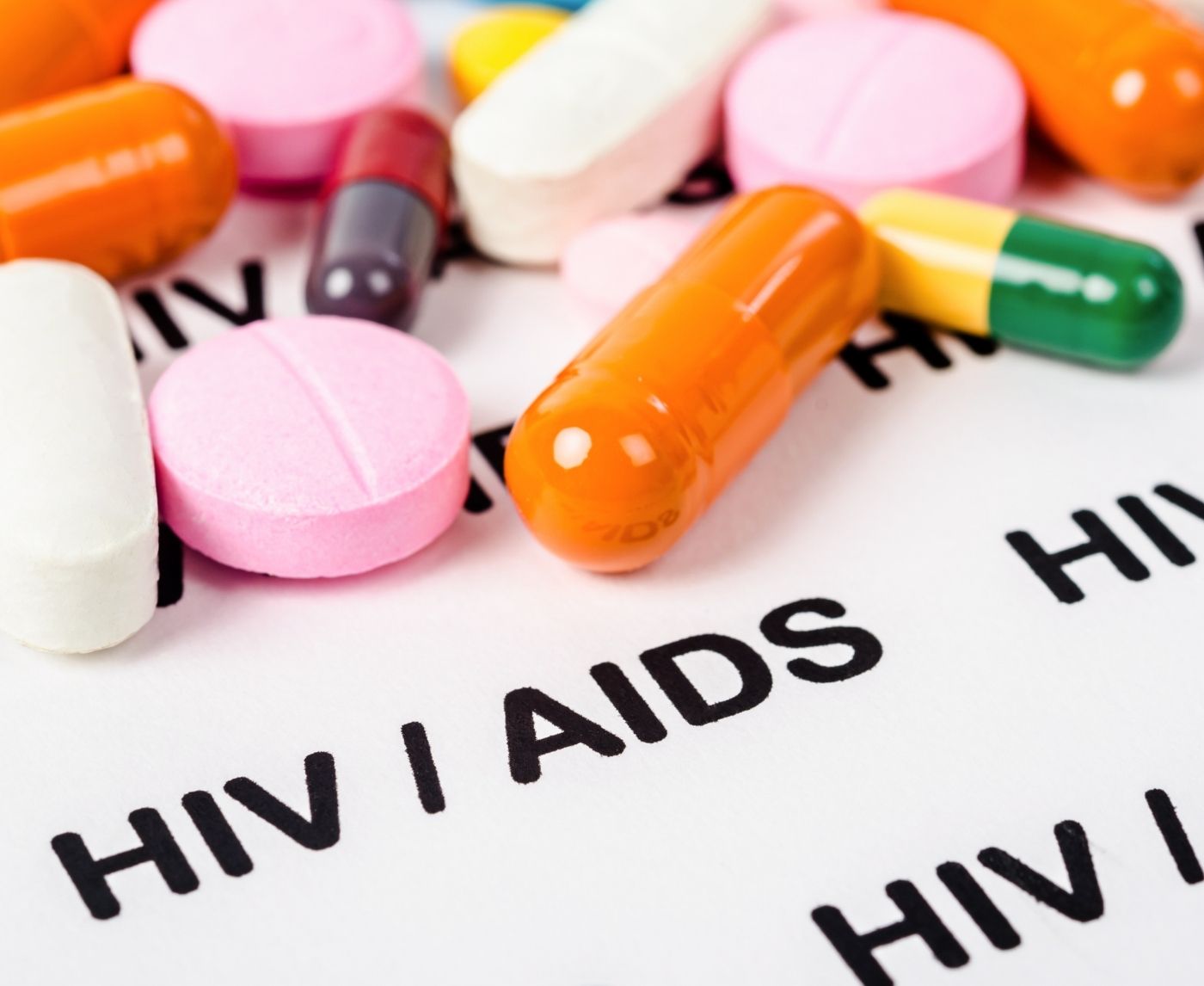



- Starting HIV treatment within days of infection still leaves the immune system mildly dysregulated within roughly three years, per a 2024 Amsterdam UMC study, so early detection through testing keeps its independent value.
- At-home rapid HIV tests use lateral-flow chemistry to detect antibodies (and sometimes p24 antigen) in fingerstick blood; they are most reliable when used after the right window, generally 3 weeks at the earliest and around 12 weeks for confirmation.
Published: November 2025 | Last updated: May 2026 | Editorial review and quality control: Martina N.
A 2024 study from Amsterdam UMC, published in eBioMedicine, complicates a story most people thought was settled: that starting HIV medication right after infection lets the body dodge the worst of the damage. The participants who began antiretroviral therapy within days of infection looked fine at six months. Within roughly three years of starting treatment, several immune-system markers had drifted back into a stress pattern, suggesting the body was still managing low-grade dysregulation even with the virus itself fully suppressed.
The study does not undermine the value of treatment. Modern HIV medication remains one of the great success stories of clinical medicine, and starting it early is still meaningfully better than starting it late. What the research adds is a separate point: catching HIV early, by testing rather than by waiting for symptoms, has a value of its own. Testing windows, the right test for the right moment, and follow-up retesting all matter more than the at-home market sometimes makes them sound.
Key Takeaways
- Starting HIV treatment within days of infection still leaves the immune system mildly dysregulated within roughly three years, per a 2024 Amsterdam UMC study, so early detection through testing keeps its independent value.
- At-home rapid HIV tests use lateral-flow chemistry to detect antibodies (and sometimes p24 antigen) in fingerstick blood; they are most reliable when used after the right window, generally 3 weeks at the earliest and around 12 weeks for confirmation.
What the Amsterdam UMC Study Actually Found
The Amsterdam UMC team followed people who began antiretroviral therapy (ART) very soon after HIV infection, in some cases within days. The researchers tracked T-cell counts, inflammatory signaling, and other immune markers across the first months of treatment and out to several years.
At six months, the cohort looked good. T-cell numbers sat close to normal ranges. Inflammatory markers had quieted down. The picture matched the conventional hope that fast treatment would let the immune system reset cleanly.
By roughly three years after treatment began, that picture shifted. Several immune markers crept back upward. The pattern was not catastrophic immune collapse; it was a slow re-entry into low-grade dysregulation. The virus was still suppressed by medication, yet the immune system was still managing the after-effects of having been infected at all.
For most readers, the practical takeaway is not that HIV treatment fails. Modern ART is extraordinarily effective at suppressing viral load and preventing transmission, and the science behind ‘undetectable equals untransmittable’ (U=U) is well established in current CDC guidance. The Amsterdam research adds a parallel point: starting medication fast still pays off, but it does not erase every consequence of having had HIV. That is one more reason to know your status sooner rather than later, by testing rather than by waiting for symptoms to make the decision for you.
Participants who started ART within days of infection had near-normal immune markers at 6 months. Within roughly three years of starting treatment, low-grade immune dysregulation had returned, despite full viral suppression being maintained throughout the study period.
What an HIV Test Actually Detects
HIV tests do not all look for the same thing, and that difference is what makes the choice of test, and the choice of timing, matter so much. The three categories that cover almost every test on the market today are antibody tests, antigen-antibody combination tests, and nucleic acid amplification tests (NAAT, sometimes called RNA tests).
Antibody tests look for the antibodies your immune system makes in response to HIV. These take time to develop after infection, generally 3 to 12 weeks depending on the person and the test, per CDC HIV testing guidance. Most rapid at-home tests fall into this category. They use lateral-flow chemistry, the same general approach as a pregnancy test or a COVID-19 rapid test.
Antigen-antibody combination tests add detection of the p24 protein, a fragment of the virus itself that appears earlier than antibodies. Lab-based 4th-generation panels use this combination and can become reliable in roughly 18 to 45 days post-exposure.
NAAT tests look for the virus’s genetic material directly. They are the most sensitive option and can detect HIV as early as about 10 to 14 days after exposure, but they require a clinic blood draw and lab processing. They are typically used for very-early screening or to confirm a result, not for routine at-home use.
The table below summarizes how the three categories compare on what they detect, sample type, and when they become reliable.
| Test Type | What It Detects | Sample Type | Earliest Reliable Time | Best Time to Test |
|---|---|---|---|---|
| Rapid Antibody Test (at-home) | HIV antibodies | Fingerstick blood | About 3 weeks | 12+ weeks for confirmation |
| 4th-Gen Antigen/Antibody Combo (lab) | p24 antigen plus antibodies | Venous blood | 18 to 45 days | 4 to 6 weeks |
| NAAT/RNA Lab Test | HIV viral RNA | Venous blood | 10 to 14 days | 2 to 4 weeks |
Why Timing Decides What the Test Catches
Every HIV test has a window period, the gap between exposure and the moment the test becomes reliable. Test before the window closes, and a negative result does not actually rule out infection; it only rules out the parts of infection the test was capable of detecting at that point.
For a rapid antibody test taken at home, the practical floor is about three weeks post-exposure. Some people develop detectable antibodies sooner, and others take closer to six. CDC’s general guidance is that a follow-up test at the 12-week mark is reliable enough to call the question closed for most situations.
For a 4th-generation lab test (which adds p24 antigen detection), the window narrows to roughly 18 to 45 days. For NAAT, it narrows further to about 10 to 14 days. Each gain in earliness comes with trade-offs: NAAT requires a clinic visit, lab turnaround time, and out-of-pocket or insurance costs that home tests do not.
Testing too early with the right test is far more common than picking the wrong test entirely. A negative result on day five after a high-risk exposure carries almost no information. The same test on day thirty carries quite a lot. The same test at week twelve is what clinicians and public-health agencies treat as a final answer for most exposure scenarios.
Most people who get a quick negative after a worrying exposure are not in clinical trouble; they are simply ahead of the test’s window. Note the exposure date, set a reminder for retesting at 4 to 6 weeks and again at 12 weeks, and use a barrier method in the meantime. That is what the testing window is designed for.
What ‘Immune Rebound’ Means in Plain English
The Amsterdam UMC finding gets called an ‘immune rebound,’ but the word can mislead. It does not mean the virus rebounded. The virus stayed suppressed in the participants who took their medication. What rebounded was the body’s stress response, the inflammatory signaling and immune-cell activity that had calmed down at six months and then drifted back upward within roughly three years.
Why this matters for a reader: even when HIV ends up under medical control, the body has spent some time managing the infection at a cellular level, and that work can leave a footprint. The footprint is not a clinical emergency; it is a low-grade pattern that can show up in lab tests as elevated inflammatory markers or subtle T-cell shifts. People who have been on ART for years generally live healthy, normal-length lives, especially when they start treatment early. The Amsterdam data adds nuance to the assumption that early treatment makes HIV biologically equivalent to never having had it.
For people without HIV, the practical implication is simpler. Every additional week the immune system spends managing active virus contributes to that residual footprint. Catching infection early shortens that window.
CDC recommends that everyone aged 13 to 64 get tested for HIV at least once as part of routine health care, and that people with certain risk factors get tested more often.
Why Retesting Still Matters After a Negative Result
A single negative test answers one question: was HIV detectable by this test, in my body, at the moment the sample was taken? If the answer is no and you are inside the window period, that is good information about the moment, but not yet about the exposure that prompted the test.
Clinicians commonly see the following pattern. Someone has an unprotected encounter and tests at home about a week later. The result is negative. They take it as the all-clear and move on. Two to four weeks after that, mild flu-like symptoms appear: low-grade fever, swollen lymph nodes in the neck or groin, sometimes a mild rash on the trunk. A second test, taken at the right point in the window, comes back positive. The first test was not wrong; it was simply too early to detect anything.
The general retesting rhythm that public-health agencies recommend after a worrying exposure is straightforward: an initial test at any point for baseline, a follow-up test at 4 to 6 weeks, and a final test at 12 weeks. That cadence covers the vast majority of seroconversion timelines. If you used a rapid antibody test for the early checks and want extra confidence, the 12-week test is the one to take seriously.
Three tests across twelve weeks may sound excessive; it is the standard cadence for resolving uncertainty after a worrying exposure, and it is how the test windows actually work. Treating one early test as a final answer is the most common way a true HIV diagnosis ends up caught months later than it could have been.
Choosing an HIV Test That Fits Your Situation
The best HIV test is the one you will take, at the time it will be reliable. Beyond that, the choice depends on what kind of question you are trying to answer.
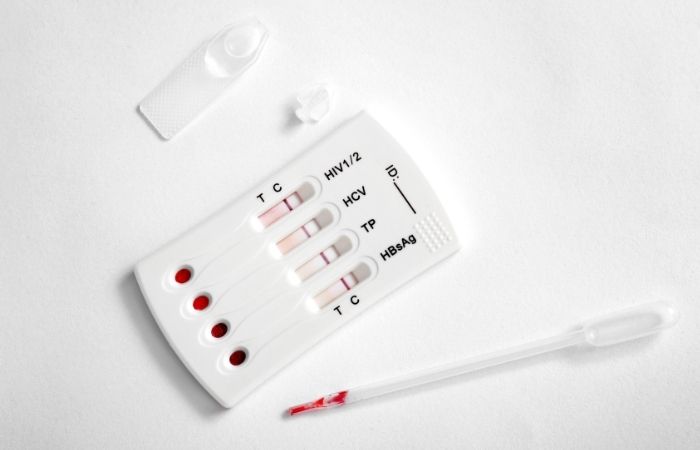
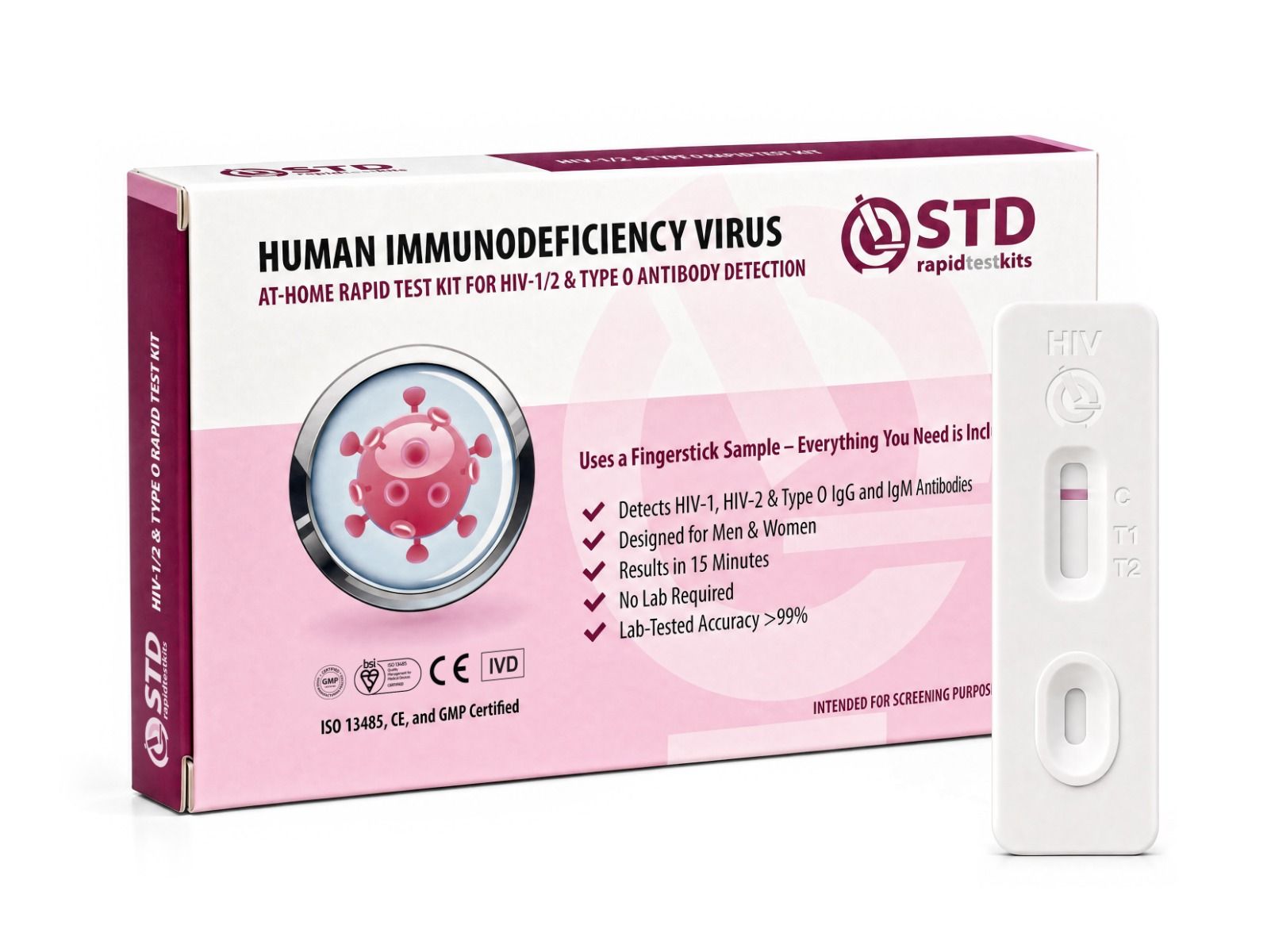
If you have a specific exposure date and want a single yes-or-no after the window has closed, a rapid HIV 1/2 home test does the job in about 15 to 20 minutes from a fingerstick. It uses the same lateral-flow chemistry as the home pregnancy and COVID tests most readers are familiar with. A negative result at 12 weeks post-exposure is treated as conclusive for most non-high-risk situations.
If you want broader screening (multiple infections at once, or a routine sexual-health check that is not pinned to a single event), a multi-STI combo home kit covers more ground. Our combination kits draw blood from a fingerstick for HIV, syphilis, and hepatitis testing, and use a self-collected swab for chlamydia and gonorrhea. They do not use urine samples; the home test market we operate in is built on lateral-flow blood and swab tests, not urine NAATs.
If you want the earliest possible window detection, or you want a confirmed lab result after a positive home test, a clinic visit for a 4th-generation lab panel or a NAAT is the right call. We do not sell mail-in lab panels; for those, your primary care provider, a Planned Parenthood clinic, or a public-health STD clinic is the best route.
This article is published by stdrapidtestkits.com, which sells at-home STI testing kits. Product recommendations below are made based on fit for the reader’s concern, not commercial benefit.
| Test Type | Best For | Result Time | Sample Type |
|---|---|---|---|
| Rapid HIV 1/2 Home Test | Single-question testing after a specific exposure (12+ weeks out) | 15 to 20 minutes | Fingerstick blood |
| Multi-STI Combo Home Kit | Broad screening across several infections at once | 15 to 25 minutes per test | Fingerstick blood and self-collected swab |
| Clinic Visit (4th-Gen Panel or NAAT) | Earliest possible window detection or lab confirmation of a home result | Same day to 3 days | Venous blood draw |
Testing With a Partner Without Making It Awkward
The cultural script around HIV testing tends to frame it as a private, slightly shameful errand. That framing is outdated. More couples are choosing to test together, before stopping condom use, before opening up an existing relationship, or as a routine check-in that becomes part of how they care for each other.
The mechanics are straightforward. Two rapid kits, two fingersticks, fifteen minutes. The conversation that surrounds it is the part most people worry about, and the part that gets easier the more directly it is approached: “I want us both to know our status. Can we test together this weekend?” That phrasing avoids accusation and frames the test as a shared step rather than a question one partner is asking the other.
For new relationships, this can be a meaningful inflection point. For long-term relationships where there has been a possible exposure (a slip, a one-time encounter outside the relationship, a partner whose status is not certain), testing together can defuse a guessing game that is otherwise hard to end. The kits arrive in unmarked packaging, the testing happens at home, and the results are yours to share or not.

Why Testing Matters Even If You Are on PrEP
Pre-exposure prophylaxis (PrEP) is one of the most effective HIV prevention tools available. Taken as prescribed, it reduces the risk of getting HIV from sex by about 99% per CDC PrEP guidance. That number is high, but it is not 100%, and it depends entirely on adherence.
Standard PrEP follow-up includes HIV testing every three months. The reason is straightforward. PrEP works by maintaining drug levels that prevent HIV from establishing infection if exposure occurs. If a person on PrEP misses doses and is then exposed, the regimen can fail. Catching that failure quickly matters for the person’s own treatment plan and to prevent onward transmission while the regimen is reassessed.
The Amsterdam UMC finding adds another reason. If PrEP fails and infection becomes established, the speed at which medication switches from prevention to treatment shapes the long-term immune picture. The earlier the switch happens, the smaller the immune footprint left behind. Quarterly testing is the mechanism that makes that early switch possible.
For people already living with HIV and on treatment, regular testing for other STIs is the parallel job. Other infections (chlamydia, gonorrhea, syphilis, hepatitis) can stress the immune system in ways that interact with HIV management. A multi-STI screen every 3 to 6 months is a common cadence; your treating clinician will tailor it to your situation.

Symptoms HIV Hides Behind
One reason HIV gets diagnosed late is that early symptoms (when they appear at all) overlap with mundane illnesses. Acute HIV infection, the first few weeks after the virus establishes itself, can present as a flu-like illness with fever, swollen lymph nodes, fatigue, and sometimes a flat, spotted rash (maculopapular) across the trunk. It can also present as nothing the person notices.
Per NIH HIVinfo on stages of HIV infection, the acute phase typically begins 2 to 4 weeks after exposure and can last several weeks. After that, the virus enters a clinical latency phase that can stretch for years without obvious symptoms. The absence of symptoms during latency is exactly why testing exists; the body can carry HIV silently long enough for the immune system to take meaningful damage before anyone thinks to check.
The table below shows symptoms that can occur in early HIV infection and how easily each one is misread as something else. None of these symptoms in isolation means HIV. Several of them together, especially after a known or possible exposure, are worth a test rather than a wait-and-see.
| Symptom | Common Misdiagnosis | When to Consider HIV Testing |
|---|---|---|
| Low-grade fever | Cold, flu, stress | If it lasts more than a few days post-exposure or appears alongside a rash or swollen nodes |
| Night sweats | Hormonal changes, anxiety | If frequent and paired with fatigue or unexplained weight loss |
| Sudden fatigue | Work burnout, poor sleep | If it appears suddenly and does not improve with rest |
| Maculopapular skin rash | Allergies, heat rash | If it appears on the trunk with no clear cause |
| Swollen lymph nodes | Dental infection, common cold | If multiple node groups (neck, groin, armpit) are enlarged with no obvious infection |
The Bottom Line for Anyone Reading This in a Hurry
The Amsterdam UMC research does not change the core advice on HIV. It sharpens the case for it. Modern medication is effective. Starting early makes a measurable difference. The U=U science is settled. None of that is undermined by the finding that the immune system still carries a low-grade footprint years into treatment.
What the research adds is a quiet reinforcement of two practical points. First, the value of testing early, because every week of unmanaged infection contributes to the eventual immune picture. Second, the value of testing on the right timeline, because the windows for different test types are different and a too-early negative is not a real negative.
For most readers, that translates into a small list of decisions. Know whether you have had an exposure that warrants testing. If you have, test now for a baseline, again at 4 to 6 weeks, and again at 12 weeks. If you are sexually active with multiple partners, build a routine cadence (every 3 months for high activity, annually for monogamous low-risk situations). If you are on PrEP, test every three months as your clinician recommends. If you are unsure, the safer direction is testing rather than waiting.
Recommended retesting cadence after a worrying exposure
- Baseline test now, to anchor the timeline (a negative inside the window is informational, not conclusive).
- Retest at 4 to 6 weeks post-exposure, when most rapid antibody tests start to become reliable.
- Final test at 12 weeks post-exposure; if negative and the exposure was a single event, the question is generally considered settled.
FAQs
- If HIV treatment starts early, isn’t that enough to prevent long-term immune damage?
- It helps significantly, but the 2024 Amsterdam UMC study indicates it is not a complete reset. People who started antiretroviral therapy within days of infection looked nearly normal at six months, then drifted back into low-grade immune dysregulation within roughly three years of starting treatment. The takeaway is not that treatment fails; it is that early detection and ongoing monitoring still matter alongside treatment.
- Can I use an at-home HIV test the day after a possible exposure?
- You can use the test that day, but the result will not yet be informative. Most at-home rapid tests detect antibodies, which take roughly 3 to 12 weeks to develop. A test in the first few days after exposure cannot reliably catch a fresh infection. The right testing rhythm is an initial baseline test, a retest at 4 to 6 weeks, and a final test at 12 weeks.
- How often should I test if I am on PrEP?
- Every three months at minimum, per CDC PrEP guidance. PrEP is highly effective when taken consistently, but it is not 100%, and missed doses can let an exposure result in infection. Quarterly testing catches that quickly so the regimen can switch from prevention to treatment without delay.
- What happens if my HIV test comes back positive?
- First, breathe. Then confirm with a second test at a clinic, ideally a 4th-generation lab panel or NAAT, which is what public-health and clinical guidelines call for. If confirmation is positive, treatment starts soon after. Modern antiretroviral therapy is highly effective, and most people who start early reach an undetectable viral load that prevents sexual transmission. The trajectory today is not the trajectory of the 1980s or 1990s.
- Can I get HIV from someone whose viral load is undetectable?
- No. The ‘undetectable equals untransmittable’ (U=U) science is settled: when a partner with HIV maintains a suppressed viral load through medication, the virus cannot be passed sexually. Testing remains worthwhile for other reasons (other STIs, peace of mind, baseline information), but the U=U finding is one of the most important shifts in HIV care of the past decade.
- Are at-home HIV tests private and discreet?
- Yes. Kits arrive in unmarked packaging, the test happens at home, and the result is yours alone unless you choose to share it. There is no waiting room, no front-desk conversation, no routing through your insurance unless you opt to seek confirmation through clinical channels.
- What is the difference between antibody, antigen, and RNA HIV tests?
- The window period is the main practical difference. RNA/NAAT tests can detect HIV within roughly 10 to 14 days of exposure; lab 4th-generation antigen-antibody panels within 18 to 45 days; home antibody tests need 3 to 12 weeks. For routine at-home use, antibody-based rapid tests are standard. If you need earlier detection or lab confirmation of a positive home result, a clinic visit for a combo panel or NAAT is the right call.
- Should I retest after a negative result if I had a high-risk exposure?
- Yes. A negative result inside the window period is not a final answer; it is a snapshot. The standard guidance is a baseline test, a retest at 4 to 6 weeks, and a final test at 12 weeks. If all three are negative and the exposure was a single event, the question is generally considered settled.
How we sourced this article: The medical content here is drawn from current public-health guidance (CDC, NIH HIVinfo, WHO) and the 2024 Amsterdam UMC study published in eBioMedicine, as summarized by the European AIDS Treatment Group. We summarize what authoritative sources actually say rather than offering individual clinical advice. For symptoms or decisions specific to your situation, please see a licensed clinician. The sources below are the ones a reader would benefit most from reading directly.
- U.S. Centers for Disease Control and Prevention. HIV testing recommendations, window periods, and overview of test types.
- U.S. Centers for Disease Control and Prevention. HIV resources, including treatment-as-prevention and PrEP overview.
- NIH HIVinfo. Stages of HIV infection (acute, clinical latency, AIDS) and typical timelines.
- Mayo Clinic. HIV/AIDS diagnosis and treatment overview.
- World Health Organization. HIV and AIDS fact sheet, including current global statistics and treatment recommendations.
- U.S. Centers for Disease Control and Prevention. HIV treatment overview, including antiretroviral therapy and the science behind viral suppression.
- European AIDS Treatment Group summary of the 2024 Amsterdam UMC study published in eBioMedicine on early ART and immune dysregulation returning within roughly three years of starting treatment.