
Published: September 2025 | Last updated: May 2026 | Editorial review and quality control: Martina N.
Menopause and hepatitis C share an uncomfortable amount of symptom territory. Fatigue, joint aches, brain fog, sleep changes, mood shifts, even digestive oddities can sit at the overlap of both. The risk for women in midlife is that a quiet liver virus gets filed away as “just menopause” for years longer than it should be.
This guide walks through what counts as a hepatitis C test, when each type of test becomes reliable, how shifting estrogen levels can change the disease trajectory, and what to do if a result comes back positive. The aim is clarity, not alarm. Most women over 50 do not have hepatitis C. For the minority who do, modern oral antivirals cure the great majority of people who complete a short course of treatment.
Key Takeaways
- After menopause, declining estrogen can speed up liver scarring in women with chronic hepatitis C, which is one reason midlife is the right time to test rather than wait.
- At-home rapid antibody tests give reliable results when used at least 12 weeks after a possible exposure. A reactive result is then confirmed with a lab HCV RNA test.
What counts as a hepatitis C test
Two different things can be measured when someone is screened for hepatitis C, and the distinction matters.
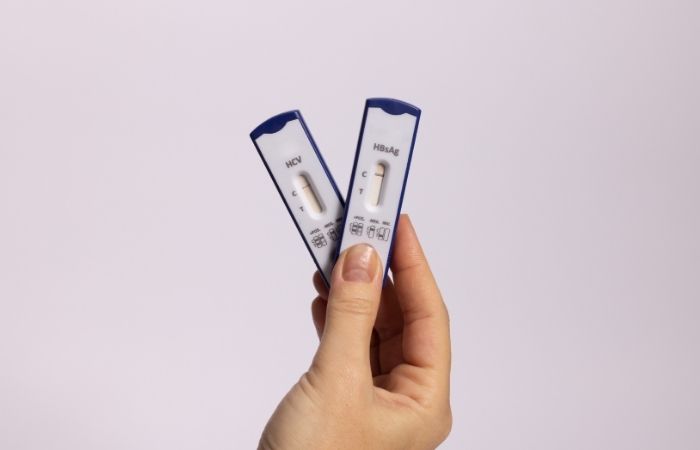
The first is an antibody test, often called an anti-HCV test. This looks for the antibodies your immune system makes in response to the virus. A reactive (positive) antibody result tells you the virus has been in your body at some point, but it does not say whether the infection is still active. About one in four people clear the virus on their own within six months (NIDDK); the rest go on to chronic infection. Either way, antibodies usually stay positive for life. At-home rapid kits are typically antibody tests, with results in about 20 minutes from a fingerstick blood sample.
The second is an HCV RNA test (also called a PCR or nucleic-acid test). This looks for the virus's genetic material directly. It is the test that confirms whether an infection is current, and it is the test used to verify that treatment has cleared the virus. RNA testing is done in a lab.
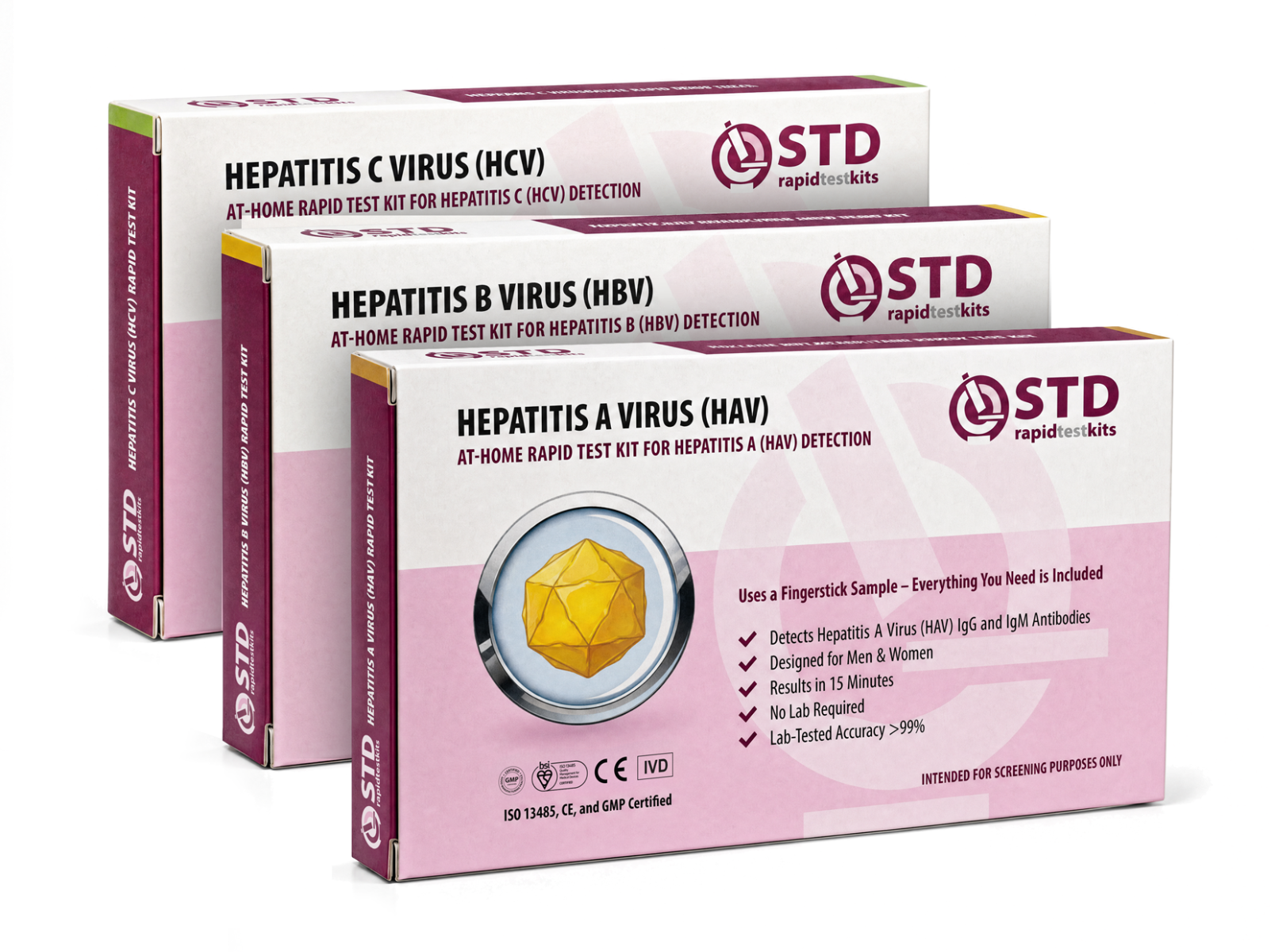
If you use an at-home hepatitis B and C rapid test kit and the result is reactive, the next step is an HCV RNA test through a doctor or lab to confirm an active infection.
| Feature | Antibody Test (anti-HCV) | HCV RNA Test (PCR) |
|---|---|---|
| What it detects | Antibodies your immune system has made against HCV | The virus's genetic material directly |
| What a positive result means | You have been exposed to HCV at some point | You currently have an active HCV infection |
| Sample type | Fingerstick or blood draw | Blood draw |
| Where it is run | At-home rapid kit or lab | Lab only |
| Typical turnaround | About 20 minutes (rapid) or 1 to 3 days (lab) | Several days, through a clinic or lab |
| Used for | First-line screening | Confirming active infection and verifying cure |
Why menopause and hepatitis C symptoms blur together
The most common reason hepatitis C goes undetected in women over 50 is not that the symptoms are hidden. It is that the symptoms look almost identical to symptoms most women in midlife are already expecting.
Menopause typically brings hot flashes, night sweats, broken sleep, mood changes, brain fog, joint aches, weight shifts, and digestive changes. Chronic hepatitis C, when it does produce symptoms, brings fatigue, joint and muscle aches, mood symptoms, sleep disturbance, and sometimes upper-right abdominal discomfort, itchy skin, or easy bruising. The two pictures share so much surface that a woman, or her clinician, may attribute everything to the hormone transition and stop there.
The trap is silence. Hepatitis C can be present in the body for ten, twenty, even thirty years without producing a dramatic complaint. During that time, low-grade inflammation in the liver continues. The longer it continues, the more scar tissue can build up. Symptoms that finally do break through often arrive late in the disease, when fibrosis is already significant.
| Symptom | Menopause | Chronic Hepatitis C |
|---|---|---|
| Persistent fatigue | Common, often tied to sleep disruption | Common, tends to be steady rather than wave-like |
| Joint and muscle aches | Common during the transition | Common in chronic infection |
| Brain fog | Common, often linked to sleep and mood | Reported in chronic infection |
| Mood changes | Common | Reported, partly linked to fatigue |
| Itchy skin without rash | Possible (dry skin from low estrogen) | Possible, especially as liver function changes |
| Right-upper-abdominal discomfort | Not typical | Possible as liver inflammation increases |
| Easy bruising or bleeding | Not typical | Possible as liver function declines |
How estrogen loss can change the trajectory
Estrogen does more than regulate reproduction. It has a protective, anti-inflammatory effect on liver tissue. Research published in hepatology journals over the past two decades has consistently shown that premenopausal women with chronic hepatitis C tend to progress to advanced liver fibrosis more slowly than men of the same age, and that this protection appears to fade after menopause.
The mechanism is biological, not behavioral. Estrogen helps regulate the liver's scar-producing cells (called hepatic stellate cells) when the liver is inflamed. Once estrogen levels drop in menopause, those cells are less restrained. In women who carry chronic HCV undiagnosed into menopause, the pace at which scar tissue accumulates can pick up.
This is why the cancer and cirrhosis risk attached to hepatitis C is the right thing to take seriously rather than dismiss. The World Health Organization estimates that 15 to 30% of people with chronic, untreated hepatitis C develop cirrhosis within 20 years, and cirrhosis in turn is a leading driver of hepatocellular carcinoma (primary liver cancer). The encouraging side of that picture is also from the data: clearing the virus with direct-acting antiviral therapy stops further fibrosis progression and reduces cancer risk substantially, even in people whose livers already show early scarring. Identifying the infection in midlife, before significant scarring has occurred, is what keeps treatment straightforward.
Estrogen restrains the liver cells that deposit scar tissue. After menopause, that restraint weakens, which is why undiagnosed chronic hepatitis C can scar the liver more quickly in the years after the hormone transition than in the decades before it.
When each test becomes reliable
Every test has a window period, the time between exposure and when the test can detect the infection. Testing too early increases the chance of a false negative. For hepatitis C, the windows are well-defined.
If the question is whether to retest after a recent possible exposure (a needle stick, an unscreened tattoo, a sexual encounter where blood exposure was possible), the safest reset point for an antibody test is 12 weeks. If an earlier answer is needed, an HCV RNA test can detect the virus itself from about 1 to 2 weeks after exposure, though it is usually run at 3 weeks or later for the most reliable result.
| Test Type | Earliest Detection | Recommended Test Timing |
|---|---|---|
| Rapid antibody (at-home, fingerstick) | 4 to 10 weeks after exposure | 12 weeks for a confident negative |
| Lab-based antibody (anti-HCV) | 4 to 10 weeks after exposure | 8 to 12 weeks for a confident negative |
| HCV RNA (PCR, lab) | 1 to 2 weeks after exposure | 3 weeks or later, used to confirm active infection |
Who in midlife should consider testing
The U.S. Centers for Disease Control and Prevention now recommends that every adult aged 18 and older be screened for hepatitis C at least once in their lifetime, and during every pregnancy. Many women over 50 have never been offered this baseline screen, simply because the universal recommendation is relatively recent.
Beyond the universal baseline, there are situations that raise the prior probability of a hepatitis C infection, even decades after the fact:
- Any blood transfusion or organ transplant before mid-1992, when reliable HCV blood screening began in the U.S.
- Ever sharing needles, syringes, or drug-preparation equipment, including injected, snorted, or smoked drugs, even once and even a long time ago.
- A tattoo or body piercing done in a setting where sterile equipment is not guaranteed.
- A history of long-term hemodialysis.
- Receiving clotting factor concentrates before 1987.
- An HIV diagnosis, or a partner with HIV or HCV.
- Persistent unexplained elevation of liver enzymes (ALT/AST) on routine bloodwork.
For any of those situations, a one-time at-home antibody test requires no clinic appointment and returns a result in about 20 minutes from a single fingerstick sample.
If your test result is positive
A reactive antibody test is the start of a process, not a diagnosis on its own. The next step is an HCV RNA test through a lab to determine whether the virus is currently active. About 25% of people clear hepatitis C without treatment in the first six months (NIDDK), and those people will keep a positive antibody result but a negative RNA result for the rest of their lives.
If the RNA test is positive, the news is much better than it was a decade ago. Direct-acting antiviral (DAA) regimens cure more than 95% of people who complete an 8 to 12 week course (WHO). The pills are once-daily, generally well tolerated, and do not involve the long, hard-to-tolerate interferon injections that older treatment used. Treatment also halts further fibrosis progression and lowers the long-term risk of cirrhosis and liver cancer, even in people whose livers already show early scarring. Most U.S. insurance plans cover treatment, and patient assistance programs exist for those without coverage.
If you have a current or recent sexual partner, the responsible step is to let them know so they can also test. Hepatitis C is primarily blood-borne, but sexual transmission does happen, especially in the presence of blood, breaks in skin, or other STIs.
How to ask your doctor about HCV testing
Older women regularly report that their clinicians do not bring up sexual health, infectious-disease screening, or hepatitis testing during routine visits, especially if the woman is in a long-term relationship or is past childbearing age. The universal screening recommendation has not yet been fully absorbed into every primary-care practice.
You do not need a reason or a confessional explanation to request a one-time hepatitis C screen. The wording can be as simple as: “The CDC recommends every adult be screened for hepatitis C at least once. I would like to add that to my next set of labs.” Insurance generally covers the screen as a preventive service.
If a clinician is dismissive, you have the right to ask for the test in writing, to request a second opinion, or to use an at-home rapid kit and bring the result to a follow-up visit.

The bottom line for women in midlife
If you are between 40 and 70 and have never been screened for hepatitis C, this is a good year to do it. The recommendation is universal, the window for safe screening is essentially anytime, and the consequences of catching a chronic infection before it scars the liver are significant. Menopause does not cause hepatitis C, but the symptom overlap and the loss of estrogen's liver-protective effect mean midlife is the period during which an undiagnosed infection is most likely to do its damage. A one-time antibody test, followed by an RNA confirmation if needed, is enough to answer the question.
CDC recommends hepatitis C screening at least once in a lifetime for all adults aged 18 years and older, except in settings where the prevalence of HCV infection is less than 0.1%.
FAQs
- How long after a possible exposure should I test for hepatitis C?
- For a rapid antibody test, wait at least 12 weeks after the exposure. Antibodies can appear as early as 4 weeks, but testing at 12 weeks reduces the chance of a false negative. If you need an earlier answer, an HCV RNA test through a lab can detect the virus directly from about 1 to 2 weeks after exposure, with 3 weeks being the more reliable cutoff.
- Can menopause make hepatitis C symptoms worse?
- It can change how the disease progresses. Estrogen has a protective, anti-inflammatory effect on the liver. Once estrogen levels drop in menopause, liver fibrosis can advance more quickly in women with chronic HCV. The visible symptoms also overlap heavily with menopause, which is why HCV is easily missed in this age group.
- I am over 60 and have not had a new partner in years. Is HCV testing still relevant?
- Yes. Hepatitis C can stay silent for decades. Anyone who received a blood transfusion or organ transplant before mid-1992, ever shared needles or drug-preparation equipment (even once), or had a tattoo or piercing in a non-sterile setting could be carrying an old infection. CDC now recommends every adult be screened at least once in their lifetime, regardless of current behavior.
- Can hepatitis C be transmitted sexually?
- Sexual transmission of HCV is possible but less common than blood-to-blood transmission. The risk is higher with shared sex toys, sex that breaks skin, anal sex, multiple partners, or co-infection with HIV or another STI. Most HCV transmission still occurs through blood exposure rather than sex.
- How do I know if my fatigue is from menopause rather than hepatitis C?
- You cannot tell from symptoms alone. Menopause fatigue often relates to sleep disruption and tends to fluctuate. Persistent unexplained fatigue paired with itchy skin, easy bruising, dull right-upper-abdominal discomfort, or elevated liver enzymes on routine labs is more suspicious for chronic liver disease and warrants a hepatitis C screen.
- Is hepatitis C curable?
- Yes. Modern oral direct-acting antiviral regimens cure more than 95% of people who complete treatment, typically in 8 to 12 weeks. The pills are once-daily and generally well tolerated. Clearing the virus prevents further liver damage, even in people who have been living with HCV for decades.
- I tested negative on a rapid antibody test but still feel unwell. Should I retest?
- If you tested within 12 weeks of a possible exposure, the result may have been too early. Retest at the 12-week mark, or ask your doctor about an HCV RNA test, which detects the virus directly and turns positive sooner than an antibody test.
- U.S. Centers for Disease Control and Prevention. Hepatitis C information for the public, including universal adult screening recommendations and basic testing guidance.
- World Health Organization. Hepatitis C fact sheet covering global prevalence, transmission, the 15-30% cirrhosis-within-20-years figure for untreated chronic infection, and current direct-acting antiviral cure rates above 95%.
- U.K. National Health Service. Hepatitis C overview including symptoms, risk factors, and the antibody-then-RNA testing workflow used in primary care.
- National Institute of Diabetes and Digestive and Kidney Diseases (NIH). Clinical reference on hepatitis C diagnosis, the roughly one-in-four spontaneous clearance rate, disease course, and direct-acting antiviral treatment.
- U.S. Office on Women's Health. Menopause overview, covering common symptoms (hot flashes, fatigue, mood, joint pain) that can overlap with chronic infection in midlife.
- U.S. Preventive Services Task Force. Recommendation for hepatitis C screening in adults aged 18 to 79 years, the basis for current universal adult screening guidance.
