
Menopause shifts the biology of sexual health in real, measurable ways: thinner tissue, reduced lubrication, a different vaginal pH, and slower local mucosal immunity. STI rates among adults over 50 have climbed steadily for a decade. Here is what actually changes biologically, what current testing recommendations say, and how to decide whether a screening panel makes sense for you.
Published: August 2025 | Last updated: April 2026 | Editorial review and quality control: Martina N.
Menopause does not change the rules of sexual health. It does shift the underlying biology in ways that matter for infection risk: the vaginal lining thins, lubrication drops, vaginal pH rises, and the protective bacteria that kept things in balance for decades start to retreat. None of that is dangerous on its own. It does mean that a sexual encounter at 55 carries slightly different physical conditions than the same encounter at 25.
At the same time, dating after long-term partnership often comes with quieter concerns about pregnancy, less attention to barrier protection, and an unspoken assumption that STIs are a younger generation's problem. The latest CDC surveillance shows otherwise. STI rates among adults over 50 have climbed in every major category over the last decade, and postmenopausal women are part of that increase rather than an exception to it.
This guide walks through what actually changes biologically, what current testing recommendations look like, and which symptoms most readers will turn out NOT to need a test for. Reassurance for the readers who came here looking for context, useful detail for those who want to screen.
Does menopause increase STI risk?
Yes, modestly. Lower estrogen thins the vaginal walls, reduces lubrication, and shifts vaginal pH closer to neutral. These changes mean more frequent microtears during intercourse and a friendlier environment for bacteria and viruses. The CDC recommends sexual history-taking and routine screening across reproductive years and beyond, not only for women under 25. If you have had a new partner in the last year, a panel covering chlamydia, gonorrhea, syphilis, HIV, and hepatitis C is the standard starting point.
Key Takeaways
- Menopausal tissue changes (thinner walls, less lubrication, higher vaginal pH) can raise STI transmission risk. The effect is real and not catastrophic.
- If you have had a new partner since your last screen, the standard at-home panel for women over 50 covers chlamydia, gonorrhea, syphilis, HIV, and the hepatitis viruses. Most infections in this age group have no symptoms.
Why menopause changes the equation for STI risk
Estrogen does a lot of structural work in the lower reproductive tract. When circulating levels drop in the menopausal transition (typically between ages 45 and 55, though the range is wider), several things happen at once.
The vaginal epithelium, normally a thick multi-layered tissue with characteristic folds called rugae, thins and flattens. Glycogen, the carbohydrate that the resident lactobacilli ferment into lactic acid, declines. Without that lactic acid, vaginal pH rises from its premenopausal range of roughly 3.8 to 4.5 toward 5.0 to 6.0, closer to neutral. Natural lubrication drops. The submucosal blood supply diminishes. Clinicians group these changes under the term Genitourinary Syndrome of Menopause (GSM), which replaced older labels like "vulvovaginal atrophy" because the changes affect the urethra and bladder neck along with the vaginal walls (Mayo Clinic, vaginal atrophy).
For STI risk specifically, three pieces of GSM matter most:
- Microtears. Friction during intercourse on thinner, drier tissue produces small breaks in the epithelium. Pathogens cross intact mucosa with difficulty; they cross broken mucosa easily.
- pH shift. The acidic premenopausal environment suppresses many bacteria and protozoa. As pH rises, that natural barrier weakens. The same shift makes recurrent urinary infections and bacterial vaginosis more common after menopause for similar reasons.
- Thinner mucosal immunity. Postmenopausal mucosal tissue carries fewer immune cells producing protective antimicrobial peptides and antibodies. Systemic immune function is not drastically different, but the first-line local defense is weaker.
None of this means menopausal sex is dangerous. The same exposure that would have produced no infection at 25 may produce one at 55, and that gap is what every prevention and testing recommendation below is designed to close.

STI trends in adults over 50
The narrative that STIs are a problem of the under-25 demographic stopped being accurate around 2010 and has been getting less accurate every year since. STI rates in the U.S. have climbed across multiple categories, and older adults are part of that increase rather than an exception to it (CDC, About STIs).
The reasons are not mysterious. Divorce and widowhood produce more single adults entering new sexual relationships at older ages. Erectile dysfunction medications removed a barrier to sexual activity in older men. Online dating and dating apps expanded partner pools across age groups. Pregnancy concerns no longer drive condom use in this cohort. None of these shifts are inherently bad. They do change the population-level math.
The specific infections behind the rise:
- Syphilis. Syphilis cases in the U.S. have multiplied across all age groups since 2018, and the over-50 share has grown along with the total. Untreated syphilis can cause cardiovascular and neurologic damage that progresses over years, which makes the late-detection pattern in older adults clinically significant.
- Gonorrhea and chlamydia. Both bacterial infections are rising in older adults, often without symptoms. Postmenopausal women in particular tend to attribute pelvic discomfort or unusual discharge to GSM rather than infection, which delays diagnosis.
- HIV. Adults over 50 now make up a substantial and growing share of all people living with HIV in the U.S., partly because of better long-term survival and partly because of new diagnoses in older adults. Late-stage HIV diagnoses are disproportionately common in this age group, often because clinicians and patients did not think to test (CDC, HIV). Transmission risk per-exposure is low with consistent barrier protection, and GSM-related microtears can raise it modestly on the receptor side, which is the same pathway that makes lubricant use and condom use especially relevant in this age group.
- Hepatitis C. The baby-boomer cohort carries elevated hepatitis C prevalence from older blood-supply exposures and historical injection-drug use. CDC recommends one-time screening for all adults regardless of risk factors, plus periodic re-screening based on ongoing exposure (CDC, Hepatitis C).
Many postmenopausal women do not discuss sexual activity with their primary care providers, and clinicians often do not ask. (Note: stdrapidtestkits.com sells rapid at-home STI tests; the panels referenced throughout this article are sold by this site.)
Symptoms that turn out NOT to be an STI
Many postmenopausal women who suspect an STI have a non-infectious cause for their symptoms. Listing these here helps most readers identify what is likely going on before deciding whether testing makes sense.
Common patterns mistaken for STIs at this age:
- Dryness and burning during sex. The default cause after age 50 is GSM itself. Vaginal moisturizers used several times a week (a different category from short-acting lubricants) and topical estrogen treatments are first-line. If symptoms resolve with moisturizer or topical estrogen, infection is unlikely.
- Recurrent urinary symptoms. Frequency, urgency, and mild burning on urination after menopause are commonly driven by postmenopausal urinary tract infections, which are not sexually transmitted. They share the same pH and tissue changes as GSM. A urine culture distinguishes UTI from STI.
- Mild abnormal discharge. Bacterial vaginosis (BV) is the most common cause of unusual discharge in this age group. It is not technically an STI, though sexual activity can trigger it. BV is treatable with prescription antibiotics, and a clinician swab confirms it.
- Itching without discharge. Lichen sclerosus, contact dermatitis from soap or laundry detergent, and vulvar eczema all produce itching that mimics infection. None are STIs, and none respond to antibiotic treatment.
- Light spotting after sex. Friable atrophic tissue bleeds easily. Persistent post-coital bleeding warrants a clinician visit (for GSM treatment, not necessarily for STI workup), but a single episode of light spotting on a thin epithelium is not surprising.
Many people who land on a page like this can address the symptom that brought them here without an STI test at all.
GSM (vaginal atrophy) drives most postmenopausal dryness, burning, and post-coital spotting. Postmenopausal UTIs share the same tissue and pH changes and account for many recurrent urinary symptoms. Bacterial vaginosis is the most common cause of unusual discharge in this age group. Lichen sclerosus and contact dermatitis drive itching that mimics infection but does not respond to antibiotics. None of these require an at-home STI test to address; talk with a clinician about treatment.
When and what to test for after menopause
For postmenopausal women, the screening question splits into two parts. First, what is worth screening for routinely? Second, when is the right time to test relative to a specific exposure?
The standard panel
For sexually active women over 50 who have had at least one new partner in the past year, current CDC and U.S. Preventive Services Task Force guidance together support screening for:
- HIV (recommended at least once for every adult; repeated based on risk)
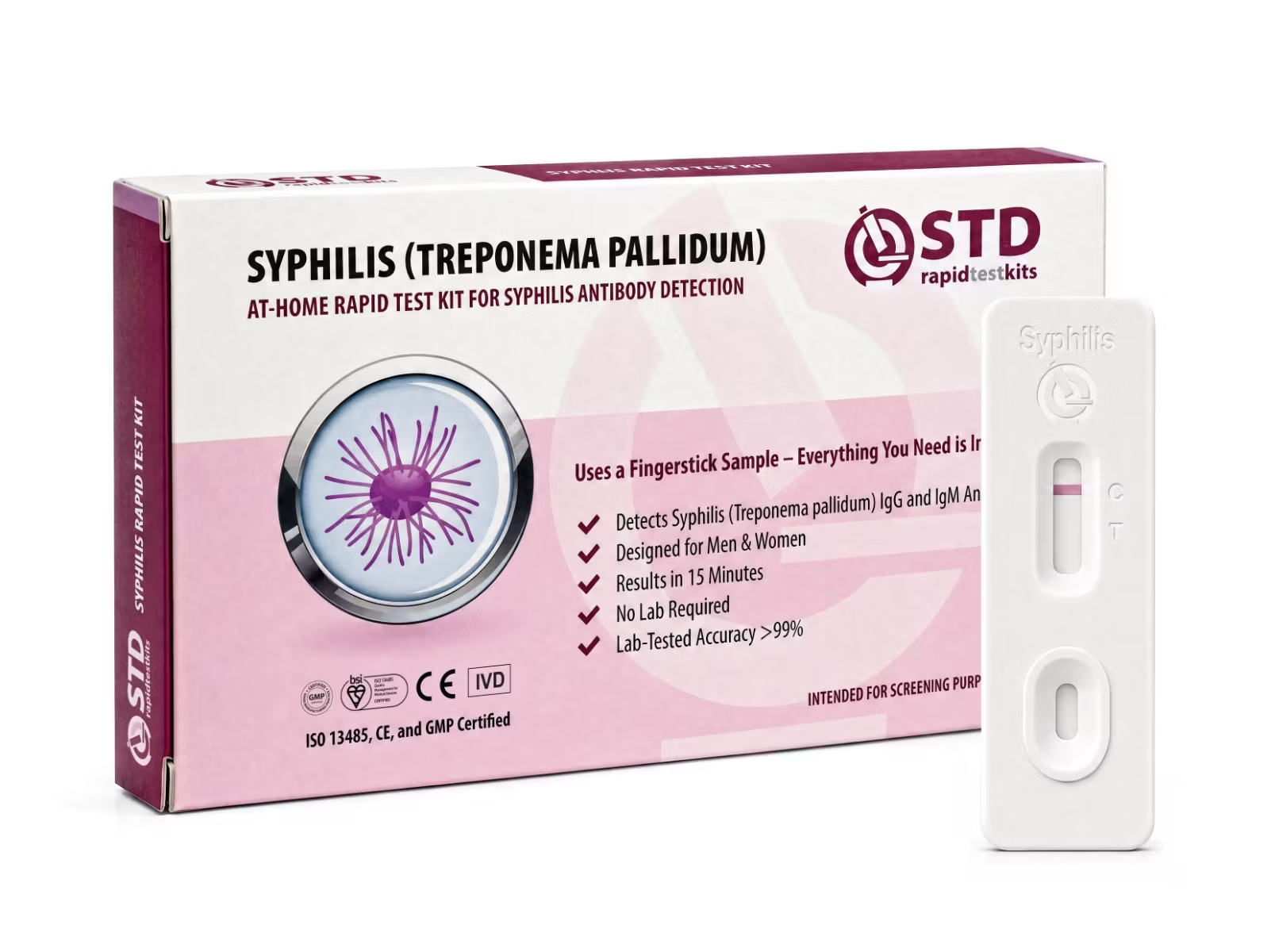
- Syphilis (any woman with a new partner; multiple times per year if multiple partners)
- Chlamydia and gonorrhea (continued screening past age 25 when new-partner risk is present)
- Hepatitis C (one-time universal screen for all adults, plus periodic re-screen with risk factors)
- Hepatitis B (screen if not vaccinated, or if vaccination status is unknown)
HSV-2 is not recommended for routine asymptomatic screening per current CDC guidance. A test makes sense if symptoms appear or if a partner has known HSV-2 (CDC, 2021 STI Treatment Guidelines).
Window periods, in plain English
Each test has a window period: the time after exposure during which the test cannot yet detect infection because the body has not produced enough virus or antibody to register on the assay. Testing inside the window can return a false negative, and a worried patient who tests on day three after a concern will get a useless result. The table below shows roughly when each common test starts to be reliable. Lab nucleic-acid testing (NAAT/PCR) generally detects infection earlier than rapid lateral-flow tests; the windows below describe the at-home rapid test cadence.
| Test | Earliest reliable testing window | Notes |
|---|---|---|
| HIV (4th-generation Ag/Ab lab) | 18 to 45 days post-exposure | Detects both antibody and p24 antigen; lab assay |
| HIV (rapid antibody) | 23 to 90 days post-exposure | Most home rapid lateral-flow tests fall here |
| Chlamydia (swab) | About 14 days post-exposure | NAAT is the lab gold standard; rapid lateral-flow uses the same swab sample |
| Gonorrhea (swab) | About 14 days post-exposure | Same testing-window logic as chlamydia |
| Syphilis (blood antibody) | 3 to 6 weeks (retest at 12 weeks if late seroconversion is a concern) | Rapid fingerstick antibody test; lab RPR/treponemal tests follow same window |
| Hepatitis B (HBsAg) | 8 to 12 weeks | Detects active infection, not vaccination response |
| Hepatitis C (antibody) | 8 to 11 weeks | Antibody test; lab nucleic-acid testing detects earlier |
If your concern is a specific exposure (a new partner, a condom break), testing the day after is not useful for most STIs. Wait at least the minimum window in the table above before testing, and consider repeating after the maximum window if the result is negative and concern persists. For visible lesions or sores, see a clinician promptly for direct swab testing rather than waiting for an antibody window.
Prevention that fits postmenopausal life
Prevention after menopause looks slightly different from prevention at 25, partly because the failure modes are different.
Lubrication, deliberately. Reduced natural lubrication is the single most actionable mechanical risk for postmenopausal women. Water-based or silicone-based lubricants reduce friction and lower the chance of microtears. Both are compatible with latex condoms. Oil-based lubricants (mineral oil, baby oil, coconut oil, petroleum jelly) degrade latex within minutes and should never be combined with latex condoms. Vaginal moisturizers used three to five times per week, distinct from sex-only lubricants, address baseline tissue dryness rather than only the moment of intercourse (NHS, menopause).
Topical estrogen, when appropriate. Low-dose vaginal estrogen creams, rings, and tablets restore some epithelial thickness and reduce GSM symptoms. The dose is local rather than systemic, and the safety profile is well-characterized for most postmenopausal women, including many who cannot use systemic hormone therapy. Discuss with a clinician; treatment improves quality of life and incidentally reduces the friction-related risk pathway for STIs.
Condoms, used consistently. Latex or polyurethane condoms remain the most evidence-based barrier method against bacterial and most viral STIs. Pregnancy is no longer the reason to use them, and the conversation with a partner sometimes feels harder for that reason. Practical scripts: "I have not been screened since my last partner, so I would like to use protection until we both test" is a complete sentence.
HPV vaccination, on the table for adults under 45. ACIP currently recommends routine HPV vaccination through age 26 and supports shared clinical decision-making for adults aged 27 to 45 based on partner risk. If you are under 45 and never vaccinated, ask your clinician whether the vaccine series makes sense for your specific risk profile.
Hepatitis B vaccination, if you do not have it. Most adults born before 1990 were not routinely vaccinated against hepatitis B as children. The vaccine remains recommended for unvaccinated adults at any age and is particularly worth considering with new sexual partners.
Safe with latex condoms: water-based and silicone-based lubricants. Both reduce friction and support condom integrity.
Not safe with latex condoms: oil-based lubricants (mineral oil, baby oil, coconut oil, petroleum jelly) degrade latex within minutes. Reserve these for non-condom use, or pair with polyurethane condoms only.
Talking with partners and providers
Two conversations are awkward for most adults around testing. Both go better with preparation.
The new-partner conversation
Direct scripts work best. "When was your last STI screen?" is straightforward and signals that you have had one yourself. "I would like us both to test before we stop using condoms" is a complete framing for the discussion. Refusal to engage with testing is information about a partner; willingness to test together is also information.
For postmenopausal women specifically, one social barrier is that the conversation feels coded as something belonging to younger adults. It is not. CDC screening guidance applies across reproductive years and beyond, and clinicians who do this well will tell you that some of the most common positive results in their practice come from older patients who had assumed risk dropped along with fertility.
The clinician conversation
If your primary care provider does not ask about your sexual activity, raise it yourself. The phrasing "I would like to be screened for STIs because I have had a new partner since my last test" avoids any need to disclose specifics and signals what you want done. If your clinician seems unfamiliar with screening guidelines for older adults, the CDC's STI clinical guidance applies across age groups and can be referenced directly.
The Menopause Society offers patient education resources on sexual health and menopausal changes at menopause.org/patient-education, a useful reference before a clinician conversation (The Menopause Society, patient education).
CDC's STI screening recommendations are written by age and risk profile, not by life stage. Sexually active adults over 50 with new-partner exposure fall within the same screening framework as younger adults; the cutoff at age 25 in routine chlamydia screening guidance reflects population prevalence in that band, not an upper limit on testing relevance. If a clinician treats screening as something for younger patients only, that is a gap in their practice rather than a feature of the guidelines.
When to see a clinician rather than testing at home
At-home rapid tests are screening tools. They are useful for routine periodic screening, for follow-up after a known exposure once the testing window has elapsed, and for the privacy and convenience of testing without a clinic visit. They are not a substitute for clinical evaluation when specific symptoms or exposures call for one.
See a clinician promptly for any of the following:
- Pelvic pain that is new or progressing. Pelvic inflammatory disease (PID) can be a complication of untreated chlamydia or gonorrhea and produces pain, fever, and abnormal bleeding. PID needs prescription antibiotics and sometimes hospital care.
- Visible genital lesions, sores, or ulcers. A clinician can swab a lesion for direct virus or bacterial detection (PCR for HSV, dark-field microscopy for a syphilitic chancre), which is more sensitive than antibody-based testing on a fresh lesion. Do not wait three weeks for an antibody test if you have a visible sore now.
- Persistent post-coital bleeding. Often GSM, occasionally cervical pathology that warrants evaluation including a Pap test and possibly HPV testing.
- Positive at-home result. Every positive home rapid test result needs confirmatory laboratory testing through a clinician. Confirmatory testing also opens the path to treatment, partner notification support, and any required public-health reporting.
- Recurrent urinary infections after menopause. Frequent UTIs are usually GSM-related and benefit from topical estrogen treatment that an at-home test cannot offer.
Pelvic inflammatory disease can develop from untreated chlamydia or gonorrhea and produce pain, fever, or abnormal bleeding within days to weeks. PID requires prescription antibiotics and sometimes hospital care; do not wait on a window-period test if pain is new, worsening, or paired with fever. See a clinician the same day.
FAQs
- Does menopause itself cause STIs?
- No. Menopause changes the tissue environment in ways that make infections somewhat more likely after exposure, but the infection itself still requires exposure to a partner who has it. Postmenopausal women in mutually-tested monogamous relationships do not need to worry about menopausal changes raising STI risk on their own.
- How often should postmenopausal women get tested?
- With a new partner since your last screen: once a year covers the core bacterial STIs. With multiple partners: every three to six months. For everyone regardless of relationship status: at least one lifetime HIV test and one hepatitis C test, with re-screening if exposure changes.
- What is the right at-home test for women over 50?
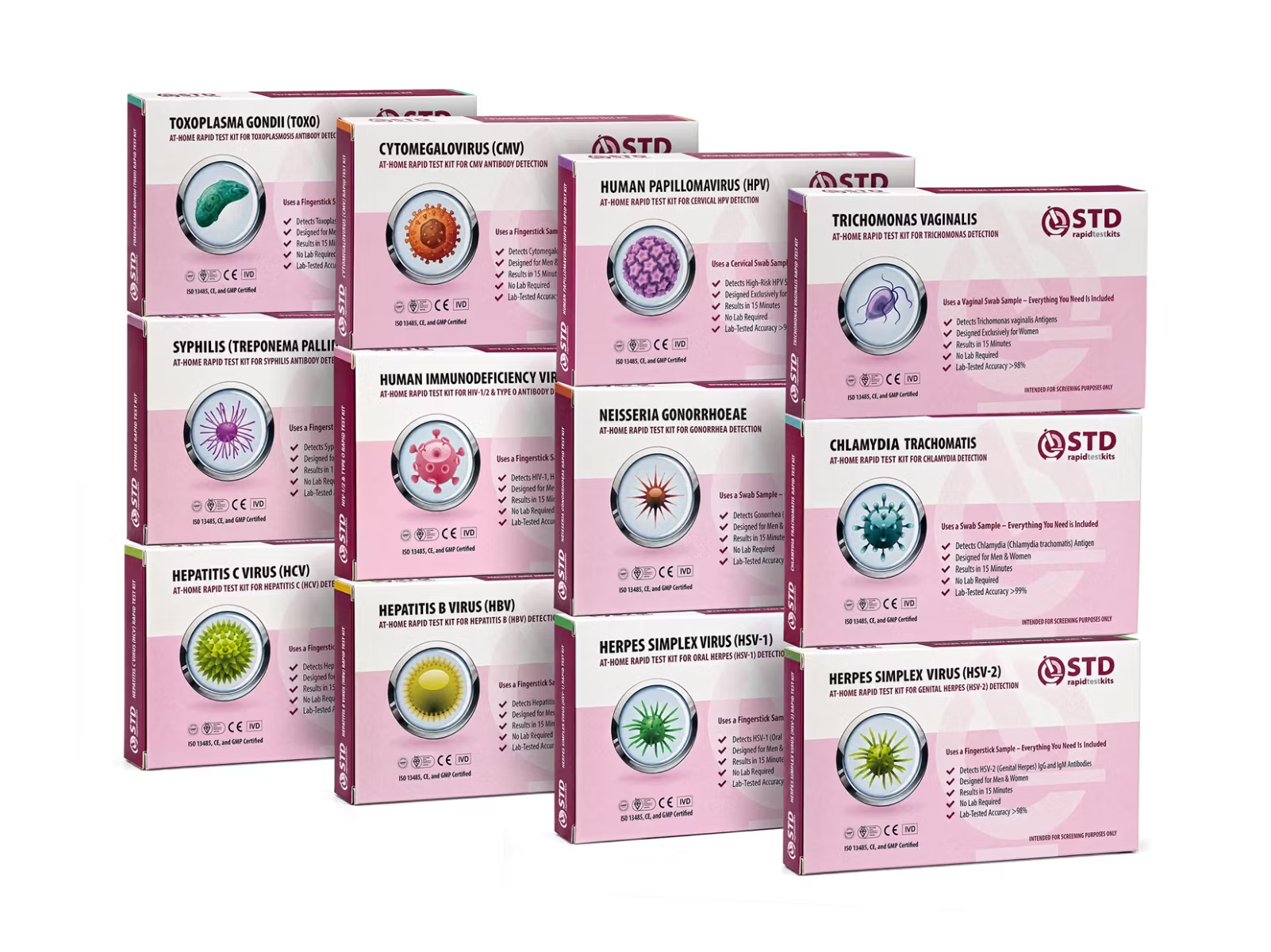
- For comprehensive baseline screening, a 10-in-1 panel covering chlamydia, gonorrhea, syphilis, HIV, the hepatitis viruses, and herpes is a sensible starting point. For follow-up after a specific exposure, target the relevant infection and respect the testing window. Single-infection kits (for example HIV or syphilis) are appropriate for repeat testing when only one type of exposure is at issue.
- Can I use lubricants with condoms safely?
- Water-based and silicone-based lubricants are condom-safe and reduce friction-related microtear risk. Oil-based lubricants (mineral oil, baby oil, coconut oil, petroleum jelly) degrade latex condoms within minutes and should not be combined with them. Polyurethane condoms tolerate oil-based lubricants but are less commonly stocked.
- How do I tell vaginal dryness from an infection?
- Dryness from GSM tends to be persistent (every day, not only during sex), worsens with friction, often pairs with mild burning unrelated to a specific exposure, and improves with topical estrogen or moisturizer. Infection symptoms tend to appear after a new exposure, often with abnormal discharge, odor, itching that does not respond to moisturizer, or pelvic pain. When in doubt, an at-home swab test for chlamydia and gonorrhea or a clinic visit settles it.
- Should I test if I have been with the same partner for years?
- Routine STI panels are not needed for stable mutually-monogamous couples without new exposure. The exceptions are universal: every adult should have at least one HIV test and one hepatitis C test in their lifetime, and any change in the relationship (separation, infidelity disclosure, partner exposure) is a reason to screen.
- Are at-home rapid tests as accurate as lab tests?
- At-home rapid lateral-flow tests are screening tools designed for high specificity, with sensitivity figures that vary by infection and kit (manufacturer-reported ranges are listed on each product page). Any positive home rapid result should be confirmed by laboratory testing through a clinician before treatment. Lab nucleic-acid testing (NAAT/PCR) has the highest analytical sensitivity, particularly in early infection. Home rapid tests suit periodic screening and private convenience; lab NAAT is what you need once you require a confirmed diagnosis and treatment decision.
- My partner refuses to discuss testing. What now?
- That is information about how a partner will handle shared health decisions. Mutual screening before stopping condom use is a reasonable expectation, and a partner unwilling to engage with that conversation is signaling something. If they refuse to engage, keep using condoms and continue screening yourself on your own schedule.
- U.S. Centers for Disease Control and Prevention. About STIs: overview of sexually transmitted infections, including general note that STI rates are rising and many infections are asymptomatic.
- U.S. Centers for Disease Control and Prevention. STI clinical guidance for healthcare providers, including the 2021 STI Treatment Guidelines: recommended screening frequencies, sexual history-taking, and HSV asymptomatic screening guidance.
- U.S. Centers for Disease Control and Prevention. HIV basics, screening recommendations for all adults, and surveillance data on diagnoses by age group.
- U.S. Centers for Disease Control and Prevention. Hepatitis C screening recommendations for all adults regardless of risk, plus age-cohort-specific guidance.
- Mayo Clinic. Vaginal atrophy (Genitourinary Syndrome of Menopause): symptoms, causes, and treatment options including topical estrogen.
- UK National Health Service. Menopause overview, including symptom management and lubricant guidance.
