Life After an STD: How to Recover, Heal, and Prevent Reinfection
An STI diagnosis is news, not a verdict. Most sexually transmitted infections respond to defined treatment, and the ones that don't can be managed long-term. This guide walks through the recovery plan: what to do this week, how to talk to partners, and how routine retesting keeps a one-time diagnosis from becoming a repeat one.




- Most bacterial STIs (chlamydia, gonorrhea, syphilis, trichomoniasis) are curable with antibiotics; viral infections (herpes, HIV, hepatitis B) are managed long-term rather than cured, and modern treatment is highly effective at suppressing them.
- Retesting at three months after treatment is the single most important post-recovery step, because reinfection rates within the first year are higher than baseline.
Published: October 2025 | Last updated: May 2026 | Editorial review and quality control: Martina N.
An STI diagnosis tends to land harder than the medical facts justify. The clinical picture is reassuring. Most sexually transmitted infections respond to a defined course of treatment, and the ones that don't have well-understood management protocols that keep people healthy and significantly reduce the risk of passing the infection to partners. The emotional response often runs ahead of that clinical reality. Shame, fear, and uncertainty about what comes next can stall people in the worst place to stall: between testing and treatment.
This article walks through what life after a diagnosis entails: the treatment plan, the healing timeline, the partner conversation, and the routine retesting that turns a one-time event into a managed part of your sexual-health routine. The goal is practical, which is to give you a clear picture of what to do this week, this month, and over the next year, so the diagnosis becomes one chapter rather than a label.
Coping with the Emotional Impact of a Diagnosis
The first 48 hours after a positive test tend to be the loudest. People describe a mix of disbelief, anger at a partner, anger at themselves, and a narrowing focus on questions like 'who else needs to know' and 'what does this mean for my future.' These reactions are normal. They are not, however, a useful basis for decisions in the moment. Treatment can usually wait a day. Disclosure can wait until you have facts to share. Rushing through the processing window tends to compound the anxiety rather than resolve it.
What helps in those first days is separating two questions that the brain tends to merge: what is the medical situation, and what does this say about me as a person. The medical situation is concrete and treatable. The second question is the one that produces shame, and it's also the one least supported by the data. The CDC's STI surveillance program tracks millions of new infections each year across all demographic categories in the United States. The figure includes a mix of newly acquired and longer-standing cases, but it gives a sense of how common contact with sexually transmitted pathogens really is.
What's worth doing in week one
- Read the official patient information for your specific diagnosis. Generic 'STI' articles miss important nuance; the CDC fact sheet for your specific infection is a better starting point.
- Confirm the treatment plan with the clinician who delivered the result. Ask what medication, what dose, how long, and what to expect in the days after starting it.
- Avoid the comment sections of forums and social media. The signal-to-noise ratio is poor and outlier stories tend to dominate.
- Tell one person you trust if you can. Carrying the diagnosis alone amplifies it.
Confirm your diagnosis with the clinician who ordered the test. Ask exactly which infection, which medication, and which dose. Don't start partner notification or wider disclosure until you have those facts in hand. Read the CDC fact sheet for your specific diagnosis rather than a generic STI article. The details matter and they're usually reassuring.
Treatment Paths by Infection Type
Sexually transmitted infections fall into two broad treatment categories, and knowing which one applies to your diagnosis shapes everything that follows. Bacterial and parasitic infections are typically curable with antibiotics or antiparasitic medication. Viral infections are typically managed with antivirals over a longer time frame, sometimes lifelong. The distinction matters because the goal of treatment is different in each case: eradicate the pathogen versus suppress its activity to a level where you feel well and pass much less risk to partners.
For bacterial STIs, the cure is usually fast. Chlamydia is treated with doxycycline taken twice daily for seven days. Gonorrhea is treated with a single intramuscular injection of ceftriaxone, often paired with oral doxycycline if chlamydia coinfection is possible. Syphilis at the primary or secondary stage is treated with a single dose of intramuscular penicillin G; later stages require additional doses. Trichomoniasis is treated with metronidazole or tinidazole as a short course of oral tablets. The CDC's STI Treatment Guidelines spell out the current first-line regimens, which have been refined over decades.
For viral STIs, the picture is different. Genital herpes is suppressed with daily antiviral medication (acyclovir, valacyclovir, or famciclovir) that reduces outbreak frequency and lowers transmission risk to partners. HIV is managed with antiretroviral therapy taken daily, and modern regimens are remarkably effective: when treatment achieves an undetectable viral load, the risk of sexual transmission is effectively zero, a finding summarized by the public-health phrase undetectable equals untransmittable (CDC Treating HIV). Hepatitis B is monitored long-term and treated with antivirals if it becomes chronic and active. Hepatitis C, until recently considered chronic, is now curable in most cases with 8 to 12 weeks of direct-acting antivirals. HPV doesn't have a direct antiviral treatment; the immune system clears most infections on its own, while persistent high-risk types are monitored with cervical screening and treated if precancerous changes appear.
Sticking with the regimen
Whichever category applies, finishing the full course is non-negotiable. Stopping antibiotics early because symptoms cleared is one of the most common reasons for treatment failure and antibiotic resistance, particularly for gonorrhea, where antimicrobial resistance has been climbing steadily and is a current focus of public-health surveillance.
| Infection | Category | Typical Treatment | Cure or Manage |
|---|---|---|---|
| Chlamydia | Bacterial | Doxycycline, 7 days | Cure |
| Gonorrhea | Bacterial | Ceftriaxone, single injection | Cure |
| Syphilis (early) | Bacterial | Penicillin G, single dose | Cure |
| Trichomoniasis | Parasitic | Metronidazole or tinidazole | Cure |
| Herpes (HSV-1, HSV-2) | Viral | Daily antiviral suppression | Manage |
| HIV | Viral | Daily antiretroviral therapy | Manage (undetectable on treatment) |
| Hepatitis B | Viral | Monitoring; antivirals if chronic active | Manage |
| Hepatitis C | Viral | Direct-acting antivirals, 8 to 12 weeks | Cure (modern era) |
| HPV | Viral | Immune clearance; monitor for cervical changes | Usually clears on its own |
Restoring Your Health: What Physical Recovery Looks Like
For curable bacterial infections, symptoms tend to improve within a few days of starting treatment. Discharge, burning during urination, and pelvic discomfort often resolve faster than the underlying infection is fully cleared, which is why finishing the prescribed course matters. The CDC recommends a test of cure for pharyngeal gonorrhea and for any infection where symptoms persist after treatment. For routine genital chlamydia or gonorrhea in adults, a test of cure isn't typically needed unless symptoms continue or adherence is uncertain.
What is recommended is a retest at three months after treatment, regardless of partner status. Reinfection rates within the first year after an initial diagnosis are higher than baseline, often because untreated or under-treated partners create a cycle of back-and-forth transmission. Three-month retesting catches that early, before it has time to spread further or cause complications.
Fertility consequences worth taking seriously
Untreated or repeatedly contracted chlamydia and gonorrhea can ascend the reproductive tract in women and cause pelvic inflammatory disease (PID), which scars the fallopian tubes and is one of the leading preventable causes of female infertility and ectopic pregnancy. The risk rises with each repeat infection, and many PID cases follow infections that produced no obvious symptoms. In men, untreated infections can produce epididymitis and, less commonly, contribute to fertility problems. Early diagnosis, completing the full antibiotic course, and the three-month retest are the primary tools available for preventing this longer-term damage.
What viral-infection recovery looks like
For viral infections, recovery is less linear. The first herpes outbreak is usually the worst; subsequent outbreaks tend to be milder and shorter. Starting daily antiviral suppression early in the course of the infection can significantly reduce both outbreak frequency and the duration of viral shedding. For HIV, the initial weeks of antiretroviral therapy involve adjusting to the medication and monitoring viral load; reaching an undetectable viral load typically takes one to six months of consistent treatment.
Side effects to expect, and what's not normal
Mild side effects from antibiotics (nausea, mild rash, transient diarrhea) are common and usually resolve within a few days. Anything more pronounced, such as severe rash, swelling of the face, difficulty breathing, or persistent vomiting, needs a same-day call to your clinician. For antivirals, side effects are typically milder, though some HIV medications produce sleep changes or gastrointestinal effects that ease over the first month.
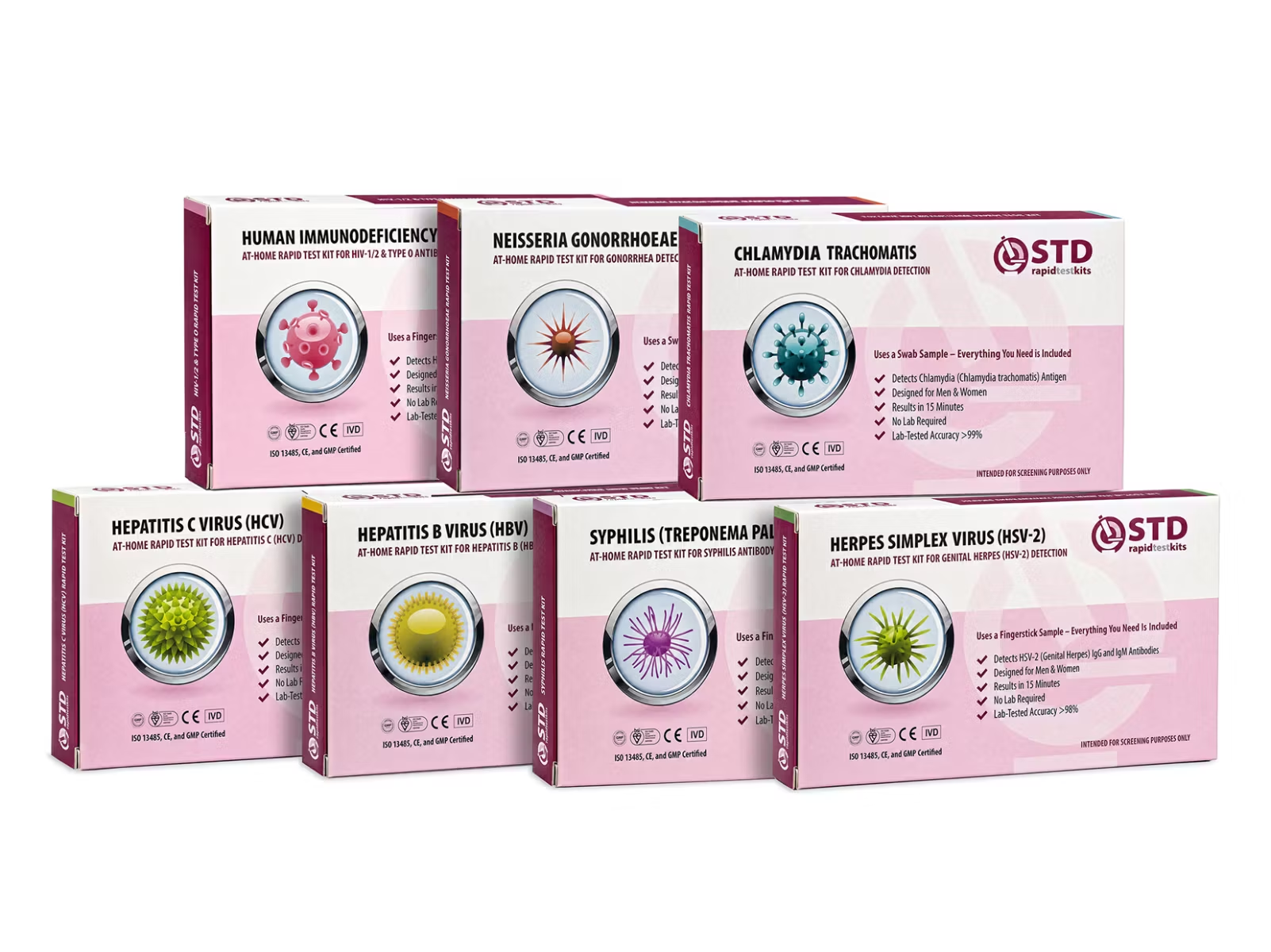
A note on what we sell: stdrapidtestkits.com offers at-home rapid lateral-flow STI test kits for screening between clinic visits. We recommend products based on fit for the reader's concern, not commercial benefit. The 7-in-1 kit below covers the infections most relevant to the three-month retest after a bacterial-STI diagnosis.
Lifestyle Choices That Support Recovery
Medical treatment does most of the work. Lifestyle changes don't substitute for medication, and the wellness industry sometimes oversells what they can accomplish. That said, the basics matter, particularly for viral infections where you're managing the immune system's relationship with the virus over years rather than weeks.
Nutrition that supports the immune system
The evidence-based picture is less exotic than supplement marketing suggests. A balanced diet with adequate protein, sufficient micronutrients (especially vitamins A, C, D, and zinc), and minimal ultra-processed food supports general immune function. There's no STI-specific superfood, and most adults in industrialized countries don't have a vitamin deficiency that meaningfully affects their immune response, with the partial exception of vitamin D in northern latitudes during winter. Focus on what's sustainable: vegetables, lean protein, whole grains, and adequate hydration.
Sleep, stress, and the immune system
Chronic stress and chronic sleep deprivation both measurably suppress immune function. For people managing herpes, stress is one of the most commonly reported outbreak triggers, although the causal mechanism is less clear than the correlation. Practical changes that show up in clinical studies of immune markers include consistent sleep timing, moderate aerobic activity several times a week, and stress-reduction practices like mindfulness, breathing exercises, or therapy. None of these are silver bullets, but they're cheap and they tend to compound.
Alcohol and substance use
Heavy alcohol use suppresses immune function and impairs decision-making around sexual safety. People recovering from a recent diagnosis sometimes drink more in the immediate aftermath as a coping mechanism, which compounds both the immune burden and the risk of repeat exposure. If that pattern is showing up, naming it directly to a clinician or therapist is worth the awkwardness; both addiction care and STI care tend to live in the same primary-care orbit and can be addressed together.
Immune-support basics backed by evidence
- Consistent sleep (7 to 9 hours nightly, regular timing) shows measurable effects on immune markers in controlled studies.
- A balanced diet with protein, vegetables, and minimal ultra-processed food does more than any single supplement.
- Stress-reduction practices (mindfulness, regular exercise, therapy) lower self-reported outbreak frequency for people managing viral STIs.
- Reducing heavy alcohol use is one of the highest-impact single changes for both immune function and sexual-safety decision-making.
Telling Partners: What Disclosure Actually Looks Like
Partner notification is one of the most consequential parts of post-diagnosis care, and one of the most dreaded. The medical reason matters. Untreated partners are how people get reinfected, and they're also how the infection spreads to others. Public-health programs call this partner services, and many jurisdictions offer free, confidential outreach that does the actual notification for you without revealing your identity.
Who to tell, and how far back
The lookback window depends on the infection. For chlamydia and gonorrhea, the CDC recommends notifying partners from the past 60 days, or your most recent partner if you haven't had sex in the past 60 days. For syphilis, the lookback depends on stage and can extend to 90 days, six months, or a full year. For HIV, partners going back to your last documented negative test (or all sexual partners if there's no negative result on record) need to be notified. Your clinician can walk you through what applies to your specific situation.
How the conversation actually goes
These conversations are easier than people expect, on average. Most former partners appreciate being told, even if their initial reaction is awkward. A few patterns that tend to work:
- Lead with the action, not the apology. 'I tested positive for chlamydia and your name came up in my contact period. You should get tested too' is clearer than a long preamble.
- Stick to facts. The diagnosis, the recommended action, the testing pathway. You don't owe anyone a relationship retrospective.
- Use the public-health channel if direct contact feels unsafe or impossible. State and county health departments offer anonymous partner notification at no cost.
- For ongoing partners, frame it as a team problem. Both of you getting tested and treated at the same time is the cleanest path to clearing the infection without bouncing it back and forth.
Expedited partner therapy
For chlamydia and, in many states, gonorrhea, clinicians can prescribe treatment for a partner without seeing them first, a practice called expedited partner therapy (EPT). The CDC supports EPT in heterosexual partnerships when the partner is unlikely to seek their own care, and many states have authorized it. Ask your clinician whether it's available where you live.
Partner services help people who have been exposed to a sexually transmitted infection get tested and treated quickly, breaking the chain of transmission and reducing the risk of reinfection.
Preventing Reinfection
Reinfection within the first year tracks the same behaviors that produced the first diagnosis: same partners, same patterns, same exposure points. The good news is that the variables that drive reinfection are mostly the variables you have direct control over. None of them require a complete lifestyle overhaul.
Barrier methods, used consistently
Condoms remain the most accessible and effective barrier for reducing STI transmission during vaginal and anal sex. Used correctly and consistently, they substantially reduce the risk of HIV transmission and offer meaningful protection against bacterial STIs as well, per the CDC's condom effectiveness guidance. Consistency is what makes them work. Sporadic use doesn't deliver sporadic protection; it delivers something closer to no protection on the unprotected occasions. Dental dams reduce risk during oral sex on a vulva or anus, although usage rates are low and most people benefit more from routine testing than from trying to make dental dams a habit.
Vaccination where it applies
Some STIs are preventable with vaccines. The HPV vaccine is recommended routinely for adolescents and adults through age 26, with shared clinical decision-making through age 45. The hepatitis B vaccine is part of routine childhood immunization in most countries and is recommended for unvaccinated adults at risk. There's no vaccine yet for chlamydia, gonorrhea, syphilis, herpes, or HIV, although research is active in several of these areas.
PrEP for HIV prevention
For people at meaningful HIV risk, pre-exposure prophylaxis (PrEP) is a daily oral or injectable medication that prevents HIV infection with high effectiveness. It doesn't protect against other STIs, so it's typically combined with regular STI testing and barrier use. Eligibility and access vary by country and insurance situation; the CDC and many local health departments maintain referral lists.
Routine testing as a habit
Sexually active adults benefit from regular testing whether or not symptoms are present. The CDC recommends annual testing for chlamydia and gonorrhea for sexually active women under 25 and for men who have sex with men, and at least one lifetime HIV screening for all adults aged 13 to 64 with repeat testing based on risk. People with new or multiple partners benefit from testing every three to six months. Home rapid testing makes that frequency feasible by removing the friction of clinic visits, particularly for screening between annual physicals.
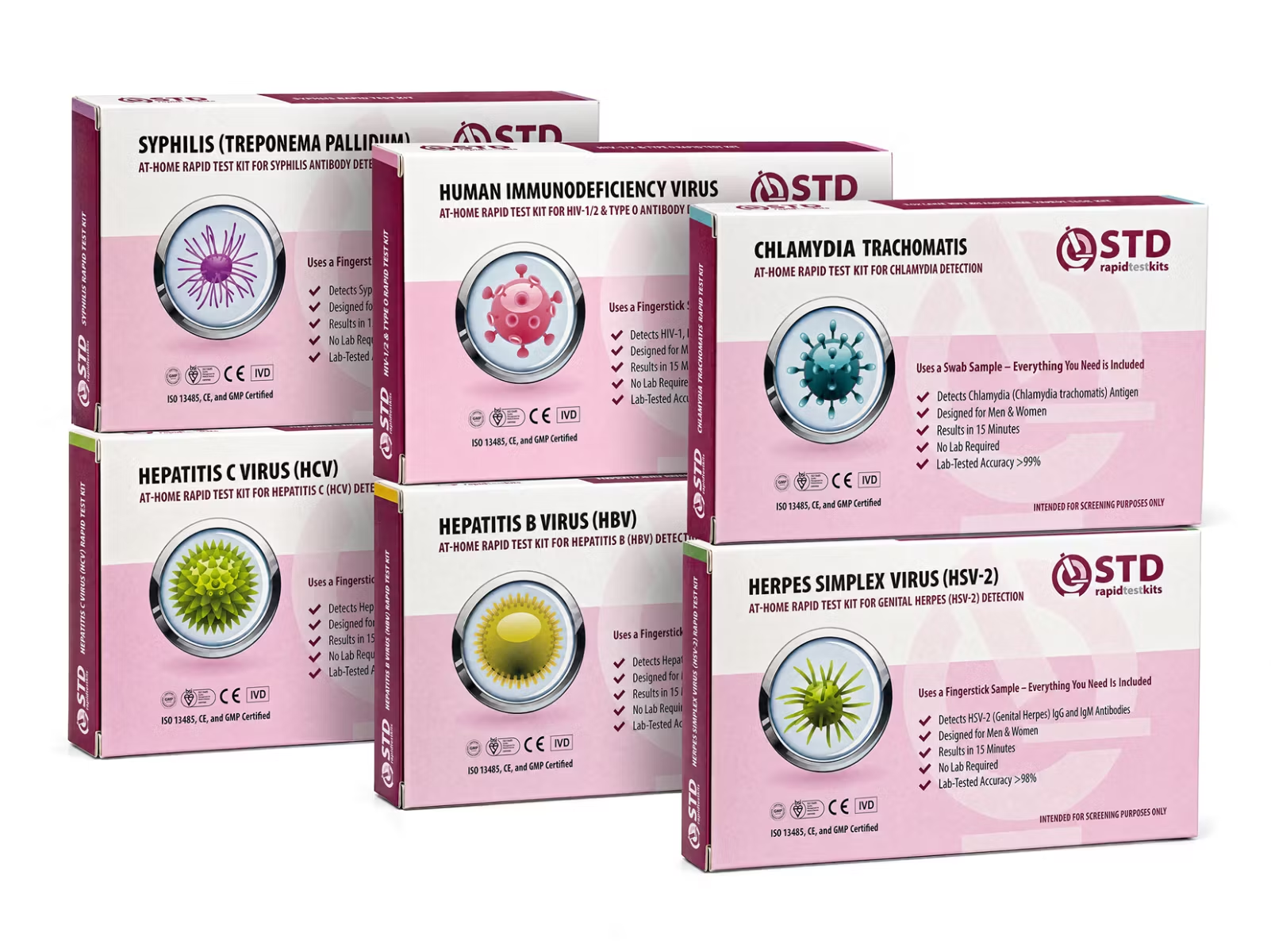
How At-Home Testing Fits Into Your Recovery Plan
Home STI testing earns its place by making routine screening frequent enough to catch things. It does not replace a clinical workup for active symptoms or complicated infections, but for routine-screening use between clinic visits, removing the friction is the point. The work of scheduling a clinic visit, taking time off, and sitting through an appointment is what keeps many people from testing at the recommended cadence. Home tests cut that friction.
For the post-diagnosis context specifically, home testing serves three purposes. First, the three-month retest after bacterial STI treatment is the single most important post-recovery step, and it's the one most people skip. Doing it at home raises adherence. Second, for people in ongoing or new partnerships, routine quarterly testing lets you and a partner agree on a shared baseline before reducing barrier use. Third, for people managing viral infections, home tests for other STIs let you monitor the things antivirals don't cover.
What home rapid tests can and can't do
Our rapid kits use lateral-flow immunoassay technology, the same chemistry as a rapid pregnancy test or a COVID-19 antigen test. They're designed for screening with high specificity, meaning a negative result is highly reliable in low-prevalence settings. For most users, that's the right tool for routine screening. They are not equivalent to laboratory nucleic acid amplification tests (NAATs), which are the gold standard for chlamydia and gonorrhea diagnosis and which laboratories use for confirmation. A positive home result should be confirmed by a clinician, who will also start treatment and arrange partner notification as needed.
When a clinic visit is the right call
Home tests don't replace clinical care for active symptoms, pregnancy, complicated infections, or for tests we don't sell (pharyngeal swabs, rectal swabs, urine NAATs, and lab-processed mail-in panels). If you have active symptoms, are pregnant, are immunocompromised, or your previous infection was complicated, a clinic visit is the right starting point. Home rapid tests fit best as the routine-screening layer underneath periodic clinical care.
Frequently Asked Questions
- Can I have a normal life after an STD diagnosis?
- Yes. For curable bacterial STIs, the infection is gone once you finish treatment, and life returns to baseline within a couple of weeks. For chronic viral STIs like HIV or herpes, daily treatment keeps you healthy and substantially lowers transmission risk to partners. People with well-managed STIs have full relationships, careers, pregnancies, and lifespans. A diagnosis describes a medical situation, and it does not predict the shape of your life going forward.
- How long should I wait to have sex again after treatment?
- For curable bacterial STIs like chlamydia and gonorrhea, the CDC recommends waiting seven days after a single-dose regimen, or until you complete a seven-day regimen, AND waiting until all partners have also been treated. Otherwise you risk immediate reinfection. For viral STIs (herpes, HIV), there's no waiting period that clears the infection; transmission risk is managed through suppressive therapy and barrier use rather than a calendar wait.
- Will my STI come back after treatment?
- Cured bacterial STIs don't relapse on their own. What looks like a 'recurrence' is almost always a fresh reinfection from an untreated or newly-acquired partner. That's why the three-month retest matters so much. For viral STIs, the virus stays in the body even when you feel well; herpes can produce occasional outbreaks for years, and HIV requires daily therapy to stay suppressed.
- How often should I get tested for STIs?
- At least once a year if you're sexually active, more often if you have new or multiple partners. The CDC recommends annual chlamydia and gonorrhea testing for sexually active women under 25 and for men who have sex with men, and at least one lifetime HIV screening for all adults aged 13 to 64. People with multiple partners often test every three to six months. Test immediately if you notice symptoms or learn that a partner has tested positive.
- Are at-home rapid STD tests accurate?
- Lateral-flow rapid tests deliver high specificity (low false-positive rates), which makes them useful for routine screening. Sensitivity is generally good but varies by infection and by the window period since exposure. A positive home result should be confirmed by a clinician with a lab-based test, and treatment should be prescribed by a clinician. A negative result in someone with ongoing risk should be repeated periodically; one negative test is a snapshot, not a permanent clearance.
- Do I still need a doctor if I'm using at-home tests?
- Yes. Home tests handle routine screening; they are not a substitute for the parts of sexual healthcare that require a clinician. You still need a doctor for: prescription treatment after a positive result, evaluation of active symptoms, pregnancy-related care, complicated or recurrent infections, contraception decisions, HPV/cervical screening, and full sexual-health exams. Home tests are designed to make routine screening more frequent between those clinical touch-points.
- What should I tell partners after a positive result?
- Lead with the action: the specific infection, that they should get tested, and where they can do that. You don't owe anyone a long relationship retrospective. For partners you can't or don't want to contact directly, your state or county health department offers anonymous partner notification at no cost. For chlamydia and (in many states) gonorrhea, your clinician may be able to prescribe expedited partner therapy, meaning treatment for the partner without an individual office visit.
- How can I support my recovery with lifestyle changes?
- The basics have the most evidence behind them: 7 to 9 hours of sleep nightly with consistent timing, a balanced diet with protein and vegetables, moderate aerobic activity several times a week, and managed stress (mindfulness, exercise, therapy). For people managing viral STIs, reducing heavy alcohol use is one of the highest-impact single changes. Skip the elaborate supplement protocols; they don't measurably outperform the basics.
- U.S. Centers for Disease Control and Prevention. Sexually Transmitted Infections Treatment Guidelines. Source for first-line antibiotic regimens (doxycycline for chlamydia, ceftriaxone for gonorrhea, penicillin for syphilis), three-month retest recommendation, and partner-notification lookback windows.
- U.S. Centers for Disease Control and Prevention. Treating HIV. Source for antiretroviral therapy, viral suppression timelines, and the undetectable-equals-untransmittable framing.
- World Health Organization. Fact Sheet on Sexually Transmitted Infections. Source for global STI prevalence and overview of curable versus manageable infection categories.
- UK National Health Service. Sexually Transmitted Infections. Overview of STI types, common symptoms, and where to seek testing in the UK.
- U.S. Centers for Disease Control and Prevention. Expedited Partner Therapy clinical guidance. Source for clinician-prescribed treatment of partners without an individual office visit.
- U.S. Centers for Disease Control and Prevention. About Genital Herpes. Source for HSV-1 and HSV-2 suppressive therapy, outbreak patterns, and viral shedding.