Itchy After Anal Sex? What's Really Causing It and When to Test
Itching after anal sex is one of the most-searched sexual-health concerns, and most of the time the cause is friction, hemorrhoids, or a reaction to lube or latex. A smaller share of cases points to a rectal infection. The right move depends on what your symptoms are doing on day three, day five, and day seven, not what they did the morning after.



- Friction-related itching usually peaks within 24 hours and fades over two to four days; itching that persists past five to seven days, escalates, or adds new features (discharge, sores, pain) is worth testing.
- Rectal swab NAAT for chlamydia or gonorrhea is a clinic-collected sample type. At-home rapid kits cover the bloodwork side of the same exposure event (HIV, syphilis, hepatitis, herpes antibody).
Published: September 2025 | Last updated: April 2026 | Editorial review and quality control: Martina N.
Anal tissue is thinner than most other body surfaces and has no built-in lubrication, so it reacts strongly to friction, products, and microbes. Most post-sex itching is mechanical and gone in a few days. A smaller share signals a rectal infection that needs attention. The trick is reading the pattern instead of guessing on day one.
If you are reading this in the middle of the night, take a breath. Catastrophizing every body sensation rarely changes the outcome. Watching the timeline does. The rest of this guide walks through what is actually causing the itch, when it fades on its own, when it is worth testing, and what kind of test answers what kind of question.
Is itching after anal sex usually serious?
Most anal itching after sex is friction, hemorrhoids, or a reaction to lube or latex, and it usually settles within two to four days. Itching that persists past five to seven days, especially with discharge, sores, or pain during bowel movements, can signal rectal chlamydia, gonorrhea, or herpes and is worth testing. Rectal-specific NAAT swab testing is collected in a clinic; at-home rapid kits cover the bloodwork side of post-exposure risk (HIV, syphilis, hepatitis, herpes antibody).
Key Takeaways
- Friction-related itching usually peaks within 24 hours and fades over two to four days; itching that persists past five to seven days, escalates, or adds new features (discharge, sores, pain) is worth testing.
- Rectal swab NAAT for chlamydia or gonorrhea is a clinic-collected sample type. At-home rapid kits cover the bloodwork side of the same exposure event (HIV, syphilis, hepatitis, herpes antibody).
Why anal tissue reacts the way it does
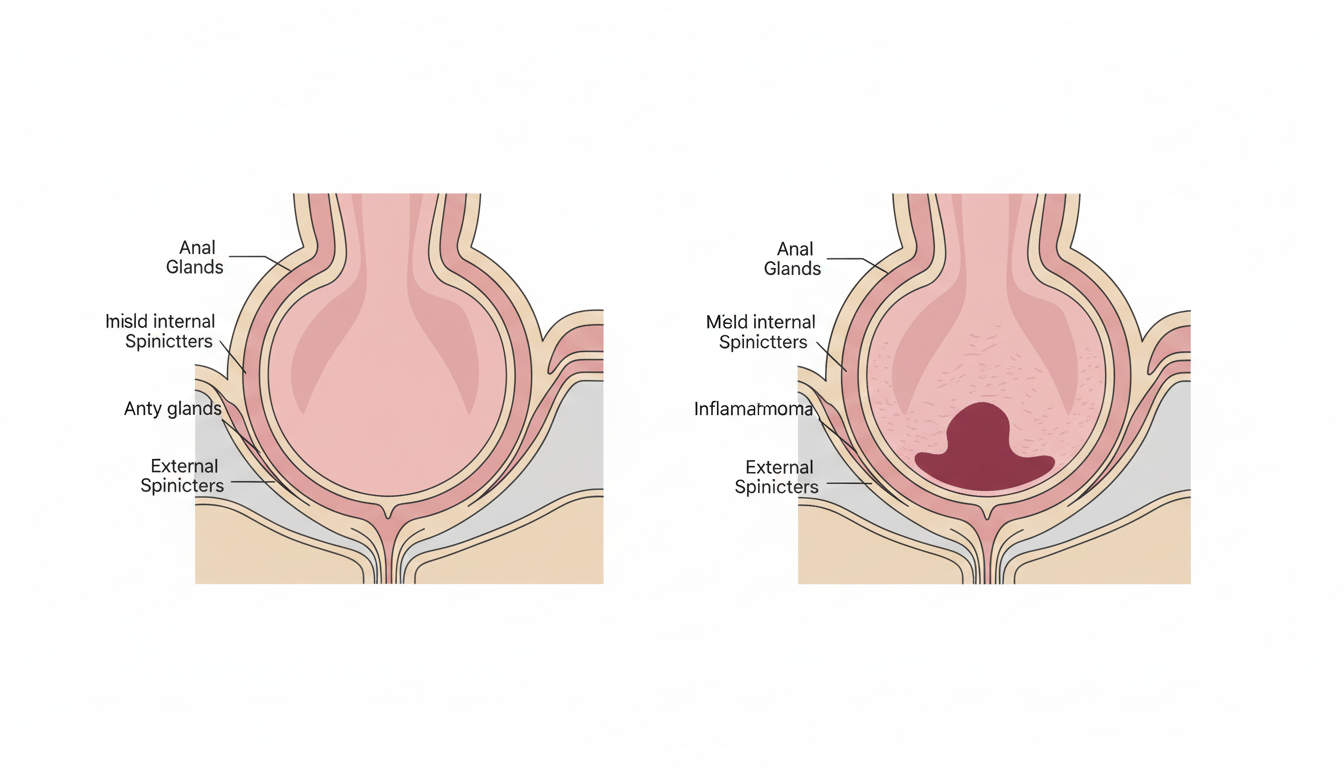
Unlike vaginal tissue, the perianal area has no self-lubricating mechanism. The skin around the anus and the lower rectal mucosa are thin, richly innervated, and highly vascular. That combination explains why a single session of penetrative sex can produce itching the next morning even when nothing felt rough at the time.
Friction creates microscopic surface tears in this tissue. They are often too small to see and too small to feel during sex, but as the body repairs them, nerve endings activate. Healing tissue itches in much the same way a healing scab does on any other body part. The sensation usually shows up 12 to 24 hours after sex and fades over two to four days.
Two non-infectious causes are easy to overlook. Latex condoms can trigger contact sensitivity, which produces itching without an obvious rash. Many lubes contain warming agents, glycerin, or fragrances that disrupt the skin barrier of the perianal area. If your itching consistently follows a particular condom brand or lube and disappears with a different product, that pattern points at sensitivity, not infection. Switching to a polyisoprene or polyurethane condom, or to a fragrance-free, glycerin-free water-based lube, often resolves the issue without further intervention.
Latex condoms can produce contact sensitivity that itches without an obvious rash. Many lubes contain warming agents, glycerin, or fragrances that irritate the perianal skin barrier. If switching to a polyisoprene or polyurethane condom, or to a fragrance-free, glycerin-free water-based lube, makes the itch disappear, the cause is product chemistry, not infection.
When it is not just friction
Rectal infections happen, and they often go undetected. The U.S. CDC's STI treatment guidance notes that rectal chlamydia and gonorrhea are commonly asymptomatic, which means a person can carry the infection and pass it on without ever feeling sick. When symptoms do appear, they are often subtle: a sense of rectal fullness, a small amount of mucus discharge, mild itching that does not fade, or discomfort during bowel movements.
Herpes presents differently. The first sign is usually a tingling or burning prodrome (the warning sensation that precedes visible sores), followed within a few days by a cluster of small fluid-filled blisters that rupture into shallow ulcers. Flu-like symptoms (fever, swollen lymph nodes, body aches) can accompany a first outbreak. The CDC's genital herpes resource describes the blister development, ulcer formation, and flu-like symptom pattern associated with a first outbreak.
Syphilis can produce a single painless sore (a chancre) at the site of exposure. Internal chancres are easy to miss because they do not hurt and are hidden from view. HIV does not present as isolated anal itching; early HIV is more often a flu-like seroconversion illness several weeks after exposure.
The clearest distinguishing feature between irritation and infection is direction of travel. Friction-related itching gets better day by day. Infection-related symptoms either persist at a steady low level or evolve, adding new features (discharge, sores, pain, fever) over the course of a week or two.
| Cause | When it starts | Other features | Direction over time |
|---|---|---|---|
| Friction or micro-tears | Within 24 hours | Mild tenderness, no discharge | Improves in 2 to 4 days |
| Lube or latex sensitivity | Within 24 hours | Burning, irritation, sometimes mild redness | Improves once the irritant is removed |
| Hemorrhoids | Often within hours, can flare anytime | Swelling, light streaks of blood, sense of fullness | Fluctuates, eases with rest and warm soaks |
| Rectal gonorrhea or chlamydia | 5 to 14 days post-exposure | Mucus discharge, rectal fullness, painful bowel movements | Persists or worsens without treatment |
| Herpes (HSV) | 2 to 12 days post-exposure | Tingling prodrome, blisters, ulcers, possible flu-like symptoms | Lesions develop, peak, then heal in 1 to 3 weeks |
| Pinworms (Enterobius) | Nighttime dominant | Intense night itching, no discharge | Continues without treatment |
Why itching at night is its own diagnostic clue
If your itching is dramatically worse at night and bearable during the day, that pattern is worth thinking about separately from STI worry. Adult pinworm females migrate to the perianal area at night to lay eggs, which produces intense, sleep-disrupting itching. The CDC's pinworm resource notes that infection is most common in school-age and preschool-age children, but adults in the same household are easily exposed through close contact, shared bedding, or contaminated surfaces.
Pinworms do not cause discharge, sores, or pain with bowel movements. So if your nighttime itching is intense but the rest of your body feels normal during the day, the parasite question is reasonable to raise with a clinician before assuming an STI. Diagnosis is usually a simple early-morning tape test, and treatment is a single oral dose of albendazole or pyrantel pamoate plus a follow-up dose two weeks later. Household members are often treated together to prevent reinfection.
Night-dominant itching with no discharge and no pain during bowel movements points toward pinworm. Steady itching across the day, especially with discharge, sores, or painful bowel movements, points toward irritation or rectal infection. The day-versus-night split is the fastest way to triage which differential is worth testing for first.
Hemorrhoids: the most common non-infectious culprit
Hemorrhoids are swollen veins in the lower rectum or around the anus, and they are remarkably common. Anal sex can flare existing hemorrhoids by raising local venous pressure or by mild surface trauma. According to the NHS hemorrhoids resource, typical symptoms include an itchy anus, lumps around the anus, and bright red blood after a bowel movement, with warm baths cited as a first-line measure for easing itching and discomfort.
The pattern that distinguishes hemorrhoids from infection is the fluctuation. Hemorrhoid itching tends to flare with strain and settle with rest, warm water, and gentle hygiene. Infection-related itching is steadier and tends to escalate. Hemorrhoid bleeding is usually a small streak; persistent or heavier bleeding deserves clinical evaluation regardless of the suspected cause.
External hemorrhoids are visible and palpable. Internal hemorrhoids may not be visible from outside but can produce a feeling of incomplete evacuation or pressure. Both respond to the same baseline care: warm soaks, fragrance-free hygiene, hydration, fiber, stool softeners, and avoiding additional friction during the flare period. If symptoms persist beyond a week or two, a clinician can confirm the diagnosis and rule out other causes.
Classic hemorrhoid indicators
- Itching that flares with bowel movements or long sitting and eases with rest
- A small palpable lump or sense of fullness near the anal opening
- Bright red streaks on toilet paper rather than blood mixed into stool
- Relief from warm baths, fragrance-free hygiene, fiber, and adequate hydration
How symptoms evolve over time
The single most useful diagnostic tool you have at home is patience. Most people make their best decisions on day five to seven, not day one. Friction heals on a predictable curve. Infections progress on a different curve. Mapping your symptoms against a timeline turns ambiguity into signal.
If your symptoms are fading by day three or four with no new features, the cause is almost always mechanical. If by day five to seven you have steady itching that has not budged, or the original symptom has been joined by discharge, sores, or pain with bowel movements, the case for testing is now stronger than the case for waiting.
The point of the timeline is not to scare you. It is to give you structure for a calm decision based on what your body is actually doing.
| Day after sex | Friction or irritation pattern | Possible infection pattern |
|---|---|---|
| Day 1 to 2 | Mild itching, tenderness, possible micro-abrasion sensation | Usually no symptoms yet |
| Day 3 to 5 | Discomfort improving, skin calmer | Early irritation, tingling, or mild prodrome may begin |
| Day 6 to 10 | Mostly resolved, returning to baseline | Discharge, sores, or persistent itching may appear |
| Day 10 plus | Fully healed | Symptoms persist or progress without treatment |
When you should actually test
Testing too early gives false reassurance. Testing too late wastes weeks of unnecessary worry. Each infection has a window period, the time between exposure and when a test can reliably detect it.
For rectal chlamydia and gonorrhea, the most reliable approach is a rectal swab processed by NAAT (nucleic acid amplification testing). The CDC's STI treatment guidance lists rectal NAAT as the recommended sample type for symptomatic or higher-risk anal exposure. Rectal swab collection is performed in a clinical setting and is not part of our at-home product line. If your concern is rectal-specific bacterial infection, a sexual health clinic, urgent care, or your primary care provider can collect that sample.
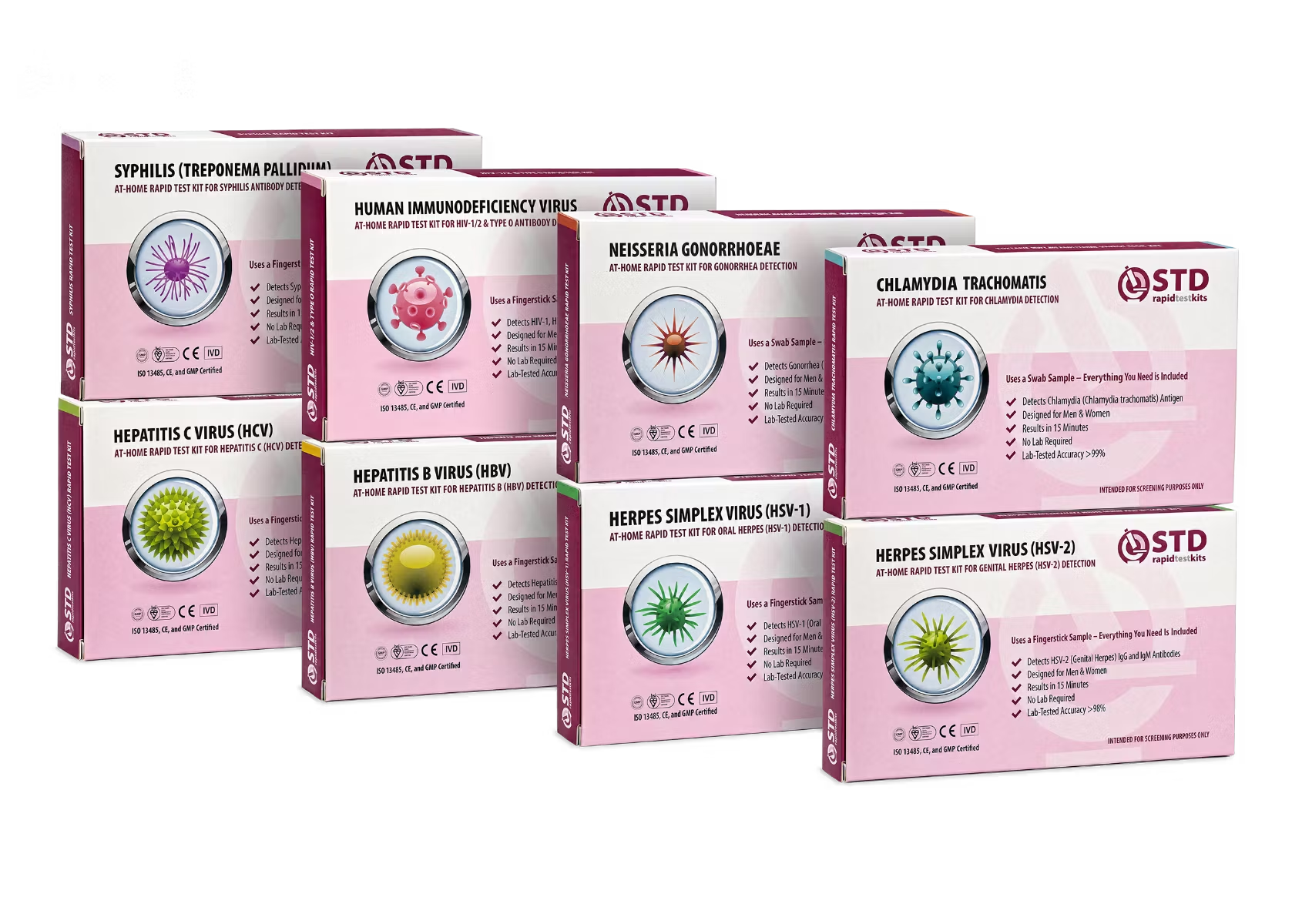
For the bloodwork side of post-anal-exposure risk, at-home rapid antibody tests can answer whether seroconversion has occurred for HIV, syphilis, hepatitis B, hepatitis C, and herpes (HSV). These are fingerstick blood tests, and their reliable detection windows are not the same as the rectal swab window for bacterial infections. The two test categories answer different questions about the same exposure event.
| Infection | Earliest reliable test | Optimal testing window | Sample type |
|---|---|---|---|
| Chlamydia (rectal) | 7 days | 14 days | Rectal swab NAAT (clinic-collected) |
| Gonorrhea (rectal) | 7 days | 14 days | Rectal swab NAAT (clinic-collected) |
| Herpes (HSV) | When sores are present (swab) or 12+ weeks for antibody | Visible lesions for swab; 12 weeks for blood antibody | Lesion swab (clinic) or blood antibody (home) |
| Syphilis | 3 weeks | 6 weeks | Blood test (clinic or home) |
| HIV | 10 to 14 days (RNA), 18 to 45 days (Ag/Ab) | 6 weeks for fourth-generation lab test | Blood (clinic) or rapid antibody (home) |
| Hepatitis B | 3 to 6 weeks (HBsAg) | 8 to 12 weeks | Blood (clinic or home) |
| Hepatitis C | 8 to 11 weeks (antibody) | 12 weeks | Blood (clinic or home) |
Our rapid kits are lateral-flow tests using either a self-collected genital swab or a fingerstick blood sample. We do not sell a rectal swab kit. If your symptoms suggest a rectal-specific bacterial infection (mucus discharge, painful bowel movements, rectal fullness), see a clinic for a rectal NAAT swab. Our kits can answer the bloodwork side of the same exposure event in parallel.
Can you have a rectal STI without anal sex?
Receptive anal sex is the highest-risk activity for rectal STIs, but it is not the only route. Rimming, shared sex toys, and contact with infected genital fluids can introduce pathogens to the rectal mucosa via the same exposure pathways as receptive penetration. The CDC's chlamydia resource notes that rectal infection can also spread from another infected site in the same person, which is one reason a partial-screening approach can miss the picture.
That removes the false reassurance some readers carry, the assumption that without receptive penetration there cannot be a rectal infection. Rimming, shared toys, and fluid contact create the same kind of exposure. It also softens the moral charge that often gets attached to anal symptoms, because the tissue simply responds to whatever it encountered. Anyone with that kind of exposure history has a reasonable basis to test, regardless of how the contact happened.
Reducing false negatives when you test
False negatives usually trace back to one of two controllable issues: timing or sample quality. Timing matters most. Rectal chlamydia and gonorrhea become reliably detectable by NAAT around 7 to 14 days post-exposure, with day 14 producing the most reliable result. Antibody-based blood tests for HIV, syphilis, herpes, and hepatitis have longer windows that range from a few weeks to a few months, depending on the assay and the infection. The data sheet on whichever kit you use will state the validated window for that specific test, and reading the result outside the timing instructions printed on the kit produces unreliable results too.
Sample quality is the other half. For at-home blood tests, fingerstick collection works best when the hand is warm and the puncture is firm enough to produce a free-flowing drop. Squeezing the fingertip dilutes the sample with tissue fluid and reduces sensitivity. For self-collected swabs, following the timing and rotation instructions precisely makes a measurable difference.
If anxiety drives you to test on day three, that is understandable. Treat the early result as preliminary, and schedule a retest at the validated window in the kit instructions before treating any negative as definitive.
Two things move the false-negative rate the most: timing and sample handling. On timing, wait until the validated window printed in the kit instructions and treat any pre-window negative as preliminary, not definitive. On sample handling for fingerstick blood tests, warm the hand first, use a firm lancet puncture, and let the drop flow freely instead of squeezing the fingertip. For self-collected swabs, follow the rotation count and contact-time printed on the swab instructions exactly. If either box is unchecked, retest at the right window before drawing conclusions.
When to seek care, not testing
There are situations where waiting for a test result is the wrong choice. Severe rectal pain, heavy or persistent bleeding, fever, pus-like discharge, painful ulcers with systemic symptoms (chills, swollen lymph nodes), and possible exposure during sexual assault are all reasons to be seen in person.
A first herpes outbreak is treated more effectively when antivirals are started early in the course of the outbreak. Rectal abscesses, anal fissures, and other non-STI causes also need clinical evaluation. The cost of one urgent care or sexual health clinic visit is far smaller than the cost of waiting through a worsening infection.
If you have any of the features above, the next step is a clinician, not a home test.
The CDC's STI treatment guidance describes rectal chlamydia and gonorrhea as frequently asymptomatic, meaning a person can carry and transmit the infection without ever feeling sick. Routine screening at the rectal site is recommended for sexually active people who report receptive anal sex, regardless of whether symptoms are present. This is paraphrased from the CDC guidance rather than quoted verbatim; the full document is linked in the sources list at the foot of this article.
Condoms, lube, and the small details that matter
Anal tissue is more susceptible to microscopic tearing than vaginal tissue, and those tiny breaches are the entry route for many bacterial and viral pathogens. Condoms used correctly, with adequate water-based or silicone-based lubrication, are the most effective tool for reducing STI transmission during anal sex. Oil-based lubes degrade latex and increase breakage risk, so they should not be paired with latex condoms.
Pre-existing latex sensitivity is more common than people realize. If you consistently develop itching after latex use and not after polyisoprene or polyurethane condoms, that clinical pattern is worth noting. Changing condom material often resolves the issue without further intervention.
Routine STI screening is part of prevention, not a sign of distrust. Many sexually active adults schedule periodic screening the way they schedule dental cleanings. The CDC recommends at least annual screening for anyone with new or multiple partners, and shorter intervals for higher-risk exposures or when symptoms appear.
Water-based and silicone-based lubes pair safely with latex condoms. Oil-based lubes (coconut oil, petroleum jelly, lotions, massage oils) degrade latex and significantly increase breakage risk; pair them only with polyurethane condoms. For sensitive perianal skin, look for fragrance-free and glycerin-free formulations. If you suspect latex sensitivity, switch to polyisoprene or polyurethane condoms and see whether the itching pattern clears.
Testing options: clinic, lab mail-in, or rapid at-home
Clinical testing offers in-person evaluation, which is necessary for severe symptoms or when a rectal swab is needed. Lab-based mail-in kits provide high analytical sensitivity and are processed in a CLIA-certified laboratory. Rapid at-home lateral-flow kits offer speed and privacy, with results available in 15 minutes or less.
These three pathways are complementary, not competing. A reasonable approach for many people after a single anal exposure event is: clinic for the rectal-specific swab if symptoms suggest a bacterial rectal infection; at-home rapid testing for the bloodwork side (HIV, syphilis, hepatitis, herpes antibody) at the validated window. This pairing covers most of what one exposure event can produce.
A note on test technology. Our at-home rapid tests are lateral-flow immunoassays. They are not NAAT or PCR and should not be interpreted as equivalent to lab molecular testing. A positive at-home rapid result is worth confirming with a lab test when possible. A negative result at the validated window is reassuring but does not replace ongoing screening if exposure is recurrent.
Three testing pathways at a glance
- In-person clinic: needed for rectal NAAT swabs, severe symptoms, suspected abscess or fissure, and any case where physical examination matters.
- Lab mail-in kit: highest analytical sensitivity, processed in a CLIA-certified laboratory, results in a few days; useful when you can wait for the strongest possible answer.
- Rapid at-home kit: lateral-flow immunoassay with a 15-minute result at home; best for the bloodwork side of post-exposure screening (HIV, syphilis, hepatitis, herpes antibody) at the validated window.
If a result comes back positive
Most rectal bacterial STIs are treated successfully with antibiotics. Treatment regimens for chlamydia and gonorrhea are short and curative, with follow-up testing at three months recommended (a test of reinfection rather than a test of cure for most cases). Partner notification and treatment is part of the standard clinical workflow.
For herpes, antivirals reduce outbreak duration, severity, and transmission risk. The first diagnosis often carries more emotional weight than the long-term reality. Many people experience infrequent recurrences and use antivirals episodically. Long-term suppressive therapy is available for people with frequent outbreaks or who want to reduce transmission risk to a partner.
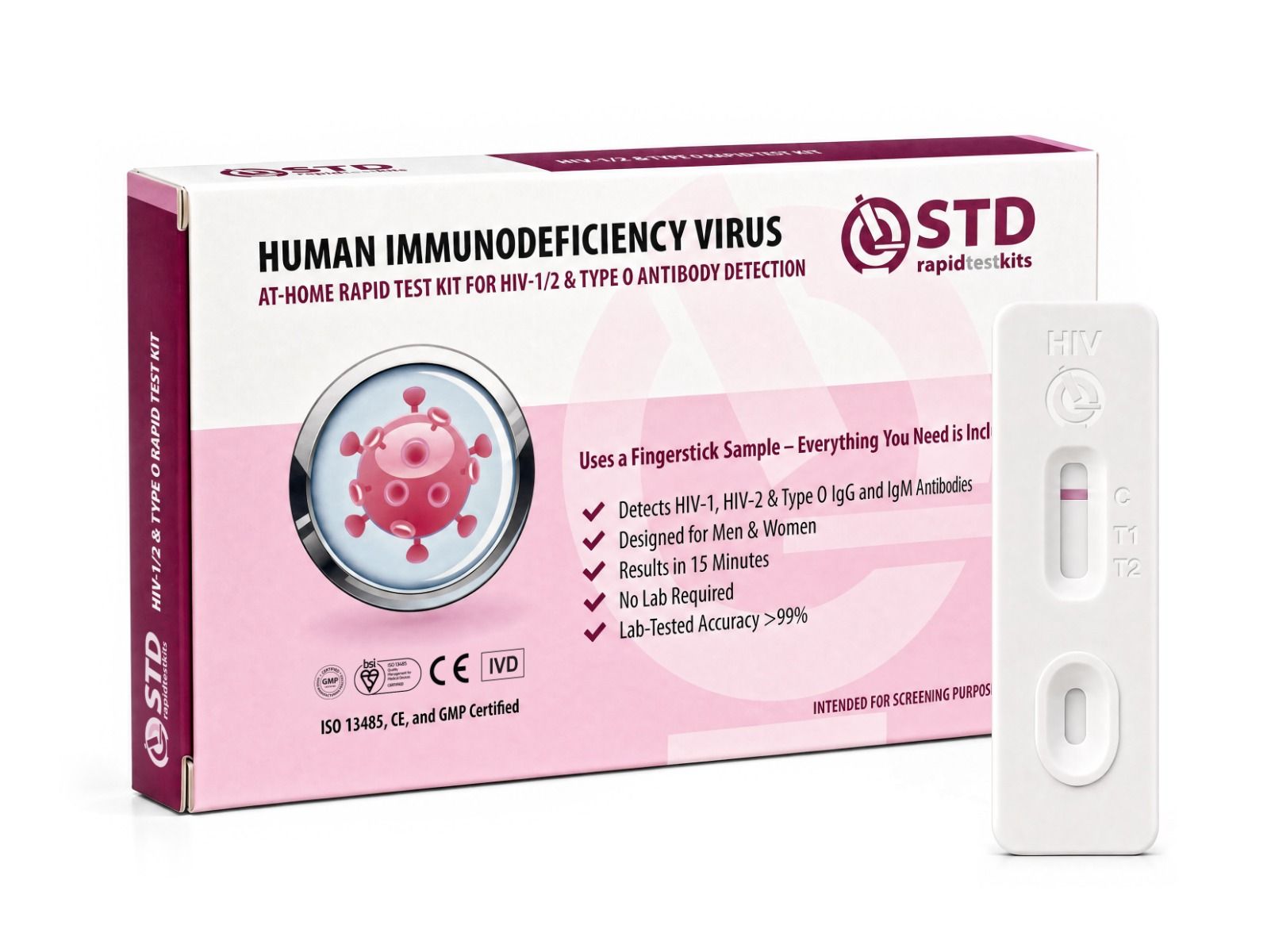
For HIV, modern antiretroviral therapy is well-tolerated and durable. People on consistent treatment with an undetectable viral load do not transmit HIV sexually (the U=U principle). Early diagnosis improves long-term outcomes substantially.
Partner conversations land better when framed around shared health rather than blame. A simple message such as "I tested positive for something treatable, and I wanted you to know so we can both follow up" tends to go better than silence.
People living with HIV who take antiretroviral therapy consistently and reach an undetectable viral load do not transmit HIV through sex. This is the Undetectable equals Untransmittable (U=U) principle, supported by the PARTNER and Opposites Attract studies. A positive HIV result is not the diagnosis it once was; with prompt treatment, life expectancy is comparable to the general population and onward transmission is preventable.
Frequently asked questions
- Can anal itching really be the only sign of a rectal STI?
- It can, although it is not the most common presentation. Rectal chlamydia and gonorrhea are frequently asymptomatic, and when symptoms appear they are often subtle (mild itching, mucus discharge, a sense of rectal fullness, or discomfort during bowel movements). If itching persists past five to seven days after a higher-risk exposure, testing is the way to get clarity.
- How do I tell herpes apart from friction itching?
- Timeline is the clearest tell. Friction shows up within 24 hours and fades steadily over two to four days, with no sores. Herpes shows up later, usually 2 to 12 days after exposure, and the symptoms grow rather than shrink. Watch for clustered fluid-filled bumps that progress to shallow open sores, sometimes with fever or swollen glands during a first outbreak. Friction never produces those features.
- Itching is much worse at night. Does that mean parasites or an STI?
- Pinworm itching is a strong night-dominant pattern, often intense enough to disrupt sleep, and it is not usually accompanied by discharge or pain during bowel movements. STI-related itching is typically steadier across the day. If your itching is sharp at night and bearable during the day with no other symptoms, the parasite question is reasonable to raise with a clinician.
- I used a condom. Am I safe from rectal STIs?
- Condoms used correctly with adequate lubrication significantly reduce STI risk during anal sex, especially for bacterial infections like chlamydia and gonorrhea. They do not eliminate risk for skin-to-skin viral infections like herpes from areas the condom does not cover, and breakage or slippage does occur. Lower risk does not mean zero risk.
- The itching started right away the morning after. What does that mean?
- Symptoms appearing within hours to a day are almost always mechanical (friction, micro-tears, or a reaction to lube or latex). Bacterial STIs need several days to incubate, and most viral infections need longer. If the itching peaks within 24 hours and fades within two to four days, irritation is the most likely explanation.
- Can lube really cause this much itching on its own?
- Yes. Warming agents, glycerin, fragrances, and flavored formulations can disrupt the perianal skin barrier and produce itching that looks like infection but is purely irritation. If the itching consistently appears after a particular product and disappears with a different one, the pattern is the diagnosis. Switching to a fragrance-free, glycerin-free water-based or silicone-based lube usually resolves it.
- What if I am too embarrassed to go to a clinic?
- Anal symptoms still carry a layer of cultural silence that has no medical basis. Privacy-friendly options exist for the bloodwork side of post-exposure testing (HIV, syphilis, hepatitis, herpes antibody) through at-home rapid kits. A rectal swab still requires a clinical visit, but many sexual health clinics are explicitly low-judgment, fast-turnaround, and confidential. Asking the clinic in advance about their walk-in or express testing path can lower the barrier.
- My home test was negative but I still feel off. What do I do?
- Two possibilities. You may have tested before the validated detection window for that infection, so a retest at the right window is the next step. Persistent symptoms with negative testing can also point to non-STI causes such as anal fissures, hemorrhoids, contact dermatitis, or pinworms. A clinician can examine the area and order targeted testing for those alternatives, which a home test cannot do.
- U.S. Centers for Disease Control and Prevention. Sexually Transmitted Infections Treatment Guidelines, including rectal NAAT recommendations and asymptomatic-rectal-infection screening guidance.
- U.S. Centers for Disease Control and Prevention. Chlamydia overview, transmission routes, and rectal infection symptom patterns.
- U.S. Centers for Disease Control and Prevention. Gonorrhea overview, including rectal site testing and asymptomatic carriage.
- U.S. Centers for Disease Control and Prevention. Genital herpes resource, including blister and ulcer development and flu-like symptoms with a first outbreak.
- UK National Health Service. Piles (haemorrhoids) overview, symptoms (itchy anus, lumps, bright red bleeding), and self-care including warm baths.
- World Health Organization. Sexually transmitted infections fact sheet, general overview of STI epidemiology and transmission through sexual contact.
- U.S. Centers for Disease Control and Prevention. Pinworm (Enterobius vermicularis) resource, including night-dominant itching pattern, age distribution, diagnosis, and treatment.