
Published: August 2025 | Last updated: May 2026 | Editorial review and quality control: Martina N.
The idea that monogamy automatically prevents sexually transmitted infections shows up everywhere, from sex-ed classes to dating advice columns. It feels intuitive: one partner means no exposure. But the public-health guidance most people are paraphrasing comes with a precondition that usually goes unspoken. The U.S. Centers for Disease Control describes the protective effect carefully as being in a mutually monogamous relationship with a partner who has been tested and does not have an STI (CDC, STI prevention). Each clause in that sentence is doing real work.
Two people committing to exclusivity does not, on its own, neutralize biology. Some infections sit dormant for years. The majority of chlamydia cases in women produce no symptoms at all. Exclusivity, however sincere, also does not erase the testing history each partner brought into the relationship. This piece walks through what monogamy can and cannot do for STI risk, and what closes the gap.
Key Takeaways
- Monogamy reduces STI risk only when both partners have tested negative before becoming exclusive, and both stay exclusive. Without a baseline test, dormant infections from previous relationships travel in undetected.
- Most chlamydia, gonorrhea, HPV, and HSV-2 infections are asymptomatic in the majority of carriers. Routine retesting every 6 to 12 months is what closes the gap between feeling safe and being safe.
What 'mutual monogamy' actually requires
Public-health bodies have recommended monogamy as a prevention strategy for decades. The exact phrasing matters. CDC guidance describes the protective form as being in a mutually monogamous relationship with a partner who has been tested and does not have an STI (CDC, STI prevention). Three conditions sit inside that sentence, and skipping any one of them is what creates the false-security problem.
First, both partners must have been tested for the relevant infections before stopping barrier protection. Without that baseline, neither partner knows what they are bringing in. Second, both partners must remain exclusive. Surveys of relationship behavior consistently find that a meaningful share of people in exclusive relationships have outside encounters, and disclosure after the fact is uncommon. Third, neither partner can be carrying a latent infection from a prior relationship. HPV, HSV-2, and even some bacterial infections can persist longer than memory does.
The serial-monogamy trap
Many people who describe themselves as monogamous are in their fourth, fifth, or tenth monogamous relationship. Each one was exclusive at the time. Between partners, condoms came off early, retesting did not happen, and any infection picked up during the previous relationship rode quietly into the next one. The label stayed the same. The cumulative exposure looked very different from what either partner described as their sexual history.
The CDC's screening recommendations exist for exactly this reason. Yearly chlamydia and gonorrhea screening is advised for all sexually active women under 25, and for older women with new or multiple partners, regardless of how those partners are described emotionally (CDC, STI screening recommendations). The guideline is written around behavior and biology, not around how a relationship is labeled.

The biology monogamy can't override
Several common STIs are biologically built to outlast a single relationship. HSV-2 establishes lifelong latency in sensory nerve ganglia after the first infection, with the virus surfacing intermittently to shed even when the carrier has no visible sores. The CDC reported 572,000 new genital herpes infections in 2018 among people aged 14 to 49 in the United States, and most carriers do not know they are infected (CDC, genital herpes overview).
HPV is even more common. Most sexually active people contract at least one HPV strain at some point. The immune system clears most infections within two years, but a subset of high-risk strains can persist and progress over the course of years (CDC, HPV overview). Someone who picked up HPV in college can transmit it to a partner well into a long, faithful marriage without ever having an outbreak or a positive Pap.
Bacterial infections behave differently but share the asymptomatic-carrier problem. The CDC notes that most chlamydia infections in women, and a substantial share in men, produce no noticeable symptoms (CDC, chlamydia overview). Untreated, chlamydia can lead to pelvic inflammatory disease and fertility damage. The infection that quietly causes long-term harm is usually the one that never announced itself with a clear symptom.
What this means for two faithful partners
Both partners can be telling the truth about their current behavior and still carry a virus or bacterium from a previous relationship. Monogamy reduces new exposure events, but earlier exposures travel in with each partner.
Can two monogamous partners still get an STI?
Yes, when neither partner was tested before becoming exclusive. Infections such as HPV, HSV-2, chlamydia, and HIV can carry over from previous partners and remain undetected for months or years. Monogamy reduces new exposures; testing detects what is already present. Both pieces are needed, which is why CDC screening guidance does not waive annual testing for self-described monogamous couples.
Why testing rates drop inside monogamous relationships
The behavioral pattern is well documented: people who describe themselves as monogamous test less. The intuition is understandable. If new exposure has stopped, why screen? The problem is that the CDC's screening guidance is not built around exposure events. It is built around behavior categories that include established relationships.
For sexually active women under 25, the CDC recommends annual chlamydia and gonorrhea screening regardless of relationship status (CDC, screening recommendations). For everyone with a new partner, baseline testing is recommended even when both partners describe themselves as low risk. The logic is statistical: the cost of a missed asymptomatic infection is high enough that the screening interval is set against general population behavior, not against self-reported monogamy.
When testing stops, the visibility of the chain stops with it. An asymptomatic carrier can transmit to a partner who can then transmit further if the relationship eventually ends. By the time symptoms surface (chronic pelvic pain, an abnormal Pap, fertility difficulty), the original exposure may be years in the past. The screening gap follows predictably from the false-safety signal the monogamy label provides.
The clinical-trust mismatch
Many primary-care providers will not raise STI screening with a patient who says they are in a monogamous relationship. The conversation gets skipped. Patients who would have screened if asked stay unscreened.
For full disclosure, this article is published by stdrapidtestkits.com, which sells at-home STI testing kits. We recommend products based on fit for the reader's concern, not commercial benefit.

How to make monogamy safer in practice
The fix is not to distrust monogamy as a relationship structure. It is to add a screening layer that monogamy alone cannot provide.
1. Test before going condom-less
The simplest, highest-leverage intervention is a baseline test before either partner stops using barrier protection. A reasonable full panel covers HIV, syphilis, chlamydia, gonorrhea, and hepatitis B and C, plus HPV and HSV-2 testing where appropriate (note: our at-home HPV rapid test is validated for vaginal self-swab and is suited to female partners; male readers should confirm HPV status via a clinic visit). At-home rapid lateral-flow kits cover most of the common infections in a single sitting, and many people find the privacy easier than scheduling a clinic visit. A positive result from any home rapid test should be confirmed with a laboratory NAAT or antibody test.
2. Wait for results before stopping condoms
The behavioral piece that makes baseline testing work is waiting for both sets of results before stopping condoms. A test taken the same week protection comes off does not reflect what either partner is bringing in if recent exposure has not yet seroconverted. HIV antibody tests, for instance, have a window period of several weeks before they reliably register a new infection.
3. Build a routine retest interval
The CDC's screening guidance supports retesting every 6 to 12 months for sexually active people, even in monogamous relationships, particularly for women under 25 and for any partner with a recent history of an STI (CDC, screening recommendations). Treating retesting as a calendar event removes the question of whether to bring it up at all.
4. Renegotiate when the structure changes
Any time the structure shifts (a brief opening, a long separation, a new partner added), the baseline resets. The conversation that worked at the start of the relationship is the same one that needs to happen at every structural change, with fresh testing on both sides before barriers come off again.
None of these steps require distrust. They sit alongside the same shared routines couples already keep for finances or health coverage.

Clinical bias and missed diagnoses, especially in women
The monogamy label does not just affect patient testing behavior. It affects how clinicians evaluate symptoms. Trichomoniasis, bacterial vaginosis, and even active herpes outbreaks are routinely first diagnosed as yeast infections or urinary tract infections in women who describe themselves as in stable relationships. The clinical reasoning is statistical: providers triage toward the more likely cause given the patient's reported risk profile.
The misdiagnosis problem compounds because women's STI symptoms are often nonspecific. Pelvic discomfort, an altered discharge, post-coital spotting, and painful urination overlap heavily between bacterial vaginosis, candidiasis, chlamydia, and gonorrhea. The CDC notes that chlamydia in women frequently presents with no symptoms at all, and when it does present, the picture often mimics conditions that get treated empirically without a swab (CDC, chlamydia overview).
What to ask for
When new symptoms appear, even in a relationship that has felt stable for years, asking the provider explicitly for STI testing (chlamydia, gonorrhea, trichomoniasis, and where appropriate herpes and HPV) is reasonable. Framing it neutrally helps: a request for a baseline rather than a confession of suspicion. Providers will rarely refuse a directly requested test, even when their initial suspicion was elsewhere.
The point is not to second-guess the clinician. It is to widen the differential when the cost of missing an asymptomatic STI is months or years of preventable transmission and avoidable long-term complications.
Being in a mutually monogamous relationship with a partner who has been tested and does not have an STI.
What STI surveillance data shows about long-term couples
The headline figures clarify why testing matters even inside long-term relationships.
STI prevalence in the United States. CDC analyses published in 2021 estimate that about 1 in 5 people in the country had an STI on any given day in 2018, the most recent year with comprehensive prevalence modeling. The figure comes from the agency's prevalence, incidence, and cost-estimate publication; the underlying reports are indexed under the CDC's STI statistics section (CDC, STI surveillance and statistics). That estimate includes chronic infections (HPV, HSV-2, HIV) and the curable bacterial infections (chlamydia, gonorrhea, syphilis, trichomoniasis).
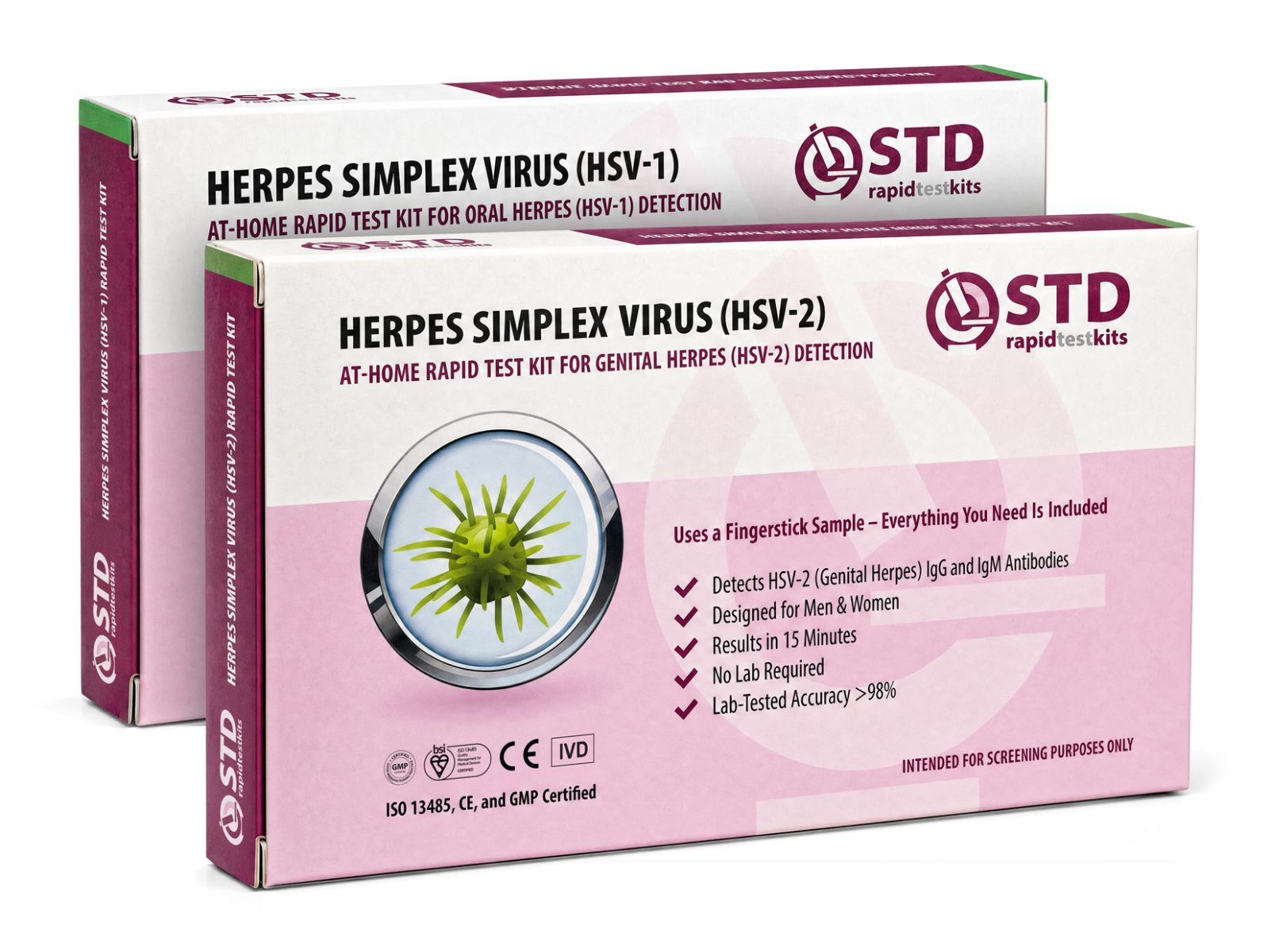
Genital herpes incidence. The CDC reported 572,000 new genital herpes infections in 2018 among people aged 14 to 49, with most carriers unaware of their status (CDC, genital herpes overview). Genital HSV-1, typically acquired via oral-to-genital contact, is increasingly common as well.
HPV exposure. The CDC describes HPV as so common that nearly every sexually active person who has not been vaccinated will acquire at least one strain at some point in their lives (CDC, HPV overview). Most clear naturally; a subset persists and matters clinically.
Asymptomatic chlamydia and gonorrhea. The CDC notes that most chlamydia infections in women, and a substantial fraction in men, cause no symptoms. The same holds for many gonorrhea infections, particularly at non-genital sites such as the throat or rectum (CDC, chlamydia overview).
Common misconceptions, cleared up
'If something were wrong, one of us would have symptoms.'
Most common STIs are asymptomatic for the majority of carriers, especially in their early phases. The absence of symptoms is the default state for chlamydia in women, for HSV-2 in most carriers, and for HPV in nearly everyone. Symptom-watching is not screening.
'Only people with many partners get STIs.'
STI risk is set per exposure, not per lifetime partner count. A single unprotected exposure with an untested partner can transmit. People in their first or second sexual relationship can and do carry infections.
'Asking for testing means I do not trust my partner.'
The cost-benefit framing helps here. The risk of missing an asymptomatic infection is higher than the social cost of a calm, mutual testing routine. Many couples find that a normalized 6-month retest schedule removes the conversational weight entirely. It becomes a calendar item, not a confrontation.
'Condoms cover everything.'
Condoms substantially reduce the risk of fluid-transmitted infections (HIV, chlamydia, gonorrhea, hepatitis B). The CDC notes that condoms will not provide protection against STDs spread by skin-to-skin contact, such as genital herpes and syphilis, because the infected contact surface extends beyond what a condom covers (CDC, condom effectiveness). Layered prevention (condoms plus vaccination plus testing) outperforms any single intervention.

Bringing it together
Monogamy is a powerful reducer of new STI exposure when it is built on a tested baseline and maintained on both sides. The places it fails are predictable: untested initial conditions, dormant infections from prior partners, asymptomatic carriage that screening would have caught, and the testing gap that opens once the label feels protective on its own. The fix is straightforward, and most couples can build it into their routine without much fuss. The practice is simple: test before barriers come off, retest on a regular calendar interval, and revisit the conversation whenever the relationship structure changes. Keep the commitment, and keep the screening alongside it.
Frequently Asked Questions
- Can I still get an STI if both of us are monogamous?
- Carrying an infection without symptoms is the norm for several common STIs, including HSV-2, HPV, and chlamydia. A couple who never tested before becoming exclusive has no baseline to rule out what either partner brought in from a prior relationship. Monogamy stops new exposures; it does not clear existing ones.
- How often should monogamous couples retest?
- CDC guidance recommends annual chlamydia and gonorrhea screening for all sexually active women under 25, and 6 to 12 months for everyone with a new partner regardless of relationship status. A retest any time symptoms appear is also reasonable.
- Does monogamy mean we don't need condoms?
- Once both partners have current negative test results across the relevant infections and remain exclusive, the protective margin from condoms is smaller. Until the baseline is confirmed and any antibody-window infections (HIV, HSV-2, syphilis) have had time to register, both layers still matter.
- What does a baseline STI panel usually cover?
- A reasonable starter panel covers HIV, syphilis, chlamydia, and gonorrhea. Hepatitis B and C are commonly added. HSV-2 antibody testing and HPV testing depend on age, anatomy, and risk factors. At-home rapid kits can cover most of this list in a single sitting.
- Can a partner really have an STI without knowing?
- Yes. The CDC describes most chlamydia infections in women, and the majority of HSV-2 cases, as asymptomatic for the carrier. HPV is the same. Absence of symptoms is the default state for several of the most common infections.
- What if my partner refuses to test?
- A direct refusal is information worth pausing on. Framing it as a mutual routine rather than an accusation usually helps. If refusal continues, that is worth taking seriously when deciding whether to stop using condoms.
- Is at-home testing as accurate as clinic testing?
- Rapid lateral-flow at-home kits screen at home in 15 to 30 minutes and use the same sample types (swab or fingerstick blood) as many clinic tests. Laboratory NAAT testing has higher analytical sensitivity, so any positive home result should be confirmed at a lab. Home and lab testing are complementary, not interchangeable.
- U.S. Centers for Disease Control and Prevention. STI prevention overview, including the wording of the mutual-monogamy guidance.
- U.S. Centers for Disease Control and Prevention. STI screening recommendations by population and age, including the annual screen for sexually active women under 25.
- U.S. Centers for Disease Control and Prevention. Genital herpes overview, source for the 2018 new-infection incidence figure (572,000 among ages 14 to 49) and asymptomatic carriage.
- U.S. Centers for Disease Control and Prevention. HPV overview, including the lifetime exposure statement and clearance versus persistence.
- U.S. Centers for Disease Control and Prevention. Chlamydia overview, including asymptomatic prevalence in women and complications of untreated infection.
- U.S. Centers for Disease Control and Prevention. STI statistics section, which indexes the agency's prevalence, incidence, and cost-estimate publication that produced the 1-in-5 / 2018 prevalence estimate.
- U.S. Centers for Disease Control and Prevention. Condom effectiveness page, including the note that condoms do not protect against skin-to-skin STDs such as genital herpes and syphilis.
