Is This a Syphilis Rash? How to Tell (Even If It Doesn't Itch)
A syphilis rash often shows up weeks after exposure as faint, painless spots on the trunk, palms, or soles. Because it usually does not itch and can mimic heat rash, allergy, or eczema, many people miss it. This guide explains what the rash looks like, how to tell it apart from common look-alikes, and when a blood test will give you a reliable answer.
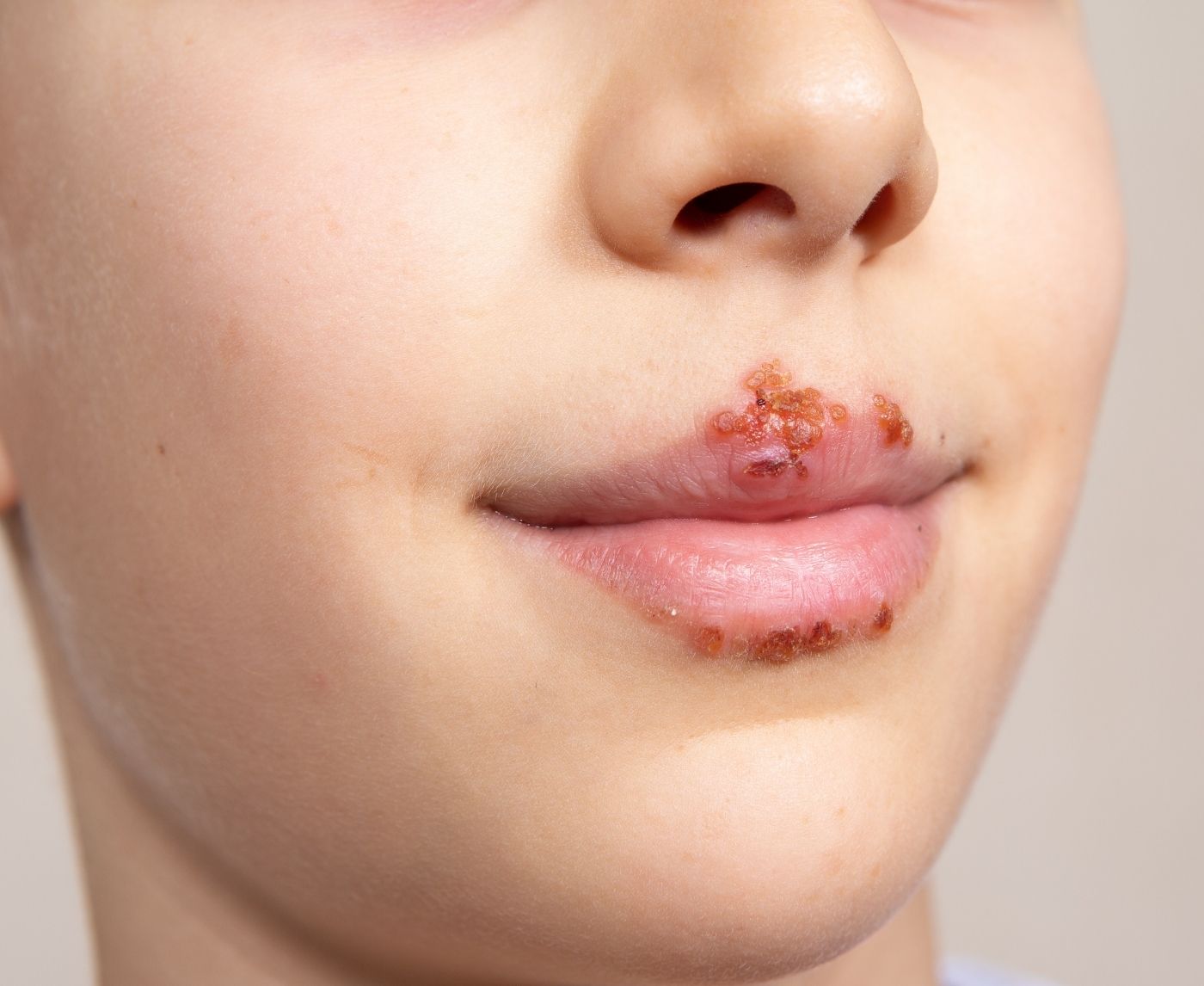



- Secondary syphilis classically causes a non-itchy, non-painful rash that often involves the palms and soles, areas where allergic and heat rashes rarely appear.
- By the time the rash is visible, standard blood antibody tests are usually positive, so a properly timed test gives a clear answer instead of weeks of guessing.
Published: November 2025 | Last updated: May 2026 | Editorial review and quality control: Martina N.
Is this a syphilis rash?
Possibly, if faint reddish, brown, or copper spots appeared on your trunk, palms, or soles a few weeks after a possible exposure and do not itch or hurt. Palm-and-sole involvement is unusual for everyday rashes, so it nudges syphilis up the list. A blood antibody test is reliable once the rash is visible, so testing now usually gives a definitive answer.
A rash that does not hurt and does not itch is easy to dismiss. Red or copper spots show up on your chest, your palms, or the soles of your feet, you blame laundry detergent or a hot week, and you move on. For most people reading this, the cause really will turn out to be heat, friction, or a mild reaction, and the patterns below help you tell those apart, including the one case that matters here: a secondary syphilis rash often looks exactly this quiet, painless, and ordinary. This guide helps you spot that pattern, understand the timing, and know when a simple blood test will give you a clear answer.
What a syphilis rash actually looks like
The rash most people are searching for, the one behind questions like "what does a syphilis rash look like?", belongs to the secondary stage of the infection. The first stage is a single painless sore called a chancre that forms where the bacteria entered the body. Many people never notice the chancre, because it does not hurt and often hides inside the vagina, rectum, or mouth. The U.S. Centers for Disease Control and Prevention describes this primary sore as usually firm, round, and painless, lasting 3 to 6 weeks and healing on its own whether or not it is treated.
Weeks later, once the bacteria have spread through the bloodstream, the secondary rash can appear. It can look like faint pink, red, or copper-colored spots. On medium and deep skin tones, it often shows up as brown, purplish, or hyperpigmented patches instead. Spots can be flat (macules) or slightly raised (papules), and some carry a fine scale. Occasionally the rash sits in just a few areas. More often it is widespread and symmetrical across the trunk, arms, legs, palms, and soles.
What makes clinicians take notice is the palms and soles. According to MedlinePlus, secondary syphilis usually causes a non-itchy rash often found on the hands and feet, a combination most everyday skin conditions avoid.
The rash can be on the palms of your hands and/or the bottoms of your feet and look rough, red, reddish-brown. The rash usually won't itch, and it is sometimes so faint that you won't notice it.
Red spots on the palms and soles: why that pattern matters
Most common skin conditions skip the palms and soles. Eczema favors the inside of the elbows and the backs of the knees. Heat rash collects in sweaty creases. Contact allergies spread across whatever skin touched the irritant. So when a rash specifically involves the thick skin of the hands and feet, and shows up on both at once, the list of likely causes gets short fast.
Secondary syphilis is well known for this distribution. After the first infection, the bacteria travel through the bloodstream, and the immune response that follows surfaces on the skin as red, copper-toned, or brownish spots, frequently across both palms and both soles. A rash on both sides at once points to a whole-body process rather than something you simply touched. They tend not to itch and not to hurt, so many people read them as mild irritation and wait for them to clear. The NHS syphilis overview similarly notes that the secondary rash often appears on the palms or soles and usually does not itch.
Clinicians narrow their list quickly when both palms and both soles are involved, because most common conditions actively avoid these thick-skinned, sweat-gland-rich surfaces. Eczema, heat rash, and contact allergies almost never produce a symmetrical palm-and-sole eruption. A rash with that distribution, paired with a possible exposure, is often routed straight to syphilis testing.
The three stages, and where the rash fits
Syphilis moves through stages, and the rash belongs to the second one. Knowing the sequence helps the timing make sense, especially if a sore came and went weeks ago with no explanation. The table below lays out what each stage looks like, where it shows up, and how it feels.
| Stage | What it looks like | Usual location | Pain or itch? | Timing after exposure |
|---|---|---|---|---|
| Primary syphilis | Single painless sore (chancre) with firm, raised edges | Genitals, anus, mouth, throat, lips | Usually painless, not itchy | About 3 weeks (range 10 to 90 days) |
| Secondary syphilis | Flat or slightly raised reddish, brown, or copper-colored spots; sometimes with fine scale | Trunk, arms, legs, palms, soles; mucous patches in mouth or genitals | Usually not itchy and not painful | Weeks to a few months after the chancre heals |
| Latent syphilis | No visible rash; infection persists silently | Internal | No symptoms | Months to years if untreated |
Why it often does not itch (and why that is so confusing)
Most of us read itching as the body's alarm bell. If something itches, it is irritated; if it burns, it is urgent. A secondary syphilis rash often does neither. It can sit on the skin like background color, visible but not insistent, which is part of why it slips by.
Picture a weekend trip: faint spots appear on your chest, there is no pain, no itching, and no obvious trigger, so you blame the hotel sheets. A week passes, the rash is still there, but you feel fine and let it go. Syphilis has earned the nickname "the great imitator" because the rash can resemble heat rash, a mild allergic reaction, eczema, pityriasis rosea, or a viral rash. The CDC describes the secondary rash as one that usually will not itch and is sometimes so faint it goes unnoticed. For anyone searching "non itchy rash std" at midnight, that detail is often the moment of recognition.
Allergic rashes usually settle, at least partially, with oral antihistamines or a topical steroid. A syphilis rash does not respond to either, because the cause is a bacterial infection, not an allergic immune reaction. If you have been treating a rash like an allergy for a week or two with no improvement, that flat response is a reason to consider an STI test rather than a stronger antihistamine.
Telling a syphilis rash apart from heat rash, allergy, and eczema
Most rashes after a hot day, a new soap, or a sweaty workout really are heat, friction, or contact reactions, not an STI. The pattern worth a second look is the one that does not fit those explanations: a symmetrical rash, weeks after a possible exposure, that does not itch and includes the palms or soles.
Heat rash follows obvious sweating and friction. Allergic contact dermatitis follows a new product or fabric and tends to itch. Eczema is usually chronic, dry, and intensely itchy, favoring the elbow creases and the backs of the knees rather than the palms. A drug eruption usually starts within days of a new medication. Hand-foot-and-mouth disease, more common in children but sometimes seen in adults, can produce palm and sole lesions, usually with mouth ulcers as a tell. A few autoimmune conditions, including dermatomyositis and palmar lupus, can also cause specific palm findings, though those tend to come with other systemic features.
| Feature | Syphilis rash | Heat rash | Allergic / contact reaction | Eczema |
|---|---|---|---|---|
| Itch | Usually none | Often itchy or prickly | Often very itchy | Often intensely itchy |
| Pain | Usually none | Mild stinging possible | Sometimes burning | Sometimes sore if cracked |
| Palms and soles involved | Commonly yes | Rare | Rare unless direct contact | Rare |
| Pattern | Symmetrical, widespread | Where you sweat or rub | Where the trigger touched skin | Flexures, hands, recurrent patches |
| Timing | Weeks after exposure | After heat or sweating | Minutes to hours after trigger | Chronic, with flares |
| Response to antihistamine or steroid cream | No real change | Some relief | Often improves | Often improves with steroid |
How it compares to other STI rashes
When a rash sparks worry, the worry rarely stays focused on one infection. HIV gets added to the list. So does the broader question of which other STIs cause skin changes. Grounding the comparison helps replace fear with pattern recognition.
An acute HIV rash typically appears 2 to 4 weeks after exposure, during the seroconversion illness when flu-like symptoms commonly emerge, per the CDC's HIV overview. Commonly that illness feels like a heavy flu, with fever, sore throat, swollen lymph nodes, headache, and body aches. The rash itself is usually a maculopapular eruption, meaning small red bumps that favor the trunk and face more than the palms and soles in isolation. That body-wide flu-like illness is quite different from a quiet, symmetrical palm rash appearing on its own weeks later.
Gonorrhea and chlamydia usually do not cause skin rashes at all. They target mucosal surfaces, so the symptoms, when present, are urethral discharge, pelvic pain, painful urination, or rectal symptoms. Herpes (HSV-1 or HSV-2) produces painful, fluid-filled blisters that ulcerate and crust, very different from flat copper spots. Trichomoniasis causes vaginal discharge and irritation rather than hand findings.
| Infection | Common rash pattern | Palms / soles involved? | Other typical clues |
|---|---|---|---|
| Secondary syphilis | Flat red or copper spots | Yes, commonly | Mild fever, fatigue, lymph node swelling |
| Acute HIV | Diffuse trunk and face rash | Rarely in isolation | Fever, sore throat, flu-like illness |
| Herpes (HSV-1 or HSV-2) | Painful fluid-filled blisters | No | Tingling or burning before outbreak |
| Gonorrhea or chlamydia | Skin involvement is rare | No | Discharge, pelvic pain, burning urination |
When the rash appears, and how long it lasts
Searches like "how long does a syphilis rash last" are usually driven by dread. The secondary rash tends to appear 2 to 8 weeks after the primary chancre and can last from a few weeks to several months. In some people it fades and returns once or twice over a year or two.
The rash can also disappear on its own with no treatment at all. One morning the spots are simply gone, with no antibiotic and no doctor visit behind it. The relief is real but misleading. The bacteria have not been cleared; they have moved into the latent stage, where the infection persists silently. Months or years later, untreated infection can affect the heart, brain, and other organs, which is why catching it at the rash stage matters far more than the rash itself does.
If a secondary rash clears without treatment, the bacteria are almost certainly still present, and the infection has simply moved into a quieter stage. Each time the rash returns, it is the same infection surfacing again, not a new rash, and each return is a chance to test before it goes silent. The only way to know your status is a blood test.
Testing for syphilis after a suspicious rash
Syphilis is diagnosed differently from chlamydia and gonorrhea. Instead of swabbing a site of infection, syphilis testing usually relies on a blood sample that looks for antibodies the immune system makes against Treponema pallidum, the bacteria behind the infection. Timing is everything: your body needs enough time to build a detectable antibody response, which is why an at-home syphilis test is most useful once the window has passed.
If you test in the first 1 to 2 weeks after a possible exposure, the result can be falsely negative even when infection is present. By the time a secondary rash is visible, antibodies are usually well established, so a blood test at that point is generally reliable. The CDC and the World Health Organization both treat blood-based antibody testing as the standard screening route for adults, and the WHO estimates that 8 million adults aged 15 to 49 acquired syphilis in 2022, so routine screening is far from unusual.
If your exposure is recent and a first test is negative, repeat testing 4 to 6 weeks later is often advised. Imagine the timeline: unprotected sex on the first of the month, an anxious test on day 10 that reads negative, then red spots six weeks later. The early negative and the later positive can both be accurate, because the window had not closed when the first sample was drawn. A well-timed test, with a follow-up if the timing is uncertain, settles the question more reliably than an anxious early screen.
Disclosure: this article is published by stdrapidtestkits.com, which sells at-home STI testing kits, including the syphilis test below. We recommend products based on fit for the reader's concern, not commercial benefit.
| Event | Typical timing | What is happening | Blood test reliability |
|---|---|---|---|
| Exposure | Day 0 | Bacteria enter through tiny breaks in skin or mucous membrane | Too early to detect |
| Primary chancre appears | 10 to 90 days, average about 3 weeks | Painless ulcer at the site of entry | May still be negative early; positive in many by week 3 to 6 |
| Secondary rash appears | 2 to 8 weeks after the chancre heals | Bacteria have spread; immune response is widespread | Antibody tests usually positive |
| Latent stage | Months to years | No visible symptoms; infection persists | Antibody tests remain positive |
What the rash looks like on different skin tones
Most textbook photos of syphilis rashes are taken on light skin, which leaves people with medium and deep skin tones unsure whether what they are seeing applies to them. On darker skin, the rash is often less obviously red and more often brown, violaceous, or hyperpigmented. Sometimes it shows up as faint patches that are slightly darker than the surrounding skin, more like a texture change or shadow than a color change.
A practical example: someone with deep brown skin notices faint darker spots on the palms or upper chest. There is no redness in the way the internet keeps showing it, so the spots do not trigger any alarm, and they get blamed on dryness or a new soap. The color contrast on darker skin simply presents differently, and that delay in recognition can mean delayed treatment.
Any new symmetrical spotting on the palms, soles, or upper chest after a possible exposure is worth checking, even when the spots are not obviously red. Subtle hyperpigmented, brown, or slightly violaceous patches on Fitzpatrick skin types IV through VI can be the same secondary syphilis rash that looks bright pink on lighter skin.
Other symptoms that often show up with the rash
Secondary syphilis rarely arrives as a rash alone. Many people feel a cluster of mild, flu-like symptoms at the same time, which adds to the confusion because they are easy to pin on a passing virus. Per the CDC's syphilis basics, the signs that commonly travel with the rash include the following.
Symptoms that often travel with the rash
Having one or more of these alongside a rash does not confirm syphilis, but it does strengthen the case for a blood test.
- Tender, swollen lymph nodes, especially in the neck, groin, or armpits Common
- Low-grade fever, headache, and lingering tiredness Common
- Sore throat that does not behave like a typical viral one Less common
- Patchy hair loss on the scalp, eyebrows, or beard Less common
- Mucous patches: small grayish-white lesions inside the mouth or on the genitals Less common
- Muscle or joint aches, sometimes with unexplained weight loss Less common
A calm plan when you notice the spots
If you are looking at red or faint spots right now, work through a few questions in order rather than spiraling. When was the last possible sexual exposure? Is the rash on both palms and both soles, or just one patch of skin? Does it itch, hurt, or do nothing at all? Is there an obvious recent trigger, such as a new medication, a viral illness with fever, or a new product on your skin?
Three signals together push the odds toward syphilis rather than an everyday allergy: no obvious recent trigger, a symmetrical pattern that includes the palms or soles, and no improvement after a week or two of antihistamines or steroid cream. People often delay at this point for an understandable reason, the quiet assumption that no pain means no problem. The biology does not work that way, and a single well-timed blood test answers the question faster than waiting it out.
Some situations call for in-person care rather than an at-home result. If you are pregnant, immunocompromised, or having neurological or eye symptoms such as vision changes, severe headaches, or hearing changes, go straight to a clinician. Syphilis in pregnancy can pass to a baby, and rare ocular or neurological involvement needs prompt evaluation that may include specialist referral or a spinal-fluid test.
What happens if you ignore it
Suppose you decide it is nothing, the rash fades after a few weeks, and life carries on with no obvious symptom. In the latent stage, the visible signs disappear while the bacteria remain in the body. Most people stay symptom-free through this period, which can last months to years.
A smaller share go on to develop late or tertiary syphilis, where the infection damages the heart and large blood vessels, the brain and nervous system (neurosyphilis), the eyes (ocular syphilis), or the bones. Late complications are far rarer now than they were before antibiotics, but they are preventable only when the infection is found and treated. Untreated syphilis in pregnancy can also pass to a baby and cause congenital syphilis, which is linked to stillbirth, low birth weight, and serious infant illness. Routine screening in pregnancy exists for exactly this reason.
Secondary syphilis has been called the great imitator for over a century, because its rash can resemble heat rash, eczema, allergic reactions, drug eruptions, pityriasis rosea, and viral rashes. Many people stay symptom-free for years between the rash fading and any later complication, which is why timely testing during the rash stage is the single most useful step a person can take.
How it is confirmed, and why treatment is straightforward
A diagnosis is rarely made on the rash alone, even by experienced dermatologists. Confirmation involves blood testing, usually in two steps: a screening antibody test, then a confirmatory test on the same sample. MedlinePlus lists the common assays, including RPR, VDRL, and FTA-ABS, which together distinguish a current active infection from a past, treated one. If a rapid home test reads reactive, the standard next step is a laboratory blood test through a clinician to confirm the result and stage the infection. If a home test is negative but the exposure was recent, repeating it after the window has fully closed is the safer call.
Syphilis is highly treatable, especially in the primary, secondary, and early latent stages. The standard treatment for early syphilis is a single intramuscular injection of long-acting penicillin (benzathine penicillin G), per the CDC's STI treatment guidelines. People with a documented penicillin allergy may be offered an alternative such as doxycycline, and in pregnancy penicillin is the only recommended option, with desensitization used when needed. Afterward, a clinician usually re-checks blood titers at intervals (commonly 6 and 12 months) to confirm the infection is responding, and partners from the relevant window are offered testing and treatment. If a possible exposure could have involved more than one infection, it is common to test broadly for syphilis, HIV, and hepatitis B and C at the same time, since they share risk factors and timing.
Clarity beats spiraling
If you are reading this while studying faint spots in the bathroom mirror, the most useful next step is not more searching. It is one well-timed test. A negative result lets you and a clinician look elsewhere for the cause. A reactive result starts a treatment path that, in the early stages, is short and highly effective.
If you would rather start at home with a private, rapid screen, the 6-in-1 panel covers the most common bases in a single sitting when more than one infection is on your mind. Either way, the next step is the same: see a clinician for any reactive result, calmly and without delay.
First, place the timing: count the weeks since the last possible exposure. Second, test once the window has closed, at home or at a clinic, rather than during the first week or two when a result can read falsely negative. Third, take any reactive result to a clinician for confirmation and treatment, which is short and highly effective in the early stages.
Frequently asked questions
- Are red spots on my palms automatically a sign of syphilis?
- Not on their own. A palm rash has several possible causes, including drug reactions, viral illness, autoimmune conditions, stress-related hives, and hand-foot-and-mouth disease in adults. What pushes syphilis higher on the list is a symmetrical, non-itchy rash on both palms and both soles, especially when it appears several weeks after a possible sexual exposure. The pattern and timing matter more than any single spot.
- Can a syphilis rash disappear on its own without treatment?
- Within a few weeks the rash can vanish on its own, but the bacteria remain active. The infection moves into a quiet latent stage where it causes no visible symptoms yet stays present in the body. Only treatment, confirmed by follow-up blood tests, actually clears the infection.
- How fast would a syphilis rash appear after sex?
- Not within a few days. The primary sore typically appears 10 to 90 days after exposure, and the secondary rash appears another 2 to 8 weeks after the chancre heals. The total span from exposure to rash is roughly three weeks to a few months. A rash that appeared overnight after sex is more likely an allergic reaction or skin irritation than syphilis.
- If it does not itch, why would it be an STI?
- Most of us treat itching as the warning bell, so a calm rash feels reassuring. A secondary syphilis rash is almost always non-itchy, which is exactly what makes it slip past detection. A painless, non-itchy presentation is one of this rash's defining features rather than evidence that nothing is wrong.
- Does HIV cause this kind of rash?
- Acute HIV can cause a rash, and it usually appears 2 to 4 weeks after exposure alongside fever, sore throat, swollen glands, and a heavy flu-like feeling. The HIV rash tends to favor the trunk and face rather than the palms and soles. When a rash is specifically symmetrical on the hands and feet without major flu symptoms, syphilis is more classically associated. Many clinicians test for both at once, since they share risk factors.
- What if I had a small painless sore weeks ago that healed on its own?
- That detail matters. A painless sore that healed without treatment is a classic primary chancre, the first sign of syphilis. The chancre often hides inside the vagina, the rectum, or the mouth, so it can be easy to miss. A current rash plus a remembered painless sore is a strong reason to test for syphilis.
- If I test negative, can I stop worrying?
- A negative result when the secondary rash is already visible is generally reliable, because antibody tests are usually positive by that stage. If you tested very early after exposure, one repeat test at 4 to 6 weeks gives a definitive answer.
- Is syphilis curable?
- Yes. Early syphilis, including the secondary rash stage, is generally cured with a single injection of long-acting penicillin. Later stages can also be treated, though the regimens are longer. The earlier the infection is diagnosed, the simpler the treatment and the lower the chance of long-term complications.
- U.S. Centers for Disease Control and Prevention. Syphilis basics: stages, the palms-and-soles secondary rash, the painless primary sore, and accompanying systemic signs.
- U.S. Centers for Disease Control and Prevention. Sexually Transmitted Infections Treatment Guidelines, syphilis section: penicillin G as the preferred treatment in all stages and required therapy in pregnancy with desensitization for allergy.
- U.S. Centers for Disease Control and Prevention. About HIV: flu-like symptoms within 2 to 4 weeks of infection during acute seroconversion.
- World Health Organization. Syphilis fact sheet: stages, transmission, serological testing, and global burden (an estimated 8 million adults aged 15 to 49 acquired syphilis in 2022).
- UK National Health Service. Syphilis overview: the painless primary sore, the non-itchy palms-and-soles secondary rash, and blood testing.
- MedlinePlus, U.S. National Library of Medicine. Syphilis: the painless primary sore, the non-itchy rash on the hands and feet, and blood tests (RPR, VDRL, FTA-ABS).