
Published: August 2025 | Last updated: May 2026 | Editorial review and quality control: Martina N.
The pattern shows up in clinics over and over again. Someone returns from a trip with what feels like a familiar urinary tract infection: burning when they pee, pressure low in the pelvis, an urgency that does not let up. They get a course of UTI antibiotics. The symptoms ease, then come back. Another course, same story. By the time anyone asks the right question and runs a full STI panel, weeks have gone by and the cause has had plenty of time to settle in.
This guide is about one of those quiet culprits: gonorrhea picked up during international travel, mimicking a UTI almost perfectly, and slipping past general practice because nobody ordered the right test early enough. If a recent “UTI” did not respond to a standard antibiotic course and the trip before it involved a new sexual partner, what follows is meant to help you ask for the workup you need.
Key Takeaways
- Gonorrhea shares its earliest urinary symptoms with a bacterial UTI in women: burning, frequency, pelvic ache. The standard urine culture run for a UTI does not test for gonorrhea, so the diagnosis is easy to miss.
- Standard UTI antibiotics (nitrofurantoin, fosfomycin, trimethoprim) do not treat gonorrhea. If symptoms return or fail to clear after a UTI course, request a full STI panel before another round of antibiotics.
Why gonorrhea gets mistaken for a UTI in women
Neisseria gonorrhoeae, the bacterium responsible for gonorrhea, settles into the cervix and urethra in women. That is the same neighborhood as the bacteria responsible for most simple urinary tract infections. The two infections produce overlapping early symptoms, and the CDC reports that most women with gonorrhea have no symptoms or only mild ones (CDC, gonorrhea overview). When symptoms do appear, they read like a textbook UTI:
- Burning or stinging during urination
- Increased urgency or frequency
- Cloudy or yellowish vaginal discharge
- Pelvic pressure or low pelvic ache
- Spotting between periods or after sex
Here is the diagnostic gap. A routine urine dipstick or urine culture in primary care looks for the common urinary bacteria like Escherichia coli and Staphylococcus saprophyticus. The lab does not screen the same sample for Neisseria gonorrhoeae unless a separate STI panel (a nucleic acid amplification test, or NAAT) is specifically ordered. A general practitioner often will not order one unless a conversation about sexual exposure comes up, and patients often do not raise it because the symptoms feel like a familiar UTI.
The result is a quiet stalemate. The urine culture comes back negative or grows nothing meaningful. The provider treats empirically for a UTI. Symptoms fade for a few days while the antibiotic clears whatever incidental bacteria were present, then return because the underlying infection was never touched. The clinical phrase for what is happening is “untreated reservoir,” and gonorrhea is one of the most common reservoirs of this kind in the post-travel population.
The standard urine culture ordered for a suspected UTI does not screen for Neisseria gonorrhoeae. Confirming or excluding gonorrhea requires a separate nucleic acid amplification test (NAAT) on either a vaginal self-swab or a first-catch urine sample. A “no growth” culture report only rules out the common urinary bacteria, not an STI.
Why international travel raises the risk in particular
Public health bodies have flagged the elevated STI exposure profile of travelers for years. The World Health Organization reports more than 374 million new cases of curable STIs each year worldwide, with chlamydia, gonorrhea, syphilis, and trichomoniasis the four most common bacterial and parasitic causes. Travelers contribute disproportionately to this number, and the reasons are well documented:
- More new sexual partners during travel than at home, often within a compressed time window
- Lower consistent condom use among tourists, especially when alcohol is involved
- Circulating drug-resistant Neisseria gonorrhoeae strains in several regions, notably parts of Southeast Asia, the Western Pacific, and Africa
- Limited or unfamiliar healthcare access during the trip, which pushes any diagnostic conversation to weeks later
The traveler returns home and presents to a regular general practitioner with a UTI-style complaint. The clinical context (recent unprotected sex abroad) often goes unmentioned because the patient does not connect the trip to a “bladder infection.” Even when the trip is mentioned, gonorrhea is rarely high on the differential for the average primary care visit that sees five or more UTI-style cases a week. Travel medicine clinics catch this far more often because they ask the question by default.

Symptoms that should push the workup toward STI testing
The crossover between UTI and STI symptoms is real, but several signals should pull the conversation toward an STI panel before another round of UTI antibiotics. If any of the following appear alongside burning urination, the workup should include gonorrhea and chlamydia testing at minimum:
- Unusual discharge that is yellow, green, or cloudy with odor
- Bleeding between periods or after sex
- Pelvic pain that radiates to the lower back or worsens with intercourse
- Rectal pain or discharge (suggesting rectal exposure)
- A sore throat without other cold symptoms, particularly after oral sex with a new partner (pharyngeal gonorrhea requires a clinic-administered throat swab; a home genital swab does not test the throat)
- For male partners: testicular or scrotal pain, or visible penile discharge
None of these symptoms confirm gonorrhea on their own. They simply shift the pretest probability enough to justify ordering the right test. Catching the correct diagnosis at the first appointment instead of the fourth saves weeks of repeat visits and prevents the infection from spreading further into the reproductive tract.
Persistent or returning urinary symptoms after a standard UTI antibiotic course is the single strongest reason to request an STI panel. The fix is not another round of UTI antibiotics. Ask specifically for a nucleic acid amplification test (NAAT) for gonorrhea and chlamydia from a vaginal swab or first-catch urine.
How to actually tell a UTI from an STI
Definitive diagnosis comes from testing. Before that, a few clinical red flags should shift the working diagnosis toward an STI:
- The urine culture came back as no growth or “no significant uropathogen,” yet symptoms persisted
- Standard UTI antibiotics (nitrofurantoin, fosfomycin, trimethoprim-sulfamethoxazole) did not clear the symptoms within five days
- A new sexual partner in the past two months, particularly during travel
- Discharge or strong odor accompanies the urinary symptoms
- Symptoms return within a week or two of stopping antibiotics
- A regular partner has recently been told they have an STI
The flip side also matters. A positive urine culture growing a known uropathogen at a relevant colony count, combined with rapid symptom resolution on a targeted antibiotic, points to a genuine UTI. The two are not mutually exclusive (coinfection does happen), but the diagnostic workup should treat them as separate questions.
Bring three pieces of information to the appointment: whether a prior UTI antibiotic course resolved the symptoms, whether you had a new sexual partner in the past two months, and whether the urine culture grew anything. If the answers are no, yes, no, ask the clinician directly for a NAAT panel for gonorrhea and chlamydia at the same visit.
Why standard UTI antibiotics don't treat gonorrhea
It comes down to bacteriology. Most simple UTIs are caused by Escherichia coli, with smaller contributions from Klebsiella, Proteus, Enterococcus, and Staphylococcus saprophyticus. UTI-specific antibiotics like nitrofurantoin and fosfomycin work by concentrating in the urine and disrupting these gut-derived bacteria. They are excellent for that job and poor at almost everything else, which is why the urinary tract is one of the only places they are used (Mayo Clinic, urinary tract infection).
Neisseria gonorrhoeae is a different organism with a different cell-wall structure and a different resistance profile. It does not respond meaningfully to nitrofurantoin or fosfomycin. Trimethoprim-sulfamethoxazole (Bactrim), another common UTI antibiotic, also has no reliable activity against gonorrhea. The result is that a UTI course can mask the urinary symptoms for a few days if incidental bacterial contamination was present, but it leaves the gonorrhea infection untreated and free to keep replicating.
Per the CDC STI Treatment Guidelines, the current first-line treatment for uncomplicated gonorrhea is a single intramuscular injection of ceftriaxone (500 mg, or 1 g for patients over 150 kg). When chlamydia coinfection has not been ruled out, oral doxycycline 100 mg twice daily for seven days is added. That regimen is meaningfully different from anything a UTI ever gets prescribed.
Antibiotic-resistant gonorrhea: what the data actually says
The phrase “super gonorrhea” sounds alarmist, but the surveillance picture is real. The CDC and WHO have both tracked rising resistance to multiple antibiotic classes over the past two decades. The most concerning strains carry high-level resistance to azithromycin and reduced susceptibility to extended-spectrum cephalosporins, which are the backbone of current first-line treatment. Documented cases have come from Japan, the United Kingdom, Australia, France, Spain, and a growing list of others, including travelers who acquired the strain abroad.
For most cases seen in primary care today, a single dose of ceftriaxone still works. The 2021 CDC guideline change to ceftriaxone monotherapy (up from the older dual therapy) reflected confidence that the drug was holding the line. The change also reflected concern about preserving its effectiveness by reducing unnecessary exposure to other classes.
Clinical implications for the traveler
- A strain picked up in a high-resistance region may need culture-based susceptibility testing if symptoms persist after a standard ceftriaxone dose.
- A test-of-cure follow-up NAAT is recommended for pharyngeal gonorrhea specifically, given lower treatment-clearance rates in throat infections.
- Mention recent international travel to the treating clinician. It changes the susceptibility-testing pathway and helps public health surveillance track imported resistance.

Other STIs that show up looking like a UTI
Gonorrhea is the most famous example, but it is not the only STI that can present with urinary-style symptoms in women:
- Chlamydia: the most common bacterial STI in the United States. The majority of female infections are asymptomatic, but those with symptoms often describe burning urination and discharge that overlap with UTI symptoms.
- Trichomoniasis: a vaginal parasitic infection that produces frothy discharge, odor, and urinary irritation. A swab-based rapid test is far more sensitive than a urine dipstick.
- Genital herpes: a primary outbreak can cause urethral inflammation with painful urination several days before any visible lesions appear. Recurrent outbreaks rarely produce this pattern.
- Mycoplasma genitalium: an emerging cause of nongonococcal urethritis with overlapping urinary symptoms, often picked up only when chlamydia and gonorrhea testing returns negative on a symptomatic patient.
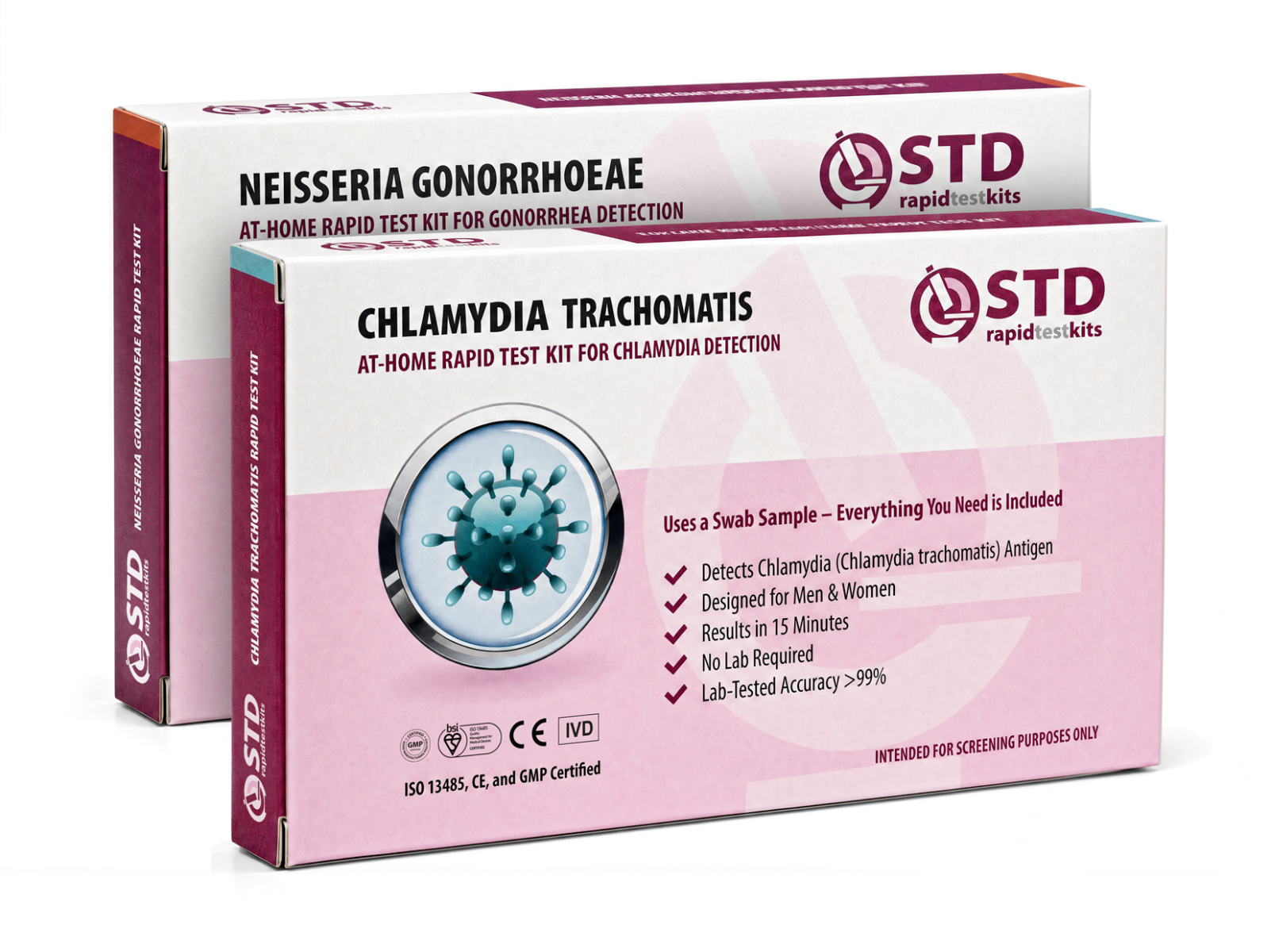
A recurring “UTI” that does not respond to standard treatment and is not growing a uropathogen on culture is grounds for a broader STI panel. This site sells rapid home tests for the two STIs most often confused with a UTI; the option below ships directly to your door.
When and how to test after travel
Timing matters. The nucleic acid amplification tests (NAATs) that labs use for chlamydia and gonorrhea become reliably positive about 1 to 2 weeks after exposure. Testing too early misses true infections; testing on a sensible window catches almost all of them. A practical workflow for someone who had unprotected sex during a trip:
- 1 to 2 weeks after exposure: NAAT screening for chlamydia and gonorrhea (vaginal self-swab for women, first-catch urine for men, with throat or rectal swabs added for relevant exposure routes)
- Same window: rapid lateral-flow at-home screening for chlamydia or gonorrhea, which uses the same swab sample type as a lab NAAT and returns a result in roughly 15 minutes. A positive at-home result should be confirmed at a clinic.
- 6 weeks after exposure: HIV antigen-antibody (fourth-generation) testing detects most infections by this window
- 12 weeks after exposure: definitive HIV testing, plus syphilis and hepatitis B/C if any indication of risk
Self-collected vaginal swab is the sample type the CDC recommends for chlamydia and gonorrhea screening in women, and it performs equally well to clinician-collected samples. An at-home rapid test fits the 1-to-2-week post-exposure window with a sample type the CDC already endorses.

Talking to a partner after a travel exposure
The conversation tends to land better when it is framed factually and without blame. Three sentences usually do the job:
- Lead with the symptom and the test, not the diagnosis: “I have been dealing with what I thought was a UTI, and the test came back positive for gonorrhea, which is treatable.”
- Acknowledge that timing is impossible to pin down: “Either of us could have had it without symptoms. Most cases are silent for weeks.”
- Move directly to a shared action: “Let us both get tested and treated, then retest in three months to make sure it is cleared.”
Most jurisdictions require providers to report new gonorrhea diagnoses to public health, and many local health departments offer partner notification services that contact recent partners on the patient's behalf if direct conversation feels impossible.
Two formal pathways exist in most U.S. states. Expedited partner therapy (EPT) lets a clinician prescribe treatment for a sexual partner without requiring that partner to come in for their own visit. Public health partner notification is a free service offered by state and local health departments: a trained disease intervention specialist contacts named partners confidentially, without identifying you. Ask the clinic that treats you about both options at the same visit.
Treatment expectations and the three-month retest
The standard treatment, ceftriaxone 500 mg intramuscular as a single dose, clears most uncomplicated gonorrhea infections within a week. Urinary and vaginal symptoms typically resolve within 3 to 7 days. Pelvic pain takes longer to settle if pelvic inflammatory disease (PID) has already started, which is one of the reasons early treatment matters.
The CDC recommends a follow-up NAAT three months after treatment. The reason is not usually to confirm cure (that is rarely needed for genital tract infection because ceftriaxone is highly effective). The reason is to catch reinfection, which is common when an untreated partner is still in the picture or a new exposure has happened in the interim. Untreated gonorrhea is one of the leading preventable causes of pelvic inflammatory disease, ectopic pregnancy risk, chronic pelvic pain, and tubal-factor infertility in women, plus epididymitis and rarer disseminated infection in men.
Antimicrobial-resistant gonorrhea is an urgent public health threat. Routine surveillance, prompt treatment of patients, and timely partner therapy are essential to controlling its spread.
Prevention strategy for the next trip
The blanket recommendation, “use condoms,” is technically correct and clinically incomplete. Condoms reduce but do not eliminate gonorrhea transmission, particularly for oropharyngeal exposure, which is one of the routes least often covered. A more useful prevention checklist for someone planning travel with the possibility of new partners:
- A pre-trip baseline STI panel to know your status before any new exposure
- Condoms for vaginal, anal, and oral contact, with the understanding that consistent oral use is uncommon in real-world practice
- Knowledge of where to access STI testing or post-exposure care in the destination, particularly for higher-risk regions
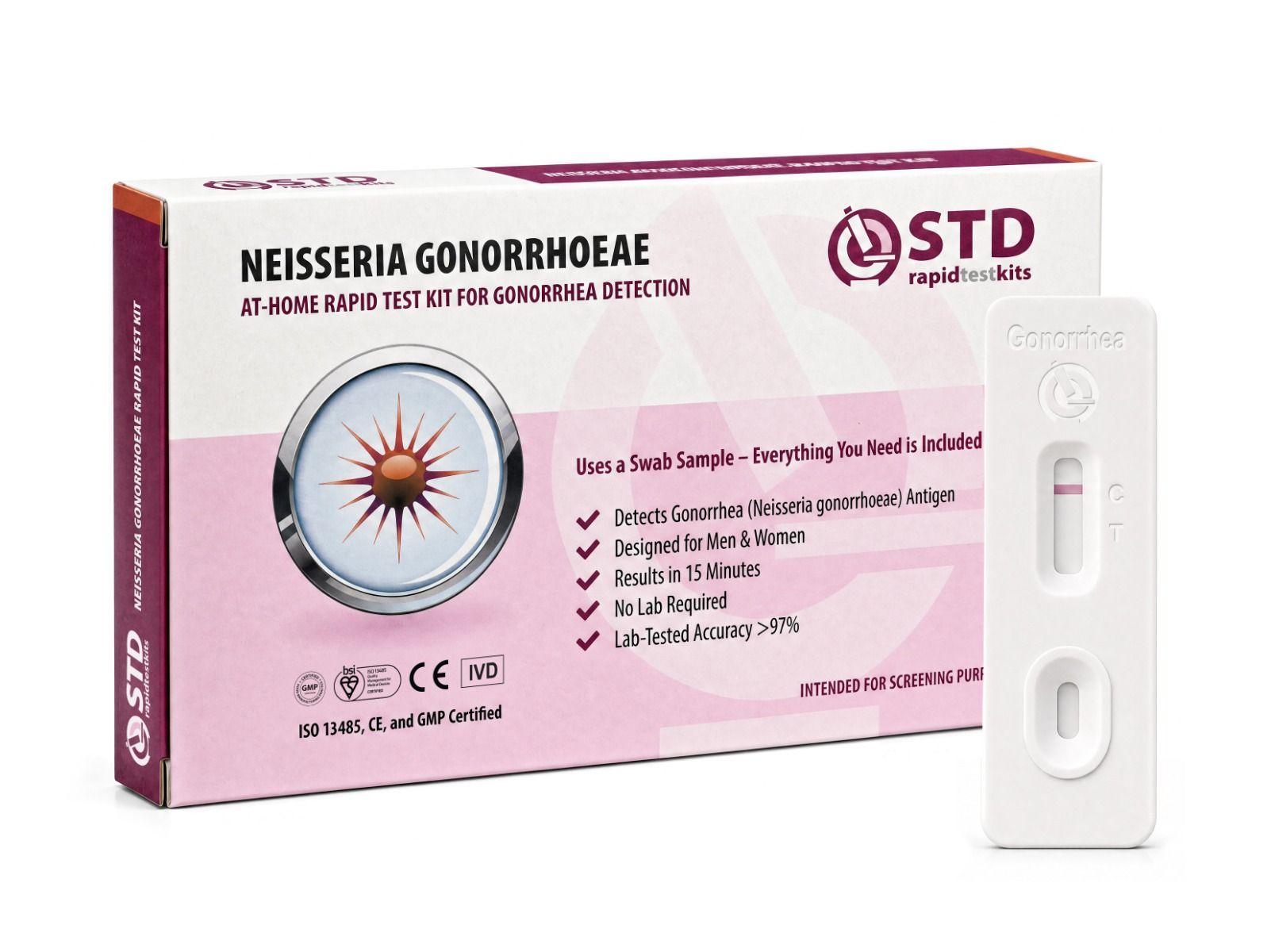
- A home rapid test kit for the week after the trip ends, paired with a plan to seek lab confirmation if positive
- For higher-frequency travelers, doxycycline post-exposure prophylaxis (doxy-PEP) is an emerging option the CDC has acknowledged for specific high-risk populations, though the data is still evolving
Don't trust the symptoms, trust the test
Burning urination after travel is a clue, not a diagnosis. A standard UTI workup answers one question (is there a common urinary bacterium?) and leaves the most likely alternative diagnosis untouched. The cost of that gap is measured in weeks of repeat antibiotics, the slow expansion of an untreated infection deeper into the reproductive tract, and the small but real risk of passing on an infection that the person carrying it does not know they have.
Ask for an STI panel the first time the symptoms do not respond to a UTI course, or the first time symptoms appear within a week or two of a new sexual contact. Self-collected vaginal swabs are CDC-endorsed, accurate, and available either through a clinic or as an at-home rapid test from the kits linked above.
Frequently asked questions
- Can gonorrhea really feel like a UTI?
- Yes. Burning urination, frequency, and pelvic ache are all symptoms gonorrhea shares with a bacterial UTI, especially in women. Most women with gonorrhea have no symptoms at all, which is part of why the diagnosis is so often missed in primary care.
- How long after exposure do gonorrhea symptoms appear?
- When symptoms appear, they usually show up 2 to 14 days after exposure. Many people, particularly women, never develop noticeable symptoms, which is why post-travel testing matters even when nothing feels wrong.
- Can I get gonorrhea while using a condom?
- Condoms substantially reduce the risk but do not eliminate it. Transmission can still occur through oral contact, breakage, or skin contact during foreplay. Consistent and correct condom use is more protective than occasional use.
- Why does international travel raise STI risk?
- Travelers tend to have more new partners in a shorter window, use condoms less consistently than at home, and may be exposed to drug-resistant strains circulating in some regions. Limited or unfamiliar healthcare access during the trip also delays diagnosis.
- Will gonorrhea clear up on its own?
- No. Untreated gonorrhea can cause pelvic inflammatory disease, infertility, ectopic pregnancy risk, and rarely disseminated infection that affects joints and skin. It does not resolve without antibiotics.
- What if the first dose of antibiotics does not work?
- A small number of strains have reduced susceptibility to first-line treatment. If symptoms persist after a single dose of ceftriaxone, the clinician should send a culture with susceptibility testing to identify a working antibiotic and confirm the strain.
- Should I test at home or at a clinic?
- Both are reasonable. A home rapid swab test can give a result in 15 minutes and uses the same sample type as a lab NAAT. A positive at-home result should be confirmed at a clinic, where treatment can also be administered the same visit.
- How long should I wait to test after a trip?
- For chlamydia and gonorrhea, 1 to 2 weeks after the exposure. For HIV with a fourth-generation antigen-antibody test, 6 weeks gives a reliable result, with 12 weeks for definitive testing. Syphilis and hepatitis B/C testing can be added at the same visit.
- U.S. Centers for Disease Control and Prevention. Gonorrhea overview: symptoms, transmission, asymptomatic carriage rates in women, and clinical presentation.
- U.S. Centers for Disease Control and Prevention. STI Treatment Guidelines, gonococcal infections: ceftriaxone 500 mg first-line regimen and three-month retest recommendation.
- World Health Organization. Sexually transmitted infections fact sheet: global incidence of curable STIs and traveler risk factors.
- Mayo Clinic. Urinary tract infection: symptoms, causes, and standard antibiotic options that do not treat gonorrhea.
- U.S. Centers for Disease Control and Prevention. Gonococcal Isolate Surveillance Project (GISP): national antimicrobial resistance surveillance data for Neisseria gonorrhoeae.
- U.S. Centers for Disease Control and Prevention. Sexually Transmitted Infections (STIs) overview and patient resources covering chlamydia, gonorrhea, and syphilis.
