Published: August 2025 | Last updated: May 2026 | Editorial review and quality control: Martina N.
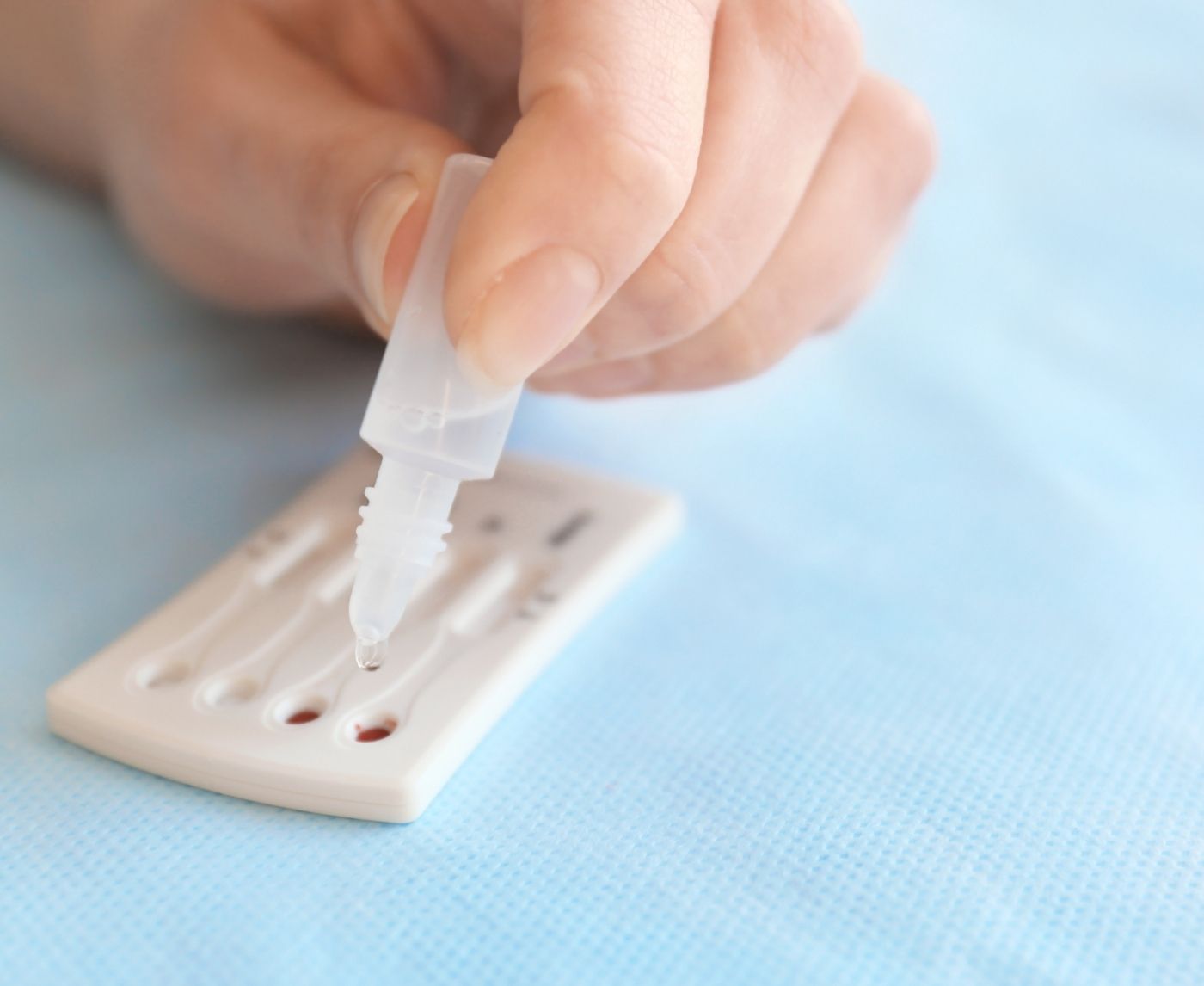
For readers in Hawaii, the question of where to get tested for sexually transmitted infections lands differently than it does on the mainland. The state's geography, the size of its communities, the cost of a clinic visit, and the limited hours of public sexual-health services all push people toward at-home options. That is not a fringe choice anymore. FDA-approved at-home STI tests now cover HIV, syphilis, and self-collected swab panels for chlamydia, gonorrhea, and trichomoniasis, and the CDC explicitly lists at-home rapid tests and mail-in self-collection kits among standard testing options (CDC STI testing options).
For most readers, this is a planning question. You want to understand what is available before you need it, not because a clock is already running. This guide walks through what at-home STI testing in Hawaii actually involves: which infections rapid kits can screen, which still need a clinic, what the window periods look like, and what to do if a result comes back positive. The practical question this answers: is at-home testing a reasonable substitute for the clinic visit you have been putting off?
Key Takeaways
- Hawaii readers have a stronger case for at-home STI testing than residents of many other states. Outer-island clinic access, tight communities, and limited clinic hours all stack the deck toward home options, and most common bacterial and bloodborne STIs are screenable with rapid lateral-flow kits.
- At-home rapid tests are a competent screening layer, not a one-to-one replacement for clinic NAAT testing. They miss pharyngeal and rectal exposure routes, window periods still apply, and any reactive result needs clinic confirmation.
Why Hawaii's geography shapes the testing decision
Hawaii's six populated islands are not equally served by public sexual-health clinics. Honolulu's larger population means more clinics, more hours, and more anonymity within a crowd. On Molokai, Lanai, and parts of the Big Island, the nearest STI-clinic appointment may sit dozens of miles away or require a ferry or short flight. The Hawaii Department of Health STD/AIDS Prevention Branch runs services across the state, but capacity and hours vary by island.
Privacy is the second pressure. In small communities where the receptionist may be a neighbor and the parking lot may be visible from the main road, the decision to walk into a sexual-health clinic carries a social cost that mainland city residents often do not face. Add the realities for queer, trans, undocumented, or housing-insecure readers, who may face additional friction at unfamiliar clinics, and at-home testing stops looking like a convenience and starts looking like the only acceptable option for some readers.
None of this is theoretical. The CDC's national STI surveillance reports a steady rise in chlamydia, gonorrhea, and syphilis cases over the past decade (CDC STI surveillance), and Hawaii has tracked alongside that trend. Whatever lowers the friction to testing helps, provided the testing itself is reliable.
If you live on Oahu, the Diamond Head clinic and several community partners offer same-day testing within reasonable driving distance. On Molokai and Lanai, public sexual-health services are limited and a clinic visit often means a flight or ferry to another island. On the Big Island and Kauai, services exist on each island but cluster around the main towns, so rural residents face a 30 to 90 minute drive at minimum. At-home kits ship to PO boxes on every island, which is part of why home testing has become a mainstream option for neighbor-island residents rather than a niche one.
What the FDA actually authorizes for at-home use
Two separate things tend to get blurred under the phrase “FDA-approved at-home STI test.” The first is the mail-in lab kit, where you collect a urine, swab, or blood sample at home and ship it to a CLIA-certified lab that runs a nucleic acid amplification test (NAAT) or antibody assay. The second is the rapid lateral-flow cassette, where you collect the sample at home and run the test yourself in 15 to 20 minutes, the same chemistry family as a home pregnancy test or a COVID-19 rapid antigen test.
The FDA's home-use diagnostic device pathway covers a growing list of products in both categories. OraQuick was the first FDA-approved at-home HIV antibody test cleared for unsupervised home use in 2012. More recently, the FDA authorized a self-collection-and-mail-in NAAT panel for chlamydia, gonorrhea, and trichomoniasis. Rapid lateral-flow kits like the ones our site sells are registered with the FDA and follow ISO-certified manufacturing standards. They are screening tools, not diagnostic confirmation, and that distinction matters when you read a result.
Sensitivity and specificity vary by product and by infection. Lateral-flow rapid antibody and swab tests typically report sensitivities in the mid-90s and specificities at or above 99 percent when used according to instructions, per manufacturer specifications such as those published on our gonorrhea rapid test product page. Laboratory NAATs report sensitivities at or above 99 percent for chlamydia and gonorrhea, which is why a clinic NAAT remains the gold standard for symptomatic patients and for re-test confirmation after a positive home result.
At-home STI testing in marketing copy is really two different things. Rapid lateral-flow kits give you a result in 15 to 20 minutes on your bathroom counter, with the same chemistry family as a home pregnancy test. Mail-in lab kits send your sample to a CLIA-certified laboratory that runs a NAAT or antibody assay, with results in 2 to 5 business days. Both have a place. Rapid is faster and entirely private; mail-in uses the same NAAT chemistry the clinic does and has higher analytical sensitivity. Our site sells rapid lateral-flow kits.
What our at-home kits can screen for (and what they cannot)
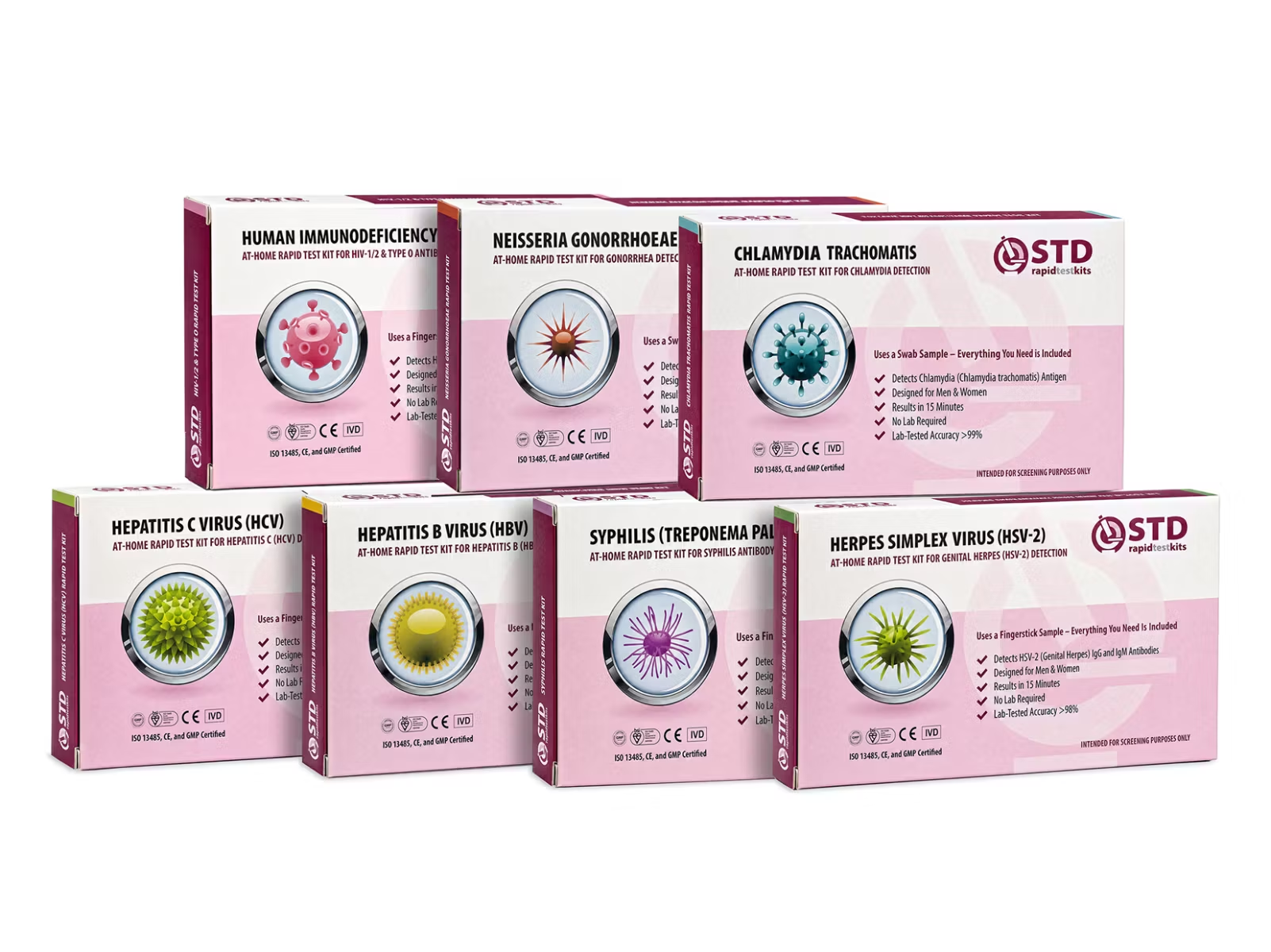
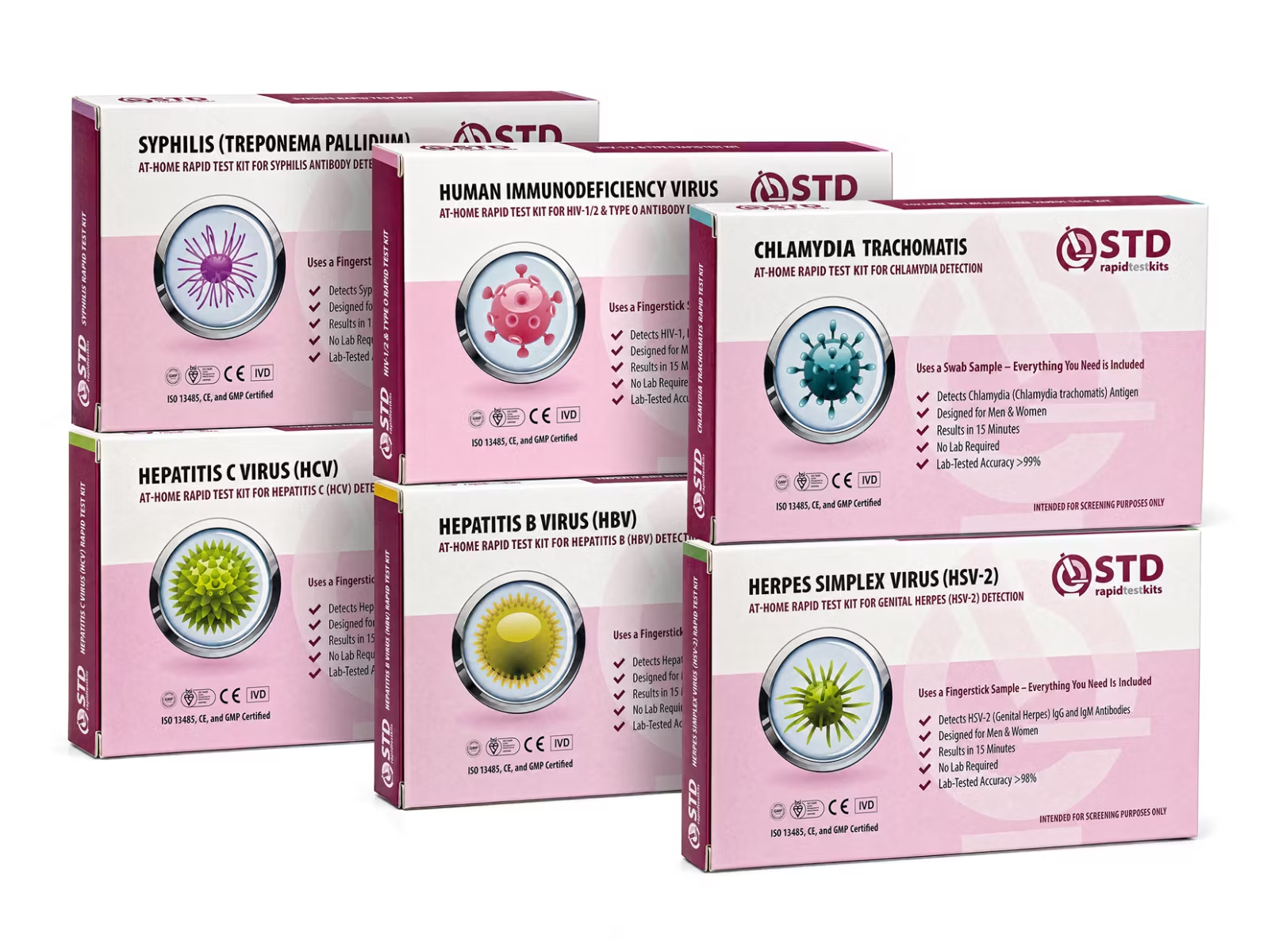
Our rapid kits cover the most-common screens for genital and bloodborne STIs that the FDA permits for at-home use. They do not cover every clinical scenario, and pretending otherwise would be a disservice.
Genital self-collected swab tests cover chlamydia and gonorrhea for any gender. Self-collected vaginal swab tests also cover trichomoniasis and human papillomavirus (HPV); these two kits are validated for female anatomy only, so male readers who need trich or HPV testing should see a clinic. Fingerstick blood tests cover HIV, syphilis, hepatitis B, hepatitis C, and herpes simplex (HSV-1 and HSV-2 antibody).
What our kits do not cover: throat (pharyngeal) and rectal-swab testing. If the exposure event was oral or anal, a genital swab will miss infections at those sites, and a clinic visit for site-specific NAAT testing is the right step. The CDC's STI treatment guidelines specifically recommend three-site testing (genital, pharyngeal, rectal) for men who have sex with men and for anyone with potential exposure at those sites. This is the scope limit our rapid kits cannot work around.
| Infection | Sample we use | Window period for reliable result | What a reactive result means |
|---|---|---|---|
| Chlamydia | Self-collected genital swab | About 14 days post-exposure | Clinic NAAT confirmation; standard treatment is a 7-day doxycycline course |
| Gonorrhea | Self-collected genital swab | About 14 days post-exposure | Clinic NAAT confirmation; current CDC guidance is a single ceftriaxone injection |
| HIV | Fingerstick blood (antibody) | About 23 to 90 days for antibody. Clinic antigen/antibody tests detect earlier; ask your provider about the current window. | Confirmatory testing and prompt linkage to care |
| Syphilis | Fingerstick blood (treponemal antibody) | 3 to 6 weeks for IgG to appear | Clinic confirmation; treatment depends on stage |
| Herpes (HSV-2) | Fingerstick blood (type-specific antibody) | 12 weeks for reliable seroconversion | Clinic confirmation; antiviral suppression if symptomatic |
| Hepatitis B | Fingerstick blood (HBsAg) | 1 to 9 weeks post-exposure | Clinic confirmation; vaccination of close contacts |
When symptoms do not tell the full story
The most consistent point in CDC STI guidance is also the most counterintuitive: many of the infections people most want to test for are silent in a majority of cases. The agency's chlamydia information states that most people who have chlamydia have no symptoms, particularly women, and that most cases would go undetected without routine screening (CDC chlamydia overview). Gonorrhea behaves similarly at non-genital sites; pharyngeal gonorrhea is frequently asymptomatic and rectal gonorrhea is easily mistaken for hemorrhoidal discomfort.
What that means in practice: “I feel fine” is not a clinical answer to “should I test?” Routine screening is the only reliable way to catch silent infections before they progress to pelvic inflammatory disease, infertility, or onward transmission. The CDC recommends annual chlamydia and gonorrhea screening for all sexually active women under 25 and for men who have sex with men. Hawaii residents who meet that recommendation rarely receive routine reminders from a primary-care system that is stretched thin, which is one place where at-home testing fills a real gap.
Symptoms that do warrant attention, with or without a test result: unusual discharge, painful urination, painless ulcers, bumps or sores in the genital area, pelvic or testicular pain, unexplained fever within weeks of a new partner. None of those are pathognomonic on their own. All of them deserve at least a screening test and, if anything is positive or anything persists, a clinic visit (NHS STI symptoms guide).
What using an at-home test actually looks like
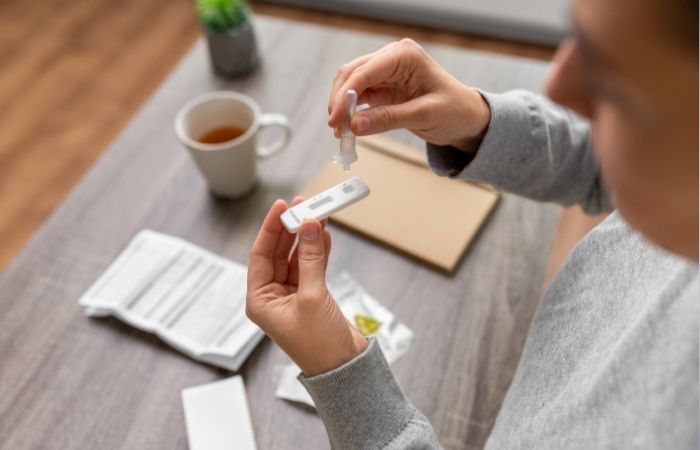
The mechanics differ between rapid lateral-flow kits and mail-in lab kits, and reader expectations should match. With a rapid kit, the steps are: read the manufacturer instructions, collect the sample (fingerstick blood for serology tests, self-swab for genital swab tests), introduce the sample into the cassette buffer, and read the test and control lines after the specified time, typically 10 to 20 minutes. Two lines means reactive, a preliminary positive. One control line means non-reactive. A missing control line means the test failed and you should repeat it.
Timing and technique both affect accuracy more than the box makes clear. Reading before the specified window, or well after it, can produce false reads, so set a timer and read at the manufacturer's stated time. Incomplete swab contact with the genital mucosa or a fingerstick that does not fill the sample well are the most common preventable sources of false negatives. The instructions are not decorative; follow them closely.
A reactive result means a screening positive that needs clinic confirmation. A reactive HIV rapid test, for example, has a strong positive predictive value but still warrants a clinic 4th-generation antigen-antibody assay before any treatment decision (CDC HIV testing). A reactive chlamydia swab warrants a clinic NAAT for confirmation and treatment.
Most people who have chlamydia have no symptoms. Even when chlamydia causes no symptoms, it can damage your reproductive system.
If your result is positive: next steps in Hawaii
A reactive at-home result is the start of the process, not the end. The most useful framing is that you now have actionable information you did not have an hour ago. The next 48 hours matter more than the next 48 days.
For bacterial STIs (chlamydia, gonorrhea, syphilis), call a primary-care provider or a Hawaii Department of Health STD/AIDS clinic for confirmation NAAT and treatment. The DOH operates a clinic in Honolulu and offers referrals statewide. Treatment for uncomplicated chlamydia is a 7-day course of doxycycline. Gonorrhea treatment is currently a single intramuscular ceftriaxone injection per the CDC's STI Treatment Guidelines. Primary syphilis treatment is a single dose of benzathine penicillin G.
For HIV, a reactive rapid antibody result requires immediate confirmatory testing with a 4th-generation antigen-antibody assay. Hawaii Department of Health and community partners offer linkage-to-care services on Oahu and on neighbor islands. Treatment outcomes for HIV diagnosed early and started on antiretrovirals are excellent. People who start antiretroviral therapy within weeks of diagnosis typically suppress the virus to undetectable levels and have a near-normal life expectancy. The gap between a reactive result and treatment initiation is the single most actionable variable, which is why moving quickly on confirmatory testing matters more than the reactive result itself.
Telehealth has expanded reasonably well in Hawaii since 2020. Several services now offer same-week prescriptions for confirmed STI cases, with prescriptions filled at a local pharmacy.
Myths that keep people from testing
The reasons people delay STI testing are well-documented in the public-health literature, and most of them rest on misconceptions worth retiring. Belief that one would notice symptoms, perceived low personal risk, fear of stigma, fear of results, and access friction are the recurring themes. Each deserves a clear response.
“I would notice if I had an STI.” Not necessarily. The CDC's published information on chlamydia, the most commonly reported STI in the United States, states that most infections are asymptomatic. Pharyngeal gonorrhea, rectal chlamydia, and early syphilis are similarly silent in most cases. Routine screening is the only reliable way to catch them.
“At-home tests are not reliable.” Reliable enough for screening when used correctly. The FDA's home-use diagnostic pathway requires manufacturers to demonstrate sensitivity and specificity comparable to laboratory tests for the screening indication. At-home rapid tests are a competent screening layer; confirmation NAAT or antibody testing at a clinic is the standard of care for any reactive result.
“Testing means I did something wrong.” This is the stickiest myth and the one with the least medical basis. The CDC's universal screening recommendations for sexually active people are not contingent on perceived risk; they are population-level public health. Annual screening is a standard recommendation for sexually active women under 25 and for men who have sex with men, not a signal that anything has gone wrong.

Hawaii-specific resources you can still use
For readers who want clinic options anyway, the public-health infrastructure in Hawaii is more accessible than its reputation suggests. The Hawaii Department of Health STD/AIDS Prevention Branch operates the Diamond Head clinic on Oahu and offers same-day STI testing on a sliding-scale fee basis. Hawaii Health and Harm Reduction Center provides free or low-cost testing in Honolulu with extended evening hours. Planned Parenthood operates health centers on Oahu and offers STI testing on a sliding scale. The Hawaii Island HIV/AIDS Foundation provides HIV testing and linkage-to-care services on the Big Island.
For neighbor-island residents, most at-home kit providers ship to PO boxes for added privacy, and Hawaii pharmacies increasingly stock at-home STI kits over the counter. These resources exist alongside, not in opposition to, at-home testing. The right answer is often a combination: rapid at-home screening as the routine layer, with the clinic reserved for confirmation, symptomatic visits, pharyngeal or rectal swabs, and pregnancy-related testing.
One scope note worth saying plainly: our at-home kits are not the right tool for every clinical scenario. Pharyngeal exposure, rectal exposure, pregnancy-related testing, and post-exposure prophylaxis decisions all need a clinician.
FAQs
- How accurate are at-home STI tests compared to clinic tests?
- For routine screening, a quality rapid lateral-flow kit catches most infections when used correctly within the relevant window period. Manufacturer specifications typically report sensitivities in the mid-90s and specificities above 99 percent. Laboratory NAAT testing remains the standard for symptomatic patients and for confirming any reactive home result; the two methods work together rather than in competition.
- How long after exposure should I wait to test?
- Window periods do not change based on geography. Chlamydia and gonorrhea: about 14 days. HIV rapid antibody: 23 to 90 days. Syphilis: 3 to 6 weeks for antibody detection. Herpes (HSV-2 antibody): 12 weeks for reliable seroconversion. Testing before the window period closes can produce false negatives.
- Can at-home kits test for throat or rectal STIs?
- Our kits cannot. Pharyngeal and rectal chlamydia and gonorrhea require site-specific swabs that the FDA has not authorized for fully at-home use. If your exposure was oral or anal, see a clinic for three-site NAAT testing per current CDC guidance.
- Are at-home STI kits private when shipped to a Hawaii address?
- Yes. Reputable providers ship in unmarked packaging without the contents named on the exterior. Shipping to a PO box is supported, and the provider's privacy practices are governed by federal HIPAA-equivalent standards for laboratory data.
- Do I need health insurance to buy an at-home STI test?
- No. At-home STI kits are sold over the counter without an insurance requirement, and most providers accept FSA or HSA cards. The trade-off is that you pay out of pocket, where insurance might cover a clinic visit.
- What if I test positive at home?
- A reactive result is a screening positive, not a confirmed diagnosis. Contact a primary-care provider or the Hawaii Department of Health STD/AIDS Prevention Branch for confirmation NAAT or antibody testing and treatment. Treatment for bacterial STIs is straightforward and effective when started promptly.
- Can tourists buy at-home tests during a Hawaii trip?
- Yes, with practical caveats. Order with enough lead time for the kit to arrive at your hotel or vacation rental, and complete the test before you fly home. Rapid kits give you a result on the day you run them; mail-in lab panels need shipping time on both ends, so plan accordingly.
- Are there free STI testing options in Hawaii?
- Yes. The Hawaii Department of Health offers sliding-scale and low-cost testing at the Diamond Head clinic on Oahu and through community partners on neighbor islands. Hawaii Health and Harm Reduction Center and Planned Parenthood also offer affordable testing. Free testing exists; the choice between free clinic-based testing and paid at-home testing comes down to your priorities for privacy, hours, and speed.
- U.S. Centers for Disease Control and Prevention. National STI surveillance and treatment guidelines, used here for case-trend context and current treatment regimens.
- U.S. Centers for Disease Control and Prevention. Chlamydia information, used here for the asymptomatic-prevalence point and routine-screening recommendations.
- U.S. Centers for Disease Control and Prevention. HIV testing guidance, used here for window-period figures and the screening-then-confirmation testing approach.
- U.S. Centers for Disease Control and Prevention. STI testing options page, used here for the regulatory and methodological distinction between at-home rapid tests, mail-in self-collection kits, and clinic-based testing.
- National Health Service (United Kingdom). Sexually transmitted infections overview, used here as a plain-English reference on STI symptoms and when to seek care.
- Hawaii Department of Health, STD/AIDS Prevention Branch. State-level clinic locations, testing services, and treatment-referral resources referenced throughout this article.
