Published: July 2025 | Last updated: May 2026 | Editorial review and quality control: Martina N.
Can one hookup really give you chlamydia, and what do you do now?
Yes. A single encounter can transmit chlamydia, and most people who get it feel nothing. Test about 2 weeks after exposure, or sooner if symptoms start. If the result is positive, treatment is a 7-day course of doxycycline, and you notify any partner from the last 60 days.
Getting ghosted hurts. Add a positive chlamydia test on top of it, and the floor really does feel like it is sliding sideways. If you landed here after a casual hookup that ended in radio silence, and your body now feels off, you are in the right place.
Chlamydia is the most frequently reported bacterial sexually transmitted infection in the United States. The CDC's STI surveillance program counted over 1.6 million chlamydia cases in 2023, its most recent reporting year (CDC STI Statistics). It can move from one person to another in a single encounter, with or without symptoms, with or without a condom slipping at the wrong moment. It is also one of the most testable, treatable infections out there. The hard part is getting clear answers fast, then taking the next small action without spiraling about everything that led you here.
Key Takeaways
- Chlamydia can transmit during a single hookup, and most people who carry it have zero symptoms, which is exactly why a one-night exposure still warrants a real test.
- Public-health guidance points to roughly 2 weeks after exposure as the most reliable testing window; treatment is a short course of antibiotics, and you can start with a private at-home swab if a clinic visit feels like too much.
One Time Really Is Enough
One of the most common sentences clinicians hear at urgent care is some version of, "I didn't think it could happen from just one time." Chlamydia does not care how careful the rest of your dating life has been. A single unprotected encounter, or one where the condom slipped late, slipped early, or never made it on for oral, is plenty of exposure for transmission.
Picture a familiar setup. You meet someone at a friend's place, things move fast, you wake up feeling fine. The next week he disappears, no replies, no closure. A few days after that, peeing starts to sting. You search "burning after sex" and the first thing that comes up is chlamydia. Your stomach drops.
A condom helps, and it is worth saying plainly that barrier protection cuts transmission risk a lot when it stays intact and covers the affected area for the whole encounter. It does not erase the risk. Slippage, breakage, and anything the condom never covered, including oral sex and skin contact with infected fluid, can still pass the bacteria along.
That sequence is not unusual at all. The CDC states on its public fact sheet that chlamydia often has no symptoms but can still cause serious health problems (CDC: About Chlamydia). Anatomy and orientation do not change the basics. The bacteria does not care whether the encounter was queer, straight, monogamous, or casual. Ghosting plus a bodily change is not a sign you are dramatic, and it is not karma. It is a signal worth investigating, calmly, with a test rather than a Google spiral.

What Chlamydia Symptoms Tend to Feel Like
When chlamydia does cause symptoms, they tend to feel like the body filing a polite complaint, not a fire alarm. They overlap with a yeast infection, a UTI, or post-sex friction, which is why people often write them off for a few days before connecting the dots. The CDC's About Chlamydia page notes that even when symptoms do show up, they tend to be subtle: a mild burn during urination, a thin discharge, or a sense that something feels slightly off in the genital area.
That overlap matters in practical terms. Chlamydia, a urinary tract infection, a yeast infection, and bacterial vaginosis can produce the same most-common signs in people with vaginal anatomy: burning while peeing, itching, and unusual discharge. In people with penises, mild urethral irritation can read as prostate inflammation or simple friction, and a reaction to a new soap, lubricant, or condom material can mimic any of it (NHS: Chlamydia overview). There is no reliable way to tell these apart by feel alone, and the treatment for each is completely different. If you have been treated for what looked like a UTI and the symptoms hang on, an STI test is the right next step, because standard UTI antibiotics will not clear chlamydia.
Subtlety is what makes chlamydia hard to catch early. People often write off mild symptoms as a urinary tract infection, dehydration, post-sex irritation, or stress. By the time something feels impossible to ignore, the bacteria has often had weeks to spread. The table below lists the most commonly reported early signs. Most people with chlamydia experience zero of them. Some experience one or two. Very few experience the full picture.
| Symptom | What it might feel like | Who reports it |
|---|---|---|
| Burning during urination | Mild stinging, like a low-grade UTI | All anatomies |
| Unusual discharge | Watery, cloudy, yellowish, may have a faint odor | All anatomies |
| Pelvic or lower-belly ache | Cramping or pressure, easy to mistake for period or gas pain | More common with vaginal anatomy |
| Spotting between periods or after sex | Light bleeding outside the menstrual cycle | People who menstruate |
| Testicular ache or swelling | Dull, often one-sided tenderness | People with penises |
| Itching or irritation in the urethra | Feels off without sharp pain | All anatomies |
| Sore throat that lingers | Scratchy, will not clear up after a few days | All anatomies (after oral sex) |
Why Most People Feel Nothing at All
Here is the inconvenient truth: most chlamydia infections cause nothing you can feel. The CDC notes that chlamydia often has no symptoms, even though it can still damage the reproductive system (CDC: About Chlamydia). The World Health Organization makes the same point in global terms: the majority of curable sexually transmitted infections are asymptomatic, which is part of why more than a million are acquired worldwide every day (WHO: STIs fact sheet). People do not get a body cue, so they do not test, so they do not know they are passing it on.
That silence is also why feeling fine is misleading. Both partners can feel completely normal, sleep with each other for weeks, and still be exchanging an active infection. The only way to know is a swab or a urine sample, run in a lab.
Annual chlamydia screening is recommended for sexually active women under 25, and for anyone over 25 with new or multiple partners (CDC: About Chlamydia). The under-25 group catches the highest reported rates of new infection in the U.S., which is why the recommendation singles them out specifically.
Chlamydia often has no symptoms, but it can cause serious health problems, even without symptoms.
Silent Does Not Mean Harmless
The reason to test even when you feel fine is that a quiet infection still does loud damage over time. Chlamydia that goes untreated can climb from the cervix or urethra into the upper reproductive tract over weeks to months, where it is a leading cause of pelvic inflammatory disease and later fertility problems (MedlinePlus: Chlamydia Infections). The people most at risk of long-term harm are often the ones who never had a single symptom to warn them.
Untreated chlamydia can cause pelvic inflammatory disease (PID), chronic pelvic pain, ectopic pregnancy risk, and fertility problems (<a href="https://www.cdc.gov/pid/about/" target="_blank" rel="noopener noreferrer">CDC: About PID</a>). The CDC reports that about 1 in 8 women with a history of PID later have trouble getting pregnant. In people with male reproductive anatomy, chlamydia can occasionally spread to the epididymis and cause pain. Catching it early prevents the complications that make this infection genuinely worth worrying about; the bacteria itself is straightforward to treat.
Pregnancy Changes the Stakes
If there is any chance you are pregnant when you read this, the testing math shifts. Untreated chlamydia during pregnancy can be passed to a baby during delivery, causing eye infection or pneumonia in the newborn. The CDC recommends chlamydia testing at the first prenatal visit for everyone who is pregnant, with retesting in the third trimester for people at higher risk.
The treatment also differs in pregnancy. Doxycycline, the standard first-line antibiotic for chlamydia, is not recommended during the second and third trimesters because of the risk of tooth discoloration in the developing fetus. Pregnant patients are treated with azithromycin instead, which clears the infection without that risk.
Pregnant patients are screened at the first prenatal visit and treated with azithromycin rather than doxycycline, since doxycycline can affect fetal tooth development. If a test comes back positive, the prescriber switches the protocol automatically.
Oral Sex Is Still Exposure
"It was just oral" comes up a lot, usually paired with a hopeful tone. Oral sex is genuinely lower risk than penetrative sex for many infections, but lower is not zero. Chlamydia can transmit during oral, particularly when there is no barrier, and it can settle in the throat without causing a sore one (CDC: About Chlamydia).
Throat-based chlamydia might feel like nothing, or like a mild scratchy throat that gets blamed on a cold. Standard STI panels do not always include a pharyngeal (throat) swab by default, so if a recent hookup involved oral, ask the testing provider directly whether your panel covers throat samples or just genital and urine samples. Many at-home rapid kits cover the genital sample type only, which is why a clinic-administered throat swab is the right move when an oral exposure is the main concern.
The phrase "I'm clean" said with confidence after a fine-feeling week is wishful thinking, not data. Someone who has not tested in months cannot know what their throat or genital tract looks like under a swab.
Most at-home rapid kits, including ours, use a self-collected vaginal or penile swab and do not test the throat. If oral exposure is your main concern, ask a clinic for a pharyngeal (throat) swab as part of your panel. The clinic visit is the right move here, not the at-home kit.
STD Rapid Test Kits sells the rapid home tests linked in this article. We recommend kits based on what fits the situation described, not commercial benefit; when a clinic visit is the better option, we say so.
When to Test After a Hookup
This is the most practical question, and it has a real answer. Chlamydia testing relies on detecting bacterial DNA or antigen from a swab or urine sample, and the bacteria need a few days to multiply to a level the test can pick up reliably. Test too early and a true infection can come back negative, which is the exact opposite of what you want.
Most public-health sources point to roughly 2 weeks after exposure as a sensible testing window for chlamydia, with some labs validating their assays from about day 7 onward (CDC: STI treatment guidelines). If symptoms show up sooner than 2 weeks, do not wait, get tested anyway. A symptomatic person carrying chlamydia usually has enough bacterial load for the test to call it correctly even on day 4 or 5. Once you are inside that window, an at-home chlamydia test can give a private answer in about 15 minutes. The table below lays out the standard timeline most clinical bodies converge on.
| Timing | Recommended action | Why it helps |
|---|---|---|
| Days 1 to 3 | Note any new symptoms, hydrate, and avoid new sexual contact | Symptoms have not had time to develop yet; reducing exposure protects future partners |
| Days 4 to 7 | Test only if a clinic visit is available and symptoms are present | Some early infections show on lab tests by day 7, though sensitivity is still limited at home |
| Days 10 to 14 | Take a chlamydia test (NAAT in clinic or rapid swab at home) | Sweet spot for detection on most platforms; lab NAAT offers higher sensitivity than rapid home tests, so a negative home result paired with ongoing symptoms is worth confirming at a clinic |
| Day 21 or later | Retest if symptoms appeared after the first test, or if your initial test was very early | Confirms the earlier negative and catches anything that incubated longer |
Where At-Home Tests Fit, and Where They Don't
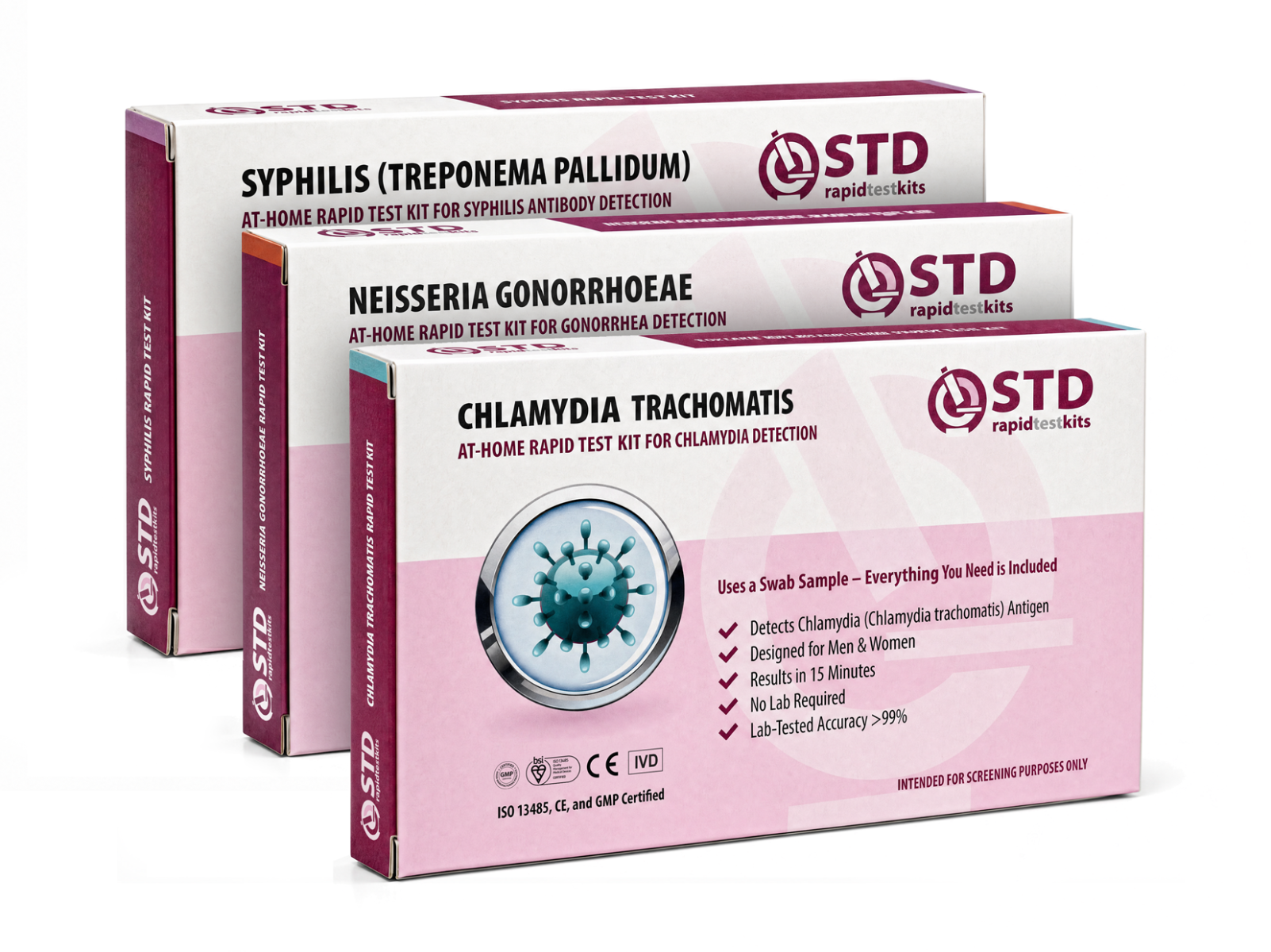
If your hookup was less than a week ago and you feel fine, the calmest plan is to bookmark a date 2 weeks out, line up an at-home STI test kit so it arrives on schedule, and use the time in between for normal life rather than worry research. Anxiety likes a deadline, and a calendar entry takes the edge off the spiraling.
At-home rapid kits use lateral-flow chemistry, which is fast, private, and a real screening tool when used inside the validated testing window. A negative home result with ongoing symptoms is worth confirming with a lab test, and a positive home result is worth a quick telehealth or clinic follow-up to start treatment. They are not the same technology as the laboratory NAAT (nucleic acid amplification test) that a clinic runs, which has higher analytical sensitivity.
If the Test Comes Back Positive
Chlamydia is bacterial, which is good news because bacteria respond to antibiotics. The current CDC recommendation, updated in 2021, is doxycycline 100 mg twice daily for 7 days for most uncomplicated cases (CDC: STI treatment guidelines for chlamydia). That replaces the older single-dose azithromycin protocol many people remember from a decade ago, because newer evidence showed doxycycline clears the infection more reliably, especially at the rectal and pharyngeal sites. Pregnant patients still get azithromycin, as noted above.
A few practical rules to follow once you have a positive result:
- Pick up your prescription the same day if possible and take the full course exactly as written. Stopping early because symptoms cleared is the most common reason treatment fails.
- Avoid sex for at least 7 days after starting treatment, even with a regular partner, even oral. The bacteria are still around during that window.
- Plan a re-test about 3 months after treatment. Re-infection from an untreated partner is more common than treatment failure, and the 3-month re-screen catches it.
- Notify anyone you have had sex with in the past 60 days so they can test and treat. The 60-day window is the partner-notification standard from the CDC's STI treatment guidelines.
If you do not have a primary care provider, urgent care, county health departments, and Planned Parenthood clinics all prescribe doxycycline for chlamydia routinely, and many at-home test providers offer a telehealth referral path so you can get the prescription without an in-person visit.

Telling a Partner Who Already Disappeared
A common emotional trap after a positive result: feeling like you owe a notification to someone who already ignored you. The brain wants to believe that closure flows in only one direction, that telling them gives them power back. It does not. Notifying a partner serves a public-health function. Whatever else you feel about the relationship is a separate conversation you can decline entirely.
You do not have to write a long message or explain how you felt about being ghosted. A simple text like, "Hey, I tested positive for chlamydia recently and you should get checked too," covers your obligation. They can do whatever they want with the information. You will not see most of what happens next, and that is fine.
If opening their thread feels physically impossible, anonymous routes exist. Most clinics will notify partners on your behalf without naming you when you ask them to do so as part of treatment. Online tools like Tell Your Partner and inSPOT let you send anonymous text or email alerts to any contact you have. Some county health departments run a similar service for free.
Notification also benefits you, indirectly. The partner who treats their infection is the partner who does not re-infect you the next time you cross paths, which is one of the reasons re-infection rates are as high as they are.
For a partner you might still want to talk to later, this version lands without blame: "Hey, I want to be upfront. I have been feeling slightly off since we hooked up and I am going to get tested. It might be nothing. I wanted you to know in case you want to test too. No accusation, just transparency." Send it once, then move on with your day.
Why "Clean" Isn't a Test Result
Hookup culture is fluent in one phrase that does a lot of damage: "Don't worry, I'm clean." Two problems with it. First, infections are not dirt. Calling an STI "dirty" or "clean" leaks shame into a conversation that should be about logistics. Second, what people usually mean is "I haven't noticed anything weird," not "I tested two weeks ago and here are the results."
For your next conversation, swap the vibe-check for a specific question. These feel awkward exactly once. After that, the question stops feeling like an interview and starts feeling like a normal step in deciding whether to sleep with someone.
Better questions than "are you clean?"
- When was the last time you got tested?
- What was on your last panel: chlamydia, gonorrhea, syphilis, HIV?
- Would you be up for swapping recent results before we sleep together?
When to Test for More Than Just Chlamydia
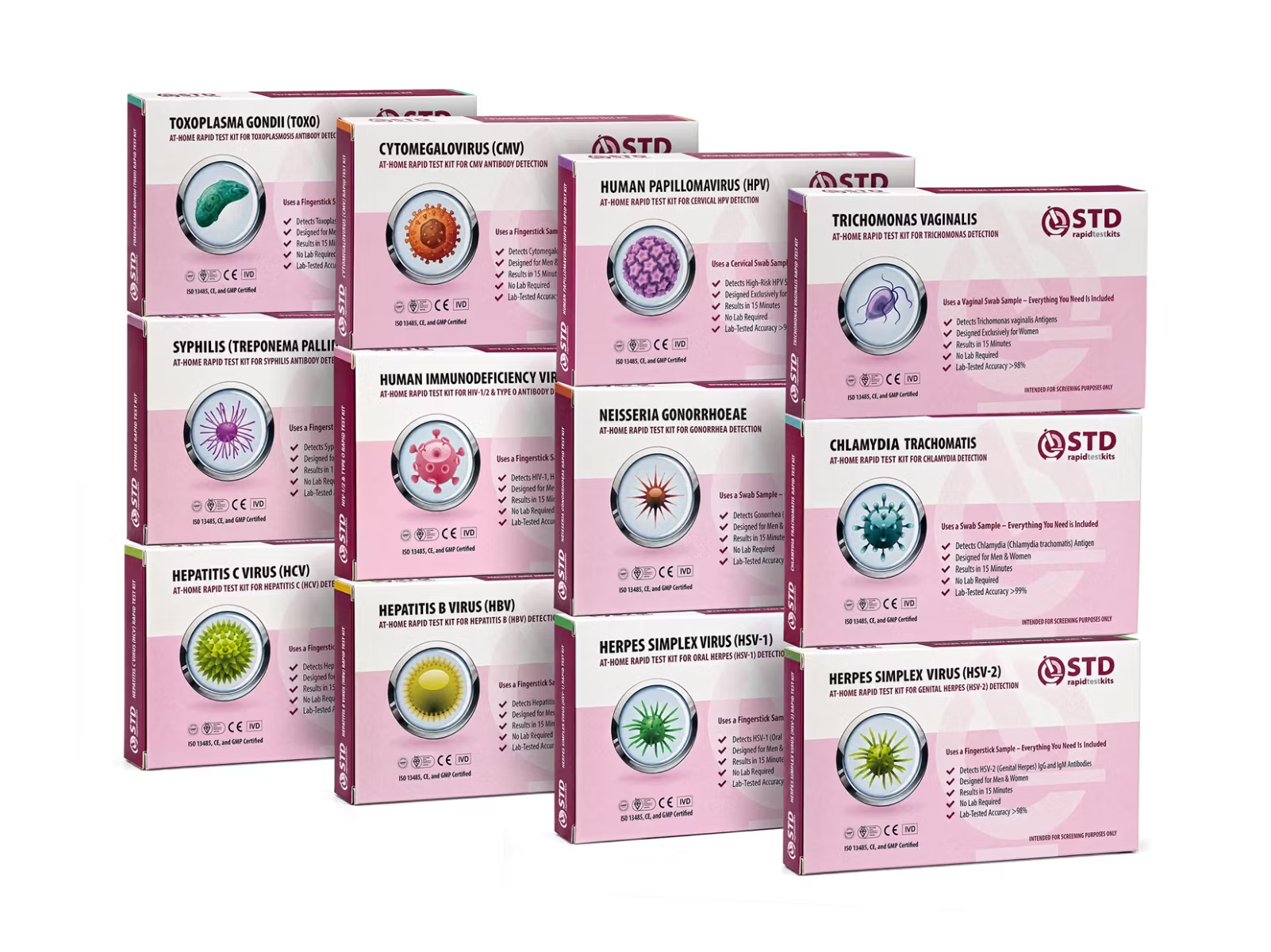
If a recent encounter left you wondering about chlamydia, it is worth widening the question. The infections that travel together most often are chlamydia and gonorrhea, then syphilis, then trichomoniasis for vaginal anatomy, with HIV and hepatitis screening rounding out a complete panel. The CDC's 2021 STI treatment guidelines specifically recommend co-testing for chlamydia and gonorrhea in anyone testing for either, because dual infection is common (CDC: STI treatment guidelines).
Window periods differ by infection. Chlamydia and gonorrhea are detectable from about 1 to 2 weeks after exposure. Syphilis blood tests can take 3 to 6 weeks to turn positive. HIV antigen-antibody ("4th-generation") tests are typically reliable from about 18 to 45 days depending on the assay; antibody-only rapid tests need closer to 90 days for full confidence. Hepatitis B surface antigen usually shows up between 4 and 10 weeks. If you want a single decision rule for a one-time exposure, a panel that bundles the most common infections at the 2-week mark is the simplest path, with a follow-up HIV and syphilis test at the 3-month mark if your initial result was negative and your exposure was a higher-risk one.
For people who hook up more frequently, the routine version is a quarterly or semi-annual screen rather than a panic-test after every encounter. Most clinics will set that cadence at intake without you having to ask, and many at-home test providers offer subscription delivery on a similar schedule. The chart below compares how long each of these infections takes to become detectable after exposure.
The Shame Spiral Is Not the Diagnosis
Ghosting after sex can feel like rejection, judgment, and shame stitched together. Add a surprise positive test, and the spiral gets fast. The internal monologue starts blaming you for trusting someone, for skipping the condom check, for enjoying the night, for being too casual, for being too earnest, for any of it.
Chlamydia is a bacterial infection. It says nothing about your worth, your decisions, or whether you "should have known better." Most of the people walking around with it right now are otherwise healthy adults who had one statistically unlucky encounter, often with a partner who also had no idea they were carrying anything.
The cultural script that turns infections into character flaws is the same script that keeps people from testing in the first place, which keeps the infections moving. The cleaner alternative is to treat testing as a normal, scheduled part of dating, the way someone schedules a dental cleaning, with no moral verdict attached.

If You Were the One Who Went Quiet
Maybe you are reading this from the other side of the situation. You hooked up, drifted, did not text back, and now your test came back positive. The first instinct is often to leave it alone, because reaching out feels like opening a door you already chose to close.
The honest version is that ghosting and partner notification are two different conversations. You do not owe anyone closure or an explanation for why you went quiet. You do owe a recent partner the heads-up that they should test. A two-line message handles it: "Hey, I just tested positive for chlamydia. You should get checked, too. Take care." Send it once, log off, get on with your day.
If you cannot bring yourself to send it directly, anonymous notification services exist for exactly this reason. The goal is to make sure they know to test. Anything beyond that, including any social repair, is optional and on your timeline.
If sending the message yourself is not possible, three options exist. Most clinics will notify partners on your behalf without naming you, as part of treatment. Online tools like Tell Your Partner and inSPOT send anonymous text or email alerts to any contact you have. Many county or state health departments run a free partner-notification service for the same purpose.
You Deserve Answers, Not Assumptions
If you got ghosted after a hookup and your body is sending up flares, you are not overreacting. You are paying attention to the right thing. A test gives you facts, treatment is short, and the people in your life who matter will not see the result as a referendum on your character.
The opposite of a shame spiral is a small, specific sequence of actions, none of which depend on the person who already disappeared. The quick decision guide below is what most clinicians would walk you through if you asked.
What to do after a hookup you are worried about
Was the exposure less than 2 weeks ago, with no symptoms so far?
Yes: Mark a calendar date 2 weeks out and order a test kit now so it arrives on schedule. Use the wait for normal life, not worry research.
Do you have symptoms now, or are you already at the 2-week mark?
Yes: Test now, at home or at a clinic. Symptoms before day 14 are a reason to test right away rather than wait.
Did the test come back positive?
Yes: Fill the doxycycline prescription the same day, and send a brief heads-up text to anyone you slept with in the past 60 days.
No: Re-test if symptoms appear later. If you did treat a positive result, screen again at 3 months to catch any re-infection from an untreated partner.
Guidance only; a healthcare provider can advise based on your specific situation.
Frequently Asked Questions
- Can I really get chlamydia from one hookup?
- Yes. Transmission can happen in a single sexual encounter, and the risk goes up if barrier protection was missed at any point, including for oral sex. Per-encounter transmission rates vary, but enough infections are passed on the first contact that a one-night exposure is a legitimate reason to test about 2 weeks later.
- Can you feel chlamydia just two days after sex?
- Symptoms within 48 hours are uncommon but possible. Most reports of post-hookup discomfort that early are friction, dehydration, a lube reaction, or other irritation rather than infection. Chlamydia usually needs at least a week of bacterial replication to produce measurable inflammation. If something feels off at 48 hours, track it and plan a test for around day 10 to 14.
- How soon after exposure should I test for chlamydia?
- Day 14 is the standard target for a reliable result. If symptoms appear before then, test immediately; bacterial load is usually detectable from day 4 or 5 in a symptomatic person. A negative result before day 14 should be confirmed with a retest at the 2-week mark.
- What are the most common early signs of chlamydia?
- Burning while peeing, unusual or yellowish discharge, low-grade pelvic ache, spotting between periods, or a tender feeling around the genitals. For people with penises, the first clue is often a small amount of discharge from the tip and mild discomfort. Most infections cause no symptoms at all, which is why screening matters.
- Can I get chlamydia from protected sex?
- Yes, though the risk is lower. Condoms cut transmission a lot when they stay intact and cover the affected area for the whole encounter. Slippage, breakage, and anything the condom does not cover, including oral sex and skin contact with infected fluid, can still pass the bacteria along. A condom reduces risk; it does not make a test unnecessary after a new partner.
- I tested negative right after the hookup. Am I in the clear?
- A result that early reflects the test-window limit, not your actual exposure status. Bacteria from very recent contact has not built up to a level either a clinic NAAT or a home rapid test can register. For the recent exposure, retest at day 10 to 14 to get a result worth acting on, and test sooner if symptoms appear in the meantime.
- Can chlamydia clear up on its own?
- Symptoms can quiet down without treatment, which gives a false sense that the infection is gone. The bacteria usually persists, can keep transmitting, and can cause longer-term complications like pelvic inflammatory disease and fertility problems. Antibiotics are the only reliable cure.
- Can I get chlamydia from oral sex?
- Yes. Chlamydia can settle in the throat after oral exposure, often without causing a sore throat or any symptoms. If a recent hookup involved oral, ask whether your test panel includes a throat swab; many standard at-home kits test only genital samples by default, so a clinic-administered pharyngeal (throat) swab may be the right call.
- Do I have to tell the person who ghosted me that I tested positive?
- Telling a recent partner is the public-health expectation, not a relationship gesture. A two-line text covers it. If reaching out feels impossible, anonymous partner-notification services and clinic-led notification can pass the information along without identifying you by name. The CDC's 60-day partner-notification window is the practical scope: anyone you slept with in the past two months.
- U.S. Centers for Disease Control and Prevention. About Chlamydia. Source for transmission routes (including oral sex), the asymptomatic-infection majority, the under-25 annual screening recommendation, and the qualitative statement that chlamydia often has no symptoms but can still cause serious health problems.
- U.S. Centers for Disease Control and Prevention. STI Treatment Guidelines, 2021, including the chlamydia chapter. Source for the recommended testing windows, the 60-day partner-notification window, chlamydia/gonorrhea co-testing guidance, the doxycycline 100 mg twice-daily for 7 days first-line regimen, the azithromycin alternative during pregnancy, and the three-month retest recommendation.
- U.S. Centers for Disease Control and Prevention. About Pelvic Inflammatory Disease (PID). Source for PID as a complication of untreated chlamydia and the figure that about 1 in 8 women with a history of PID have difficulty getting pregnant.
- National Health Service (UK). Chlamydia overview. Source for symptom descriptions in men and women and the note that most people with chlamydia have no symptoms.
- World Health Organization. Sexually transmitted infections (STIs) fact sheet. Source for chlamydia as a curable bacterial STI and the point that the majority of curable STIs worldwide are asymptomatic.
- MedlinePlus (U.S. National Library of Medicine). Chlamydia Infections. Source for chlamydia as a common, often symptomless, antibiotic-curable infection and the link between untreated infection and pelvic inflammatory disease.
