
Published: December 2025 | Last updated: May 2026 | Editorial review and quality control: Martina N.
The tonsil-and-tongue-base cancers driven by human papillomavirus are climbing across the United States, and the South is taking the heaviest hit. Florida, Mississippi, Alabama, and Georgia consistently sit near the bottom of national HPV vaccination rankings, and those same states sit near the top for late-stage oropharyngeal cancer diagnoses. The biology has not changed. What has changed is who is being vaccinated, who is being screened, and who is being told that an act they thought was casual can show up two decades later as a tumor at the base of the tongue.
This piece walks through what is actually happening on the ground: why the South, why men, why now, and what realistic prevention looks like for an adult reader who never got the vaccine and is hearing about all of this for the first time.
Key Takeaways
- Oropharyngeal cancers are now the most common HPV-driven cancer in U.S. men, and men are diagnosed roughly five times as often as women.
- The HPV vaccine prevents the strains responsible for the vast majority of these cancers, yet Southern states sit at the bottom of national adolescent vaccination rates, especially for boys.
Why the South Is Seeing the Sharpest Rise
According to CDC data on HPV-associated cancer cases, oropharyngeal cancers (those affecting the base of the tongue, tonsils, and pharyngeal wall) are now the most common HPV-associated cancer among men in the United States, with roughly 18,800 cases in men versus 3,800 in women annually. The steepest growth in case rates over the past two decades has been concentrated in Southern states.
There is no single villain. A handful of long-running structural forces stack up here, and the South has more of each:
- Lower HPV vaccination rates among teens and young adults, especially boys
- Limited preventive care access in rural counties, with few primary care or ENT options nearby
- Few routine dental or ENT screenings that might catch early lesions in the back of the throat
- Strong stigma around discussing oral sex and STDs with providers
- Vaccine hesitancy reinforced by political, religious, and cultural factors
The Symptoms That Most People Miss
Unlike cervical cancer, where Pap smears and HPV co-testing catch precancerous changes early, there is no established screening test for HPV-related throat cancer. That means most cases are caught only after symptoms appear, and by then the tumor is often locally advanced. The trouble is that the early warning signs feel ordinary, which is exactly why they get dismissed:
- A sore throat that lingers past two or three weeks, often more pronounced on one side
- A sensation of food sticking or pain when swallowing
- Voice changes or persistent hoarseness lasting more than a few weeks
- A painless lump in the side of the neck (often the first thing patients actually notice)
- An earache on one side that does not clear up
- Unexplained weight loss

Why Men Carry the Heavier Load
Most men ignore these symptoms early on. In states like Alabama or rural Georgia, where the nearest ENT specialist can be ninety minutes away, plenty of patients push through the discomfort until it becomes hard to swallow or speak. That delay is the difference between an early-stage cancer with high cure rates and a stage 3 or 4 diagnosis that requires radiation, chemotherapy, and sometimes surgery to the base of the tongue.
HPV is one of the most common viruses in the country. The CDC's overview of HPV states plainly that nearly everyone who is not vaccinated will get HPV at some point in their lives. The reason oropharyngeal cancer is hitting men disproportionately comes down to two factors: how long the virus lingers, and how rarely men are screened anywhere it could be caught early.
Research suggests oral HPV infections persist longer in men than in women. The reasons are not fully understood, but some combination of immune response differences, smoking and alcohol patterns, and anatomical exposure during oral sex appears to be involved. Women, meanwhile, have decades of established cervical screening that picks up the virus elsewhere in the body, often before any malignancy develops anywhere. For men, there is no equivalent: a typical adult man can go from age 18 to age 50 without anyone ever looking inside his oropharynx unless he has a symptom worth complaining about.
Oral HPV infections appear to clear less reliably in men than in women. Combined with the absence of any routine throat or oropharyngeal screening in male primary care, that biological tendency translates into the steeper case curve oncologists are now seeing in men in their 40s and 50s.
The Oral Sex Conversation No One Has
Oral sex is the primary route HPV reaches the throat. That is the part of the conversation that rarely happens between patient and provider, especially in regions where sex education has leaned abstinence-only or where the topic feels too uncomfortable to raise at a routine visit. The silence costs people the basic information needed to make sense of their own diagnosis when it comes.
HPV does not require intercourse to spread. Genital-to-mouth contact during oral sex is the main vector, but skin-to-skin contact in the genital area and deep mouth-to-mouth contact can transmit the virus in some cases. Condoms reduce risk but do not eliminate it, since they do not cover all of the skin that can carry virus.
For Southern men in their 30s, 40s, and 50s (many of whom never had comprehensive sex education), the idea that a few hookups from twenty years ago could surface now as cancer feels impossible. The data says otherwise. The lag between exposure and tumor is exactly why this is showing up as a population-level pattern now, not before.
HPV does not require intercourse to spread. Genital-to-mouth contact during oral sex is the primary route to the throat. Condoms reduce risk but do not eliminate it, because they do not cover all of the skin that can carry virus, and deep mouth-to-mouth contact can transmit virus in some cases.
Why is HPV throat cancer rising fastest in the South?
The South has the lowest teen HPV vaccination rates in the country, the fewest preventive screenings in rural counties, and the strongest stigma around discussing oral sex with a doctor. Combine that with a 15-to-30-year lag between HPV exposure and tumor development, and you get a generation of men in their 40s and 50s now showing up with advanced oropharyngeal cancers that the vaccine could have prevented.
Southern Vaccine Coverage, By State
National HPV vaccine coverage has been climbing slowly, but Southern states remain at the back of the pack. CDC's TeenVaxView surveillance tracks state-level adolescent vaccination rates, and the gap between national and Southern coverage is large enough to matter at population scale. These figures are HPV vaccine initiation rates (the percentage of adolescents who have received at least one dose). The three states below are representative of the broader Southeastern cluster, which also includes Georgia, South Carolina, and Louisiana.
| State | Teen Boys with at least 1 HPV Dose | Teen Girls with at least 1 HPV Dose |
|---|---|---|
| Mississippi | 43% | 50% |
| Alabama | 47% | 54% |
| Florida | 49% | 56% |
| U.S. National Average | 62% | 70% |
Florida and the Southeastern Cluster
Florida is a useful case study. The state ranks in the top five for new cancer cases of any kind annually, and while throat cancer was historically tied to tobacco and heavy alcohol use, the picture has shifted. HPV-positive oropharyngeal cancers now account for the majority of new throat cancer cases in non-smokers under 50, and Florida's mix of inconsistent sex education, vaccine skepticism, and uneven access to ENT specialists has produced a quiet but serious cancer cluster.
The pattern repeats across the Southeast: Mississippi, Alabama, Georgia, South Carolina, Louisiana.
HPV-positive oropharyngeal cancers now account for the majority of new throat cancer cases in non-smokers under 50. The historical assumption that throat cancer is a smoker's-and-drinker's disease no longer holds for younger patients, and that change is most visible across the Southeastern states.
Is There an At-Home Test for Throat HPV?
The honest answer is no. There is currently no FDA-cleared at-home test for oral or pharyngeal HPV, and the same applies to most male-anatomy HPV testing. Some research clinics offer oral rinse or throat swab testing as part of studies, but those are not validated screening tools and are not covered by insurance.
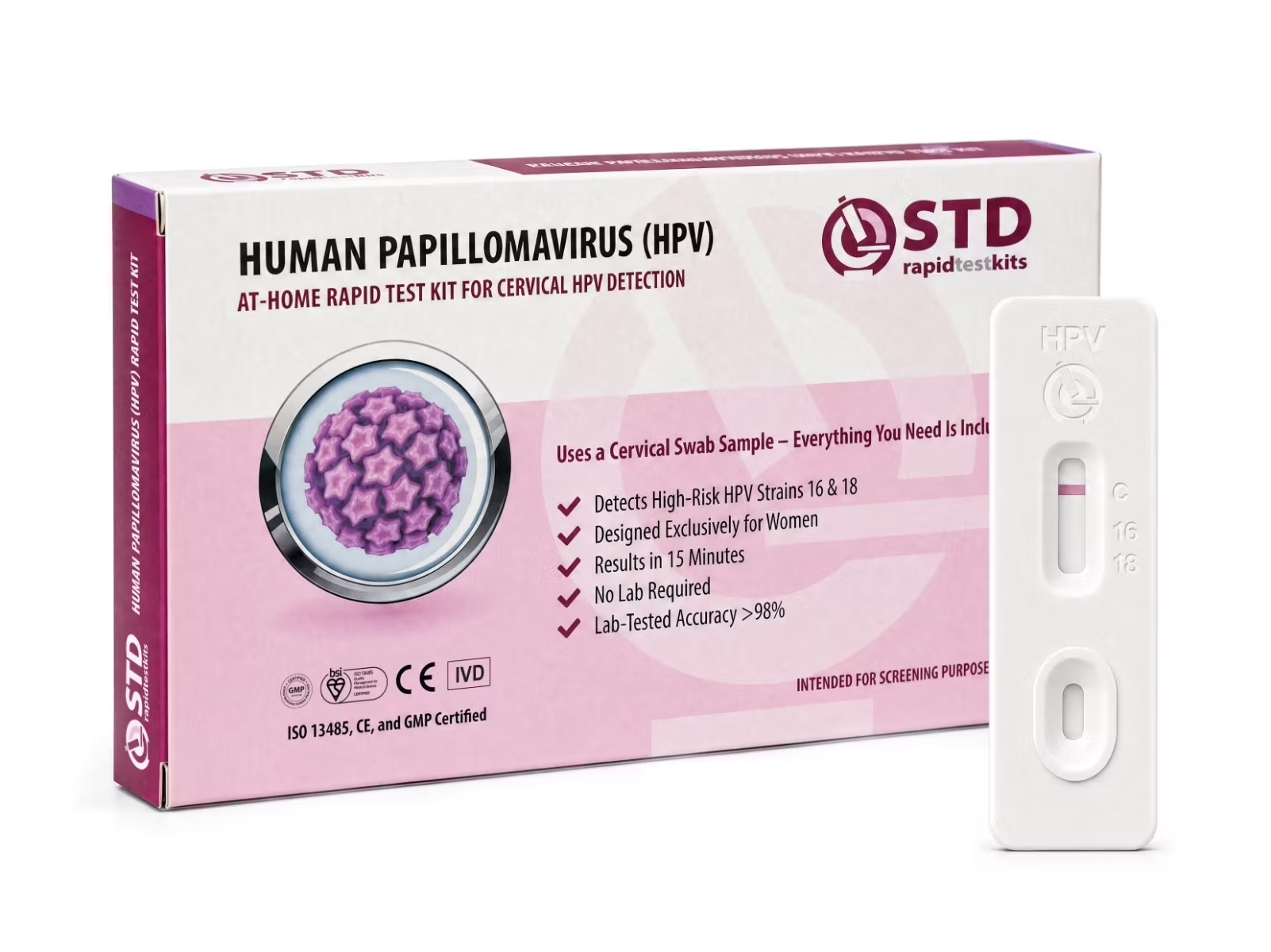
If you have a cervix, the picture is different. Cervical Pap and HPV co-testing remain the most reliable early-warning system any of us have for HPV-related disease, and an at-home rapid HPV swab can screen for the high-risk strains most associated with cervical cancer. For people without a cervix, the realistic options are narrower: stay alert for symptoms that persist beyond two to three weeks, see a dentist or ENT if anything in the throat does not resolve, and prevent infection in the first place through vaccination.
Our at-home HPV swab kit is validated for vaginal self-collection only. We do not currently offer a male-compatible HPV home test or any at-home throat-HPV test. Male readers concerned about oropharyngeal exposure should see a clinic and ask specifically about ENT evaluation if symptoms develop.
Prevention That Reduces Risk
The blunt version: HPV-related throat cancer is largely preventable. That is what makes the Southern surge so frustrating. The vaccine has been on the market for nearly two decades, and the data on its protection against the high-risk strains responsible for oropharyngeal, anal, cervical, and penile cancers is unambiguous.
HPV-16 drives the majority of HPV-positive throat cancers. Gardasil 9 covers HPV-16 and HPV-18 alongside seven additional high- and low-risk types, which means a fully vaccinated person is protected against the strain responsible for most oropharyngeal tumors. ACIP recommends routine vaccination starting at age 11 or 12, with catch-up doses through age 26. For adults aged 27 through 45, vaccination is a shared clinical decision with a provider rather than a universal recommendation, but it is approved and available. Many adults still believe the vaccine is 'only for girls' or 'too late for them'. Both are wrong, and both beliefs are doing real damage in states where uptake is already weak.
What works for prevention:
- Vaccinating at ages 9 through 12, before any exposure (this is where the protection is strongest)
- Catch-up vaccination through age 26 for anyone who missed the routine schedule
- Shared-decision vaccination through age 45 if you are eligible and want the protection
- Framing the conversation as cancer prevention, not as a marker of sexual behavior
- Talking openly about HPV with adolescent boys, not just girls
Most cancers found in the back of the throat, including at the base of the tongue and in the tonsils, are HPV-positive.
Why the Vaccine Conversation Stalls
In much of the South, openly talking about sex (especially anything beyond procreation) remains uncomfortable territory. That cultural reality bleeds into vaccine decisions. Some parents reject the HPV vaccine specifically because they believe it sends a permissive message about teen sexuality. Others have simply never had a clinician spend the two minutes needed to explain that the vaccine is, first and foremost, about preventing cancer.
Multiple national surveys have found that fewer than half of parents in Southern states describe themselves as 'very likely' to vaccinate their sons against HPV. The takeaway is not that those parents are anti-vaccine in general.

If a Partner Has Been Diagnosed
If a partner is diagnosed with HPV-related throat cancer, the natural first question is whether you should get tested too. The clinical answer is more nuanced than a simple yes or no. There is no routine oral HPV screening recommended for partners of diagnosed patients, and most long-term couples have already shared whatever HPV strains they carry years before any tumor appears.
The more useful focus is on symptoms (any persistent sore throat, hoarseness, neck lump, or one-sided earache lasting longer than a few weeks) and on baseline cancer screening the at-risk partner can actually act on. For partners with a cervix, that means staying current on Pap and HPV co-testing. For partners without a cervix, that means knowing what symptoms to flag and not dismissing them as allergies or reflux for months on end.
This is not a story about blame. HPV moves through populations silently, and decades-long latency is the rule, not the exception.
If you have a cervix: stay current on Pap and HPV co-testing on the schedule your clinician recommends. This is the closest thing any of us have to a routine HPV screening tool.
If you do not: keep a watchlist of throat symptoms lasting more than two to three weeks (one-sided sore throat, hoarseness, a painless neck lump, one-sided earache) and see a primary care doctor or ENT if any of them appear.
Your Realistic Next Step
If you are reading this and wondering what to do, the answer depends on which side of the prevention curve you are on. None of these steps require dramatic life changes. They are routine medical decisions that most people can act on in a week.
Three reader paths cover most of the situations people land here in:
- If you are eligible for the vaccine (anyone through age 26 routinely, anyone through age 45 with a provider conversation), ask your primary care doctor or pharmacy about getting vaccinated. The vaccine prevents the infections that cause these cancers in the first place.
- If you have symptoms (persistent sore throat, neck lump, voice changes, or one-sided earache lasting more than two to three weeks), see a primary care doctor or ENT. The treatable window is wider at stage 1 or 2 than at stage 3 or 4.
- If you have a cervix, stay current on cervical Pap and HPV co-testing on the schedule your clinician recommends.
Frequently Asked Questions
- Can oral sex really cause throat cancer?
- Yes, but in slow motion. HPV transmitted during oral sex can establish itself in the tonsils or base of the tongue, and for a small percentage of people the virus persists long enough to drive cellular changes that become cancerous. This typically takes 15 to 30 years from initial exposure. Most people who get oral HPV clear it without ever knowing they had it.
- Why is this such a problem in the South specifically?
- The South has weaker vaccination infrastructure, sparser rural healthcare access, and stronger cultural stigma around sexual-health conversations, a combination that delays both prevention and diagnosis. The result is fewer vaccines administered, later-stage tumors at diagnosis, and higher mortality than the national average.
- I thought HPV was only a risk for women.
- That is the single most damaging myth around this virus. HPV causes cervical cancer in women, but it also causes oropharyngeal cancer (now more common in men than women), anal cancer, and penile cancer. Men over 40 are currently leading the statistics for HPV-driven throat cancer.
- Can I get tested for HPV in my throat?
- Not easily. Unlike the cervix, where Pap and HPV co-testing is routine, there is no FDA-cleared screening test for oral or pharyngeal HPV. Some research clinics offer oral rinse testing in studies, but it is not a routine clinical service. The realistic strategy is symptom awareness plus prevention through vaccination.
- What is the earliest sign that something is off?
- Most patients first notice a painless lump on one side of the neck, or a sore throat that does not clear after two to three weeks. Others report hoarseness, ear pain on one side, or trouble swallowing. If any of these last more than three weeks, get them checked, especially if you have a history of oral sex without HPV vaccination.
- I am in my mid-30s. Is it too late for the vaccine?
- No. The HPV vaccine is approved through age 45. For ages 27 to 45, it is a shared clinical decision rather than a routine recommendation, but if you have not been exposed to the high-risk strains the vaccine covers, you can still benefit. Bring it up at your next primary care visit.
- If I have HPV in my throat, can I pass it to my partner?
- Possibly, but in long-term partnerships you have likely shared whatever strains you both carry already. HPV moves easily through close contact and routinely lies dormant for years. The more practical step is open communication and standard cancer screening for both partners, including Pap and HPV co-testing for the partner with a cervix.
- Does an HPV diagnosis mean someone cheated?
- No. HPV can be latent for years or even decades before showing up. A positive result or a late diagnosis can reflect an exposure long before your current relationship started, and it tells you nothing reliable about whose body the virus came from or when. Trust, science, and a calm conversation with a clinician are the right starting points.
How we sourced this article: We combined current guidance from leading public health and medical organizations (CDC, WHO, NHS, Mayo Clinic, and the National Cancer Institute) with peer-reviewed surveillance data to make this guide practical and accurate. The figures cited above are taken from CDC HPV surveillance pages and CDC TeenVaxView state-level coverage data current as of the writing of this update.
- U.S. Centers for Disease Control and Prevention. HPV-Associated Cancer Cases by Anatomic Site (data showing oropharyngeal cancers are the most common HPV-associated cancer among men in the U.S., with case counts around 18,800 in men versus 3,800 in women annually).
- U.S. Centers for Disease Control and Prevention. About HPV (background on HPV biology and the statement that nearly everyone who is not vaccinated will get HPV at some point in their lives).
- U.S. Centers for Disease Control and Prevention. HPV Vaccine Recommendations (Advisory Committee on Immunization Practices schedule, routine through age 26 and shared decision through age 45).
- U.S. Centers for Disease Control and Prevention. TeenVaxView (state-level adolescent vaccination coverage data, including HPV vaccination initiation and series-completion figures used in the state comparison table).
- World Health Organization. Cervical Cancer Fact Sheet (global guidance on HPV-driven cancers and the role of HPV vaccination in prevention).
- National Health Service (UK). Human Papillomavirus (HPV) (patient-facing overview of HPV transmission, vaccination eligibility, and cancer risk).
- Mayo Clinic. HPV Infection: Symptoms and Causes (clinical overview of HPV-related conditions including oropharyngeal cancer).
- National Cancer Institute. Oropharyngeal Cancer Treatment (PDQ): Patient Version (background on tumor biology, HPV positivity, and treatment outcomes).
