

Published: November 2025 | Last updated: April 2026 | Editorial review and quality control: Martina N.
HPV is the most common sexually transmitted infection in the United States, and the U.S. Centers for Disease Control and Prevention puts it plainly: nearly everyone will get HPV at some point in their lives (CDC, About HPV). Most people never know it happened. The virus can settle on genital skin, inside the throat, around the anus, or stay so quiet that no current test catches it for years.
Understanding where HPV lives, how it shows up (or refuses to), and which tests exist for which bodies is what turns background anxiety into a workable plan. This guide pulls together what the CDC, WHO, NHS, and peer-reviewed research currently say about silent HPV, the testing gap that disproportionately affects men, and the practical steps that lower long-term risk: vaccination, routine cervical screening for those eligible, and partner-aware sex.
Can you have HPV in your throat, genitals, or nowhere visible at all?
Yes. HPV infects the skin and mucous membranes of the genitals, anus, mouth, and throat, and most infections produce no symptoms at all. Roughly 9 in 10 clear within two years, but a small share of high-risk strains (most commonly types 16 and 18) can persist for years and lead to cervical, anal, penile, vulvar, vaginal, or oropharyngeal cancers. Routine cervical screening, the HPV vaccine, and barrier protection are the three tools that actually lower long-term risk.
Key Takeaways
- Most HPV is invisible: roughly 9 in 10 infections clear within two years without symptoms or treatment, per the CDC.
- Vaccination is the strongest prevention tool. ACIP recommends routine HPV vaccination through age 26 and shared clinical decision-making for adults aged 27 to 45.
Where HPV Lives in the Body
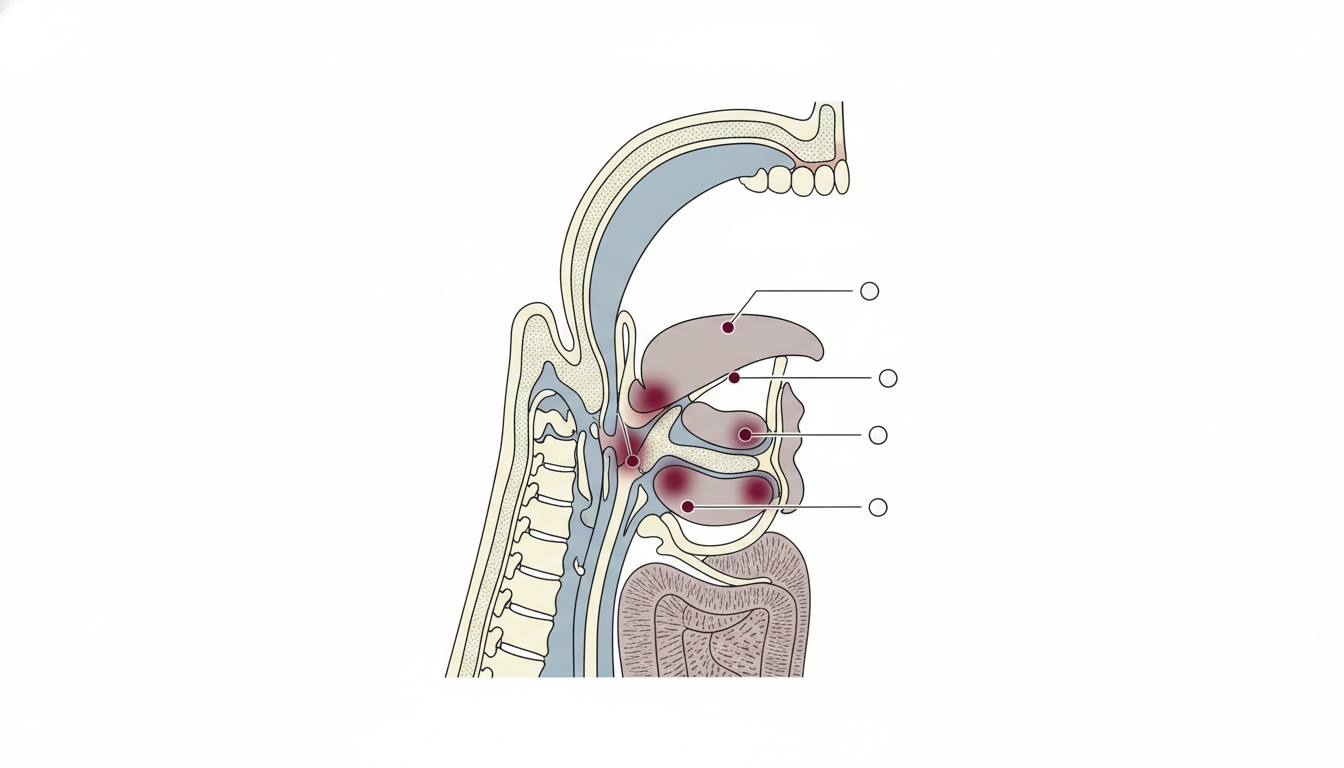
HPV infects skin and mucous membranes far beyond the genitals. The virus is a family of more than 200 related strains, and dozens of them spread through sexual contact (CDC, genital HPV infection). They can establish themselves anywhere skin and mucosa meet during sex: the cervix, vagina, vulva, penis, scrotum, anus, perianal skin, mouth, throat, and tonsillar tissue.
Skin-to-skin contact alone is enough to transmit HPV; intercourse is one route among several. That is why condoms reduce but do not eliminate transmission; the virus can colonize areas a condom does not cover, like the base of the penis, the labia, the scrotum, or the perianal skin. Oral sex moves HPV between the genitals and the mouth or throat. Deep open-mouth kissing carries a smaller risk that researchers are still characterizing.
| Body region | How HPV gets there | What it usually looks like |
|---|---|---|
| Cervix | Vaginal sex, fingering, sex toys | No visible signs; detected on Pap smear or HPV DNA test |
| Vulva, vagina, penis, scrotum | Genital skin-to-skin contact | Often invisible; warts only with low-risk strains 6 and 11 |
| Anus and perianal skin | Anal sex, contact near the anus | Usually silent; warts or abnormal cells in some cases |
| Mouth, throat, tonsils | Oral sex, deep kissing (rarer) | Almost always silent; rarely persistent sore throat or hoarseness |
Why Most HPV Infections Are Silent
The strains that cause visible warts (mainly HPV 6 and 11) are different from the strains most likely to cause cancer (mainly HPV 16 and 18). The cancer-linked strains rarely produce any symptom you can see or feel. They live in the basal layer of skin or mucosa, replicate slowly, and either get cleared by the immune system or persist quietly for years.
That biology has two practical consequences. First, the absence of warts is not reassurance. Plenty of people carry high-risk HPV with no clue and no test result to confirm it. Second, transmission can happen during the entire silent period. Skin shedding the virus can pass it to a partner whether or not anything is visible.
Time-of-exposure attribution is also unreliable. The virus can stay dormant or sub-clinical for months or years before a Pap result flags it, which is why a positive HPV finding in a long-term relationship rarely means recent infidelity. Honest answer in those situations is usually that the timing cannot be known.
You can pass HPV during periods when you have no symptoms, no warts, and no positive test result. The virus sheds from skin without any visible sign, which is how most transmission happens during asymptomatic periods. The implication is not to panic or quarantine. It is to use barrier protection where it helps, get vaccinated if you are still in the recommended window, and keep up with cervical screening if you have a cervix.
Oral HPV and the Throat-Cancer Connection
Oral HPV is the part of the conversation that has shifted most in the last decade. CDC surveillance data consistently show that oral HPV is common in adults and that prevalence is meaningfully higher in men than in women. Almost all of those oral infections clear without symptoms.
A small share persist, and persistent infection with HPV 16 in particular is now the leading attributable cause of oropharyngeal (throat, tonsil, base-of-tongue) cancers in the United States. The CDC states that about 60% to 70% of cancers of the oropharynx may be linked to HPV, and incidence has been rising in men in their 40s, 50s, and 60s (CDC, basic information about HPV and cancer).
The frustrating gap: there is no FDA-approved at-home or routine clinic test for oral HPV. Throat swabs for HPV are used in research and oncology settings but are not part of standard primary care. If you have a sore throat, hoarseness, persistent ear pain, or a one-sided lump in the neck that does not resolve in three to four weeks, the right next step is an ENT evaluation, not a self-test. We do not sell a throat swab; this is a clinic situation.
The Male HPV Testing Gap
For people with a cervix, HPV is a managed condition. Pap smears (cytology) and HPV DNA tests are part of routine well-care from age 21 or 25 onward. Abnormal results trigger colposcopy (an in-clinic examination of the cervix using a magnifying instrument, often paired with a biopsy of any suspicious area), follow-up testing, and treatment of pre-cancerous lesions long before cancer develops. WHO data show that cervical screening, paired with timely treatment of detected pre-cancerous changes, is one of the highest-impact tools for preventing progression to cervical cancer (WHO, cervical cancer fact sheet).
For men, that infrastructure does not exist. There is no FDA-approved HPV screening test for men, and most providers will not order one even on request. Anal Pap testing exists, but it is generally limited to immunocompromised patients, men living with HIV, or men who have receptive anal sex with men, where rates of high-risk anal HPV are higher.
The result is that a meaningful share of men carry HPV without a way to confirm it short of visible warts or a downstream cancer diagnosis. Population studies referenced by the CDC and U.S. National Cancer Institute consistently find genital HPV prevalence in adult men in the same range as in women. Men carry HPV at equivalent rates to women; what is missing is any routine pathway to document it.
This matters for partner conversations. A man with no symptoms and no available test cannot prove he is HPV-free. Most sexually active adults have been exposed to HPV at some point. The questions that lead somewhere useful are about vaccination status, routine screening for any partner who is eligible, and any current visible symptoms. Emerging research is also exploring whether persistent HPV in semen affects fertility outcomes, but that work is preliminary and not yet a clinical screening recommendation.
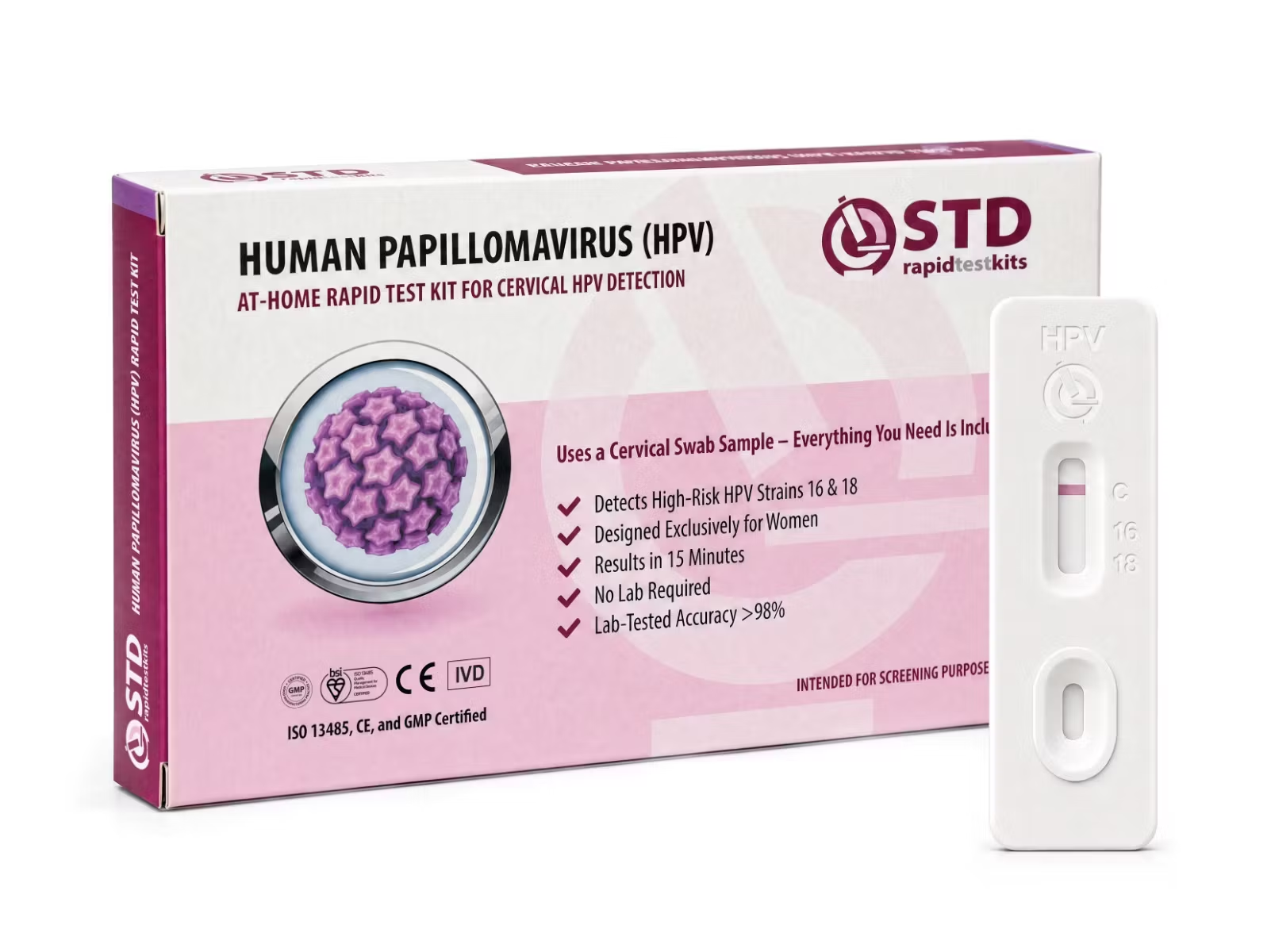
No FDA-approved routine HPV test exists for men. Anal Pap testing is offered to specific high-risk groups only: immunocompromised patients, men living with HIV, and men with receptive anal sex history. Visual exam for warts and biopsy for suspicious lesions remain the main clinical pathways outside those groups, and our at-home HPV swab is built for vaginal self-collection, so it does not fill the gap either.
How HPV Is Tested Today
Four tools cover almost everything currently available, and each answers a different question. None of them, individually, gives a complete picture, which is part of why HPV is so often described as confusing.
| Test | Who it is for | What it detects |
|---|---|---|
| HPV DNA test (cervical) | People with a cervix, generally age 25 and up | Presence of high-risk HPV genotypes (16, 18, plus a pooled high-risk group) |
| Pap smear (cytology) | People with a cervix, generally age 21 and up | Abnormal cervical cells caused by HPV; not the virus itself |
| Visual or biopsy exam | Anyone with a visible lesion or wart | Genital warts (low-risk types 6 and 11) or pre-cancerous lesions |
| Anal Pap (cytology) | People living with HIV, immunocompromised, or with receptive anal sex history | Abnormal anal cells linked to HPV |
What a Positive HPV Result Actually Means
A positive HPV result on a Pap or HPV DNA test is not a cancer diagnosis. It means the lab detected DNA from one of the higher-risk HPV strains, almost always HPV 16, HPV 18, or one of the pooled high-risk types. What happens next depends on which strain was detected and what the cytology shows.
If your Pap is normal but you tested positive for HPV 16 or 18, most U.S. guidelines recommend a colposcopy promptly, because those two strains carry the highest cancer risk. If you tested positive for one of the pooled high-risk strains and the Pap is normal, the usual pathway is repeat co-testing in 12 months. If both Pap and HPV are abnormal, a colposcopy and possibly a biopsy follow.
For low-risk HPV that has produced visible warts, treatment options described by the NHS include topical creams or liquids, in-clinic freezing (cryotherapy), and surgical or laser removal (NHS guidance on genital warts). These treatments remove the visible lesion; the body's immune system handles the underlying virus.
There is no antiviral cure for HPV. The good news is that most adults will not need one. The body usually clears the virus on its own within one to two years. Screening exists to catch the small share of infections that does not clear, well before any of them become serious.
Three pathways after a positive HPV result
- HPV 16 or 18 detected: most U.S. guidelines recommend colposcopy promptly, since these two strains carry the highest cancer risk.
- Pooled high-risk HPV positive with a normal Pap: the usual pathway is repeat co-testing (Pap plus HPV) in 12 months.
- Both Pap and HPV abnormal: colposcopy is recommended and a biopsy may follow if a suspicious area is identified.
HPV Vaccination at Any Age in the Recommended Window
The Gardasil 9 vaccine protects against nine HPV types, including the seven highest-risk cancer-causing strains and the two main wart-causing strains. The Advisory Committee on Immunization Practices (ACIP) currently recommends:
- Routine vaccination through age 26 for everyone who did not complete the series earlier.
- Shared clinical decision-making for adults aged 27 through 45, where catch-up may benefit some people based on prior exposure and risk.
The vaccine works best before any HPV exposure, which is why public-health programs target ages 11 to 12. It still has value after sexual debut because most people have not been exposed to all nine covered strains. Vaccination does not treat existing infection or clear what is already there. It can still prevent infection with the strains you have not yet encountered, which is why it retains value even after sexual debut (CDC, HPV vaccines).
If you are in the shared-decision-making window, the conversation worth having with a clinician is about your specific exposure history, the cost or insurance coverage of the three-dose series, and whether vaccination still buys meaningful coverage given your circumstances. The vaccine is now routinely recommended for boys as well as girls, reversing more than a decade of public-health messaging that framed HPV as a women-only concern.
HPV vaccine has the potential to prevent more than 90% of cancers caused by HPV.
What If HPV Testing Is Not Available to You?
If you do not have a cervix, the at-home HPV swab is not built for your anatomy, and the clinical pathway above does not have a parallel for you. Men who want a definitive HPV result have no FDA-cleared path to one outside of specific high-risk clinical protocols. Screening still matters, just for the conditions where reliable home tests do exist.
For sexually active adults regardless of gender, the more actionable home-testing question is usually: am I current on the things I can actually test for from home? Several common infections often coincide with HPV exposure, and unlike HPV, they have clear testing windows, clear treatments, and reliable consumer tests.
If a sore throat is your specific concern after oral exposure, that is a clinic conversation, not a home-test situation. Pharyngeal swabs for gonorrhea and chlamydia are clinic-administered, and there is no consumer test for oral HPV.
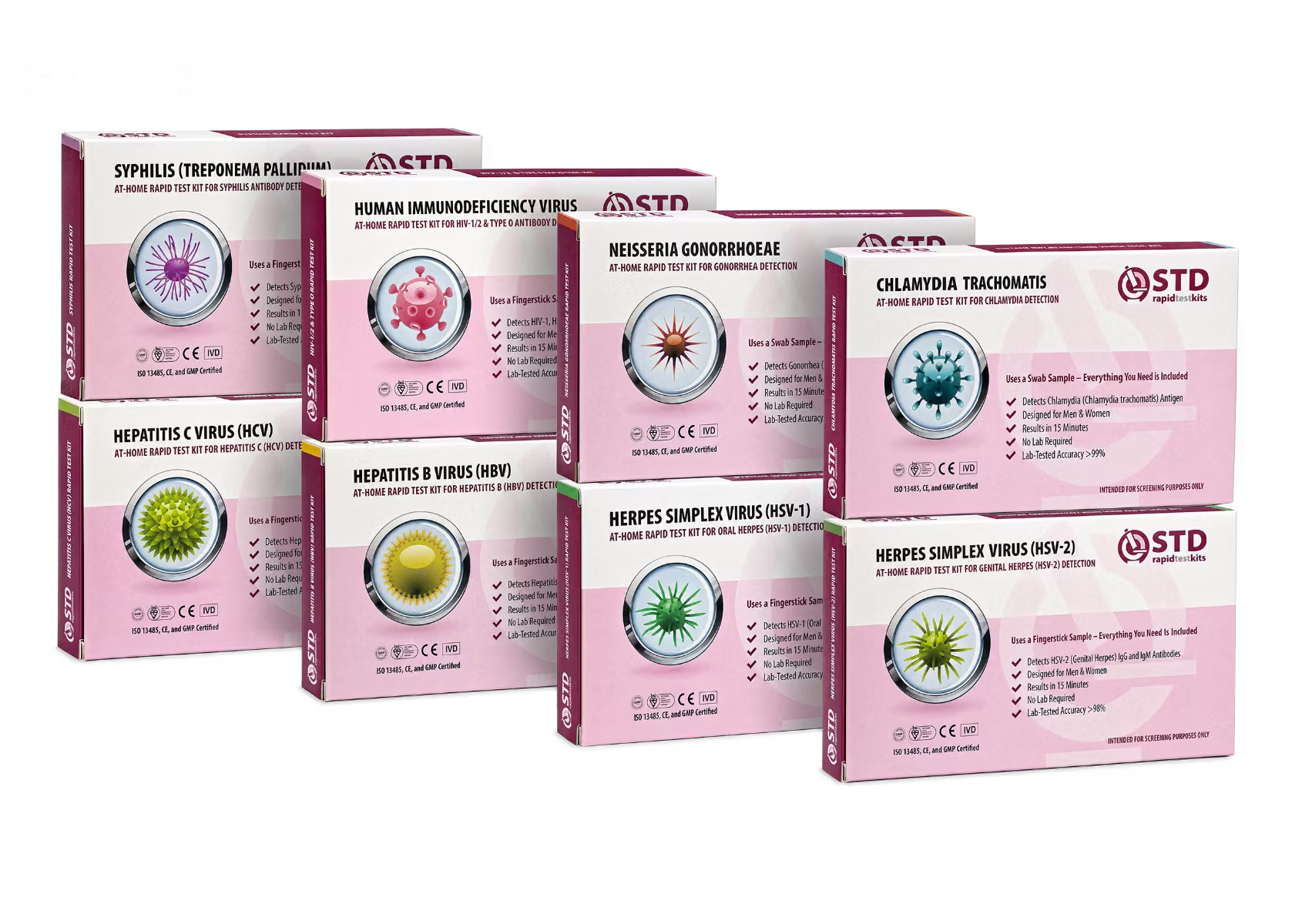
Chlamydia (self-collected swab), gonorrhea (self-collected swab), syphilis (fingerstick blood), HIV (fingerstick blood), hepatitis B (fingerstick blood), and hepatitis C (fingerstick blood) all have validated at-home rapid tests. These are different pathogens from HPV, but they often coincide with the same exposures, and confirming or ruling them out is a useful next step when HPV-specific testing is not available to you.
Talking to Partners About HPV
HPV disclosure is harder than it should be because the cultural framing has not caught up with the biology. Most sexually active adults will be exposed to HPV at some point; you tested positive for one strain on a recent Pap and you wanted them to know. That is the conversation, without additional framing.
In long-term partnerships, the math usually points the same direction. If one partner has detectable HPV, the other has very likely been exposed too, regardless of when the relationship started. Disclosure in that context is more about shared planning (vaccination status, screening schedule) than about assigning blame.
In newer relationships, disclosure is reasonable but does not need to be exhaustive. The clinically meaningful information is whether either partner has visible warts (which warrant a barrier method until treated), whether either is up to date on vaccination, and whether the partner with a cervix is current on Pap and HPV DNA screening. Beyond that, HPV is a fact of adult sexual life rather than a moral judgment.
Three items cover the clinically meaningful ground: (1) if either partner has visible warts, use a barrier method until they are treated; (2) check vaccination status for both partners and consider catch-up Gardasil 9 if anyone is in the recommended window; (3) confirm the partner with a cervix is current on Pap and HPV DNA screening. Anything beyond those three is conversation, not clinical action.
Frequently Asked Questions
- Can HPV really live in your throat?
- Yes, and most oral HPV infections clear on their own without symptoms. The action item to remember: if you develop a sore throat, hoarseness, persistent ear pain, or a one-sided lump in the neck that does not resolve in three to four weeks, ask your clinician for an ENT referral. There is no consumer test for oral HPV. Persistent infection with HPV 16 specifically is the strain pattern linked to oropharyngeal cancers.
- Can you pass HPV when you have no symptoms?
- Yes, and this is how most transmission happens. HPV does not need visible warts, lesions, or active symptoms to spread. The virus colonizes skin and mucosa, and contact with infected skin can transfer it whether or not either partner notices anything.
- Can you catch HPV just from kissing?
- It is uncommon but not impossible. Peer-reviewed research suggests that deep open-mouth kissing carries a small risk if the virus is present in the mouth or throat, especially with multiple partners. Oral sex is a much more efficient transmission route than kissing.
- Is there an HPV test for men?
- Not a routine, FDA-approved one. Anal Pap testing is offered to specific high-risk groups (immunocompromised patients, men living with HIV, men with receptive anal sex history). Otherwise, HPV in men is usually only diagnosed when visible warts appear or, much later, if an HPV-related cancer is found. Our at-home HPV kit is validated for vaginal self-collection only.
- If I test positive for HPV, do I have cancer?
- No. A positive HPV test means the virus is present, not that cancer is present. Most HPV clears within one to two years. Follow-up (repeat Pap, colposcopy if indicated) exists to monitor whether the infection persists and whether any cell changes develop, well before cancer would.
- Will a regular STD panel catch HPV?
- Usually no. Standard STI panels test for chlamydia, gonorrhea, syphilis, and HIV. HPV is detected on cervical Pap or HPV DNA tests, not on a typical STI test panel. Some at-home kits include an HPV swab, but only for vaginal self-collection.
- Can I get HPV more than once?
- Yes. There are dozens of sexually transmissible HPV strains, and immunity to one does not protect against the others. This is part of why the Gardasil 9 vaccine covers nine separate strains, including the highest-risk cancer types and the main wart types.
- Do condoms protect against HPV?
- Partly. Condoms reduce HPV transmission but do not eliminate it because the virus can live on skin the condom does not cover (the base of the penis, labia, scrotum, perianal area). Vaccination, routine cervical screening for those with a cervix, and condom use together are far more effective than any one alone.
- U.S. Centers for Disease Control and Prevention. About Genital HPV Infection. Used for transmission routes and high-risk strain identification.
- U.S. Centers for Disease Control and Prevention. Basic Information About HPV and Cancer. Used for the 60% to 70% HPV attribution figure for oropharyngeal cancers and the link between persistent HPV 16 and throat cancer.
- U.S. Centers for Disease Control and Prevention. About HPV. Used for the 'nearly everyone will get HPV' prevalence statement and the 9-out-of-10 clearance figure.
- U.S. Centers for Disease Control and Prevention. HPV Vaccines. Used for ACIP routine vaccination through age 26, shared clinical decision-making through 45, and the more-than-90% cancer-prevention figure.
- World Health Organization. Cervical cancer fact sheet. Used for the impact of cervical screening programs on progression to cervical cancer and global elimination targets.
- U.K. National Health Service. Genital warts treatment overview. Used for treatment options and clinical course of low-risk HPV warts.
