
Published: July 2025 | Last updated: May 2026 | Editorial review and quality control: Martina N.
There is a particular silence that lives in many Latino households, the kind that wraps itself around anything to do with sex, the body, or what you might have brought home from a Saturday night out. You can feel it at family dinners when a cousin clears her throat too loudly. You can hear it in the careful pause your mom takes when a telenovela mentions birth control. So when you find yourself wondering whether you should get tested for an STI, the conversation in your own head can feel impossibly loud, and the conversation with your abuela feels impossible to start.
This guide is for the person standing in that gap. You can take care of your health without setting the family on fire, and you can do it whether or not anyone in the house ever knows. You have legal options. You have private options. And you have ways to start the talk that respect both who you are and who they are.
Key Takeaways
- Every U.S. state and DC lets adults, and in some form every state lets minors, consent to confidential STI testing on their own. No family signature required.
- At-home rapid test kits ship in plain packaging and can be ordered, used, and read entirely privately. Your address is the only signal anyone outside the home sees.
Why This Talk Feels So Hard in Latino Households
For many first- and second-generation Latino kids, sexual health does not come up at the dinner table until something has already gone wrong. Religious framing, the way machismo and marianismo set up unspoken rules for boys and girls, and decades of immigrant survival instinct have all combined to make the topic feel like a confession instead of a normal medical decision.
The numbers tell us that silence has a real cost. CDC surveillance reports that Hispanic and Latino people in the U.S. carry a disproportionate share of new chlamydia, gonorrhea, and syphilis diagnoses each year. CDC HIV surveillance tells a similar story: Hispanic and Latino communities account for a share of new HIV diagnoses well above their share of the U.S. population. None of that is because anyone in our communities is doing anything wrong; it is because access to bilingual sexual health education, insurance coverage, and clinic time has been uneven for a long time.
When you decide to test, you are not breaking with your family. You are filling a gap that the public health system has spent decades trying to close in our communities.
Hispanic and Latino people in the U.S. carry a disproportionate share of new chlamydia, gonorrhea, syphilis, and HIV diagnoses each year, according to CDC surveillance. That gap is driven by uneven access to bilingual health education, insurance coverage, and clinic time, not by behavior in our communities.
Get Clear on Your Why Before You Speak
Before you open the conversation with anyone, get clear inside your own head on why you are testing. The reason matters because it is the anchor you will return to when someone reacts emotionally. Common reasons that are completely valid:
- You are starting a new relationship and you want to know your status going in.
- A condom broke, a barrier slipped, or something else made you wonder.
- You have not been tested in a while and you want a fresh baseline.
- A partner told you they tested positive for something and you want to confirm your own status.
- You are about to have your first sexual partner and you want to start the habit of regular testing now.
- You simply want the peace of mind that comes from knowing.
Once you know your reason, you do not need to lead with it when you talk to your abuela. But knowing it for yourself means you will not get knocked off balance if the conversation goes sideways. You can stay grounded in the truth that this is your healthcare and your decision.
A simple script that works inside the family without revealing more than you want: “I care about my health and I want to be responsible. This is what adults are supposed to do, and I want to do it right.” That sentence belongs to you. You can repeat it as many times as you need to during a difficult conversation.
“I care about my health and I want to be responsible. This is what adults are supposed to do, and I want to do it right.”
Memorize it. Repeat it as many times as the conversation needs. You are informing, not asking permission.
What Might Be Going On for Your Abuela
Your abuela might react with shock. With tears. With a long, heavy silence. Try to remember that her reaction is usually not about you. It is about her own memory of a generation when these topics were never named out loud, when an STI diagnosis was treated as a family disgrace rather than a treatable infection, and when women in particular carried the social weight of sexual health entirely alone.
She may also be quietly worried about something specific that she remembers from years past. A relative who passed away during the early years of the HIV epidemic. A neighbor whose daughter was rumored about for years after a single diagnosis. A whispered story she heard as a young woman that shaped how she thinks about this whole subject. None of that history is your fault, and none of it changes what is medically true now. STI testing is routine. Treatment, for the infections that need it, is usually short and effective. The modern landscape looks very different from what she may remember.
Approach with empathy. Lead with values she taught you. Try language like, “You always told me to take care of myself. This is one of the ways I am doing that.” Or, “I am being responsible because of how you raised me.” You are not asking for permission. You are telling her, with respect, that you are doing the right thing.

Use Family Memory as a Bridge
Abuelas hold the family record. They remember the cousin who got sick in the eighties, the great-aunt who refused to see a doctor and paid for it later, the tía who quietly insisted her daughters get their annual checkup even when nobody else in the family did. That memory is a resource, and you can use it to anchor a new conversation.
Start by drawing on something she remembers. “Do you remember how tía Marta always pushed everyone to get their physicals? She was right.” Or, “Abuela, you were the one who told me strong women take care of their health. That is what I am doing.” By tying your decision to family pride and to a value she already holds, you turn what could be a confrontation into a continuation of something she started.
You can also invite her wisdom rather than informing her of yours. Ask, “What would you have told me if you had been able to talk about this kind of thing when you were my age?” Some abuelas will deflect. Some will surprise you with a story they have never told anyone. Either way, you have signaled that her experience matters in this conversation. Most abuelas will find something worth saying when invited that way.
Try this opener with your abuela:
“What would you have told me if you had been able to talk about this kind of thing when you were my age?”
It signals respect, makes her experience part of the conversation, and lowers the temperature on what could otherwise feel like a confrontation.
Can You Get Tested Without Your Family Knowing?
The short answer is yes. The longer answer depends on three things: your age, whose insurance you are on, and how private you need the process to be.
If you are 18 or older anywhere in the U.S., you have the legal right to confidential STI testing. No parental consent required. If you are under 18, every U.S. state and the District of Columbia allows minors to consent to STI testing and treatment on their own in some form, although the exact rules and minimum age vary state to state. Guttmacher Institute policy research on minor consent and your state department of health website are reliable places to confirm the specific rules where you live.
The wrinkle most teens and young adults run into is the insurance explanation of benefits, or EOB. When you use a parent’s insurance, the company usually mails an EOB to the policyholder describing what services were billed. The lab line for an STI panel can show on that summary. The EOB does not give the parent your test results, but it can signal that testing happened.
If EOB visibility is a dealbreaker, you have private options that bypass insurance entirely:
- At-home rapid test kits. Ordered online in plain packaging. Self-collected sample. Results read at home in minutes, with no insurance line, no clinic schedule, and no chart your family can access.
- Title X clinics. Federally funded family planning clinics that offer confidential STI testing on a sliding scale, including for minors, without billing parents. The HHS Office of Population Affairs, which administers the Title X family planning program, lists eligible clinics on its site.
- Planned Parenthood. Many locations offer confidential STI testing on a sliding scale and will not send anything to your home address if you ask them not to.
- Confidential telehealth services. Some providers offer at-home test kits with telehealth follow-up, billed directly to you rather than through family insurance.
Can I really get tested without anyone in my family finding out?
Yes. If you are 18 or older in the U.S., you can consent to confidential STI testing on your own. If you are under 18, every state and DC allows minors to consent to STI testing in some form, though the specific rules vary by state. For the most privacy from family on your insurance plan, at-home rapid test kits, Title X clinics, and Planned Parenthood (paid out-of-pocket on a sliding scale) are the most reliable options. Results stay yours unless you choose to share them.
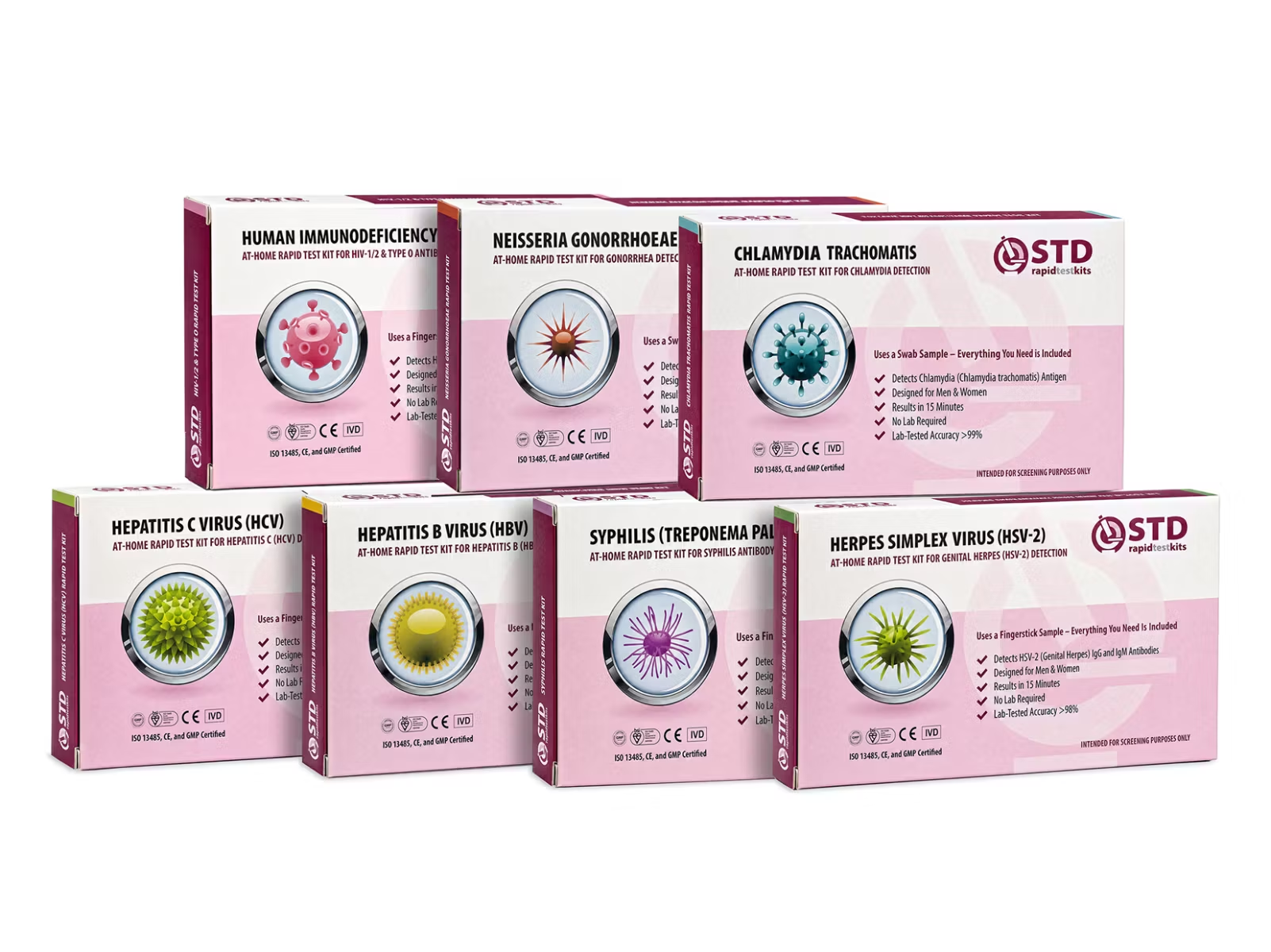
This article is published by stdrapidtestkits.com, which sells at-home STI testing kits. The product recommendations below are based on fit for this article’s topic, not commercial benefit. Confidential clinic and telehealth options are equally valid and we mention them throughout.
Soft Entries: How to Start Without Confronting Anyone
You do not have to start with a direct announcement. Sometimes the easiest opener is a sideways one, where you bring the topic into the room without putting yourself at the center of it. The point is not to deceive your family. It is to lower the temperature of a conversation that does not have to be a confrontation.
Some approaches that work in real households:
- Borrow a news hook. “I read that most people with chlamydia or gonorrhea don’t have any symptoms. That kind of scared me into wanting to check.”
- Use a friend as a reference point. “A friend just did a home test for the first time. It made me think I should do mine too.”
- Frame it as standard adult care. “It is like getting a physical or a dental cleaning. Just something adults are supposed to do.”
- Ask her advice on a hypothetical. “If a friend of mine wanted to get tested but felt embarrassed, what would you tell her?”
- Reference a public health campaign. “The CDC has been pushing routine STI testing for everyone our age. I want to start doing it like they recommend.”
Easing into the topic is not avoidance. It is a way to give the older person in the room time to catch up to a conversation she did not see coming. Once the topic is in the air, you can decide how much of it you want to make explicitly about yourself.
Easing in is not avoidance. It gives the older person in the room time to catch up to a conversation she did not see coming. Once the topic is in the air, you decide how much of it you make explicitly about yourself.
When the Reaction Is Hard to Take
Sometimes the conversation goes well. Sometimes it does not. Yelling. Tears. Accusations of being too American, too modern, too disrespectful. Cold silence that stretches for days. Threats about insurance, about living arrangements, about what other relatives are going to be told.
None of that defines your decision. You chose to take care of your health. You showed up with respect. The reaction belongs to the person reacting, not to you.
Some things that help when the response is hard:
- Do not argue back in the first moment. Strong reactions usually peak and then pass. Stay calm, repeat your value statement once, and step away if you need to.
- Give it time before you reopen. Many family members come back a day or a week later in a softer place. Some come back ready to share their own history that you never heard before.
- Lean on a sibling, cousin, or friend who knows what you are doing. Going through this alone makes it harder than it needs to be.
- Talk to a counselor or therapist if the conversation shakes you. A single session can help you process a hard family reaction. Title X clinics, university counseling services, and many community health centers offer this on sliding-scale or no-cost terms.
Going first is hard. It is also how silence ends in a family that has not had this conversation in any generation before yours.

Getting tested for sexually transmitted infections is part of routine health care. Many STIs cause no symptoms, so testing is often the only way to know your status.
What to Get Tested For and How Often
The right panel depends on your age, your sexual activity, and which infections you might have been exposed to. The CDC’s baseline recommendation for sexually active adults includes regular screening for chlamydia, gonorrhea, syphilis, and HIV. People at higher risk should also consider hepatitis B, hepatitis C, and herpes simplex (HSV) testing when appropriate, and women under 26 should be on the HPV vaccination and screening schedule recommended by their provider.
A useful starting framework:
- Annual baseline. Sexually active adults should test for HIV at least once, and for chlamydia and gonorrhea at least annually if under 25 or with new or multiple partners.
- After a new partner. Plan testing around the window period of each infection. Chlamydia and gonorrhea are typically detectable about two weeks after exposure; HIV, syphilis, and hepatitis are detectable on standard panels by about three months.
- After a possible exposure. Time the test to the window period rather than rushing the next day. A negative result inside the window is not yet meaningful.
- Routine retesting for ongoing risk. Many guidelines suggest every three to six months for adults with multiple partners or other ongoing risk factors.
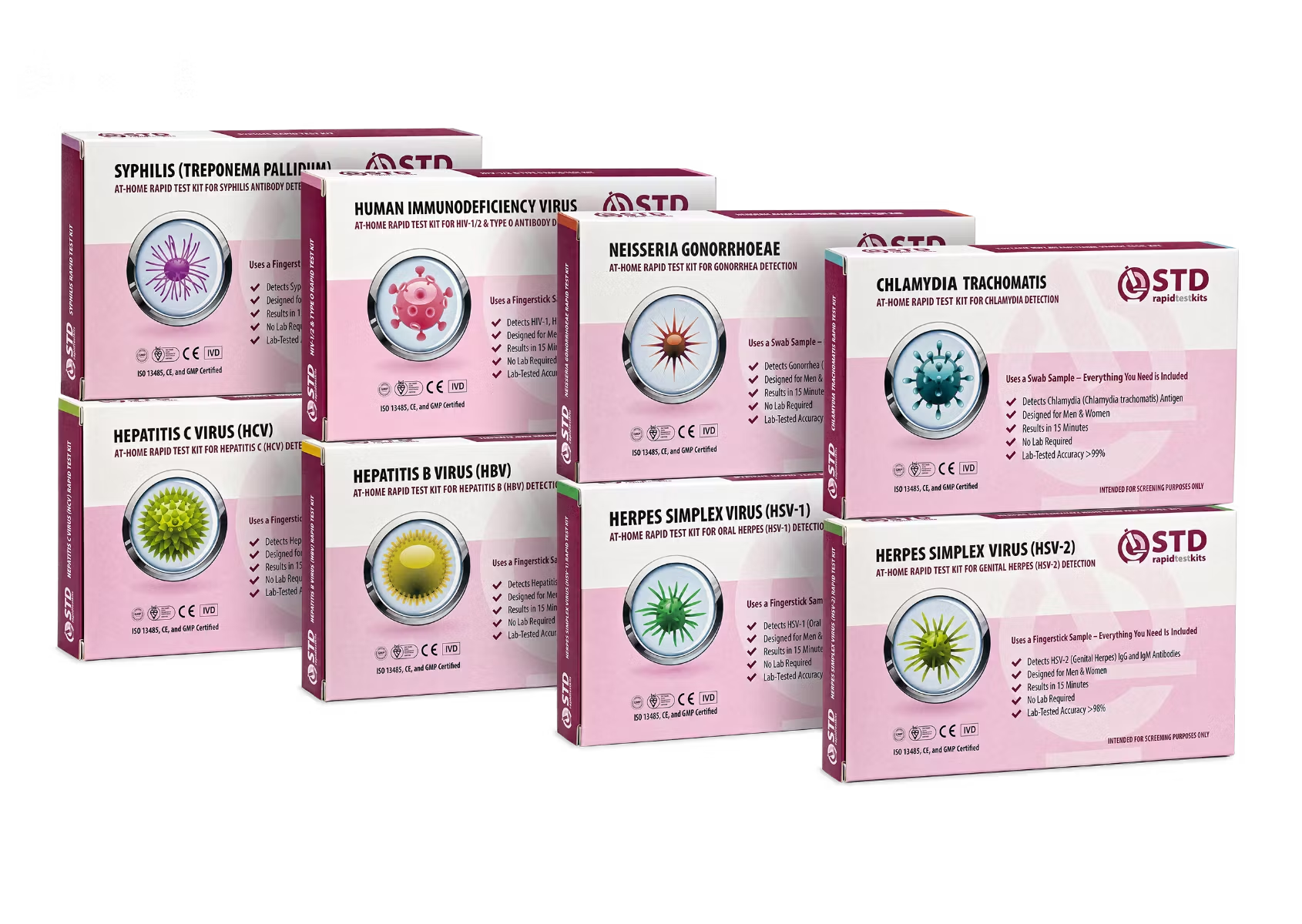
A combination panel is often the most efficient choice. Instead of ordering one test at a time, a combo kit screens for several common infections off a single appointment or a single at-home kit, which is especially helpful when you want one private, complete sweep.
You Do Not Need Permission to Protect Yourself
If you are waiting for the perfect moment, the supportive sit-down, the version of your family where everyone is calm and informed and gives you a hug before you go to the clinic, the wait can last forever. That moment may never come. It does not have to come.
What you need is your status, your treatment if you need it, and your peace of mind. You can have all three before you ever say a word out loud to anyone in your family. Ordering an at-home test today, or booking a confidential clinic visit tomorrow, is a complete action. You do not owe anyone the announcement.
If you do decide to tell someone later, that is also a complete and brave choice. But your healthcare does not pause to wait for permission you were never required to ask for.
1. At-home rapid kit. Ordered online in plain packaging, self-collected, no insurance line.
2. Title X clinic. Federally funded, sliding scale, confidential for minors. Find one through the HHS Office of Population Affairs.
3. Planned Parenthood. Sliding-scale STI testing paid out of pocket, which keeps it off a family insurance plan.
When the Silence Ends With You
Being the first person in your family to bring this conversation into the open is hard, vulnerable work. For most of us, no one taught us how to do it because no one in our line had the chance. The silence has been protective for generations, but protective at a cost: undiagnosed infections, untreated chronic conditions, decades of shame stored in places where it does not belong.
You do not have to make a big speech. You do not have to convert anyone to your view. You just have to take care of yourself, and let the people around you watch a younger version of the family treat sexual health as routine instead of taboo. The cousin who is fifteen right now is watching how you do this. The little niece you babysit on weekends will remember whether her older cousins talked about doctors or whispered about secrets.
Whether you say it out loud or handle it alone, the most important step is action. Get tested. Take care of your body. The silence ends one person at a time, and right now you are that person.
Today: order an at-home rapid STI test in plain packaging.
This week: look up your nearest Title X clinic through the HHS Office of Population Affairs site, in case you want a confirmatory lab test or in-person visit.
Anytime: share this article with a sibling, cousin, or friend who is also stuck on the conversation. Going second is easier than going first, and you can be the person who makes that possible for someone else.
Frequently Asked Questions
- Can I get tested for STIs without my parents finding out?
- Yes. If you are 18 or older, you have the legal right to confidential testing anywhere in the U.S. If you are under 18, every state and DC has a law that lets minors consent to STI testing on their own in some form, though the exact age and rules vary. Check Guttmacher Institute policy research and your state department of health website to confirm the specific rules where you live before you go to a clinic.
- Will the insurance explanation of benefits (EOB) reveal what I was tested for?
- It can. EOBs sent to the primary policyholder usually show the type of visit and the lab work billed, which can be enough to signal STI testing. If full privacy from family on your insurance plan matters, the most reliable workarounds are at-home test kits, Title X clinics, and Planned Parenthood paid out-of-pocket on a sliding scale. None of those routes involve a billed insurance line on a family EOB.
- What is the cheapest confidential way to get tested?
- Title X clinics and Planned Parenthood both offer sliding-scale STI testing, often free or close to free for people with low income or no insurance. At-home rapid test kits are a flat one-time cost with no clinic or insurance involved. Cost varies by panel and provider, so it is worth checking two or three options before deciding.
- Are at-home rapid STI tests accurate?
- Yes, when used correctly. Most home rapid lateral-flow tests report sensitivity in the mid- to high-90% range and specificity above 99% when used after the appropriate window period, with figures varying by target pathogen and manufacturer, so check the package insert for your specific kit. A positive home result is worth confirming with a clinic lab test, which uses higher-sensitivity molecular methods. A negative result inside the window period is not yet meaningful and should be repeated after the recommended waiting time.
- What should I say to my abuela about getting tested?
- Lead with values she taught you, not with details about your sex life. Something like, “You raised me to take care of my health, and this is part of that” usually lands better than a graphic explanation. Pick a calm, private moment, not a family gathering. Repeat the same short value statement if she pushes back. You are informing her, not asking permission.
- What if my family reacts with anger or accusation?
- Stay calm in the first moment. Do not argue back. Repeat one short value statement, and step away from the conversation if you need to. Strong reactions usually peak and pass within hours or days. Many family members come back later in a softer place than where they started. If the reaction shakes you, a single counseling session can help you process it.
- Which STIs should I be tested for if I am sexually active?
- The core four for any sexually active adult are chlamydia, gonorrhea, syphilis, and HIV. Those cover the majority of undiagnosed bacterial and viral infections that public health agencies prioritize for routine screening. Higher-risk situations or specific exposures add hepatitis B, hepatitis C, herpes, and HPV, with HPV screening typically handled during gynecologic care for women.
- How often should I get tested?
- Once a year is the floor for anyone under 25 or with new partners. For ongoing higher-risk activity, every three to six months is more realistic. After a specific possible exposure, time the test to the window period for that infection rather than rushing in the next day. A too-early test is not yet meaningful and can return a false negative.
- U.S. Centers for Disease Control and Prevention. STI testing overview, prevention, and U.S. surveillance data including racial and ethnic breakdowns.
- U.S. Centers for Disease Control and Prevention. HIV surveillance and routine screening recommendations for U.S. adults and adolescents.
- U.S. Department of Health and Human Services, Office of Disease Prevention and Health Promotion. MyHealthfinder: conversation starters for discussing STI testing with a sexual partner.
- Guttmacher Institute. Policy research on minors’ access to STI services and confidential consent in the United States.
- U.S. Department of Health and Human Services, Office of Population Affairs. Administers the Title X family planning program, which funds confidential sexual health services for adults and minors.
- MedlinePlus, U.S. National Library of Medicine. Sexually transmitted infections: symptoms, testing windows, and care.
