
Published: June 2025 | Last updated: May 2026 | Editorial review and quality control: Martina N.
GLASS, the World Health Organization's Global Antimicrobial Resistance and Use Surveillance System, is the closest thing public health has to a real-time scoreboard of bacteria versus antibiotics. The numbers can change which drug your clinician picks for a UTI, whether your travel itinerary needs a backup test kit, or how worried to be when a routine throat swab takes longer than expected to clear. The problem is that the data lives inside 300-page PDFs of microscopic tables with column headers like 3GC-R E. coli and CRE Klebsiella, the kind of layout that makes you want to refresh your social feed instead.
This guide flattens the learning curve. In about ten minutes you'll know which columns to scan, which red cells matter, which countries publish enough data to trust, and how to translate a scary percentage into a useful next step at home. We're not here to make you an epidemiologist. We're here to make sure you don't ignore a tool that could save you a wasted antibiotic prescription, or a missed diagnosis.
Key Takeaways
- GLASS publishes country-by-country resistance percentages for major pathogens including Neisseria gonorrhoeae; the 2025 release shows ceftriaxone resistance climbing in over a dozen countries.
- Tables lag real-time biology by 1 to 2 years, so reading them is only half the loop. Pair what you see with timely testing after potential exposure, especially when traveling to flagged regions.
What GLASS Actually Is (and Why WHO Built It)
GLASS launched in 2015 as the WHO's answer to a messy, country-by-country patchwork of lab results. Before GLASS, comparing antibiotic resistance between Argentina and Sweden was like comparing baking recipes written in different languages with different units. The system now pulls data from more than 130 countries and territories, each following the same laboratory protocols, so the numbers line up apples-to-apples rather than apples-to-furniture.
It merges two streams. GLASS-AMR tracks antimicrobial resistance, what share of confirmed infections shrug off the drugs we throw at them. GLASS-AMC tracks antimicrobial consumption, how many milligrams of antibiotics each country dispenses per capita. Comparing the two reveals whether high prescribing drives resistance, or whether stewardship can buffer it.
Every year WHO drops a long report stuffed with tables: bloodstream infections, urinary infections, gonorrhea, and sometimes special sheets for emerging threats. Each row is a country. Each column is either a year or a drug class. The shading works like traffic lights: pale green means most isolates are still susceptible, yellow is a warning band, deep red signals that frontline treatment is in trouble. The WHO GLASS initiative page is the entry point if you want to download the source files.
Here's the catch: even experienced clinicians admit the layout can put you to sleep. If the jargon doesn't get you, the small font will.
GLASS-AMR answers: what fraction of confirmed infections are resistant to each antibiotic class. GLASS-AMC answers: how many milligrams of each antibiotic each country dispenses per capita. Reading both side by side is what reveals whether national prescribing is driving the resistance pattern you see.
Why You Should Care, Even If You Feel Healthy
Antimicrobial resistance was directly responsible for 1.27 million deaths globally and associated with 4.95 million total deaths when indirect contributions are counted, per the WHO antimicrobial resistance fact sheet. In the United States, the CDC's Antimicrobial Resistance Threats Report tracks millions of drug-resistant infections each year, with billions in direct healthcare costs and tens of thousands of attributable deaths.
Those stats can feel abstract until you realize that the first-line antibiotic your doctor prescribes for a raging UTI, a persistent sore throat, or a confirmed gonorrhea infection might already be unreliable in your zip code, depending on local resistance patterns.
For sexually active readers, the stakes get personal fast. Gonorrhea has progressively evolved resistance to nearly every class of antibiotics ever used against it. When GLASS shows a country crossing double-digit resistance to ceftriaxone, the last reliable injectable in most national protocols, every untested encounter becomes riskier than it was last year. Routine self-screening after a potential exposure takes about fifteen minutes and closes the lag between published resistance data and your personal risk.

Anatomy of a GLASS Table, Row by Row, Column by Column
Open any GLASS PDF and head to the bloodstream infection sheet. You'll see a grid that looks like a high school chemistry quiz with too many columns. Here's the decoder ring:
- Rows: Countries, territories, or specific reporting areas.
- Columns 1 to 3: Year, number of isolates tested (n), and percentage testing coverage.
- Columns 4 to 8 (approximately): Percentage of isolates resistant to each key antibiotic class. For E. coli that means third-generation cephalosporins and fluoroquinolones. For Staph aureus it means methicillin. For Neisseria gonorrhoeae it means ceftriaxone, cefixime, and azithromycin.
- Shading: GLASS uses a heat-map gradient. Pastel for low resistance, deep scarlet for danger zones where a single-drug regimen may already fail.
The beauty of this uniform layout is that one scanning trick works everywhere. Focus on the right-most “% R” columns, where red cells tend to cluster. Read horizontally for a cross-country comparison in one year. Read vertically for a single country's trend over time. Always glance at the n column too. A scary 30% resistance figure pulled from only twelve isolates means something very different than the same percentage built from twelve hundred.
| Column | What it shows |
|---|---|
| Country / area (rows) | Reporting jurisdiction for the row of data |
| Year | Surveillance year the figures cover |
| n (isolates tested) | Sample size behind each percentage |
| Testing coverage | Share of national lab network reporting in |
| % R per drug class | Percentage of isolates resistant to that antibiotic |
The 2025 Numbers That Should Catch Your Eye
WHO's May 2025 GLASS release shows a global median around 40% of bloodstream E. coli isolates now resist third-generation cephalosporins, up from the previous year. In practical terms, nearly two out of five patients with an E. coli bloodstream infection may need a pricier, more toxic backup drug for what used to be a routine problem. (See the WHO GLASS initiative page for the full release.)
Flip to the GLASS gonorrhea sheet and the tension spikes. Multiple countries reported 10% or higher resistance to ceftriaxone, the last-line injectable in most national treatment protocols. Several of those happen to be popular travel destinations across Southeast Asia, where the CDC has flagged hotspots for years through its STI surveillance program.
The picture gets sharper with the WHO 2024 Bacterial Priority Pathogens List, which ranks Neisseria gonorrhoeae in its high-priority tier alongside pan-resistant Acinetobacter and carbapenem-resistant Klebsiella. It's an official acknowledgment that the bugs behind common sexually transmitted infections have elbowed into the same danger bracket as classic hospital superbugs.
This article is published by stdrapidtestkits.com, which sells at-home STI testing kits. We recommend products based on fit-for-purpose for the reader's concern, not on commercial benefit.
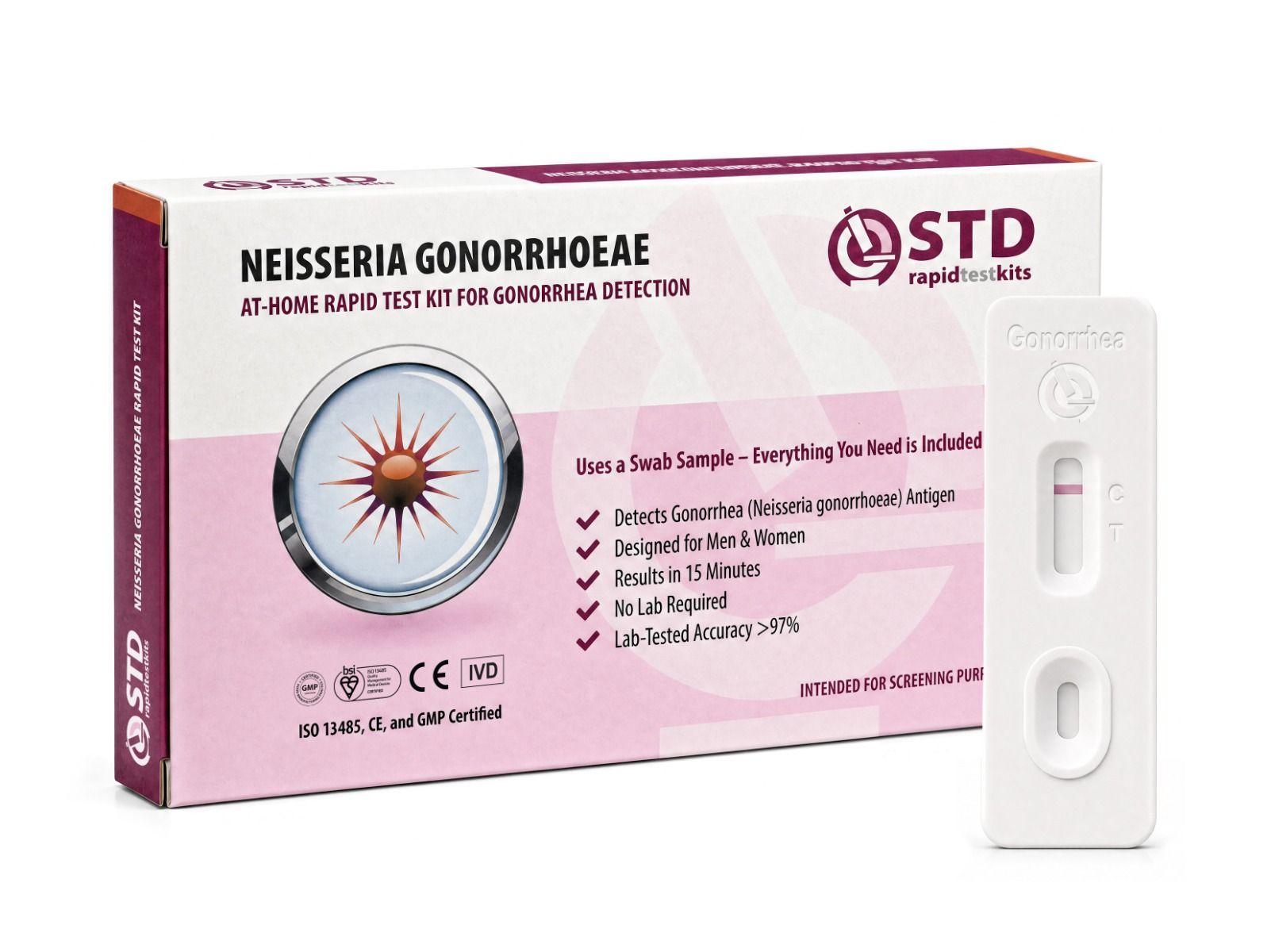
Gonorrhea in the Red Zone: How GASP Sharpens the GLASS Picture
Two acronyms, one headache. While GLASS collects broad AMR data across many pathogens, the Gonococcal Antimicrobial Resistance Surveillance Programme (GASP) zooms in on gonorrhea specifically. Recent GASP bulletins show that parts of Southeast Asia, and worryingly parts of Southern Europe, are reporting azithromycin resistance above 20%, the threshold at which dual-therapy regimens start to wobble. When GASP and GLASS agree on rising resistance, clinicians move from watchful waiting to revising treatment protocols, as reflected in the CDC's STI treatment guidelines for gonorrhea.
Case in point: the UK. Health authorities documented a small but worrying cluster of ceftriaxone-resistant Neisseria gonorrhoeae infections in recent years, with some cases linked through dating-app networks. Public-health teams traced the trajectory back to GLASS-style data showing creeping ceftriaxone-resistant percentages climbing from near zero in 2020 to single-digit positives by 2023. Cross-checking GLASS against GASP bulletins is how a single red cell becomes a defensible signal worth acting on, or gets confirmed as noise, before national guidelines change.
The 3-Minute Skim: A Speed-Reading Ritual
Grab a fresh GLASS PDF and set a three-minute timer. You're not trying to crunch every decimal, just hunting for hotspots. Follow this rhythm:
- Frame your question first. Something like: where is ceftriaxone resistance pushing past 5%? A single laser-focused query keeps your eyes from wandering.
- Jump to the latest year column. GLASS arranges years left to right, so 2024 and 2025 data hide at the far edge. Red or dark-orange cells in that column are your immediate attention.
- Cross-check the n column. Scroll left to see how many isolates back up that percentage. Anything under 30 warrants caution; tiny samples can inflate or deflate the rate dramatically.
- Peek at neighboring countries for context. Bacteria travel with people. If Thailand lights up red and Vietnam is orange, that border just got epidemiologically busier.
- Note the trend arrow. Most GLASS sheets include a small flag comparing to the previous year. Two or more upward arrows in a row signals a real climb rather than a one-year blip.

Pattern or Noise? Dodging the Small-n Trap
Picture this. A country posts an 11% ceftriaxone-resistant gonorrhea rate from just nine lab samples. One resistant strain out of nine isolates is a signal worth noting, but the sample base is too small to call it a trend on its own. Some small-n signals turn out to be real and worth acting on, like the cluster that triggered UK guideline reviews. Others mean-revert the following year and were never trends to begin with. Here's how to separate smoke from fire:
- Check coverage. GLASS lists how many sentinel laboratories feed each country's data. Fewer than three labs equals a potential blind spot rather than nationally representative coverage.
- Compare to regional averages. If neighboring countries sit at 0 to 2% resistance while you spike to double digits on a handful of tests, you may be catching an outbreak rather than a systemic shift, or vice versa.
- Look for year-over-year consistency. Single-year blips happen. Two consecutive climbs usually mark a real trend worth changing behavior over.
- Follow up with GASP. For Neisseria gonorrhoeae, GASP bulletins provide lab-confirmed susceptibilities that often validate or debunk GLASS outliers.
Bottom line: patterns need persistence. But noise still matters if it nudges you to test after a risky encounter. Even a wobbly statistic can be the prompt that prevents an undiagnosed infection from being passed forward.
Treat a high resistance percentage with extra scepticism when any of these apply:
- Fewer than 30 isolates tested for the country and year.
- Fewer than three sentinel laboratories feeding national data.
- A spike in one year only, with no comparable rise in neighbouring countries.
From Spreadsheet to Bedside: Turning Numbers Into Action
So you spotted a red cell in a country you just booked for a spring break trip. Do you cancel? Probably not. Instead, translate data into specific moves:
- Before you go: Pack condoms and a mail-order rapid test. Viral risks like HPV, HSV, and HIV have vaccines or post-exposure tools. Bacterial STIs need detection and treatment, ideally early.
- While abroad: Stick to current treatment guidelines from credible sources. If a pharmacy hands you an outdated drug for a confirmed bacterial infection, you're gambling on a strain that may already be resistant, and feeding wider AMR with each partial dose.
- Back home: Test 7 to 14 days after potential exposure, even without symptoms. UK authorities have warned travelers of so-called “super gonorrhea” linked to Asian travel hotspots after detection rates climbed over recent surveillance periods.
- Share, don't shame. If a test comes back positive, tell partners early. Rapid notification plus treatment curbs onward transmission and slows the spread of resistant strains.
Use GLASS as one input among several. A red cell is a prompt to test and check current treatment guidelines, not a guarantee about any individual outcome.
The Consumption Side: Reading the GLASS-AMC Mirror
GLASS isn't just about bugs. Its sibling module, GLASS-AMC, tracks how many milligrams of antibiotics humans consume per capita. Countries with the most broad-spectrum prescribing often mirror those with the darkest resistance heat-maps. But there are outliers worth noting:
- High use, low resistance. Nations with robust stewardship (tight prescription rules, narrow-spectrum-first guidance, short standard durations) can buffer resistance even when consumption is high.
- Low use, high resistance. Settings with rampant over-the-counter sales (no scripts required) tend to see partial courses, the perfect breeding ground for hard-to-kill strains.
For everyday readers, AMC matters because over-using leftover antibiotics at home nudges community resistance upward. Toss expired pills; never split doses with a partner; never start your own course without confirming a bacterial cause.
Five Myths the GLASS Tables Debunk in One Glance
Scrolling GLASS can feel like myth-busting bingo. Here are common misconceptions, plus the table cells that prove them wrong.
Myth 1: Resistance only happens in hospitals.
GLASS community-infection sheets show 30% or higher fluoroquinolone-resistant E. coli in outpatients from multiple countries. Your local urgent-care UTI prescription may already be flying half-blind, before the patient ever sees the inside of a hospital.
Myth 2: Europe is safe; resistance is a low-income issue.
Several Southern European countries report bloodstream Klebsiella carbapenem resistance above 15%, higher than some African settings. Geography is not destiny here. Stewardship policy is.
Myth 3: If my partner has no symptoms, we're fine.
Asymptomatic gonorrhea drives most silent spread. Even countries publishing low cef-R percentages still have undiagnosed carriers in the population. No symptoms is not the same as no risk, especially for pharyngeal or rectal sites where local symptoms may never appear.
Myth 4: Only multiple antibiotic courses cause AMR.
Even single mis-dosed treatments create selective pressure. Tables comparing AMC against AMR can show resistance spikes after a single national mass-drug campaign, separate from years of layered prescribing.
Myth 5: I can wait for symptoms before testing.
By the time outbreaks show clinically, GLASS has usually recorded the resistance climb already. The two-year lag in surveillance cuts both ways: population-level patterns trail real biology, and early personal testing is what closes the gap.
Gonorrhea has progressively developed resistance to the antibiotic drugs prescribed to treat it.
Why Reading GLASS Without Testing Is Half the Loop
Reading GLASS without follow-through is like checking the weather and leaving your umbrella at home. Surveillance tables signal where antibiotics may flop. Your personal risk hinges on a different variable: have you been screened recently? Public health research consistently suggests that consistent screening paired with targeted treatment slows the community spread of resistant strains over time, especially for sexually transmitted infections that respond fast to short antibiotic courses when caught early.
That's why our mantra threads through every section of this guide: skim, interpret, then act. A discreet at-home test closes the feedback loop between global trend and individual status. Kits arrive in plain packaging, use a self-collected swab or fingerstick, and deliver results in roughly fifteen minutes. No clinic queue, no missed work hours, no awkward checkout line conversations. If positive, you can move faster to confirmatory clinical care and partner notification, both of which reduce onward transmission of resistant strains.
Remember: GLASS tables run one to two calendar years behind real-time. Your body's biology updates daily.
Swab-based rapid tests for gonorrhea and chlamydia become reliable about 7 to 14 days after exposure. Blood-based tests for HIV and syphilis have longer seroconversion windows, so check each kit's specific instructions. If symptoms appear or persist, retest and see a clinician.
Your 7-Step Monthly GLASS Reading Checklist
Need a fridge-magnet version of this guide? Here's a condensed workflow you can run monthly, or whenever a news report hints at a “superbug” outbreak. Each step is a guardrail against both complacency and data overwhelm.
- Pick one pathogen at a time. Focus on Neisseria gonorrhoeae, or E. coli, or Klebsiella. Don't try to read every table at once.
- Open the latest year column. Jump straight to 2024 or 2025 cells; older years are historical context, not action signals.
- Scan for red cells at 10% or higher. Flag countries with double-digit resistance as your watch-list zones for travel and current sexual partners.
- Verify sample size. Fewer than 30 isolates? Mentally downgrade urgency one notch and look for corroboration in other reports.
- Compare neighbors. Regional clusters hint at travel-related spread. Plan protection accordingly, especially when crossing land borders.
- Cross-check with GASP or your national dashboard. One data stream is good. Two streams in agreement is what guideline committees look for.
- Decide and act. If the risk touches your travel, dating, or symptom profile, order a rapid test kit and bookmark current treatment guidelines from the CDC STI program before swiping right again.
FAQs
- Is GLASS data really accurate if countries self-report?
- Countries follow a standardized WHO protocol and audits, but under-reporting and uneven lab coverage do happen. Cross-checking with national dashboards and GASP tightens reliability, especially when a single-year number looks unusual.
- How often are the GLASS tables updated?
- Annually, with provisional mid-year bulletins when emerging outbreaks warrant a faster signal. The main release typically lands in May or June each year.
- What does “3GC-R” mean?
- Resistance to third-generation cephalosporins, the antibiotic class that includes ceftriaxone and cefotaxime. It's a key signal for E. coli, Klebsiella, and gonorrhea trends.
- Can I use GLASS to decide which antibiotic to ask my doctor for?
- No. GLASS guides public-health policy and prescribing protocols at the population level. Individual prescriptions still depend on your clinician's culture or NAAT result combined with current treatment guidelines.
- Does rising resistance guarantee my treatment will fail?
- Not at all. Higher percentages raise the odds that first-line therapy underperforms, but susceptibility testing on your specific sample and timely follow-up are what determine your personal outcome.
- Are at-home rapid test kits reliable when resistant strains are circulating?
- Yes for detection. Rapid lateral-flow tests detect the presence of the pathogen, not its drug profile. A positive result still needs lab confirmation and susceptibility testing to guide treatment choice.
- How soon after exposure should I test?
- Swab-based rapid tests for gonorrhea and chlamydia become reliable once bacteria have replicated for one to two weeks; day 7 is practical, day 14 is more reliable. Blood-based tests for HIV and syphilis have longer seroconversion windows, so check the specific kit's instructions.
- Do condoms fully protect against resistant STIs?
- Condoms substantially reduce transmission of fluid-borne infections like gonorrhea, chlamydia, and HIV, but they don't cover every skin contact area. Periodic screening complements consistent condom use.
- World Health Organization. Global Antimicrobial Resistance and Use Surveillance System (GLASS) initiative page describing scope, country coverage, and annual report releases.
- World Health Organization. Fact sheet on antimicrobial resistance, including global mortality estimates and the burden of resistant infections (1.27 million direct deaths and 4.95 million total attributed deaths).
- U.S. Centers for Disease Control and Prevention. Antimicrobial Resistance Threats Report tracking U.S. resistance figures, attributable deaths, and economic burden.
- U.S. Centers for Disease Control and Prevention. STI Treatment Guidelines, gonococcal infections section, including current ceftriaxone protocols and the statement on progressively developed resistance.
- U.S. Centers for Disease Control and Prevention. Sexually Transmitted Infections program landing page with surveillance reporting and screening recommendations.
