When to Test for Syphilis After Oral Sex
Timing your post-exposure syphilis test the right way
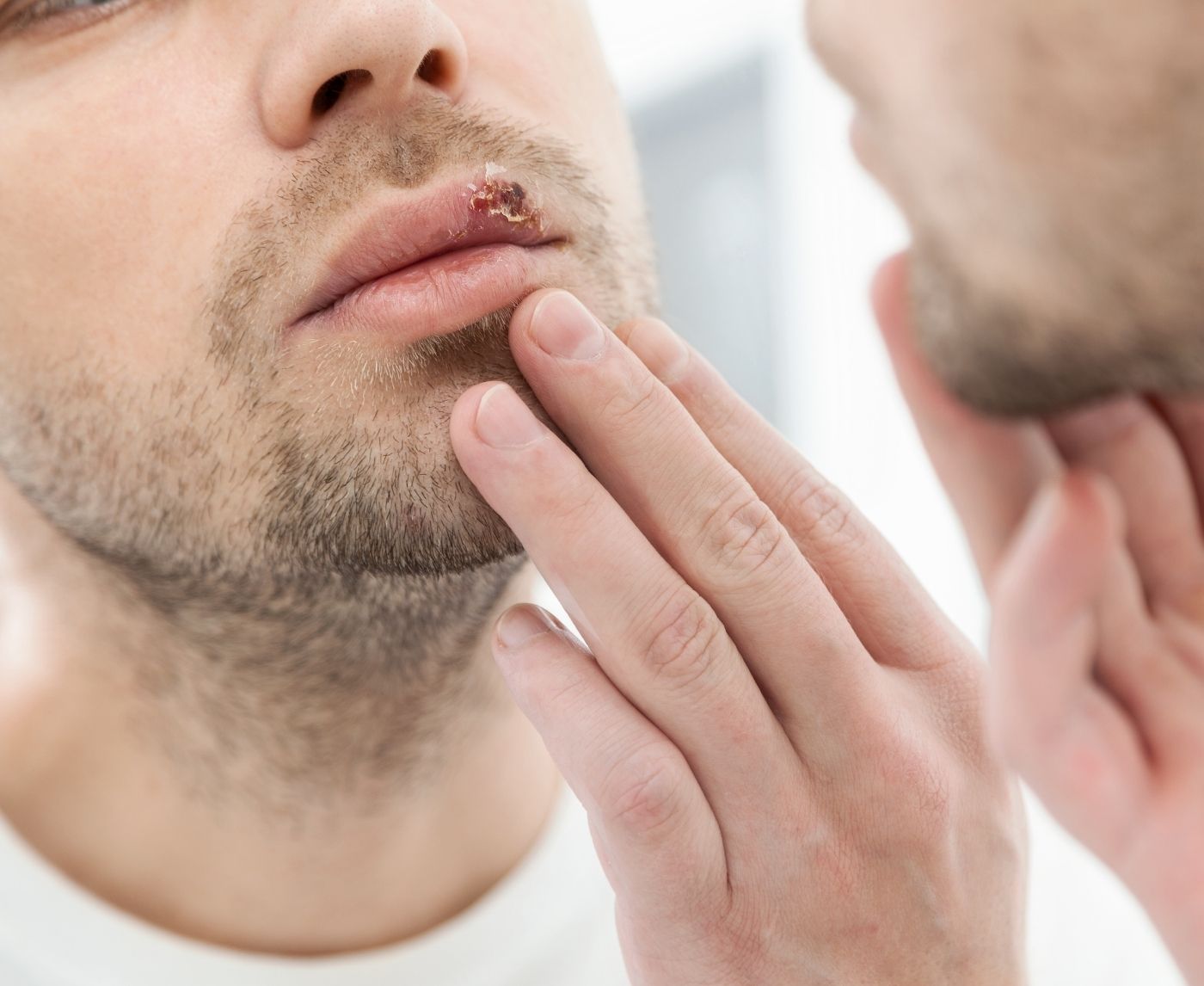



- Most antibody-based syphilis tests become reliable between 3 and 6 weeks after exposure; testing earlier risks a false-negative result that feels like reassurance but is not.
- A negative test at 6 weeks is meaningful for low-risk asymptomatic exposures; a follow-up test at 12 weeks is the conservative confirmation point for anyone with higher-risk exposures, HIV, or immune compromise.
Published: September 2025 | Last updated: May 2026 | Editorial review and quality control: Martina N.
Oral sex feels lower-risk than vaginal or anal sex, and for some infections it is. Syphilis is the exception. The bacterium that causes it can pass through any mucosal contact with an infected sore, including sores you cannot see on a partner's mouth, lips, throat, or genitals. That makes the question of when to test after an oral encounter a real medical question, not a paranoid one.
The short version: most rapid syphilis tests reliably catch infection between 3 and 6 weeks after exposure, with a confirmatory retest at 12 weeks if the first result is negative and you remain worried. The longer version, which matters because the timing decision affects whether your test result actually means anything, takes the rest of this article.
Why oral sex is not a syphilis-free zone
Treponema pallidum, the spiral-shaped bacterium that causes syphilis, enters the body through small breaks in skin or mucous membranes. Sex of any kind that brings mucosal tissue into contact with an infectious sore can transmit it. The CDC's overview of syphilis confirms that oral, vaginal, and anal sex all carry transmission risk when one partner has an active chancre or mucous patch (CDC, About Syphilis).
Two oral scenarios drive most exposures:
- Giving oral sex to a partner with a genital chancre. The sore is often painless, often hidden under foreskin, in the vaginal canal, or in the rectum, and not always visible to your partner either.
- Receiving oral sex from a partner with an oral chancre, mucous patch on the tongue or tonsil, or a syphilitic lesion on the lips. Some oral lesions are mistaken for canker sores or cold sores by the person who has them.
U.S. syphilis case counts have risen sharply over the past decade, with the largest increases among adults of reproductive age and a corresponding rise in congenital syphilis (CDC STI Statistics). Oral exposure is part of that rise.
Primary syphilis sores are typically painless, often hidden, and resolve on their own in roughly 3 to 6 weeks even without antibiotics. Many infected people never notice one. Without treatment the bacterium moves on to the secondary and latent stages while the visible sore fades, which is why a partner who 'looks fine' or 'felt fine' at the time of the encounter cannot be ruled out as a source of exposure.
The first 0 to 3 weeks: why testing too early backfires
Standard syphilis tests do not look for the bacterium itself. They look for antibodies your immune system produces in response to it. Your body needs time to make those antibodies after exposure, and during that lag period, called the window period, the test can return a falsely negative result even when you are infected.
Here is what is happening biologically during those early weeks:
- Days 1 to 10: the bacteria multiply at the site of contact (lips, tongue, tonsillar pillars, genitals, anus). No antibodies yet, no visible sore in most cases.
- Days 10 to 21: a painless ulcer called a chancre can appear at the contact point. It may sit on the lip, tongue, gumline, soft palate, or genitals, and it often heals on its own in 3 to 6 weeks even without treatment, which is why many people miss it.
- Days 21 to 42: antibodies build up to detectable levels in the blood. This is when most lateral-flow rapid tests and lab assays begin to reliably return a positive result.
A test taken at week 1 or week 2 is almost certain to return negative regardless of infection status. That is not because the test is bad; it is because there is nothing for the test to find yet.
If you test before week 3, treat the result as a baseline rather than an answer. Plan a retest at week 6, and a second confirmatory test at week 12 if the encounter was higher-risk or if any new symptoms appear in the meantime.
Three testing checkpoints: 3, 6, and 12 weeks
Most STI clinics frame post-exposure syphilis testing around three checkpoints. You do not need all three for every exposure, but knowing what each one tells you helps you decide how many to plan.
The three-week mark is the earliest a positive antibody result is plausible. Many people who develop a chancre develop it around this point, and clinicians will test if symptoms appear. A negative result here is preliminary, not final.
The six-week mark is where rapid and lab tests reach their typical sensitivity. The CDC's Sexually Transmitted Infections Treatment Guidelines describe serologic tests as becoming reliably reactive within several weeks of infection (CDC STI Treatment Guidelines). For asymptomatic people with no other risk factors, a negative result here usually closes the question.
The twelve-week mark is the conservative confirmation point. A small percentage of people seroconvert (develop detectable antibodies in the blood) later than the typical curve, and people living with HIV or other forms of immune compromise can take longer to make detectable antibodies. A negative result at 12 weeks lets most people stop retesting unless a new exposure happens.
| Test timing | What it tells you | Best for |
|---|---|---|
| 3 to 4 weeks post-exposure | First plausible window for a positive antibody result. A negative still needs follow-up. | Symptomatic exposures or high-risk encounters |
| 6 weeks post-exposure | Typical detection window for most rapid and lab tests. A negative is meaningful for low-risk asymptomatic exposures. | Routine post-exposure screening |
| 12 weeks post-exposure | Conservative confirmation. A negative is as close to definitive as a single test can give. | Ongoing concern, HIV, or immune compromise |
What if symptoms appear before the testing window?
Symptoms can be the first signal something is happening, even if an antibody test would still come back negative. The most reliable early signs of oral syphilis include:
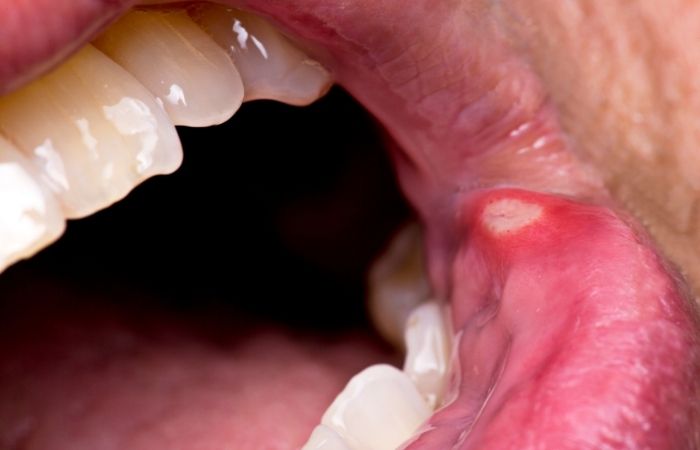
- A single round, firm, painless ulcer on the lip, tongue, gum, tonsil, or soft palate that does not heal within 1 to 2 weeks.
- A persistent sore throat without the usual cold or flu symptoms.
- Painless, mildly enlarged lymph nodes in the neck or under the jaw.
- A whitish mucous patch on the inside of the cheek or tongue (a less common but characteristic finding).
Oral chancres are easy to miss and easy to misdiagnose. Clinicians who do not see syphilis often may attribute a painless tongue ulcer to a canker sore, an aphthous ulcer, or a minor irritation. The NHS notes that oral chancres can heal without treatment in a few weeks while the infection silently progresses into the secondary stage (NHS, Syphilis symptoms). If you have a painless sore that does not heal after a known exposure, ask explicitly for syphilis testing rather than waiting for the symptom to disappear.
Reported cases of syphilis have been steadily increasing in the United States, with the largest annual increases observed among adults of reproductive age.
What syphilis test should you actually use?
Syphilis testing splits into two categories based on what the test detects, and most clinical workflows use both. (Disclosure: stdrapidtestkits.com sells a rapid at-home syphilis test; the guidance below applies to any syphilis test regardless of brand.)
Non-treponemal tests like RPR (Rapid Plasma Reagin) and VDRL detect antibodies your body makes in response to tissue damage from the infection. They are inexpensive, common in clinics, and useful for screening, but they can produce false positives from pregnancy, autoimmune conditions, recent vaccination, or other infections.
Treponemal tests like TPPA, FTA-ABS, and EIA detect antibodies specific to Treponema pallidum itself. They are more specific, but they stay positive for life in many people even after successful treatment, so they are usually used to confirm a non-treponemal positive rather than to track current infection.
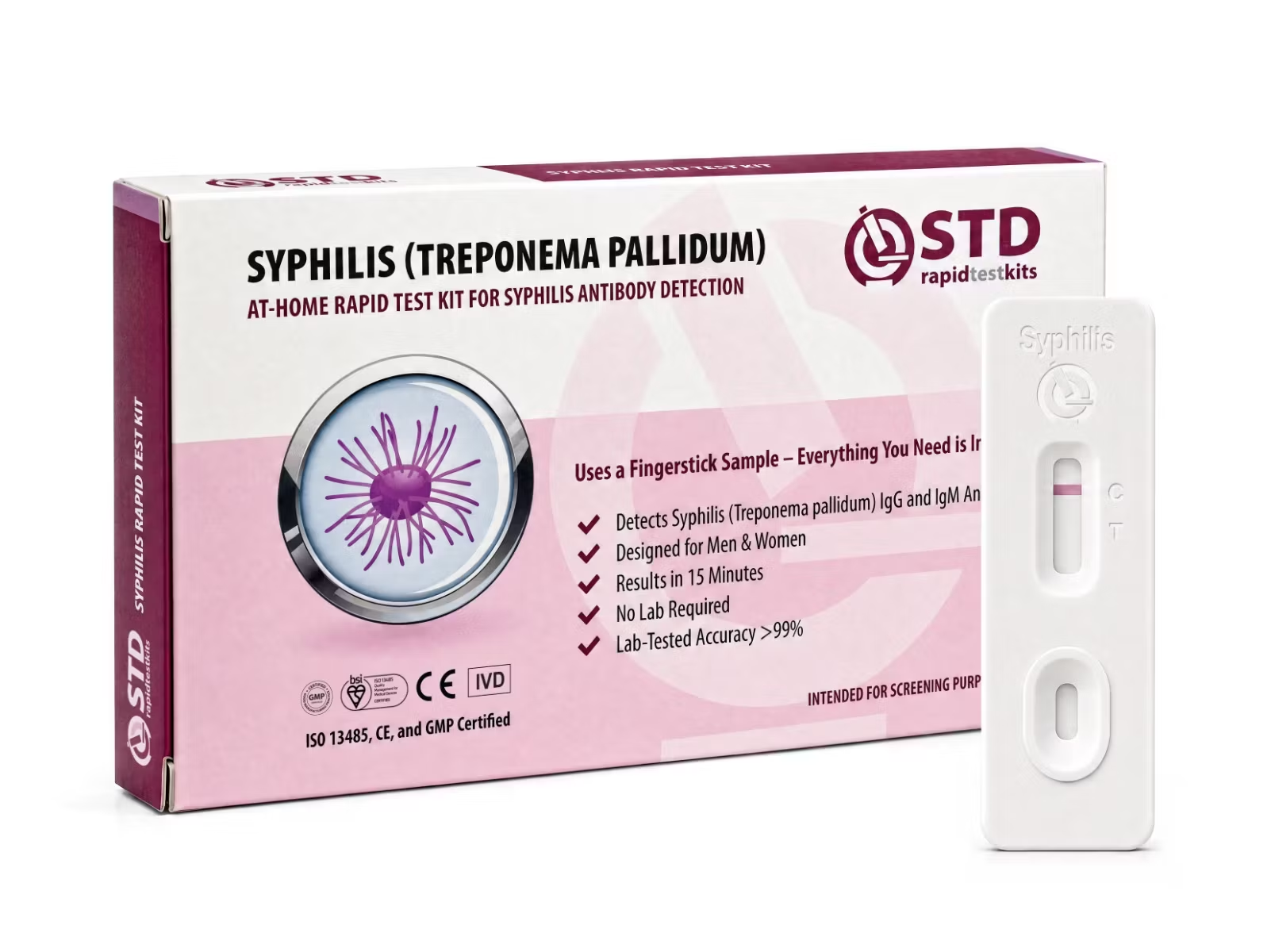
Rapid at-home and point-of-care tests are usually treponemal-specific lateral-flow strips that look for antibodies to T. pallidum from a fingerstick blood sample. They give a result in roughly 10 to 20 minutes and reach their typical sensitivity around the 6-week mark. A positive at-home result is a strong indicator and should be confirmed at a clinic with a non-treponemal test to assess whether the infection is current and active.
| Test | What it detects | Detection window | Typical use |
|---|---|---|---|
| RPR or VDRL (non-treponemal) | Antibodies linked to active infection | About 3 to 6 weeks | Initial clinic screening |
| TPPA, FTA-ABS, EIA (treponemal) | Antibodies specific to T. pallidum | About 3 to 6 weeks, often a lifetime marker | Confirmation of a positive screen |
| At-home rapid lateral-flow | Treponemal antibodies via fingerstick blood sample | About 4 to 6 weeks | Private at-home screening; lab confirmation if reactive |
Real-world scenarios: should you test?
Exposures rarely come with clean labels. Sometimes a partner discloses a positive result weeks later. Sometimes you find out about a sore you did not see at the time. Sometimes you just have a gut feeling that needs an answer. The CDC notes that oral-route syphilis transmission is well documented and that asymptomatic infection is common (CDC, About Syphilis).
The table below maps the most common situations against the recommendation that fits each one. Pick the row closest to your actual exposure and follow the timing it lists.
| Situation | Recommendation |
|---|---|
| Gave unprotected oral to a partner of unknown status, no symptoms since | Test at 6 weeks. Retest at 12 weeks if any new symptoms or further exposures appear. |
| Partner disclosed a syphilis diagnosis after the encounter | Baseline test now plus tests at 6 and 12 weeks. Ask your clinician about preventive treatment. |
| You noticed a sore in their genitals or mouth at the time | Test now and again at 6 weeks. Consider preventive treatment if a provider recommends it. |
| Received oral from a partner with active oral lesions | Test at 4 to 6 weeks even if you have no symptoms yourself. |
| A painless ulcer appeared in your mouth 2 to 6 weeks after the encounter | See a clinician promptly. Ask explicitly for syphilis testing alongside a lesion exam. |
| Deep kissing only, no oral or genital contact | Optional. Risk is low but not zero if your partner has active oral lesions. |

At-home rapid tests, mail-in panels, and clinic testing
You have three practical options for syphilis screening after an oral exposure, and each one fits a different situation.
At-home rapid tests use a fingerstick blood sample on a lateral-flow strip, the same chemistry family as a home pregnancy test or a COVID rapid test. They detect treponemal antibodies, return a result in 10 to 20 minutes, and reach their typical sensitivity around the 6-week mark. They are private, immediate, and inexpensive, but they screen rather than diagnose. A reactive result should always be confirmed at a clinic with both a non-treponemal and a treponemal test.
Mail-in lab panels use a dried blood spot card or a small vial collected at home and shipped to a CLIA-certified laboratory. They typically run both treponemal and non-treponemal assays and return a result in 2 to 5 days. They are more analytically sensitive than rapid strips and produce a result most clinics will accept as a starting point for treatment.
Clinic and STI-clinic testing remains the standard of care. A trained clinician will order a non-treponemal screen plus a treponemal confirmatory test, examine any visible lesions, and offer immediate treatment if you test positive. The CDC maintains a public locator for low-cost and free testing sites by zip code (CDC GetTested).
For routine post-exposure screening with no symptoms, an at-home rapid test at the 6-week mark plus a clinic follow-up if it reads reactive is a reasonable path. For symptomatic or high-risk exposures, go directly to a clinic.
| Option | Time to result | Typical use | Confirmation needed |
|---|---|---|---|
| At-home rapid test | 10 to 20 minutes | Private screening at the 6-week mark | Yes, follow up at a clinic if reactive |
| Mail-in lab panel | 2 to 5 days | Treponemal plus non-treponemal results from home | Often accepted as a starting point for treatment |
| Clinic or STI-clinic visit | 1 to 3 business days | Full screening, lesion exam, immediate treatment access | Confirmation is built into the workflow |
If your test is positive: confirmation, treatment, and partner notification
A positive syphilis result is one of the most treatable outcomes in sexual health. The infection is bacterial, well understood, and reliably curable in its early stages with a standard antibiotic regimen. Acting quickly is what matters.
Step 1: Confirm the result. If your initial positive was from an at-home rapid test, follow up at a clinic. The standard confirmation pathway is a non-treponemal test (RPR or VDRL) plus a confirmatory treponemal test (TPPA or FTA-ABS). The combination distinguishes a current active infection from a marker of past, treated infection.
Step 2: Get treatment. Per the CDC's Sexually Transmitted Infections Treatment Guidelines, early syphilis (primary, secondary, or early latent) is treated with a single intramuscular injection of benzathine penicillin G, 2.4 million units (CDC STI Treatment Guidelines, Syphilis; the 2.4 million unit dose appears in the 'Primary and Secondary Syphilis' subsection of the guidelines). Late latent or syphilis of unknown duration requires three doses at weekly intervals. Penicillin allergy is managed with doxycycline or, in some cases, ceftriaxone; pregnant patients are always treated with penicillin and desensitized if necessary.
Step 3: Notify recent partners. Anyone you had oral, vaginal, or anal contact with in the previous 90 days for primary syphilis, 6 months for secondary syphilis, or up to 1 year for early latent syphilis should be informed so they can be tested and treated. Most state health departments run a free anonymous partner-notification service, so you do not have to make the contact yourself.
When a negative test still feels uncertain
Negative results sometimes fail to feel like answers, especially after a high-anxiety exposure. That is a legitimate human response, not a sign you missed something on the test. A few things help:
- Stick to a calendar-based retest schedule rather than re-testing every few days. Three time-points (week 6, week 8, week 12) is enough; more does not add information.
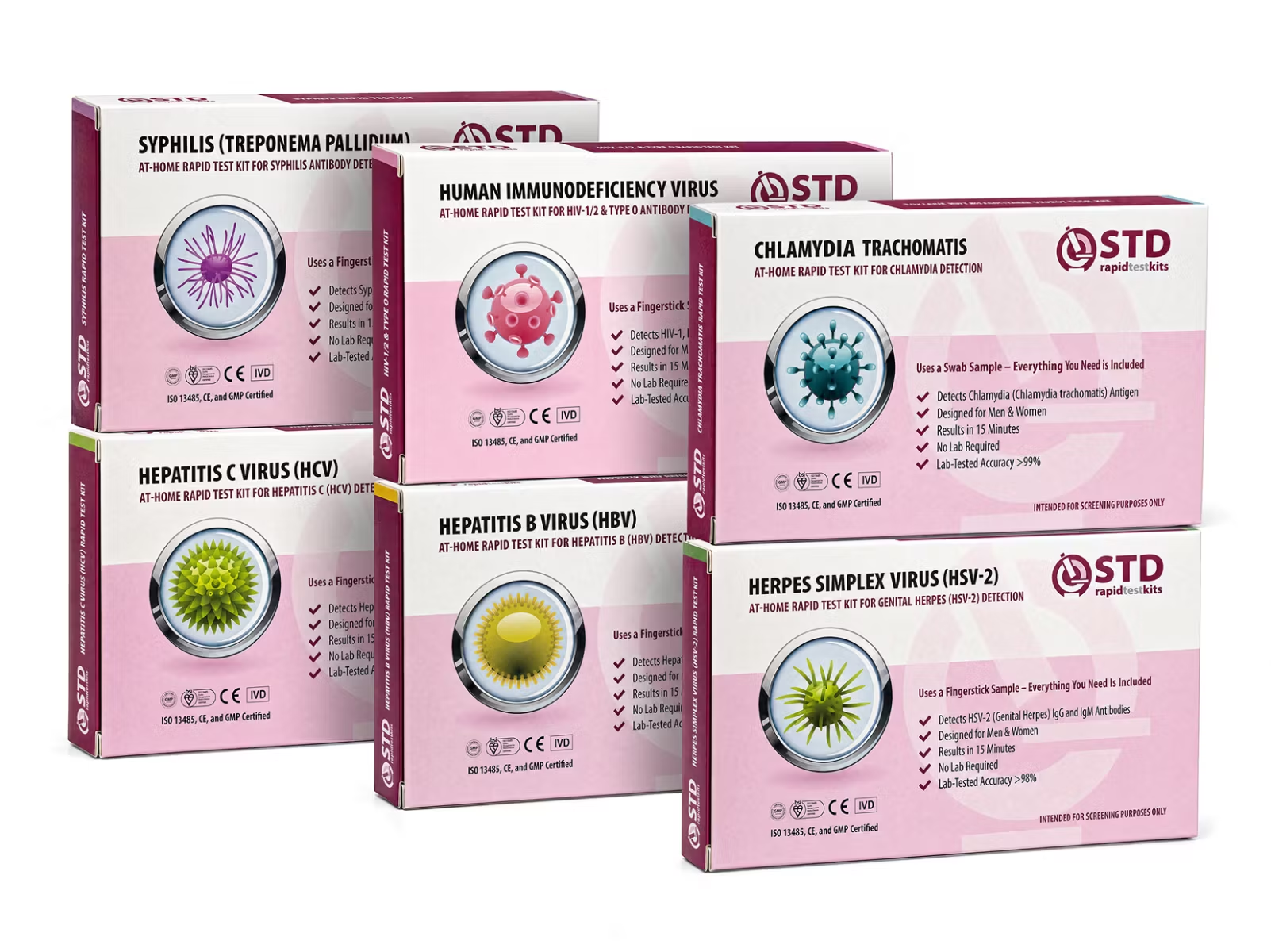
- Test for the realistic co-infections from the same exposure instead of re-testing for syphilis repeatedly. Common pairings include HIV (test at 18 to 45 days for fourth-generation antigen/antibody, 90 days for antibody-only), gonorrhea and chlamydia (about 2 weeks for swab-based assays), and hepatitis B and C.
- Talk to a sexual health nurse or therapist if intrusive thoughts about a past exposure persist after a confirmed negative at 12 weeks. Compulsive re-testing is itself a recognized anxiety pattern that responds to professional support.
Routine STI screening every 3 to 6 months for anyone with new or multiple partners catches infections that one-off post-exposure testing misses, especially asymptomatic chlamydia and gonorrhea picked up at later encounters that you might not realise warranted a fresh test.
FAQs
- Can syphilis really transmit through oral sex?
- Yes, both giving and receiving. Treponema pallidum spreads through mucosal contact with a chancre or mucous patch, including lesions on lips, tongue, gums, tonsillar pillars, soft palate, or genitals that neither partner notices at the time. The infection does not care which type of sex was involved; it cares about contact with infectious tissue.
- How soon after oral sex should I get tested?
- Six weeks is the sweet spot for most rapid and lab antibody tests. If symptoms appear earlier, test at 3 to 4 weeks and again at 6. If the encounter was higher-risk or if your partner later tested positive, add a confirmatory test at 12 weeks.
- I feel completely fine. Do I still need to test?
- Yes if the exposure was higher-risk and your partner's status is unknown. Most early syphilis infections are asymptomatic or have a chancre that heals on its own, so absence of symptoms is not the same as absence of infection.
- What does an oral syphilis sore look like?
- Typically under 1 cm across, about the diameter of a pencil eraser. The back-of-mouth locations (tonsillar pillar, soft palate, inside cheek near the molars) are the ones people miss without a mirror, and missing the sore is part of why oral syphilis goes undiagnosed. If a painless sore in your mouth has not started healing after 10 to 14 days, ask a clinician specifically for syphilis testing rather than assuming it is a normal oral irritation.
- Is a negative test at 2 weeks meaningful?
- Not really. The antibody window for syphilis is roughly 3 to 6 weeks. A test taken before week 3 is too early to detect most infections. Treat an early negative as a baseline only and plan a confirmatory test at week 6.
- Can deep kissing transmit syphilis?
- Possible but uncommon. Transmission via kissing requires direct contact with an active oral chancre or mucous patch, plus a break in skin or mucosa on your side. A peck is essentially zero risk. Prolonged deep kissing with someone known to have an active oral lesion is the situation worth testing for.
- My partner tested positive. My test is negative. What now?
- If less than 6 weeks have passed since exposure, your test was likely too early. Retest at 6 and 12 weeks. Ask your clinician about epidemiologic treatment, which is offered in some scenarios when a partner has confirmed early-stage syphilis even before your test seroconverts.
- Is syphilis curable?
- Yes. Early syphilis (primary, secondary, early latent) is reliably cured by a single intramuscular dose of benzathine penicillin G. Later-stage or unknown-duration syphilis requires three weekly doses. Treatment in pregnancy uses penicillin regardless of allergy, with desensitization if needed.
Our article was constructed based on current advice from the most prominent public health and medical organizations, and then molded into simple language based on the situations that people actually experience. Clinical guidance is drawn from the U.S. Centers for Disease Control and Prevention's Sexually Transmitted Infections Treatment Guidelines, the WHO's syphilis fact sheet, NHS condition pages, and CDC patient-facing testing resources. Surveillance figures reference the CDC's annual STI Statistics reports.
- U.S. Centers for Disease Control and Prevention. About Syphilis: transmission, signs and symptoms, and testing overview used throughout this guide for transmission routes and stage definitions.
- U.S. Centers for Disease Control and Prevention. Sexually Transmitted Infections Treatment Guidelines, syphilis chapter. Used for benzathine penicillin G dosing, stage definitions, and partner-notification windows. The specific 2.4 million unit IM dose appears in the 'Primary and Secondary Syphilis' subsection.
- U.S. Centers for Disease Control and Prevention. STI Statistics: annual U.S. case counts and trend data referenced in the rising-incidence statement.
- World Health Organization. Syphilis fact sheet covering global epidemiology, transmission routes, and clinical stages.
- NHS. Syphilis condition page used for the symptom progression and asymptomatic-healing description in the oral chancre section.
- U.S. Centers for Disease Control and Prevention. GetTested: locator for low-cost and free STI testing sites by zip code, used to support the clinic-access discussion.