
Published: October 2025 | Last updated: April 2026 | Editorial review and quality control: Martina N.
The spit-or-swallow question gets googled at 2 a.m. for one reason: people want a clean rule that tells them whether one choice protects them from a sexually transmitted infection (STI) after oral sex. The honest answer is small. Both swallowing and spitting carry similar risk for most STIs, because the infection happens during contact between the mouth, throat, lips, and the partner's genital tissue, fluids, or sores. What you do with semen afterward is rarely the deciding factor.
The factors that matter are different: which STI is involved, whether either partner has cuts, sores, or active infections, whether a barrier was used, and how recently either of you was tested. This article walks through what oral sex can transmit, where the spit-versus-swallow distinction genuinely changes the math, the small but real HIV question, and what to do if you want to test soon after a recent encounter. We will be plain about what our at-home rapid kits cover and where you need a clinic visit instead.
Does spitting or swallowing change STI risk after oral sex?
For the STIs most often spread through oral sex (gonorrhea, chlamydia, syphilis, herpes, HPV), spitting versus swallowing changes very little. Transmission happens during the act itself, when mucous membranes of the mouth and throat contact a partner's genital tissue, fluid, or sores. Stomach acid kills some pathogens once swallowed, which can lower risk for gut-route infections like hepatitis A, but it does not retroactively undo throat exposure. The CDC describes HIV transmission via oral sex as little to no risk. Use a barrier, and test using the windows below if you are worried.
Key Takeaways
- Most STIs that spread during oral sex (gonorrhea, chlamydia, syphilis, herpes, HPV) are transmitted by mucous-membrane contact, so spitting versus swallowing barely shifts the risk for the act you already did.
- The CDC says the risk of HIV from oral sex is little to no risk; the realistic worries are pharyngeal gonorrhea, oral syphilis, oral HPV (linked to throat cancers), and herpes.
How STIs spread during oral sex
Oral sex is the stimulation of a partner's genitals or anus using the mouth, lips, or tongue. Whether you are giving (the active partner) or receiving (the partner whose genitals are stimulated), STI transmission depends on three things meeting at the same moment: an infectious pathogen, a vulnerable tissue surface, and direct contact between them.
Vulnerable surfaces include the lips, the inside of the cheeks, the gums, the tongue, the back of the throat, the urethra, the vaginal walls, the cervix, the anus, and the skin of the penis or vulva. All of these are mucous membranes or thin skin, and pathogens cross them more easily than they cross intact, dry outer skin. Tiny breaks you may not even notice, including those from recent dental work, brushing too hard, ulcers, or a sore throat, raise the risk further.
Pre-ejaculate, semen, vaginal fluid, blood, and active herpes shedding all carry pathogens for one or more STIs. Direct skin-to-skin contact alone can transmit herpes and HPV, no fluid required (CDC: About STI Risk and Oral Sex).
The CDC identifies chlamydia, gonorrhea, syphilis, herpes (HSV-1 and HSV-2), HPV, and HIV as infections that can spread through oral sex, plus hepatitis A, hepatitis B, and shigella infections in the case of oral-anal contact.
Spitting versus swallowing: does it actually matter?
This is the question that probably brought you here, so it deserves a careful answer.
When a partner ejaculates in your mouth and the semen carries an STI pathogen, the throat and mouth have already been exposed during the oral sex itself. The pathogens have already met the mucous membranes most likely to acquire infection. Whether the semen then goes down (swallowing) or comes back up (spitting) is mostly a question of what happens to fluid that has already done what it was going to do.
There are two narrow places where the choice does matter, and they are smaller than the internet implies:
- Hepatitis A and gut-route infections. Hepatitis A and shigella spread by the fecal-oral route. If a partner's penis or skin carries fecal contamination from recent anal contact, swallowing semen along with that contamination is theoretically a slightly higher inoculum than spitting, because more material reaches the gut. Stomach acid neutralizes a lot of these pathogens, but not all.
- HIV (already very low). If HIV-positive semen reaches the back of the throat, the relevant question is whether the virus can cross into bloodstream-adjacent tissue. Spitting removes the volume more quickly. The CDC still rates the overall risk as little to no risk either way (CDC: About STI Risk and Oral Sex).
For gonorrhea, chlamydia, syphilis, herpes, and HPV, the contact during oral sex is what transmits, not what you do with semen at the end. Pharyngeal gonorrhea seeds the throat tissue. Syphilis can produce a painless chancre at any contact point, which can include in or around the mouth. Herpes sheds asymptomatically from the skin. None of these require swallowing in order to take hold.
Spitting is also not magic protection. It does not undo lip and gum exposure, and it does not rinse the throat. If you want to lower risk, the leverage is upstream: barriers, vaccination, knowing your partner's recent test results, and testing yourself.
Which STIs are most relevant after oral sex
Here is what the CDC and WHO flag as the realistic concerns when oral sex is on the table. The risk profile is different from vaginal or anal sex, so this list is shorter and skewed toward bacterial throat infections plus a few viruses.
| Infection | Can spread by oral sex? | Typical oral presentation | Often asymptomatic? |
|---|---|---|---|
| Gonorrhea | Yes (both directions) | Sore throat, redness, pus on tonsils, or nothing at all | Yes, frequently silent |
| Chlamydia | Less common but yes | Mild sore throat or no symptoms | Yes |
| Syphilis | Yes (sore-to-mouth or mouth-to-genital) | Painless ulcer (chancre) at the contact point, possibly in or around the mouth | Easy to miss because the chancre is painless |
| Herpes (HSV-1, HSV-2) | Yes (both directions) | Cold sores around the mouth, or no visible sore at all | Yes, asymptomatic shedding is common |
| HPV | Yes | Usually invisible; persistent infection can cause oropharyngeal cancers years later | Yes, almost always |
| HIV | Little to no risk per CDC | Acute infection symptoms are systemic, not oral | Often, in early stages |
| Hepatitis A | Yes via oral-anal contact | Stomach and liver symptoms weeks later | Sometimes |
Why oral STIs are so often missed
Most pharyngeal gonorrhea infections cause no symptoms at all, a silence that lets them spread before anyone knows to test (CDC: About STI Risk and Oral Sex). When symptoms appear, they pass as a mild sore throat, easy to dismiss as a cold or seasonal allergies. The same is true of oral chlamydia.
Syphilis is even more deceptive. The first stage is a single painless sore (a chancre) at the contact point, which can include in or around the mouth. Because it does not hurt, and because it heals on its own in three to six weeks, many people never see a clinician for it. The infection then moves into the secondary stage and can cause longer-term problems if untreated.
Oral HPV is its own slow-moving worry. Oral HPV infection is common among US adults; most infections are asymptomatic and clear within two years, but persistent high-risk types, primarily HPV-16, are the driver of oropharyngeal cancers. HPV is thought to cause around 70% of oropharyngeal cancers diagnosed in the United States (CDC: HPV and Oral Cancer Facts).
One more reason oral STIs are missed: most clinics do not throat-swab unless you ask. A standard STI screen often defaults to urine and a blood draw. If oral sex is part of your sex life, specifically request a pharyngeal (throat) swab for gonorrhea. The CDC does not recommend routine pharyngeal chlamydia testing; genital chlamydia screening remains the standard (CDC STI Treatment Guidelines, 2021).
And if a throat infection is diagnosed, treatment is often harder than treating the same infection in the genital tract. The CDC has designated antibiotic-resistant gonorrhea a public health priority, and pharyngeal infections are part of why.
Can you really get HIV from oral sex?
Yes, in theory. In practice, the risk is small. The CDC describes the risk of getting HIV from oral sex (giving or receiving) as little to no risk, much lower than the risk from anal or vaginal sex (CDC: About STI Risk and Oral Sex).
The reason it is not zero is that HIV transmission requires the virus to reach a tissue where it can establish infection. Saliva is hostile to HIV, the mouth has fewer cells the virus can target than the rectum or vagina does, and intact oral mucosa is a real barrier. The conditions that raise the risk are bleeding gums, fresh dental work, mouth ulcers, an active untreated genital STI in either partner (which raises HIV transmissibility in general), high HIV viral load in the source partner, and ejaculation into the mouth in combination with any of those.
Practical implication: an HIV blood test is reasonable peace of mind after high-risk exposures, but the math does not justify panic over a typical oral sex encounter. Fourth-generation rapid HIV tests detect the virus reliably from about 18 to 45 days post-exposure depending on the assay; an antibody-only test can reliably rule out infection by around 90 days post-exposure. If you want to test, time your test to the assay's window period.
There is little to no risk of getting or transmitting HIV from oral sex.
How to lower the risk during oral sex
The single biggest risk reducer is a barrier. The CDC and WHO both recommend barrier methods for every act of oral sex (WHO STI fact sheet). The practical options:
- Condom on the penis for fellatio. A non-lubricated or flavored latex condom blocks contact with semen and pre-ejaculate and reduces direct skin-to-skin transmission of herpes and HPV.
- Dental dam over the vulva or anus for cunnilingus or rim jobs. A dental dam is a thin square of latex or polyurethane. If you do not have one, a condom cut open lengthwise works.
- Vaccination. The HPV vaccine prevents most cancer-causing strains and is recommended through age 26, with shared clinical decision-making through age 45 per ACIP. The hepatitis B vaccine is also relevant for sexually active adults who have not been previously vaccinated.
- Oral hygiene matters more than mouthwash. Bleeding gums and recent dental work raise risk. Avoiding oral sex right after aggressive flossing or extraction is reasonable. Mouthwash does not kill HIV, syphilis, gonorrhea, or HPV, despite popular belief.
- Communication and recent testing. A partner who has tested in the last few months and shared the results with you is meaningfully different from a partner who has not tested in years. The conversation does not have to be clinical: a simple "when did you last get checked, and what did they test for?" covers most of it.
- Skip oral sex if either partner has visible sores, an active cold sore, an unhealed cut, or recent dental surgery. The risk window is short and avoidable.
If you are taking PrEP for HIV prevention, that protects against HIV but does not protect against gonorrhea, syphilis, herpes, or HPV. Doxy-PEP (doxycycline taken within 72 hours of condomless sex) is now recommended by the CDC for some adults at high risk and reduces bacterial STIs including chlamydia, gonorrhea, and syphilis. See the CDC's doxy-PEP clinical guidance for eligibility criteria, and talk to a clinician about whether either fits your situation.
Testing after oral sex: what we sell and what we don't
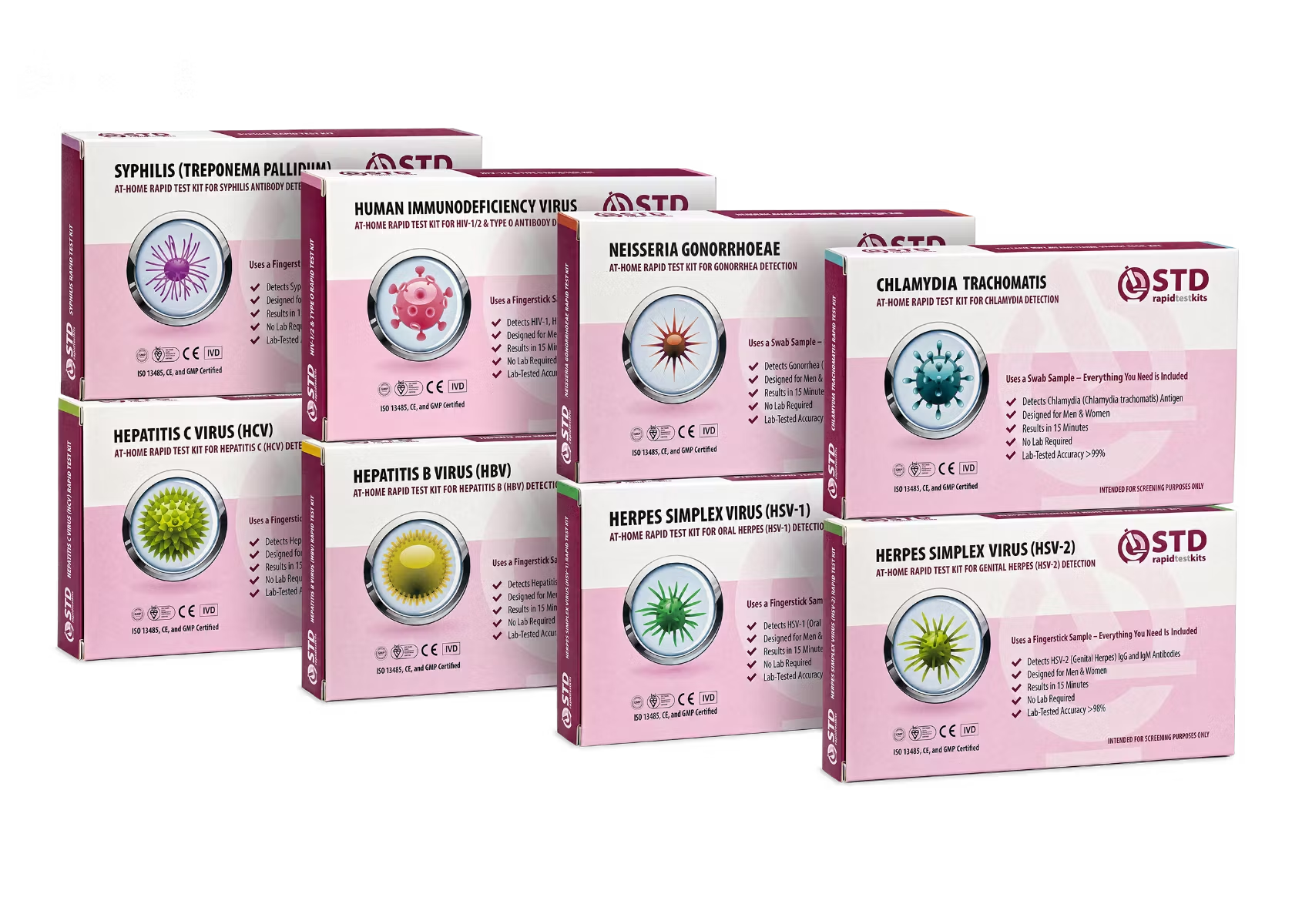
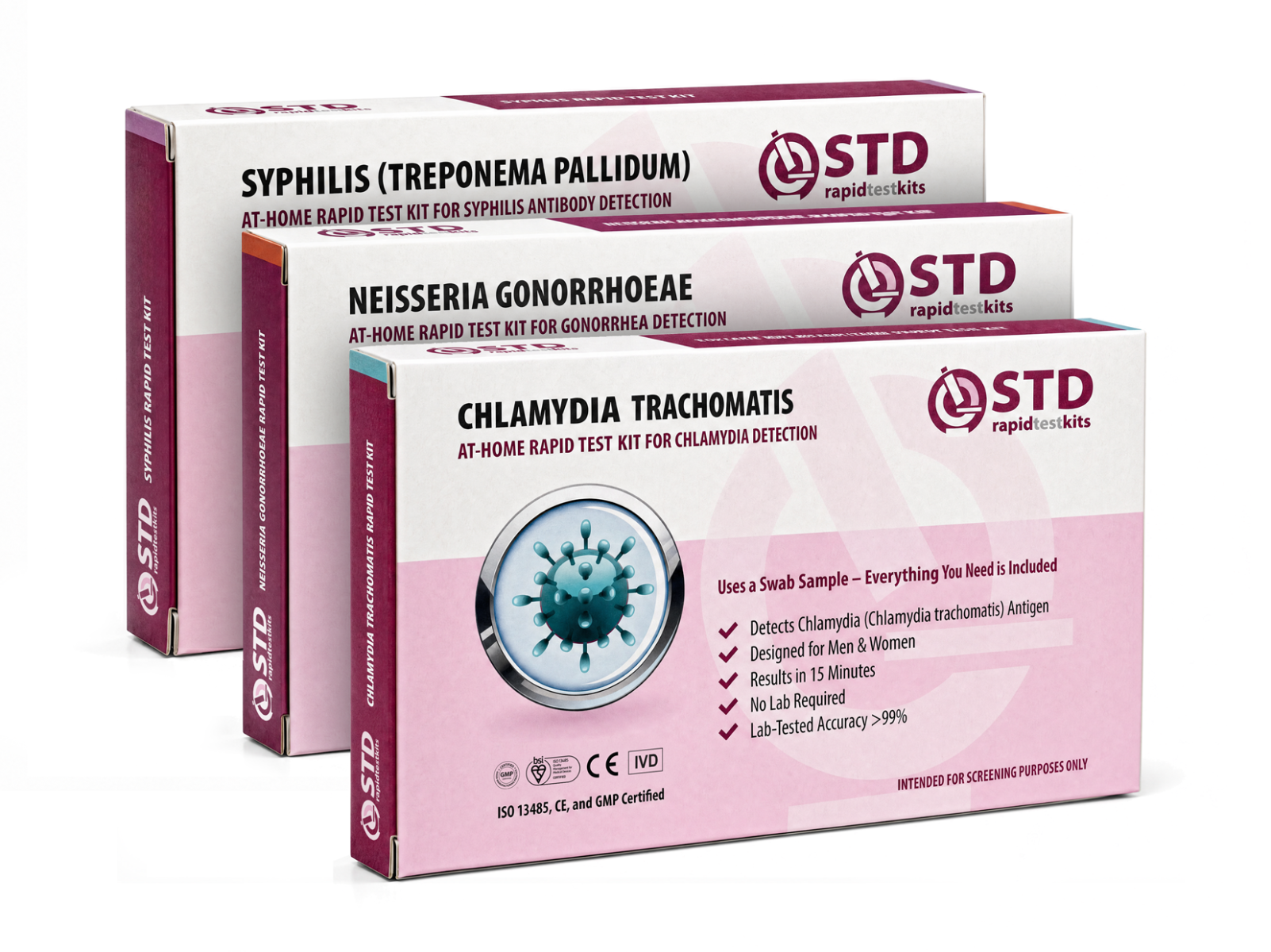
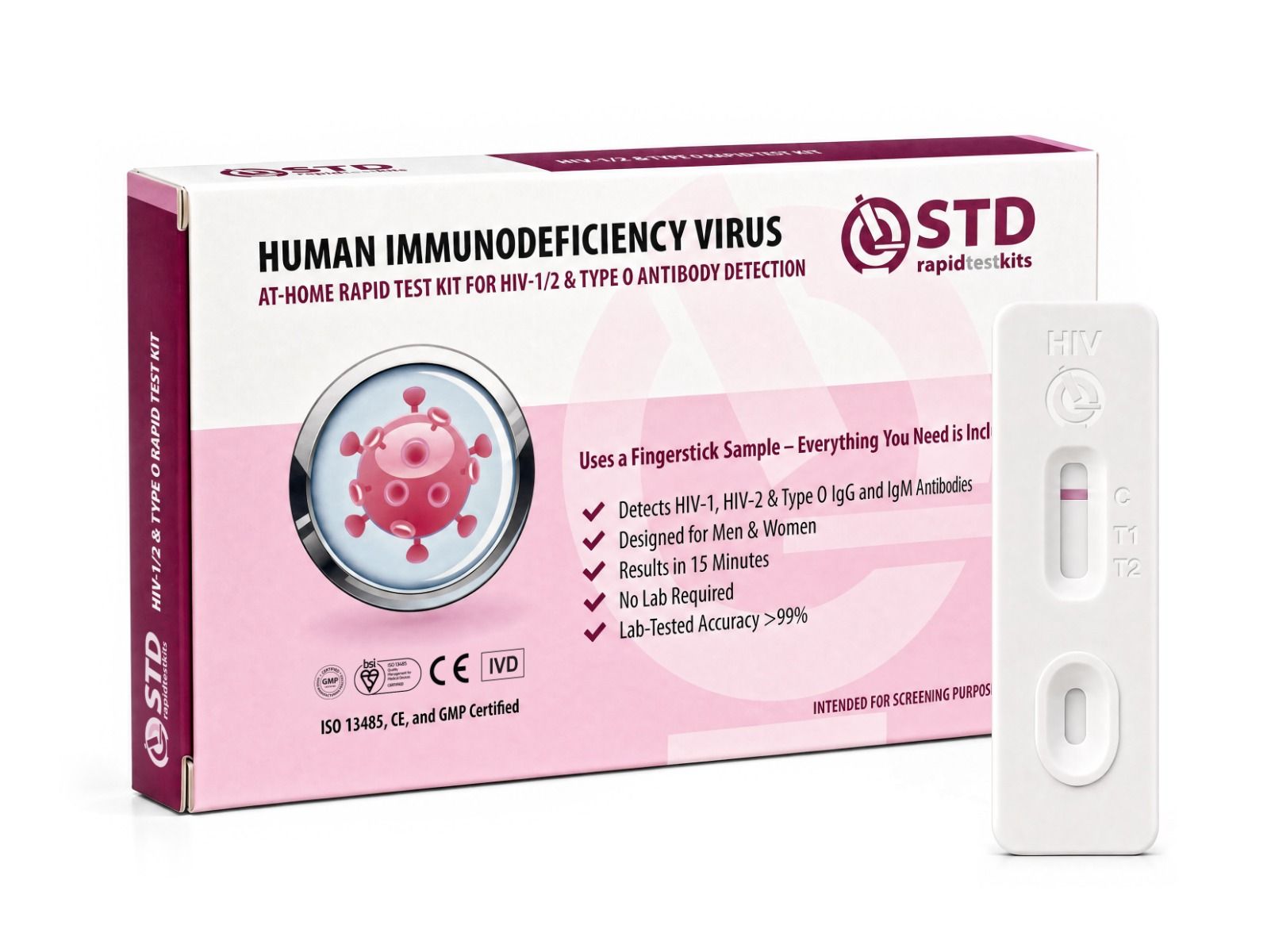
stdrapidtestkits.com sells rapid lateral-flow at-home kits that use a self-collected genital swab or a fingerstick blood sample. We do not sell pharyngeal (throat) swab tests. If your specific concern is a pharyngeal gonorrhea infection from receiving oral sex, the right move is a clinic or sexual health service that can collect a throat swab and process it on a lab NAAT.
What our kits do cover well is the adjacent-risk layer that comes with most oral-sex encounters: the partner site that may have been exposed in the same session, the bloodborne infections that can show up after high-risk activities, and screening when no symptoms are present. A typical pattern after a higher-risk recent encounter:
- Right away (day 0 to 7). Most STIs are not yet detectable. If you have symptoms (a sore, a discharge, a sustained sore throat), see a clinician now rather than waiting for a window to open.
- Day 14 onward. Chlamydia and gonorrhea genital swab tests start to detect reliably. Our chlamydia, gonorrhea, and combination kits work in this window for genital sample sites.
- Week 3 onward. Syphilis blood tests begin to turn positive in primary infection. A negative result here is reassuring but not final until 12 weeks post-exposure.
- Day 18 to 45. Fourth-generation HIV tests (antigen-antibody) typically detect by this window. Antibody-only HIV tests need closer to 90 days.
- Routine screening (no specific event). Annual screening is a CDC recommendation for sexually active adults; more often if you have new or multiple partners.
A positive at-home rapid result should be confirmed at a clinic with a lab NAAT or confirmatory antibody test. Our rapid lateral-flow tests are screening tools that pair well with lab confirmation, not a replacement for it. The lab uses NAAT and PCR chemistries with higher analytical sensitivity; the home kit gives you a fast, private first answer.
This article is published by stdrapidtestkits.com, which sells at-home STI testing kits. We recommend products based on fit-for-purpose for the reader's concern, not commercial benefit, and we say so plainly when a clinic visit is the right step instead.
The bottom line on spitting, swallowing, and STIs
Oral sex is lower risk than penetrative sex for some STIs and roughly equivalent for others, but it is not risk-free. The act of giving or receiving oral sex is what transmits gonorrhea, chlamydia, syphilis, herpes, and HPV. Spitting versus swallowing afterward changes very little for those infections. HIV transmission via oral sex is rated as little to no risk by the CDC, with the conditions that raise the risk (open sores, bleeding gums, untreated co-infections) being the practical things to avoid.
The leverage is in the steps before and after, not the moment of decision in the middle: barriers every time, the HPV and hepatitis B vaccines if you are eligible, an honest conversation with your partner, and a regular testing rhythm. If oral sex is a regular part of your sex life, request a throat swab at your clinic at least annually, and use at-home rapid kits to cover the adjacent genital and bloodwork screening between visits.
Carrying an STI is a health issue, not a moral one. If you have any doubt after a recent encounter, testing at the right window is faster and cheaper than treating an infection that has had months to progress.
FAQs
- Can you get chlamydia or gonorrhea from giving a blowjob?
- Yes for both. Giving oral sex to a partner with genital gonorrhea can lead to a pharyngeal gonorrhea infection, usually asymptomatic. Pharyngeal chlamydia can also occur, but the CDC does not recommend routine pharyngeal chlamydia testing; genital screening remains the standard. A throat swab at a clinic is the diagnostic test for suspected pharyngeal gonorrhea.
- Can I get an STI even if my partner has no visible sores?
- Yes. Herpes can shed from the skin without a visible sore, gonorrhea in the throat is usually asymptomatic, and oral HPV is almost always invisible. "Looks clean" is not the same as "tested negative."
- Does mouthwash kill STIs after oral sex?
- No, despite the persistent rumor. Mouthwash kills some bacteria but does not reliably kill HIV, syphilis, gonorrhea, herpes, or HPV in the throat. Some studies have looked at antiseptic mouthwash and pharyngeal gonorrhea with mixed results, but mouthwash is not a substitute for barriers or testing.
- What is the actual HIV risk from giving or receiving oral sex?
- The CDC describes it as little to no risk, much lower than vaginal or anal sex. The risk rises if the giver has bleeding gums, fresh dental work, or mouth ulcers, or if the receiver has an untreated STI that raises their HIV transmissibility. Even in those situations, the risk remains low compared with penetrative sex without a condom.
- How long after oral sex should I wait to test?
- Plan around the slowest test in your panel. For gonorrhea and chlamydia (genital swab), day 14 is the earliest reliable window. Syphilis blood tests can start turning positive around three weeks. For HIV, a fourth-generation test works from 18 to 45 days; an antibody-only test needs closer to 90 days. Symptoms before any of those windows should send you to a clinician, not a home kit.
- Do you sell a throat-swab test kit?
- No. Our at-home rapid kits use self-collected genital swabs or fingerstick blood samples, not pharyngeal swabs. For a suspected throat infection, see a clinic that can collect and lab-process a pharyngeal sample. Our kits are appropriate for genital and bloodborne screening after the same encounter.
- Is oral HPV really linked to throat cancer?
- Yes. CDC estimates that HPV causes about 70% of oropharyngeal cancers in the United States, mostly involving high-risk type 16. Most oral HPV infections clear on their own within one to two years; persistent infection over many years is what carries cancer risk. The HPV vaccine prevents most cancer-causing strains.
- If I tested negative two months ago, can I trust those results now?
- Only for exposures that ended at least one full window period before the test. If you have had any new sexual contact since the test, those negatives do not cover the new exposures. Re-testing after each new partner, or on an annual rhythm with one regular partner, is the CDC's basic guidance.
- U.S. Centers for Disease Control and Prevention. About STI Risk and Oral Sex. Lists STIs that can spread via oral sex; states that the risk of HIV from oral sex is little to no risk; recommends condoms and dental dams for every oral sex act.
- U.S. Centers for Disease Control and Prevention. HPV and Oral Cancer Facts. Source for the figure that HPV causes about 70% of oropharyngeal cancers in the United States, and for the role of high-risk HPV-16 in persistent oral infection.
- U.S. Centers for Disease Control and Prevention. About Genital Herpes. Source for HSV-1 and HSV-2 transmission patterns and asymptomatic shedding.
- U.S. Centers for Disease Control and Prevention. Sexually Transmitted Infections Treatment Guidelines, 2021 (MMWR). Recommendation that sexually active people who report receptive oral sex be screened for pharyngeal gonorrhea; states that pharyngeal chlamydia testing is not routinely recommended.
- World Health Organization. Sexually Transmitted Infections Fact Sheet. Source for global STI burden and the recommendation that condoms be used in vaginal, oral, and anal sex.
