

Published: August 2025 | Last updated: April 2026 | Editorial review and quality control: Martina N.
Situationships catch a lot of blame for the rising rates of sexually transmitted infections (STIs) among people in their twenties. The structure itself is neutral. The pattern inside many of those connections is what drives risk: hooking up without ever defining the relationship, skipping the testing conversation because it feels too serious, and assuming that if a partner seems healthy, they probably are.
That assumption fails because most common STIs cause no symptoms for weeks, months, or in some cases years. A partner who genuinely believes they are uninfected can still pass on chlamydia, gonorrhea, HPV, or HSV. The silence inside casual dating turns ordinary exposure into compounding exposure, where one untested encounter quietly seeds the next.
This is a clear-eyed look at why STI rates are climbing in Gen Z, what the data shows, and how to keep your sex life confident and safe without pretending casual dating is going to disappear.
Are situationships really spreading STIs?
Casual dating itself does not cause STIs. The behaviors common inside situationships do: inconsistent condom use, vague status questions, no routine testing between new partners, and the awkward silence that lets infections move undetected. People aged 15 to 24 account for nearly half of new STI cases in the United States each year per <a href="https://www.cdc.gov/sti-statistics/index.html">CDC STI surveillance</a>, largely because most chlamydia and gonorrhea infections cause no symptoms. Smarter testing, clearer questions, and barrier methods close most of the gap.
Key Takeaways
- Skipping testing, inconsistent condom use, and vague status conversations drive STI spread inside casual dating, regardless of what the connection is called.
- The CDC reports that roughly half of new STI cases in the United States happen in people aged 15 to 24, and most chlamydia and gonorrhea infections cause no symptoms.
This article is published by stdrapidtestkits.com, which sells at-home STI testing kits. We summarize current CDC, NHS, and WHO guidance and recommend products based on fit-for-purpose for the reader's concern, not commercial benefit. We are not a clinic and do not provide diagnosis.
Why situationships and STI risk get linked
A situationship sits in the gray space between dating and not dating. There is consistent texting, regular hookups, and shared time, but no agreed exclusivity and no obligation to disclose other partners. Many people enjoy that flexibility. The structure itself is morally neutral. The structure does, however, encourage three specific behaviors that drive infection rates.
Vague status conversations. When the relationship has no label, asking "have you been tested recently?" can feel like asking too much, too soon. Both partners often default to silence, which means each assumes the other is testing routinely or sleeping only with them. Neither assumption tends to be accurate.
Condom drift. Studies of casual partnerships find that condom use drops sharply after the first one or two encounters, even when partners are not exclusive. The shift happens because frequent contact starts to feel like familiarity, and familiarity reads as safety. This is consistent with CDC STI prevention guidance, which highlights consistent condom use as a core protective behavior.
Concurrent partners. Without exclusivity, both people may be sleeping with others, which is fine logistically and adds risk biologically. STIs spread through networks, not couples. Even one untested concurrent partner expands every other partner's exposure.
None of these is unique to situationships. They show up in any casual setup where status, testing, and protection get treated as awkward topics rather than basic logistics.
- Vague status talk: the testing question gets skipped because the relationship has no label.
- Condom drift: protection drops after the first or second encounter even when partners are not exclusive.
- Concurrent partners: one untested partner expands risk for everyone in the network.
"Are you clean?" Why the question is broken
"Clean" is the most common framing in casual dating and one of the least useful. The word implies that having an STI makes someone dirty, which loads the answer with shame and makes a vague reply easier than an honest one. It also tells you nothing concrete: clean by what test, run when, with how many partners since.
The bigger problem is that visual cues do not work. Most chlamydia infections in women cause no symptoms at all, and a large share in men also stay silent. Gonorrhea, HPV, early syphilis, and early HSV often present with nothing visible. The NHS notes plainly that many STIs have no symptoms, and that visual or behavioral assessment is unreliable (NHS sexually transmitted infections).
Four questions replace "are you clean?" with information you can actually use:
- "When did you last get tested?" A specific date is what you want. "A while back" is not testable information.
- "What did you get tested for?" Many people assume a routine clinic visit covers HIV, herpes, and HPV. It often does not. A standard STI panel may screen only chlamydia and gonorrhea unless extras are requested.
- "Have you had new partners since that test?" Even a recent negative test is point-in-time. New exposures restart the clock.
- "Are we using protection tonight?" A direct question about barrier methods, asked before clothes come off, is far easier than the same conversation mid-encounter.
None of these reads as accusation when delivered casually. They read as someone who tests themselves and treats their sexual health as routine.
How long after sex should you test?
Testing the morning after a hookup feels like the responsible move. It is also too early for most infections to show. Each STI has a window period, the time between exposure and when a test can reliably detect it. Testing inside that window can give a false negative and false reassurance.
The general windows for common rapid and lab-based tests:
| Infection (test type) | Earliest detection | Reliable window |
|---|---|---|
| Chlamydia (NAAT or rapid swab) | 1 to 2 weeks | 14 to 21 days |
| Gonorrhea (NAAT or rapid swab) | 1 to 2 weeks | 14 to 21 days |
| Syphilis (blood antibody) | 3 weeks | 6 weeks |
| HIV (4th-generation antigen / antibody) | 18 days | 45 days |
| HIV (antibody only) | 23 days | 90 days |
| HSV-1 / HSV-2 (IgG blood) | 4 to 6 weeks | 12 weeks (3 months) |
| Hepatitis B (surface antigen) | 3 to 6 weeks | 8 to 12 weeks |
| Hepatitis C (antibody) | 8 to 9 weeks | 6 months |
Putting the window-period chart into practice
The practical takeaway from the table above: a test taken seven days after a hookup catches most chlamydia and gonorrhea, but not HIV, syphilis, or HSV. For full confidence after a higher-risk exposure, plan two test rounds. The first at two to three weeks captures the bacterial infections. The second at three months catches HIV, syphilis, and HSV antibody seroconversion. The CDC's screening guidance describes the same staged approach (CDC screening recommendations).
Rapid lateral-flow tests like the at-home kits sold here use the same sample types as lab tests. They are designed for screening speed and privacy rather than the highest possible analytical sensitivity, so a positive result on a rapid test should be confirmed at a clinic. A negative result close to the window edge is worth repeating once the window fully closes. The two technologies are complementary, not interchangeable.

What the data shows about Gen Z and STI risk
The framing that "Gen Z is uniquely irresponsible" misses what the data shows. Two facts repeat across CDC and WHO surveillance.
First, people aged 15 to 24 carry a disproportionate share of new STI diagnoses. The CDC's most recent surveillance data attributes nearly half of newly reported chlamydia and gonorrhea cases each year to that age group (CDC STI surveillance). The pattern holds across recent years and is partly biological (younger cervical tissue is more susceptible to chlamydia, for example) and partly behavioral (more new partners, less established testing routines).
Second, most of these infections are silent. The CDC's chlamydia overview notes that the infection often has no symptoms, and that when symptoms do appear they may not show up until several weeks after sex with an infected partner (CDC chlamydia overview). Gonorrhea is similar in women and increasingly silent in extragenital sites, and HPV exposure is so common that the CDC describes it as a near-universal experience for sexually active adults.
What the data does not show is a generation that abandoned safer sex. Condom use among young adults has declined modestly compared with the early 2000s, but the steeper drivers are testing gaps and asymptomatic transmission. People do not skip testing because they are reckless. They skip because they feel fine, their partners feel fine, and clinic visits feel like overkill until something goes wrong.
The honest fix is to make testing the routine baseline rather than the panic response.
Nearly half of newly reported chlamydia and gonorrhea cases each year fall in people aged 15 to 24, per CDC STI surveillance data. The disparity reflects both biology and testing patterns, not a uniquely reckless generation.
What to do right after unprotected sex
If you had an unprotected encounter and now you are anxious, the steps are simple even when the feelings are not.
Pause the panic spiral. Most STIs are treatable. Bacterial infections (chlamydia, gonorrhea, syphilis) clear with antibiotics. Viral infections (HIV, HSV, HPV) are managed long-term, and HIV in particular has dramatically improved treatments and prevention options.
Note the date. Window periods matter. Write down the date of exposure so you can plan tests at two to three weeks and again at three months.
Watch for symptoms but do not self-diagnose. Burning during urination, unusual discharge, lesions, sores, or persistent flu-like symptoms within a month of exposure deserve a clinic visit. Most infections, however, will not announce themselves, which is why the timed test plan matters more than symptom-watching.
Consider PEP if HIV exposure is plausible. Post-exposure prophylaxis is a 28-day course of antiretrovirals that prevents HIV when started within 72 hours of exposure. The CDC recommends consideration after sexual exposure to a partner whose HIV status is unknown or known positive (CDC HIV prevention guidance). Time matters here; sooner is better.
Test on schedule. A two-to-three-week test catches most chlamydia and gonorrhea. A three-month follow-up catches HIV, syphilis, and HSV. At-home rapid panels cover the early window for the bacterial infections conveniently. Clinic confirmation is worth the trip for any reactive result.

What can happen if STIs go untreated
Most STIs are treatable. Most are also progressive when ignored, and the long-tail consequences are the part of the story that rarely makes it into casual conversation.
Pelvic inflammatory disease (PID). Untreated chlamydia or gonorrhea in women can ascend from the cervix into the fallopian tubes and uterus. PID can cause chronic pelvic pain, ectopic pregnancy, and tubal scarring that affects fertility. The CDC reports that roughly 1 in 8 women with a history of PID experience difficulty getting pregnant later (CDC PID overview).
Epididymitis. The same infections in men can inflame the epididymis, the coiled tube behind the testicle. Treated, this resolves cleanly. Untreated, the inflammation can scar and affect fertility.
Untreated syphilis. Syphilis progresses through stages (primary, secondary, latent, tertiary). Late-stage syphilis can damage the heart, blood vessels, brain, and nervous system years after the initial chancre healed and was forgotten (CDC syphilis overview).
Increased HIV risk. The CDC notes that the presence of any inflammatory STI raises the chance of HIV transmission during exposure, both because broken tissue offers an entry point and because immune cells gather at the site of infection.
HPV and cervical cancer. Most HPV infections clear on their own within one to two years. A persistent infection with a high-risk strain is the leading cause of cervical cancer. Routine Pap screening and HPV vaccination through age 26 (with shared clinical decision-making through age 45) close most of this risk.
Worth flagging: many of these consequences develop with no warning symptoms during the silent infection. The reason for routine testing is not to confirm something is wrong. It is to catch problems before they become unfixable.
The CDC notes that chlamydia often has no symptoms, and that when symptoms do appear, they may not show up until several weeks after sex with an infected partner.
Building a testing habit that fits casual dating
Testing only when you are scared turns sexual health into a panic loop. A routine schedule turns it into a habit that protects you and everyone you sleep with.
A working baseline for someone in a situationship or otherwise dating casually:
- Every 3 to 6 months if you are sexually active with one or more partners.
- Between new partners, so each relationship starts on a known baseline.
- Two to three weeks after any unprotected exposure, with a follow-up at three months for HIV, syphilis, and HSV.
- Annually for HIV at minimum, more often (every 3 to 6 months) if you have multiple partners or other risk factors.
The specific schedule matters less than the regularity. The CDC's screening recommendations describe similar baselines for people under 25 and for anyone with new or multiple partners (CDC screening recommendations).
What changes the dynamic in casual dating is when both partners treat testing the way they treat dental cleanings: scheduled, expected, mentioned without flinching. "I tested last month, all clear" is a sentence that lowers stakes for both people. So is "I'm due for a screen, want to do one together?"
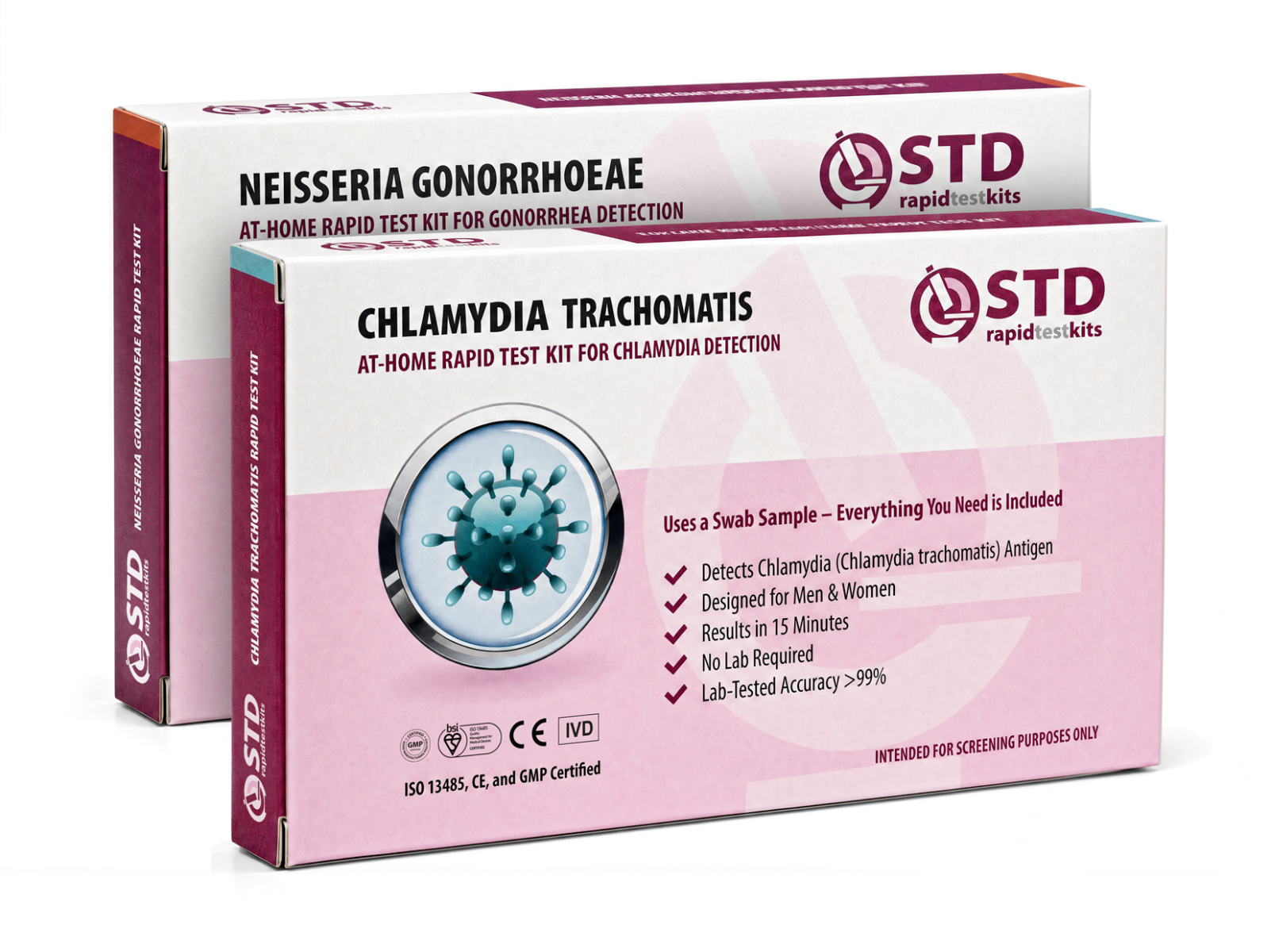
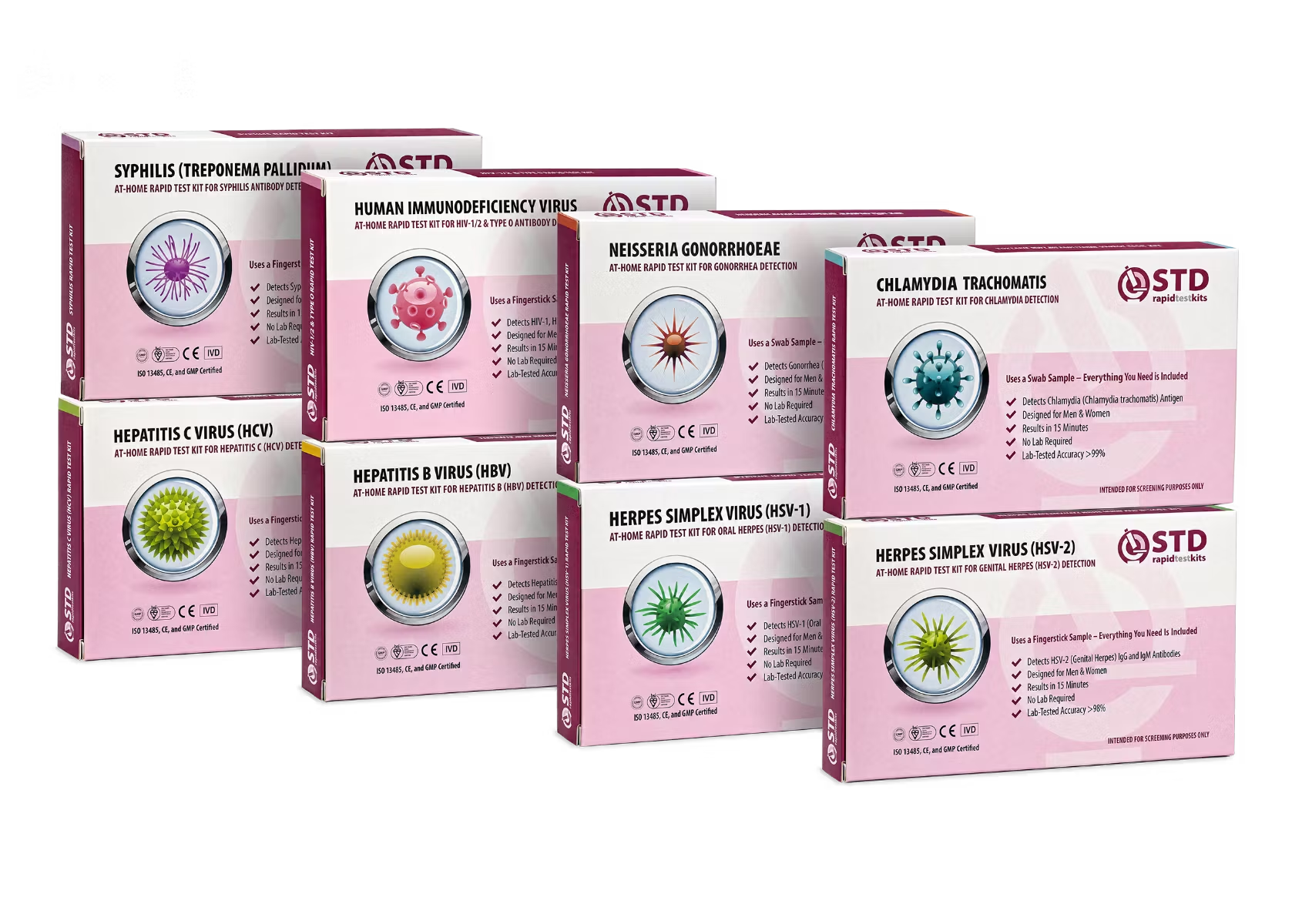
At-home rapid tests fit casual dating because they remove the clinic-visit hurdle. You can run a chlamydia and gonorrhea swab privately, get the result in about fifteen minutes, and confirm reactive results at a clinic. A combination panel handles the broader screen between partners.

What a positive result actually means
A positive STI result is uncomfortable. It is rarely a catastrophe. Treatment maps for the most common infections are well-defined.
Chlamydia and gonorrhea. Single-dose or short-course antibiotics, prescribed by a clinician. Re-testing at three months confirms clearance. The CDC updates antibiotic recommendations regularly because gonorrhea has developed resistance in some regions, so clinic-prescribed treatment is non-negotiable here.
Syphilis. Penicillin remains first-line. Number of doses depends on the disease stage, which a clinician determines from blood test patterns and history.
HIV. A positive screen leads to confirmation testing, baseline labs, and same-day antiretroviral therapy in many U.S. clinics. People on consistent treatment with an undetectable viral load do not transmit HIV to sexual partners (the U=U principle, endorsed by the CDC and major HIV research bodies).
HSV. No cure, but suppressive antiviral therapy reduces outbreak frequency and transmission risk significantly. Most people with HSV-2 have ongoing healthy sexual relationships with disclosure and barrier use.
HPV. Most infections clear without treatment in one to two years. High-risk strains require monitoring through Pap and HPV screening, and precancerous changes are treatable when caught early.
Disclosure to recent partners is the harder part of a positive result. The straightforward script: contact partners from the past three to six months, share that you tested positive, and recommend they test. Some clinics offer anonymous partner notification services if direct contact is not workable. Disclosure protects partners. It does not assign blame.
Anxiety, shame, and avoidance after a hookup are common responses, and they often make people delay testing. The shame is cultural, not personal. If a positive result has you spiraling, reach out to a therapist or a sexual-health counselor in addition to your clinical team. Treating the infection and treating the feelings are both part of recovery.
Frequently asked questions
- Can I get an STI from a single hookup?
- Yes. One unprotected exposure is enough to transmit any of the common STIs, especially chlamydia, gonorrhea, HSV, HPV, and HIV. The probability per encounter varies by infection and exposure type, but "only once" is not a meaningful protection.
- How soon after unprotected sex should I get tested?
- Plan two test rounds. The first at two to three weeks after exposure catches most chlamydia and gonorrhea. The second at three months covers HIV, syphilis, and HSV antibody seroconversion. Testing earlier is fine, but a negative result inside the window does not yet mean you are uninfected.
- Do condoms prevent all STIs?
- Condoms reduce transmission risk substantially for fluid-borne infections like HIV, gonorrhea, and chlamydia. They are less protective against skin-to-skin infections like HSV, HPV, and syphilis chancres outside the covered area. Used correctly and consistently, they are still the single most effective barrier method available.
- Should I tell my situationship partner if I test positive?
- Yes. Disclosure to anyone you have had sex with in the past three to six months is the responsible move and breaks the chain of onward transmission. Some clinics offer anonymous partner notification services if direct contact feels unsafe or impossible.
- Are at-home STI tests reliable?
- Rapid lateral-flow at-home tests use the same sample types as lab tests but trade some analytical sensitivity for speed and privacy. They are reliable as a screening tool, especially after the recommended window has passed. Reactive results should always be confirmed at a clinic with a NAAT or other lab-grade test.
- Can oral sex transmit STIs?
- Yes. Gonorrhea, chlamydia, syphilis, HSV-1 and HSV-2, and HPV all transmit through oral exposure, though the per-act risk is lower than for vaginal or anal sex. Pharyngeal gonorrhea in particular is often asymptomatic and tends to require a clinic-administered swab to detect.
- If I have no symptoms, why should I bother testing?
- Chlamydia causes no symptoms in roughly 70 to 80 percent of women and a large share of men, and it can persist for months without any signal. Gonorrhea, early syphilis, and HSV often stay silent too. Regular testing finds infections that will not announce themselves any other way.
- How do I bring up testing without making it awkward?
- Lead with your own routine: "I get tested every few months, last one was March. When was yours?" Framing it as a habit rather than a suspicion lowers the stakes for both people. The discomfort of the question is a fraction of the discomfort of an untreated infection.
- U.S. Centers for Disease Control and Prevention. National STI surveillance hub, including age-group breakdowns of new chlamydia, gonorrhea, and syphilis cases.
- U.S. Centers for Disease Control and Prevention. Chlamydia overview covering symptom prevalence, transmission, and screening recommendations.
- U.S. Centers for Disease Control and Prevention. Pelvic inflammatory disease (PID) overview covering long-term reproductive consequences of untreated chlamydia and gonorrhea.
- U.S. Centers for Disease Control and Prevention. Syphilis overview covering disease stages, late-stage organ damage, and treatment.
- U.S. Centers for Disease Control and Prevention. STI screening recommendations for clinicians, including age-based and risk-based screening intervals.
- U.S. Centers for Disease Control and Prevention. HIV prevention hub, including post-exposure prophylaxis (PEP) guidance for sexual exposure.
- U.K. National Health Service. Sexually transmitted infections overview, covering symptom variability and reasons visual assessment fails.
- World Health Organization. Sexually transmitted infections fact sheet covering global burden, transmission routes, and prevention.
