
Published: November 2025 | Last updated: April 2026 | Editorial review and quality control: Martina N.
Herpes anxiety usually begins as a question of timing rather than a diagnosis. A new partner two days ago, a strange itch this morning, a Google search at 2am that lands on the worst photos online. The first thing worth knowing is that the body works on a slower clock than panic does. The herpes incubation window is one of the more predictable parts of an otherwise unpredictable virus, and once you understand what each day after exposure typically looks like, separating real warning signs from ordinary skin noise gets a lot easier.
How long after exposure do herpes symptoms usually appear?
For people who develop a noticeable first outbreak, symptoms typically appear 2 to 12 days after exposure, with most landing around days 4 to 7. Many people never recognize a first outbreak at all because their symptoms are too mild to register. If irritation appears within 24 hours of sex, the cause is almost always something other than herpes.
Key Takeaways
- Herpes symptoms typically emerge 2 to 12 days after exposure, but a large share of people never recognize a first outbreak because the signs are too subtle.
- Blood antibody tests can take up to three months to become fully reliable. Swabbing an active sore is the fastest, most accurate option during a visible outbreak.
The Quiet Phase: What Happens Right After Exposure
Herpes simplex virus enters the body through small breaks in skin or mucous membrane during direct skin-to-skin contact. That contact can be vaginal, oral, or anal sex, but it can also be intimate skin contact with an active sore even without intercourse. The two herpes types behave similarly: HSV-1 is more common around the mouth, HSV-2 is more common in the genital area, but either type can infect either site (WHO herpes simplex virus fact sheet).
Once the virus crosses the skin barrier, nothing visible happens for a while. The virus copies itself inside nearby cells and then travels along sensory nerves toward clusters of nerve cell bodies called ganglia. That migration is silent. There are no sores yet, no fever, and no clear signal that anything is wrong, even though the immune system has begun to notice.
Clinicians and public health sources place the typical first-episode incubation window at 2 to 12 days, with most first outbreaks that do show up clustering in the first half of that window. Outbreaks appearing after day 12 are less common but not unheard of, particularly when the immune system is briefly stressed by another illness, exhaustion, or a new medication. General reader-friendly background on the virus is available on the CDC's genital herpes page.
One reason herpes spreads so widely is that this quiet phase looks and feels like nothing. People assume that exposure should produce obvious symptoms within hours, and when nothing happens they conclude they are in the clear. The virus is already there.
A Day-by-Day Timeline of the First Outbreak
Every body responds slightly differently, but clinicians have observed a fairly consistent pattern in how a noticeable first outbreak unfolds. The table below maps out the typical progression for people whose first episode is severe enough to register.
This sequence explains why someone might have a sexual encounter and then feel completely normal for several days before any sign appears. The delay is biological, not unusual. The first outbreak also tends to be the most obvious one of someone's life. Later recurrences usually shorten and soften because the immune system has already produced antibodies and reacts to the virus faster, a pattern reflected in the WHO's HSV recurrence guidance (WHO HSV fact sheet).
If sores show up within a day or two of a sexual encounter, the infection almost always traces back to an earlier exposure rather than the most recent partner. The replication and nerve-migration steps simply cannot complete in a few hours.
| Time After Exposure | What May Happen |
|---|---|
| Day 0 | Skin-to-skin contact transmits the virus through microscopic breaks in skin or mucous membrane. Nothing visible yet. |
| Days 1 to 2 | Virus copies itself in surface cells and begins traveling along nearby sensory nerves. Almost everyone feels normal. |
| Days 2 to 5 | Some people notice prodrome sensations: tingling, itching, or mild burning in a small patch of skin. |
| Days 4 to 7 | Most common window for visible symptoms. Small red bumps appear, often in clusters, and develop into fluid-filled blisters. |
| Days 7 to 12 | Blisters open into shallow ulcers that may feel tender or sting during urination if near the urethra. |
| Days 10 to 20 | Sores crust over and heal as the immune system suppresses the active outbreak. First-episode healing can run longer than later outbreaks. |
Early Warning Signs Most People Miss
Before any visible sore appears, many people experience what doctors call the prodrome stage. Think of it as the nervous system flagging that something is happening before the skin shows it. The prodrome can last anywhere from a few hours to a couple days, and during that window the virus is already active in the nerve endings just below the surface.
The sensations are subtle enough that most people miss them the first time. Common prodrome signals include:
- A tingling or pins-and-needles feeling in a small patch of genital, oral, or surrounding skin
- Itching or burning that does not match anything obvious like shaving, friction, or new soap
- Skin sensitivity, where light touch or clothing friction suddenly feels raw
- A dull ache or shooting sensation in the buttocks, thighs, or pelvis along the path of a sensory nerve
- Mild low-back or hip discomfort, especially before a recurrent outbreak in someone who already knows their pattern
Not everyone gets a noticeable prodrome, particularly during the very first outbreak. When it does happen, recognizing it is genuinely useful: starting antiviral medication during the prodrome can shorten the eventual outbreak (NHS genital herpes guidance).
Many people only connect the early sensations to herpes after sores appear and they replay the previous day in their head. At the time, those signals look like a hundred other harmless things: a heat rash, an ingrown hair, friction from sex, even the start of a yeast infection.
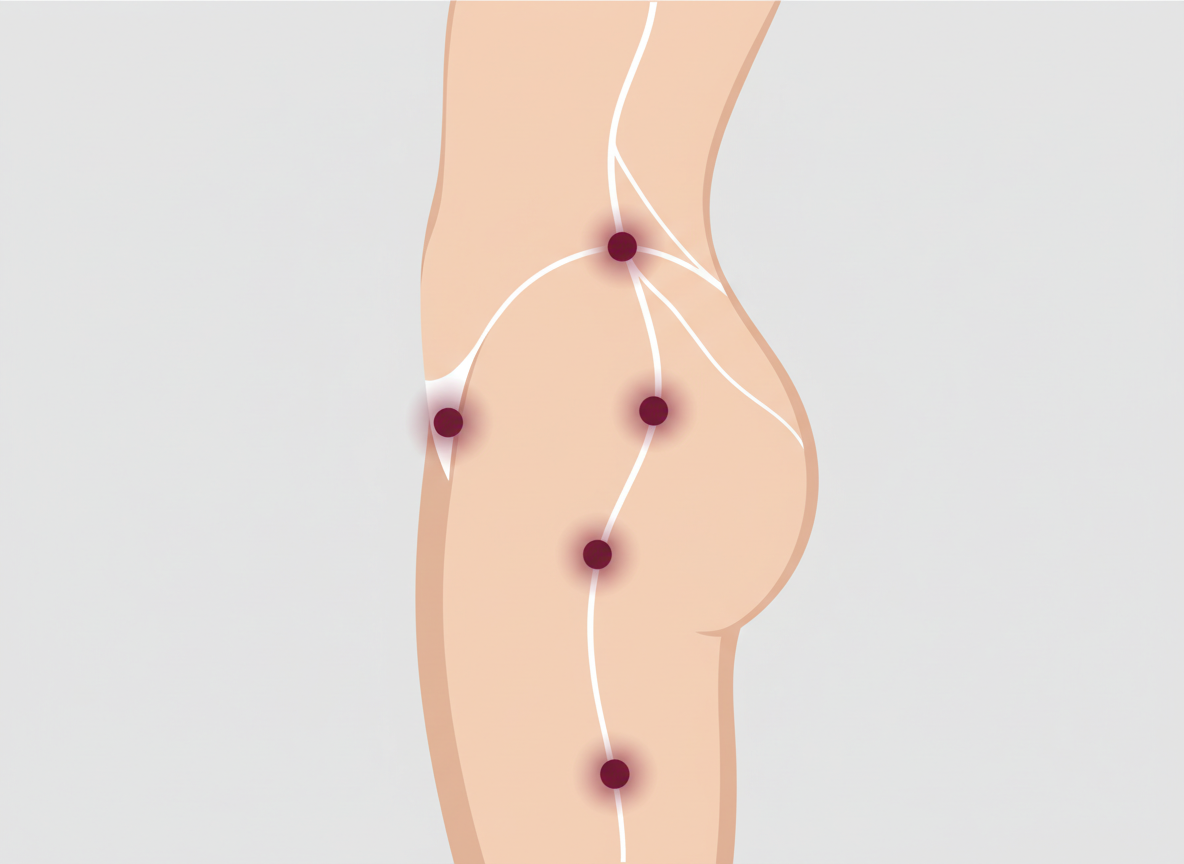
Prodrome sensations are not random. They follow the path of the specific sensory nerve the virus is traveling along, which is why a person can feel an odd tingle in the inner thigh or buttock a day before any sore appears in the genital area. That nerve-distribution pattern is also why recurrences tend to repeat in roughly the same skin region, sometimes year after year. Recognizing your own pattern over time, if you have one, makes future episodes far less alarming.
When Symptoms Never Show Up (Which Is Surprisingly Often)
One of the most counterintuitive things about herpes is how often the first outbreak just does not happen the way people expect. A large share of people with genital HSV-2 either have such mild symptoms that they attribute them to something else or have no recognizable outbreak at all. The CDC notes that most people with genital herpes do not know they have it because their symptoms are mild or absent (CDC genital herpes basic information).
Clinicians call this an asymptomatic infection. The virus is fully present, can still occasionally shed from the skin, and can still pass to a partner, but the person carrying it never experiences the textbook blistering outbreak. This is a major reason herpes spreads silently inside relationships where everyone genuinely believes they are negative.
The World Health Organization estimates that roughly 3.8 billion people under age 50 carry HSV-1 worldwide and around 520 million people aged 15 to 49 carry HSV-2 (WHO HSV fact sheet). Most live their entire lives without recognizing a classic outbreak.
Even when symptoms do occur, they can be subtle enough to mistake for something else: a small cut, an ingrown hair, a patch of irritated skin, a single pimple-like bump that heals in three days. None of those rule herpes out, and none confirm it either. The absence of a dramatic outbreak does not mean the absence of infection. That is exactly why testing exists.
Most people who carry HSV do not know they have it. The virus can shed intermittently from skin that looks completely normal, which is part of why herpes is one of the most widespread infections in the world. A negative outbreak history is not the same as a negative test result, and a partner with no visible symptoms can still pass the virus on.
What the First Outbreak Actually Feels Like
The pictures you see when you panic-search at midnight are usually the worst-case scenarios. Real first outbreaks vary widely. Some people get one or two small sores that heal in a week. Others develop more painful clusters along with flu-like symptoms because the immune system is meeting the virus for the first time and producing a full systemic response.
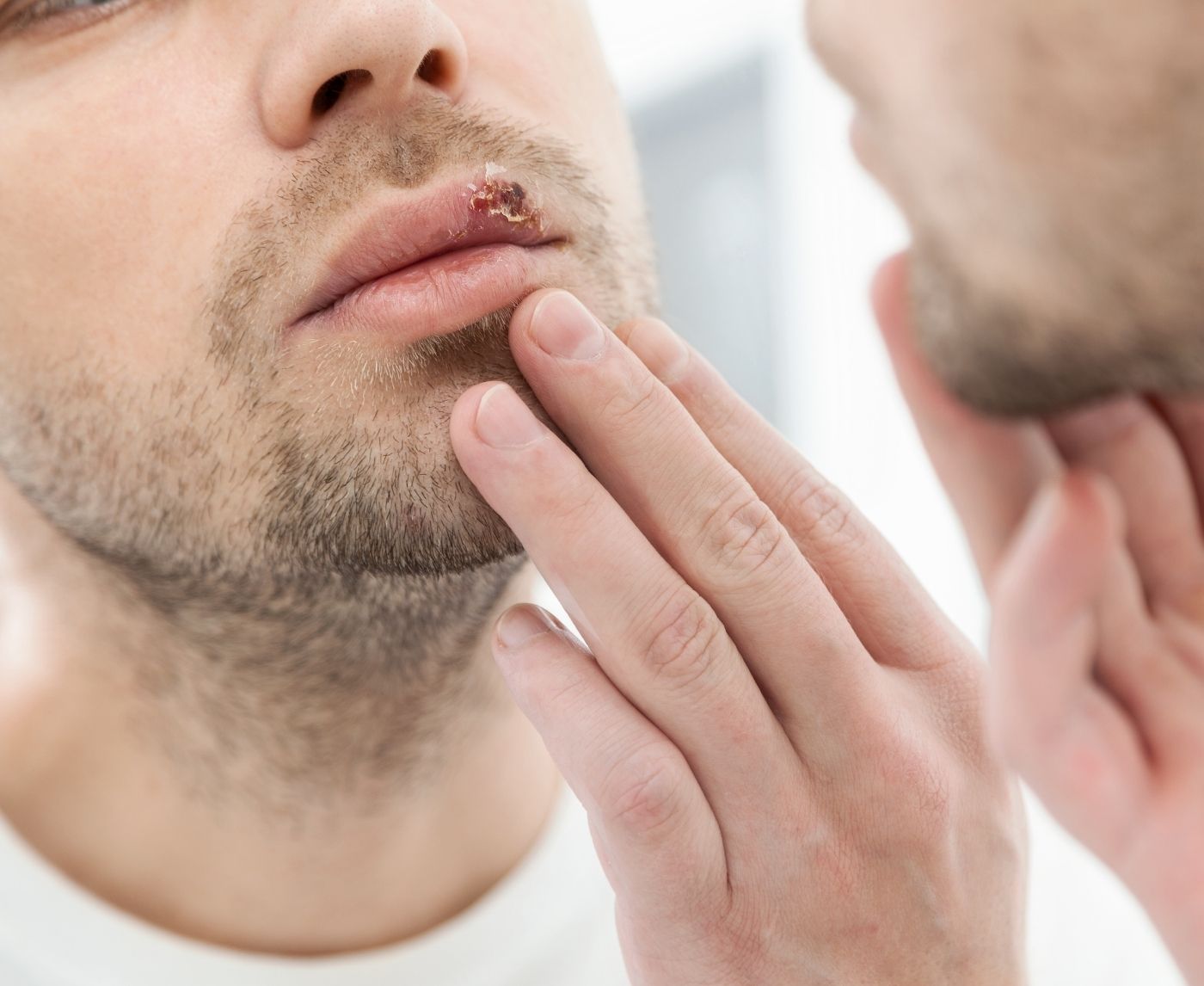
For most people, the first outbreak combines local skin symptoms with broader body symptoms. Local symptoms typically appear in clusters near the original site of contact: the genital region, the buttocks, or the area around the mouth depending on exposure. Body-wide symptoms, when they show up, look like a mild viral illness and usually fade within a week even though the skin sores may take longer to fully heal.
Common patterns reported during a first episode are summarized below.
| Symptom | How It Usually Feels |
|---|---|
| Small blisters or sores | Fluid-filled bumps in tight clusters that break open and form shallow, tender ulcers |
| Tingling or itching | Often appears one to two days before sores, signals viral activity in the underlying nerve |
| Painful skin sensitivity | Touching or friction from clothing makes the area feel raw or burning |
| Flu-like symptoms | Fatigue, mild fever, body aches, headache, swollen lymph nodes in the groin during a first episode |
| Burning during urination | Occurs when sores sit near the urethra and urine touches them |
| Tender lymph nodes | Swollen, sometimes painful nodes in the groin that resolve as the outbreak heals |
Why the First Outbreak Can Feel Like the Flu
The first time the immune system encounters herpes, it has no template for it. The response can be loud: fever, fatigue, swollen lymph nodes in the groin, body aches, sometimes a headache. The NHS describes these systemic symptoms as common during a first episode and notes that recurrent outbreaks are usually shorter and less severe (NHS genital herpes guidance).
That is why people often say their first outbreak felt more like a virus that affects the whole body than a skin condition. The immune system is doing a full systemic introduction. Once it has produced antibodies and learned the virus, future recurrences rarely repeat the flu-like phase. They tend to be shorter, more localized, and milder.
Some people experience occasional recurrences once or twice a year. Others go many years without another episode, and a meaningful number never have a second visible outbreak at all. Frequency is influenced by the type of HSV (genital HSV-2 generally produces more frequent recurrences than genital HSV-1 per the WHO HSV fact sheet), immune status, stress, illness, and individual biology.
After the immune system has produced antibodies, future episodes tend to skip the flu-like phase. Most recurrences are localized to roughly the same skin area, last under a week, and do not bring the systemic body symptoms (fever, swollen lymph nodes, body aches) of the first episode. If something feels nothing like the first outbreak, that does not rule out a recurrence; it is what most recurrences look like.
Why Timing Matters for Herpes Testing
One of the most stressful parts of suspected exposure is the wait between encounter and meaningful results. Herpes tests come in different formats and they answer different questions. The right test depends on whether you currently have a sore.
If a sore is present, swabbing the lesion for laboratory PCR (a molecular test that detects the virus directly) is the most accurate diagnostic during an active outbreak. The CDC's general guidance describes lesion sampling and antibody blood testing as the two main routes (CDC genital herpes overview).
If no sore is present, blood antibody tests are the option, but they need time to become reliable. The body can take up to three months to produce detectable antibodies (MedlinePlus herpes test guide). In practice most assays become detectable somewhere between 4 and 12 weeks after exposure, with full sensitivity by around 16 weeks for the slower seroconverters. Testing too early often produces a false negative, which is worse than no test because it provides false reassurance.
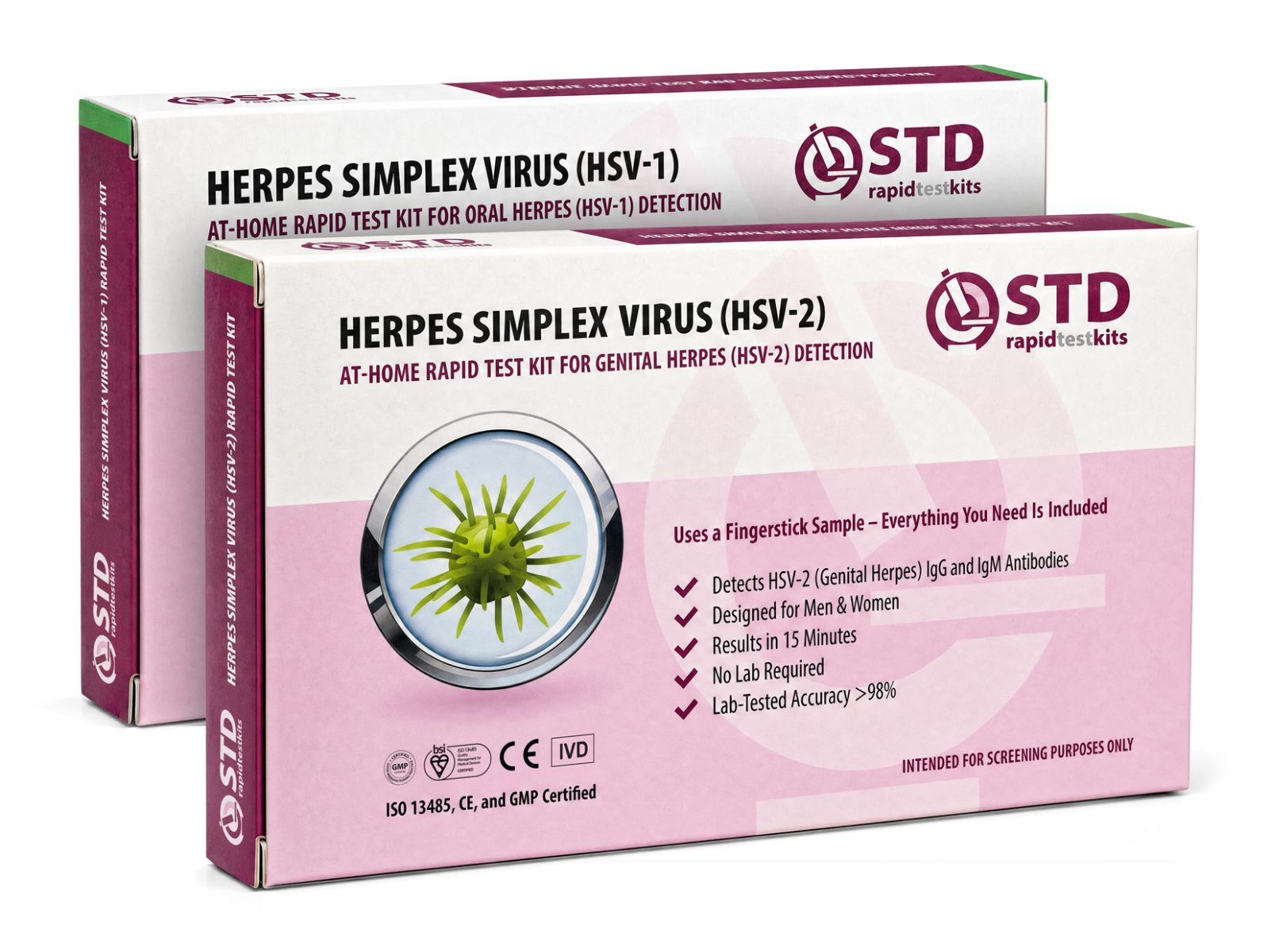
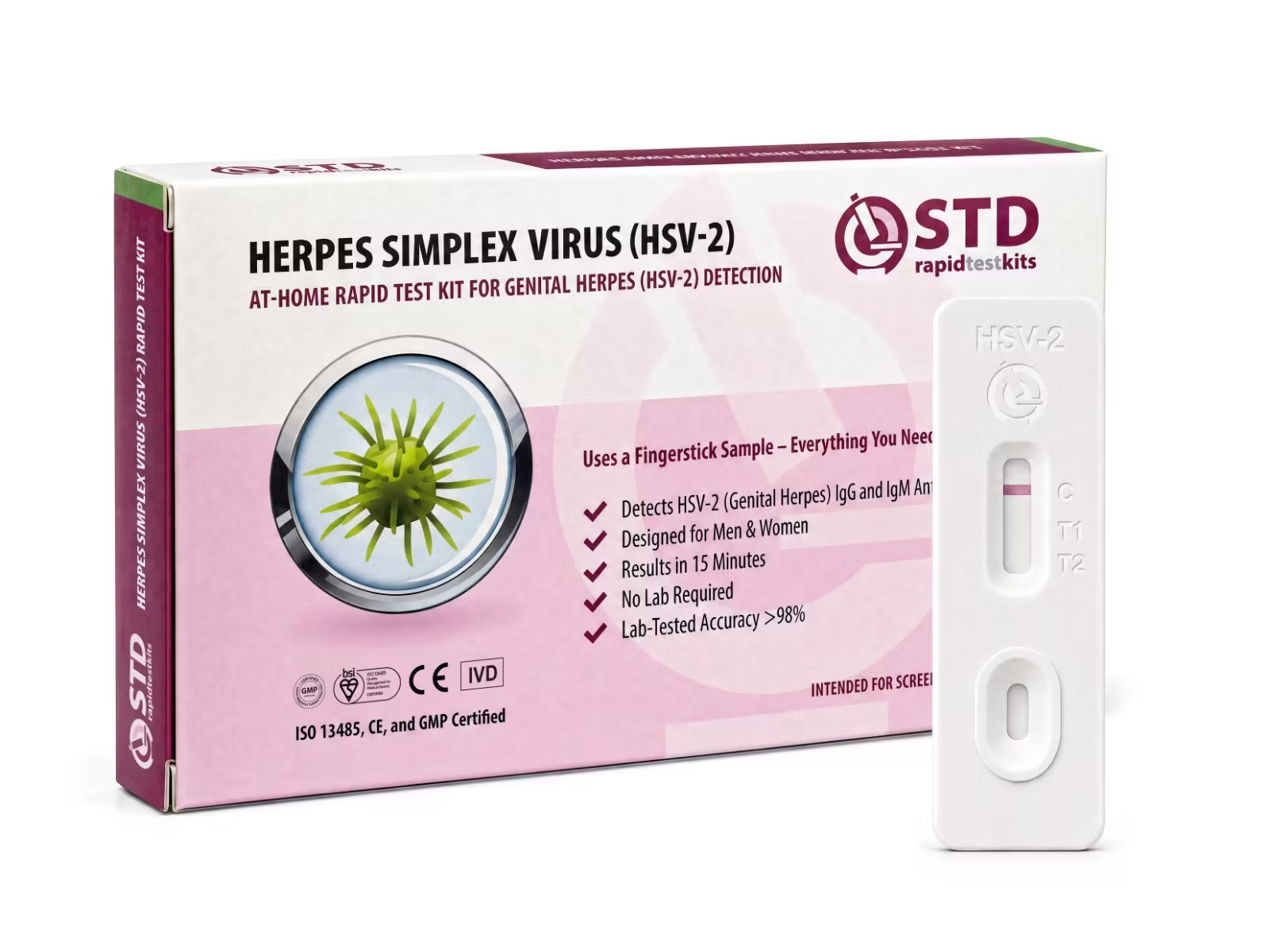
At-home rapid blood antibody tests use the same chemistry as laboratory blood tests: lateral-flow strips that detect immune response to HSV. They are useful screening tools after the antibody window has passed, and a clear positive is worth confirming with a clinician for type-specific results. Quick disclosure: we sell rapid at-home herpes blood tests, and the linked product below goes to our own product page.
| Test Type | What It Detects | When It Works Best |
|---|---|---|
| Lesion swab (lab PCR) | Herpes virus DNA directly from a sore | While an active blister or ulcer is still present |
| Lab blood antibody test | IgG antibodies to HSV-1 and HSV-2 | Roughly 4 to 12 weeks after exposure for most people, with full sensitivity by around 16 weeks |
| At-home rapid blood test | Same antibody response, lateral-flow chemistry | After the antibody window has passed, useful for private screening |
Can Herpes Symptoms Appear the Next Day?
This is one of the most frequently searched questions after a recent encounter, and the short answer is no. The virus needs days, not hours, to copy itself enough times and migrate along nerves to produce a visible outbreak. The shortest realistic incubation is two days, and even that sits at the fast end of what clinicians see.
If irritation, redness, or small bumps appear within 24 hours of sex, the more likely culprits are mechanical or chemical:
- Friction irritation from prolonged or vigorous sex, especially without enough lubrication
- Razor burn or ingrown hairs from recent shaving or waxing
- Contact dermatitis from a new condom material, lubricant ingredient, or laundry detergent
- Yeast or bacterial irritation that was already present and got nudged into a noticeable phase
None of those rule herpes out forever, but none of them are herpes appearing overnight. If symptoms genuinely emerge within hours of sex, the cause is almost always something else. And if herpes does eventually show up days later, the source may have been a previous partner or even a previous month. The virus does not always cooperate with whoever you most recently slept with, which is why timeline math matters before assigning blame.
Skin Issues Often Mistaken for Herpes
Because early herpes can be subtle, plenty of harmless skin conditions get scrutinized as possible outbreaks. This is especially common in the first few days after a new sexual partner, when ordinary bumps suddenly seem suspicious under bright bathroom lighting at midnight.
The defining pattern of herpes sores is a tight cluster of fluid-filled blisters that opens into shallow ulcers and crusts over within a week or two. They are usually painful or tender, and they tend to recur in roughly the same spot when they recur at all. Bumps that stay small, painless, and unchanged for weeks, or that are clearly tied to shaving or clothing friction, are usually something else, and the NHS guidance on genital symptoms covers many of the common look-alikes (NHS genital herpes). When in doubt, a clinician swab of an active lesion settles the question fast.
| Condition | How It Usually Appears | Key Difference From Herpes |
|---|---|---|
| Ingrown hair | Single red bump near a hair follicle | Often has a visible hair embedded; resolves with warm compresses |
| Razor burn | Patch of irritated red skin | Appears within hours of shaving; no clusters of blisters |
| Friction irritation | Redness or soreness after sex | Improves quickly with rest; no fluid-filled blisters |
| Fordyce spots | Tiny pale or yellowish bumps | Painless, permanent, and present long-term |
| Pimples or folliculitis | Single pus-filled bumps | Usually solitary, not clustered, and tied to a single hair follicle |
| Contact dermatitis | Itchy red rash in a defined area | Tracks the shape of contact (condom edge, fabric seam) rather than nerve distribution |
What Happens Inside the Body During the First Outbreak
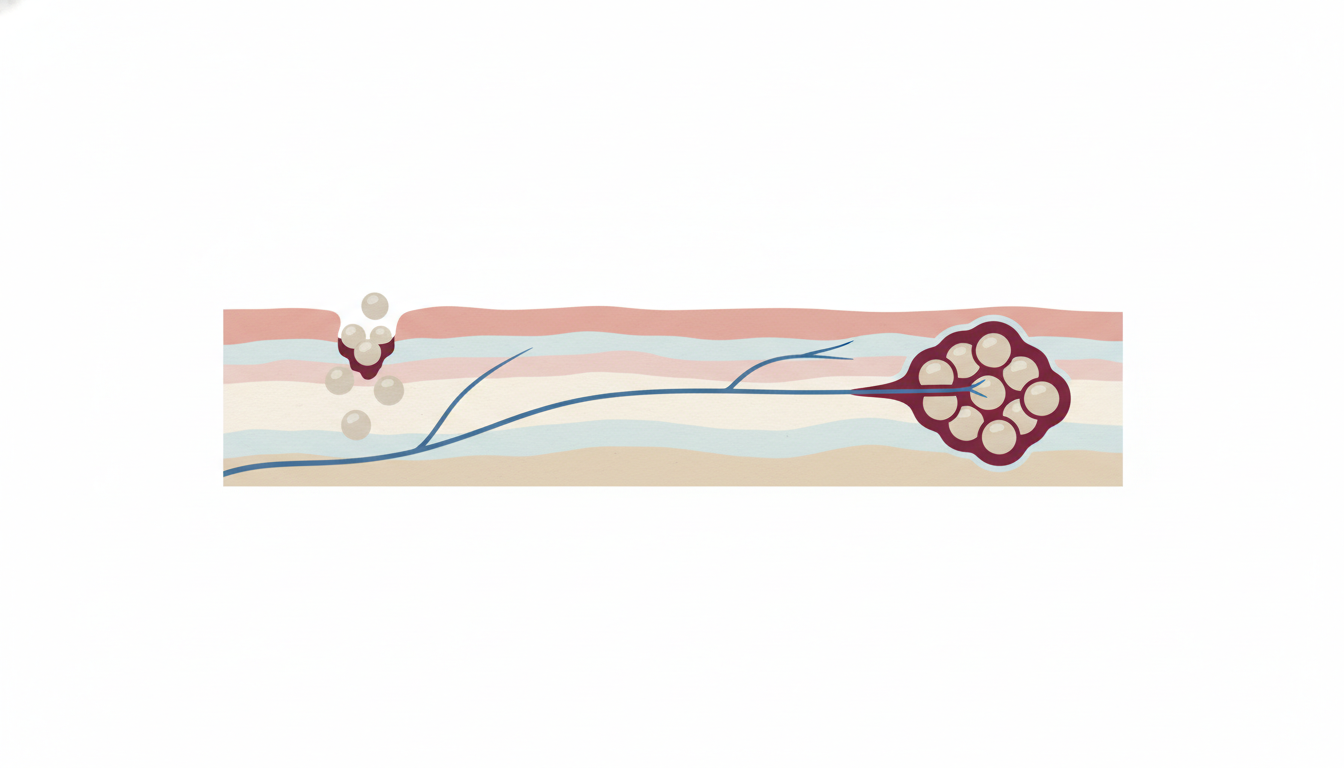
Understanding the biology helps the timeline make sense. The first outbreak is essentially the visible result of a sequence of steps that started a week or more earlier. The virus enters through microscopic breaks in skin or mucous membrane and copies itself in surface cells. Within a day or two it reaches sensory nerve endings and travels along them toward a ganglion, a cluster of nerve cell bodies that acts as its long-term hideout.
The immune system begins reacting once the virus is replicating in volume, and that immune response, not the virus itself, produces most of the symptoms people notice. After the immune system suppresses the visible outbreak, the virus stays dormant inside the ganglion and can reactivate later under triggers like physical stress, illness, hormonal shifts, or local skin trauma. Most recurrent outbreaks involve the virus traveling back along the same nerve to roughly the same skin region, which is why outbreaks tend to repeat in one spot.
Most people with genital herpes have no symptoms or have very mild symptoms. Mild symptoms may go unnoticed or be mistaken for other skin conditions like a pimple or ingrown hair.
What To Do After a Possible Herpes Exposure
If you think you may have been exposed to herpes, the most important thing to remember is that time matters. Symptoms do not appear instantly, and testing too early produces confusing or falsely reassuring results. The smart move is to watch the timeline rather than panic during the first few days.
Watch the genital, oral, or surrounding skin for the patterns described earlier: tingling, itching, or localized irritation that emerges several days after exposure can sometimes signal the start of an outbreak. If blisters or sores appear, that is the moment when testing is most accurate. A clinician can swab the lesion and send it for laboratory PCR while the virus is actively present (CDC genital herpes overview).
If no sores appear, blood antibody testing is the route, but be patient with the window. Testing at four weeks may catch most cases, and the body can take up to three months in total to produce detectable antibodies (MedlinePlus herpes test guide). Until that window has passed, a negative result is not a clean bill of health.
Avoid sexual contact while sores are present, since the virus sheds most heavily during active outbreaks. Discuss your situation with any current partners; herpes can shed from skin even without visible sores, so honest conversation is part of caring for both of you.
For people who want privacy, an at-home rapid blood test offers a discreet option once the antibody window has passed. It will not replace a clinician swab during an active outbreak, but it can answer the screening question without a clinic visit.
Frequently Asked Questions
- How soon after exposure do herpes symptoms usually start?
- Most people who develop a noticeable first outbreak see it somewhere between 2 and 12 days after exposure, with the densest cluster around days 4 to 7. It rarely happens overnight, and it rarely waits months. Many people, however, never recognize a first outbreak at all because their symptoms are too mild to register.
- Can herpes really show up the very next day?
- Almost never. The virus needs days to replicate enough and travel along nerves before it can produce a visible sore. Irritation that appears within 24 hours of sex is far more likely to be friction, shaving irritation, an allergic reaction to lubricant, or an ingrown hair than herpes appearing overnight.
- What do the very first herpes symptoms feel like?
- Many people describe the earliest sign as a strange tingling or pins-and-needles feeling in one small spot, sometimes with itching, burning, or unusual skin sensitivity. The sensation is subtle enough that plenty of people ignore it the first time and only connect it to herpes after a blister appears a day or two later.
- Do herpes sores always look like the dramatic photos online?
- Not at all. Many real outbreaks are mild: one or two small blisters or a shallow sore that could easily be mistaken for an ingrown hair or irritated skin. The dramatic images tend to show worst-case presentations, not the average experience.
- Can someone have herpes and never notice symptoms?
- Yes, and it happens often. The CDC notes that most people with genital herpes do not know they have it because their symptoms are mild or absent. The virus can still occasionally shed from the skin and pass to a partner even when no outbreak is visible.
- How long does the first herpes outbreak usually last?
- From the first blister to fully healed skin, a first outbreak commonly runs 10 to 20 days. Later outbreaks typically resolve in a week or less because the immune system already recognizes the virus and reacts faster.
- When is the right time to test for herpes after exposure?
- If sores are present, get them swabbed right away; lesion PCR is the most accurate test during an active outbreak. If no sores appear, blood antibody tests usually become reliable within 4 to 12 weeks of exposure, with the body taking up to three months in total to produce a full antibody response. Testing too early can give a false negative.
- Could symptoms appearing days later mean my most recent partner is the source?
- Sometimes, but not always. Herpes can stay quiet in the body for weeks, months, or years before a first visible outbreak. In some cases the virus has been present for years without causing a recognizable outbreak, and a confirmed positive result does not automatically point to a recent partner. An outbreak after a new partner does not automatically mean that partner was the source.
- U.S. Centers for Disease Control and Prevention. Genital herpes basic information, including the description that most people with genital herpes have no symptoms or very mild symptoms that may be mistaken for other skin conditions like a pimple or ingrown hair, plus the description of lesion sampling and antibody blood testing as the two main diagnostic routes.
- World Health Organization. Herpes simplex virus fact sheet, including global HSV-1 (~3.8 billion people under age 50) and HSV-2 (~520 million people aged 15 to 49) prevalence figures and the pattern that genital HSV-2 typically produces more frequent recurrences than genital HSV-1.
- NHS. Genital herpes guidance covering prodrome symptoms, antiviral treatment timing, common look-alike conditions, and the pattern that recurrent outbreaks are usually shorter and milder than the first episode.
- MedlinePlus. Herpes (HSV) test reference, noting that the body can take up to three months to produce detectable HSV antibodies after exposure.
