Swollen Groin Lymph Nodes: Herpes, HIV, Syphilis, or Shaving?
How to tell if a groin lump is an STI or a shaving cut



- Most swollen groin lymph nodes come from skin irritation, minor cuts, or fungal infections, not from sexually transmitted infections.
- Timing matters: swelling within 24 to 48 hours of sex usually reflects friction or skin trauma, while herpes, syphilis, and HIV each have longer incubation periods.
Published: August 2025 | Last updated: May 2026 | Editorial review and quality control: Martina N.
A tender lump in the groin can stop a person cold. The mind jumps fast to herpes, HIV, or something worse. Then the 1 a.m. searching starts, and the lump gets pressed every hour to see if it has grown.
Most of the time, that lump is a swollen inguinal lymph node, and the trigger is less dramatic than the worry suggests: a shaving cut, friction from a long run, or a small infected hair follicle. The immune system is filtering an irritant out, and the node nearby is doing what nodes do.
Some swollen groin nodes do signal a sexually transmitted infection. Herpes, syphilis, and (less commonly) HIV can each show up this way, but the patterns differ, the timing differs, and the right next step depends on what other symptoms travel with the swelling. This guide walks through the realistic causes, the timing math after a possible exposure, and when at-home testing or a clinic visit makes sense.
Key takeaways
- Most swollen groin lymph nodes come from skin irritation, minor cuts, or fungal infections, not from sexually transmitted infections.
- Timing matters: swelling within 24 to 48 hours of sex usually reflects friction or skin trauma, while herpes, syphilis, and HIV each have longer incubation periods.
How Your Inguinal Lymph Nodes Work
The body has hundreds of lymph nodes positioned along its drainage system. They act as filtering checkpoints for the immune system. When tissue in their drainage zone gets irritated, infected, or injured, the node nearby swells while it processes immune cells and traps unwanted material.
The cluster in the groin is called the inguinal lymph nodes. They sit in the crease where the thigh meets the lower abdomen, and they drain a wide area: the genitals, the buttocks, the lower abdominal wall, the perineum, and the entire leg down to the foot. A scrape on the ankle, athlete's foot between the toes, a small cut from shaving the bikini line, an infected ingrown hair, or a genital sore can all activate the same set of nodes.
A reactive node usually feels like a soft, movable lump under the skin, anywhere from pea-sized to grape-sized. It may be tender to pressure, or it may not. It can last a few days or a few weeks, depending on what set it off.
The groin lymph cluster is downstream of a surprisingly large area. Inflammation anywhere in the following zones can swell these nodes:
- The external genitals, including the labia, scrotum, and penis
- The perineum and the skin around the anus
- The lower abdominal wall, below the navel
- The buttocks and the upper thigh skin
- The entire leg, from upper thigh to the toes
That last one is the most-forgotten: an infected toenail or an irritated bite on the calf can absolutely swell a groin node on the same side.
Common Causes of Swollen Groin Lymph Nodes
The cause shapes both the pattern and the timeline. The table below covers the most common triggers, what tends to set them off, the symptoms that travel with the swelling, and how long the node usually stays enlarged.
| Cause | Typical Trigger | Other Symptoms | How Long It Lasts |
|---|---|---|---|
| Ingrown hair or shaving irritation | Recent shaving or friction | Red bump, localized tenderness | Several days to 2 weeks |
| Fungal infection (jock itch, athlete's foot) | Moisture, sweating, tight clothing | Itchy rash, peeling skin | Until treated |
| Genital herpes | Skin-to-skin sexual contact | Painful blisters or shallow ulcers | Throughout the outbreak |
| Syphilis (primary stage) | Sexual exposure weeks earlier | Painless sore (chancre) | Chancre lasts 3 to 6 weeks |
| Acute HIV | High-risk exposure 2 to 4 weeks earlier | Fever, sore throat, rash, body aches, swelling in multiple body areas | 1 to 3 weeks during acute phase |
| Skin infection or cellulitis | Cut, wound, infected follicle | Warmth, redness, sometimes fever | Improves with treatment |
When Shaving or Friction Is the Cause
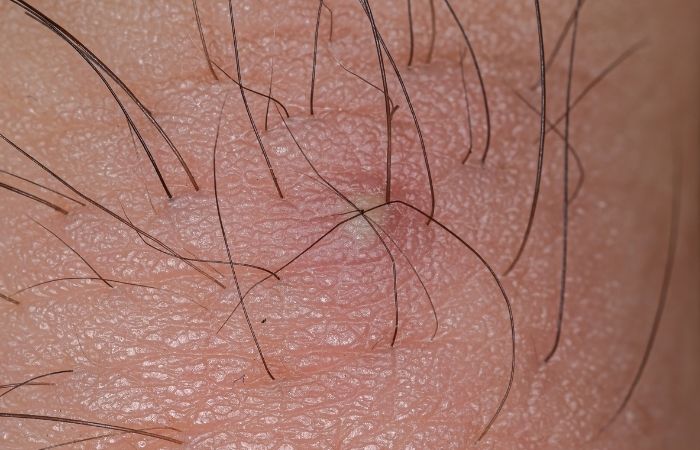
Shaving the pubic area, the bikini line, or the scrotum creates microscopic openings in the skin. Most of the time those openings seal quietly. Occasionally one becomes a doorway for bacteria already living on the skin's surface. The follicle gets clogged, bacteria multiply, the body sends in white blood cells, and the inguinal node nearby swells while it filters the inflammation.
The pattern is fairly recognizable. A red or pink bump appears on the surface within a day or two of shaving. Sometimes a curled hair is visible under the skin. The bump may itch or sting. By day three or four, a deeper lump in the groin crease becomes noticeable. The deeper lump is the lymph node responding to the surface irritation.
This pattern often points away from a sexually transmitted infection for two reasons. First, the surface bump looks like a pimple or ingrown hair rather than a clustered blister or a clean ulcer. Second, the timeline is too fast for most STIs to declare themselves. Herpes usually takes longer to produce visible lesions, and syphilis takes weeks. A swollen node that appears within 24 to 48 hours of a shave or a friction event is almost always reactive to local skin irritation.
When the Cause Might Be Herpes
Genital herpes can cause swollen groin lymph nodes, especially during a first outbreak. The lymph swelling rarely shows up by itself, though. It travels with skin symptoms that usually appear first.
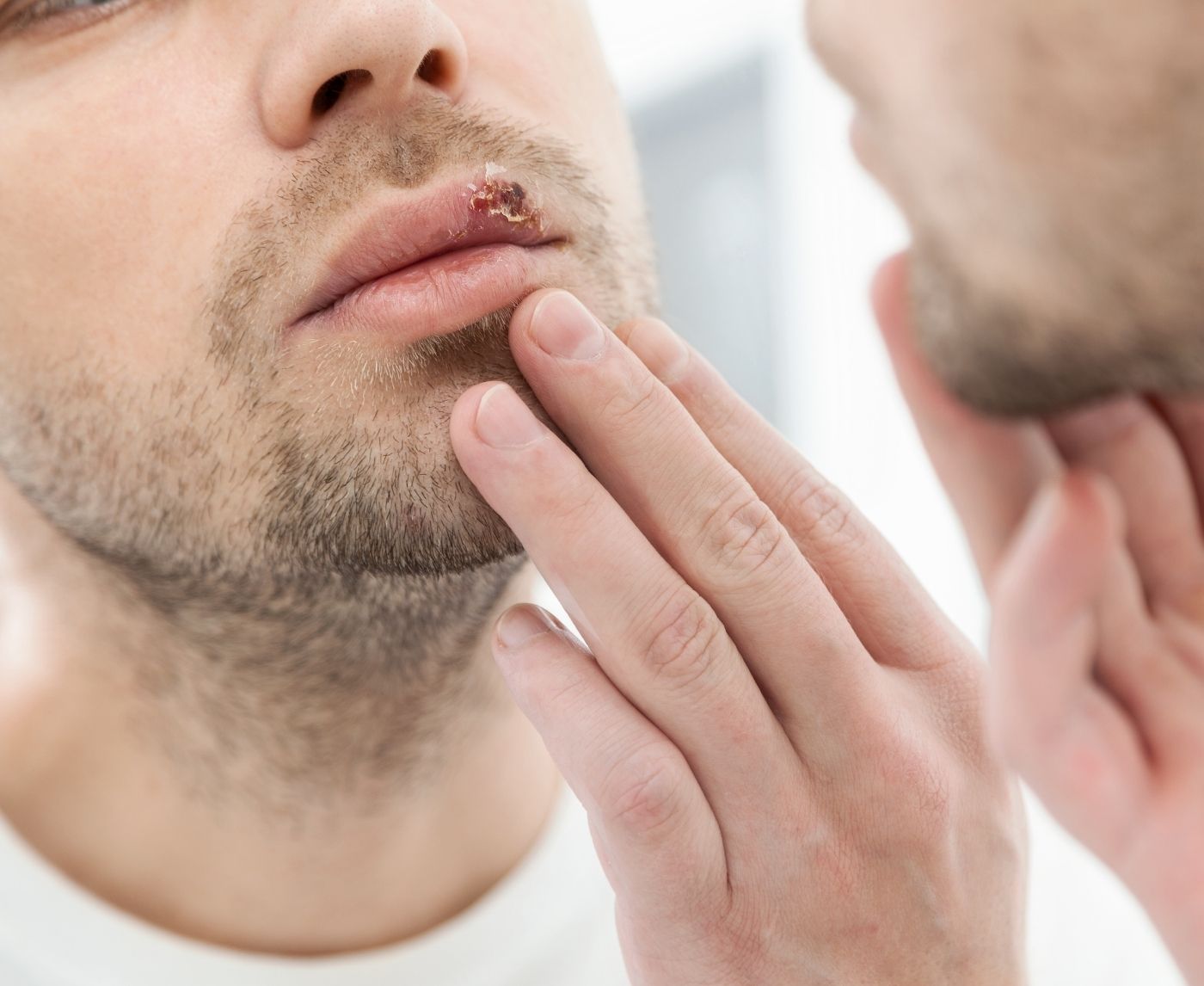
A first herpes outbreak typically starts with tingling, burning, or itching on a patch of skin in the genital area. Within a day or two of those warning symptoms, small fluid-filled blisters appear. They cluster together rather than appearing as a single isolated bump. Within another day or two, the blisters break open and form shallow ulcers that can sting badly when urine touches them. Around the same time, the inguinal lymph nodes on one or both sides become tender and noticeably enlarged. Some people also feel flu-like symptoms during a first outbreak: fever, body aches, headache, fatigue.
Recurrent outbreaks tend to be milder. The sores are usually fewer, the duration is shorter, and lymph node swelling is less prominent. People who have had herpes for years often recognize the prodrome (the tingling or burning warning) without much node involvement at all.
A swollen groin node with no surface skin changes after several days, no genital tingling or pain, and no clustered blisters becomes less consistent with herpes. The skin findings are the diagnostic anchor; the node swelling is a supporting sign. A blood antibody test can confirm whether the virus has been present in the body, though antibody tests need time after exposure to turn positive: the CDC STI Treatment Guidelines recommend repeating type-specific antibody testing 12 weeks after the suspected acquisition date, since false-negative results are more frequent at early stages of infection. This site publishes editorial articles and sells at-home STI testing kits; the kit linked below is one screening option once the antibody window has passed, recommended on clinical fit rather than commercial benefit.
When the Cause Might Be HIV
HIV is the cause everyone fears first, and it deserves an honest answer rather than a brush-off.
Acute HIV infection (the first weeks after exposure) can cause swollen lymph nodes. The key word is nodes, plural. Acute HIV usually causes generalized lymphadenopathy, meaning nodes swell in more than one body region at the same time. People often notice tender swelling in the neck, under the jaw, in the armpits, and sometimes the groin, all together.
The lymph swelling almost never travels alone in acute HIV. According to the CDC, most people who become infected with HIV develop flu-like symptoms within 2 to 4 weeks after infection. Clinically, that flu-like illness commonly includes fever, sore throat, body aches, fatigue, and sometimes a rash. The combination feels like a rough case of the flu, often dismissed as one.
A single isolated swollen node in the groin, with no other body areas swelling, no fever, no rash, no sore throat, and no high-risk exposure in the past month, is not the classic acute HIV picture. That does not mean exposure should be ignored. It means the symptom pattern shapes whether HIV is a leading suspect or a low-probability cause.
Testing remains the way to settle the question. According to CDC HIV testing guidance, an antigen/antibody lab test using blood from a vein can usually detect HIV 18 to 45 days after exposure. Rapid antibody tests have longer window periods, generally 23 to 90 days after exposure. The right test depends on how long ago the exposure was: testing three days after a high-risk exposure will not catch HIV or syphilis, so waiting for the relevant window to close produces a result that is actually meaningful.
Acute HIV (the seroconversion illness) rarely shows up as one isolated symptom. CDC notes that most people who become infected develop flu-like symptoms within 2 to 4 weeks of exposure. Clinically, that illness commonly includes several of the following together:
- Fever and chills
- Sore throat
- Swollen lymph nodes in more than one body area (often neck, armpits, and groin at once)
- Skin rash, often on the trunk
- Muscle and joint aches
- Fatigue and night sweats
One isolated tender groin node with none of these other signs is not the classic acute HIV picture.
Syphilis: The Painless Sore That Often Goes Unnoticed
Syphilis cases have risen sharply in the United States in recent years, and the primary stage often looks deceptively gentle. Within a few weeks of exposure, a single firm, usually painless ulcer called a chancre develops at the site where the bacterium entered the body. The chancre can sit on the penis, the vulva, inside the vagina or rectum, on the cervix, on the lips or tongue, or anywhere skin-to-skin contact happened.
Because the chancre does not hurt and can hide internally, people often miss it entirely. The first sign that something is wrong might be the swollen inguinal lymph nodes nearby. The nodes are usually firm, mobile, painless, and often present on both sides of the groin. According to the CDC, the chancre lasts 3 to 6 weeks and heals on its own regardless of whether the person receives treatment, which can falsely reassure people that the issue resolved while the infection silently moves on to the secondary stage.
A firm painless groin node with no other obvious cause, especially after a recent exposure, deserves a syphilis blood test. Syphilis is curable with antibiotics, but untreated cases can progress over years to affect the heart, brain, and nerves. A rapid antibody test at home is one route; a clinic-administered confirmatory test is the gold standard.
Primary syphilis at a glance
- The chancre is typically a single, firm, painless ulcer at the site of contact (genitals, anus, mouth, or rectum).
- Per CDC: the sore lasts 3 to 6 weeks and heals on its own with or without treatment.
- Healing of the sore does NOT mean the infection is gone. Untreated syphilis progresses silently to the secondary stage.
- Inguinal lymph nodes near a chancre are often firm, mobile, and painless on both sides of the groin.
- Syphilis is curable with antibiotics; a positive blood test deserves prompt clinical follow-up.
How Different STIs Affect Lymph Nodes
Not every STI causes the same pattern. The location, pain level, and accompanying signs differ, which is partly why guessing from the node alone is unreliable. The table below summarizes the typical presentation of each.
| STI | Node Location | Pain Level | Accompanying Signs |
|---|---|---|---|
| Genital herpes | Groin, often both sides | Tender | Clustered blisters, shallow ulcers, tingling before lesions |
| Primary syphilis | Groin, often both sides | Usually painless | Single painless firm ulcer (chancre) |
| Acute HIV | Multiple body areas (neck, armpits, groin) | Variable, often mild | Fever, sore throat, rash, body aches |
| Chlamydia and gonorrhea (urogenital) | Occasionally mild groin swelling | Mild or none | Discharge, painful or burning urination, pelvic pain |
| Lymphogranuloma venereum (rare LGV chlamydia strain) | Groin, often very enlarged and matted | Tender, sometimes draining | Small genital sore that may heal before nodes enlarge |
Non-STI Triggers People Forget
The inguinal nodes drain the entire lower body, and that fact gets overlooked when anxiety is high. Almost any inflammation below the belly button can swell them. Some examples worth keeping in mind:
- Athlete's foot or a toenail infection. A fungal or bacterial infection on the foot can absolutely trigger a swollen groin node on the same side as the affected foot.
- An infected cut or scrape on the leg. Even a small wound that seems harmless can draw an immune response.
- Jock itch. The fungal rash itself may be subtle, but the nearby nodes often join the response.
- Insect bites on the legs. Especially bites that get scratched and become infected.
- Friction injuries. Long runs, cycling, tight clothing, and repeated rubbing can inflame skin and provoke an immune reaction.
- Folliculitis. An inflamed hair follicle anywhere in the bikini area, on the thigh, or in the perineum.
- Recent vaccination in the leg. Less common in adults, but the immune system can mount a local response after an injection.
The trigger is often somewhere on the leg or skin surface, not in the genital tract.
People scanning for a groin lymph node trigger almost always look at the genital area first and stop there. The inguinal nodes also drain the entire leg, including the foot. An athlete's foot infection between the toes, an infected ingrown toenail, a small cut from a pedicure, or a scratched-open insect bite on the calf can each swell a groin node on the same side. Before assuming the cause is sexual, take a careful look at the foot and lower leg of the side that swelled.
How Long Should Swelling Last?
Most reactive lymph nodes shrink within one to three weeks once the original trigger settles. The timeline runs roughly like this: the node enlarges over a few days, peaks, then gradually softens and shrinks as the immune response finishes its work. NHS guidance on swollen glands notes that swollen glands caused by an infection will usually get better by themselves within 1 to 2 weeks.
Some patterns are worth flagging for medical evaluation rather than waiting. A reactive node behaves like a soft, mobile, eventually-shrinking lump. Anything that breaks that pattern warrants professional evaluation.
These features signal that a swollen lymph node has stopped behaving like a typical reactive one and deserves an in-person evaluation:
- The node keeps growing past two weeks instead of starting to shrink.
- It feels rock-hard rather than firm-but-rubbery, and stays fixed in place when you press on it.
- It persists beyond about four weeks with no change in size.
- It comes with unexplained weight loss, drenching night sweats, persistent fevers, or multiple enlarged nodes in other body regions.
None of these alone is a diagnosis. They are the situations in which a clinician needs to take a closer look rather than letting the wait-and-see clock run.
Painful vs Painless: What the Difference Means
Pain level alone does not diagnose anything, but it does shape the pattern. Tender, painful nodes typically signal active inflammation. The immune system is currently fighting something nearby, and the node is engaged. Common drivers of tender groin nodes include herpes outbreaks, skin infections, cellulitis, ingrown hairs, and reactive inflammation from friction or shaving.
Painless swelling tells a different story. Some infections, including primary syphilis, classically produce firm, painless lymph nodes near a painless sore. Slow-growing conditions can also enlarge nodes without producing tenderness, which is part of why persistent painless swelling deserves evaluation more readily than a tender lump that is clearly responding to a visible cause.
Two illustrative patterns help anchor the difference. A tender, warm node in someone who shaved a few days ago and has a small infected bump is almost always responding to the visible local irritation. A firm, painless node in someone who had a sexual exposure several weeks ago and notices a painless sore on the genitals is a different picture entirely, and a syphilis blood test is the right next step.
Tender vs painless: what each pattern usually means
- Tender, warm node + visible skin irritation nearby = most often a reactive response to shaving, folliculitis, jock itch, or a minor skin infection.
- Tender node + clustered genital blisters or shallow ulcers = consider a herpes outbreak; a clinician swab during the active outbreak is the most reliable test.
- Painless, firm node on both sides + a painless genital sore = consider primary syphilis; a blood antibody test is the next step.
- Painless node persisting beyond four weeks with no obvious trigger = warrants in-person clinician evaluation rather than further home observation.
Decision Guide: Monitor, Test, or See a Doctor
The right next step depends on the symptom mix and the timing of any possible exposure. The table below maps common scenarios to a reasonable response. None of this replaces clinician judgment, especially for symptoms that change.
| Situation | Most Likely Explanation | Reasonable Next Step |
|---|---|---|
| Recent shaving plus a tender surface bump plus mild node swelling | Localized irritation, folliculitis, or ingrown hair | Monitor for 1 to 2 weeks, keep the area clean and dry |
| Clustered genital blisters or shallow ulcers plus tender nodes | Possible herpes outbreak (especially a first one) | See a clinician for swab testing during the active outbreak; antibody testing later |
| A painless genital sore plus firm groin nodes | Possible primary syphilis | Test for syphilis promptly; the infection is curable with antibiotics |
| Fever, sore throat, rash, body aches plus swelling in neck, armpits, and groin | Possible acute HIV or a non-HIV viral illness | Test for HIV based on exposure timing; see a clinician for evaluation |
| A single firm or hard groin node lasting over 4 weeks with no clear cause | Needs medical evaluation | Schedule a clinician visit for a physical exam and possible imaging or biopsy |
Testing as Clarity, Not Punishment
For someone stuck in a worry loop about a swollen groin node, testing does the one thing that anxiety cannot: it replaces guessing with information. The question is not whether to feel ashamed; it is which test fits the timing.
For a very recent exposure (less than two weeks), most STI tests are too early. Antibodies have not had time to develop, and even the most sensitive HIV tests have window periods of roughly 18 to 45 days according to CDC testing guidance. Testing during that early period can produce a falsely negative result and a falsely calm reader. The smarter move is to wait for the appropriate window, then test on solid ground.
For an exposure beyond the window period, at-home rapid lateral-flow tests are an accessible option for screening. They use the same sample types as lab tests, but they are not identical to a laboratory NAAT (the molecular gold-standard test for chlamydia and gonorrhea, for example). A positive home result is worth confirming with a lab follow-up, and a negative result late in the window period gives genuine reassurance.
A multi-infection panel can make sense when the worry covers several conditions at once, since choosing one test for one specific infection often leaves the question "but what about the others?"

The After-Sex Anxiety Window
A specific kind of worry hits after a sexual encounter that felt risky in hindsight: the condom slipped, or the partner's history was less clear than expected, or the moment bypassed the usual checks. Then, two or three days later, a tender groin lump shows up and the brain wires it directly to that night.
The brain's logic is understandable, but the body's biology runs on a different clock. Sexually transmitted infections have incubation periods, meaning the time between exposure and noticeable symptoms. Those periods are usually measured in days to weeks, not hours. A lymph node that swells within the first 48 hours after sex is not following the typical STI clock. Friction, micro-trauma, an irritated follicle, or an unrelated skin issue is statistically more consistent with that timeline. Testing immediately after a high-risk exposure will not catch what has not had time to develop yet; the realistic move is to identify the appropriate window for the infection of concern and test on solid ground.
Typical STI incubation periods after exposure
- Herpes: first symptoms typically appear within days to a few weeks of a primary infection; many primary infections produce no noticeable initial outbreak at all (NHS, CDC).
- Syphilis: the primary chancre typically appears within a few weeks of exposure, sometimes considerably later (CDC).
- Acute HIV symptoms: usually appear within 2 to 4 weeks after infection (CDC).
- Chlamydia and gonorrhea: symptoms, if any, usually appear within 1 to 3 weeks of exposure; many infections stay symptom-free.
When Symptoms Suggest Something More Serious
The deeper anxiety hiding behind any swollen lymph node is the worry about something far worse than an STI: cancer, lymphoma, or autoimmune disease. Those fears deserve honest information rather than a deflection.
Cancerous lymph nodes typically have a different feel and behavior from reactive ones. They tend to be hard rather than firm-but-rubbery, fixed in place rather than mobile under finger pressure, painless or only mildly tender, and progressively enlarging over weeks to months rather than fluctuating with skin issues. They rarely appear as a single isolated swelling that came on suddenly after a hookup or a shave.
Systemic illnesses that involve lymph nodes tend to bring other signs along: unexplained weight loss (10 percent or more of body weight over six months), drenching night sweats that soak the sheets, fevers lasting weeks without an obvious cause, persistent fatigue, and multiple enlarged nodes in different body regions.
A single tender node that appeared in the context of recent shaving, friction, or a skin issue, in someone with no other systemic symptoms, is overwhelmingly more likely to be reactive than sinister. A node that breaks the reactive pattern (rock-hard, fixed, progressively growing, lasting beyond a month) is the one that needs a clinician's eyes.
Swollen glands are usually a sign the body is fighting an infection.
Frequently asked questions
- Can a swollen groin lymph node alone mean HIV?
- Acute HIV usually causes swelling in more than one body region at once (neck, armpits, groin) along with a flu-like illness: fever, sore throat, rash, body aches, fatigue. A single isolated groin node without any other symptoms and without a recent high-risk exposure does not fit the classic acute HIV pattern. According to CDC guidance, most people who become infected develop flu-like symptoms within 2 to 4 weeks of exposure.
- Does herpes always cause visible sores when nodes swell?
- During a first outbreak, lymph node swelling almost always travels with skin changes: clustered blisters or shallow ulcers in the genital area, often with tingling or burning before the lesions appear. A swollen groin node with no surface skin changes after several days is much less consistent with active herpes. A blood antibody test taken at least 12 weeks after a possible exposure can clarify whether the virus is present, per CDC STI Treatment Guidelines.
- If the lump does not hurt, is that worse than if it does?
- Pain level alone does not diagnose anything. Tender nodes usually signal active inflammation (skin infections, herpes, ingrown hairs). Painless firm nodes can appear with primary syphilis near a painless ulcer, and persistent painless swelling that does not shrink also deserves clinician review. Context (recent exposure, skin findings, timing) matters more than pain level.
- Can shaving really cause a lymph node to swell?
- Yes, razor nicks create microscopic openings in the skin that can let bacteria into a hair follicle. The follicle gets inflamed, sometimes becoming an ingrown hair or a small infected bump, and the nearby inguinal lymph node swells while the immune system clears the irritation. This is one of the most common non-STI causes of a tender groin lump.
- How soon after sex would an STI cause a swollen node?
- If the node appeared within 48 hours of sex, friction or micro-trauma is far more likely than any STI. All common STIs need at least several days to produce symptoms. Herpes is the fastest, with first symptoms typically appearing within days to a couple of weeks of a primary infection; syphilis and HIV usually take about 2 to 4 weeks before any visible signs.
- What if the only symptom is the lump?
- Without genital sores, discharge, fever, or swelling elsewhere in the body, a single reactive groin node is most often responding to a minor local cause: a small cut, a fungal rash, an ingrown hair, friction, or an irritation lower down the leg. If the node gradually shrinks over 1 to 3 weeks, that trend is reassuring. If it persists beyond about a month, grows steadily, or becomes hard and fixed, a clinician should evaluate it.
- How long is too long for a swollen lymph node?
- Four weeks without any reduction in size is the practical threshold to seek evaluation. If the node is also rock-hard, fixed in place, or accompanied by unexplained weight loss, drenching night sweats, or persistent fevers, see a clinician sooner rather than waiting the full four weeks. NHS guidance notes that infection-related swollen glands usually settle on their own within 1 to 2 weeks; anything well beyond that timeline deserves a closer look.
- Can anxiety alone make lymph nodes swell?
- Anxiety does not enlarge lymph nodes on its own. What anxiety can do is heighten body-scanning, leading to repeated pressing or poking of the area, which can keep a small reactive node tender or feeling larger than it is. There is always a physical trigger somewhere, but the trigger is often more mundane than the worry suggests.
Our article was constructed based on current advice from the most prominent public health and medical organizations, and then molded into simple language based on the situations that people actually experience. We reviewed clinical guidance from the U.S. Centers for Disease Control and Prevention (CDC About HIV, CDC HIV Testing, CDC About Syphilis, CDC STI Treatment Guidelines), the World Health Organization herpes simplex virus fact sheet, and the UK National Health Service swollen glands resource. Each numeric or timing claim in this article (antibody window periods, the 2-to-4-week acute-HIV flu-like illness, the 3-to-6-week duration of a primary syphilis chancre, the 1-to-2-week typical recovery time for swollen glands) is sourced from those specific live pages, verified at the time of this revision.
- U.S. Centers for Disease Control and Prevention. STI Treatment Guidelines, Genital Herpes chapter. Supports the recommendation to repeat type-specific HSV antibody testing 12 weeks after suspected acquisition because false negatives are more frequent at early stages of infection.
- U.S. Centers for Disease Control and Prevention. About HIV. Supports the statement that most people who become infected with HIV develop flu-like symptoms within 2 to 4 weeks of exposure.
- U.S. Centers for Disease Control and Prevention. HIV Testing. Supports the antigen/antibody lab-test detection window of 18 to 45 days after exposure and the 23-to-90-day rapid antibody test window.
- U.S. Centers for Disease Control and Prevention. About Syphilis. Supports the description of the primary-stage chancre as usually firm, round, and painless, and the 3-to-6-week duration during which the sore heals on its own with or without treatment.
- World Health Organization. Herpes Simplex Virus fact sheet. Supports general epidemiology of HSV-1 and HSV-2 and the typical pattern of milder recurrent outbreaks after the first.
- UK National Health Service. Swollen Glands. Supports the framing that swollen glands are usually a sign the body is fighting an infection, and that infection-related swollen glands usually settle by themselves within 1 to 2 weeks.