
Published: August 2025 | Last updated: May 2026 | Editorial review and quality control: Martina N.
Most online photos of herpes, syphilis, or HPV show light pink tissue and bright red lesions. That is not how these infections appear on Black and brown vulvas. On darker skin, the same conditions can show up as flat hyperpigmented patches, faint pigment shifts, or skin-tone bumps that blend with the surrounding tissue. The signs are real; they are quieter than textbook pictures suggest.
This guide covers what herpes, syphilis, HPV, and trichomoniasis actually look like on melanated vulvar skin, why most reference images get this wrong, how to separate a true STI sign from a harmless mimic like razor burn or contact dermatitis, and how to test from home without an urgent-care stare-down.
This article is published by stdrapidtestkits.com, which sells at-home STI testing kits. We recommend products by fit for the reader's concern, not commercial benefit.
Key Takeaways
- On darker skin, STI lesions often look like flat hyperpigmented patches or subtle pigment changes rather than the bright red, blistered patterns shown in most medical textbooks.
- If you feel burning, tingling, soreness, or notice a new mark, trust the sensation. Visual confirmation is not a prerequisite for testing.
Why Most STI Reference Photos Miss Darker Skin
The visual library used in medical training, online symptom checkers, and patient education leaflets skews heavily toward light skin. A body of published research has documented that darker skin tones are significantly underrepresented in dermatology reference images used in textbooks and clinical training materials. That gap matters because the same infection can register visually very differently depending on baseline pigmentation.
Pink tissue makes red things obvious. Brown and Black tissue does the opposite. Inflammation that looks bright pink on lighter vulvar tissue can look like a slightly darker patch on a melanated one. Ulcers that look raw and red on one skin tone can look hyperpigmented on another, with the surrounding skin appearing only slightly different from baseline. Vesicles that show as crystal-clear bubbles on pink skin can look like dry, cracked spots that crust over quickly.
This is not about the conditions being rarer in Black and brown communities. Per CDC surveillance data, several STIs including HSV-2 are more common in non-Hispanic Black adults than in non-Hispanic white adults (see the CDC herpes program landing page for current statistics and resources), which makes the visibility gap consequential rather than abstract.
Most people with genital herpes have no symptoms or have very mild symptoms. Mild symptoms may go unnoticed or be mistaken for other skin conditions like a pimple or ingrown hair.
What Herpes Looks Like on Brown and Black Vulvas
Genital herpes (most commonly HSV-2, sometimes HSV-1) typically begins with a tingle, an itch, or a burning sensation. That early stage often shows no visible signs at all on any skin tone. When lesions do appear, the textbook image is a tight cluster of small fluid-filled blisters on a red base. On darker vulvar skin, the presentation can look quite different:
- A cluster of small, flat, hyperpigmented spots, sometimes barely raised, that may be more obvious by touch than by sight.
- One or two small open spots that scab quickly and look like a dry crack rather than a wet ulcer.
- A patch of skin that feels rough, slightly shinier, or oddly tender compared with surrounding skin, with only a faint pigment change.
- Subtle darkening of the inner labia, perineum, or buttock crease that was not there before, accompanied by tenderness or itching.
Location matters too. HSV lesions can appear on the labia majora, labia minora, clitoral hood, perineum, inner thighs, or perianal area. Per the CDC's genital herpes overview, most people with herpes have no symptoms or have symptoms so mild they go unnoticed. On melanated skin the lesion's color may match surrounding pigmentation closely enough that touch and sensation become the more reliable cue.
Syphilis, HPV, and Trichomoniasis on Melanated Skin
The herpes pattern is not the only one that gets misread on darker skin. Three other common infections show up with their own variations:
Primary syphilis typically presents as a single painless ulcer, called a chancre, about three weeks after exposure on average and within a range of about 10 to 90 days (CDC About Syphilis). On lighter skin, the chancre is described as round, firm, and red with a clear border. On darker vulvar skin, the ulcer is often surrounded by a hyperpigmented ring rather than a bright red one. Because it does not hurt, many people miss it entirely or mistake it for a healed razor cut. The secondary-stage rash that appears weeks later, often on the palms, soles, or trunk, is described in textbooks as copper-penny colored; on darker skin it can look like grayish or violet flat patches that blend with the underlying tone.
HPV genital warts appear as small flesh-colored growths that may be flat or cauliflower-shaped. On Black and brown vulvar skin, they often look skin-tone or slightly darker than surrounding tissue. They are commonly mistaken for skin tags, ingrown hair scars, or normal anatomical variants. A useful tell is grouping: several small bumps in one area that were not there a few months ago deserve a check.
Trichomoniasis, caused by the parasite Trichomonas vaginalis, is the most common curable STI and often shows up as a yellowish-green discharge with a strong fishy odor, plus internal itching or burning during urination (CDC About Trichomoniasis). External visible signs are typically less helpful for diagnosis than discharge color, odor, and sensation. Trich often presents without obvious external lesions on any skin tone.
The side-by-side comparison below lays the classical textbook descriptions against what the same conditions can look like on darker vulvar skin.
| STI | Classic textbook description | Common appearance on darker vulvar skin |
|---|---|---|
| Herpes (HSV-2) | Clustered red blisters on pink tissue | Flat or shiny hyperpigmented patches; small scabbed spots; tender even when subtle |
| Syphilis (primary chancre) | Round, firm, red sore with clear border | Painless ulcer with a hyperpigmented rolled border; may be slightly lighter or darker than baseline |
| HPV (genital warts) | Raised, flesh-colored growths | Skin-tone or slightly darker papules; sometimes flat; easy to confuse with skin tags |
| Trichomoniasis | Yellow-green discharge with irritation | Discharge color may look darker; external skin signs are usually minimal |
When Providers Do Not Look Closely Enough
The training-image gap does not stay in textbooks. It shows up in exam rooms. People with darker skin frequently report being told their symptoms are just irritation, razor burn, or stress before a later test confirms an actual infection. That dismissal is rarely deliberate; it often comes from a clinician genuinely not knowing what a particular STI presentation looks like on darker skin, because they were never shown.
The downstream effect is real. Delayed diagnosis means delayed treatment, which for syphilis can mean progression to more serious stages and, in pregnancy, congenital transmission (CDC About Syphilis). For HSV, it means more outbreaks before someone learns suppression options. For HPV, it means longer windows when a high-risk strain could be progressing without monitoring.
What helps in the exam room: clear, specific descriptions of what you noticed and when. "I have a tender patch on the left labia majora that started three days ago, is slightly darker than the surrounding skin, and is sore when I wipe" gives a clinician far more to work with than "something feels off down there." If you sense visual cues are being underweighted, ask directly: "Could this present without classic redness on my skin tone? Can we test rather than wait?"
An at-home rapid screen run before or alongside the visit gives you objective data to bring into the conversation, and skips the friction of a clinician who is not ready to look closely.
From Burning to Bumps: Sensations That Deserve a Test
Visual cues are one channel. Sensation is another, and on melanated skin it is often the louder one. A few patterns worth paying attention to:
- Burning during urination without obvious discharge can point to chlamydia, gonorrhea, trich, or early HSV, especially if it starts within a few days to a few weeks of a new partner.
- Localized tenderness or stinging at a single spot on the vulva, perineum, or inner thigh, even if the skin looks almost normal, can be early herpes before any visible lesion forms.
- Persistent itching not relieved by changing soap, laundry detergent, or underwear material warrants a check, especially when paired with discharge changes.
- A raw or windburned sensation in one area that does not fade within a few days, particularly without an obvious external trigger.
The symptom table below pairs each common sensation with what it can look like across skin tones and which STIs are typical culprits.
| Symptom | On lighter skin | On darker skin | Possible STI cause |
|---|---|---|---|
| Rash or itch | Pink or red rash, flaky patches | Grayish or dark brown patches, sometimes dry or leathery | Trichomoniasis, herpes, allergic reaction |
| Raised bumps | Bright pink, blistered appearance | Skin-tone or slightly darker than baseline, sometimes flat | HSV-2, HPV warts, molluscum contagiosum |
| Discoloration | Red patches or bruise-like appearance | Hyperpigmentation or lighter streaks | Syphilis, friction, chemical irritation |
| Open sores | Pink, moist ulcers with defined edges | Flat or dry lesions, may scab without obvious blistering | Herpes, syphilis, secondary infection |
When It Is Not an STI, But Still Deserves a Check
Plenty of vulvar changes have nothing to do with STIs. Some of the most common mimics on melanated skin include:
- Razor burn and ingrown hairs. Tender papules that appear within a day or two of shaving, often clustered, may turn into dark spots after they resolve.
- Contact dermatitis. Reactions to laundry detergent, pad adhesives, scented wipes, or even nickel snaps in underwear can cause linear or patchy irritation that leaves darker marks behind.
- Yeast overgrowth. Yeast does not always look like classic cottage-cheese discharge. It can present as raw, peeling skin, especially on the inner labia, with itch and external irritation.
- Latex or lubricant sensitivity. A new condom material, flavored lubricant, or spermicide can trigger a superficial burn that, on darker skin, fades into a hyperpigmented patch within days.
- Hidradenitis suppurativa. A chronic inflammatory skin condition more common in people of African descent that produces tender lumps in the groin and is often misread as recurrent STIs.
The overlap with early STI signs is the trap. Razor burn that does not resolve within three to five days, or an irritation that comes with new burning during urination or new discharge, is worth a test. Either outcome (an infection found early, or an infection ruled out) is useful information.
If a bump, patch, or irritation persists beyond five days, or appears alongside new burning during urination, new discharge, or a change in discharge color or odor, test. You get useful information either way: an infection caught early when treatment is straightforward, or a non-STI cause ruled out so you can stop worrying.
Testing Without the Shame Spiral
The tension between wanting answers and wanting to skip the urgent-care experience is real. Three reasonable options:
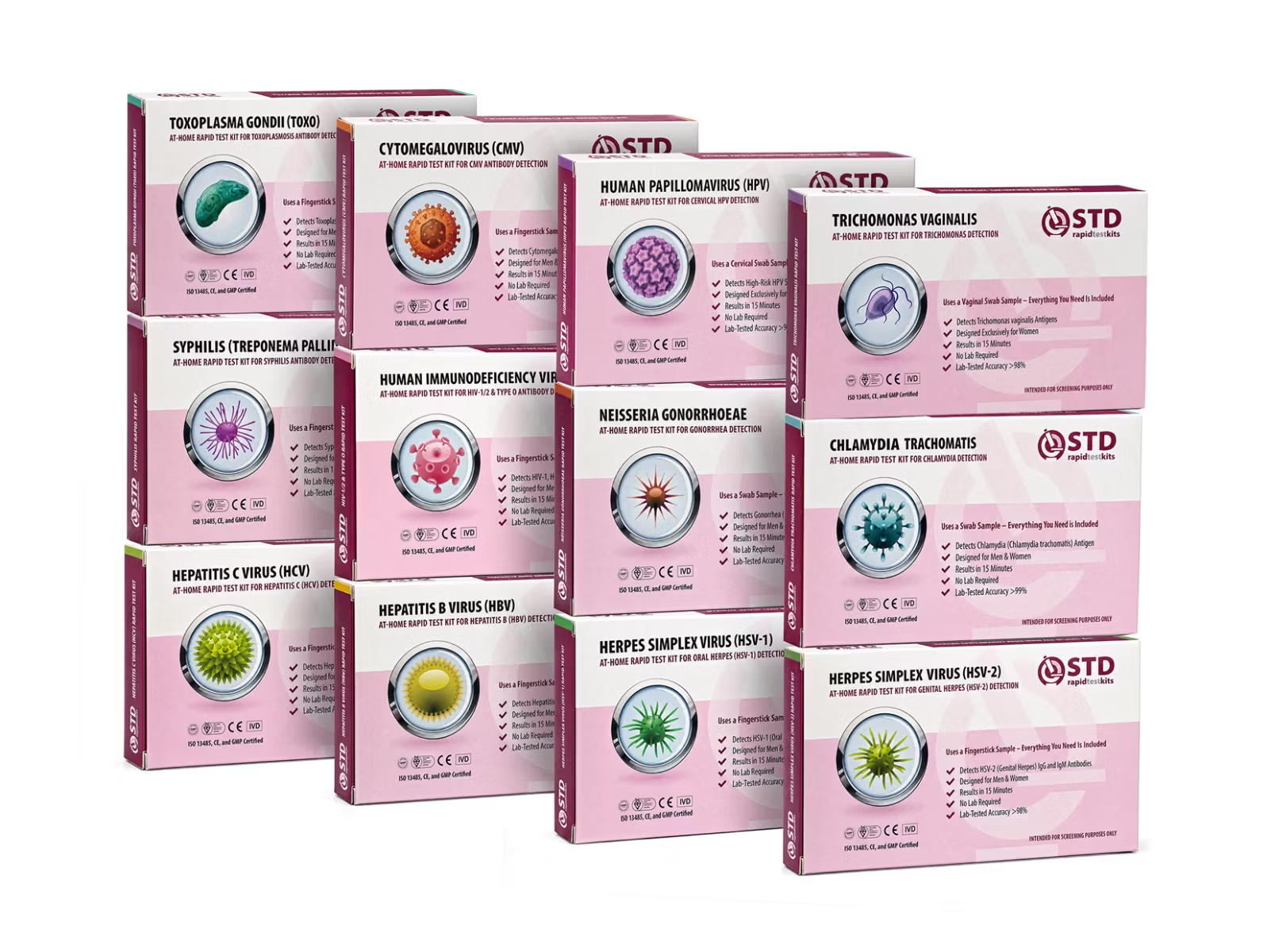
- At-home rapid tests. Lateral-flow cassettes that read a fingerstick blood sample or a self-collected swab. Results in about 15 minutes. Best for screening common STIs at home when you want a fast answer without involving a clinic.
- Mail-in lab kits. You collect a sample at home, mail it to a lab, and get results in two to three days. Useful when you want lab-grade analysis on a broader panel.
- In-clinic testing. The right call if you are pregnant, immunocompromised, have active symptoms that need exam-level evaluation, or want a NAAT-confirmed result on chlamydia or gonorrhea.
At-home lateral-flow rapid tests are not the same chemistry as laboratory NAATs (nucleic acid amplification tests). NAATs detect viral or bacterial DNA directly and are highly sensitive; lateral-flow tests use antibody or antigen detection on a strip. Both have a role: rapid tests for fast screening at home, NAAT for definitive confirmation. A positive at-home result is worth confirming at a clinic, and a negative result during a window period (before the body has produced detectable antibodies) is worth repeating later.
Window periods vary by infection. Per the CDC's herpes testing guidance and other CDC infection-specific pages, useful general rules: chlamydia and gonorrhea, about one to three weeks after exposure; syphilis, about three weeks for the primary chancre and four to twelve weeks for reliable blood tests; herpes antibody tests, up to 16 weeks or more for reliable seroconversion; HIV antibody/antigen, generally reliable by twelve weeks. If you want a single round of testing, day fourteen to twenty-one captures many infections; for HIV, syphilis, and herpes, a follow-up at twelve weeks (and a repeat herpes test at sixteen weeks or later) is the standard.
Healing and Post-Inflammatory Hyperpigmentation
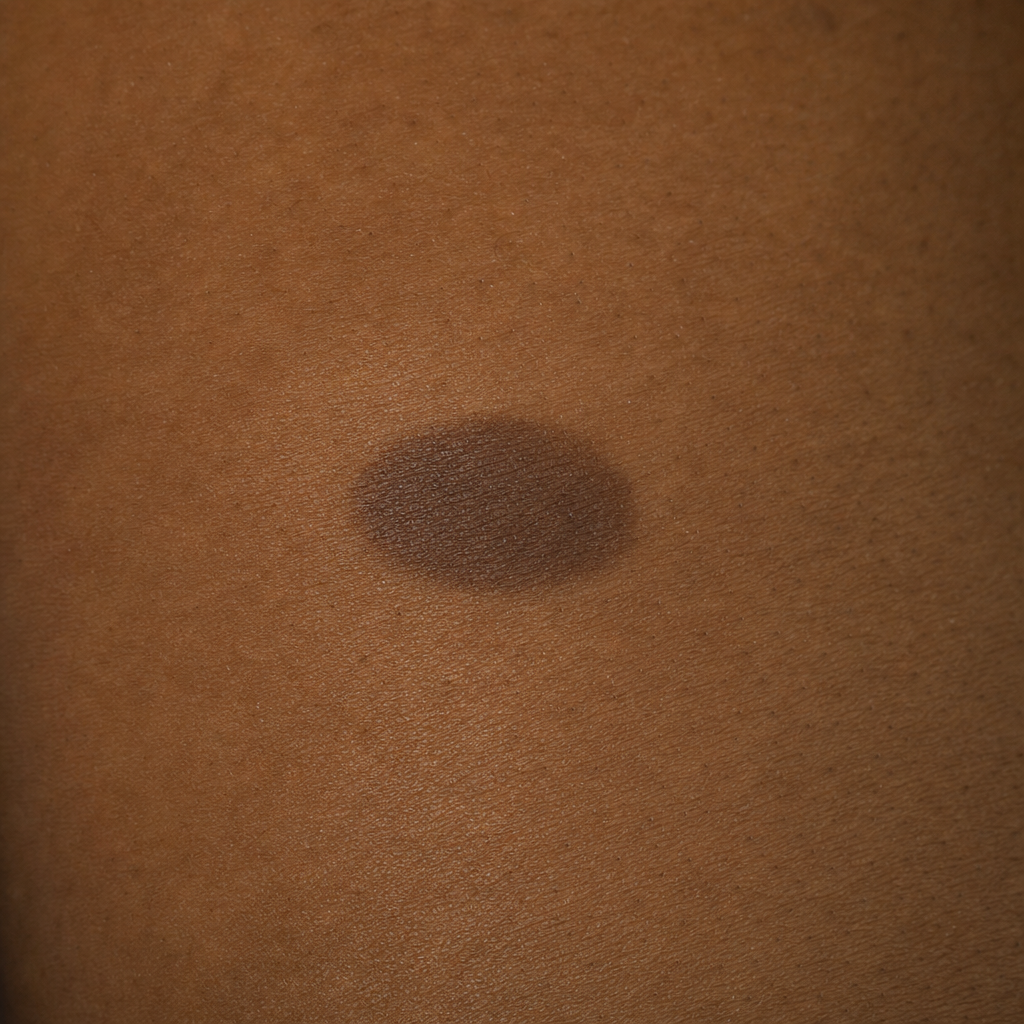
If you have been treated for an STI and the visible lesion is gone, you may still be looking at a darker patch where the sore used to be. That is almost always post-inflammatory hyperpigmentation (PIH), not a recurrence and not contagious. PIH happens when the skin's melanocytes respond to inflammation, infection, friction, or trauma by depositing extra melanin during healing. It is very common on melanin-rich skin and can take weeks to many months to fade.
What PIH after a vulvar STI can look like:
- Flat, well-defined dark brown or violet macules where lesions used to be.
- A line or band of slightly darker pigmentation along the inner labia.
- Splotchy areas of uneven tone after recurrent yeast, herpes, or bacterial vaginosis.
- Occasional lighter patches if pigment-producing cells were damaged during a severe inflammatory episode.
What helps:
- Let the area breathe. Loose cotton underwear and no synthetic liners reduce friction that prolongs pigmentation.
- Fragrance-free soothing options. Aloe vera gel, calendula cream, or cool chamomile compresses can calm residual inflammation.
- Avoid scrubbing or exfoliating the pigmented area; this worsens PIH on darker skin.
- For persistent PIH that bothers you, a dermatologist familiar with skin of color can suggest topical options (azelaic acid, kojic acid, niacinamide) appropriate for the vulvar area.
For most people the pigment settles on its own within a few months; if a patch lingers past six months and bothers you, a dermatologist familiar with skin of color can suggest topical options safe for the vulvar area.
Post-inflammatory hyperpigmentation after a healed STI lesion is not a recurrence and is not transmissible to a partner. The dark mark is the skin's inflammation record, not active infection. It typically fades over weeks to many months with no treatment needed. If a patch persists past six months and bothers you, a dermatologist familiar with skin of color can recommend topical options safe for the vulvar area.
Trust What Your Body Tells You
STI signs on Black and brown skin can look quieter than the textbook pictures suggest. Melanated skin presents the same conditions differently, and the reference library most clinicians and patients learn from was built from a narrower slice of human variation than actually exists. If you are paying attention to your own skin, you have a built-in baseline no reference photo can match. A new patch, a different texture, a burn that was not there last week: those are signals worth respecting, whether or not they match what Google's image search shows.
When something feels off, testing is the move, and if something is found, treatment for most common STIs is straightforward. The pigment changes that follow are normal healing, and they fade at their own pace. Pigment changes left behind are part of how melanated skin records what it has been through.
Frequently asked questions
- Can herpes really look like just a dark spot on Black skin?
- Yes. On melanated vulvar skin, an HSV lesion can appear as a flat hyperpigmented patch, a small scabbed crack, or a faint cluster of darker spots rather than the bright red blisters in textbook images. If a spot stings, tingles, or feels tender, even when it looks subtle, it is worth a test. Per the CDC, most people with herpes have mild or unrecognized symptoms, and that is even harder to catch on darker skin.
- How do I tell razor bumps from STI bumps?
- Razor bumps usually appear within a day or two of shaving and calm down in three to five days. STI bumps tend to linger longer, change in shape or color over time, or come with sensations like burning, tingling, or new discharge. If a bump is still there a week later, or you noticed it without recent shaving, test.
- Why does my doctor say it is nothing when I feel something is wrong?
- Many clinicians were trained on reference images that skew toward lighter skin and miss subtler presentations on darker skin. If you are not getting a satisfying answer, ask specifically: could this present without classic redness on my skin tone, and can we test rather than wait? An at-home rapid screen done before or alongside the visit gives you objective data to bring in.
- What if it burns but I do not see anything?
- Several STIs cause sensation before visible signs, including early herpes, chlamydia, gonorrhea, and trichomoniasis. Burning during urination, localized tenderness, or persistent itching without a clear external trigger are reasons to test even when nothing is visible. On melanated skin, internal signals are often more reliable than visual ones.
- Do STIs leave dark marks on Black skin after healing?
- Often, yes. Post-inflammatory hyperpigmentation is common on melanin-rich skin after any inflammatory event, including STI lesions. The dark patch left behind is not contagious and not a recurrence. It can take weeks to many months to fade. Loose cotton underwear, fragrance-free skin care, and avoiding scrubbing the area help. A dermatologist familiar with skin of color can suggest topicals for stubborn PIH.
- How long after exposure should I wait to test?
- For most exposures, day 14 to 21 covers chlamydia and gonorrhea. Syphilis usually needs a follow-up blood test around 4 to 12 weeks to confirm. Herpes antibodies can take up to 16 weeks or longer to register, so a negative result before that window leaves the question open. HIV is generally reliable by 12 weeks with a fourth-generation antibody/antigen test.
- Can I take an STI test at home if I do not know which infection I have?
- Yes. A multi-panel at-home kit screens for the most common STIs at once, which is the right call when you are unsure. Rapid lateral-flow kits give results in about 15 minutes; mail-in panels offer broader coverage with two-to-three-day lab turnaround. Either approach skips the urgent-care wait.
How we sourced this article. We built this guide from current public-health guidance (CDC, WHO, NHS, Mayo Clinic) and peer-reviewed clinical literature, with attention to how STI presentation differs on melanated skin. This is a summary for general readers, not clinical advice. For diagnosis or treatment, see a licensed clinician.
- U.S. Centers for Disease Control and Prevention. About Genital Herpes overview, including symptoms, transmission, and the prevalence of asymptomatic infection.
- U.S. Centers for Disease Control and Prevention. Genital herpes program landing page with current surveillance, testing, and prevention resources.
- U.S. Centers for Disease Control and Prevention. Screening for Genital Herpes, including which tests are appropriate and when, and the up-to-16-weeks-or-more seroconversion window.
- U.S. Centers for Disease Control and Prevention. About Syphilis, including stages, the primary chancre presentation, exposure-to-symptom timing, and complications including congenital transmission.
- U.S. Centers for Disease Control and Prevention. About Trichomoniasis, including symptoms and discharge patterns.
- U.S. National Library of Medicine, MedlinePlus. Genital herpes patient overview, signs, testing, and care.
