Hepatitis C in Men vs Women: Silent Signs and Missed Warnings
Hepatitis C can sit quietly in the body for ten or twenty years before anything feels clearly wrong. The signals it does send read differently in men and women, and diagnosis often lags as a result. Here is what to look for, why those signs get missed, and when an at-home Hep C test is the right next step.
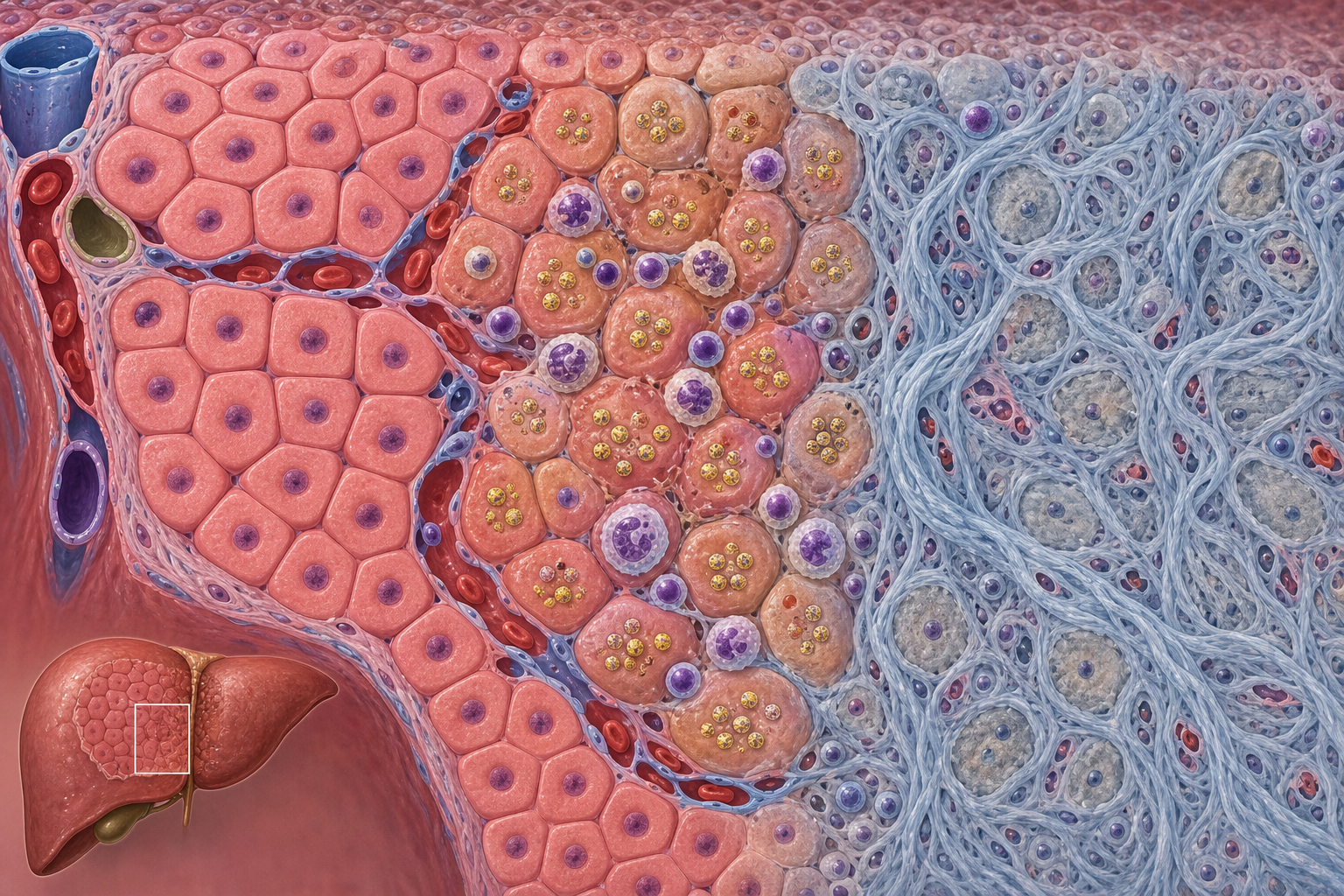



- Most people with chronic Hepatitis C feel fine for years, even while liver damage builds quietly in the background.
- Symptom patterns and diagnostic timelines differ by gender, but the CDC now recommends one-time HCV screening for every adult 18 and older regardless of risk.
Published: September 2025 | Last updated: May 2026 | Editorial review and quality control: Martina N.
The infection is the same, but the way it surfaces differs. Men more often report fatigue, joint stiffness, abdominal discomfort, and libido changes. Women more often report brain fog, mood shifts, and cycle changes. Both groups frequently feel nothing for years, which is why the CDC recommends universal HCV screening for every adult 18 and older.
Hepatitis C is one of the quietest viruses a body can carry. Most people who have it feel completely normal for years, sometimes decades, while the liver works overtime to keep things stable. The signals it does send (mild fatigue, brain fog, a slip in appetite) are easy to file under stress, age, or hormones.
That ambiguity hits men and women differently. The same virus shows up in different language, gets read by clinicians through different lenses, and ends up diagnosed on different timelines. The result is a diagnostic gap that costs years of liver health for people whose only mistake was sounding ‘nonspecific’ in the chart. Between 2.4 million and 4 million U.S. adults are estimated to have had Hepatitis C from 2017 to 2020 per the CDC's HCV Basics page, and a sizable share have no idea.
Why Hepatitis C Stays Hidden So Long
Hepatitis C earns its ‘silent’ label by skipping the symptoms readers expect from a viral infection. There is no sore throat at onset, no high fever, no clear day when ‘feeling fine’ becomes ‘feeling sick.’ According to the CDC's HCV Basics page, less than half of people who acquire Hepatitis C clear the virus on their own within the first six months. The majority develop chronic infection, and chronic Hepatitis C is famous for its empty waiting room: no pain, no rash, no obvious flag the way an active flu would feel.
Part of the reason is anatomy. The liver has no pain-sensing nerves of its own, so damage accumulates without sending an alarm signal. By the time symptoms appear loudly enough to investigate, the virus has often been replicating for ten to twenty years and the liver is already showing fibrosis (scarring) or early cirrhosis (advanced scarring that disrupts normal liver function).
People rarely seek care for a vague drop in stamina. They wait for something dramatic. The trigger, when it finally comes, is usually unrelated to a hepatitis worry: a pre-op blood panel, an insurance physical, a new primary-care visit that happens to include the universal HCV screen.
The majority of chronic Hepatitis C diagnoses in the U.S. are picked up incidentally: a routine annual physical, a pre-surgical workup, or a one-time screening run because the patient happened to fall under the CDC's universal-screening recommendation. Few people land in a clinic asking specifically about liver symptoms. Universal screening was designed to close exactly that gap.
How Hepatitis C Tends to Show Up in Men
In men, chronic Hep C more often surfaces as physical wear and tear. The complaints that bring men into a clinic, when they bring them at all, tend to be tangible: a mid-day energy crash that did not used to be there, joint stiffness a younger version would have shrugged off, mild upper-right abdominal discomfort, lower libido, or a creeping sense of being slower.
Five patterns repeat across clinical descriptions of men with chronic HCV, and each is exactly the kind of complaint men have been culturally trained to push through. Persistent fatigue, the bone-deep kind that does not lift after a weekend off. Cognitive fog, the lost-word and lost-thread kind that men in their thirties and forties blame on burnout or early ADHD. Joint stiffness in knees, lower back, and hands, driven by chronic immune-system activation that registers as old sports-injury aches. Sexual changes: reduced libido, erectile dysfunction, less satisfying orgasms, none of which most men connect to a liver virus. Mood shifts: irritability, low mood, anxiety, easily labeled as midlife stress.
These signs blend in with everyday life after age forty. They sound like training stress, sleep debt, mid-life testosterone decline, or alcohol catching up. Most men do not flag them as infectious until something unambiguous happens: an elevated liver enzyme on a routine work physical, jaundice that finally tints the eyes, or unexplained abdominal swelling.
Cultural factors compound the delay. Men have, on average, fewer routine primary-care visits than women, which means fewer chances for an opportunistic HCV screen during an annual check-in. When men do present, they more often present with the dramatic late signs rather than the early vague ones.
| What men often feel | What it usually gets blamed on |
|---|---|
| Steady, slow-build fatigue | Burnout, long hours, poor sleep |
| Joint or muscle soreness without injury | Aging, gym strain, normal stiffness |
| Mild yellowing of eyes or skin | Tired eyes, lighting, sun exposure |
| Loss of appetite or upper-right abdominal ache | Stress, diet, drinking habits |
| Drop in libido or erectile function | Mid-life testosterone shift, work pressure |
How Hepatitis C Tends to Show Up in Women
In women, the same virus often presents with a different vocabulary. Neurocognitive complaints are more common: brain fog, slower word retrieval, mood swings, or a flat tiredness that does not match the day's load. Digestive symptoms (bloating, nausea, off appetite) and shifts in menstrual regularity also show up more often in female presentations.
That symptom mix is precisely the mix that gets routed away from infectious disease. Fatigue plus brain fog plus mood change reads as ‘stress’ or ‘depression’ to a busy provider; menstrual irregularity reads as ‘hormones’; bloating reads as ‘IBS.’ Hepatitis C does not even enter the differential until standard panels come back unremarkable, and the patient comes back with the same complaints months later.
Hormonal shifts may also affect how the disease progresses. Patient-facing information from MedlinePlus notes that Hepatitis C symptoms vary widely between individuals and are often subtle for years. Some research suggests women may experience milder early symptoms, with damage picking up speed in the late forties or fifties as estrogen levels fall at menopause.
| What women often feel | What it usually gets blamed on |
|---|---|
| Unearned exhaustion that sleep does not fix | Caregiver burnout, depression |
| Brain fog, word-finding trouble | Perimenopause, ADHD, stress |
| Bloating, nausea, low appetite | Hormonal cycle, IBS, gut issues |
| Cycle changes or new heavy bleeding | PCOS, perimenopause, thyroid |
| Low mood, irritability, anxiety | Premenstrual dysphoric disorder, life stress |
Silent Signs Worth Flagging in Yourself or a Partner
No single item on the checklist below is a Hepatitis C diagnosis. Each one has a benign explanation that fits the average busy life. What matters is the pattern. When several of these show up together, persist beyond a few months, and do not respond to the usual fixes (better sleep, less alcohol, a vacation), an HCV screen is a reasonable next step regardless of perceived risk factors. The checklist is gender-neutral on purpose: the items below appear across both male and female presentations, just at different frequencies and with different default explanations.
Silent Hep C Signs to Watch For
Any one item can have a benign explanation. The pattern, persistence over months, and lack of response to ordinary fixes is what makes a Hep C test worth requesting.
- Persistent fatigue that does not lift after a weekend off, vacation, or a long night of sleep Common
- Brain fog, slowed word retrieval, lost thoughts mid-sentence Common
- Unexplained joint stiffness or aching in knees, lower back, or hands without injury Common
- Loss of appetite or mild upper-right abdominal discomfort Less common
- Reduced libido or new erectile difficulty in men under fifty Less common
- Bloating, nausea, or off appetite without a clear dietary cause Less common
- Cycle changes, new heavy bleeding, or symptoms that intensify around perimenopause Less common
- Low mood, irritability, or anxiety that does not match life circumstances Less common
- Mild yellowing of the eyes or skin (jaundice) Rare
- New abdominal swelling or unexplained easy bruising Rare
Where the Diagnostic Gap Comes From
Research across specialties has documented that men reporting pain are more likely to receive imaging, while women reporting fatigue or pain are more likely to receive antidepressant referrals. Whatever the underlying mechanism, the downstream effect for Hepatitis C is consistent: women's symptoms get attributed to depression, anxiety, hormones, or autoimmune conditions before infectious disease enters the picture.
Men face a different version of delay. Because the cultural script for men is to brush off vague symptoms, many do not bring fatigue or joint complaints to a clinician at all. When they finally arrive, they often arrive with the dramatic signs (jaundice, abdominal swelling, abnormal labs from an unrelated test) that mean disease is already advanced. The lag is shorter on average, but the disease at presentation is further along.
The fix is not symptom-by-symptom guesswork. The fix is to lower the bar for testing. Universal screening means a clinician does not have to spot the right symptom pattern in the right gender at the right age.
| Group | Typical diagnostic detours | What tends to finally trigger testing |
|---|---|---|
| Women | Depression workup, anxiety screening, perimenopause attribution, autoimmune referral | Symptoms that escalate post-menopause, or a new provider running a hepatitis panel |
| Men | Stress, alcohol use, normal-aging assumptions | Abnormal liver enzymes on a work physical, visible jaundice, abdominal swelling |
What Changes After Fifty
The liver becomes less forgiving with age, and Hepatitis C exploits that shift. For women, the drop in estrogen at menopause appears to remove a mild protective effect against fibrotic activity. Symptoms that were tolerable for decades, low-grade fatigue, brain fog, occasional bloating, can intensify in the late forties and fifties. What used to feel like a quiet background hum becomes loud enough to disrupt work and sleep, and a fresh round of testing finally turns up an antibody-positive HCV result that has been brewing for twenty years.
For men, testosterone tapering does not protect the liver in the same way estrogen once did, but it does change how fatigue and inflammation register. Men in their fifties commonly describe a ‘sudden’ stamina crash, when in reality cirrhosis has been progressing quietly. The presentation feels acute even though the underlying damage is the result of decades.

The Hormone Connection in Men
Most men do not associate a liver virus with erectile dysfunction or low libido. Both are well-documented in chronic Hepatitis C, especially as fibrosis progresses. The mechanism involves the liver's role in producing sex-hormone-binding globulin (SHBG) and metabolizing testosterone. When the liver is inflamed or scarred, the hormone math gets disrupted: free testosterone often drops, SHBG climbs, and the net effect is reduced libido and impaired sexual function.
Population studies in chronic Hepatitis C patients have shown reductions in serum testosterone correlating with the degree of liver fibrosis, and prevalence of erectile dysfunction in chronic HCV populations runs meaningfully higher than in matched controls without the virus. Many men report improvements in libido, erectile function, and overall energy within months of completing antiviral treatment, as the liver recovers and hormone metabolism normalizes.
If a man in his thirties or forties notices an unexplained drop in libido or sexual function, especially alongside fatigue or joint pain, a Hep C test belongs on the workup list, not just a testosterone panel.
The liver produces sex-hormone-binding globulin (SHBG) and metabolizes testosterone. Chronic HCV inflammation disrupts both: free testosterone drops, SHBG climbs, and reduced libido or erectile changes follow. Sexual function frequently improves within months of completing direct-acting antiviral treatment, which is one reason men dismissing libido changes as ‘just aging’ are encouraged to test rather than reach for a testosterone panel first.
How Untreated Hep C Tends to Progress
The progression sketch matters because most readers know the late signs (jaundice, abdominal swelling) and assume that anything before those signs is too early to worry about. The opposite is true. The window between first exposure and serious damage is exactly where treatment is easiest and most effective. The table below sketches the typical untreated arc, drawn from primary-care descriptions of patients who arrive at diagnosis after years of vague complaints.
| Time since exposure | Common day-to-day experience | What is happening internally |
|---|---|---|
| 0 to 3 months | No symptoms, or mild fatigue brushed off as a busy stretch | Virus replicates in liver cells. Acute phase. Less than half of people clear it spontaneously. |
| 3 to 6 months | Appetite slips, sleep worsens, joint stiffness creeps in | Immune response intensifies. Chronic infection becomes likely. Early liver inflammation begins. |
| 6 to 12 months | Brain fog, mood swings, libido changes start to register | Chronic infection is established. Liver damage progresses quietly. |
| 1 to 5 years | Worsening fatigue, weight changes, sexual dysfunction | Fibrosis (scarring) develops in many cases. Liver function gradually declines. |
| 10 to 30 years | Jaundice, abdominal swelling, mental confusion in advanced cases | Cirrhosis or, in some cases, hepatocellular carcinoma (liver cancer) may develop. |
How People Actually Acquire Hepatitis C
Hepatitis C is bloodborne. Anything that gets infected blood into the bloodstream can transmit it, and the list of routes is broader than the conversation usually allows. Sex transmits Hep C far less efficiently than HIV or hepatitis B, so most cases trace back to non-sexual blood exposures that catch people by surprise. A single past episode of injection drug use decades ago, a tattoo from an unregulated setting, a transfusion before 1992: each is enough exposure to warrant testing now. The table below lays out the main routes and their relative risk profile.
| Transmission route | Risk level | Notes |
|---|---|---|
| Shared injection equipment, including a single past episode | Highest-volume route in U.S. today | A single experimentation episode decades ago is sufficient exposure to warrant testing now. |
| Unregulated tattoos or piercings | Moderate when needles or ink are shared | Licensed parlors with proper sterilization protocols are very low risk. Tattoos done in homes, parties, or prison are not. |
| Pre-1992 blood transfusions, blood products, or organ transplants | Elevated background risk | The U.S. blood supply was not screened for HCV until 1992. |
| Shared razors, toothbrushes, nail clippers, or other skin-breaking household items | Low per exposure, not zero | Common surprise route for people with no other recognized risk factors. |
| Sex involving blood (anal sex, sex during menstruation, cuts or sores, HIV co-infection) | Above the very low baseline for vaginal sex | Vaginal sex without blood exposure is very low baseline. Blood involvement is the variable that matters. |
How to Actually Get Tested
Hepatitis C testing has two layers. The first is an HCV antibody test, which detects whether the immune system has ever seen the virus. A reactive antibody result means the body produced antibodies at some point. To know whether the virus is still active, the antibody test is followed by an HCV RNA test (a nucleic acid test, or NAT), which looks for the virus itself. A positive NAT confirms current infection.
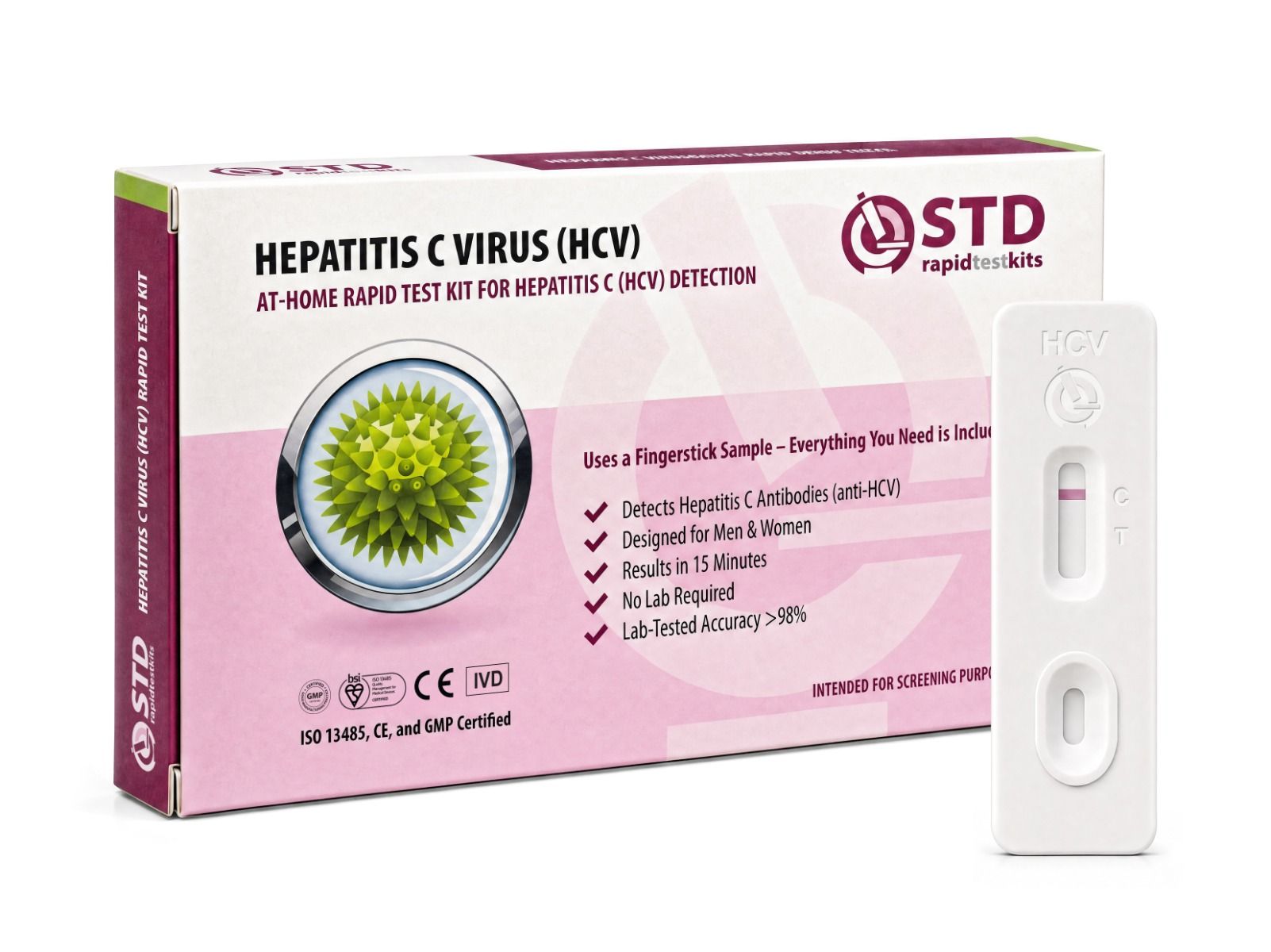
At-home rapid tests cover the antibody screening step privately, with a fingerstick blood sample. An at-home Hepatitis C antibody test delivers a result in about fifteen minutes. A reactive home result is not a diagnosis on its own; it is a signal to follow up with a NAT through a clinician or lab to confirm whether the infection is active. Antibodies can take several weeks to develop after exposure. The CDC's HCV testing guidance notes that if exposure may have occurred within the past six months, the doctor should order a NAT for HCV RNA rather than an antibody test, because antibodies can take weeks to develop after acute infection. The same guidance recommends one-time screening for all adults eighteen and older, plus periodic testing for anyone with ongoing risk factors like injection drug use or HIV. The USPSTF gives the same screening a Grade B recommendation for adults aged 18 to 79.
There is no waiting for symptoms to qualify. The screening recommendation is age-based, not symptom-based. Anyone over eighteen who has never been tested is in scope. Disclosure: stdrapidtestkits.com sells the at-home rapid HCV antibody kit referenced below. We recommend it based on fit-for-purpose for the reader's concern, not commercial benefit.
What Treatment and Recovery Actually Look Like
Hepatitis C treatment changed dramatically in 2014 with the arrival of direct-acting antiviral (DAA) pills. The regimen is no longer the brutal interferon course older readers may remember. According to the NIDDK's hepatitis C overview, antiviral medicines now cure more than 95% of people with chronic hepatitis C in 8 to 12 weeks. The WHO's hepatitis C fact sheet describes a broader 12 to 24 week range globally depending on whether cirrhosis is present. Side effects are typically mild enough that most patients keep working through the course.
For the small minority who do not achieve a sustained virological response on a first-line regimen, re-treatment options exist with similarly high success rates. True direct-acting antiviral resistance is rare and should be evaluated by a hepatology specialist before assuming treatment failure rather than, for example, a missed-dose explanation or a re-exposure event.
What changes between men and women is less the medication and more the emotional reckoning around it. Men diagnosed late often confront the fact that they ignored years of warning signs they did not recognize as warnings. Women diagnosed late often confront years of clinicians dismissing what turns out to have been a real signal all along. Both reactions affect what comes next, including whether someone tells partners, follows up, or returns to routine care.
Treatment ends the active infection. It does not always reverse fibrosis that has already set in, which is why earlier diagnosis improves outcomes. Anyone with a confirmed positive RNA result should also have liver fibrosis assessed, and follow-up care should plan for any organ damage detected before the cure. Patients who reached cirrhosis before treatment typically continue on a six-month ultrasound-and-bloodwork surveillance schedule to catch any liver cancer early, which makes cirrhosis a serious diagnosis but a manageable one rather than a terminal sentence.
CDC recommends hepatitis C screening at least once in a lifetime for all adults aged 18 years and older, except in settings where the prevalence of HCV infection is less than 0.1%.
Telling Partners Without the Shame
Hepatitis C spreads primarily through blood-to-blood contact. Sexual transmission is possible but uncommon outside of conditions involving blood (rough sex, anal contact, menstrual blood, or HIV co-infection). Most cases trace back to shared injection equipment, unsterile tattoo or piercing tools, transfusions before reliable blood screening (pre-1992 in the U.S.), or healthcare exposures with poor infection control.
Partner notification is still worth doing for anyone who could plausibly have shared a risk environment: current sexual partners, anyone the diagnosed person shared injection equipment with, household members who might have shared a razor or toothbrush. The point is not blame; it is giving people the information to test themselves.
There is no perfect script. A short, factual message tends to work: a positive result, a treatment plan in motion, and a recommendation that the partner test as well. Anyone uncomfortable drafting it can ask a clinician for help.

After the Cure: Retesting and Prevention
Direct-acting antivirals clear the virus, but they do not produce immunity. Reinfection is possible if exposure happens again. For people whose infection traces back to injection drug use, ongoing harm-reduction support and access to sterile equipment matters more than ever after cure. For people whose infection traces back to a one-time exposure, prevention is straightforward: avoid shared blood-contact items, choose regulated tattoo and piercing settings, and confirm sterile practice with any medical or dental procedure.
Liver follow-up continues even after viral clearance. Cirrhosis-related risks (including a higher long-term risk of liver cancer) do not vanish because the virus is gone. Anyone who reached significant fibrosis before treatment usually continues with periodic imaging and bloodwork.
For people whose recent test was negative but who have other potential exposures (a new partner, a recent unprotected encounter, a possible HIV exposure), a broader STI panel is reasonable. The 7-in-1 at-home rapid kit below covers Hepatitis C alongside other common infections in one package.

Trust the Whisper Before the Scream
Hepatitis C symptoms whisper. They are easy to dismiss as stress, hormones, age, or burnout. The diagnostic system layers its own filters on top: women with vague complaints get routed toward depression and hormones, men with vague complaints get routed toward ‘just get more sleep,’ and the virus keeps working in the background.
The single most powerful thing anyone can do is reject the symptom-guessing game entirely. The CDC's recommendation is universal: every adult, eighteen and older, gets screened for Hepatitis C at least once. That is a baseline, not a high-risk test. If the result is non-reactive, that is one anxiety closed. If the result is reactive, the next step is an RNA test and, if active, a treatment course that ends in cure for the vast majority of people.
Listening to a quiet body is hard. Acting on what it says, while the signal is still quiet, gives the medication and the liver the best chance to do their work.
Your Next Steps
Have you ever had an HCV antibody test as an adult 18 or older?
Yes: If the result was non-reactive and no new blood-exposure events have happened since, no immediate action is needed. Universal screening is one-and-done per CDC guidance.
Did a recent antibody test come back reactive (positive)?
Yes: Follow up with a lab HCV RNA NAT through a clinician to confirm whether the infection is currently active. A reactive antibody does not always mean current infection; it can also reflect a past exposure that the immune system cleared.
Is the RNA test positive, meaning active infection?
Yes: Ask a clinician about direct-acting antiviral treatment. Cure rates exceed 95% per the NIDDK, in a typical 8-to-12-week oral course. The course usually does not require time off work.
No: A reactive antibody with a negative RNA usually means the body cleared a past infection. No treatment is needed, but flag the antibody history at future medical visits so that any retest interprets the antibody result correctly.
A short three-step flow for HCV testing. Guidance only; a clinician can advise based on your full history.
FAQs
- Can I have Hepatitis C and feel completely fine?
- Yes, and that is the most common scenario. Most chronic Hep C infections produce no clear symptoms for years, sometimes decades, while liver damage builds up quietly. That is why the CDC recommends screening every adult eighteen and older at least once, regardless of risk.
- Do men and women really get different Hep C symptoms?
- Yes, and the difference affects how long diagnosis takes. Men's HCV tends to surface via physical complaints like fatigue, joint stiffness, libido changes, and eventually abnormal liver labs or visible jaundice. Women's tends to surface after years of neurocognitive and hormonal complaints attributed to other causes, producing a longer diagnostic lag on average. The CDC's universal screening recommendation is the fix: one HCV test per lifetime regardless of symptoms.
- Is Hepatitis C a sexually transmitted infection?
- Hepatitis C is primarily blood-to-blood, not classically sexual. Transmission during sex is possible when blood contact is involved (anal intercourse, menstrual blood, rough sex, HIV co-infection). The most common transmission routes are shared injection equipment, unsterile tattoo or piercing tools, and pre-1992 transfusions.
- Can I really get Hepatitis C from a tattoo?
- Yes, when the equipment is not properly sterilized. Licensed parlors that follow standard sterilization protocols are very low risk. Tattoos done in someone's kitchen, at a party, or in prison are higher risk because shared needles and ink caps can carry residual blood. The CDC lists unregulated tattooing as a recognized HCV transmission route.
- I have never used drugs. Could I still have it?
- Yes. Common non-drug exposure routes include unregulated tattoos, shared razors or toothbrushes, sex with blood involvement, blood transfusions before 1992, and certain healthcare exposures. The CDC now recommends one-time Hep C screening for all adults age 18 and older regardless of risk factors.
- Does Hep C really affect sexual function?
- It can. Chronic HCV has been associated with reduced testosterone, low libido, and erectile dysfunction, particularly as liver fibrosis progresses. The liver's role in metabolizing sex hormones is part of the mechanism. Many men report improvements in sexual function after antiviral treatment as the liver recovers.
- How long can Hepatitis C stay undetected?
- Years to decades. Chronic Hep C is often diagnosed ten to twenty years after exposure, frequently at a routine checkup or after liver enzymes show up abnormal on bloodwork ordered for an unrelated reason.
- How do I get tested at home?
- A fingerstick rapid antibody test gives a result in about fifteen minutes. If a possible exposure happened within the past six months, the CDC recommends a lab HCV RNA test rather than an antibody test, because antibodies can take weeks to develop. A reactive antibody result always needs lab RNA follow-up to confirm whether the infection is currently active.
- If I test positive, how is it treated?
- Cure rates above 95% are now standard with direct-acting antiviral pills, per the NIDDK. The course is a once-daily oral regimen of roughly 8 to 12 weeks for most patients, extended for advanced liver scarring. Side effects are generally mild and the regimen rarely interferes with normal work or activity.
- Can I get Hep C again after being cured?
- Yes. Antibodies do not prevent reinfection, so re-exposure (shared needles, unsterile tools, certain sex acts) can produce a new active infection. Periodic retesting is recommended for anyone with ongoing risk factors.
- U.S. Centers for Disease Control and Prevention. Hepatitis C Basics page, including the estimated 2.4 million to 4 million U.S. adults living with HCV from 2017 to 2020 and the spontaneous-clearance figure that less than half of acute infections clear without treatment.
- U.S. Centers for Disease Control and Prevention. Hepatitis C Testing guidance, including the universal one-time screening recommendation for adults aged 18 and older and the recommendation to use a NAT for HCV RNA over an antibody test when exposure may have occurred within the past six months.
- World Health Organization. Hepatitis C fact sheet covering global burden, transmission routes, and direct-acting antiviral treatment standards including the 12 to 24 week duration range.
- U.S. Preventive Services Task Force. Grade B recommendation for HCV screening in asymptomatic adults aged 18 to 79.
- National Institute of Diabetes and Digestive and Kidney Diseases (NIH). Hepatitis C overview covering transmission, diagnosis, fibrosis progression, and the 8-to-12-week treatment regimen with >95% cure rate.
- MedlinePlus (U.S. National Library of Medicine). Patient-facing information on Hepatitis C symptoms, testing, and treatment, including the wide variability in symptom presentation.
- NHS. Hepatitis C overview, including symptom patterns and testing access in the UK.