Heat Rash vs Herpes: How to Tell the Difference Fast
Decode whether a rash is sweat, allergy, or an STD signal
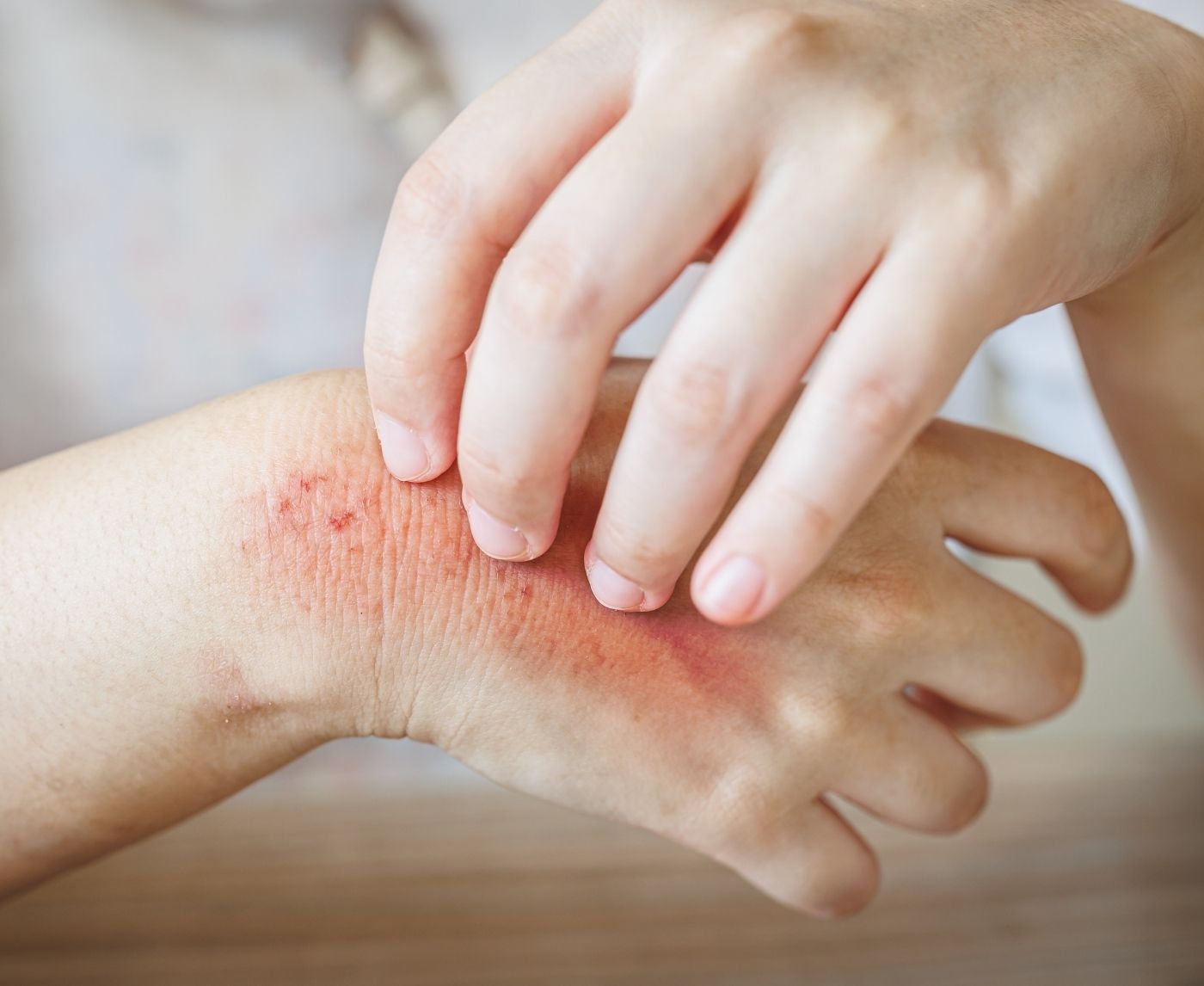



- Heat rash, contact-allergy rashes, and ingrown hairs resolve within hours to days once you cool down, stop the trigger, or let the hair grow out; STD-related rashes do not, and they often return.
- Herpes is recognized by tingling that comes before clustered fluid-filled blisters; syphilis is recognized by a non-itchy reddish-brown rash that can appear on palms or soles.
Published: August 2025 | Last updated: May 2026 | Editorial review and quality control: Martina N.
A rash in a private area almost always feels alarming. The skin there is thin, the body part is sensitive, and the timing (often after sex, after a sweaty afternoon, or after switching laundry detergent) makes it hard to know whether you are looking at simple irritation or something that needs testing. The good news: most rashes that appear on the inner thighs, groin, or genital skin are not sexually transmitted infections. The harder truth: some are, and the visual differences between them are smaller than the internet makes them seem.
This guide walks through how to tell heat rash, allergic reactions, ingrown hairs, and the STIs that most often cause skin findings (herpes, syphilis, and HIV, plus the rarer presentations of HPV warts, disseminated gonorrhea, and acute hepatitis) apart in plain language. None of this replaces a clinical exam. It is meant to help you decide whether the rash you are looking at deserves a few days of cooling and patience, or a 15-minute at-home test.
Key Takeaways
- Heat rash, contact-allergy rashes, and ingrown hairs resolve within hours to days once you cool down, stop the trigger, or let the hair grow out; STD-related rashes do not, and they often return.
- Herpes is recognized by tingling that comes before clustered fluid-filled blisters; syphilis is recognized by a non-itchy reddish-brown rash that can appear on palms or soles.
What heat rash looks like, and how it behaves
Heat rash, called miliaria in clinical terms, happens when blocked sweat ducts trap perspiration just below the skin's surface. According to NHS guidance on heat rash and prickly heat, the rash typically presents as small, raised spots about 2 to 4 millimeters across, sometimes with tiny clear fluid-filled tops that feel prickly when touched. It tends to flare under tight clothing, in skin folds, and during hot, humid weather, and it is treated mainly by keeping the skin cool so it stops sweating and irritating the rash.
Three behaviors mark a rash as heat-related rather than infectious. First, it appears within hours of overheating, sweating, or wearing tight non-breathable fabric, not days later. Second, it stops at the boundary of the friction or sweat zone (under a waistband, between thighs, in the groin crease) rather than scattering to unrelated body parts. Third, it fades once you cool down, change into loose dry clothing, and let the skin breathe. A rash that meets all three behaviors and resolves within a day or two is almost certainly heat rash.
What heat rash does not do: it does not turn into deep fluid-filled blisters that crust over, it does not return to the same exact spot every few weeks, and it is not contagious to a partner.
- Timing: it appears within hours of overheating, sweating, or wearing tight non-breathable clothing, not days after.
- Location: it stays inside the friction or sweat zone (under a waistband, between the thighs, in the groin crease) and does not scatter to unrelated body parts.
- Resolution: it fades within a day or two once you cool down, switch to loose dry clothing, and let the skin breathe.
When it is not allergies or an ingrown hair
The second easy explanation is contact dermatitis: an allergic or irritant skin reaction to something that touched the area. The NHS contact dermatitis page describes it as skin that becomes itchy, blistered, dry, or cracked, with redness in lighter skin tones, and it notes that the condition usually clears up completely once the trigger is identified and avoided. Common culprits in the genital area include latex condoms, lubricants and spermicides, scented body washes, new laundry detergent, and shaving products.
Allergic rashes have their own signature. They tend to be diffuse rather than tightly clustered, they itch more than they sting, and they often follow the shape of whatever contacted the skin: red, slightly puffy, sometimes with small bumps but rarely with the deep grouped blisters that herpes produces. Most importantly, they improve once you remove the trigger. A switch to a hypoallergenic detergent, a non-latex condom, or fragrance-free body wash usually clears a true contact-allergy rash within a few days.
Ingrown hairs and folliculitis after shaving look different again. The classic ingrown hair is a single raised, inflamed papule, sometimes with a visible curled hair shaft trapped just under the skin, surrounded by a small halo of redness. There is no cluster of fluid-filled blisters and no recurrence in the exact same spot weeks apart. A handful of ingrown hairs after a close shave clears on its own as the hair grows out or after a few days of warm compresses.
If you have ruled out a recent product change, if the rash sits in one tight cluster rather than spreading to where you actually contacted the suspected allergen, and if it keeps coming back after sex with a particular partner, you are likely not dealing with an allergy or a shave reaction.
| Feature | Heat Rash | Contact Dermatitis | Ingrown Hair |
|---|---|---|---|
| Trigger | Sweat blocked under the skin from heat, humidity, or tight clothing | Direct skin contact with an irritant or allergen (latex, fragrance, detergent) | Recent shaving or waxing in the area |
| Pattern | Many small uniform spots scattered across a wide patch | Diffuse red, puffy skin matching the area that contacted the trigger | One or a few isolated raised papules, sometimes with a visible hair shaft |
| Sensation | Prickly and stinging more than itchy | Itchy, sometimes burning, often diffuse | Sore or tender at each papule, not itchy across the whole area |
| Typical resolution | Hours to 2 days after cooling and loose clothing | A few days to a week after removing the trigger | Days as the hair grows out, faster with warm compresses |
Visual differential: four conditions people confuse
A side-by-side look at the most common causes of a rash in the bikini area helps anchor the prose. Heat rash, contact dermatitis, ingrown hairs, herpes, and syphilis all play in a small visual vocabulary of bumps and patches, but the patterns separate quickly when you can see them together. The gallery below pairs the benign mimics with the two STD findings most likely to surface in this anatomy. Notice how heat rash spreads evenly across a wide patch while herpes clusters tightly on an inflamed base, and how secondary syphilis reaches body parts (the palms) where benign rashes rarely go.
The herpes pattern: tingling, then clustered blisters
Herpes is the STD most often confused with heat rash, and for good reason: a first outbreak can start as small red bumps that look superficially like sweat irritation or razor burn. Sequence matters more than severity here. The NHS genital herpes page describes a typical prodrome of tingling, burning, or itching around the genitals before any visible bump shows up, and it notes that the infection is contagious from the first tingle of a new outbreak, before any blisters appear.
What follows is distinctive. Small painful blisters cluster together, usually in groups of three to a dozen, and they sit on a base of red inflamed skin. The blisters break, weep clear fluid, then crust over, and the cycle takes 1 to 2 weeks to fully heal. The first outbreak typically appears within days to weeks of exposure (commonly within 2 to 12 days). Recurrent outbreaks are usually shorter and milder than the first, and they tend to return to roughly the same area because the virus lives dormant in nearby nerve cells.
Two facts complicate self-diagnosis. First, herpes can present as small cuts, raw spots, or what looks like a paper cut rather than the textbook cluster of blisters. According to the CDC's genital herpes overview, mild symptoms are often unnoticed or mistaken for other skin conditions like a pimple or ingrown hair. Second, the virus can shed from skin that looks completely normal. Per the WHO's herpes simplex virus fact sheet, genital HSV is often transmitted by people who do not know they carry the virus. The most reliable way to confirm or rule out herpes when no active sore is present is a blood antibody test, with results most reliable 4 to 12 weeks after exposure (some assays extend the window to 16 weeks). When there is an active lesion, a clinician-collected swab tested by PCR or culture is faster and more direct.
Mild symptoms may go unnoticed or be mistaken for other skin conditions like a pimple or ingrown hair. You also can get genital herpes from a sex partner who does not have a visible sore or is unaware of their infection.
If you are looking for an at-home herpes test
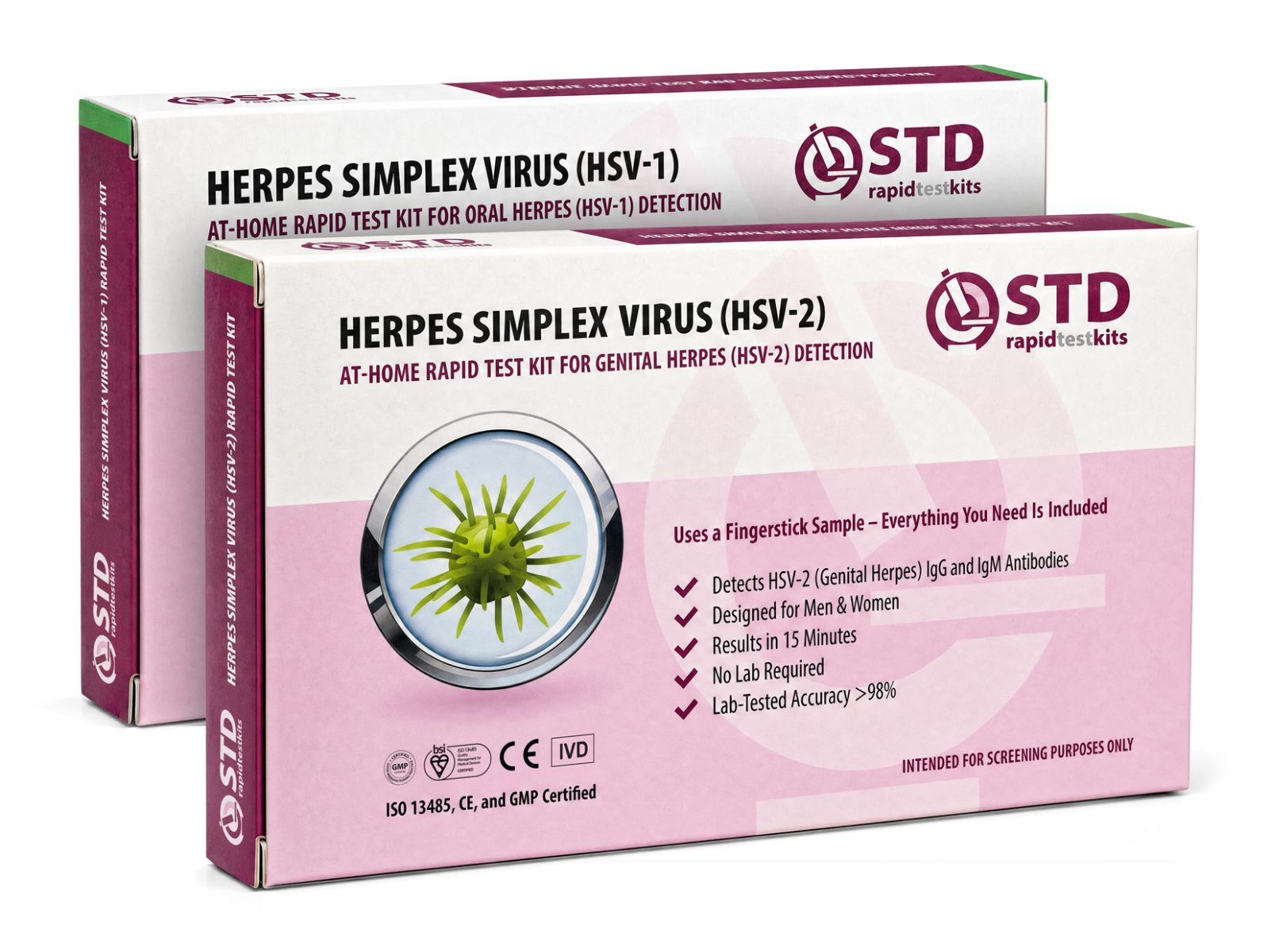
When the rash you are watching fits the herpes pattern (recurrence, prodrome, clustered blisters) but no active lesion is present at the moment you decide to test, the right tool is a blood antibody test. The kit below covers both HSV-1 and HSV-2 from a single fingerstick sample. Use it 4 to 12 weeks after a suspected exposure so the body has time to seroconvert; an earlier negative inside the window is not a final answer.
Syphilis: the quiet rash on palms and soles
Syphilis is the rash that catches people most off guard, because it does not look or feel like the genital symptoms most people associate with an STI. The infection has stages, and the secondary stage, which sets in some weeks after the primary chancre heals, is when a body-wide rash often appears. The CDC's syphilis overview notes that the rash can appear on the palms of the hands and the bottoms of the feet, that it usually will not itch, and that it can be so faint it is easy to miss.
The primary stage opens with a single painless ulcer, called a chancre, at the site of contact, typically around 3 weeks after exposure though the incubation range spans roughly 10 to 90 days. The chancre has a clean, firm, rolled border and heals on its own across 3 to 6 weeks even without treatment, which is part of why it gets missed. Many chancres form inside the vagina, on the cervix, in the rectum, or at the back of the throat, where they are never seen.
Visually, the secondary syphilis rash is reddish to copper-brown, made up of flat or slightly raised spots, and often does not itch at all. That painless quality is exactly what causes people to dismiss it as a heat-related blotch or a reaction to new shoes. The rash can also appear on the trunk, the thighs, or anywhere on the body, and it sometimes comes with mild flu-like symptoms (fatigue, low fever, swollen glands) that get blamed on a passing virus.
Untreated syphilis can quietly progress for years before causing damage to the heart, brain, or nervous system. The good news: the infection is treatable with a course of penicillin, often a single injection in the early stages, and a single rapid blood antibody test can confirm or rule it out. If you have a non-itchy rash on your palms or soles, especially after a sexual encounter in the past few months, treat it as a testing question, not a wait-and-see one.
The palms of the hands and the soles of the feet are not common sites for benign rashes. A non-itchy reddish-brown rash in either location, especially in someone who has been sexually active in the past few months, is a textbook sign of secondary syphilis and warrants a rapid blood antibody test. Even faint or sparse spots count.
HIV, HPV, and the other STIs worth knowing about
Two to four weeks after exposure to HIV, some people develop what doctors call acute retroviral syndrome: a brief flu-like illness that can include fever, swollen lymph nodes, fatigue, and a rash. The CDC's HIV overview notes that most people develop flu-like symptoms within 2 to 4 weeks of infection. In practice, that flu-like illness can include a faint pink or red rash on the upper chest, back, or face, and it usually fades within a week or two on its own.
The problem is exactly that quick fading. Many people read the rash as a harmless viral exanthem, attribute the fever and tiredness to overwork, and never connect the two. By the time HIV is eventually diagnosed, the acute-phase opportunity for early treatment has passed. The CDC recommends prompt testing if you develop unexplained flu-like symptoms after a possible exposure, since modern fourth-generation antigen-antibody tests can detect infection as early as 18 days after exposure (see the window-period table below), significantly earlier than older antibody-only assays.
HPV is the most common STI worldwide and produces a different category of skin finding. According to the WHO's STI fact sheet, most STIs are asymptomatic in early stages. Most HPV strains produce no visible signs at all and clear within two years on their own. The strains that cause genital warts produce small flesh-colored or grayish bumps that grow slowly and are often dismissed as skin tags or harmless papules. The high-risk strains responsible for cervical, anal, and oropharyngeal cancers usually produce no symptoms whatsoever; cervical screening (a Pap test or HPV test) is how they get caught.
Trichomoniasis, in people with vulvas, can present as redness, itching, and a frothy discharge that gets mistaken for a yeast infection; many cases are completely asymptomatic. Our at-home trichomoniasis kit is validated for vaginal self-swab only, so readers with a penis who suspect trichomoniasis should see a clinic for testing. Two other STIs cause rashes worth knowing about even though they are less common. Disseminated gonorrhea, where the bacterium spreads into the bloodstream, can cause a few painful red or grey pustules on the hands, fingers, or near joints. Acute hepatitis B and C can occasionally cause hives or a flat reddish rash on the trunk as part of the immune response.
Most STI symptom photos in medical textbooks were taken on light skin. On darker skin, herpes lesions, syphilis rashes, and HPV warts can present as violet, brown, or hyperpigmented rather than the textbook bright red. The morphology (clustering, blistering, recurrence, location) is the same; the color is what differs. If the visual references you find online do not match what you are seeing, that does not mean it is nothing. Test based on pattern, not color.
Why these rashes get confused, and how clinicians sort them out
Rashes get misread so often because the skin has a small visual vocabulary. Red bumps, blisters, and patches are the alphabet, and many conditions write similar-looking sentences with them. What clinicians do, and what you can do at home with a few extra questions, is layer pattern, timing, and context onto the visual.
What the rash looks like in three dimensions matters first: are the lesions clustered or scattered? Flat or raised? Filled with clear fluid or solid? Symmetric or one-sided? Heat rash is scattered and uniform. Herpes is clustered, blistered, and typically one-sided. Syphilis is scattered but distinctively non-itchy and reaches body parts (palms, soles) where most things do not. Allergic rashes follow the shape of the trigger. Ingrown hairs are isolated single papules, often with a visible hair.
When the rash appeared narrows the list almost as much as what it looks like. Heat rash appears within hours of overheating; an ingrown hair appears within a day or two of shaving; herpes appears within days to weeks of exposure, often preceded by tingling; the secondary syphilis rash appears weeks to months after exposure; the acute HIV rash appears 2 to 4 weeks after exposure. If you can mentally line up your symptoms against a possible exposure date, the calendar narrows the list.
Context covers everything else: recent partners, recent product changes, recent travel, and any other symptoms (fever, sore throat, swollen glands). Clinicians ask these questions because the answers materially change which diagnoses sit at the top of the list. None of it is a moral judgment about a patient. The most useful thing you can do at home is honestly write down all three (pattern, timing, context) before you Google your way to a worst-case scenario.
How can I tell heat rash from herpes at home?
Heat rash appears within hours of sweating or tight clothing, sits in friction zones, and clears within a day or two once you cool down. It does not blister deeply, weep clear fluid, or recur weeks later. Herpes appears within days to weeks of exposure (commonly 2 to 12 days), starts with tingling or burning, then forms clustered fluid-filled blisters that take 1 to 2 weeks to heal and tend to return to the same area. Any rash that fits the herpes pattern, or any rash you cannot confidently rule out, is worth a 15-minute at-home test.
Window periods: why testing too early gives false reassurance
Every STI has a window period, the lag between exposure and when a test can reliably detect the infection. Test inside the window and a negative result does not mean you are uninfected; it means the test cannot see the infection yet. Plan a retest after the window closes. The numbers below are general guidance for screening tests; specific kit instructions for use define the exact validated window for each assay.
| Infection | Earliest detection | Reliable testing window | Test type |
|---|---|---|---|
| Chlamydia and gonorrhea | About 7 days | 14 days post-exposure | NAAT (lab) or rapid swab |
| Syphilis | 3 weeks | 6 weeks (most cases reactive by then) | Treponemal or non-treponemal blood |
| HSV-2 (blood antibody) | 3 to 4 weeks | 4 to 12 weeks (some assays to 16) | IgG antibody, fingerstick or lab |
| HSV (active sore) | Day 1 of lesion | While the sore is open and has fluid | Clinician PCR or culture swab |
| HIV (fourth-generation Ag/Ab) | About 18 days | 45 days, retest at 90 for definitive | Lab or rapid blood |
| HPV | Not applicable for symptom screening | Routine cervical screening (Pap or HPV test) | Cervical sample at clinic |
What if the spot is already gone?
Herpes lesions can heal in under a week, sometimes faster on a recurrence. A clinician swab needs an active lesion to work because it directly samples viral material from the sore. Once the sore scabs over and clears, that route is closed.
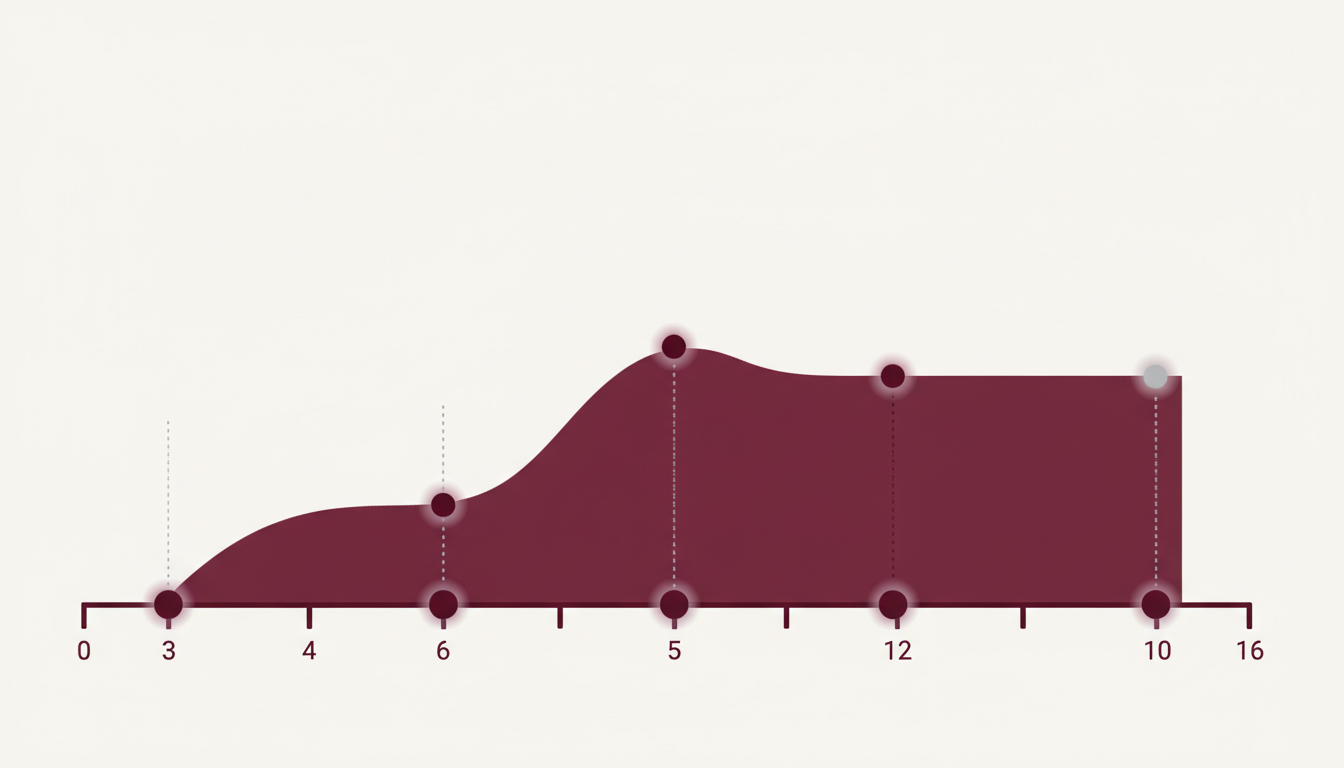
The alternative is a herpes blood antibody test. These tests detect IgG antibodies that the body produces in the weeks after a primary infection. Window-period guidance from the CDC and FDA-cleared assay labels typically places the reliable testing window at 4 to 12 weeks after exposure. Antibody tests are the right tool when there is no active sore to swab. The timeline below summarizes how seroconversion progresses over the weeks after exposure, which is the same shape window-period guidance describes for the chlamydia, gonorrhea, syphilis, and HIV assays above.
When a clinician brushes it off
The diagnostic ceiling at a walk-in clinic is real. Herpes blood testing is not part of the standard STI screening panel in most clinics; unless you specifically request it or have a visible sore to swab, it usually does not get done. HPV testing is generally not done in cisgender men in primary care, and for women it happens through cervical screening rather than a routine clinic visit. A first-glance differential of "looks like folliculitis" or "probably eczema" is a reasonable starting point, but it does not become a diagnosis without follow-up. If the prescribed cream did not help and the rash persists, that is information worth bringing back to the same clinician, or to a second one.
If a clinic visit did not resolve your concern, asking for these specific tests is reasonable self-advocacy:
- HSV-2 IgG type-specific blood test. Detects antibodies to herpes simplex virus type 2; useful when no active sore is present.
- Syphilis RPR plus a treponemal test. Standard screening and confirmatory blood tests for syphilis at any stage.
- Chlamydia and gonorrhea NAAT (urine or swab). The most sensitive lab test for these infections, useful even when symptoms are absent.
None of these are unusual requests. A provider who refuses to order them when you have specific concerns is worth a second opinion.
Common myths that keep people guessing
One stubborn belief is that herpes always looks dramatic, that it is only real if the blisters are huge and obvious. In reality, a first outbreak can be subtle: a few small bumps, a paper-cut-looking lesion, or what looks like razor irritation. Many people never recognize their first outbreak at all, which is part of why so many infections go undiagnosed.
Another common assumption is that a rash that does not itch cannot be an STD. The opposite is closer to true. Secondary syphilis is famously non-itchy. The acute HIV rash is often non-itchy. Even some herpes lesions are more painful or burning than itchy. Itch alone is a poor signal of cause.
A related belief is that an STD rash will be obvious to a partner or a clinician on first glance. Skin findings are notoriously hard to interpret, even for experienced doctors, which is why blood tests, swab tests, and PCR tests exist. A clinician examining a rash is forming a probability estimate, and the actual diagnosis comes from a lab. What makes these beliefs sticky is that they offer reassurance: if it does not itch, it cannot be serious; if I cannot see clusters, it must be heat; if my doctor said it looked fine, I am fine. Reassurance is human, but it is not the same as confirmation.
Three myths to set aside
- Herpes always looks dramatic. In practice, a first outbreak can be a few small bumps, a paper-cut-style fissure, or what looks like razor irritation; many people never recognize their first outbreak at all.
- A rash that does not itch cannot be an STD. Secondary syphilis is famously non-itchy, the acute HIV rash often is too, and even some herpes lesions are more painful or burning than itchy.
- An STD rash will be obvious to a clinician on first glance. Skin findings are notoriously hard to interpret by eye; the actual diagnosis comes from a blood test, swab test, or PCR test, not a visual exam.
The three questions that tell you it is time to test
There is no perfect home checklist for telling a heat rash from an STD rash. There is, however, a useful triage. If you can answer no to all three of the questions below, the rash is almost certainly benign and a few days of cooling and watching will resolve it. If you answer yes to any one of them, an at-home rapid test gives you a verifiable answer in 15 to 20 minutes.
Three triage questions
- Did the rash appear after a recent unprotected encounter or a new partner? Days to weeks puts herpes on the table; 2 to 4 weeks puts acute HIV on the table; a month or more puts secondary syphilis on the table.
- Does the rash reach unusual places? Palms, soles, the trunk, the inner cheek of the mouth, or around the anus. Heat rash, contact dermatitis, and ingrown hairs stay in the friction zone or where the trigger touched. STD-related rashes do not respect those boundaries.
- Does the rash recur in roughly the same spot weeks or months apart? A rash that fades and returns is the textbook description of recurrent herpes, not heat irritation.
When more than one infection sits in the differential
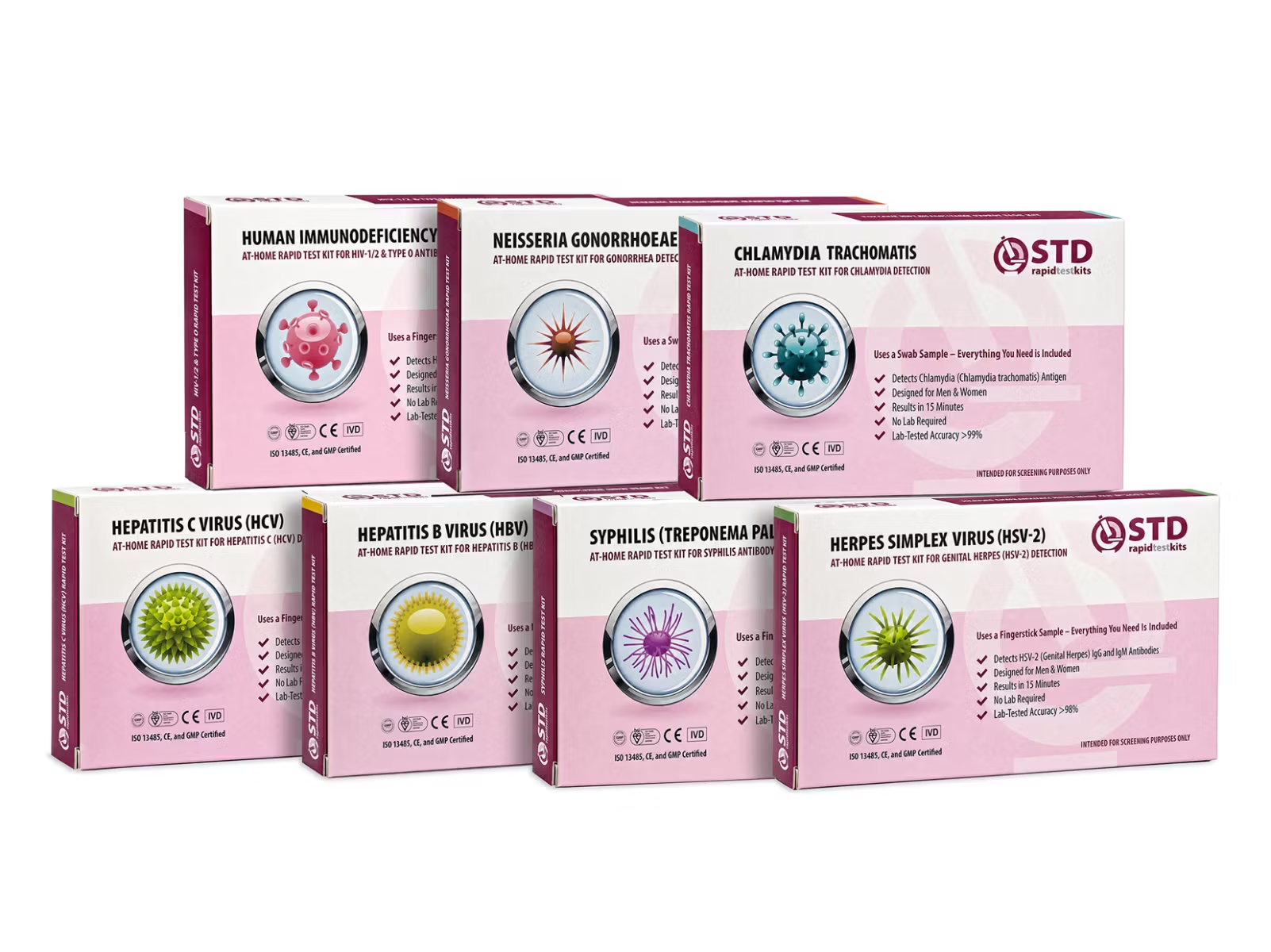
Sometimes the rash is one part of a bigger picture: a recent unprotected encounter, several infections you want ruled out at once, or a flu-like illness from a few weeks back that you brushed off at the time. Booking separate clinic visits for each test is slow, and most general panels skip herpes by default. A combination kit that covers the common infections in one box is the most efficient way to put a verifiable answer behind your worry.
Talking to a partner without making it dramatic
If a test does come back reactive, the conversation with a partner is usually less fraught than people expect. A short, factual disclosure is enough. The script does not need to be perfect; honesty plus a calm tone is the whole job. People who handle this conversation badly are usually flagging something about themselves, not about you. HSV-2 is more common in U.S. adults than the cultural conversation around it suggests, which is one reason most clinicians treat the disclosure as a routine medical fact, not a confession. Per the CDC's STI treatment guidelines for genital herpes, daily antiviral suppressive therapy reduces both outbreak frequency and the rate of transmission to seronegative partners, which gives most people a real set of management options to discuss alongside the diagnosis.
If you are still in the testing-window stage and waiting on a result: "I noticed something on my skin that does not match my baseline. I am getting tested. Wanted to let you know in case you want to do the same."
If you have a confirmed positive: "I tested positive for HSV-2. I did not know before. I am starting treatment, and I want you to have the information so you can decide what to do."
That is the whole script. No long preamble, no apology. If a partner reacts badly, that reaction is information about them, not about you.
You deserve answers, not assumptions
The skin is one of the slowest places to read, and the genital area is one of the most stigmatized. That combination keeps people in a holding pattern of dismissal, denial, and 2 a.m. searches. The honest move is to give yourself a verifiable answer instead of a probabilistic guess.
Most rashes really are heat, friction, an ingrown hair, or a passing reaction to a new product, and they will resolve on their own. The rashes that are not benign are still treatable, often with a single course of antibiotics or a manageable antiviral routine. What is not treatable is the worry that comes from never finding out. Whether the result is negative or positive, knowing your status is what restores the calm that the rash interrupted.
- If the spot is active right now. A clinician swab during the outbreak is the fastest, most direct test. Same-day appointment if possible.
- If the spot is gone or you want privacy. Use an at-home herpes blood antibody test 4 to 12 weeks after possible exposure. Earlier testing inside the window needs a retest.
- If you have multiple concerns from one encounter. A multi-infection panel covers more ground in one go than booking separate tests for each infection you are worried about.
FAQs
- Can heat rash really look like herpes?
- At first glance, yes, both can appear as small red bumps in the same general area of the groin or inner thigh, which is exactly why they are so routinely confused. The differences emerge in behavior. Heat rash appears within hours of sweating, fades once the skin cools, and does not form deep fluid-filled blisters that crust over. Herpes blisters appear within the 2-to-12-day window after exposure, weep clear fluid, take 1 to 2 weeks to heal, and tend to return to the same spot.
- Can a rash from condoms, lube, or a new shave look like an STD?
- Yes. Latex, spermicides, and fragranced lubricants are common contact-allergy triggers, and a close shave routinely leaves a few isolated ingrown hairs. The rashes they cause are usually itchy or sore at the spot, match the area touched, and improve once you switch products or let the hair grow out. STD-related rashes do not improve simply because you switched detergent, condom brand, or razor.
- Does herpes always cause blisters?
- Rarely in the classic cluster form. Many first outbreaks show up as a single shiny spot, a small fissure that looks like a paper cut, or a few red bumps that never progress to obvious blisters. The practical implication: when a lesion appears days to weeks after sexual contact and then recurs in the same area, a blood antibody test 4 to 12 weeks after exposure gives a reliable answer without needing an active sore to swab.
- How fast can a herpes rash appear after sex?
- Initial herpes outbreaks typically appear within the 2-to-12-day window after exposure, often preceded by a tingling or burning sensation in the area. Heat rash and contact-allergy rashes appear within hours of the trigger, and ingrown hairs appear within a day or two of shaving. The mismatch in timing is one of the most reliable distinguishing clues.
- Can syphilis cause a rash without any other symptoms?
- Yes. Secondary syphilis frequently presents as a non-itchy reddish-brown rash on the palms and soles, sometimes with mild flu-like symptoms that get blamed on something else. The painless quality is exactly why it gets dismissed. The CDC notes the rash can be so faint it goes unnoticed. A rapid blood antibody test confirms or rules it out.
- Does the HIV acute rash itch?
- Usually not. The acute-stage HIV rash is typically a flat or slightly raised red or pink rash on the upper chest, back, or face, often appearing alongside fever, swollen glands, and fatigue 2 to 4 weeks after exposure. It rarely itches and usually fades within a week or two on its own, which is exactly why it is often missed.
- Can I spread herpes without a visible rash?
- Yes. Asymptomatic viral shedding means the herpes virus can be transmitted from skin that looks completely normal. Per the WHO's herpes simplex virus fact sheet, genital HSV is often transmitted by people who do not know they carry the virus. Knowing your status, even between outbreaks, is the foundation of safe partner conversations and antiviral suppressive therapy if you choose it.
- My rash went away. Should I still get tested?
- If it disappeared within a day or two of cooling down or removing a likely irritant, and never recurred, it was probably benign. If it recurred, lingered more than a week, blistered, wept, or reached unusual places like palms or soles, get tested. STD-related rashes commonly fade and return; one fading episode does not rule them out, and a blood antibody test still works after the lesion is gone.
- U.S. Centers for Disease Control and Prevention. About Genital Herpes. Supports claims that mild herpes symptoms are often mistaken for other skin conditions, and that the virus can transmit from a partner with no visible sore.
- U.S. Centers for Disease Control and Prevention. STI Treatment Guidelines: Genital HSV Infections. Supports the claim that daily suppressive antiviral therapy reduces outbreak frequency and transmission to seronegative partners.
- U.S. Centers for Disease Control and Prevention. About Syphilis. Supports claims that the secondary-stage rash can appear on palms and soles, that it usually does not itch, and that it can be faint enough to miss.
- U.S. Centers for Disease Control and Prevention. About HIV. Supports the claim that most people develop flu-like symptoms within 2 to 4 weeks of HIV infection.
- World Health Organization. Sexually transmitted infections (STIs) fact sheet. Supports the general claim that most STIs are asymptomatic in early stages.
- World Health Organization. Herpes simplex virus fact sheet. Supports the claim that genital HSV is often transmitted by people who do not know they carry the virus.
- U.K. National Health Service. Genital Herpes. Supports claims about the tingling or burning prodrome before lesions appear and asymptomatic viral shedding between visible outbreaks.
- U.K. National Health Service. Heat Rash (Prickly Heat). Supports claims about the appearance of heat rash, the role of blocked sweat ducts, and cooling as the primary management.