
Published: August 2025 | Last updated: May 2026 | Editorial review and quality control: Martina N.
You can drink green juice every morning, ferment your own kombucha, and meditate for an hour after yoga class. None of those habits protects you from gonorrhea. Wellness culture is genuinely useful for energy, digestion, sleep, and stress management. It is not built to prevent or treat a bacterial sexually transmitted infection.
That distinction matters because gonorrhea is curable, but only with the right medical care. The bacterium Neisseria gonorrhoeae infects mucous membranes in the genitals, throat, rectum, and eyes, and it has been quietly developing resistance to the antibiotics that once cured it easily. The U.S. Centers for Disease Control and Prevention describes gonorrhea as very common in the United States, particularly among people ages 15 to 24, with hundreds of thousands of cases reported annually in surveillance data. No supplement, juice, or herbal protocol changes how that bacterium behaves once it has colonized tissue. What does change outcomes is testing, followed by the antibiotics a clinician prescribes when a test comes back positive.
This piece is for readers who landed here from a late-night search like "can kombucha cure STDs" or "gonorrhea home remedies." If that is you, the short answer is no. The longer answer, and the reason the myth keeps spreading, is what the rest of the article is about.
Key Takeaways
- No food, supplement, or wellness ritual cures or prevents gonorrhea. Only a confirmed test followed by prescribed antibiotics clears the infection.
- Gonorrhea often causes no symptoms, particularly in women and at pharyngeal or rectal sites. Feeling healthy is not the same as being uninfected.
Why wellness habits can't prevent or cure a bacterial STI
Gonorrhea is caused by a bacterium that attaches to and invades the moist surface tissues of the urethra, cervix, rectum, throat, and conjunctiva. Once it is there, it multiplies. Probiotics, antioxidants, leafy-green nutrients, and fermented drinks affect the gut and general nutritional status. They do not reach the mucosal surface cells where N. gonorrhoeae establishes infection, and even in a laboratory dish where compounds like garlic extract show some antibacterial activity, the doses required and the pharmacokinetics of getting those compounds into infected tissue make any clinical effect implausible. A review of common home remedies for gonorrhea, including garlic, apple cider vinegar, turmeric, and probiotic drinks, finds no evidence that any of them cures the infection in humans.
Wellness habits have real value. A balanced diet, regular sleep, and stress management support immune function and overall health. They do not block exposure to a bacterium that transmits through specific sexual contact, and they do not eliminate that bacterium once it has colonized tissue. Treating wellness routines and antibiotic therapy as interchangeable is what leads to weeks of delayed treatment, ongoing transmission to partners, and the slow drift of the bacterium toward antibiotic resistance.
The same logic applies in reverse. The fact that something is medicinal does not make it a substitute for a diet you enjoy, sleep you protect, or relationships that calm your nervous system.
Wellness routines address general systemic health. Antibiotics address bacterial colonization of mucosal tissue. These operate at entirely different scales, and neither tool does the other's job.
Gonorrhea symptoms that get mistaken for everyday problems
Gonorrhea can appear in several body sites, and the symptoms in each site mimic other common problems. In the urethra, the classic signs are burning during urination and a discharge that may look white, yellow, or green. In the cervix, infection may cause unusual discharge, bleeding between periods, or pain during sex, and many cervical infections are entirely silent. In the throat, a gonococcal infection often resembles a routine sore throat or strep, sometimes with redness and swollen lymph nodes, and sometimes with no discomfort at all. In the rectum, signs can include discharge, itching, soreness, bleeding, or painful bowel movements. Eye infection causes redness and discharge and is rare outside specific exposure routes.
Because these patterns overlap with razor burn, yeast infections, urinary tract infections, hemorrhoids, and viral sore throats, the temptation to wait it out is strong. Some people reach for cranberry juice, others for probiotic shots, others for elderberry syrup. Symptoms that come from gonorrhea will not respond. Pain or discharge that lasts more than a few days, returns after seeming to clear, or appears after a new partner is the signal to test rather than experiment with supplements. According to the U.K. National Health Service, symptoms usually appear around two weeks after infection, though in some cases they do not appear for many months.
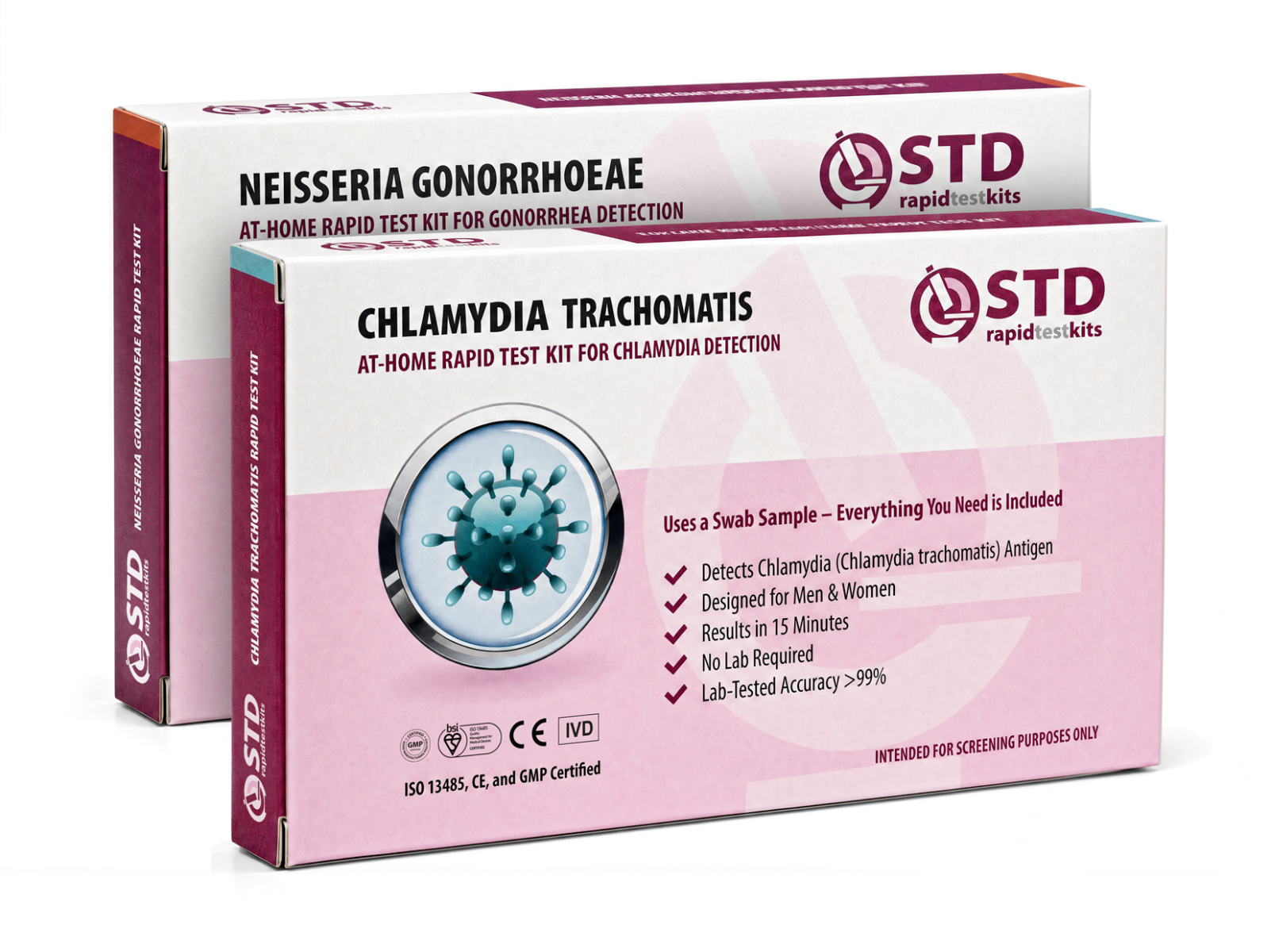
Gonorrhea and chlamydia coinfection is also common. A clinician finding one infection will typically test for and often treat the other empirically, because untreated chlamydia behind a treated gonorrhea case is a frequent cause of recurrent symptoms.
Most gonorrhea infections cause no symptoms at all
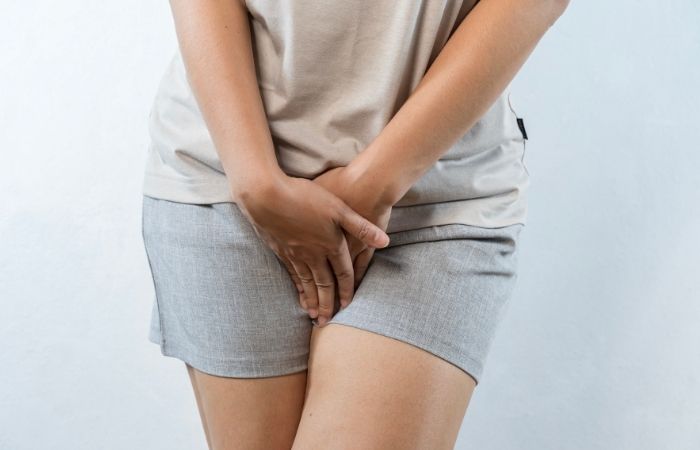
The most consequential fact about gonorrhea is how often it causes no symptoms. The Cleveland Clinic notes that approximately 50% of women with gonorrhea will not experience symptoms. Men are considerably more likely than women to notice urethral symptoms, though silent infection does occur, and pharyngeal and rectal infections are routinely asymptomatic in both sexes. That silence has two practical consequences. Someone who feels well can still be infected and can still transmit. And routine screening, rather than symptom-driven testing, is what catches most of these infections, which is why public-health bodies recommend annual screening for sexually active women under 25 and for any person with a new partner or multiple partners.
Untreated gonorrhea has serious complications. In women, it can ascend the reproductive tract and cause pelvic inflammatory disease, scarring of the fallopian tubes, ectopic pregnancy, and infertility. In men, it can cause epididymitis and, rarely, infertility. In either sex it can disseminate into the bloodstream and cause joint infections or, very rarely, life-threatening sepsis. Untreated infection also increases the risk of acquiring or transmitting HIV during sexual contact, because mucosal inflammation creates a more permissive environment for viral entry. None of those complications are reachable by diet, and none of them are reliably reversed once they happen.
Antibiotic resistance: why catching it early matters more than ever
For most of the twentieth century, gonorrhea was a problem with an easy answer. Penicillin used to clear it reliably. Then resistance emerged across multiple bacterial lineages. Doctors moved to tetracyclines, and resistance emerged again. The same pattern repeated with fluoroquinolones in the 2000s and azithromycin in the 2010s. The current first-line treatment in most of the world is a single intramuscular dose of ceftriaxone, a cephalosporin, and the World Health Organization has documented the emergence of strains resistant to multiple antibiotic classes and warns that gonorrhea risks becoming untreatable.
For individual care, prompt treatment matters more than ever. Every infection treated promptly with the recommended regimen is one fewer opportunity for the bacterium to acquire resistance through prolonged exposure, partial treatment, or unsupervised antibiotic use. Every infection that someone tries to manage with garlic capsules or kombucha while it lingers untreated is the opposite. The bacterium replicates while symptoms wait or never appear. It picks up resistance genes from neighboring bacteria. It transmits to the next partner during the next contact. The CDC's Antimicrobial Resistance Threats report classifies drug-resistant gonorrhea as an urgent threat, and current treatment guidelines reflect a constantly narrowing therapeutic margin.
This is one reason at-home testing matters as a public-health tool, not just a personal one. Faster detection means faster treatment, which means less time for the bacterium to be present in the population at any given moment. It is also a reason to avoid self-medication with leftover antibiotics from a friend, an aunt, or a previous course: incomplete or inappropriate dosing actively selects for resistant strains.
Drug-resistant Neisseria gonorrhoeae is an urgent antibiotic resistance threat in the United States.
Why the kombucha-cures-STDs myth keeps spreading
Three forces keep wellness-cures-everything content visible on social platforms. The first is stigma. Many people who suspect they may have an STI would rather try a private home remedy than book a clinic appointment, because the clinic appointment makes the possibility feel real and risks a difficult conversation with a partner. A bottle of kombucha is anonymous. A clinic appointment goes on a calendar.
The second is the financial logic of the wellness industry. There is no profit margin in telling a reader to call a sexual-health clinic. There is a margin in selling a probiotic drink, a tincture, or a "detox" tea. The most viral wellness claims tend to also be the most sellable, which is why "this drink supports gut health" gets repeated honestly and then drifts, post by post, into "this drink supports immunity against infections" and finally into the implication that it can substitute for medicine.
The third is plausibility leak. Some natural compounds have measurable antibacterial activity in a laboratory dish. That is genuinely true for garlic, oregano oil, and a long list of plant extracts. The leak happens when laboratory activity gets quoted as if it translated, directly and at the doses humans consume, into clinical activity against an established infection. It does not. The distance between a petri dish and infected reproductive-tract tissue is measured in pharmacokinetics, immune dynamics, and concentration, and none of those favor the supplement.
Knowing why the myth spreads is useful because it changes how readers can respond to it. The next time a wellness creator implies that a morning ritual is a hedge against STIs, the response is not anger at them personally. It is recognition that the platform's incentives reward that exact framing, and that the cost of believing it is paid silently by the people whose infections go untreated.
Stigma: A bottle of kombucha is anonymous; a clinic appointment is not.
Industry incentives: Margins reward selling a product, not recommending a clinic.
Plausibility leak: Lab-dish antibacterial activity gets retold as clinical effect, which is not the same thing.
What an at-home gonorrhea test actually involves
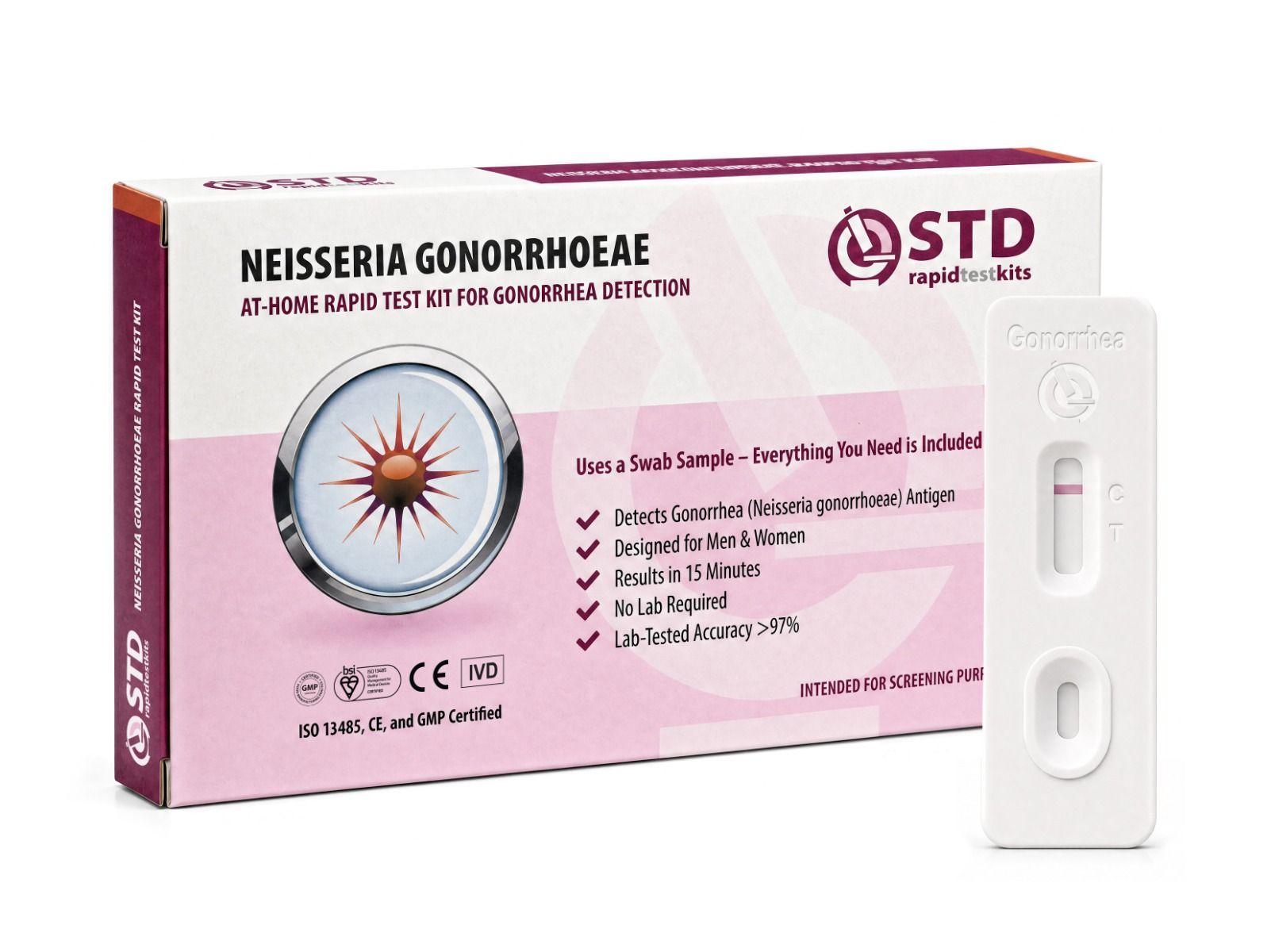
The mechanics of an at-home rapid gonorrhea test are simpler than most people expect. The kit contains a sterile swab, a small buffer tube, a lateral-flow cassette, and a printed instruction sheet. The user collects a sample from the appropriate site, in most cases a vaginal self-swab for women or a urethral swab for men, places the swab in the buffer, drops the buffer onto the cassette, and reads the result after the instructed wait. Rapid lateral-flow tests deliver a visible result in roughly 15 minutes, which means the answer comes the same day the sample is collected rather than several days later.
The important caveat is what these tests are and are not. At-home rapid swab tests are lateral-flow immunoassays, not laboratory nucleic-acid amplification tests (NAATs). NAATs are the gold-standard laboratory method used by clinics and are slightly more sensitive in low-bacterial-load infections. The two technologies are complementary rather than equivalent: rapid tests give same-day screening in privacy and at low cost, and any positive result is worth confirming with a clinic NAAT before starting treatment. A clinic visit is also needed for prescribing the appropriate antibiotic regimen, since gonorrhea treatment requires a specific cephalosporin given on a specific schedule.
At-home rapid swab kits are validated for genital sample collection, not throat or rectal swabs. If the exposure was oral or rectal, a clinic-collected swab from that site is the more reliable path. This site sells rapid at-home STI test kits; the test below is one of the products we carry.
When to test and what to do with the result
When you test depends on why you're testing. After a known or suspected exposure, most testing guidelines and the manufacturer instructions for rapid swab tests recommend waiting at least one to two weeks before testing, to allow the bacterial load to rise above the detection threshold of the assay. Testing immediately after exposure increases the chance of a false-negative result. If symptoms appear, that is the point to test, and a negative test in someone with persistent symptoms after the window has passed is worth confirming at a clinic.
For routine screening, the CDC recommends annual gonorrhea and chlamydia screening for all sexually active women under 25, for older women with risk factors such as a new partner or multiple partners, for men who have sex with men at least annually with more frequent testing for higher-risk practices, and for pregnant people early in pregnancy. People not in those categories who simply want a baseline before a new relationship are also good candidates for testing.
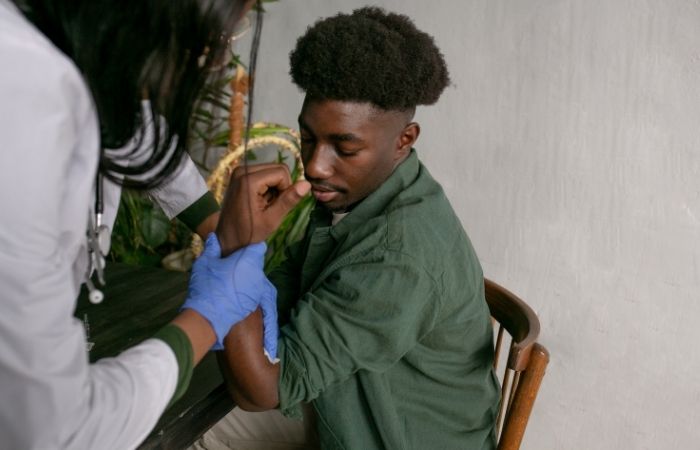
After a positive result, the next step is a clinic that can prescribe the recommended antibiotic regimen, currently a single dose of ceftriaxone for uncomplicated gonorrhea, often accompanied by doxycycline if chlamydia coinfection has not been ruled out. Partners from the past 60 days should be notified and tested. Sexual contact should be avoided for seven days after treatment to prevent reinfection or onward transmission. A retest at three months is recommended to detect reinfection from an untreated partner.
Keep the wellness, add the science
Keep the green juice. Keep the kombucha. Keep the meditation practice and the daily walk. None of those habits are at odds with the practices that actually reduce STI risk, and they may make you more likely to keep up with the practices that do.
Layered prevention works in roughly the same way layered immune defense works in the body: no single barrier is perfect, several barriers in combination are. Consistent condom use during vaginal, anal, and oral sex reduces but does not eliminate transmission. Routine screening on a defined schedule catches asymptomatic infections that condoms missed. Open communication with partners about recent test results creates a baseline of mutual information. Vaccination against hepatitis B and HPV closes the door on related infections, though no vaccine for gonorrhea currently exists. And testing soon after any new sexual contact, especially unprotected contact, is how anxiety converts into a defined next step rather than a months-long worry.
What does not belong in that layer is a supplement marketed as STI protection or an herbal protocol marketed as an STI cure. Treat those marketing claims with the same skepticism you would apply to a vitamin claiming to prevent influenza. Both layers belong, just in their proper roles.
FAQs
- Can kombucha cure gonorrhea?
- No. Kombucha contains probiotics that may support gut health, but it has no antibacterial activity against Neisseria gonorrhoeae at the doses humans consume. The only proven cure is a prescribed antibiotic regimen, currently a single intramuscular dose of ceftriaxone for uncomplicated infection.
- How long after exposure should I test for gonorrhea?
- Most at-home rapid swab tests are reliable starting roughly one to two weeks after exposure. Testing earlier increases the chance of a false negative. If you develop symptoms, that is a good moment to test, and a negative result in someone with persistent symptoms after the window is worth confirming at a clinic.
- Can you get gonorrhea from oral sex?
- Yes. Pharyngeal gonorrhea is transmitted through oral contact with infected genitals, and it is often asymptomatic. At-home swab kits are validated for genital sampling, not throat sampling, so a pharyngeal infection requires a clinic-collected throat swab to confirm.
- Does gonorrhea always cause discharge?
- No. Pharyngeal and rectal infections are silent in most cases regardless of sex, and roughly half of women with cervical infection notice nothing at all. Absence of symptoms is not absence of infection, which is the practical reason routine screening exists.
- What happens if gonorrhea goes untreated?
- In women, the most common serious outcome is pelvic inflammatory disease, which can scar the fallopian tubes and lead to infertility or ectopic pregnancy. In men, epididymitis is the main local risk. Both sexes can develop blood-borne joint infection or, rarely, sepsis. Untreated gonorrhea also raises the risk of acquiring or transmitting HIV.
- Are there natural cures for gonorrhea?
- No. Garlic, turmeric, apple cider vinegar, herbal teas, and probiotic drinks have no proven activity against gonorrhea in human infection. Even compounds that show antibacterial effects in laboratory dishes do not reach effective concentrations in infected reproductive tissue. Antibiotics prescribed after a confirmed test are the only proven treatment.
- Can men have gonorrhea without symptoms?
- Yes. Men are more likely than women to notice urethral symptoms, but silent urethral infections do occur, and pharyngeal and rectal infections in men are usually asymptomatic. This is why routine screening is recommended for men who have sex with men and for any sexually active person with a new partner.
- Are at-home gonorrhea tests as accurate as lab tests?
- Rapid lateral-flow at-home tests are accurate enough for first-line screening, with sensitivity and specificity figures published on each manufacturer's data sheet. Laboratory NAATs are more analytically sensitive, particularly in low-bacterial-load infections, and any positive at-home result is worth confirming at a clinic before starting treatment. The two technologies are complementary rather than interchangeable.
- U.S. Centers for Disease Control and Prevention. Gonorrhea topic page covering transmission, symptoms, and screening guidance.
- World Health Organization. Gonorrhoea (Neisseria gonorrhoeae infection) fact sheet, including global burden and antimicrobial resistance trends.
- U.K. National Health Service. Gonorrhoea overview covering symptoms, transmission, and time-to-symptom window of around two weeks.
- Cleveland Clinic. Gonorrhea condition page covering causes, symptoms, complications, and the roughly 50% asymptomatic rate in women.
- Mayo Clinic. Gonorrhea symptoms and causes overview.
- U.S. Centers for Disease Control and Prevention. Antimicrobial Resistance Threats report, urgent-threat classification of drug-resistant Neisseria gonorrhoeae.
- Healthline. Review of common home remedies marketed for gonorrhea and the evidence behind each claim.
