Published: August 2025 | Last updated: May 2026 | Editorial review and quality control: Martina N.
Genital itching is one of the most common reasons people quietly type symptoms into a search bar at 2 a.m. The worry is reasonable. The internet returns a wall of possibilities ranging from "you're fine" to "it might be an STI." Most of the time, the honest answer lives closer to the first option. Itching alone, without discharge, without sores, without a bad smell, is usually a sign that genital skin reacted to something: a new soap, a recent shave, friction from tighter clothing, sweat that lingered after a workout, or a fragranced product that crossed paths with sensitive tissue.
Still, a small number of sexually transmitted infections can start with itching alone, before any classic symptom shows up. Knowing which causes are common, which ones deserve testing, and how timing after sex changes the math gives you a path forward that doesn't rely on guessing.
Key Takeaways
- Most genital itching without discharge is irritation from shaving, friction, soap, sweat, or fabric, not an infection.
- Herpes and trichomoniasis can start with itching before other symptoms appear; testing after a new partner removes the guesswork.
Most of the Time, the Cause Is Skin, Not an Infection
Genital skin is thinner and more reactive than skin almost anywhere else on the body. It sits in a warm, moist environment, often pressed against fabric, sometimes shaved, frequently exposed to soaps and detergents. Small inputs produce surprisingly large reactions.
Clinicians who staff sexual health and dermatology clinics see this pattern constantly. A large fraction of patients who arrive worried about an STI walk out with a diagnosis of contact irritation, friction, or shaving-related folliculitis. Skin gets blamed most often because skin is most often responsible.
The triggers tend to be ordinary: a switch in laundry detergent, a new scented body wash, a different brand of condom, tighter workout clothes worn for hours after a sweaty session, or a fresh shave that left tiny inflamed follicles. Itching that appears within hours of one of those changes, fades within a few days, and isn't joined by sores, bleeding, painful urination, or an unusual smell is almost always non-infectious.
This is why a thoughtful clinician's first question after "how long has this been going on?" is usually "what's new in your routine?"
| Possible Cause | Typical Clues | How Common |
|---|---|---|
| Contact irritation | New soap, detergent, lube, or condom brand | Very common |
| Shaving irritation | Itching appears 1–2 days after shaving | Very common |
| Yeast imbalance | Intense itching often before discharge appears | Common |
| Allergic reaction | Itching with redness or burning, no sores | Common |
| Eczema or dermatitis | Dry, flaky patches that come and go | Common |
| Herpes (prodrome phase) | Tingling or itching 1–2 days before blisters | Possible after exposure |
| Trichomoniasis | Irritation that may precede frothy discharge | Possible after exposure |
| Chlamydia | Mild irritation in some cases, often silent | Less common as itching |
But a Few STIs Really Do Start With Itching Alone
Some sexually transmitted infections give a clear warning: a discharge, an open sore, burning during urination. Others stay quiet for days or weeks, and a few of those quiet ones occasionally announce themselves as a tingling or itchy patch before anything else changes.
Herpes is the textbook example. CDC guidance describes genital herpes as typically appearing as "one or more blisters on or around the genitals, rectum or mouth," and notes that most people have no symptoms or very mild symptoms (CDC, Genital Herpes). Clinical literature also documents a prodrome phase: a tingling, itching, or buzzing feeling in the skin a day or two before any visible blister appears, which is one reason an unexplained itch after a new exposure can be worth taking seriously. Trichomoniasis is even more itch-forward; the CDC's trichomoniasis page lists "itching, burning, redness or soreness of the genitals" as a typical symptom and notes that about 70% of people infected develop no symptoms at all (CDC, About Trichomoniasis). Chlamydia occasionally produces mild irritation that people initially write off, though most chlamydia infections are silent (CDC, Chlamydia).
None of this means itching automatically signals an infection. It does mean that when itching follows a new sexual encounter and doesn't fade within a few days, the simplest way out of the guessing loop is to test rather than wait.
| STI | Early Sensation | What Usually Happens Next |
|---|---|---|
| Herpes (HSV-1 or HSV-2) | Tingling, itching, or nerve-like sensitivity | Small blisters or ulcers appear within 1–3 days |
| Trichomoniasis | Itching, irritation, mild burning | Frothy discharge or odor may develop |
| Chlamydia | Mild irritation in some cases | Often no symptoms at all |
| Gonorrhea | Usually no early sensation | Discharge or burning during urination |
Timing After Sex Is the Single Biggest Clue
Whether genital itching is more likely irritation or infection depends heavily on when it started relative to sexual activity. Infections need time to incubate before they can produce symptoms, while irritation usually shows up almost immediately.
If itching appears within hours of sex, friction or a product reaction is the more likely culprit. If itching starts several days after a new exposure, an infection becomes more plausible because the timing matches typical incubation windows. The table below shows the general windows most clinicians work with.
| Condition | Typical Symptom Timing | Common Early Sensations |
|---|---|---|
| Friction or product irritation | Within hours | Burning, itching, skin sensitivity |
| Shaving irritation | 24–48 hours | Itching, small bumps along follicles |
| Herpes | 2–12 days after exposure | Tingling, itching, nerve-like sensitivity |
| Trichomoniasis | 5–28 days after exposure | Irritation, itching, inflammation |
| Chlamydia | 7–21 days after exposure | Mild irritation, often silent |
| Gonorrhea | 2–14 days after exposure | Often no symptoms in early phase |
Non-Infectious Causes Clinicians See Every Week
Beyond the obvious shaving and detergent triggers, several conditions land patients in dermatology and primary care offices with the same complaint: itching without discharge. None of them are sexually transmitted.
Contact irritation. Soaps, bubble baths, scented wipes, fragranced lubricants, and certain condom brands can disrupt the skin barrier even when labeled "gentle" or "for sensitive skin." Fragrance is a common offender, and so are preservative ingredients in lubricants.
Allergic reactions. Latex condoms, spermicide, and the dyes in some lubricants trigger contact dermatitis in people who weren't reactive before. Sensitivity can develop over time, so a product used safely for months may suddenly cause itching.
Yeast imbalance. A mild yeast overgrowth can cause itching before the classic thick discharge appears. Antibiotics, hormonal shifts, pregnancy, and tight synthetic clothing all raise the risk.
Chronic skin conditions. Eczema, psoriasis, lichen sclerosus, and chronic contact dermatitis don't spare the genital region. They often look milder there than on the rest of the body, which makes them easy to miss.
Friction and microtrauma. Longer or more intense sexual activity than usual, or sex without sufficient lubrication, leaves the skin inflamed for a day or two afterward. The pattern resolves on its own.
This list isn't a substitute for a clinical exam, but it captures the bulk of the "itching without discharge" visits at dermatology and sexual health clinics in any given week.

When Itching Should Push You Toward Testing
The decision to test is less about how intense the itch feels and more about context around it. Three patterns push genital itching from "probably skin" toward "worth screening for."
First, itching that follows a new sexual partner, especially without barrier protection, deserves attention because it lines up with the incubation window for herpes, trichomoniasis, or early chlamydia. Second, itching that lasts beyond five to seven days or keeps returning suggests something more than transient irritation. Third, itching that's joined by even subtle changes, mild burning during urination, faint redness, a small bump that wasn't there before, raises the likelihood of infection enough to make testing the responsible move.
Routine STI screening fits inside this. The CDC recommends that sexually active women under 25 get tested for chlamydia every year, and that women 25 and older with risk factors such as new or multiple partners do the same (CDC, Chlamydia). Sexually active gay and bisexual men should also be screened annually. Symptom-triggered testing fits inside that framework rather than replacing it. The table below shows when each common infection becomes reliably detectable after exposure.
| STI | Earliest Reliable Testing | Best Testing Window |
|---|---|---|
| Chlamydia | 5–7 days after exposure | 2 weeks |
| Gonorrhea | 5–7 days after exposure | 2 weeks |
| Trichomoniasis | About 7 days after exposure | 2–4 weeks |
| Herpes (antibody test) | About 3 weeks | 12 weeks for full seroconversion |
| Syphilis | About 3 weeks | 6 weeks |
| HIV (4th-generation test) | 10–14 days | 4–6 weeks |
Many sexually transmitted infections cause no symptoms, especially in their early stages. The only way to know if you have one is to be tested.
What to Try While You Watch and Wait
If irritation is the more likely cause and you're inside the early window where infection isn't fully ruled out yet, a few practical adjustments help the skin recover and remove confounding triggers.
The goal is to strip out anything that might be feeding the itch and give the skin a clean slate for three to five days. If symptoms fade within that window after removing a suspected irritant, that outcome is its own answer. If they don't, screen.
- Switch to unscented soap and rinse rather than scrub; skip scented wipes, douches, and feminine-hygiene sprays.
- Wear cotton underwear that breathes. Synthetic fabrics trap heat and moisture against sensitive tissue.
- Pause shaving for one to two weeks to let inflamed follicles settle.
- Keep the area dry after showering, and avoid hot tubs or long baths while the skin is reactive.
- Swap brands if you suspect a lubricant or condom is the trigger, and see whether the itch resolves.
Myths That Keep People Stuck
A few patterns of misinformation make this symptom harder to interpret than it needs to be. The table below summarises the four most common ones along with what's actually true.
The NHS notes that STIs can take up to 7 weeks after unprotected sex to appear on a test (NHS, STIs), which is why an early negative result taken before that window closes may need to be repeated. Testing based on risk, rather than waiting until a symptom has stuck around long enough to feel convincing, is the cleaner approach.
| Myth | Reality |
|---|---|
| No discharge means no STI. | Many chlamydia and gonorrhea infections produce no visible symptoms, which is why routine screening is recommended for sexually active women under 25 and others with risk factors. |
| STIs always cause obvious symptoms. | Asymptomatic infections are the rule rather than the exception. Most STI diagnoses come from routine screening, not from someone feeling sick. |
| If the itching stops, it must have been nothing. | Symptoms can fluctuate. Herpes outbreaks in particular come and go. An infection can still be present even after a temporary itch has faded. |
| A negative test rules out everything forever. | Testing only reflects the moment of the sample. A result taken inside the window period may need to be repeated once enough time has passed for the infection to become detectable. |
Frequently Asked Questions
- Can an STI really start with just itching and nothing else?
- Yes, occasionally. Herpes is the most common example: the prodrome phase often shows up as tingling or itching one or two days before any visible blister appears. Trichomoniasis can also start with itching before discharge develops. That said, most people who feel itchy without other symptoms are dealing with skin irritation, not infection.
- Why am I itchy down there with no discharge, smell, or bumps?
- Genital skin is unusually reactive. New soap, shaving, tight workout clothes, sweat, a fragranced lubricant, or even a different laundry detergent can irritate the area surprisingly fast. If the itching fades within a few days of removing the suspected trigger, irritation is the likely cause.
- Could chlamydia cause itching?
- Most chlamydia infections cause no symptoms at all, which is exactly why the CDC recommends annual screening for sexually active women under 25 regardless of how they feel. A subset of cases do produce mild irritation, so itching that follows a new partner or unprotected sex is a reasonable reason to test.
- Does herpes feel itchy before sores appear?
- The prodrome typically lasts one to two days, with tingling, itching, or a subtle nerve-like sensation in the skin before small blisters or ulcers appear. If skin tingling turns into visible sores within 48 hours of onset, get checked promptly.
- How long is too long to be itchy?
- A few days of mild itching, especially after shaving or a known irritant, is normal. If the itch lasts longer than about five days, keeps returning, or worsens instead of fading, it's a reasonable point to either schedule a clinic visit or screen at home.
- Why does itching sometimes show up after sex?
- Most often it's friction. Longer or more vigorous sex can irritate delicate skin, especially with insufficient lubrication. Other common causes are reactions to latex condoms, spermicide, or fragranced lubricant. The key detail is whether the irritation fades quickly or sticks around.
- Which STI is most associated with itching?
- Among common infections, herpes and trichomoniasis are the two most likely to cause itching as an early or prominent symptom. The larger pattern, though, is that a large share of STI cases produce no symptoms at all, so testing is based on exposure risk as much as on how you feel.
- Is it overreacting to test just because something feels off?
- Not at all. Sexual health clinics and at-home test buyers regularly include people seeking reassurance after a low-risk exposure. Getting a clear answer ends the mental loop faster than another week of guessing, and screening every year or two is standard practice for sexually active adults.
From an Open Question to a Closed One
Genital itching without discharge is one of the most-searched symptoms in sexual health for a reason: it's common, it sparks anxiety, and the answer is rarely obvious from the symptom alone. The vast majority of cases resolve on their own once an irritant is removed. A small but real fraction signal something that deserves attention.
The difference between "wait and watch" and "test now" lives in context: when the itch started, what it followed, and whether anything else has changed. When the answer isn't clear from context, testing is faster, cheaper, and less stressful than another week of speculation.
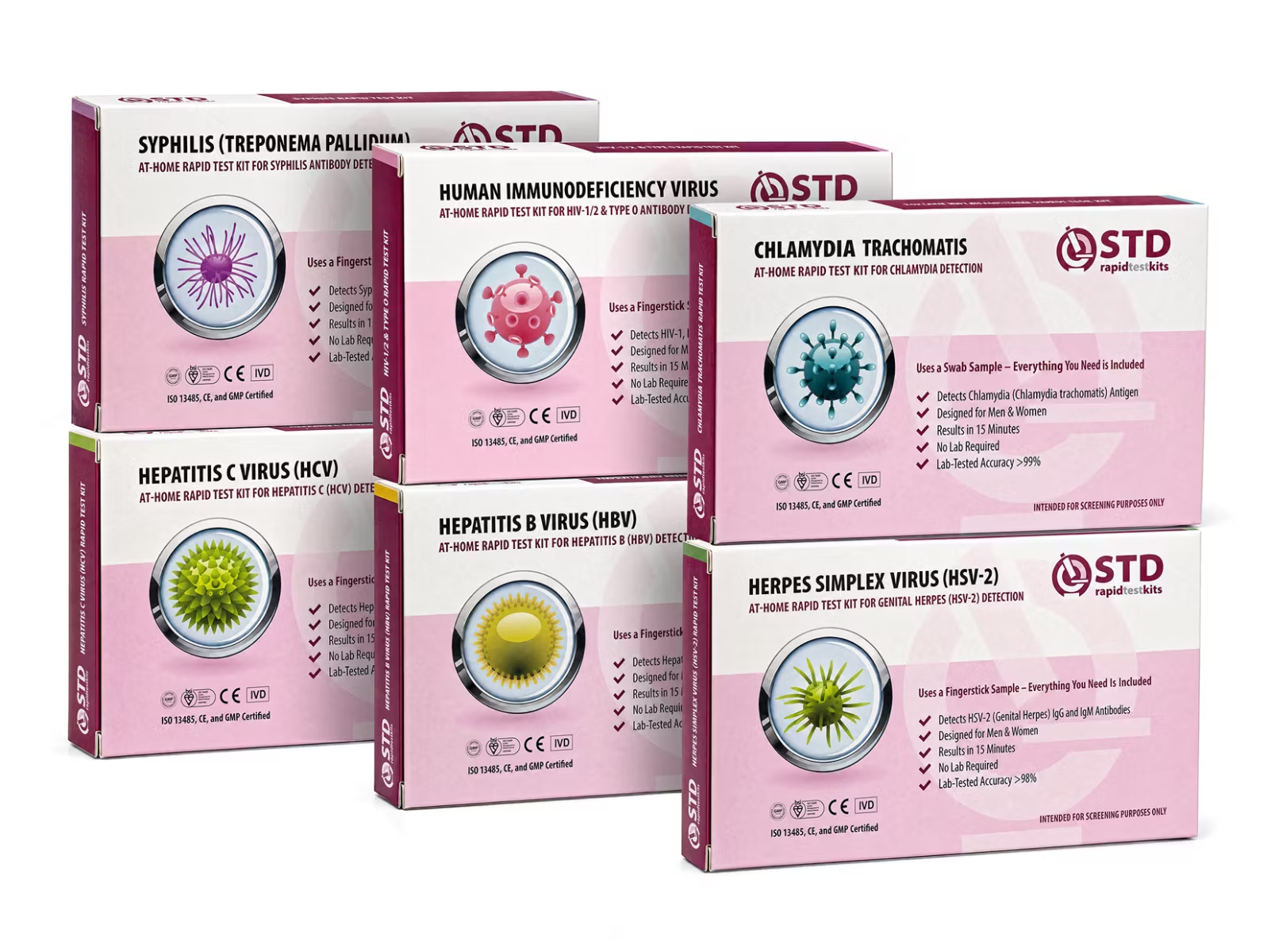
For private at-home options, stdrapidtestkits.com offers screening kits for the most common infections, including the combo packages that bundle multiple tests in one shipment. Knowing your status gives you clarity, peace of mind, and a clear way to take control of your health.
How We Sourced This Article: This guide synthesizes current public-health guidance from the U.S. Centers for Disease Control and Prevention, the World Health Organization, and the UK National Health Service, alongside peer-reviewed clinical literature on the dermatologic and infectious causes of genital itching. Recommendations on testing windows and screening intervals reflect current CDC STI screening guidelines. We deliberately avoid fabricated patient stories and clinical anecdotes; quoted statements are attributed to named public-health sources.
- U.S. Centers for Disease Control and Prevention. Sexually Transmitted Infections hub covering screening guidance, herpes, trichomoniasis, and chlamydia fact sheets used in this article.
- UK National Health Service. Sexually Transmitted Infections clinical guidance, including the recommended testing window of up to 7 weeks after unprotected sex.
- World Health Organization. Sexually Transmitted Infections fact sheet covering global symptom patterns, prevalence, and testing guidance.
- U.S. National Library of Medicine, MedlinePlus. Sexually Transmitted Diseases overview used for patient-facing symptom descriptions.
