Published: December 2025 | Last updated: May 2026 | Editorial review and quality control: Martina N.
A fishy or sharp scent without any visible discharge is one of the most-searched vaginal-health concerns, and the answer most people are looking for tends to be the same one clinicians would give: it is probably not a sexually transmitted infection, it probably is a temporary microbiome or pH shift, and the only way to be certain is to look at the timing and decide whether testing is the right next step.
The pattern that brings people to a search bar usually looks identical. Nothing else feels off. No itch, no burning, no visible change. Just an odor that was not there last week. That is enough to start a quiet panic loop, especially after sex, a missed period, or a new partner. The honest framing is that the most common cause of this exact pattern is bacterial vaginosis (BV) or a brief pH disruption, both of which are common, treatable, and not sexually transmitted on their own. The harder truth is that you cannot rule out an STI by smell alone, which is why the testing decision still matters even when the odds favor reassurance.
Key Takeaways
- Bacterial vaginosis is the most common vaginal condition in women ages 15 to 44, according to the CDC, and odor-first presentations are common, especially in mild or early cases.
- STIs like chlamydia and gonorrhea rarely present with odor alone, but they often present with no symptoms at all, which is why testing matters even when BV is the more likely answer.
What a fishy odor without discharge usually means
The vagina runs slightly acidic by design. A mix of lactobacilli, the lactic-acid-producing bacteria, keeps the pH around 3.8 to 4.5 and crowds out the anaerobic bacteria that produce strong-smelling compounds. When that balance shifts, even by a small amount, those anaerobes can briefly take over and produce volatile amines that read as a fishy or sour smell. This mechanism is behind most odor-only complaints, and it explains why odor often precedes any visible discharge.
That does not mean every shift is BV. Vaginitis is the broader category that includes BV, yeast infections, and trichomoniasis, and a meaningful share of cases involve subtle odor without the textbook discharge picture. The MedlinePlus overview of vaginitis describes the same pattern: odor and irritation often precede discharge changes. Here is how the most likely causes tend to show up:
| Cause | What's happening | Typical clues |
|---|---|---|
| Bacterial vaginosis (BV) | Lactobacilli drop, anaerobes take over | Persistent fishy smell, often stronger after sex |
| Temporary pH imbalance | Acidity shift from cycle, diet, antibiotics, or new soap | Mild odor, no other symptoms, fades on its own |
| Post-sex chemistry shift | Semen (pH 7.2 to 8.0) alkalizes the vagina briefly | Odor 12 to 36 hours after sex, then fades |
| External sweat and skin bacteria | Buildup in vulvar skin folds, tight clothing | Improves with washing the external area |
| STI (less common as odor-only) | Inflammation from chlamydia, gonorrhea, or trichomoniasis | Often paired with discharge, burning, or pelvic discomfort |
BV can show up as odor only, and that is part of why it gets missed
The classic teaching is that bacterial vaginosis comes with thin gray-white discharge plus a fishy smell, often stronger after sex. In real-world presentations, that combination is the textbook version, not the universal one. CDC patient guidance on BV notes that many people with BV have no symptoms at all, and odor-first presentations are common, especially in mild or early cases.
What is happening underneath is a shift in the vaginal microbiome. Lactobacilli drop, and a mix of anaerobes (Gardnerella vaginalis is a frequent player) expands. The metabolic byproducts of those bacteria include trimethylamine and putrescine, the same family of amines that make spoiled fish smell the way it does. The chemistry is essentially identical, which is why the smell is so distinctive and recognizable even at low concentrations.
The reason this gets missed: people (and sometimes clinicians) wait for the discharge to confirm what the nose already noticed. Odor alone can be the first and only sign for days or weeks. A fishy smell that lingers past 72 hours deserves a closer look even if nothing else feels off.
Untreated BV is associated with a modestly higher risk of acquiring STIs and, in pregnancy, with preterm birth. The <a href="https://womenshealth.gov/a-z-topics/bacterial-vaginosis" target="_blank" rel="noopener">U.S. Office on Women's Health BV page</a> summarizes those associations. That is the reason a persistent odor without other symptoms is still worth a wet-mount or pH plus amine test at a clinic.
Could an STI actually cause odor without discharge?
Odor alone as the leading sign is possible but uncommon. Chlamydia and gonorrhea, the two most prevalent bacterial STIs in the US, more often present with no symptoms at all or with discharge, pelvic pain, or pain during urination. The World Health Organization's STI fact sheet reports more than 374 million new infections globally each year across chlamydia, gonorrhea, syphilis, and trichomoniasis, and notes that the majority of cases are asymptomatic, which is why odor-based screening alone misses most infections.
Trichomoniasis is the one STI that classically includes a strong odor, often described as fishy or musty, sometimes with frothy yellow-green discharge. It is caused by a parasite, not a bacterium, and it is the most common curable non-viral STI worldwide. If the smell came on after a new partner and will not quit, trichomoniasis belongs on the differential. Our at-home trichomoniasis swab is validated for vaginal self-swab in women and returns a result in about 15 minutes; it is a rapid lateral-flow test, not a lab NAAT, so a positive result is worth confirming with a clinic-grade test.
Chlamydia and gonorrhea can also indirectly affect vaginal flora by causing inflammation that shifts the local environment, which can produce subtle smell changes before any discharge appears. That is the second-tier reason odor-only screening is not enough on its own: silent infections can still be sitting underneath, and the only way to clear them off the list is to test.
When it is almost certainly not an infection at all
Not every odor shift is medical. The vagina is a sensitive ecosystem that responds to a lot of inputs: hormones across the cycle (estrogen drops before menstruation, which thins the lining and affects flora), pregnancy, breastfeeding, diet, hydration, recent antibiotics, new soaps, and even new laundry detergent. The NHS bacterial vaginosis page specifically lists douching, perfumed products, and new sexual partners as triggers that disrupt the lactobacilli balance without necessarily involving an STI.
Post-sex pH shifts are the single most underdiscussed cause of "what is that smell" anxiety. Semen sits at roughly pH 7.2 to 8.0, which is alkaline relative to the acidic vagina. After unprotected sex, the local pH can stay shifted for several hours up to a day or two, and during that window, odor-producing bacteria have a small temporary advantage. If the smell appears the morning after sex and is gone by the next day, that is almost always chemistry, not infection.
Sweat, tight non-breathable clothing, prolonged tampon use, and a forgotten condom or sex toy can all produce odor without any STI involvement. The pattern that distinguishes these from BV is duration. Lifestyle-driven odor usually clears within 24 to 72 hours of removing the cause. Persistent odor past 72 hours is the threshold that pushes BV higher on the differential.
BV is the most common vaginal condition in women ages 15 to 44.
How to read the timing of the change
Timing is the single most useful signal you can give a clinician or a testing decision. When did the smell start? What happened in the 24 to 72 hours before? Did it appear once and fade, or has it cycled back repeatedly? The answers point toward different causes with different next steps.
The decision rule most clinicians work from looks roughly like this: an odor that appears within 24 hours of sex and fades by the next morning is almost always a temporary pH shift. An odor that persists more than 72 hours, or that keeps coming back after every sexual encounter, leans toward BV. An odor that appears alongside any other symptom (itching, burning, pelvic discomfort, unusual discharge, bleeding between periods) raises the priority of STI testing regardless of how strong the smell is. The table below maps these patterns to the next sensible step.
| Pattern | Most likely cause | Best next step |
|---|---|---|
| Odor 12 to 36 hours after sex, then fades | Temporary pH shift from semen | Monitor; no testing needed unless it returns |
| Persistent fishy smell more than 3 days, no discharge | Bacterial vaginosis (early or mild) | Clinic visit for wet-mount or pH/amine test |
| Odor after a new partner or unprotected sex | Could be BV, trichomoniasis, or silent chlamydia/gonorrhea | Rapid at-home STI panel first, clinic if positive or still symptomatic |
| Odor plus itching, burning, or unusual discharge | BV, yeast, trichomoniasis, or other vaginitis | Clinic visit promptly |
| Negative STI test, smell continues | BV, yeast, or chronic pH disruption | Clinic visit for non-STI vaginitis workup |
What helps, and what usually makes it worse
The biggest trap is treating odor like a hygiene problem. The instinct is to scrub harder, douche, switch to a "feminine wash," or layer on scented products. Every one of those is on the Office on Women's Health BV-prevention list as something to specifically avoid because it disrupts the lactobacilli that keep the environment stable. Douching, in particular, is associated with a higher BV recurrence rate and is no longer recommended by major medical bodies for any routine purpose.
What does help: warm water on the external vulva, unscented mild soap if anything, breathable cotton underwear, changing out of damp workout clothes promptly, and letting time work on minor pH shifts. For confirmed BV, the standard treatment is a short course of metronidazole or clindamycin, prescribed by a clinician after either a microscopy "clue cell" check or an in-clinic pH plus amine test. The U.S. Office on Women's Health page on BV notes that recurrence is common, which is why partner factors and contraceptive method sometimes need to be addressed alongside the antibiotic.
Douching, scented washes, and antibacterial soaps strip the lactobacilli that keep vaginal pH acidic. The CDC, NHS, and Office on Women's Health all explicitly list douching as a trigger that makes BV more likely, not less. Plain warm water on the external area is what the major public-health bodies recommend.
At-home STI tests: what they cover and what they cannot rule out
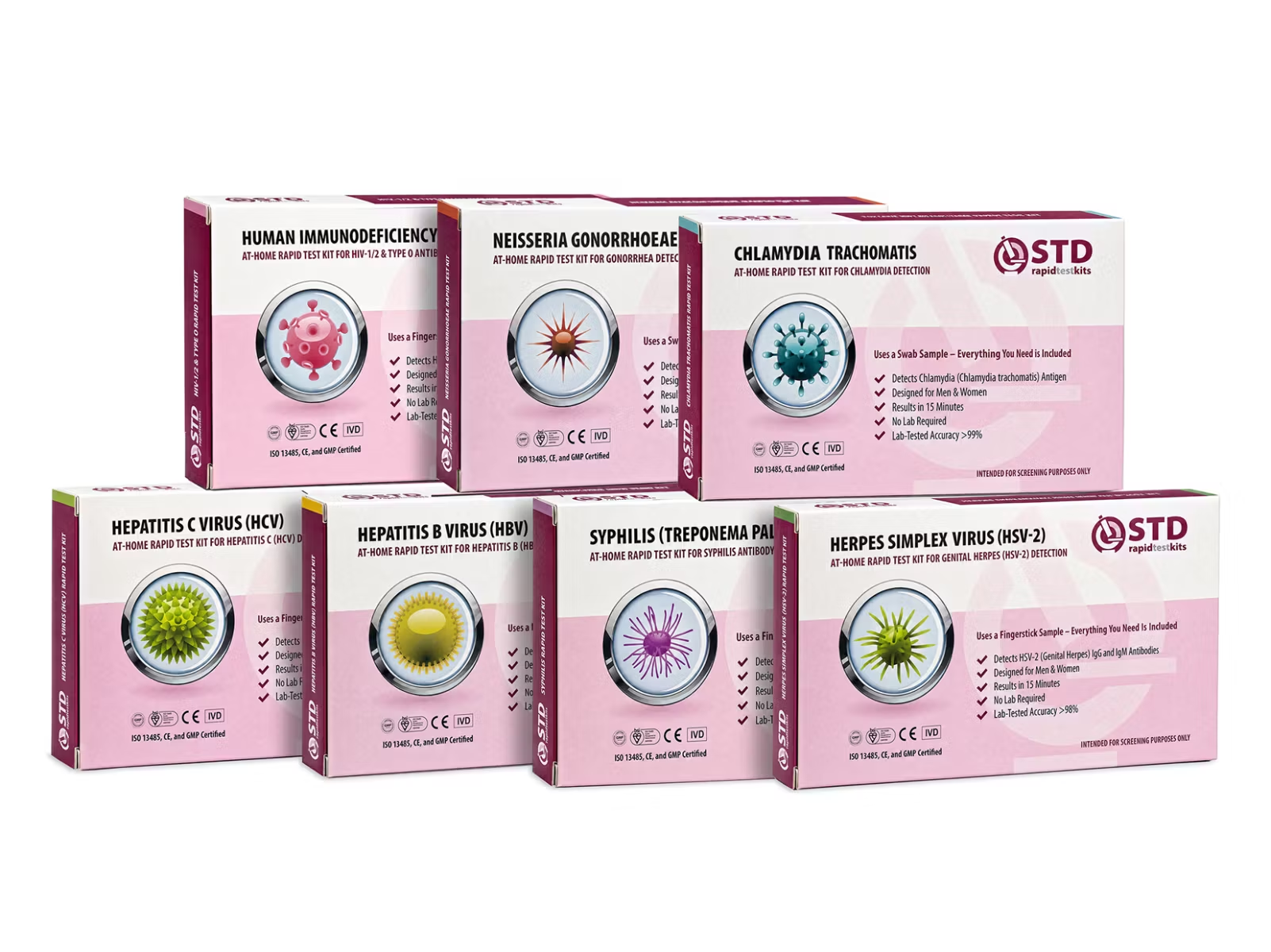
If you are worried that the odor is the first sign of an STI, an at-home rapid test is a useful screening tool. Our kits are lateral-flow rapid tests that read the same swab or blood sample type lab tests use, and they return a result in roughly 15 minutes. A combination kit lets you screen for the most common bacterial STIs in a single session, which is the practical case for using one here. A positive result on a rapid test is worth confirming with a lab-based NAAT through a clinician, because lab NAATs have higher analytical sensitivity than at-home lateral-flow chemistry; the two are complementary, not equivalent.
What our at-home kits do not test for: bacterial vaginosis itself. BV diagnosis still runs through a clinic, because it is confirmed by either microscopy (looking for "clue cells" on a wet mount), a pH test combined with a whiff/amine test, or a lab-grade molecular test. Standard at-home STI rapid panels do not include a BV swab, so a clean rapid-test result rules out the common STIs but does not rule out BV. If you have already ruled out STIs and the smell persists, the next stop is a clinician for a BV evaluation, not another at-home kit.
This is the pragmatic reason testing still makes sense even when BV is the more likely answer. Ruling out the STI side narrows the list to "probably BV or pH," which is treatable but needs a clinic visit for confirmation. The two paths together resolve the uncertainty faster than another week of watching and waiting.
When monitoring should turn into testing
There is a difference between paying attention to your body and over-monitoring it, and there is a point where waiting stops being useful. A working threshold most clinicians use: if the odor has been consistent for more than three days, or if it keeps coming back after every sexual encounter, or if any other symptom appears (itching, irritation, unusual discharge, pelvic discomfort, bleeding between periods), the wait-and-see window has closed.
The other trigger is exposure context. A new sexual partner, a partner who recently disclosed an STI exposure, or unprotected sex with someone whose status you do not know, all shift the priority toward screening regardless of how mild the smell is. CDC screening guidance recommends annual chlamydia and gonorrhea testing for sexually active women under 25 and for older women with risk factors. An odor change is a reasonable prompt to bring that annual screening forward by a few months.
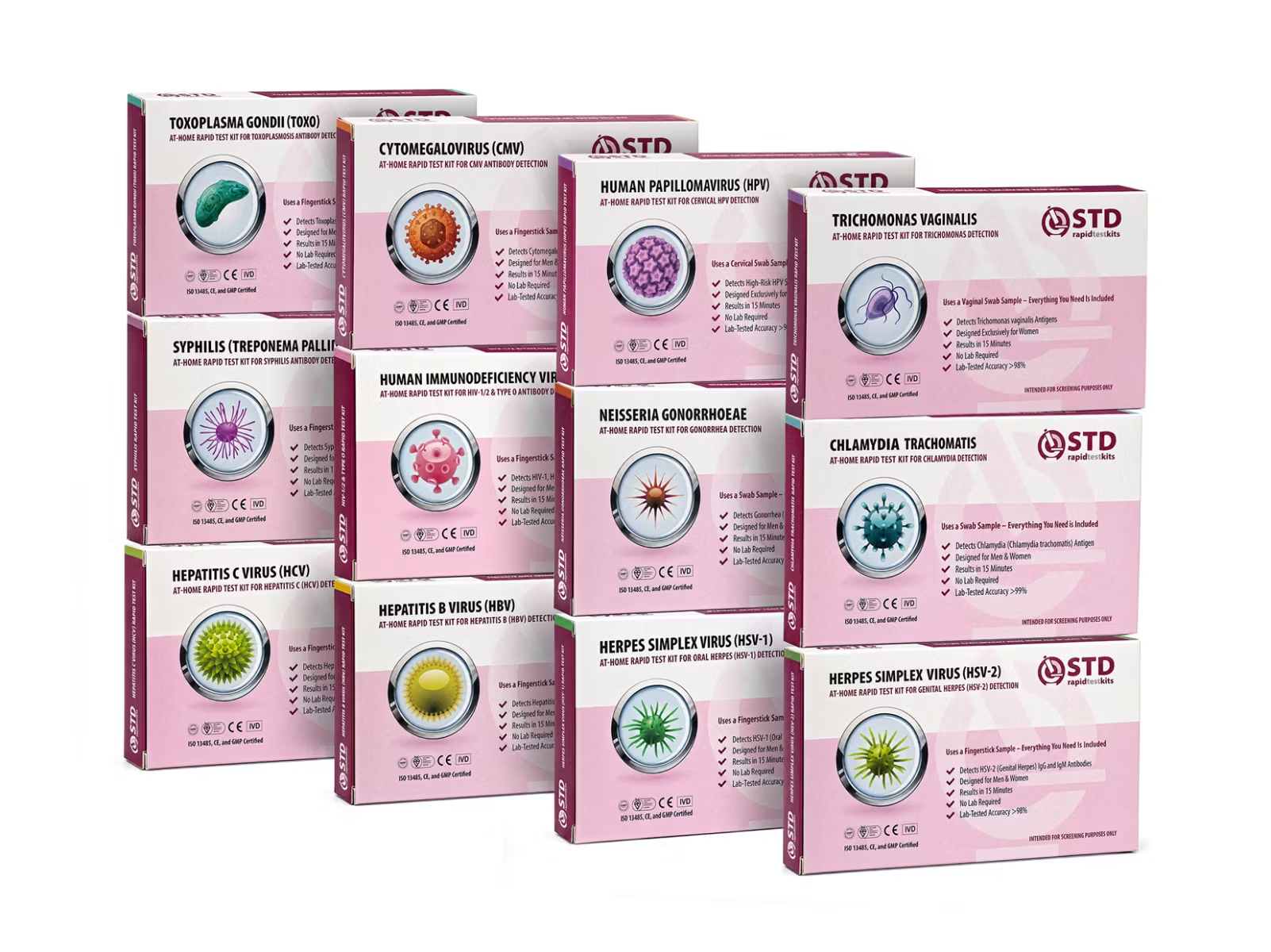
For readers who want a single test that covers the bacterial STIs most likely to overlap with this symptom pattern, a women-focused combination kit is the practical choice. It screens for the female-specific infections (including trichomoniasis and HPV, which use vaginal self-swabs validated for female anatomy) plus the standard bacterial and viral STIs in one session, so a clean result clears the infections most often missed when odor is the only sign.
One last note on clarity versus guessing
A fishy odor without discharge sits in the uncomfortable middle of vaginal-health questions: not severe enough to feel like an emergency, but persistent enough to mess with your head. The pattern is usually a temporary pH shift or early bacterial vaginosis, not an STI, and the practical path through it is the same regardless of which one turns out to be the answer. If the smell is gone by tomorrow, it was chemistry. If it stays past three days or keeps coming back, ruling out the common STIs at home and then seeing a clinician for BV confirmation gets you to a real answer faster than continued observation alone.
- Smell gone by tomorrow: no action needed, almost certainly a temporary pH shift.
- Persists past 3 days, or returns after every sexual encounter: run an at-home STI panel to clear the common infections.
- STI panel clean and the smell continues: clinic visit for a BV wet-mount or pH plus amine test.
FAQs
- Can BV really show up as just smell and nothing else?
- Yes, and that is the part that throws most people off. The textbook description of BV includes gray discharge plus a fishy smell, but many real cases start with smell alone, especially mild or early ones. If the odor sticks around past a normal cycle window, a clinician visit for a wet-mount or pH plus amine test is the next step, since at-home rapid kits cover STIs but not BV directly.
- Does a fishy smell mean I have an STI?
- Usually no. The most common cause of an odor-only complaint is bacterial vaginosis or a temporary pH shift, neither of which is sexually transmitted on its own. The exception is trichomoniasis, which is an STI and does classically cause a fishy odor. If a new partner is in the picture, screening for the common bacterial STIs gives you a clean answer in about 15 minutes.
- Why does it smell worse after sex when nothing else is going on?
- The pH gap between semen (alkaline) and the vagina (acidic) temporarily tips the local environment after unprotected sex. Odor-producing bacteria get a brief window while pH recovers, usually within 12 to 24 hours. If the smell clears by the next morning, it is chemistry, not infection. If it lingers past 72 hours, BV becomes more likely and a clinic check or at-home STI screen is worth doing.
- I have no discharge or itching. Do I still need to test?
- It depends on the timeline and the exposure context. If the smell has been there for less than three days and there is no recent new partner, watch and wait is reasonable. If it has persisted past three days, or there has been a new exposure, an at-home rapid STI test clears the most likely silent infections in one session. BV testing still needs a clinic visit.
- Can chlamydia or gonorrhea show up with just smell?
- It is possible but unusual as a leading sign. Chlamydia and gonorrhea are more often silent (no symptoms at all) or present with discharge, burning during urination, or pelvic pain. They can indirectly shift vaginal flora and cause subtle smell changes, which is one of the reasons CDC screening is recommended even when smell is the only thing you have noticed.
- Will the odor fix itself if I leave it alone?
- Sometimes. Temporary pH shifts (after sex, after antibiotics, mid-cycle) usually self-correct within one to three days. Bacterial vaginosis usually does not fully resolve on its own and often needs a short course of metronidazole or clindamycin prescribed by a clinician. BV recurrence within 12 months is common, which is why the underlying triggers sometimes matter as much as the antibiotic.
- Am I making it worse by trying to clean it?
- Almost certainly, yes. Aggressive cleaning removes the protective bacteria that keep the vagina acidic, which makes odor-producing bacteria more competitive, not less. Warm water on the external area is what the CDC, NHS, and Office on Women's Health all recommend. Avoid douches, scented products, and antibacterial soaps.
- I tested negative for STIs but the smell is still there. What now?
- That is a common pattern. A clean STI test rules out chlamydia, gonorrhea, and trichomoniasis (on women-validated panels), but it does not rule out bacterial vaginosis, yeast, or pH-driven shifts. The next step is a clinic visit for wet-mount microscopy or an in-office pH and amine test, since BV diagnosis is not something at-home rapid kits cover.
How we sourced this article: This guide is built from current patient-facing guidance from the CDC, NHS, World Health Organization, the U.S. Office on Women's Health, and MedlinePlus, focused on bacterial vaginosis, vaginal pH, and STI screening. Every quantitative or guideline claim is linked inline to the source page that supports it. We do not provide clinical diagnosis; this article is a summary of public-health and clinical-society guidance, not a substitute for evaluation by a licensed clinician.
- U.S. Centers for Disease Control and Prevention. About Bacterial Vaginosis (BV): symptoms, transmission, and 'most common vaginal condition in women ages 15 to 44' statement.
- NHS. Bacterial vaginosis condition page: symptoms, causes, and triggers including douching and perfumed products.
- World Health Organization. Sexually transmitted infections fact sheet: 374 million annual incidence figure, asymptomatic share, and curable STI overview.
- U.S. Office on Women's Health. Bacterial vaginosis page: triggers, prevention guidance, recurrence pattern, and downstream associations including preterm-birth and STI-acquisition risk.
- MedlinePlus (U.S. National Library of Medicine). Vaginitis overview: BV, yeast, trichomoniasis, and non-infectious causes.
