Published: October 2025 | Last updated: May 2026 | Editorial review and quality control: Martina N.
After an HPV diagnosis, the mind tends to look for someone to blame. Sometimes that blame lands on a partner. More often, quietly, it lands on the body itself, and on whatever stress preceded the test result. The question that follows is almost universal: did stress cause this, or make it worse?
The science is more measured than the spiral. Stress does not create HPV, and it does not transform low-risk strains into cancer overnight. But chronic, sustained stress can shift how efficiently your immune system clears any virus, HPV included. According to the U.S. Centers for Disease Control and Prevention, most HPV infections (about 9 in 10) clear on their own within two years. Understanding what stress does, and what it does not do, makes that statistic less abstract and the diagnosis less frightening.
Key Takeaways
- Stress does not cause HPV, but chronic stress may slow immune clearance by influencing cortisol and T-cell activity over time.
- Most HPV infections clear within 12 to 24 months. Regular cervical screening, not perfect stress management, is what prevents progression to cancer.
Your immune system is strategic, not lazy
Your immune system is not a light switch. It does not flip on or off based on mood. It is a coordinated, layered defense network that is constantly making decisions about what deserves attention and what does not.
When HPV enters the body, it infects surface cells, often without causing immediate symptoms. There is no dramatic fever or obvious sick day. For many people, the virus stays quiet while immune cells slowly identify and clear infected tissue. According to the CDC, this is why most HPV infections resolve within two years without treatment, even though more than 200 strains of the virus exist.
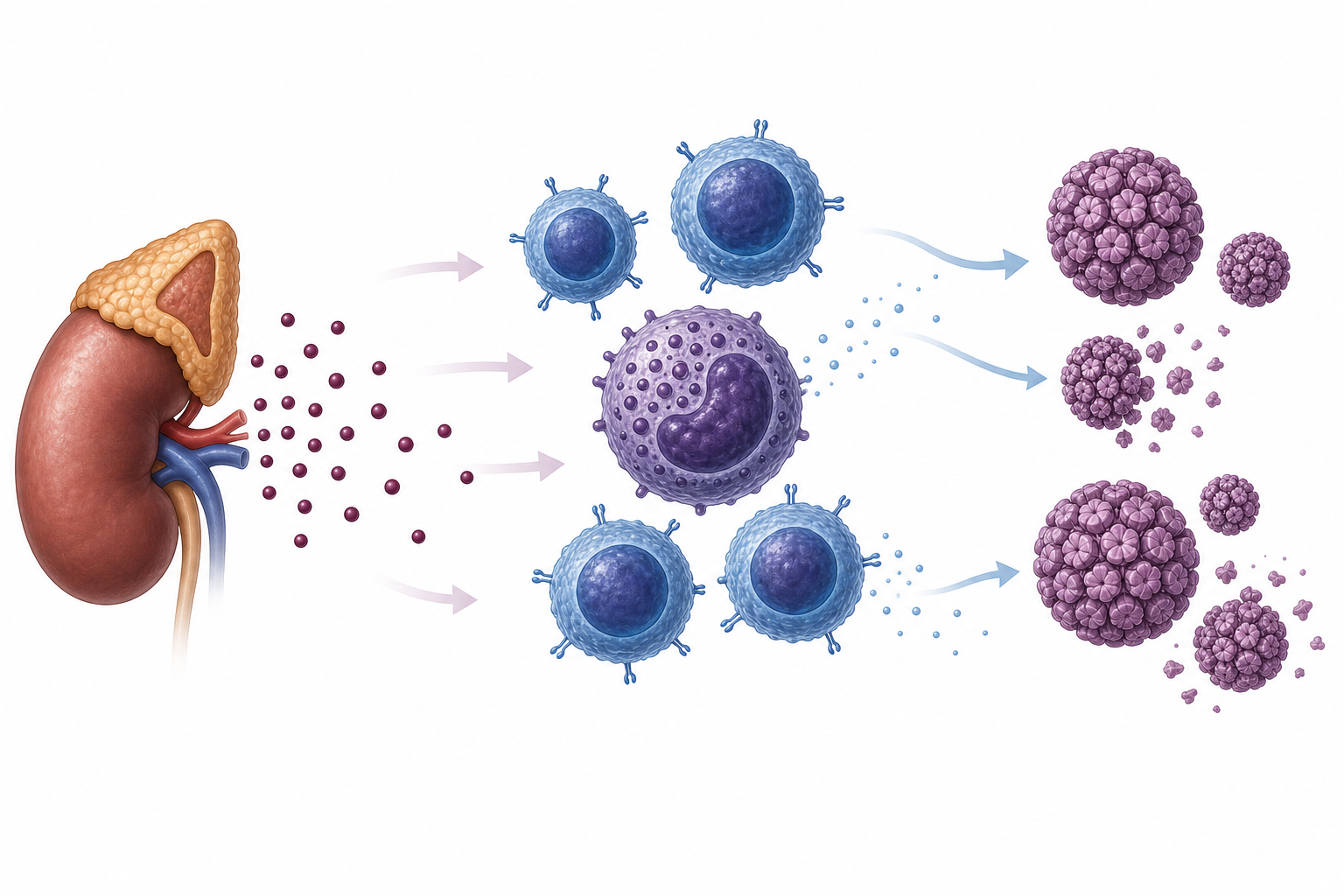
So if your body usually clears HPV on its own, where does stress fit into this picture? Stress does not directly feed the virus, and it does not power it up. What chronic stress does change is how efficiently immune cells communicate. It shifts hormone levels. It can slow certain protective responses. In some cases, that shift may influence how long HPV lingers, or whether previously controlled virus becomes detectable again on a screening test.
Acute stress (a deadline, a hard week) triggers a short-term cortisol spike that the body recovers from quickly. Chronic stress (months of poor sleep, untreated anxiety, long-term caregiving) keeps cortisol elevated, which is the pattern that can dampen the cell-mediated immunity HPV clearance relies on.
How cortisol shifts immune function
Picture your immune system as a team of night-shift security guards. They patrol quietly. They log intruders. They do not panic unless something truly urgent shows up. Now picture the fire alarm going off every few hours, even when there is no fire. That is what chronic stress can feel like biologically.
When you are stressed, your body produces hormones like cortisol that help you handle the load. Short bursts of cortisol are useful. They help your body stay in balance and dampen inflammation when immediate threats appear. The problem comes when stress becomes constant: weeks of poor sleep, months of anxiety, years of unresolved trauma. Cortisol levels can stay elevated, and that prolonged exposure can dampen certain immune responses.
Research in psychoneuroimmunology describes how chronic stress may reduce the activity of natural killer cells and T-cells, both of which play roles in identifying and clearing viral infections. HPV clearance relies heavily on this cell-mediated immunity. Chronic stress may influence how efficiently your immune system clears the virus, but it does not guarantee persistence or progression on its own.
| Biological factor | What happens during chronic stress | Why it matters for HPV |
|---|---|---|
| Cortisol levels | Stay elevated over weeks or months | May weaken cellular immune signaling |
| T-cell activity | Reduced proliferation and responsiveness | Slower identification of infected cells |
| Inflammatory balance | Immune regulation becomes dysregulated | Can alter viral control dynamics |
| Sleep cycles | Disrupted deep-sleep immune recovery | Potential delay in viral clearance |
Does stress make HPV worse?
Chronic stress can slow how efficiently your immune system clears HPV by influencing cortisol levels and reducing the activity of T-cells and natural killer cells. It does not create HPV, transform a low-risk strain into cancer, or override your body's clearance capacity. Most HPV infections still clear within 12 to 24 months. Stress management supports immunity, and routine cervical screening is what prevents progression.
Can stress reactivate dormant HPV?
This is the part that sends people spiraling. Someone clears HPV. Tests come back negative. Months or years later, a new screening shows a positive result. The immediate assumption is betrayal, either by a partner or by their own body. HPV biology is more complicated than that.
HPV can enter a low-level dormant state. That does not mean it is gone forever, and it does not mean it is actively causing harm. In some cases, immune control suppresses the virus to levels below detection. Later, changes in immune balance, which may include aging, illness, hormonal shifts, or chronic stress, can allow viral DNA to become detectable again. Notice the language carefully: detectable. Not newly created. Not necessarily newly acquired.
Stress alone does not automatically reactivate HPV. There is no evidence that one rough week at work suddenly wakes up the virus. But sustained immune suppression over time may influence viral expression in some individuals.
Cleared versus dormant
- Cleared means viral levels are below detection on current tests, not necessarily zero.
- Re-detected results can reflect aging, hormonal shifts, illness, or chronic stress, not just new exposure.
- Stress is one input among several. It rarely acts alone as the cause of reactivation.
How long HPV persists
Most HPV infections clear within 12 to 24 months. That statistic can feel abstract until you are the person watching the calendar. Clearance does not mean the virus vanishes dramatically. It means your immune system reduces viral levels to the point that tests no longer detect them.
In people experiencing chronic stress, clearance timelines may vary. That does not mean stress guarantees persistence. It means immune efficiency is one input among several. The World Health Organization notes that strain type, age, and overall health also play meaningful roles.
| Scenario | Typical clearance window | Influencing factors |
|---|---|---|
| Healthy immune function | 12 to 24 months | Age, HPV strain type, overall health |
| Chronic high stress | May extend clearance window | Sleep deprivation, sustained cortisol elevation |
| Immunocompromised state | Longer persistence possible | Medical conditions, certain medications |
What stress does not do
Some of the most common worries after an HPV diagnosis are flat-out misconceptions. Let us dismantle them clearly.
Stress does not transform a low-risk HPV strain into a high-risk one. It does not suddenly cause cervical cancer. It does not mean you are contagious forever, and it does not mean your body is broken. HPV progression, when it happens, is influenced by strain type, immune response, smoking status, age, and other biological variables. The National Cancer Institute notes that long-lasting HPV infection causes almost all cervical cancers, with cellular changes progressing over time when not detected and treated. Among the more than 200 HPV strains, only a subset is classified as high-risk for cancer; stress does not move a strain between those categories. Stress may influence immune modulation, but it is one factor among many.
The real danger is not stress itself. It is misinformation layered on top of stress, which feeds the spiral and keeps cortisol cycling for the wrong reasons.
Sleep, burnout, and viral persistence
There is a difference between acute stress and chronic depletion. Acute stress is the argument, the exam, the deadline. Chronic stress is the months-long grind: caring for a sick parent, financial instability, untreated anxiety humming under everything else.
Sleep is often the first casualty, and sleep is not optional maintenance. During deep sleep, your immune system recalibrates. Cytokines are regulated. T-cells are restored. When sleep consistently drops below six hours, immune efficiency declines. That does not mean HPV automatically worsens, but it does mean the system clearing it is working under strain.
Think about the nights you scroll instead of rest. The coffee replacing meals. The jaw clenching through emails. None of these make you irresponsible. They make you human. They do, however, shape immune performance over time.
Can you boost your immune system to clear HPV faster?
The internet is loud about detox teas, miracle supplements, and expensive immune stacks. Let us be steady here.
You cannot hack your immune system into superhero mode overnight. What you can do is support it in consistent, boring, evidence-aligned ways: regular sleep, balanced nutrition, smoking cessation, managing chronic inflammation, and following recommended cervical screening schedules. These actions do not guarantee faster clearance, but they create conditions that favor immune resilience.
Therapy, better limits on chronic stressors, and consistent rest are often the most effective immune interventions available. And if part of your stress is uncertainty about your sexual health status, getting tested can reduce the mental load.
Nearly all sexually active people will get HPV at some point in their lives. Most HPV infections go away on their own and do not cause any health problems.
Screening is what prevents cancer
If you have a cervix, routine Pap tests and HPV co-testing are what protect you from progression. Screening identifies cell changes long before cancer develops. That is prevention working as designed, and it is the most consistent predictor of good outcomes across populations.
The National Cancer Institute notes that screening intervals depend on age and prior results. The underlying principle is steady: persistent HPV infection can drive cellular changes over many years, and screening interrupts that timeline. Stress does not accelerate cancer biology overnight, and it does not override the protection that consistent screening provides.
General cervical screening intervals (NCI)
- Ages 21 to 29: Pap test every 3 years.
- Ages 30 to 65: HPV test every 5 years, Pap every 3 years, or Pap + HPV co-test every 5 years.
- Specific timing depends on prior results and personal risk; follow your provider's plan.
When the anxiety becomes the bigger threat
Here is the irony no one talks about. Sometimes the stress about HPV becomes more physiologically disruptive than the virus itself. The late-night spirals. The compulsive symptom-checking. The endless forum scrolling. The sudden belief that every twinge is a sign of progression. That kind of sustained vigilance keeps cortisol elevated and the nervous system braced.
Imagine someone refreshing their lab portal every few hours, not because results changed, but because uncertainty feels unbearable. That mental loop is exhausting, and exhaustion is inflammatory. Reducing the loop has real physiological value: sustained alarm keeps cortisol elevated and the nervous system braced, which places genuine strain on any biological system.
Clarity reduces alarm. Follow-up appointments reduce alarm. Accurate information reduces alarm. Routine screening does two things at once: it detects cellular changes early, and it removes the uncertainty that keeps the anxiety loop running.
Your body is still on your side
There is a strange comfort in remembering this: your immune system has cleared thousands of microscopic invaders in your lifetime that you never knew about. Viruses, bacteria, parasites, handled quietly and efficiently, without drama. HPV is not uniquely powerful because you had a rough year. It behaves according to biology, not emotion.
Chronic stress can shift the terrain your immune system operates on. It does not rewrite the rules. Your body is not betraying you. It is negotiating, adapting, and doing what human bodies have done for centuries: managing exposure and moving forward. Most of the time, it succeeds.
If you are reading this somewhere between burnout and a positive test result, take what is useful and leave the catastrophizing.
- Aim for 7 to 9 hours of consistent sleep most nights.
- Keep scheduled Pap and HPV co-testing appointments on the cadence your provider recommends.
- Address chronic anxiety with a clinician or therapist rather than silent endurance.
- If you smoke, ask your provider about a cessation plan; smoking is a known risk factor for HPV persistence.
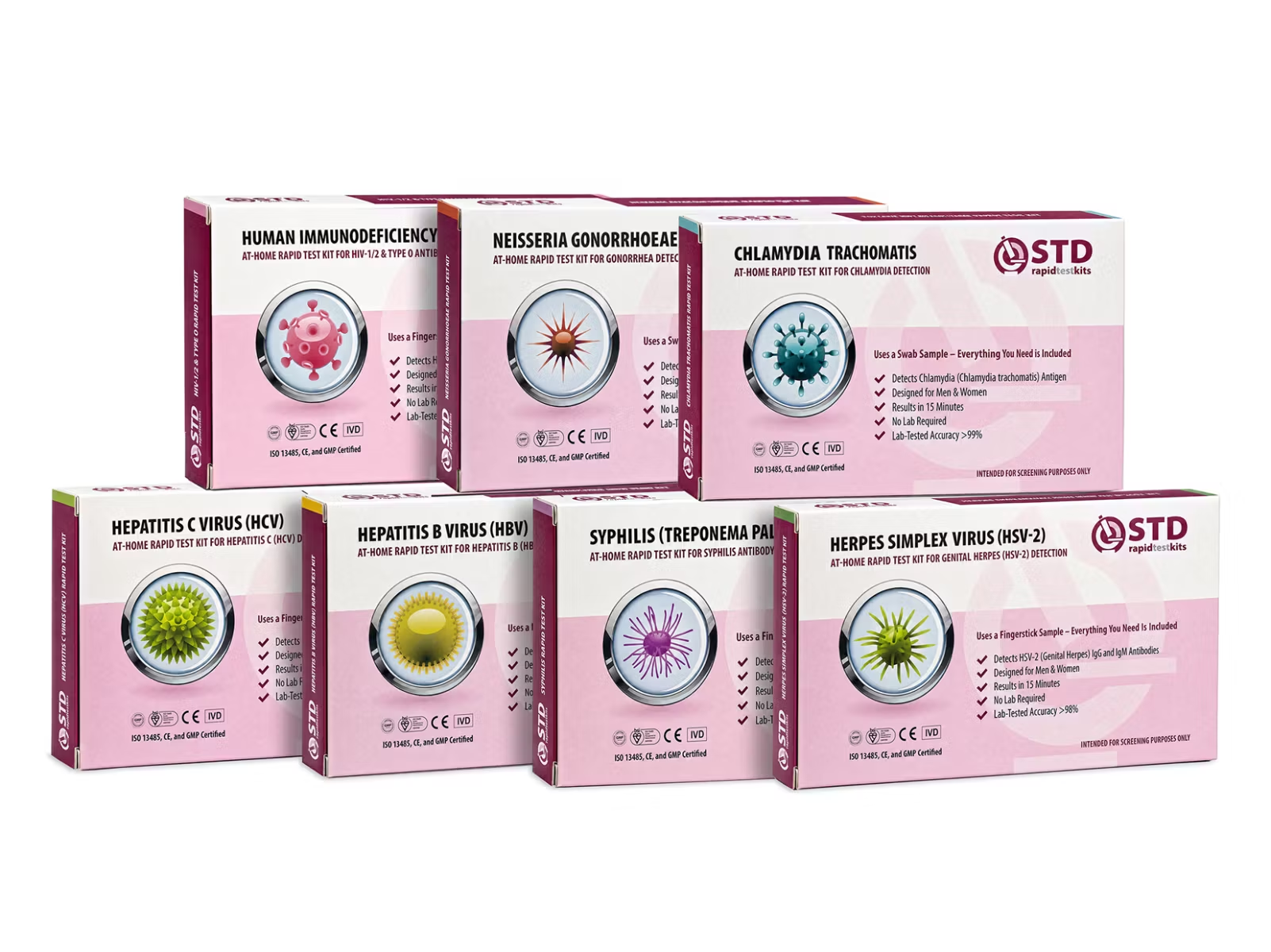
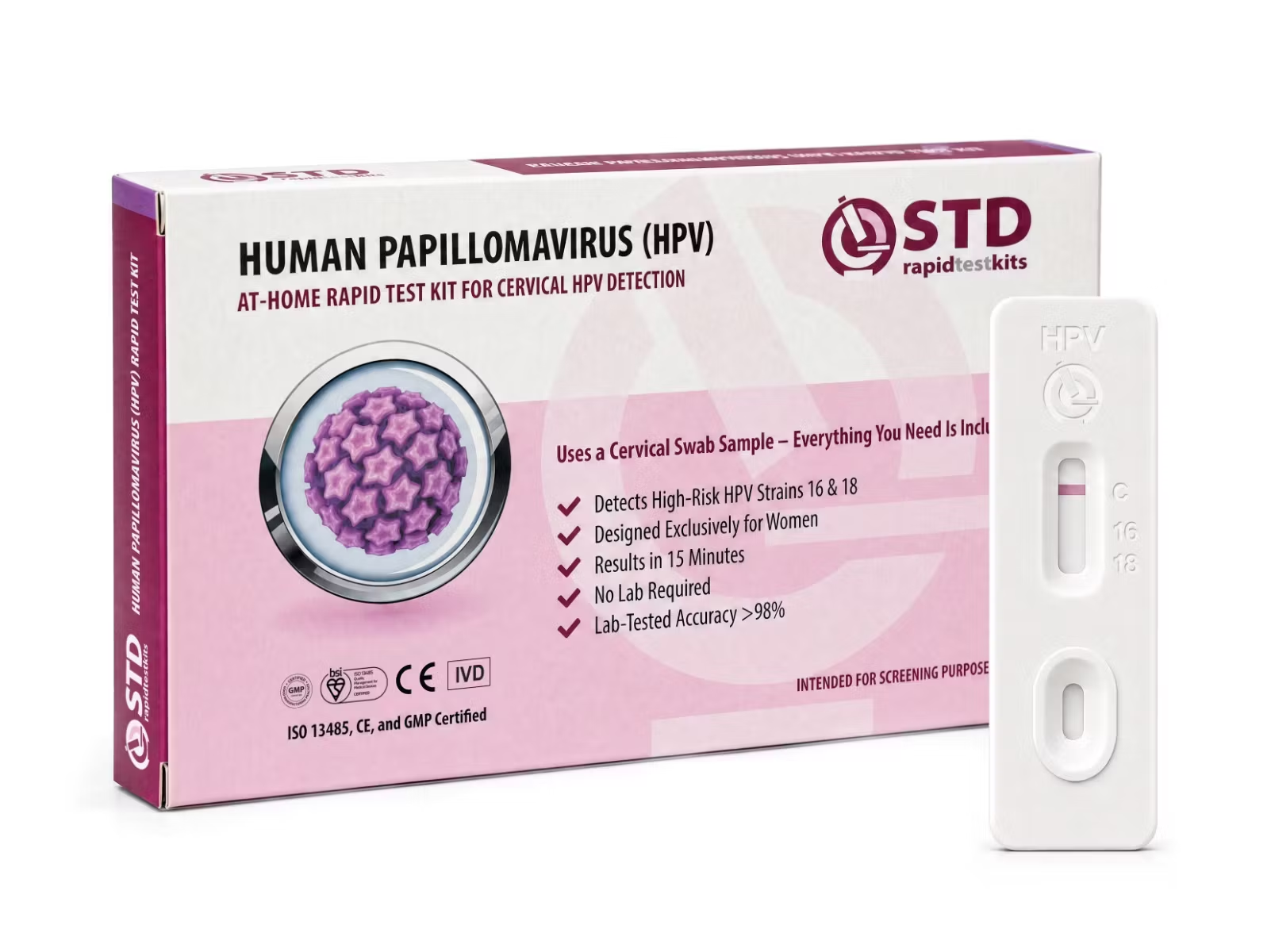
- If broader sexual-health uncertainty is fueling the stress loop, get tested so you know where you stand.
FAQs
- Can stress actually make my HPV worse?
- Chronic stress can influence immune response, and immune response shapes how your body manages HPV. A single hard week will not suddenly supercharge the virus. Sustained months of poor sleep, untreated anxiety, or chronic strain are more likely to slow clearance than a temporary spike in cortisol.
- If I calm down, will HPV go away faster?
- Lowering chronic stress supports immune balance over time, but breathwork and meditation do not instantly clear a virus. Think of it as removing ankle weights from a runner who is already moving. Your body can do the work; you are just making it easier.
- Can HPV come back when I am stressed?
- HPV can become detectable again after being suppressed below detection levels. Reactivation involves multiple factors: aging, hormonal shifts, illness, and immune balance. Stress may be one piece of the puzzle, not the sole cause of a re-detected result.
- I have been positive for over a year. Did stress stop me from clearing it?
- Not necessarily. Clearance timelines vary widely. Some strains linger longer in some immune systems. Stress might influence efficiency, but persistence rarely points to a single cause. Talk to your provider about follow-up if your timeline is concerning to you.
- Does anxiety weaken the immune system that much?
- Chronic, unrelenting anxiety can alter cortisol patterns and immune signaling. Your immune system is not fragile, though. It bends, recalibrates, and recovers. Occasional panic does not equal permanent damage.
- Will improving my sleep help?
- Yes. Deep sleep is when immune cells reset and coordinate. Sleeping five broken hours a night leaves your immune system running on fumes. Consistent rest will not cure HPV on its own, but it supports the environment that clears it.
- Does stress increase my risk of cervical cancer?
- Cervical cancer from HPV develops over years, typically 10 to 15 years for a persistent infection to progress through cellular changes. Stress does not compress that timeline. What changes the outcome is whether those cellular changes are caught early, which is what regular Pap and HPV co-testing is for.
- Should I retest every time I go through a stressful period?
- Follow medical screening guidelines rather than emotional impulses. Retesting because you had a hard month at work will not change viral biology. If uncertainty itself is fueling ongoing stress, that is a different conversation worth having with a provider.
- U.S. Centers for Disease Control and Prevention. About HPV: basic information for the public, including natural history and clearance rates.
- World Health Organization. Cervical cancer fact sheet, covering HPV as the primary cause and the role of screening in prevention.
- National Cancer Institute. Cervical cancer overview, including the role of persistent HPV infection.
- National Cancer Institute. Cervical cancer screening guidance, including Pap and HPV co-testing recommendations.
- U.S. Centers for Disease Control and Prevention. HPV and cancer basic information, covering long-term progression risk and the role of high-risk strains.
