

Published: October 2025 | Last updated: April 2026 | Editorial review and quality control: Martina N.
Chlamydia is the most commonly reported bacterial sexually transmitted infection in the United States, and in men it usually arrives without warning signs. Chlamydia often has no symptoms, according to the U.S. Centers for Disease Control and Prevention, and that pattern is especially common in men. An infection you cannot feel is one you do not test for, treat, or stop passing on. Asian men sit at a particular intersection of that silence. Public-health campaigns rarely feature them, reported screening rates run lower than other racial groups, and family or community pressure to never discuss sex makes the conversation harder before it even starts. This guide is plain-English, source-backed, and designed for the reader who feels mostly fine but keeps wondering whether they should test.
How do I know if I have chlamydia, and when should I test?
Most men with chlamydia have no symptoms. When symptoms do show, they tend to be mild: brief burning when urinating, a small amount of cloudy or clear penile discharge, or mild itching at the tip of the urethra. The most reliable time to test after a possible exposure is around 14 days. If you have new symptoms or a partner who tested positive, test sooner and consider a follow-up test at the 2-week mark. Standard treatment is doxycycline 100 mg twice daily for 7 days.
Key takeaways
- Chlamydia often produces no symptoms in men, per the CDC; Asian men are also screened at lower reported rates than other groups, which lets the infection sit undetected.
- Test around 14 days after possible exposure for best accuracy. If you test earlier and get a negative result, repeat the test at day 14.
Why chlamydia hides in men
Chlamydia trachomatis is a bacterium that infects the urethra, throat, or rectum depending on the exposure route. Once it takes hold, it does not always trigger the inflammatory response that produces visible swelling, redness, or pain. The CDC's chlamydia overview describes the infection as one that often has no symptoms in either sex, and when symptoms do appear in men they tend to be mild urethral signs rather than dramatic ones.
Even when symptoms do show up, they are subtle enough to misattribute. A faint burning when urinating gets blamed on dehydration or a spicy meal the night before, while a morning drip on underwear gets written off as sweat or residue. A bit of itching at the tip of the urethra gets attributed to razor irritation or friction from sex. None of these signs are dramatic, and none of them last long enough to force action on their own.
The incubation period adds another layer of confusion. The bacterium can take roughly one to three weeks after exposure to produce a positive test, and symptoms (when they appear at all) usually show up in that same window. The bacterium is still multiplying during the first week, and without a test, there is no reliable signal that anything is wrong.
| Symptom in men | How often | What it gets blamed on instead |
|---|---|---|
| No symptoms at all | Common; the typical presentation in men | Not applicable |
| Brief burning when urinating | Common when symptoms occur | Dehydration, spicy food, mild UTI |
| Cloudy or clear penile discharge | Common, often mild | Sweat, normal pre-ejaculate, residue |
| Itching or tingling at the tip of the urethra | Occasional | Razor irritation, friction from sex |
| Testicular pain or swelling on one side | Uncommon | Strain, sports injury |
| Rectal pain, discharge, or bleeding (after receptive anal sex) | Less common, often missed | Hemorrhoids, friction, normal soreness |
Why Asian men are screened less often
The reasons Asian men test less are not biological. Asian men get chlamydia at the same biological rate as anyone else with the same exposure pattern. What differs is whether the test happens at all.
The CDC's health disparities page for Asian populations shows lower reported STI rates among Asian Americans than among most other racial groups in U.S. surveillance data. Reported rates and true prevalence are not the same thing, though, and lower reported numbers can reflect lower screening rather than a lower underlying risk. A few specific patterns drive the screening gap:
- Cultural silence around sex. In many Chinese, Vietnamese, Filipino, Indian, Korean, and Japanese family settings, sex is rarely discussed. A young adult who grew up in that environment often has no template for asking a doctor about STI testing without feeling like they are confessing something.
- Underrepresentation in awareness campaigns. Most STI outreach in the U.S. centers on Black and Latino communities (where reported rates are highest) or on men who have sex with men. Asian readers rarely see themselves in the messaging, which feeds a quiet assumption of low personal risk.
- Privacy concerns inside the household. Multigenerational living, shared insurance plans, or tight-knit community clinics mean a clinic visit can feel exposed. Walking into a sexual-health service where you might be recognized is a meaningful barrier.
- Language and immigration friction. Recent immigrants may not know which services accept their insurance or whether visits create a record that affects immigration paperwork. The friction adds up.
None of this changes the biology. It changes the diagnosis rate. The reasonable response is to make screening as low-friction as possible, which is part of why discreet at-home testing exists.
When to test, and when to retest
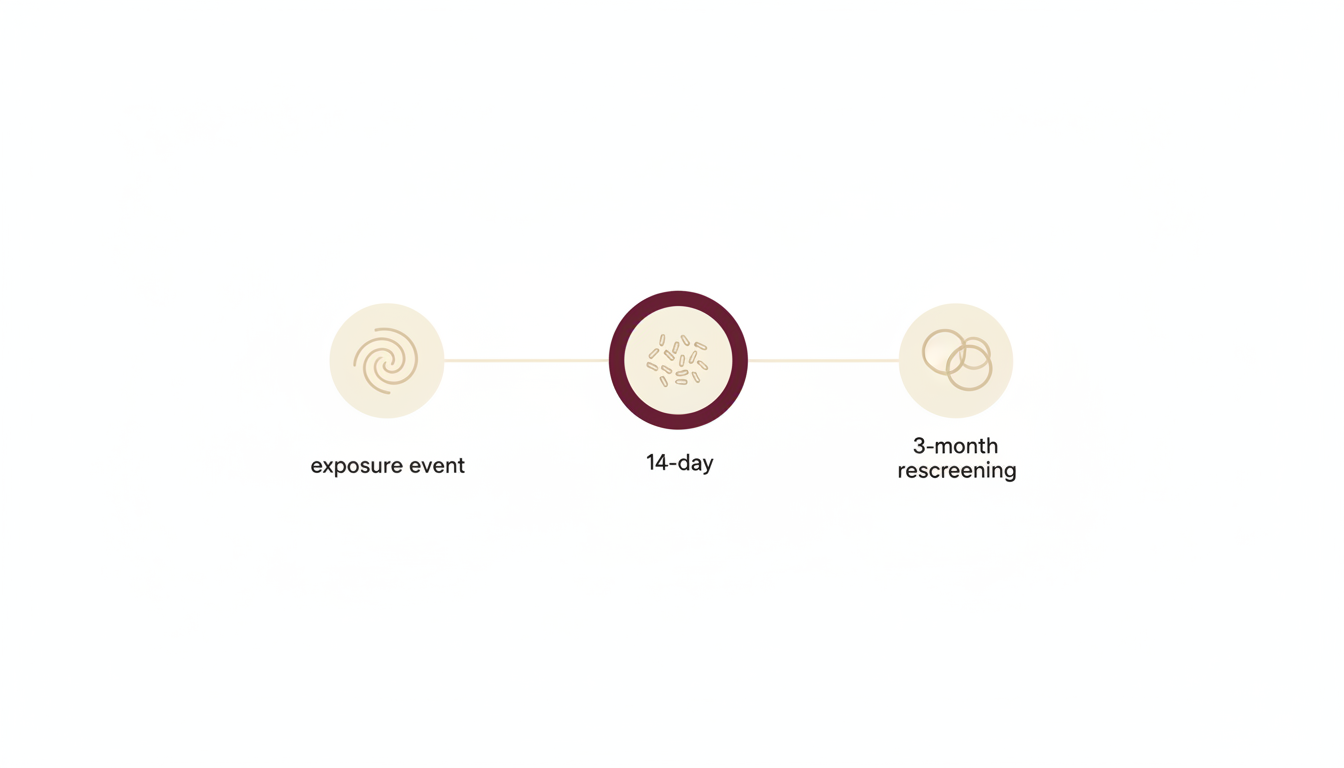
Timing matters more for chlamydia than for some other STIs. Test too soon and the bacterium has not yet reached detectable levels in your sample, which produces a false negative. Wait too long and the infection may already have caused tissue inflammation or been passed to a partner.
The CDC's STI treatment guidelines describe testing as appropriate after the bacterium has had time to multiply, generally about 1 to 2 weeks after exposure for most assays. A practical pattern looks like this:
| Days since possible exposure | What is happening | Should you test now? |
|---|---|---|
| Day 1 to 6 | Bacterium often below detection threshold | Too early. Test only if you have clear symptoms; plan a real test at day 14. |
| Day 7 to 13 | Some assays may begin to detect infection | Optional early test; if negative, retest at day 14 to confirm. |
| Day 14 onward | Most reliable detection window for both lab NAAT and at-home rapid tests | Yes. This is the standard testing point after a possible exposure. |
| 3 months after a positive result | CDC rescreening point to detect reinfection from an untreated partner | Yes, even if treatment went well and you feel fine. |
Rapid test at home, or NAAT at the lab?
Two different test technologies are commonly available, and they answer slightly different questions. Knowing which one you used (and what its sensitivity profile is) matters before you treat the result as final.
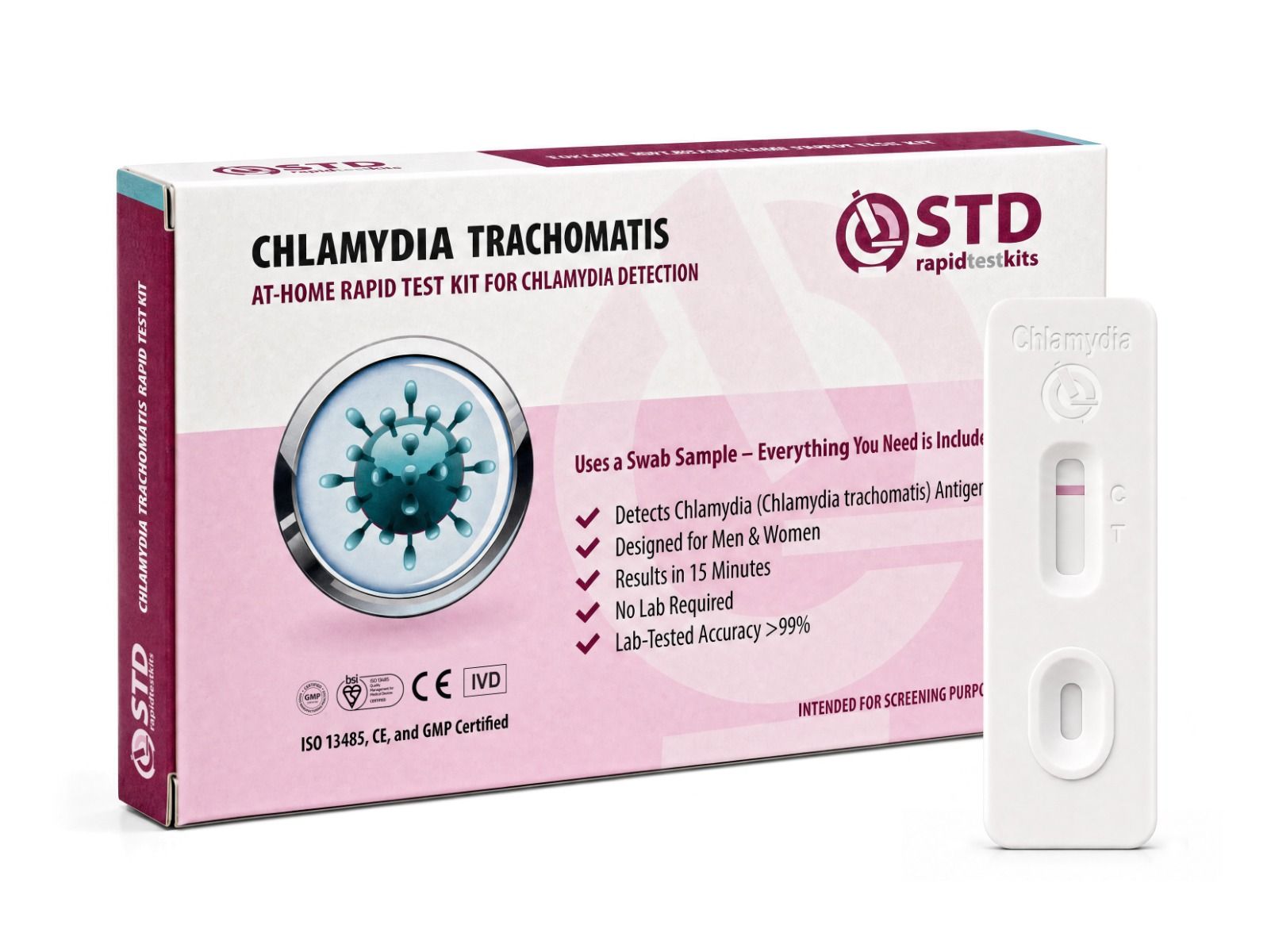
At-home rapid lateral-flow tests use the same general chemistry as a pregnancy test or a rapid COVID strip. You collect a urethral swab, apply it to a test strip, and read a colored line within 15 to 20 minutes. (Our at-home chlamydia kit is swab-based; some other commercial home kits use urine, but those are a separate category.) These rapid tests are useful for fast, private screening at home. Their analytical sensitivity is lower than a laboratory NAAT, particularly in asymptomatic infections with low bacterial load.
Laboratory NAAT (nucleic acid amplification testing) is the diagnostic gold standard the CDC references in its treatment guidelines. NAAT amplifies bacterial DNA from the sample and can detect very small amounts of chlamydia. It is more sensitive than rapid lateral-flow but takes a few days for results and usually requires a clinic visit or a mail-in kit.
The two are complementary, not interchangeable. A positive on a home rapid test is meaningful and worth acting on. A negative on a home rapid test is reassuring but, especially if you tested before day 14 or if you have ongoing symptoms, worth confirming with a lab NAAT.
Home rapid tests and lab NAATs use different chemistries. Rapid tests are lateral-flow strips, the same family as pregnancy and COVID home tests. NAATs amplify bacterial DNA in a lab and detect smaller amounts of infection. Treat a positive home result as actionable; treat a negative home result as preliminary if you tested early or still have symptoms. Note: stdrapidtestkits.com publishes this article and sells the rapid at-home swab kits described below.
What to do if your test is positive
A positive chlamydia result is treatable, and the pathway forward is clear. Chlamydia is one of the most treatable bacterial STIs, and a short course of antibiotics clears the infection in the large majority of cases. The steps below describe the standard pathway based on current CDC guidance.
1. Confirm if needed. If your positive came from a home rapid test or you tested before day 14, follow up with a lab NAAT to confirm. If your positive came from a lab NAAT, you can treat that result as definitive.
2. Get the antibiotic. The current preferred regimen in the CDC STI treatment guidelines is doxycycline 100 mg taken orally twice daily for 7 days. An alternative is azithromycin 1 g taken once. Both require a prescription; many telehealth services can write one without an in-person visit.
3. Notify recent partners. The CDC recommends notifying any sex partners from the past 60 days (or your most recent partner if it has been longer) so they can also be tested and treated. Many U.S. health departments offer anonymous partner notification services if a direct conversation is not possible. The simplest message works: "I just tested positive for chlamydia. You may have been exposed and should get tested."
4. Avoid sex for 7 days after treatment. Even if symptoms clear faster, the standard advice is to wait 7 full days after starting doxycycline (or 7 days after the single azithromycin dose) and until all sex partners have also been treated. Otherwise reinfection is likely.
5. Rescreen at 3 months. The CDC recommends a follow-up test about 3 months after treatment to detect reinfection, not to confirm cure. Routine test-of-cure (a repeat test soon after treatment to verify the antibiotic worked) is only recommended in pregnancy or when symptoms persist; standard treatment failure for chlamydia is rare.
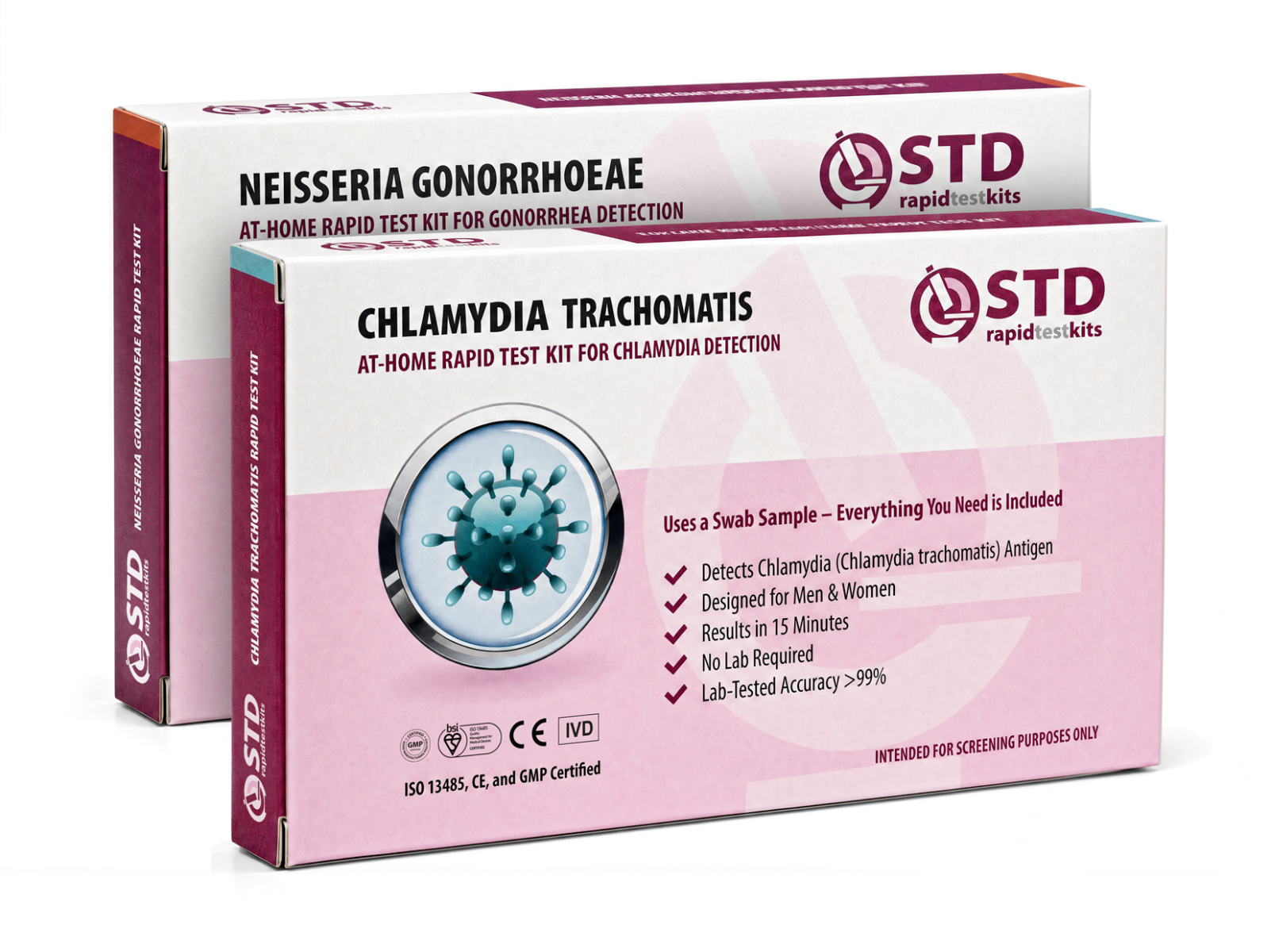
Chlamydia and gonorrhea share the same transmission routes and frequently appear together. The CDC recommends testing for both at the same time after any potential exposure. If you are testing for chlamydia, a combined chlamydia + gonorrhea screen costs little extra and answers a more useful question.
What untreated chlamydia can actually do
The reason public-health agencies push for routine screening is not the acute illness; it is the long-term complications of an infection that sits untreated for months or years. In men, untreated chlamydia can spread from the urethra to the epididymis (the tube that stores sperm), causing epididymitis. The condition presents as testicular pain and swelling on one side and is uncomfortable but treatable when caught early. In rare cases, repeated or prolonged infection can affect fertility, though this outcome is much less well-established in men than in women.
The larger reproductive risk falls on female partners. Untreated chlamydia in women can ascend into the uterus and fallopian tubes, causing pelvic inflammatory disease (PID). PID can scar the fallopian tubes and is a leading preventable cause of infertility and ectopic pregnancy. The World Health Organization's STI fact sheet describes this as one of the most significant public-health consequences of untreated chlamydia globally.
Throat and rectal infections from oral or receptive anal exposure are usually asymptomatic and cause less direct local damage, but they remain transmission reservoirs and should be treated when detected.
Most people who have chlamydia have no symptoms. If you do have symptoms, they may not appear until several weeks after you have sex with an infected partner.
Why at-home testing changes the math for Asian men
The most commonly described barrier in research interviews with Asian men is privacy and the absence of judgment, rather than a shortage of clinics. A clinic visit means a waiting room, a front-desk conversation, and a record of why you came in. For someone living with parents, sharing a family insurance plan, or worried about being recognized in a small community clinic, that friction is enough to delay the visit indefinitely.
An at-home test removes most of that friction. The kit ships in plain unmarked packaging. You collect the sample in your own bathroom. You read the result yourself. Mail-in lab kits return results through a private patient portal. Nothing about the process requires explaining to anyone in your household what is in the box.
At-home testing complements clinical care rather than replacing it. A clinic NAAT is still the gold standard and is the right path when symptoms persist, when you are exposed to multiple infections, or when treatment requires confirmation. The at-home option is a real alternative for the screening step, which is the step Asian men most often skip, and removing that barrier matters for diagnosis rates.
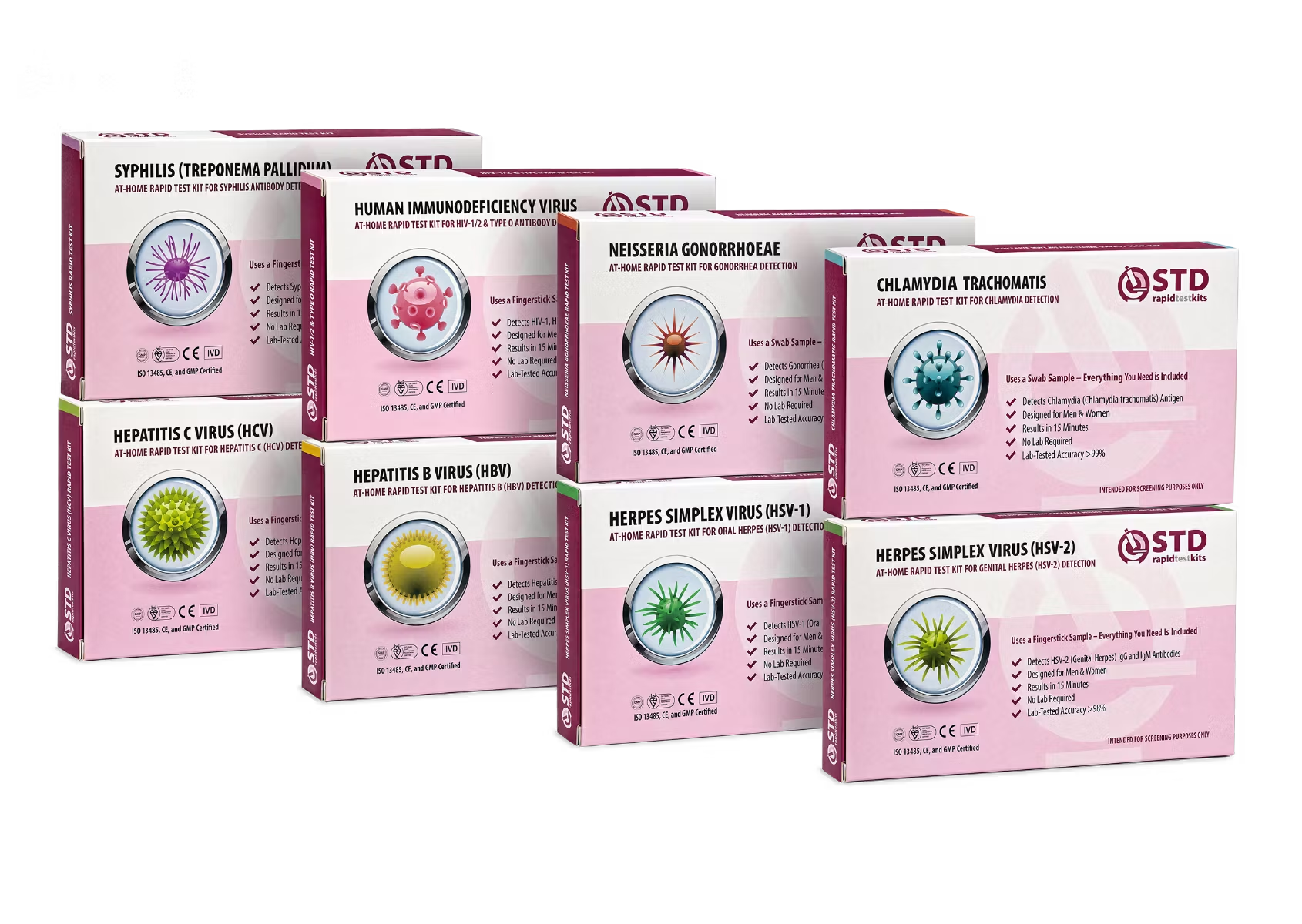
If your last exposure could have involved more than one infection, or if you would rather screen broadly once than test narrowly twice, a multi-infection panel covers the most common bacterial and viral STIs in a single shipment. The 8-in-1 kit below is the standard any-gender combo for this use case.
At-home rapid swab is appropriate when: you have no current symptoms, your last possible exposure was at least 14 days ago, and you want a private screening result before deciding on next steps.
A clinic visit is the better fit when: you have current symptoms (especially testicular pain, persistent burning, or rectal symptoms), your exposure included an oral or rectal route you specifically want tested, you tested positive at home and want a confirmatory NAAT plus same-day prescription, or you need to be screened for multiple infections including HIV and syphilis with formal documentation.
Common questions
- I feel fine. Could I still have chlamydia?
- Yes. The CDC describes chlamydia as an infection that often produces no symptoms, and that pattern is especially common in men. Many of the rest have symptoms so mild they get blamed on dehydration, sweat, or razor irritation. "Feeling fine" is the most common presentation, not a sign of being uninfected. The only way to know is to test.
- How long after sex should I wait before testing?
- About 14 days is the practical answer. Most laboratory NAATs and at-home rapid tests reliably detect the infection from that point. Earlier testing can produce false negatives because the bacterium has not yet reached detectable levels. If you test early and get a negative, repeat the test at day 14 to be sure.
- Can I get chlamydia from oral sex?
- Yes. Chlamydia can infect the throat after oral contact with an infected partner, and the throat infection is almost always asymptomatic. Unless you specifically test the throat (which requires a pharyngeal swab at a clinic), it can persist undetected. Our home rapid kit screens the genital site, not the throat; if oral exposure is your specific concern, a clinic visit is the better fit.
- Will chlamydia clear on its own if I just wait?
- Sometimes the body clears the infection without treatment, but this is unreliable and can take many months. During that time you can pass it to partners and develop complications such as epididymitis. The risk-to-benefit math of one short course of antibiotics versus months of waiting strongly favors treating.
- What if my home rapid test is negative but I still have symptoms?
- Treat the result as preliminary and follow up with a clinic NAAT. Lab NAATs detect smaller amounts of bacterial DNA than rapid lateral-flow tests, so they catch infections that rapid tests miss. Persistent symptoms also suggest looking for other causes such as gonorrhea, mycoplasma, or a non-STI urinary tract infection.
- Do I have to tell my partner if I test positive?
- Yes, and the simpler the message the better. Recent partners (the past 60 days, or the most recent if longer) need to be told so they can test and treat. Many U.S. state health departments offer anonymous partner notification services, so a direct conversation is not the only option. A short factual message is enough: "I tested positive for chlamydia. You may have been exposed and should get tested."
- Will an at-home test show up on my insurance or medical records?
- No. An at-home kit you pay for out of pocket does not generate an insurance claim, a pharmacy record, or a clinic visit note. The order ships in unmarked packaging. This is one of the practical reasons at-home testing closes the gap for readers who share insurance with family or live in close-knit communities.
- After treatment, when can I have sex again, and do I need to retest?
- Seven days of abstinence after treatment starts is the rule, and partners must also be treated before you resume. The CDC recommends a rescreening test at 3 months post-treatment to catch reinfection from an untreated partner, so plan that follow-up even if you feel fine. The 3-month test is for catching reinfection, not for verifying that the antibiotic worked, so it applies to everyone treated successfully.
- U.S. Centers for Disease Control and Prevention. About Chlamydia. Reference for asymptomatic presentation, symptom description in men, complications including epididymitis, and incubation period.
- U.S. Centers for Disease Control and Prevention. Sexually Transmitted Infections Treatment Guidelines: Chlamydial Infections. Reference for doxycycline 100 mg twice daily for 7 days as preferred regimen, alternative azithromycin 1 g, partner notification window, and 3-month rescreening recommendation.
- U.S. Centers for Disease Control and Prevention. Health Disparities in Asian People. Reference for lower reported STI rates among Asian Americans in U.S. surveillance data.
- World Health Organization. Sexually Transmitted Infections (STIs) fact sheet. Reference for global burden of untreated chlamydia and pelvic inflammatory disease as a leading cause of infertility.
- NHS. Chlamydia. Reference for symptom description in men, testing approach, and complications of untreated infection from the UK National Health Service.
