Published: November 2025 | Last updated: May 2026 | Editorial review and quality control: Martina N.
Is chlamydia during pregnancy actually dangerous, and what should I do?
Yes, when untreated. Exposed newborns can develop conjunctivitis in the first two weeks of life or pneumonia in the first one to three months, and preterm labor is also a risk. The CDC recommends screening at the first prenatal visit, plus a third-trimester retest for anyone under 25 or with ongoing risk factors. First-line treatment is a 1 g oral dose of azithromycin, with a test-of-cure about 4 weeks later.
Chlamydia is a very common bacterial sexually transmitted infection in the United States (CDC About Chlamydia). Globally it is the most commonly reported bacterial STI, and the World Health Organization counts well over 100 million new chlamydia infections each year worldwide (WHO STI fact sheet). Pregnancy does not lower that risk, and prenatal care does not always catch it. Most people with chlamydia have no symptoms, so the only reliable way to know is a test, and the test is not always offered automatically. This guide walks through how chlamydia affects a pregnancy, why screening can miss your case, what testing looks like at home and in clinic, which treatments are safe in pregnancy, and what to do if a positive result lands in your inbox after the baby is already here.
This article is published by stdrapidtestkits.com, which sells at-home STI test kits. We recommend products based on fit-for-purpose for the reader's concern, not commercial benefit.
Key Takeaways
- Chlamydia in pregnancy usually has no symptoms, so testing (not symptom-watching) is the only reliable way to know. The CDC recommends screening at the first prenatal visit plus a third-trimester repeat for people under 25 or with ongoing risk factors.
- Untreated infection can pass to the baby during birth, but a single dose of pregnancy-safe antibiotics clears it. When the mother is treated and re-tested for cure before delivery, the newborn transmission risk drops close to zero.
What untreated chlamydia does to a pregnancy
Chlamydia trachomatis is a bacterial infection of the cervix, urethra, rectum, and (less commonly) the throat. When it stays untreated, the bacteria can travel upward from the cervix into the uterus and fallopian tubes. In a non-pregnant body that pathway leads to pelvic inflammatory disease. In a pregnant body it adds another layer of risk: inflammation from untreated infection can affect the membranes holding the amniotic fluid and is associated with preterm delivery and preterm premature rupture of membranes. The CDC recommends treatment in pregnancy specifically to prevent these maternal complications (CDC STI Treatment Guidelines, Pregnant Persons).
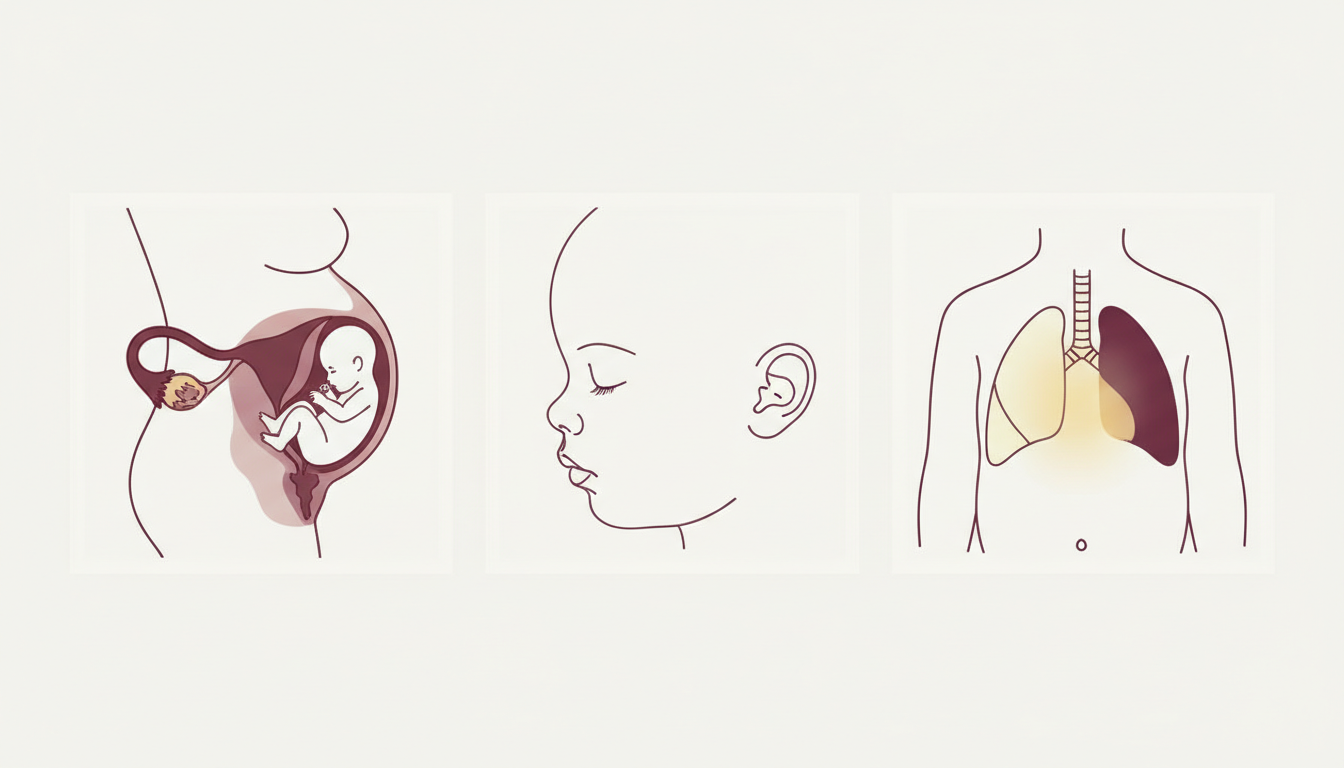
The second risk is direct transmission during vaginal delivery. As the baby moves through the birth canal, bacteria in the cervical and vaginal secretions can reach the eyes, the nasopharynx, and (a few weeks later) the lower airways. Some studies also document transmission during cesarean delivery when membranes have already ruptured before the operation, although that risk is lower. Among infants born to mothers with untreated chlamydia, a substantial proportion develop conjunctivitis in the first two weeks of life, and a smaller but significant proportion develop pneumonia in the first one to three months (CDC STI Treatment Guidelines). Many exposed infants acquire some form of chlamydial colonization but stay asymptomatic and are never diagnosed.
Two newborn outcomes are particularly well documented:
- Neonatal conjunctivitis, an eye infection that typically develops 5 to 12 days after birth, with swollen lids, yellow discharge, and crusting. Without antibiotic treatment it can cause lasting eye damage.
- Chlamydial pneumonia, a lower-respiratory infection that develops in the first one to three months of life and presents with rapid breathing, a persistent staccato cough, and poor feeding, usually without fever.
Some studies have also linked untreated chlamydia in early pregnancy to a higher risk of first-trimester miscarriage, although that data is less consistent than the data on preterm birth and neonatal infection. The most consistently documented risks are preterm delivery and the two newborn infections above. Both are largely preventable with a course of antibiotics during pregnancy.
Why standard prenatal screening can miss your case
Routine prenatal care includes a long list of tests: blood type, anemia, blood sugar, blood pressure, group B strep, and others. Chlamydia is on the recommended list too, but the CDC's recommendation is age- and risk-based, not universal. The CDC, the U.S. Preventive Services Task Force, and the American College of Obstetricians and Gynecologists all align on the same broad strokes:
- Screening at the first prenatal visit for all pregnant people under 25.
- Screening at the first prenatal visit for anyone 25 or older with risk factors (a new partner, more than one partner, a partner with an STI, or a partner with concurrent partners).
- Retesting in the third trimester (typically between weeks 28 and 36) for the same groups, to catch infections acquired during the pregnancy.
- A test-of-cure about 4 weeks after treatment in pregnancy, given the high stakes (CDC Chlamydia Treatment Guidelines).
The reasoning behind two test points is straightforward. A woman who tests negative in the first trimester can acquire a new infection later in pregnancy if she or her partner has new exposures. A repeat test in the third trimester catches that interval infection in time for treatment and a test-of-cure before delivery. Skipping the third-trimester repeat is the single most common preventable failure that leads to neonatal chlamydial pneumonia in women who started prenatal care on time.
If you are 26 or older and your provider does not flag you as higher-risk, the test may not be ordered unless you ask. People in long-term relationships often assume their first prenatal blood panel covered everything, and an infection acquired earlier (or by a partner with concurrent partners) can sit in the cervix for months without symptoms. Asking for a chlamydia test, even when you do not technically meet the screening criteria, is reasonable and costs your provider almost nothing to add.
If your prenatal clinic does not offer chlamydia screening, or if there is a long wait between visits and you want answers sooner, an at-home chlamydia test is a reasonable bridge between scheduled visits.
Pregnant persons aged less than 25 years and those at increased risk for chlamydia (e.g., those who have a new sex partner, more than one sex partner, a sex partner with concurrent partners, or a sex partner who has a sexually transmitted infection) should be screened.
How chlamydia symptoms hide during pregnancy
Most chlamydia infections, in pregnancy or otherwise, cause no noticeable symptoms. When symptoms do appear, they overlap heavily with normal pregnancy changes, which makes them easy to dismiss.
Common chlamydia symptoms include increased vaginal discharge with a yellow tint, a burning sensation when urinating, lower abdominal pain, light bleeding between periods or after sex, and pain during sex (NHS Chlamydia; Mayo Clinic Chlamydia, Symptoms and Causes). In pregnancy, increased discharge is normal, mild cramping is normal, and urinary frequency is normal. The signs that should push you toward a test are: a clear change in discharge color or smell, persistent pelvic pain that does not match your usual pregnancy aches, or any post-coital bleeding.
The practical takeaway is that you cannot reliably distinguish chlamydia from normal pregnancy by how you feel. If you have had a new partner during the pregnancy, if a current partner has tested positive, or if it has been more than a year since your last STI screen, get tested. Symptoms are a poor screening tool here.
- You have had any new sexual partner during this pregnancy.
- A current or recent partner has tested positive for an STI.
- It has been more than 12 months since your last full STI screen.
- You are noticing a change in discharge, post-coital bleeding, or unfamiliar pelvic pain.
- You are entering your third trimester and were not retested.
Your testing options in pregnancy
Two paths get you a chlamydia result during pregnancy.
Clinic NAAT. A nucleic acid amplification test (NAAT) on a urine sample or vaginal swab is the laboratory standard. It is the most sensitive and specific test available for chlamydia screening (CDC STI Treatment Guidelines), and it is well-validated in pregnancy. Results usually come back within a few days. NAATs detect bacterial DNA directly, which is why they outperform culture or older antibody-based methods. The CDC considers NAAT the preferred test for chlamydia screening. The catch is that you usually need it ordered, and during pregnancy that order is risk- and age-based.
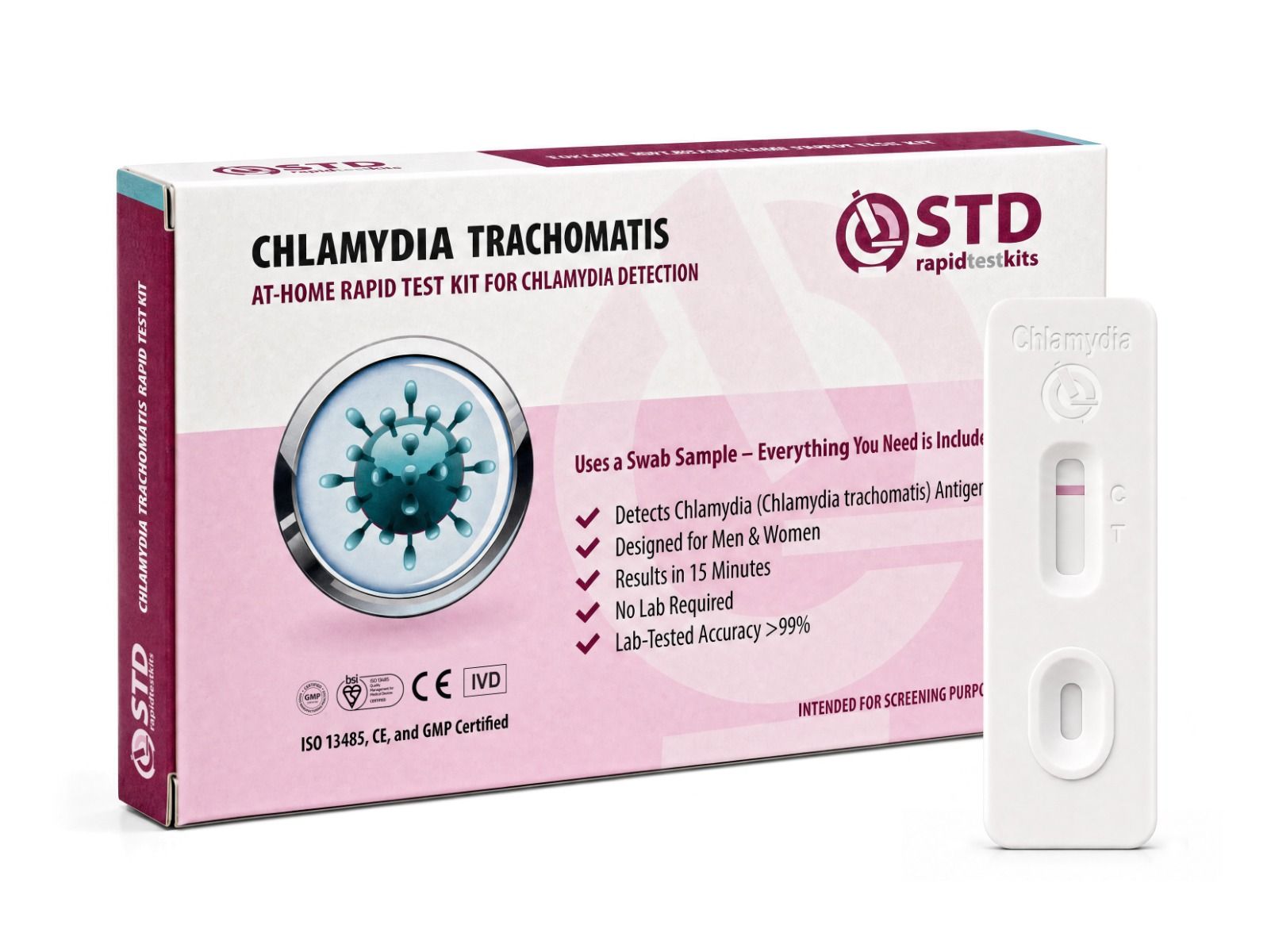
At-home rapid swab. An at-home rapid lateral-flow swab is a different technology. You collect a vaginal swab yourself, run the test on the included cassette, and read the result in about 15 minutes. Lateral-flow chemistry has lower analytical sensitivity than a lab NAAT, so a home rapid test is best treated as a screening complement to the prenatal panel rather than a replacement. A positive result on a home test is still meaningful and worth confirming with your prenatal provider, who can move directly to treatment and order a confirmatory NAAT. A negative result close to a known exposure is less reassuring; the retesting principles described above still apply.
The two methods are complementary. A clinic NAAT is the gold standard for diagnosis. A home rapid test is a fast, private way to act when an appointment is days or weeks away, and a practical option for screening a partner who declines a clinic visit but is willing to self-swab.
Treatment that is safe in pregnancy
Chlamydia is curable. The treatment in pregnancy is short, well-tolerated, and standard of care.
The CDC's first-line regimen for chlamydia in pregnancy is a single 1 g oral dose of azithromycin. The alternative regimen is amoxicillin 500 mg orally three times a day for 7 days. Both have a long safety record in pregnancy (CDC Chlamydia Treatment Guidelines). Azithromycin does not cross the placenta in significant amounts.
Doxycycline, the first-line treatment outside pregnancy, is not used during pregnancy because tetracyclines can deposit in fetal teeth and bone. The CDC also recommends a test-of-cure (preferably by NAAT) about 4 weeks after completing treatment in pregnancy, plus a repeat test about 3 months later, to confirm the infection cleared and to catch any new exposure. This test-of-cure step is specific to pregnancy; outside of pregnancy, follow-up testing is mostly to catch reinfection at 3 months.
If a baby does develop a documented chlamydial infection after delivery, the first-line treatment is oral erythromycin base or ethylsuccinate at 50 mg/kg/day in four divided doses for 14 days. A 3-day course of oral azithromycin is the shorter alternative regimen. Treatment failure is uncommon when antibiotics are completed correctly, but a follow-up swab is reasonable in infants who do not respond clinically.
Your provider will also recommend that you avoid sexual contact for 7 days after a single-dose treatment (or until the 7-day course is complete), and that any current sexual partner is tested and treated as well, to prevent re-infecting each other after treatment.
Erythromycin (and, to a lesser extent, azithromycin) given in the first weeks of life carries a small but documented association with infantile hypertrophic pyloric stenosis, especially in babies under 6 weeks of age. United States pediatric standard of care is therefore to monitor exposed newborns and treat documented chlamydial conjunctivitis or pneumonia when it appears, rather than to give every exposed newborn empiric antibiotics. The protective lever is treating the mother during pregnancy, not the baby after birth.
Retesting, reinfection, and treating your partner
Treatment clears the current infection, but it does not protect you from getting reinfected. If a sexual partner is not also tested and treated, the same infection can come right back, sometimes within weeks. Reinfection during pregnancy is common enough that the CDC builds it into the schedule: a test-of-cure about 4 weeks after treatment, plus a retest about 3 months later. If you are still pregnant in your third trimester, retesting again before delivery is a reasonable extra step, especially if there is any chance of new exposure.
Partner symptoms are not a reliable guide. Most people with chlamydia have no symptoms regardless of gender, so a partner who feels fine can still test positive, and an untreated partner is the most common source of reinfection. Where it is legally permitted, your prenatal clinician can use Expedited Partner Therapy (EPT): writing a prescription or supplying medication for your partner to take without their own clinic visit. EPT is legal in most United States states and is the single biggest lever against reinfection. If EPT is not available where you live, your partner needs their own clinical evaluation.
Avoid sexual contact for 7 days after a single-dose treatment, or for the full 7 days of an amoxicillin course, and ideally until both partners have completed treatment. The CDC also recommends abstaining until any prior partner from the previous 60 days has been notified and treated. Consistent condom use through the rest of pregnancy reduces both reinfection risk and exposure to other STIs that affect newborn outcomes (HSV, gonorrhea, syphilis), and helps when a partner's status is not fully known.
If you only find out after delivery: watching the newborn
This happens, and it does not mean the worst-case outcome is now inevitable. If you test positive for chlamydia after giving birth, three priorities follow.
First, talk to your baby's pediatrician right away. Two specific patterns are worth watching for in the first few months of life.
Neonatal chlamydial conjunctivitis typically develops 5 to 12 days after birth and shows up as red, swollen lids with yellow discharge and crusting. It is diagnosed by a conjunctival swab and treated with oral erythromycin.
Neonatal chlamydial pneumonia takes longer to appear. The bacteria colonize the newborn's airways at birth, but symptoms typically surface between 2 and 19 weeks of life, with most cases appearing at 4 to 12 weeks. Clinicians sometimes call it an "afebrile pneumonia" because most affected babies do not run a fever, which helps distinguish it from bacterial pneumonias caused by group B Streptococcus (GBS) or Staphylococcus and from viral pneumonias caused by respiratory syncytial virus (RSV) or influenza. Antibiotic choice and clinical course differ between those causes, so the maternal chlamydia history matters when the workup begins.
Diagnosis is made with a nasopharyngeal swab tested by NAAT or culture, sometimes combined with a chest X-ray. Babies who develop pneumonia severe enough for hospitalization are usually admitted to a pediatric ward or step-down nursery rather than the NICU, although severely affected infants with poor feeding or oxygen needs can require NICU-level support. Long-term outcomes for treated infants are generally good, though follow-up studies have shown a higher rate of recurrent wheeze and asthma diagnoses in childhood among infants who had chlamydial pneumonia compared with peers who did not.
Second, get treated yourself. Postpartum treatment of chlamydia uses the same antibiotics as treatment in pregnancy, and it is compatible with breastfeeding. Chlamydia is not transmitted through breast milk, so a positive result does not change feeding decisions once you are on treatment.
Third, treat your partner. The same logic that applies during pregnancy applies postpartum: an untreated partner means reinfection. If your partner cannot get to a clinic quickly, ask your provider whether EPT is available in your state.
Newborn signs that warrant same-day pediatric evaluation
Especially when the mother had a known or suspected chlamydial infection during pregnancy. Most affected babies do not run a fever, which is the key feature distinguishing chlamydial pneumonia from GBS, RSV, or influenza pneumonias.
- Red, swollen eyelids with yellow discharge and crusting in the first 1 to 2 weeks of life Common
- Persistent dry, repetitive cough (often described as staccato) between weeks 4 and 12 Common
- Rapid breathing rate over 60 breaths per minute at rest in a newborn Common
- Nasal congestion without an obvious viral illness Common
- Poor feeding, poor weight gain, or unusual fatigue Common
- Usually no fever, or only a low-grade fever (distinguishing feature of chlamydial pneumonia) Common
- Retractions (visible pulling-in of the chest wall with each breath) Less common
- Bluish lips or skin (cyanosis), indicating low oxygen Rare
Other STIs that affect newborns: why broader prenatal testing matters
Chlamydia is the most common cause of bacterial neonatal pneumonia, but it is far from the only sexually transmitted infection that affects newborns. A complete prenatal panel typically screens for HIV, syphilis, hepatitis B, and gonorrhea alongside chlamydia, and many practices add hepatitis C as well. The transmission figures in the table below come from CDC perinatal-transmission guidance: the 15 to 25 percent untreated HIV transmission rate (and reduction to under 1 percent with full prenatal management) is from the CDC's perinatal HIV transmission page (CDC HIV), and the 5 to 6 percent HCV vertical-transmission estimate is from the CDC's hepatitis C clinical overview (CDC Hepatitis C).
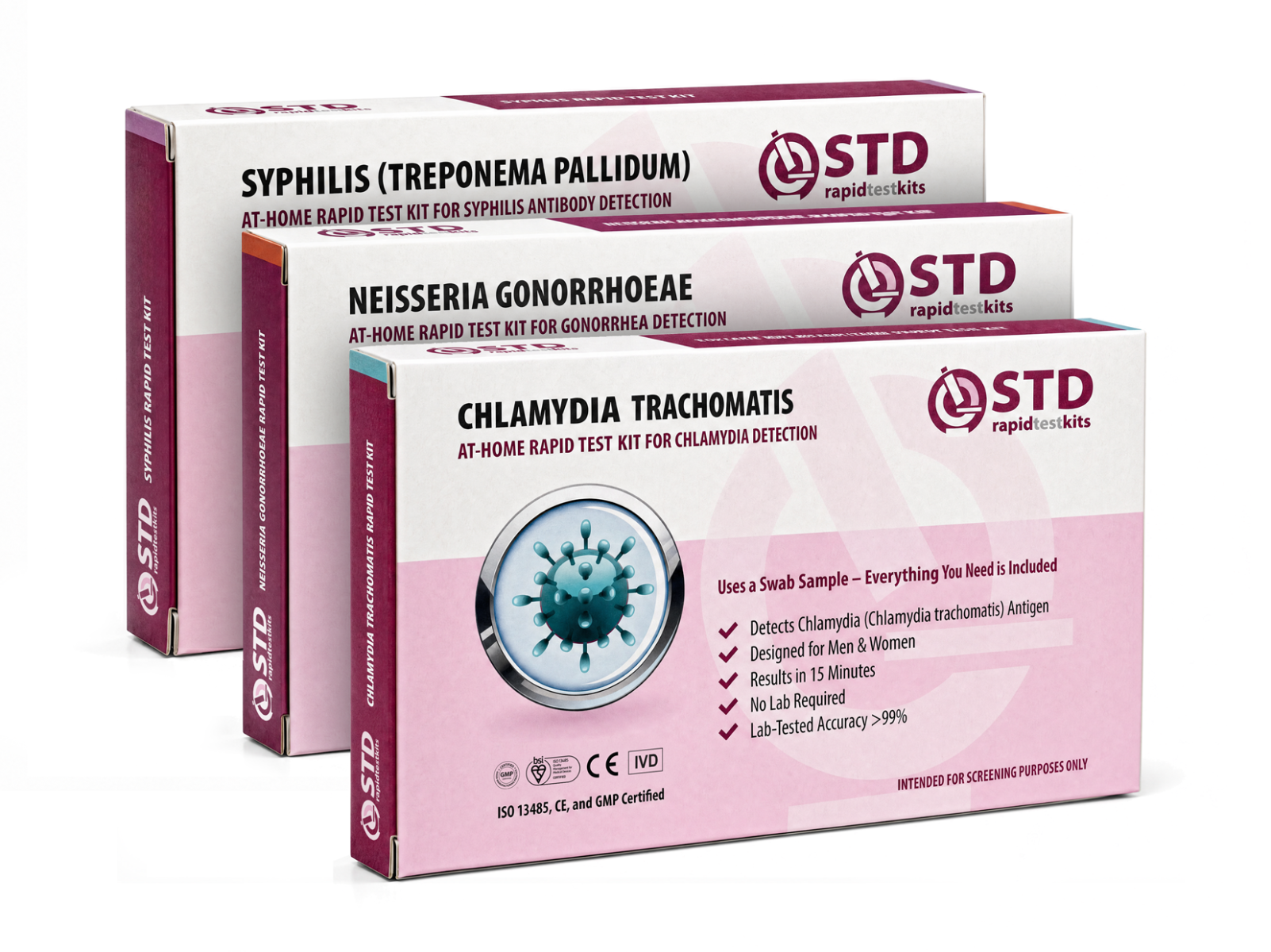
For women preparing for pregnancy, or in the early weeks before the first prenatal visit, a broader rapid panel can give an at-home read on most of these. At-home rapid kits are lateral-flow immunoassays rather than the NAAT or antibody-confirmation chemistry used by labs, so they are best treated as a screening complement to the lab-processed prenatal panel rather than a replacement. A positive result from any at-home test is reason to confirm with your prenatal clinician.
| STI | Newborn risk if maternal infection untreated | Standard prevention |
|---|---|---|
| Gonorrhea | Newborn conjunctivitis (ophthalmia neonatorum); rarely, disseminated infection | Universal erythromycin eye ointment for every newborn at delivery; prenatal screening of the mother |
| HIV | 15 to 25 percent transmission without intervention; under 1 percent with full prenatal management | Universal opt-out prenatal HIV screening, antiretroviral therapy in pregnancy, planned delivery, infant prophylaxis |
| Syphilis | Stillbirth, prematurity, and a wide range of congenital syphilis complications | Prenatal screening at the first visit (and again at delivery in higher-prevalence settings); maternal penicillin treatment |
| Hepatitis B | Vertical transmission at birth from HBsAg-positive mother, with risk of chronic infection | Newborn HBV vaccine plus hepatitis B immunoglobulin (HBIG) within 12 hours of delivery |
| Hepatitis C | About 5 to 6 percent transmission from infected mother to newborn | No current intervention prevents transmission; newborn surveillance and early direct-acting antiviral treatment when indicated |
Long-term: fertility and future pregnancies
Chlamydia's longer-term concern is its effect on the upper reproductive tract. Untreated infection can lead to pelvic inflammatory disease (PID), which can scar the fallopian tubes. Tubal scarring is one of the leading causes of tubal-factor infertility and ectopic pregnancy (a fertilized egg implanting outside the uterus, usually in a damaged tube), which is a medical emergency (NHS Chlamydia).
If chlamydia is in your history, treated or not, ask your provider to document it in your prenatal record so any future pregnancy team can screen you earlier. If you are planning to conceive again, a screening test before pregnancy is a reasonable step. Treating an active infection before conception is simpler than treating it during pregnancy, and it removes the risk window entirely; the lead time for partner treatment is also longer outside pregnancy, which matters because partner treatment is the step that most often gets dropped.
None of this is meant to add anxiety after the fact. A single, promptly treated chlamydia infection is unlikely to affect future fertility. The risk rises with repeated untreated infections and longer-duration untreated infections, both of which are addressable by screening on a sensible cadence going forward.
Bottom line on fertility
- A single, promptly treated chlamydia infection is unlikely to affect future fertility.
- Screening before your next pregnancy removes the risk window entirely; treating an active infection before conception is simpler than treating one during pregnancy.
- Repeat untreated infections are the pattern that drives long-term fertility risk, so a sensible screening cadence in the years after a treated infection matters more than any one positive test.
Your next step, depending on where you are
Are you newly or recently pregnant, and a chlamydia test has not been added to your first-visit prenatal panel yet?
Yes: Ask your prenatal provider to add chlamydia to your first-visit screening (a urine sample or vaginal swab; the test costs almost nothing to add). If clinic access is delayed, an at-home rapid swab is a reasonable bridge until your appointment.
Are you under 25, or 25 and older with risk factors (a new partner, more than one partner, a partner with a known STI), and entering or in your third trimester (weeks 28 to 36) without a repeat chlamydia test?
Yes: Ask for the third-trimester retest. This is the single test most often skipped and the one that catches an interval infection in time for treatment and a test-of-cure before delivery.
Have you tested positive in pregnancy or postpartum, and your sexual partner has not yet been tested or treated?
Yes: Ask your clinician about Expedited Partner Therapy (legal in most U.S. states). Without partner treatment, reinfection within weeks is common and is the leading preventable cause of treatment failure.
No: Continue with your scheduled prenatal panel and the CDC retesting cadence (test-of-cure at 4 weeks, repeat at 3 months). If a new exposure happens between visits, call your clinic the same day or use an at-home rapid swab for a faster preliminary read.
Guidance only. Your prenatal clinician knows your specific situation; use this to decide what to bring up at your next visit.
Frequently asked questions
- Can I have chlamydia during pregnancy without any symptoms?
- Yes. Most chlamydia infections, in pregnancy or otherwise, cause no symptoms at all. That is why the CDC recommends screening based on age and risk factors rather than waiting for symptoms to appear.
- How does chlamydia cause pneumonia in a newborn?
- Chlamydia trachomatis bacteria in the mother's cervix and vagina contact the newborn's eyes, nose, and throat during vaginal delivery. The bacteria can then travel to the lower airways and cause an inflammatory pneumonia. Symptoms typically appear 4 to 12 weeks after birth, often as a persistent dry cough and fast breathing without fever. A meaningful proportion of infants born to mothers with untreated chlamydia develop pneumonia in the first one to three months of life.
- Is the standard antibiotic treatment safe for my baby?
- Yes. Both pregnancy-safe options, azithromycin (single dose) and amoxicillin (7-day course), have decades of obstetric safety data behind them. Neither crosses the placenta in amounts that affect fetal development. Doxycycline is off the table in pregnancy, but neither alternative is a compromise; treatment outcomes are equivalent.
- How long should I wait to retest after treatment?
- The CDC sets two checkpoints after treatment in pregnancy: a NAAT at about 4 weeks to confirm clearance, and again at 3 months to rule out reinfection. If you are still pregnant when treatment ends, your provider may add a screen before delivery as well.
- If my first-trimester chlamydia test was negative, do I really need to test again later?
- Yes, especially for anyone under 25 or with any new sexual exposure since that first-trimester swab. A negative early result only covers exposures up to the moment the sample was taken; a partner change, a new diagnosis in a current partner, or a missed earlier exposure can all introduce a new infection mid-pregnancy. The third-trimester retest is the protective step that catches those interval infections in time for treatment and a test-of-cure before delivery, and in routine practice it is also the step most often left off the chart.
- Can I still deliver vaginally if I had chlamydia?
- If your test-of-cure confirms the infection has cleared before delivery, vaginal birth is generally fine and chlamydia transmission is no longer a concern. A cesarean delivery performed before membranes rupture reduces but does not fully eliminate the risk if you still test positive at delivery, and the CDC does not recommend cesarean section solely to prevent chlamydia transmission. Treating the maternal infection during pregnancy is the more effective intervention.
- Can a baby with chlamydial pneumonia fully recover?
- Most infants treated promptly make a full recovery. The CDC's first-line treatment for neonatal chlamydial pneumonia is oral erythromycin at 50 mg/kg/day in four divided doses for 14 days, with a 3-day course of azithromycin as the shorter alternative. One caveat: children who had chlamydial pneumonia in infancy are diagnosed with recurrent wheezing or asthma at a higher rate than their peers in long-term follow-up studies, which is part of why prenatal prevention through screening is the preferred lever.
- Do I have to tell my partner if I test positive?
- Yes, in practice. If your partner is not tested and treated, you can be reinfected after your own treatment. Where it is legally available, Expedited Partner Therapy lets your prenatal clinician send a prescription home with you for your partner without a separate visit. Many state and local health departments also offer anonymous partner-notification services if direct conversation is not safe or feasible.
- Can I use an at-home STD test while pregnant?
- Yes. At-home swab tests for chlamydia use a self-collected vaginal swab and do not interact with the pregnancy itself. They are useful when you want a fast answer between prenatal visits, or for screening a partner who will not see a clinician. They do not replace the lab-processed prenatal NAAT, and a positive home result should always be confirmed with your prenatal provider.
- Will having chlamydia during pregnancy affect my future fertility?
- A single chlamydia infection that is treated promptly is unlikely to affect future fertility. The fertility risk rises with repeated untreated infections, because untreated infection can scar the fallopian tubes through pelvic inflammatory disease. Documenting your history, screening early in future pregnancies, and treating any active infection before trying to conceive again all reduce that risk.
- U.S. Centers for Disease Control and Prevention. Chlamydial Infections in the STI Treatment Guidelines, including treatment regimens for pregnant persons (azithromycin 1 g; amoxicillin 500 mg three times daily for 7 days), the test-of-cure recommendation at approximately 4 weeks, neonatal conjunctivitis timing (5 to 12 days), neonatal pneumonia onset (typically 4 to 12 weeks of age, that is, the first 1 to 3 months), and the neonatal erythromycin regimen (50 mg/kg/day in four divided doses for 14 days).
- U.S. Centers for Disease Control and Prevention. Screening Recommendations and Considerations for Pregnant Persons in the STI Treatment Guidelines, including age- and risk-based screening criteria for pregnancy and the test-of-cure recommendation 4 weeks after treatment.
- U.S. Centers for Disease Control and Prevention. About Chlamydia fact sheet, an overview of chlamydia as a common bacterial sexually transmitted infection.
- U.S. Centers for Disease Control and Prevention. HIV in pregnancy and prevention of mother-to-child transmission, including the 15 to 25 percent untreated transmission estimate and reduction to under 1 percent with full prenatal management.
- U.S. Centers for Disease Control and Prevention. Overall STI Treatment Guidelines, including ophthalmia neonatorum prevention, Expedited Partner Therapy guidance, and qualitative context on the proportion of exposed infants who develop conjunctivitis or pneumonia.
- World Health Organization. Sexually transmitted infections (STIs) fact sheet, including global burden of new chlamydia infections each year and clinical overview.
- National Health Service (UK). Chlamydia overview, including symptoms, testing methods, treatment guidance, and complications such as pelvic inflammatory disease and ectopic pregnancy.
- Mayo Clinic. Chlamydia trachomatis: symptoms, causes, and overview of clinical presentation in women and men.
- U.S. Centers for Disease Control and Prevention. Hepatitis C clinical overview, including perinatal transmission estimates (about 5 to 6 percent vertical transmission from infected mother to newborn).
