
Published: September 2025 | Last updated: May 2026 | Editorial review and quality control: Martina N.
Chlamydia screening guidance was written for younger adults, and that framing has carried over into how many doctors and patients think about the infection today. Public health surveillance tells a different story. CDC STI surveillance data show that chlamydia rates in adults over 45 have been climbing for more than a decade, and the infection is one of the bacterial STIs driving that trend. Age does not lower the biological risk of catching it, and in older bodies the complications of leaving it untreated can be more serious, not less.
The infection is often called silent because most people who carry it have no symptoms at all. When symptoms do appear, they overlap with the everyday discomforts of an older body: vaginal dryness, a touch of pelvic discomfort, mild urinary changes, or joint aches. So they get blamed on menopause, prostate medication, or arthritis. Meanwhile the infection persists, sometimes for months or years, and quietly raises the risk of complications that antibiotics cannot reverse once they are established.
This guide pulls together current CDC, NHS, Mayo Clinic, and WHO guidance on what untreated chlamydia can do to an older body, when testing makes sense, and what to do if a result comes back positive. The aim is honest information without alarm bells, written for someone who wants to make a clear-headed decision about whether to test.
Key Takeaways
- The CDC notes that most people with chlamydia have no symptoms, which is why screening is recommended even when nothing feels wrong.
- Antibiotics cure chlamydia, but they cannot reverse complications like scarred fallopian tubes or chronic pelvic pain that may already have set in by the time the infection is found.
Why Chlamydia Often Goes Unnoticed After 50
Chlamydia is sometimes described as a silent infection because the majority of people who carry it never feel ill from it. The U.S. Centers for Disease Control and Prevention notes that most chlamydia infections produce no symptoms, which is the primary reason routine screening exists at all. When symptoms do appear, they are typically mild: a slight burning during urination, a change in vaginal or penile discharge, a low-grade pelvic ache, or spotting between periods in premenopausal women.
In older adults those signals are even easier to overlook. Postmenopausal vaginal dryness, mild urinary changes, and joint aches are common with age, with chronic conditions, and with the medications used to manage them. A slightly off urinary pattern or a small change in discharge often gets attributed to prostate medication, menopause, or arthritis before anyone considers an STI. The infection lives in the urogenital tract, can spread to the upper reproductive organs without warning, and can persist for months or years if nothing flags it for testing.
The pattern is common in older men: testicular discomfort or urinary changes get routed through a prostate workup, screening is not offered because no one asked about new sexual partners, and the infection is found late, sometimes only after a partner tests positive. Older women face a parallel pattern. Postmenopausal hormonal changes thin vaginal and urethral tissue, which can make symptoms feel like dryness, irritation, or recurrent urinary tract infection. A presumptive UTI is treated with a short antibiotic course that does not cover chlamydia, the symptoms ease briefly, and the infection continues.
Providers may not ask older patients about sexual activity, and patients may not volunteer the information. So screening conversations that happen routinely in younger adults are quietly skipped in this age group. The American Sexual Health Association and the CDC both flag this gap as a leading reason late diagnoses cluster in older adults.
What Happens When Chlamydia Goes Untreated
Untreated chlamydia is harmful at any age, but the long-term complications can be more significant in older adults because postmenopausal anatomy, an aging immune system, and overlapping chronic conditions are less forgiving. Most of these outcomes are preventable with a single course of antibiotics once the infection is identified. The table below summarizes the most common complications and who tends to be most at risk for each.
| Complication | What it means | Who is most at risk |
|---|---|---|
| Pelvic inflammatory disease (PID) | The infection ascends from the cervix into the uterus and fallopian tubes, causing pain, scarring, and sometimes infertility. The CDC lists chlamydia as one of the most common bacterial causes. | People with a uterus. Postmenopausal women may not notice the early signs because cyclic bleeding cues are gone. |
| Epididymitis | Inflammation of the coiled tube behind the testicle, producing scrotal pain, swelling, and sometimes fever. | Men of any age, often misattributed in older men to prostate-related discomfort. |
| Reactive arthritis | An autoimmune reaction to the bacterial infection that triggers joint inflammation, most often in the knees, ankles, or feet. | Anyone, with higher incidence in people who carry the HLA-B27 gene variant (present in roughly 6 to 8 percent of the general population). |
| Adult inclusion conjunctivitis | Eye redness, discharge, and gritty discomfort when the bacteria reach the conjunctiva, typically by hand contact after genital exposure. | Any sexually active adult; underdiagnosed because eye-only symptoms are not linked back to an STI. |
| Chronic pelvic or scrotal pain | Long-term discomfort that can persist after the infection itself is cleared, particularly when PID or epididymitis was advanced before treatment. | Older adults whose infection ran for months before being identified. |
How Long Can Chlamydia Persist Without Treatment
There is no single answer to how long an untreated infection lasts. Duration depends on the strength of the immune response, whether the person is re-exposed by an untreated partner, and whether anything prompts testing in the meantime. CDC guidance is clear that chlamydia does not reliably clear on its own and that the route to confirmed clearance is screening followed by antibiotics.
Some immune systems may eventually suppress or clear the infection without treatment. The catch is that there is no reliable way to know that has happened without testing, and the time during which the infection is active is also the time during which complications can develop and partners can be exposed. A clinically inactive infection can also flare back into transmissibility, particularly if the person's overall immune function dips because of illness, surgery, or stress.
The practical takeaway is that time is not on your side. The earlier the infection is identified, the lower the chance of pelvic inflammatory disease, epididymitis, or reactive arthritis taking hold, and the simpler the treatment course.

Testing After 50: What You Actually Need to Know
Testing for chlamydia after 50 follows the same protocols as testing at 25. The most accurate laboratory method is nucleic acid amplification testing (NAAT), which detects the bacterial DNA from a urine sample or a self-collected vaginal swab. NAAT is the diagnostic approach recommended by CDC for chlamydia screening, and it is the standard used in clinics and in lab-processed mail-in panels.
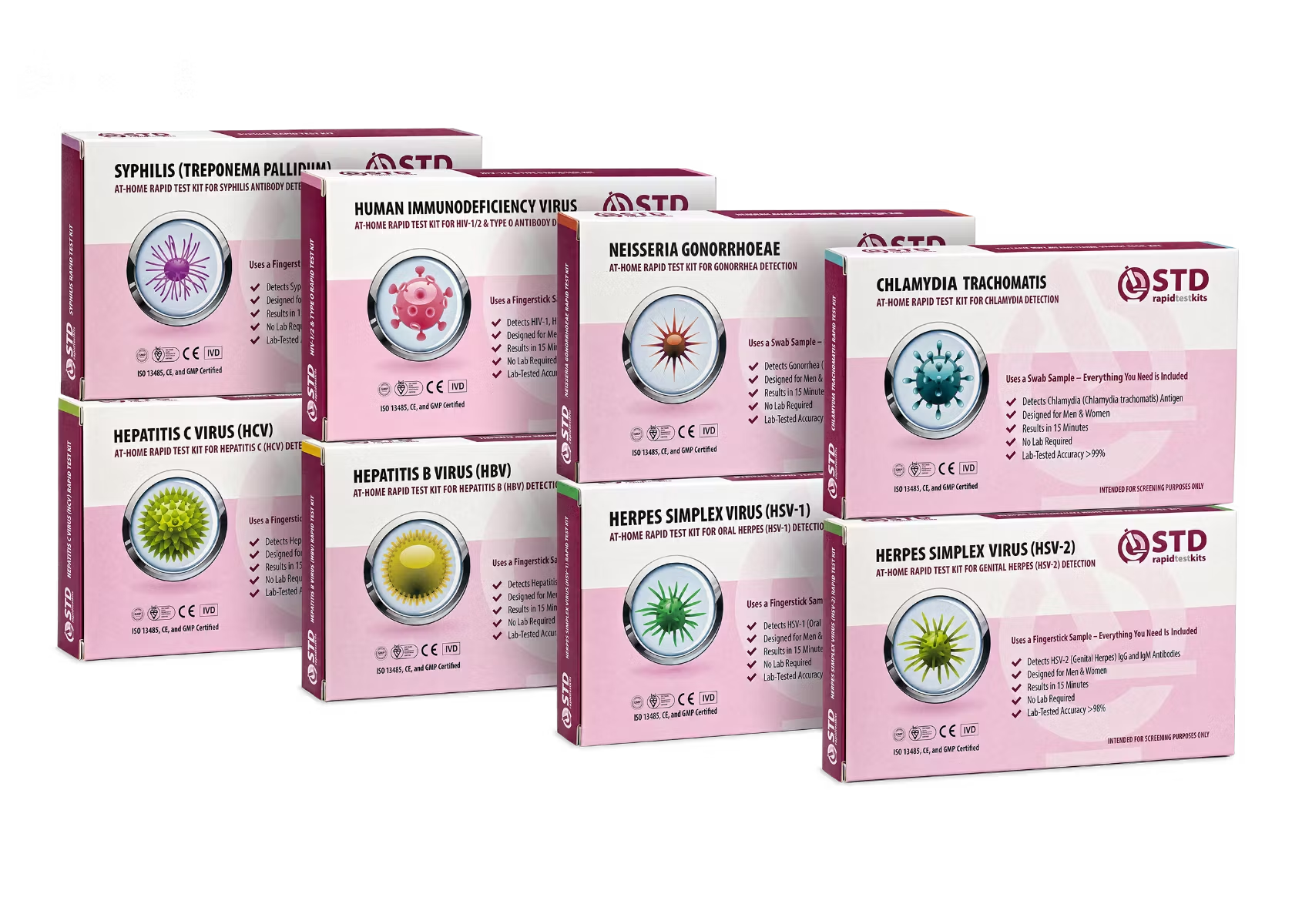
At-home rapid lateral-flow tests are a different category of technology. They use antigen detection on a self-collected swab and return a result in roughly fifteen minutes without sending anything to a lab. The two approaches are complementary, not equivalent. Lab NAAT has higher analytical sensitivity, particularly for asymptomatic infections; rapid lateral-flow tests offer a faster, more private screen that is useful for prompting a confirmatory NAAT if the result is positive or symptoms persist.
If you have had a new partner, a partner whose test status you do not know, a partner who has tested positive, or symptoms that have not been explained, you have grounds to test. You do not need a doctor's permission, a clinic visit, or an awkward conversation at a reception desk to justify screening. This site sells at-home rapid test kits, and the option below is one of them.
Not Just a Younger Person's Problem: STI Risk Over 50
Public health surveillance shows that several factors raise STI risk in adults over 50 rather than lowering it. Some are biological, some are behavioral, and some come from gaps in how the healthcare system handles sexual health in older patients.
| Risk factor | Why it matters after 50 |
|---|---|
| Thinning of vaginal or urethral tissue | Postmenopausal estrogen decline reduces the natural mucosal barrier to infection. Small abrasions during sex can make transmission easier. |
| Lower condom use | Many older couples stop using condoms once pregnancy is no longer a concern, which removes the only barrier that also protects against STIs. |
| Reduced immune response | An aging immune system may be slower to suppress a new infection and slower to recognize a chronic one. |
| New partners after divorce or widowhood | Dating again later in life often involves new exposures, and conversations about prior testing may feel awkward to start. |
| Provider assumptions | Many primary care visits skip sexual history questions in older patients, which means screening is not offered by default. |
The "I Feel Fine" Trap
The single most damaging belief about chlamydia is that no symptoms means no infection, and therefore no risk. The CDC's screening guidance exists precisely because most infections produce no symptoms, and the infection causes silent damage during the asymptomatic window. Spotting in postmenopausal women, mild urinary discomfort, slightly cloudy urine, or a low-grade pelvic ache can all be early signals that get ignored or routed to a different diagnosis.
Older adults who reconnect with previous partners after a long break sometimes assume there is no risk because the encounter felt familiar or the partner is someone they have known for years. Neither is protective. A previous test result is only as current as the day it was performed, and any new sexual contact since then resets the clock on what is known. The biology of transmission does not depend on how recent or how serious a relationship feels.
If symptoms do appear and do not resolve in a week or two, or if they recur after antibiotics that were prescribed for something else, that is a reasonable trigger to test specifically for chlamydia and gonorrhea rather than assume the cause is age.
Most people with chlamydia have no symptoms. If you do have symptoms, they may not appear until several weeks after having sex with a partner who has chlamydia.
What Comes Next After a Positive Result
A positive chlamydia test in an older adult is not catastrophic. Chlamydia is curable with a short course of antibiotics. Current CDC treatment guidance lists doxycycline 100 mg taken twice daily for seven days as the first-line option, with azithromycin 1 gram as a single dose available as an alternative when doxycycline is not appropriate. For most people, any symptoms that were present resolve within a few days of starting the antibiotic. What often takes longer is the emotional adjustment to the diagnosis itself.
Four steps follow a positive result.
1. Start treatment promptly. A primary care provider, urologist, gynecologist, or telehealth service can prescribe doxycycline or azithromycin without delay. If you tested at home, share the result with whichever provider you trust to write the prescription.
2. Tell recent sexual partners so they can also test and treat. This is uncomfortable, and many people put it off, but anonymous partner notification services exist and can deliver the message without revealing the source. Without partner treatment, reinfection is the most likely outcome.
3. Avoid sexual contact for the full abstinence window. See the callout below for the timing rule that applies to both regimens.
4. Plan a retest. The CDC recommends retesting roughly three months after treatment, both to confirm clearance and to catch any reinfection from an untreated partner. Retest is recommended for everyone with a previous chlamydia diagnosis, even when the treatment course felt straightforward.
Both regimens share the same abstinence window. For doxycycline, complete the full 7-day course before resuming sex. For azithromycin, wait 7 days after the single dose. Skipping this window is the most common cause of partner reinfection within the household.
Will Chlamydia Come Back? Reinfection and Retesting
Antibiotics cure chlamydia but do not produce lasting immunity. Reinfection from the same partner (when that partner was not also treated) or from a new partner is the most common reason people test positive a second time. CDC reinfection data is the reason for the three-month retest recommendation, particularly when there are concerns about whether partner treatment actually happened.
A return of symptoms after treatment, or a new positive result in a current partner, does not mean the antibiotic failed. The far more likely explanation is reinfection. Antibiotic resistance has not been a meaningful issue in chlamydia treatment to date, and standard regimens remain highly effective.
Retesting also helps in the small number of cases where the first treatment course was incomplete because of vomiting, drug interactions, or missed doses. If you have any reason to think the full course did not stay down, talk to a provider rather than waiting three months. The table below summarizes the most common retesting scenarios.
| Situation | When to retest | Why it matters |
|---|---|---|
| Completed treatment, no symptoms, partner treated | About 3 months after treatment | CDC standard recommendation to catch any reinfection. |
| New partner since treatment | Within 2 to 4 weeks of the new exposure | A new exposure resets the testing clock and can predate the 3-month window. |
| Symptoms persist or return after treatment | 2 to 3 weeks after finishing antibiotics | Suggests either an incomplete clearance or reinfection from an untreated source. |
| Partner tested positive after you finished treatment | 2 to 4 weeks after the partner's treatment | Confirms you were not re-exposed during their untreated window. |
Sexual Health After 50 Is Still Health
Sexual activity does not retire at 50, 60, or 70, and neither does the underlying biology that makes STI screening worthwhile. The infection rates climbing in older age groups are a real public health signal, and the longer chlamydia goes undetected the more likely it is to cause complications that can be hard to reverse.
The reassuring side of the same picture is that testing has never been faster, easier, or more private. A clinic NAAT, a mail-in panel, or an at-home rapid screen can each give you a useful answer within a few days to a few weeks of any concern. Antibiotics handle a positive result. Partner conversations are awkward, but they are also routine in every age group and can be done with the support of anonymous notification services if a direct conversation feels unsafe.
If anything in this article matches your situation, the next step is simple: pick the screening option that fits how you prefer to test, do it, and act on the result.
Three concrete next steps
- Pick a screening method that fits how you prefer to test: a clinic NAAT, a mail-in panel, or an at-home rapid screen.
- Test, even if nothing feels wrong. Most chlamydia infections produce no symptoms at all.
- If the result is positive, start the antibiotic course promptly and let recent partners know so they can also test and treat.
Frequently Asked Questions
- Can chlamydia stay in the body for years without anyone noticing?
- Yes. Most infections produce no symptoms, and the ones that do produce symptoms in older adults are easy to attribute to menopause, prostate issues, or arthritis. Cases that surface only when a partner tests positive, or when a routine workup catches them by accident, are common. The CDC's screening guidance exists for this exact reason.
- I do not have symptoms. Should I still get tested?
- If you have had a new partner, a partner whose test status you do not know, or a partner who has tested positive, then yes. Many people with chlamydia, especially postmenopausal women and older men, have no symptoms at all. Testing is the only reliable way to know your status.
- I am postmenopausal. Can I still get chlamydia?
- Yes. Menopause does not protect against STIs. Hormonal changes thin vaginal tissue and can actually make transmission easier. Dryness, burning, or spotting that gets blamed on menopause is worth ruling out with a test if a new exposure is possible.
- Can chlamydia cause joint pain?
- Yes, in a small percentage of cases it triggers reactive arthritis, an immune reaction that causes joint inflammation, typically in the knees, ankles, and feet. If joint pain started around the time of any urinary or genital symptoms, or in the weeks after an exposure, raise it with your provider.
- I am embarrassed to tell my partner. What do I say?
- A short, factual message works best: a recent test came back positive for chlamydia, it is treatable with antibiotics, and the partner should also test. Anonymous partner notification services exist and can deliver the message without naming the source. Partner treatment is what prevents reinfection back to you.
- Should I retest after antibiotics?
- Yes. The CDC recommends retesting about three months after treatment, sooner if symptoms return or if you have a new partner. Reinfection from an untreated partner is the most common reason for a second positive result, which is what the three-month retest is designed to catch.
- I have not had sex in years. Do I need to worry about chlamydia?
- If there has been no sexual contact of any kind, oral, vaginal, or anal, since your last clean test, you are likely in the clear. If "years" really means "mostly years, with a few encounters," testing once to clear the slate is reasonable and inexpensive.
How we sourced this article: Guidance comes from the U.S. Centers for Disease Control and Prevention, the UK National Health Service, the World Health Organization, Mayo Clinic, and the National Library of Medicine's MedlinePlus. Numbers, treatment regimens, and screening windows match what these sources publish on their public information pages. The article is summarized into plain English by a medical writer for at-home health decisions; it does not provide individual clinical diagnosis. For symptoms or a positive test, a licensed provider should guide treatment.
- U.S. Centers for Disease Control and Prevention. About Chlamydia. Symptoms, transmission, and the rationale for routine screening.
- U.S. Centers for Disease Control and Prevention. STI Treatment Guidelines: Chlamydial Infections. First-line doxycycline regimen and azithromycin alternative.
- U.S. Centers for Disease Control and Prevention. About Pelvic Inflammatory Disease. PID as a downstream complication of untreated chlamydia.
- Mayo Clinic. Chlamydia trachomatis: symptoms and causes. Complications including epididymitis and reactive arthritis.
- UK National Health Service. Chlamydia overview, including symptoms in older adults and screening guidance.
- World Health Organization. Sexually transmitted infections (STIs) fact sheet. Global incidence and screening priorities.
- MedlinePlus, U.S. National Library of Medicine. Chlamydia Infections. Patient-facing overview of the infection and its testing approaches.
