

Published: August 2025 | Last updated: April 2026 | Editorial review and quality control: Martina N.
Chlamydia is the most commonly reported bacterial sexually transmitted infection in the United States, and the majority of people who have it never feel a single symptom. That silence is exactly why it matters for fertility. While the infection sits quietly in the cervix or urethra, Chlamydia trachomatis can climb upward into the uterus, fallopian tubes, and ovaries, where it triggers inflammation that damages the very tissues responsible for releasing, transporting, and nurturing eggs.
This article walks through what chlamydia actually does to the female reproductive tract, how that translates into measurable fertility risk, what testing and treatment look like in 2026, and the practical steps you can take if you are worried about your egg quality or future pregnancy plans. The reassuring news up front: most people who get chlamydia and treat it promptly do not develop infertility. The minority who do almost always share one preventable factor, which is a long stretch of undiagnosed infection.
Does chlamydia damage egg quality?
Indirectly, yes. Chlamydia bacteria do not change the DNA inside individual eggs, but untreated infection leads to pelvic inflammatory disease in an estimated 10 to 15 percent of women, and that inflammation can scar the fallopian tubes and disrupt the ovarian environment your eggs depend on. Caught and treated early with antibiotics, chlamydia rarely causes lasting fertility damage. The risk climbs sharply when the infection sits undiagnosed for months or years, which is the most common scenario because chlamydia is usually symptomless.
Key takeaways
- Most women and around half of men with chlamydia have no symptoms, which is why the CDC recommends annual screening for sexually active women under 25 rather than waiting for warning signs.
- Untreated chlamydia progresses to pelvic inflammatory disease in an estimated 10 to 15 percent of women, and PID is the main pathway through which the infection harms fertility, including egg quality, tubal patency, and pregnancy outcomes.
How chlamydia silently damages the female reproductive tract
To understand the link between chlamydia and egg quality, it helps to follow what the bacteria physically do once they enter the body. Chlamydia is transmitted through vaginal, anal, or oral sex with an infected partner. The initial site of infection is usually the cervix in people with a vagina or the urethra in people with a penis. From there, the immune system mounts a response, but because the bacteria live inside host cells, the infection often persists for months without producing the discharge, burning, or bleeding that would prompt someone to seek care.
When the infection is not treated, the bacteria can ascend through the cervix into the uterus and out into the fallopian tubes. Clinicians call this ascending infection. Once C. trachomatis reaches the upper genital tract, it triggers a cycle of inflammation that involves recruitment of immune cells, release of inflammatory cytokines, and ongoing low-grade tissue damage. The inflammation can affect three structures that matter for fertility: the lining of the uterus (endometritis), the fallopian tubes themselves (salpingitis, which is tube inflammation), and the tissue surrounding the ovaries (peri-oophoritis).
The fallopian tubes are particularly vulnerable. Their inner surface is lined with delicate, hair-like cilia that move a released egg toward the uterus and create the environment where fertilization happens. Inflammation flattens those cilia and can leave behind scar tissue that narrows or completely blocks the tube. A blocked tube does not just stop a sperm from reaching an egg. It also raises the risk of an ectopic pregnancy, where a fertilized egg implants in the tube itself rather than the uterus, which is a medical emergency.
Critically, this damage often happens silently. A person can have an active upper-tract infection with significant tubal injury and feel completely fine. By the time fertility is being evaluated years later, the inflammation may have resolved but the structural damage remains.
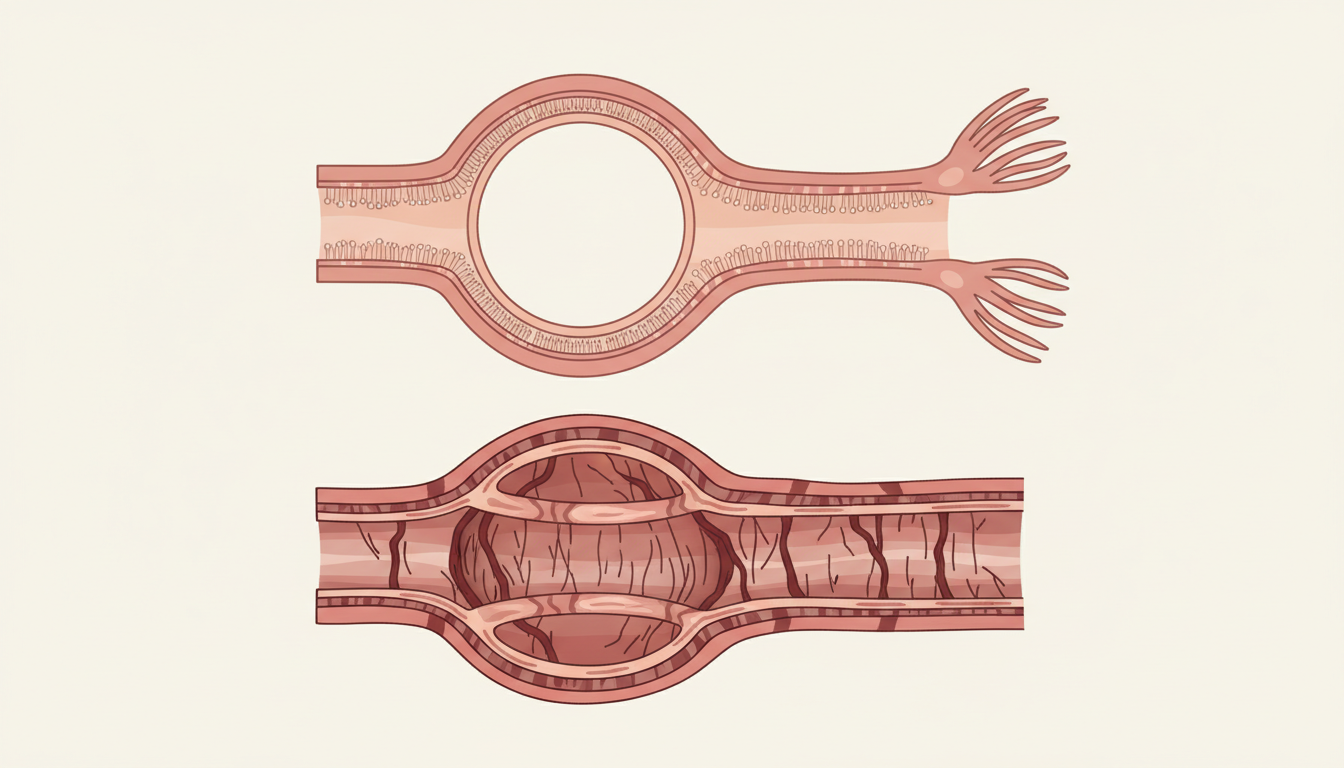
Pelvic inflammatory disease: the link between chlamydia and infertility
Pelvic inflammatory disease, commonly shortened to PID, is the umbrella diagnosis for inflammation and infection of the upper female reproductive tract: the uterus, fallopian tubes, ovaries, and surrounding tissue. Chlamydia is one of the two leading causes of PID, alongside gonorrhea, although roughly half of PID cases involve other bacteria too.
Untreated chlamydia is estimated to progress to PID in roughly 10 to 15 percent of women, a figure widely cited in public health literature on chlamydia complications. The CDC's pelvic inflammatory disease overview describes how that progression scars the fallopian tubes and surrounding tissue. Across a population, hundreds of thousands of PID cases each year trace back to a chlamydia infection that was never caught.
The cruel feature of chlamydia-related PID is that it is frequently subclinical. Classic textbook PID presents with pelvic pain, fever, abnormal discharge, and pain during sex. Chlamydia-driven PID often presents with none of those, or with symptoms so mild they get blamed on a heavy period or a urinary tract infection. The damage continues quietly while the patient and clinician have no signal that something is wrong.
The fertility consequences of PID are well documented. After a single episode of PID, the risk of tubal factor infertility roughly doubles compared with women who never had PID. After two episodes, the risk is meaningfully higher again, and after three or more episodes a significant share of patients have permanently impaired tubes. The risk of ectopic pregnancy also rises substantially, because partially scarred tubes can let a sperm and egg meet but cannot transport a developing embryo back to the uterus.
This is the central reason public health guidance puts so much weight on routine chlamydia screening in young women. Screening interrupts the chlamydia-to-PID-to-infertility pipeline at the earliest, most treatable stage.
Many women with chlamydia-driven PID do not develop classic pelvic pain or fever. Vague lower-abdominal discomfort, spotting between periods, or pain only during deep penetration can be the only signs. If you have any of these and have not been screened recently, ask a clinician about chlamydia and gonorrhea testing rather than waiting for the symptoms to escalate.
What chlamydia actually does to egg quality
Egg quality is a clinical shorthand for the biological readiness of an oocyte to be fertilized and develop into a healthy embryo. It depends on the genetic integrity of the egg, the energy capacity of its mitochondria, the surrounding follicular fluid, and the hormonal environment that prepared it for ovulation. Individual egg DNA stays intact during a chlamydia infection. What chlamydia disrupts are the supporting systems an oocyte depends on: follicular fluid quality, inflammatory cytokine balance, and the oxidative environment around the developing egg.
Inflammatory cytokines reach the ovary
When the upper genital tract is inflamed, immune cells release signaling proteins called cytokines. These molecules travel locally and can reach the ovaries through the peri-ovarian tissue. Chronic exposure to inflammatory cytokines has been shown to interfere with normal follicle development, the slow process by which a small population of immature eggs matures and one is selected for ovulation each cycle. Disrupted follicle development can mean fewer mature eggs released and a less hospitable follicular fluid environment for the eggs that do develop.
Oxidative stress damages oocyte mitochondria
Chronic infection generates reactive oxygen species, unstable molecules that damage cell membranes, proteins, and DNA when they outpace the body's antioxidant defenses. Oocytes are especially sensitive because they rely on a fixed set of mitochondria to power fertilization and the first days of embryo development. Oxidative damage to mitochondrial DNA cannot be repaired, so any losses are essentially permanent for that egg. Studies of women with chronic genital infections have documented elevated oxidative stress markers in follicular fluid, which is one of the proposed mechanisms by which chlamydia chips away at egg quality over time.
Hormonal signaling can be disrupted
Ovulation depends on a precise sequence of hormonal signals between the brain and the ovaries. Significant pelvic inflammation can interfere with this signaling, leading to irregular cycles, missed ovulations, or shortened luteal phases that make implantation harder. Most of this disruption is reversible once the infection is cleared, but it can delay conception during the months a woman is actively trying.
Accelerated ovarian aging
A growing body of research suggests that chronic inflammation, from any source, may accelerate the natural decline of the ovarian reserve. The ovarian reserve refers to the pool of remaining eggs a woman has, and it shrinks steadily with age. Chronic chlamydia exposure is one of several environmental stressors that may push that decline forward by months or years. The clinical signal is subtle and hard to attribute to any single cause, but it is consistent with what we see at the cellular level.
| Mechanism | Effect on ovarian and egg health | Reversibility after treatment |
|---|---|---|
| Cytokine-driven inflammation | Disrupts follicle development and the ovulatory environment | Largely reversible if the infection is treated early |
| Oxidative stress | Damages oocyte mitochondria and follicular fluid quality | Partial recovery; some oocyte-level damage is permanent |
| Hormonal signaling disruption | Irregular cycles and missed ovulations | Reversible within a few cycles after treatment |
| Tubal scarring (peri-ovarian extension) | Mechanical block, ectopic pregnancy risk | Often permanent; surgical repair is sometimes possible |
Fertility outcomes: ectopic pregnancy, miscarriage, and IVF success
The mechanisms above translate into measurable differences in real-world fertility outcomes for women with a history of chlamydia, especially untreated chlamydia. The actual numbers help clarify how much that history matters.
Tubal factor infertility
Tubal factor infertility, where damaged or blocked fallopian tubes prevent conception, accounts for roughly a quarter to a third of female infertility cases evaluated in fertility clinics. Chlamydia is by far the leading infectious cause. The clinical pattern is characteristic: a woman in her late twenties or thirties with no obvious gynecologic history undergoes a hysterosalpingogram (HSG) as part of a fertility workup, and the imaging reveals tubal blockage that traces back to a chlamydia infection she may not even remember having.
Ectopic pregnancy
An ectopic pregnancy implants outside the uterus, most commonly in a fallopian tube, and is dangerous because the tube cannot stretch to accommodate a growing embryo. Women with prior chlamydia, particularly those who developed PID, have a substantially higher lifetime risk of ectopic pregnancy. Even partial tubal scarring can let a fertilized egg make it part way down the tube and then stall.
Miscarriage
Past chlamydia and miscarriage share a murkier statistical relationship than tubal disease does. Some studies report a modestly higher miscarriage rate in women with prior chlamydia exposure, particularly in those with documented PID. The proposed mechanism is a combination of altered uterine lining receptivity and lower-grade chronic inflammation. The effect, where present, is modest compared with stronger predictors like maternal age, body mass index, and chromosomal abnormalities.
IVF outcomes
Women with prior chlamydia or PID who pursue in vitro fertilization (IVF) tend to have lower per-cycle success rates than age-matched women without that history, primarily because of compromised tubal status (which is bypassed by IVF) and reduced endometrial receptivity (which is not). Hydrosalpinx, a fluid-filled blocked tube that is often a chlamydia legacy, specifically reduces IVF success and is sometimes treated by removing or clipping the affected tube before transfer.
None of this is a verdict. Many women with a chlamydia history go on to have entirely normal pregnancies. A documented history is, however, a useful piece of information when planning ahead, and it strengthens the case for catching any current infection before it has a chance to add to whatever damage may already exist.
If left untreated, chlamydia can lead to pelvic inflammatory disease, which can result in long-term complications including infertility, ectopic pregnancy, and chronic pelvic pain.
Who should test, when, and how
Because chlamydia is usually symptomless, the entire prevention strategy rests on routine screening rather than symptom-driven testing. The U.S. Preventive Services Task Force and the CDC both recommend annual chlamydia screening for all sexually active women under age 25, and for women 25 and older with risk factors such as a new partner, multiple partners, or a partner with a known infection. Pregnant women should be screened at their first prenatal visit, and again in the third trimester if they are at higher risk.
Window period: how soon you can test
Chlamydia tests detect bacterial DNA or surface antigens, not antibodies, so the test becomes accurate fairly quickly after exposure. A reasonable rule of thumb is to wait about 1 to 2 weeks after a possible exposure for a clinical NAAT (nucleic acid amplification test) and roughly 14 days for a home rapid lateral-flow swab. Testing too early can produce a false negative if the bacterial load has not yet built up enough to detect.
What lab tests look like
The reference standard for chlamydia testing in clinics is a NAAT. The sample can be a vaginal swab (preferred and slightly more sensitive than urine), a cervical swab collected during a pelvic exam, or a first-catch urine sample. NAAT is highly sensitive and highly specific, and it is what most public-health screening programs use.
What home rapid tests cover
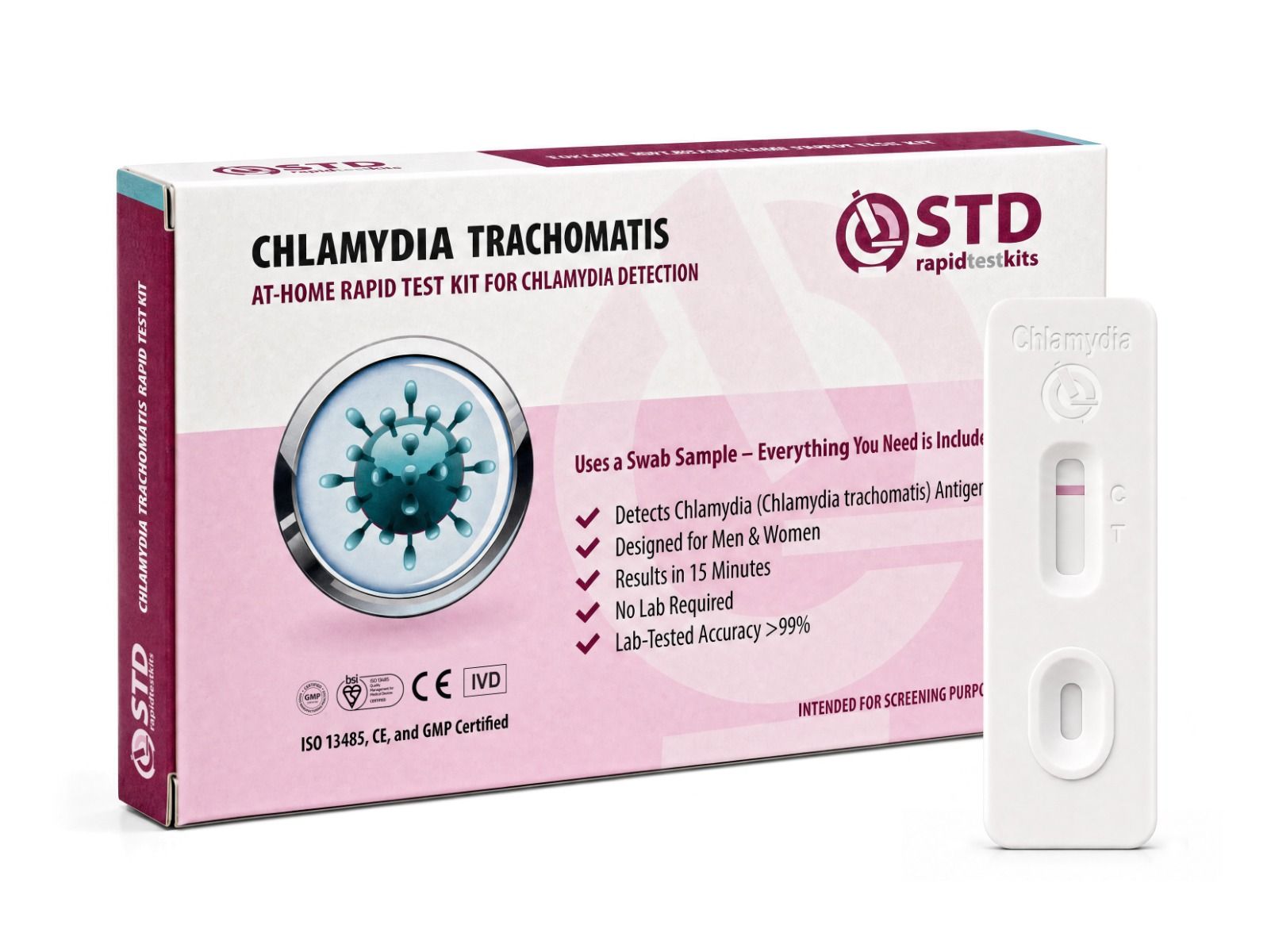
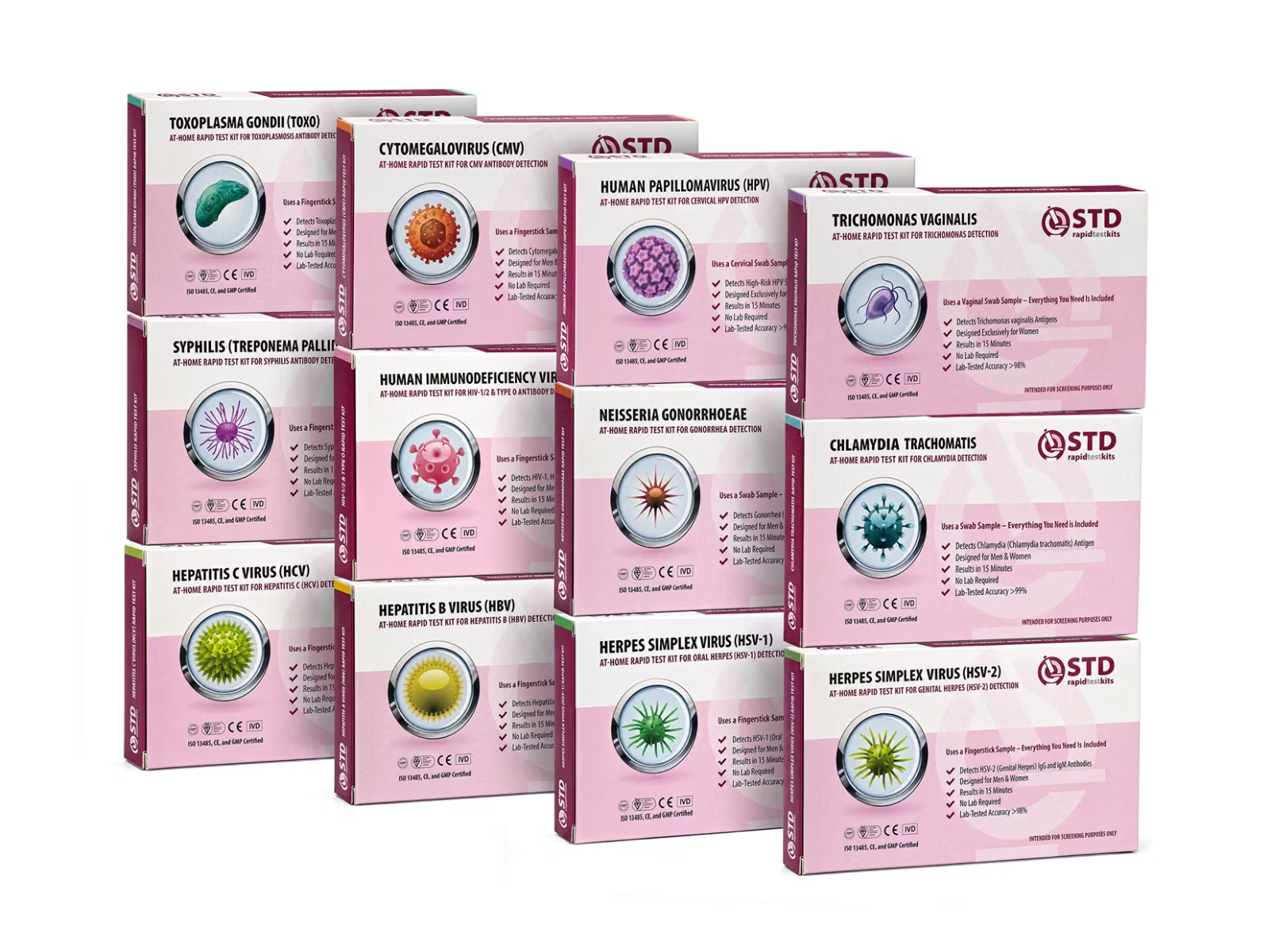
At-home rapid tests for chlamydia use lateral-flow chemistry on a self-collected vaginal swab. They give a result in about 15 minutes without a lab visit. They are excellent screening tools because privacy and convenience remove the biggest barrier to actually testing, which is showing up. They are not a perfect substitute for laboratory NAAT in terms of analytical sensitivity, so a positive home result is worth confirming with a clinician, and a negative result with ongoing concerning symptoms still warrants a clinic visit.
For an ongoing screening strategy, the most useful framing is: NAAT for definitive testing, lateral-flow at home for routine screening between clinic visits or any time something feels off.
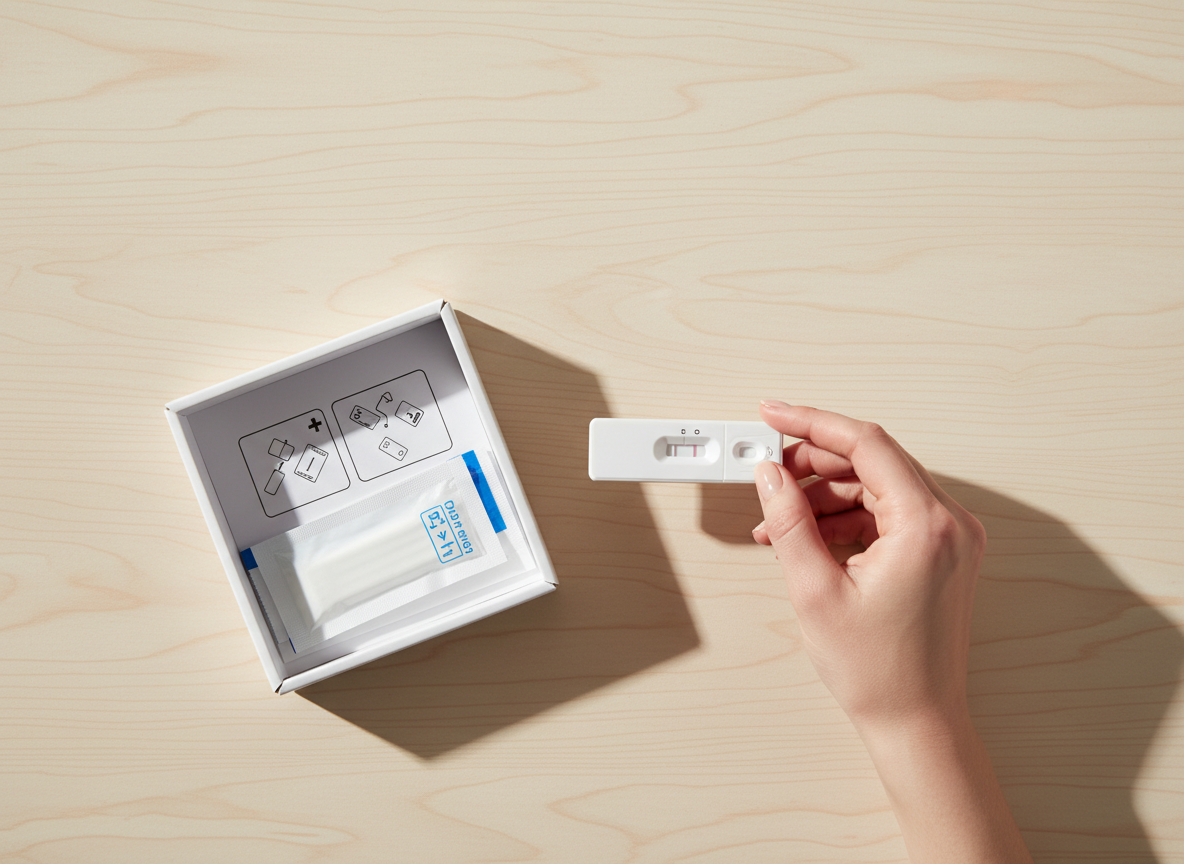
The combination that works best for most readers is to anchor an annual NAAT through a primary care visit and use a home rapid test in between, especially after a new partner or any concern. The home swab is uncomplicated. You collect a vaginal sample yourself with a soft swab, transfer it to the developer solution provided in the kit, place a few drops on the test cassette, and read the result at the indicated time. The privacy and speed are the point: a test you actually take is more useful than a clinic appointment you keep meaning to schedule.
Disclosure: this site sells at-home rapid STI testing kits; the product links below go to our store.
Treatment in 2026 and what to do after
Chlamydia is, biologically, a straightforward infection to cure. The 2021 CDC STI treatment guidelines, which remain the current standard, recommend doxycycline 100 mg taken twice daily for 7 days as the first-line treatment for uncomplicated genital chlamydia in non-pregnant adults. Azithromycin as a single 1-gram dose is now a second-line option for situations where doxycycline is not appropriate, such as in pregnancy, where azithromycin remains the preferred regimen.
Doxycycline replaced azithromycin as first-line because newer evidence showed a meaningfully higher cure rate, particularly for rectal chlamydia, and a lower relapse rate. The week-long course is harder logistically than a single dose, and the trade-off in cure rate is worth it.
Treat the partner, every time
One round of treatment for one partner does not break the cycle if the other partner is reinfecting them. Both U.S. and U.K. guidelines recommend that all sexual partners from the past 60 days be tested and treated, regardless of their own test result. Many U.S. states allow expedited partner therapy, where the diagnosed patient takes a prescription home for their partner, removing the friction of getting the partner to the clinic.
Wait before having sex again
Avoid sex for a full 7 days after a single-dose regimen and until the 7-day course is finished and all partners have been treated. The bacteria can still be transmitted during early treatment.
Re-test in three months
This is the step that gets skipped most often. The CDC recommends re-testing about three months after treatment. Reinfection from an untreated partner or a new contact is common during that window, so the three-month re-test catches a second infection before it has time to add to whatever inflammation the first one started.
Antibiotics eliminate the chlamydia bacteria reliably. Fallopian tube scarring is structural tissue damage that persists after the bacteria are gone, which is why earlier testing protects more of the reproductive system than later testing does.
Protecting future fertility after a chlamydia diagnosis
If you have been treated for chlamydia and are thinking ahead about pregnancy, the practical steps fall into three categories: preventing reinfection, supporting general reproductive health, and knowing when to seek a fertility evaluation.
Prevent reinfection
The single most important factor in long-term fertility outcomes after chlamydia is not getting reinfected. Each new infection is another inflammatory event with the potential to add scarring. Consistent condom use, mutual testing with new partners before unprotected sex, and the three-month re-test after any treated infection are the practical pillars. If you are in a relationship with multiple partners on either side, an annual or twice-yearly screening schedule is reasonable.
Support general reproductive health
The lifestyle factors that protect ovarian reserve and egg quality in the general population are the same ones that help after a chlamydia infection: not smoking, maintaining a healthy weight, getting adequate folate and other micronutrients, managing chronic stress, and limiting alcohol. None of these undo structural damage, but they protect the eggs you have from additional cumulative wear.
Know when to seek a fertility evaluation
If you have a documented history of chlamydia or PID and have been trying to conceive for 6 to 12 months without success (12 months under 35, 6 months over 35), it is reasonable to ask for a fertility evaluation sooner than the standard timeline rather than later. Useful tests in this scenario include a hysterosalpingogram (HSG) to assess tubal patency, an antral follicle count via ultrasound, and an anti-Müllerian hormone (AMH) blood test for ovarian reserve. These are diagnostic tools, not predictions; many women with prior chlamydia have completely normal results.
If you are planning pregnancy in the next year or two
Get a current chlamydia screen, treat any active infection, complete the three-month re-test, and consider a baseline ovarian reserve check if you are over 32. None of this is alarmist. It is the same workup any thoughtful preconception consultation would offer, just with the awareness that a past chlamydia history shifts the prior probability of finding something worth addressing.
Frequently asked questions
- Does chlamydia change the DNA inside my eggs?
- Chlamydia works on fertility through three pathways: inflammation that disrupts how follicles mature, oxidative stress that degrades the follicular fluid your eggs develop in, and structural scarring that can block the fallopian tube. The genetic code inside an individual oocyte is not altered. What changes is the surrounding environment, and that environment is what determines whether the egg can be fertilized and develop normally.
- If I had chlamydia years ago and was treated, am I still at risk for infertility?
- It depends on whether the infection caused PID before treatment. A short, promptly treated infection rarely leaves lasting damage. A longer, undiagnosed episode that progressed to PID before antibiotics were started can leave permanent tubal scarring even after the bacteria are gone. If you are concerned, a hysterosalpingogram is the standard imaging test to assess tubal patency.
- Can chlamydia cause infertility in men?
- Yes, although less commonly than in women. Untreated chlamydia in men can cause epididymitis, inflammation of the tube behind the testicle that stores and transports sperm, and severe or repeated cases can affect sperm quality and motility. On routine screening, U.S. guidance differs by sex: annual screening is specifically recommended for sexually active women under 25, while the U.S. Preventive Services Task Force concludes that current evidence is insufficient to recommend routine chlamydia screening for men across the board. Men who have sex with men should be tested at all exposed anatomical sites at least annually, and any man with symptoms or a known exposure should test regardless of routine-screening status.
- How soon after exposure can chlamydia be detected?
- 14 days is the practical minimum for a home rapid swab. Clinic NAAT can detect the infection a few days earlier, from around day 7 to 10, because it is more analytically sensitive. Testing in the first week after exposure is likely to miss an early infection with either method, so if you test negative before day 10 and still have concerns, retest at two weeks.
- I have no symptoms. How do I know I should test?
- You almost certainly will not know from symptoms, which is exactly why screening is the strategy. Annual screening is recommended for all sexually active women under 25, and for women 25 and older with a new or non-monogamous partner. Anyone whose partner tests positive should also be tested regardless of symptoms.
- What does treatment look like in 2026?
- First-line treatment for uncomplicated genital chlamydia is doxycycline 100 mg by mouth twice daily for 7 days, per the CDC's 2021 STI treatment guidelines (still current). Azithromycin 1 g as a single dose is the alternative when doxycycline is not appropriate, including in pregnancy. Avoid sex for 7 days after treatment is complete and until any partners have been treated.
- Should my partner be treated even if they test negative?
- Yes, current guidelines recommend treating all partners from the past 60 days regardless of their own test result, because false negatives and very early infections can occur. Many U.S. states allow expedited partner therapy, where your clinician sends home a prescription for your partner.
- If I'm planning pregnancy and had chlamydia in the past, what should I do first?
- Get a current screening test to confirm you are infection-free, complete the three-month re-test if you were recently treated, and discuss a baseline preconception workup with your clinician. If you are over 35 or have been trying to conceive for several months, asking for a fertility evaluation that includes tubal imaging and ovarian reserve testing is a reasonable next step.
- U.S. Centers for Disease Control and Prevention. Chlamydia overview, including symptoms, transmission, complications, and screening recommendations.
- U.S. Centers for Disease Control and Prevention. Pelvic inflammatory disease overview, including how PID damages the fallopian tubes and surrounding reproductive tissue and why it is a leading cause of infertility.
- U.S. Centers for Disease Control and Prevention. STI Treatment Guidelines 2021, including the first-line doxycycline regimen for uncomplicated chlamydia and partner-management recommendations.
- U.S. Preventive Services Task Force. Chlamydia and gonorrhea screening recommendations for sexually active women, and the insufficient-evidence determination for routine screening of men.
- National Health Service (UK). Chlamydia symptoms, testing, treatment, and complications including infertility and ectopic pregnancy.
- World Health Organization. Sexually transmitted infections fact sheet, including global chlamydia incidence and reproductive health consequences.
