When Should You Change HIV Medications If You're Undetectable?
Undetectable on your HIV medicine but wondering whether a newer pill, a once-monthly injection, or fewer side effects might be better? A switch can make sense for some people. It also has real risks if your treatment history isn't checked first. This guide covers the good reasons to change, the weaker ones, and what your clinician reviews before anything changes.



- If your HIV medicine keeps you undetectable and you tolerate it well, you usually don't need to switch.
- Side effects, drug interactions, and trouble taking every dose are valid reasons to ask about a change, but only after your clinician has reviewed your full treatment and resistance history.
Published: October 2026 | Last updated: October 2026 | Editorial review and quality control: Martina N.
Should you change HIV medicines if you're undetectable?
Usually only when there's a clear reason: side effects, a drug interaction, a health change, or a regimen that's hard to stick with. If your current medicine works and you tolerate it well, staying on it is often the safest choice. Any switch should be planned with your HIV clinician, never on your own.
Medically reviewed by Aikaterini Maragkou, MD.
Reaching an undetectable viral load is the main goal of HIV treatment. Once you're there, it's natural to wonder whether to keep things exactly as they are or try something newer. Friends may mention a single-pill option. Ads talk about injections every one or two months. Or a side effect you've lived with for years may finally seem worth raising.
Most people can get HIV under control within six months, according to the CDC's HIV treatment page. The NHS gives a similar timeline: on daily medicines, it usually takes around 6 months for the virus to be undetectable. After that, the job is to keep it under control. Changing medicines can help with that, or it can put it at risk, depending on why you switch and how carefully the switch is planned.
Key Takeaways
- If your HIV medicine keeps you undetectable and you tolerate it well, you usually don't need to switch.
- Side effects, drug interactions, and trouble taking every dose are valid reasons to ask about a change, but only after your clinician has reviewed your full treatment and resistance history.
What does an undetectable viral load mean for your treatment?
Your viral load is the amount of HIV in your blood. HIV medicine stops the virus from making copies of itself. When treatment works, viral load drops so low that standard tests can't measure it. That's what "undetectable" means. The virus is still in the body, which is why treatment continues for life.
An undetectable result also protects your partners. The CDC states that if you have an undetectable viral load, you will not transmit HIV through sex, a principle known as Undetectable = Untransmittable, or U=U (CDC). The World Health Organization says the same in its HIV fact sheet.
Because of this, a regimen that keeps you undetectable is valuable. It protects your immune system, your long-term health, and your partners. Any change has to keep that protection in place from the first day of the new medicine.
Why a working regimen is worth protecting
- The NHS notes it usually takes around 6 months on daily medicine for the virus to become undetectable.
- People who stay undetectable on treatment will not pass HIV to sexual partners, per CDC and WHO guidance.
- Skipping doses, even occasionally, lets HIV multiply and raises the risk of drug resistance, according to NIH HIVinfo.
- Resistance to one medicine can reduce how well other drugs in the same class work, which narrows future treatment options.
When is it a good idea to change HIV medicines?
Changing HIV medicines while you're undetectable is common and can be done safely. Clinicians usually call it "optimizing" or "simplifying" a regimen, and it tends to come up for one of five reasons.
Side effects. Serious side effects from HIV medicines are rare but possible, according to NIH HIVinfo. The same page says it may sometimes be necessary to change HIV medicines to stop a side effect, and that providers can often adjust treatment so you can stay on it. Ongoing nausea, sleep problems, mood changes, kidney or bone concerns, or changes in weight or cholesterol are all worth raising.
Drug interactions. Starting a new medicine for another condition can change how your HIV medicine works, or the other way round. NIH HIVinfo notes that some HIV medicines may make hormonal birth control less effective. Heart, seizure, tuberculosis, and acid-reflux medicines, as well as some supplements, can also cause problems.
Trouble taking every dose. If a large pill count, food rules, or twice-daily dosing makes it hard to stay on track, a simpler regimen may protect your viral load better than the current one.
New health conditions. Kidney disease, liver disease, heart risk, or bone thinning can make some medicines a poorer fit than they were when you started.
Cost or access. Insurance changes, moving countries, or supply problems sometimes force a change. These are practical reasons, and the same safety checks apply.
| Reason to consider a switch | What it can look like | Typical next step |
|---|---|---|
| Side effects | Ongoing nausea, poor sleep, mood changes, lab changes in kidney or lipid tests | Clinician reviews whether a different drug in the same or another class would fit |
| Drug interaction | Starting a new heart, seizure, TB, or birth-control medicine | Clinician and pharmacist check interactions; dose change or switch if needed |
| Hard to take every dose | Missed doses, food rules, several pills a day | Discuss a simpler regimen or long-acting option |
| New health condition | Kidney, liver, bone, or heart concerns | Choose medicines with a better safety profile for that condition |
| Cost or access | Insurance change, moving, supply gaps | Find an equally effective regimen that's available to you |
Which reasons usually aren't enough on their own?
Some reasons to switch sound convincing but don't hold up well when your current medicine is working and you feel fine. Hearing that a newer pill or injection exists is the most common one. NIH HIVinfo cautions that switching regimens may lead to drug resistance that could limit future treatment options, so a change needs a benefit that outweighs that risk.
Questions about newer options are welcome at any routine visit. Bring them up, and let the decision rest on your treatment history, your health, and what you want from treatment day to day.
Common beliefs about switching HIV medicines
Myth: Once I'm undetectable, I can stop or pause my medicine for a while.
Fact: Undetectable means treatment is working. NIH HIVinfo warns not to cut down, skip, or stop HIV medicines without talking to your provider, because HIV can rebound and develop resistance.
Myth: If I'm undetectable, any HIV regimen will keep me that way.
Fact: Resistance can develop over time or be passed from person to person, and it can weaken several drugs in the same class. Clinicians review every past regimen and resistance test so the new medicines match your virus.
Myth: Being offered a switch means my treatment has failed.
Fact: Many switches in people who are undetectable are planned changes for side effects, interactions, or easier dosing. NIH HIVinfo notes it may sometimes be necessary to change medicines just to stop a side effect.
What does your clinician check before changing your regimen?
A safe switch depends on details that aren't visible in a single lab result.
Your full treatment and resistance history. Drug-resistance testing identifies HIV mutations that can affect how well certain medicines will work, according to NIH HIVinfo. Your clinician reviews past regimens and resistance results because earlier mutations can limit which medicines will work now. If you've been treated at more than one clinic or in another country, bring any records you have.
Hepatitis B status. About 10% of people with HIV in the United States also have hepatitis B, and some HIV medicines, such as tenofovir alafenamide, treat both infections (NIH HIVinfo). If a switch removes a medicine that was also controlling hepatitis B, the liver infection can become active again. Your clinic will check hepatitis B blood tests before any change. If you simply want to know your status in the meantime, an at-home hepatitis B test can screen privately, but your clinic's lab results are what guide the switch.
Every other medicine and supplement you take. Include over-the-counter antacids, vitamins with iron, calcium, or magnesium, and herbal products.
Pregnancy plans. Many people assume pregnancy means changing HIV medicine. NIH says most HIV medicines are considered safe during pregnancy, and an effective regimen used before pregnancy should generally be continued throughout it (NIH HIVinfo). Sometimes a regimen does change, so tell your clinician early if you're planning a pregnancy or might be pregnant.
This article is published by stdrapidtestkits.com, which sells at-home STI testing kits. We recommend a product only when it fits the concern a reader is asking about.
Don't stop, skip, or cut back on HIV medicine while you wait to discuss a switch, even if a side effect is bothering you. NIH HIVinfo advises always speaking to your provider before stopping. If a side effect feels severe, such as a rash with fever, yellowing skin or eyes, or trouble breathing, get urgent medical care.
Are long-acting HIV injections a reason to switch?
For some people, yes. Long-acting injectable treatment replaces daily pills with clinic injections. NIH HIVinfo lists Cabenuva, a combination of cabotegravir and rilpivirine, as given every one or two months, and notes that most long-acting HIV medicines start with a short period of pills called an oral lead-in (NIH HIVinfo).
Injections can help people who find daily pills stressful, want more privacy at home, or struggle to take tablets on time. They also come with trade-offs. You need to keep regular injection appointments, because late doses can let drug levels fall. Your resistance history also matters, since the medicines in the injection have to be fully active against your virus. Ask your clinician whether you're a good candidate and what the visit schedule would look like.
If a daily HIV treatment regimen is working effectively and is tolerable, switching may not be necessary.
Should you ask about switching? A quick self-check
Use the steps below to sort out whether a switch conversation makes sense now or can wait for your next routine visit. They're meant to prepare you for that conversation. Only your HIV care team can decide on a change, because the decision depends on lab results and history that a checklist can't see.
Is it time to talk about changing HIV medicines?
Has a recent viral load test come back detectable, or have you been missing doses?
Yes: Contact your clinic promptly. A detectable result needs a different workup, including possible resistance testing, before any routine switch.
Are side effects affecting your health or making it hard to take every dose?
Yes: Book a visit to discuss a switch. Keep taking your current medicine until a new plan is in place.
Are you starting a new medicine, planning a pregnancy, or managing a new health condition?
Yes: Ask your clinician and pharmacist to review interactions and fit. A dose change or regimen switch may be needed.
Is pill count, dosing schedule, or cost making treatment hard to stick with?
Yes: Ask whether a simpler regimen or a long-acting option fits your resistance history.
No: If you're undetectable and feel well, staying on your current regimen is usually the safest choice. Review it at routine visits.
Guidance only. Your HIV clinician makes the final decision based on your labs and treatment history.
What happens after you switch?
Your clinician will schedule a viral load test soon after the change to confirm you're still undetectable, along with any blood tests linked to the reason for switching, such as kidney or liver checks. Take the new medicine exactly as prescribed, and ask what to do if you miss a dose, since the rules differ between medicines.
Tell your clinic about new side effects, even mild ones, so your team can decide whether they need attention. If the follow-up viral load comes back detectable, your team will look at adherence, interactions, and resistance before deciding what to do next.
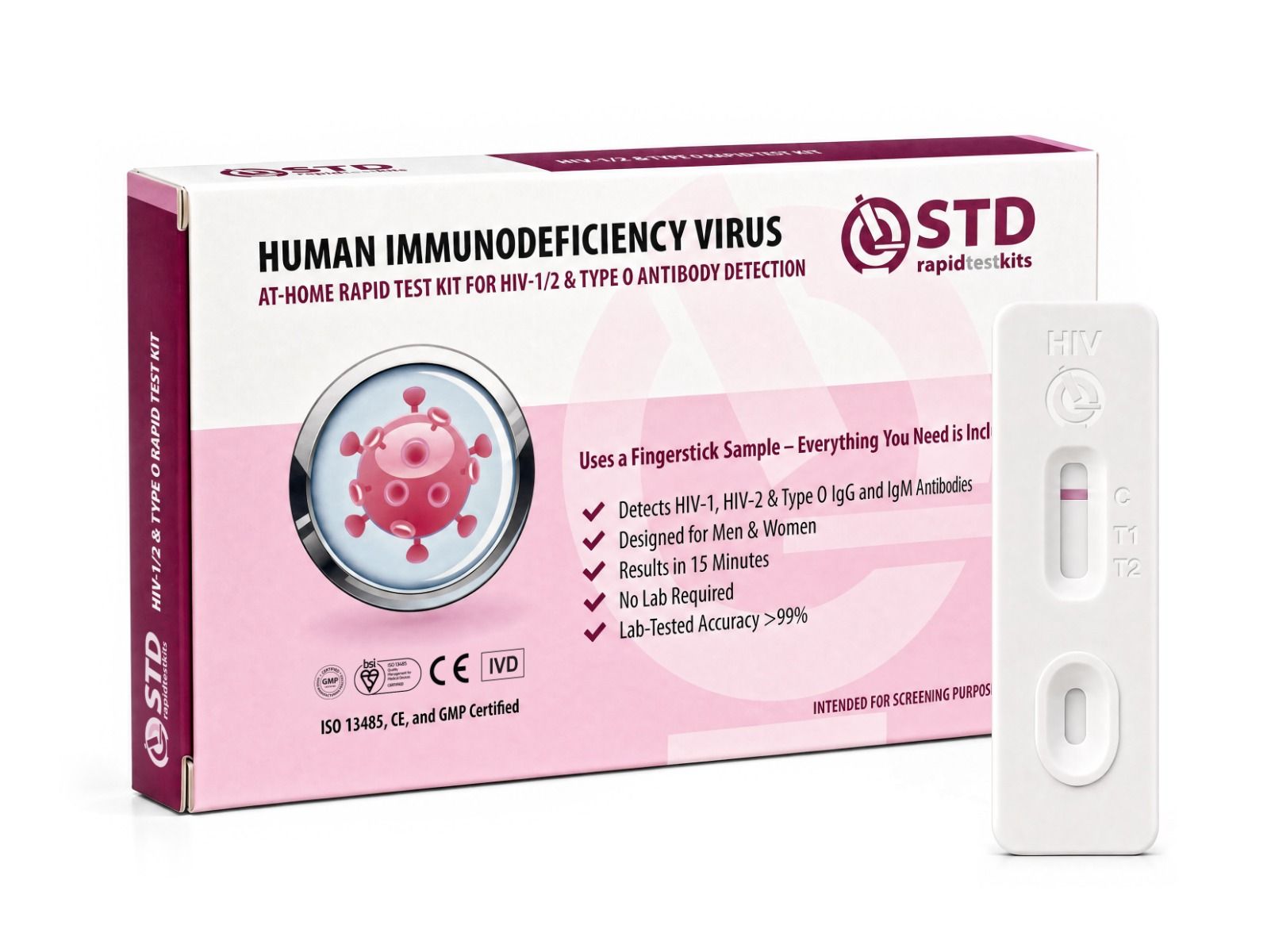
During a switch, partners sometimes worry about their own risk. While you stay undetectable, the CDC states you will not transmit HIV through sex. Some partners still choose to check their own HIV status as part of routine sexual health care, especially if they have other partners or haven't tested before. A home fingerstick test is one private way to do that.
FAQs
- Do I need to change HIV medicines if I'm undetectable?
- Not usually. A regimen that keeps you undetectable without troublesome side effects is generally worth keeping. Side effects, interactions, new health issues, or dosing problems are the usual reasons to raise a change with your clinician.
- Can switching HIV medicines cause drug resistance?
- It can if the new regimen isn't fully active against your virus. That's why clinicians review every earlier regimen and resistance test result before a switch, and why NIH HIVinfo cautions that switching may lead to resistance.
- Will I still be undetectable after switching?
- A carefully planned switch is designed to keep you undetectable. Your clinic will check your viral load soon after the change to confirm it, and will look into the cause quickly if the result is detectable.
- Can I stop my HIV medicine while I wait to switch?
- No. Keep taking your current medicine until your clinician starts the new one. NIH HIVinfo warns that even occasionally skipping doses can let HIV multiply and become resistant.
- Do I need to switch HIV medicines if I get pregnant?
- Often not. NIH says an effective regimen used before pregnancy should generally continue throughout pregnancy, though some regimens are adjusted. Tell your clinician as early as you can.
- How often are long-acting HIV injections given?
- Injections only work if you keep every clinic appointment, since late doses let drug levels fall. Cabenuva is scheduled every one or two months, per NIH HIVinfo, and your clinician will check your resistance history before you start.
- Why does hepatitis B matter when changing HIV medicines?
- Hepatitis B can flare if a medicine that was quietly controlling it is dropped. Some HIV drugs treat both infections, so your clinic checks hepatitis B blood tests and plans for it before any switch.
- Can my partner get HIV from me during a medication switch?
- Not through sex while you stay undetectable, per CDC and WHO. Keep taking your medicine as prescribed and attend your follow-up viral load test so you know you're still undetectable.
- U.S. Centers for Disease Control and Prevention. Treating HIV: undetectable viral load, Undetectable = Untransmittable, and most people getting HIV under control within six months.
- World Health Organization. HIV and AIDS fact sheet: people on ART with an undetectable viral load will not transmit HIV to sexual partners.
- NHS. HIV and AIDS: daily antiretroviral treatment and the roughly 6 months it usually takes to become undetectable.
- NIH HIVinfo. HIV Medicines and Side Effects: changing medicines to stop a side effect and not stopping without provider advice.
- NIH HIVinfo. Drug Resistance: what resistance testing identifies, how skipped doses raise resistance risk, and how resistance can affect several drugs in a class.
- NIH HIVinfo. Long-Acting HIV Medicine: Cabenuva dosing every one or two months, oral lead-in, and the resistance risk of switching a working regimen.