
Published: October 2025 | Last updated: May 2026 | Editorial review and quality control: Martina N.
Yes, you can pick up both a UTI and an STD from the same partner during the same encounter. The two infections come from different organisms, but sex creates the conditions that let both take hold at once. Friction near the urethra. New bacteria from skin, fingers, or genitals. Body fluids that may carry chlamydia, gonorrhea, or trichomoniasis. None of these need a long sexual history to land. One night with one person can do it.
The complication is that UTIs and several STDs cause overlapping symptoms. Burning when you pee. Pelvic pressure. Frequent urgency. A clinician handing out antibiotics for a presumed UTI may quiet the bladder while leaving an untreated STD running underneath. That is why the safest move, when symptoms come on after sex, is to test for both rather than guess between them.
This guide walks through how the two infections overlap, why one round of antibiotics often is not enough, when to retest, and what to do if your partner swears they are clean but your body says otherwise.
Key Takeaways
- Sex can trigger a UTI and transmit an STD at the same time. They are different infections but they share the same opportunity.
- Standard UTI antibiotics like nitrofurantoin and trimethoprim do not treat chlamydia or gonorrhea. If symptoms persist after treatment, retest for both.
Why UTIs and STDs share the same conditions
One infection does not cause the other. They simply thrive in the same environment. Friction during sex can push bacteria from the skin, fingers, or anus toward the opening of the urethra. At the same time, body fluids exchanged during sex can carry organisms responsible for chlamydia, gonorrhea, or trichomoniasis. The two events happen together because the conditions are shared, not because one triggers the other.
A urinary tract infection most often starts when bacteria like E. coli reach the urethra and travel up to the bladder, per Mayo Clinic guidance on UTIs. Sex makes that journey easier because of friction and the proximity of the urethra to the vaginal opening or anus. If a partner also carries an untreated STD, the same encounter can introduce a sexually transmitted organism alongside the gut or skin bacteria that triggered the UTI. Two infections, one event.
Untreated chlamydia and gonorrhea also cause urethritis, the clinical term for inflammation of the urethra, which produces UTI-like symptoms even when no urinary bacteria are present. The CDC's chlamydia overview notes that infection in the urethra often presents with painful urination and discharge that mimic other lower urinary tract problems.
Friction pushes skin and gut bacteria toward the urethra at the same moment that body fluids may carry chlamydia, gonorrhea, or trichomoniasis. Neither pathway requires the other; they share the same opportunity.
When UTI and STD symptoms look identical
The textbook split looks neat: UTIs make it burn to pee, STDs cause discharge or sores. Real life is messier. Painful urination, frequent urgency, and pelvic discomfort are common to both. Trichomoniasis and gonorrhea can produce a constant feeling that the bladder is not fully emptying, which is the classic UTI complaint. And many STDs stay quiet altogether. The CDC notes that most chlamydia infections produce no symptoms at all, which means the only difference between the two diagnoses can be a test result.
The table below maps how often each symptom shows up in a typical UTI versus a typical STD.
| Symptom | UTI | STD (e.g., Chlamydia, Gonorrhea, Trich) |
|---|---|---|
| Burning when peeing | Very common | Common |
| Frequent urination | Very common | Sometimes |
| Urgent bladder pressure | Common | Occasional |
| Vaginal or penile discharge | Rare | Common |
| Pelvic or lower abdominal pain | Sometimes | Common |
| Fever or chills | Possible if UTI spreads to kidneys | Less common |
One encounter, two infections
You do not need a complicated sexual history to end up with both a UTI and an STD. One partner, one night, the right combination of friction and exposure, and you are there. Risk goes up further when condoms are skipped for any portion of sex, when oral or manual play follows or precedes penetration without washing in between, when saliva is used as lubricant, and when nobody pees within an hour or so afterward.
Picture the common pattern. Someone in their twenties hooks up with a new partner. Condoms get used for vaginal sex but not for oral. Two days later they feel pressure in the bladder and a sharp sting mid-stream. They assume UTI, get a quick prescription, take it, and feel mostly better. A month later the partner messages them: positive for chlamydia. The earlier antibiotics did nothing for the chlamydia, which had been quietly settling into the urethra the whole time.
That is the double bind. Chlamydia and gonorrhea both colonize the urethra and produce burning that is identical to a bladder infection, per the CDC STI Treatment Guidelines. The antibiotics most often prescribed for an uncomplicated UTI do not cover those two STDs. So one infection gets quieted, the other simmers, and the reader walks out of the clinic thinking they handled it.
It is also worth flagging the reverse pattern. A partner can be entirely honest about their last test, but their last test may have been before the window period closed, or it may not have included the specific infection now in play.

Why treating one does not always cure the other
Most people leave a clinic visit holding a prescription and assume they are done. The medication for a standard UTI is usually nitrofurantoin or trimethoprim-sulfamethoxazole, and these are excellent at clearing the kind of bacteria that infect the bladder. They are not the right drugs for chlamydia or gonorrhea. Per the CDC STI Treatment Guidelines, gonorrhea requires a separate antibiotic regimen that differs from standard UTI drugs, and chlamydia is treated with doxycycline. Take a UTI antibiotic when you actually have both infections, and only one of them goes away.
The pattern that follows looks like this. Symptoms ease for a few days because the UTI is responding to treatment. Then pelvic pain, abnormal discharge, or pain during sex shows up a week or two later. Many people interpret that as a brand new infection. It usually is not. The STD was there the whole time, untreated, and now it is moving from a quiet phase into a symptomatic one.
The reverse can happen too. Someone treated for chlamydia with doxycycline may notice their bladder symptoms ease, because doxycycline has some activity against the bacteria that cause UTIs. That is a coincidence rather than a cure. If you finished a chlamydia course and your bladder still feels off two weeks later, the UTI may not have been fully treated. The genital and urinary tracts share close real estate but they do not always respond to the same drugs.
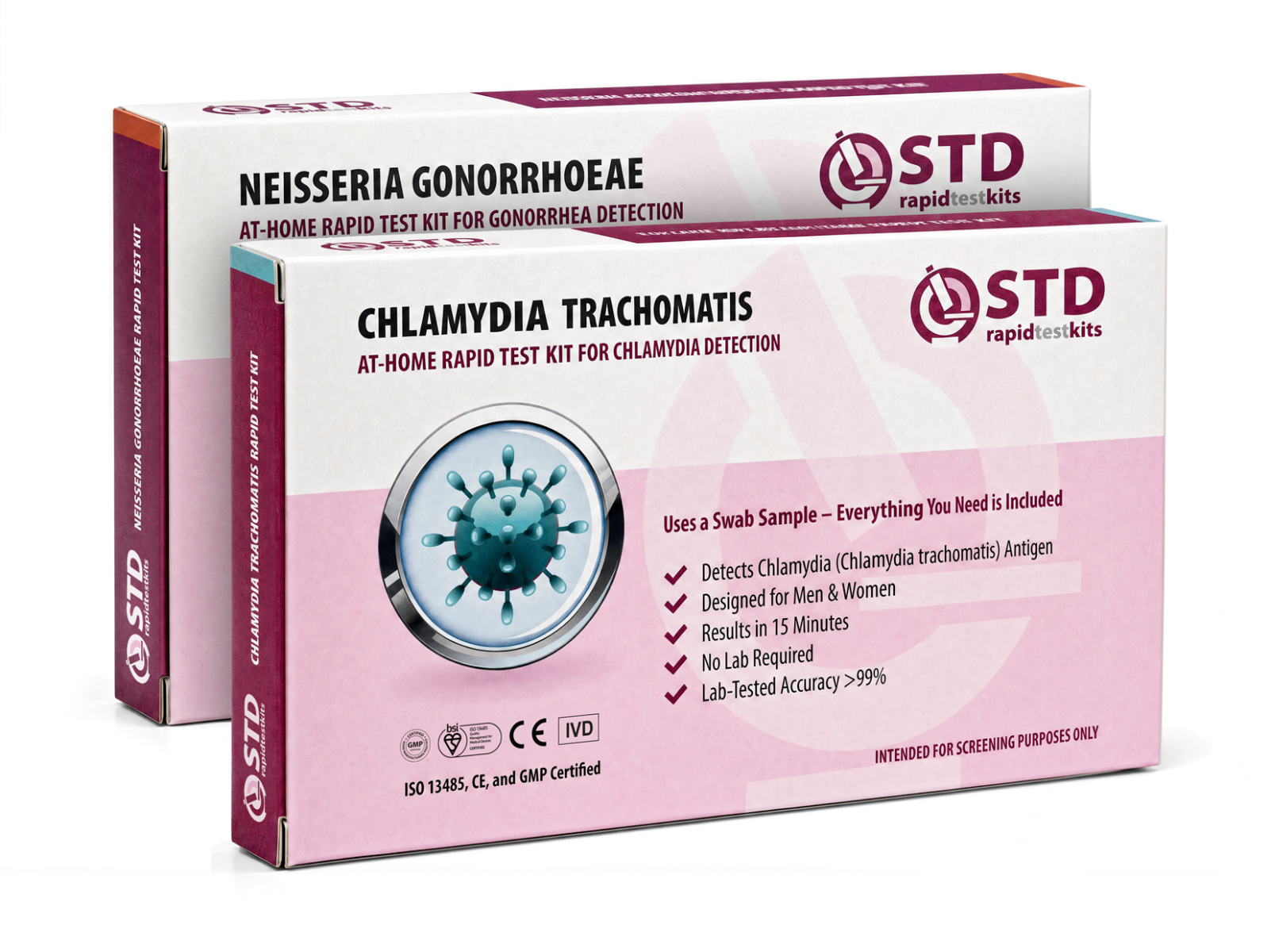
We sell at-home rapid swab kits for chlamydia and gonorrhea; there is one below if you want to screen before or instead of a clinic visit.
When symptoms persist after treatment
One of the most common follow-up complaints in gynecology and urology offices is some version of "I already got treated, but I still feel off." Bladder pressure that does not lift. Burning that returns the next time you have sex. Spotting between periods. Lingering symptoms do not always mean the treatment failed. They often mean something else was missed.
Picture a different scenario: a person in their thirties reports burning during urination plus a low-grade ache in the testicles. The urine culture comes back clean but the doctor prescribes a UTI antibiotic anyway, just in case. The pain quiets briefly and then returns after sex. Only after a full STI panel does gonorrhea turn up. It had been there for weeks, untreated and slowly progressing, hiding behind a UTI label that never quite fit the symptoms.
False negatives complicate the picture too. STD tests have window periods. Take one too soon after exposure and you can come back negative even though you are infected. Test sensitivity depends on how recently the exposure happened and which infection is being checked. Quick urine dipsticks for UTIs can also miss low-level infections, particularly in people with frequent recurrences.
If you finished antibiotics and your symptoms came back, or never went away, the answer is to retest with the right tools. Ask for a full STI panel that explicitly covers chlamydia, gonorrhea, and trichomoniasis. Repeat the urine test if bladder symptoms continue.
If a urine culture comes back clean but symptoms persist, request chlamydia and gonorrhea swab tests before starting another UTI antibiotic course. A second round of UTI drugs cannot fix an STI the first round never targeted.
Day-by-day timeline of dual infection
Symptoms of a UTI and an STD do not always announce themselves on the same day. UTIs flare quickly because the bacteria multiply fast in urine. STDs run on their own incubation periods, which range from a few days for gonorrhea to a couple of weeks for chlamydia. The table below shows the realistic arc of dual infection after the same encounter.
| Day After Sex | What Might Happen | What It Could Mean |
|---|---|---|
| Day 1–2 | Mild burning when peeing, urgency, bladder pressure | Early UTI or urethral irritation; STD may still be incubating |
| Day 3–5 | Symptoms worsen; no discharge yet; possibly a low fever | UTI flaring; STD symptoms may emerge subtly |
| Day 6–10 | Some relief if antibiotics started; pain returns or shifts | Possible misdiagnosis; STD not covered by UTI antibiotic |
| Day 10–14 | Discharge, pelvic ache, or pain during sex appears | Classic STD symptoms emerging after UTI clears |
| 2+ Weeks | Ongoing symptoms, partner notification, or testing prompt | Time for a full STI panel; possible dual infection |
Who is most at risk
Anyone can pick up both a UTI and an STD from the same encounter, but several factors raise the odds. People with vaginas have a shorter urethra, which means bacteria reach the bladder more easily. NHS UTI guidance reflects that anatomy in its higher reported female case rates. Add the possibility of asymptomatic chlamydia or trichomoniasis, and a dual infection becomes easy to miss. The factors below raise the risk of dual infection from a single encounter.
- Sex with a new partner whose recent test history is unclear or incomplete
- Multiple forms of sex (vaginal, anal, oral) without barrier protection
- Using fingers, toys, or body parts between orifices without washing
- Skipping urination within an hour after sex
- A history of recurrent UTIs or untreated STDs
Most people who have chlamydia have no symptoms. If you do have symptoms, they may not appear until several weeks after you have sex with an infected partner.
What to do if you think it is both
Maybe you finished a round of UTI antibiotics and something still feels off. Maybe symptoms came on quickly after a new sexual encounter and that simple-UTI label suddenly seems thin. Either way, when there is a real possibility your symptoms could come from more than one source, the answer is to test for more than one source rather than guess.
The good news is that you do not need to sit in a waiting room or recap your sexual history with a stranger. At-home rapid panels now cover the most common STDs that mimic or overlap with UTIs: chlamydia, gonorrhea, trichomoniasis (the at-home swab is validated for vaginal self-collection only, so men needing a trichomoniasis test should see a clinic), and syphilis. For the urinary side, most telehealth services can order a urine culture or call in a UTI antibiotic without an in-person visit if your history is clear.
If you are managing both a possible bladder infection and a possible STD exposure, testing both is not overcautious. It is the practical move. Ruling out one without the other leaves the door open to weeks of low-grade symptoms and a later round of pelvic pain or discharge that could have been caught early.
When a partner says they are "clean"
One of the more frustrating situations is the partner who insists they have been tested and the results came back clean. They may even show you a screenshot. But your body is telling a different story: pain, urgency, pressure that did not exist last week. You do not want to accuse them. You also cannot ignore your own symptoms.
Several things can be true at once. A standard STI screen does not always include herpes or trichomoniasis. Many providers do not run chlamydia or gonorrhea testing unless someone asks for it or has symptoms. Window periods matter: a test taken too soon after exposure can return a clean result while the infection is still incubating. And some people equate any blood test with an STI screen, which it usually is not.
A partner being honest and a partner being currently uninfected are not the same thing. Testing now is the way to convert uncertainty into information. It is not blame. It is data.
A negative result is only as reliable as the test that produced it. Standard STI screens often omit herpes and trichomoniasis unless specifically requested, and tests taken before the window period closes can return clean while infection is still incubating.
When to retest
Treatment is not always the end of the story. For chlamydia and gonorrhea, the CDC recommends retesting around three months after treatment, especially in anyone under 25 or with new partners, because reinfection is common. For a UTI, returning symptoms within two weeks may not be a brand new infection but a relapse of the original one that did not fully clear.
Retest also if your symptoms changed character. Burning that became pelvic ache. Bladder urgency that turned into discharge. New genital discomfort that was not there during the first round. These shifts often mean a different organism is now driving things.
Track your timeline. Note when symptoms start, when they ease, when they return.
Retest cadence at a glance
- Chlamydia and gonorrhea: retest about three months after treatment, per CDC guidance, especially under age 25 or with new partners.
- UTI: if bladder symptoms recur within two weeks of antibiotics, return for a urine culture rather than another empiric course.
- If symptoms change character (burning becomes pelvic ache, urgency becomes discharge), book a full STI panel rather than a refill.
You deserve answers, not assumptions
When something feels off after sex, the worst response is to wait and see. UTIs and STDs share so many symptoms that the only reliable difference between them is what a test shows. If you were treated for a UTI and the burning came back, that is a signal to test more broadly. If you were treated for an STD and the bladder pressure persists, that is a signal to recheck the urinary side. Either way, your job is not to figure out which infection it is from symptoms alone. That guess is what gets people stuck.
The path forward is short: test for both, treat what shows up, recheck after the recommended window. That sequence solves more lingering after-sex symptoms than any single round of antibiotics ever will.
- Test for both infections rather than guessing from symptoms alone.
- Treat what shows up, using regimens matched to the actual organism.
- Retest at the recommended interval (three months for chlamydia and gonorrhea; two weeks if UTI symptoms recur).
FAQs
- Can I really get a UTI and an STD from the same hookup?
- Yes. One partner, one encounter, and the right combination of friction and bacterial exposure can give you both. The infections do not cause each other; they simply share the same opportunity.
- Why does it still burn after I took UTI antibiotics?
- UTI antibiotics like nitrofurantoin or trimethoprim-sulfamethoxazole do not treat chlamydia or gonorrhea. If your bladder pain returned within a couple of weeks, an untreated STD is one of the most likely explanations. Test with a panel that covers chlamydia and gonorrhea before assuming the UTI came back.
- My partner says they are negative. Should I still test?
- Yes. A negative result is only as good as the test that produced it. Many routine screens do not cover chlamydia or gonorrhea unless someone asks, and a test taken before the window period closes can return clean even when an infection is present. Testing yourself converts uncertainty into actual information.
- How can I tell the difference between a UTI and an STD?
- Not from symptoms alone. Burning, urgency, and pelvic pressure are common to both. Discharge, pain during sex, or spotting between periods leans more toward an STD, but the only reliable distinction is a test result.
- Can I pass both infections to someone else?
- STDs, yes, especially while untreated. UTIs are not directly contagious, but the bacteria that trigger them can move between bodies through fingers, toys, or oral contact. The practical step is to pause sex until you are tested and, if needed, treated.
- What if I feel fine now? Do I still need to test?
- If symptoms came on after sex and were treated as a UTI without an STD panel, retest anyway. Chlamydia in particular can quiet down without going away, and untreated infections raise the long-term risk of pelvic inflammatory disease and infertility.
- Do condoms prevent this whole situation?
- They reduce the risk significantly but not entirely. Condoms block most STD transmission and reduce some UTI risk, but UTIs can still happen because of friction or skin bacteria, and condom use during oral sex is far less common than during penetration. Consistent use, peeing after sex, and routine testing remains the strongest combination.
- How often should I test if I am sexually active?
- Every three to six months is a reasonable cadence for anyone with new partners, and yearly testing is usually enough for people in long-term mutually monogamous relationships where both partners screened clean after the window period closed. Test sooner if symptoms appear or a partner reports a positive result. After treatment for chlamydia or gonorrhea, the CDC recommends a follow-up test about three months out because reinfection is common.
This article draws on current public-health guidance from the U.S. Centers for Disease Control and Prevention, the U.K. National Health Service, and the Mayo Clinic, then translates it into the situations readers actually face when symptoms appear after sex. Where research on dual-infection rates is limited, we say so rather than imply a stronger evidence base than exists. Nothing here replaces a personal evaluation from a licensed clinician.
- U.S. Centers for Disease Control and Prevention. Chlamydia overview, including symptoms in the urethra, asymptomatic infection, and recommended retesting after treatment.
- U.S. Centers for Disease Control and Prevention. Gonorrhea overview, including symptoms that mimic urinary tract infections and current treatment recommendations.
- U.S. Centers for Disease Control and Prevention. Trichomoniasis overview, including symptoms in people with vaginas and asymptomatic carriage rates.
- U.S. Centers for Disease Control and Prevention. Sexually Transmitted Infections Treatment Guidelines, including specific drug regimens for chlamydia and gonorrhea, screening recommendations, and retesting cadence.
- Mayo Clinic. Urinary Tract Infection (UTI) overview, including risk factors related to sex, female anatomy, and treatment options.
- U.K. National Health Service. Urinary tract infections (UTIs) overview, including who is most at risk and when to seek further testing.
