
Published: August 2025 | Last updated: May 2026 | Editorial review and quality control: Martina N.
Search “Can you die from an STD?” and Google will surface the worst-case outcomes first. In rare, untreated cases, certain sexually transmitted infections can become life-threatening. That outcome is the exception, not the rule. Most STIs today are either curable with a short course of antibiotics or manageable for life with routine medication. The bigger risk for most people is not the infection itself; it is going months or years without knowing they have one.
This article walks through which infections genuinely carry serious risk, what changes when they go untreated for years, what modern treatment in 2026 looks like, and how to figure out where you stand without spiraling. The goal is not to scare you. It is to give you the context that search results usually leave out.
Key Takeaways
- Almost every STI can be cured or managed once you know about it; the dangerous version is the one nobody catches for months or years.
- The infections most likely to cause severe long-term harm (HIV, syphilis, high-risk HPV) are also the ones with the most effective screening and prevention tools available today.
Where the Fear Comes From, and Why It Feels Real
The cultural memory of STIs is stuck in a different era. If you grew up watching news segments about HIV in the 1990s, hearing classroom warnings about untreated syphilis, or seeing dramatic stories online about young people losing fertility, your brain has filed sexually transmitted infections under “potentially deadly” without much updating since.
That filing is not entirely wrong. A handful of STIs really did cause serious illness and death at scale before modern testing and treatment caught up. The cultural fear is built on a real history. The problem is that the medicine has moved much faster than the public conversation about it.
In 2026, the typical course of an STI for a person with access to testing and care looks almost boring. Notice something, get tested, get a result, take a pill or schedule a follow-up, and move on. That story does not get clicks or generate fear, so it rarely shapes what people search up at 2 a.m.
The gap between what the science says now and what the panic feels like is where most of the bad decisions happen. Someone notices a bump or has an exposure, lands on a worst-case article, and avoids testing entirely. Avoidance is what causes harm, because the small window for catching an infection early is the same window most people miss when they freeze.
The version of these diseases that lives in our cultural memory predates antiretrovirals, single-dose ceftriaxone, the HPV vaccine, and routine cervical screening. What people picture when they hear “STD” is largely the pre-treatment era. The infections themselves still exist; the outcomes around them have changed substantially.
So Can You Actually Die From an STD Today?
Yes, but the qualifiers matter, and they matter a lot.
The infections that can be fatal today fall into three categories. First, untreated syphilis can progress over years into tertiary disease that damages the brain, heart, and large blood vessels. Most people with untreated syphilis never reach the tertiary stage, but those who do face serious organ damage, per CDC syphilis clinical guidance. Second, untreated HIV progresses to AIDS, which makes the body vulnerable to opportunistic infections that ultimately cause death; this is preventable with consistent antiretroviral therapy (a daily medication regimen that suppresses the virus), per CDC HIV treatment data. Third, certain high-risk strains of HPV cause cervical, anal, and oropharyngeal cancers when not detected by routine screening; HPV causes more than 39,000 cancers in the United States each year, according to American Cancer Society data, with cervical cancer among the most lethal.
Outside those three, fatal outcomes are genuinely rare in modern care. Disseminated gonococcal infection (a bloodstream spread of gonorrhea) can reach the joints and, in rare cases, cause endocarditis or meningitis, but most cases are caught and treated before that point. Chlamydia almost never directly kills anyone; its long-term cost is fertility damage and chronic pelvic pain from untreated pelvic inflammatory disease. Herpes is uncomfortable but, for otherwise healthy adults, not a meaningful mortality risk.
The pattern is consistent: deaths from STIs in 2026 are almost always the downstream result of an infection that nobody knew about for long enough to do real damage.
| STI | Curable? | Can It Become Dangerous? | Fatal Risk (Untreated) |
|---|---|---|---|
| Chlamydia | Yes (antibiotics) | Yes (PID, infertility) | Extremely rare |
| Gonorrhea | Yes (antibiotics) | Yes (disseminated infection) | Rare but possible |
| Syphilis | Yes (penicillin) | Severe organ damage at late stages | Yes (tertiary stage, in a minority of untreated cases) |
| HIV | No (manageable for life) | Yes (immune system damage) | Preventable with treatment |
| High-risk HPV | Often cleared by immune system | Yes (cancer risk over years) | Yes (indirectly via cancer) |
| Herpes (HSV-1 / HSV-2) | No (suppressible) | Rarely (in healthy adults) | Extremely rare |
Can an STD actually kill you?
Yes, but rarely, and almost always only when an infection goes untreated for years. Untreated HIV, untreated tertiary syphilis, and persistent high-risk HPV are the three sexually transmitted infections most associated with mortality in 2026. All three are detectable with routine screening and either curable or highly manageable when caught at any earlier stage. The infection itself is rarely the cause of harm; the delay is what creates the risk.
When STIs Become Dangerous, and Why Timing Matters
Not all infections follow the same timeline. Some give early warning signs that push people to get tested within days. Others are designed by their own biology to stay quiet for months, sometimes years.
Bacterial infections (chlamydia, gonorrhea, syphilis) tend to progress more predictably. Untreated chlamydia or gonorrhea in someone with a uterus can reach the upper reproductive tract within weeks and cause pelvic inflammatory disease, which scars the fallopian tubes and can lead to infertility or ectopic pregnancy, per CDC STI guidance. Untreated syphilis cycles through stages over years: a painless sore, then a body-wide rash and flu-like symptoms, then a long latent silent phase, and tertiary disease in a minority of cases.
Viral infections behave differently. HIV without treatment slowly depletes CD4 immune cells (the white blood cells HIV targets) over an average of 8 to 10 years before progressing to AIDS, per CDC HIV data. HPV can persist silently for years while gradually causing precancerous cell changes; routine cervical cancer screening (Pap and HPV co-testing) is built around catching those changes before they become invasive.
Two takeaways from this timing pattern. First, almost every dangerous outcome takes years of untreated infection to develop. Second, almost every dangerous outcome is preventable when the infection is caught at any earlier stage.
| STI | Early Stage | Mid Stage | Late Risk |
|---|---|---|---|
| Chlamydia | Often no symptoms | Pelvic inflammation | Fertility damage |
| Gonorrhea | Discharge or none | Spreads beyond original site | Disseminated infection (rare) |
| Syphilis | Painless sore | Rash, flu-like symptoms | Brain and heart damage |
| HIV | Flu-like illness or none | Long silent phase | AIDS without treatment |
| High-risk HPV | Often unnoticed | Precancerous cell changes | Cervical or other cancer |

What Modern Treatment Actually Changed
The version of these diseases people fear is mostly the pre-treatment version. The reality today is genuinely different.
HIV is the clearest example. In 1995, an HIV diagnosis carried an average survival of a few years. Today, a person diagnosed with HIV who starts antiretroviral therapy and stays on it has a life expectancy comparable to someone without HIV, per CDC HIV treatment data. The U=U principle (Undetectable equals Untransmittable) means that once viral load is suppressed below the threshold of detection, the virus cannot be passed sexually. That is documented across multiple large-scale studies and is the current scientific consensus, endorsed by the CDC.
Syphilis, gonorrhea, and chlamydia are all curable with antibiotics when caught early. Penicillin remains highly effective against syphilis at every stage. Gonorrhea is treated with a single intramuscular dose of ceftriaxone in most cases, though antibiotic-resistant strains are an emerging concern the CDC monitors closely. Chlamydia clears with a short course of doxycycline.
HPV is the trickiest, because it is not “cured” in the traditional sense. Most HPV infections clear on their own within two years thanks to the immune system. The cases that progress to cancer do so because the immune system did not clear a high-risk strain and the cells were not screened. The HPV vaccine, given routinely to adolescents through age 26 and via shared clinical decision-making through age 45 per current ACIP guidance, prevents the strains responsible for the majority of HPV-related cancers.
Herpes is suppressible with daily antiviral therapy, which reduces outbreaks and lowers transmission risk to partners.
Treatment outcomes at a glance
- HIV: with consistent antiretroviral therapy, life expectancy approaches the general population and viral suppression prevents sexual transmission.
- Syphilis, gonorrhea, chlamydia: bacterial cure with antibiotics, often a single dose for early-stage gonorrhea or syphilis.
- HPV: most infections clear on their own; the strains responsible for the majority of HPV-related cancers are vaccine-preventable per ACIP.
- Herpes: suppressible with daily antivirals that reduce outbreaks and partner transmission risk.
“But I Feel Fine,” the Most Dangerous Thought in Sexual Health
The single most common reason people miss the early window is simple: they feel completely normal, so they assume nothing is wrong. No pain, no discharge, no unusual symptoms. So why test?
Because many of the most common STIs are intentionally quiet at the early stage. They evolved that way. An infection that does not cause obvious symptoms gets transmitted further, and that is what makes it successful, evolutionarily speaking. From the host’s perspective, that same infection is the one most likely to cause long-term damage, because there is no signal pushing the person to get checked.
The CDC estimates that the majority of chlamydia and gonorrhea infections in women cause no noticeable symptoms in the early stage, per CDC STI surveillance. Early HIV infection produces a flu-like illness in some people and nothing at all in others. HPV is silent by default. Even syphilis, which does produce a sore in its first stage, is often missed because the sore is painless and located somewhere the person does not routinely examine.
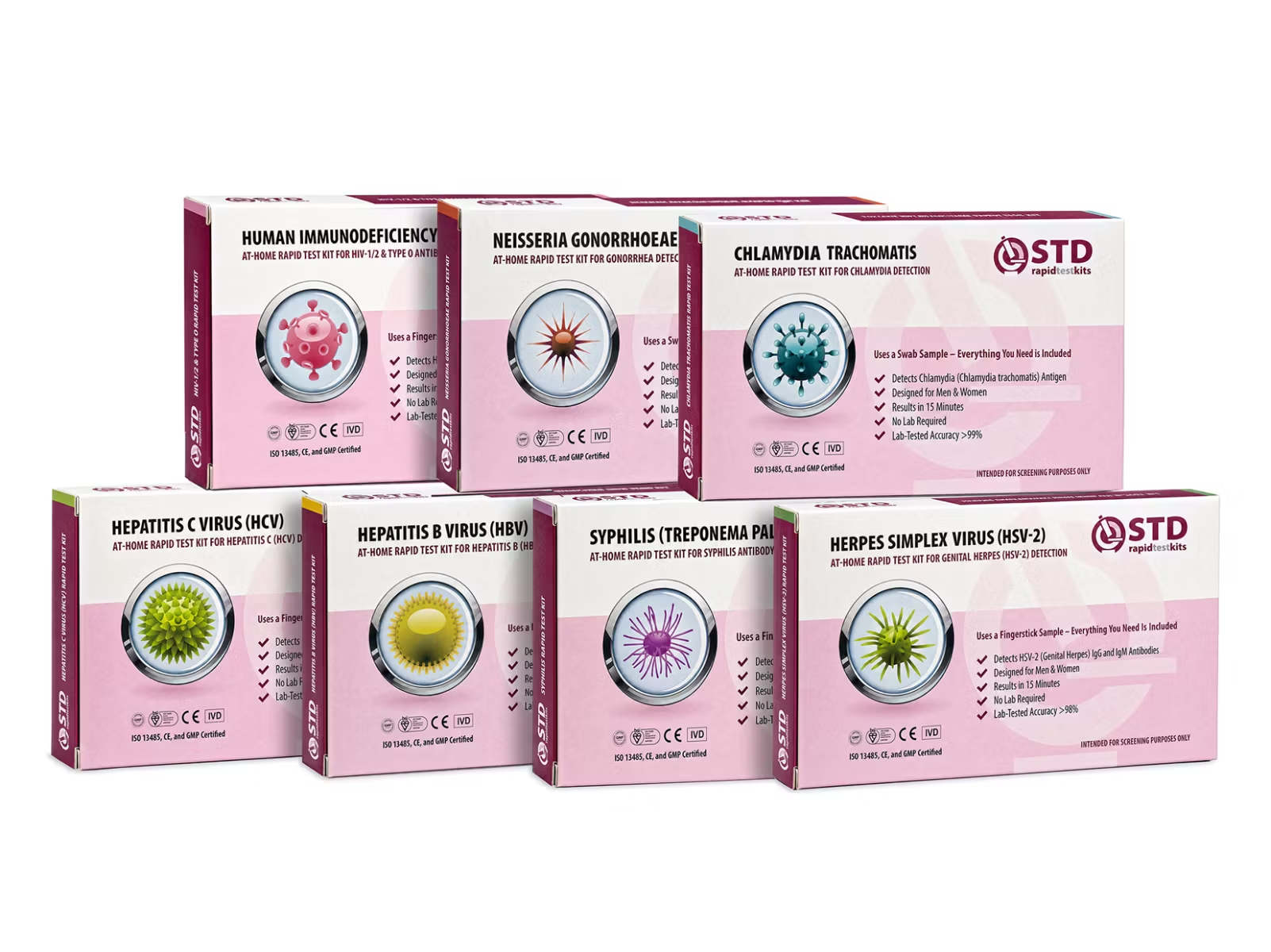
The takeaway is not that everyone should panic-test constantly. It is that feeling fine is not the same as being STI-free. Routine screening exists for exactly this reason, and a multi-infection at-home kit covers the common ones in a single session if a clinic visit feels like more than you want to deal with right now.
This site sells at-home rapid STI test kits. The product below is directly relevant to the testing discussion above; we recommend products based on fit-for-purpose for the reader’s concern, not commercial benefit.
Which STIs Carry the Most Risk (and Which Carry the Most Stigma)
Public fear and actual medical risk do not always line up. Some of the infections people fear most are, in 2026, among the most manageable. Some of the infections people barely think about carry serious long-term risk if missed.
A more useful ranking, based on lifetime risk of serious complication in someone who does not get screened, looks like this.
| STI | Typical Public Fear Level | Actual Medical Risk Today | Why It Matters |
|---|---|---|---|
| HIV | Very high | Manageable with daily medication | Treatment prevents progression and transmission |
| High-risk HPV | Low to medium | Potentially serious over years | Leading cause of cervical and several other cancers |
| Syphilis | Medium | High if untreated for years | Can damage brain, heart, and large vessels |
| Gonorrhea | Medium | Moderate; rising antibiotic resistance | Can disseminate beyond the genital tract |
| Chlamydia | Low | Moderate | Often silent; can cause infertility if untreated |
| Herpes (HSV-1 / HSV-2) | Very high | Low | Emotional weight far exceeds physical risk in healthy adults |
How Delay Actually Plays Out in Real Life
Real-world delay rarely looks dramatic. It is usually small assumptions stacked over time.
Consider a common pattern. A 28-year-old notices mild pelvic discomfort. It is not severe, not consistent, not enough to feel urgent. They tell themselves it is probably stress or something they ate. A month passes. Then three. By the time they go in for testing, an untreated gonorrhea infection has spread beyond the original site, and they are now dealing with pelvic inflammatory disease rather than a single dose of antibiotics.
Or consider another pattern. A 34-year-old has no symptoms at all. They go in for a routine Pap test during an annual checkup, and the result shows high-grade precancerous cell changes from a persistent high-risk HPV infection. They had no idea anything was happening. The screening caught it years before it would have become invasive cervical cancer.
Neither person did anything wrong. The first had a perfectly normal response to mild, vague symptoms. The second had no symptoms at all and only knew because they showed up for a routine appointment. In both cases, the outcome was shaped almost entirely by timing and screening access, not by how dangerous the underlying infection is on paper.
Sexually transmitted infections are very common. Millions of new infections occur every year in the United States, and many STIs do not cause symptoms, which is why regular screening is one of the most effective ways to protect your health.
Why Google Makes STIs Feel Deadlier Than They Are
Search engines surface what gets engagement, and worst-case stories generate engagement. Type a vague symptom into Google and the first results are rarely the boring, common, manageable scenario. They are the rare, dramatic complication.
That is not the algorithm being malicious. It is the algorithm being optimized for clicks, and clicks favor fear. The story of millions of people getting tested every year, treating their bacterial infection in a week, and never thinking about it again does not trend. The story of untreated tertiary syphilis pulled from a 19th-century medical journal case report does.
The result is a systematic mismatch between perceived risk and actual risk. People tend to overestimate the lifetime fatality risk of STIs while underestimating their lifetime infection probability. A single test replaces that mismatch with an actual answer about your own status.
The CDC, WHO, and NHS all describe STIs as common, routinely treatable, and frequently asymptomatic. Surveys of patient-facing search content tell a different story: dramatic outcomes dominate the first page, and accurate base-rate context is buried below the fold. Calibrating expectations to the public-health sources, not the worst-case anecdotes, is what most readers actually need.
What Low Risk Looks Like for Most People
Most people who contract an STI today do not experience severe complications. That is not optimism. It is what the data show across modern healthcare systems with reasonable testing access, per WHO global STI guidance and NHS STI guidance.
If you are generally healthy, have access to testing, and act on results when they come back positive, your risk of severe long-term outcomes drops sharply. Concretely:
- Bacterial STIs (chlamydia, gonorrhea, syphilis at early stages) are typically cured with a single course of antibiotics, often in a single dose.
- Viral STIs (HIV, herpes) are managed with daily medication that, in HIV’s case, allows a near-normal life expectancy and prevents onward sexual transmission.
- HPV is monitored through routine screening (Pap and HPV co-testing), and the highest-risk strains are largely preventable through vaccination per current ACIP guidance.
What to Do Next, Without Overthinking It
If you have read this far, you are probably trying to decide whether you should test, not whether STIs are deadly in the abstract. So here is the straightforward version.
If something happened recently that you are unsure about, test once the relevant window period has passed for the infection you are concerned about. Window periods differ by infection: a fourth-generation HIV antigen-antibody test reliably detects HIV by about 45 days in most people (though windows vary by assay), while chlamydia and gonorrhea become reliably detectable by about 2 weeks post-exposure, per CDC screening guidance. If you have no specific exposure but have not been screened in over a year, schedule routine screening anyway; the CDC recommends annual STI screening for all sexually active adults under 25 and for higher-risk adults of any age.
Either way, the answer is testing, not Googling more symptoms. A broader multi-infection at-home panel is useful when you want to cover blood-borne infections (HIV, syphilis, hepatitis) alongside the common bacterial swab tests in a single screening session.
What People Really Mean When They Ask “Can an STD Kill You?”
The literal question is usually not the real question. When someone types this into a search bar at 2 a.m., they are rarely asking about mortality statistics. They are asking something more uncomfortable: “Did I just permanently change my life?” or “Is my body now broken in some way that matters?” Those concerns are real, and they deserve a real answer.
Medically, the vast majority of STI diagnoses do not change your life in any lasting way. Bacterial infections clear with treatment and leave no permanent mark. Most viral infections are either suppressible (HIV, herpes) or cleared by the immune system over time (most HPV). The few diagnoses that do require ongoing management fit into a normal life rather than defining it. People in long-term HIV treatment have careers, relationships, and children. People with herpes have partners, sex, and ordinary lives.
The version of an STI diagnosis that feels life-ending is almost always a temporary moment of fear meeting an outdated cultural script.
The question that pulls people to a search bar is rarely “what are the mortality statistics for chlamydia?” It is usually “am I going to be okay?” For the vast majority of STI diagnoses in 2026, the medical answer to that second question is yes, with treatment or with routine monitoring. The emotional weight of the moment is real; the long-term medical fallout, in most cases, is not.
You Deserve Clarity, Not Catastrophizing
The question “can an STD kill you” has a real answer, and it is mostly reassuring. The infections that can become serious are the ones we have the best tests and the best treatments for. The window to catch them early is wide. The downstream damage almost always comes from delay, not from the infection itself.
If something is making you anxious, the next step is not more searching. It is a test. Get the answer, deal with what is actually there (which is usually nothing), and stop carrying the uncertainty.
Three concrete next steps
- If you had a specific exposure, test once the relevant window period has passed for the infection you are concerned about.
- If it has been more than a year since your last screening, schedule a routine check regardless of symptoms.
- If you want a broad baseline at home, a multi-infection at-home kit covers the most common bacterial and blood-borne infections in one session.
Frequently Asked Questions
- Can an STD kill you in 2026?
- Yes, but rarely. Untreated HIV, untreated syphilis at the tertiary stage, and persistent high-risk HPV strains can cause death, but all three are routinely detected and either curable or highly manageable when caught earlier. Death from an STI in 2026 almost always means an infection went unknown for many years.
- Which STIs are most likely to be fatal if untreated?
- HIV (without antiretroviral therapy), syphilis (in its tertiary stage after years of progression), and high-risk HPV strains (when they cause undetected cervical, anal, or oropharyngeal cancer). Each is screenable, and HIV and HPV both have effective preventive options (PrEP and the HPV vaccine).
- Can chlamydia kill you?
- Chlamydia almost never causes death directly. Its long-term cost in untreated cases is fertility damage and chronic pelvic pain from pelvic inflammatory disease. Fatal complications from chlamydia are extremely rare in modern care, even when treatment is delayed.
- Is HIV still a death sentence?
- When antiretroviral therapy is started early and taken consistently, life expectancy for people with HIV now approaches that of the general population. Viral suppression below the detection threshold also eliminates sexual transmission, a principle endorsed by both the CDC and WHO under the U=U framework. The risk today comes from late diagnosis or interrupted treatment, not from the infection itself.
- How long can someone live with an untreated STI?
- It depends on the infection. Untreated HIV averages 8 to 10 years before progressing to AIDS. Untreated syphilis can take 10 to 30 years to reach tertiary disease, and only a minority of untreated cases progress that far. HPV-related cancers, when they occur, typically develop over 15 to 20 years of persistent infection.
- Do STIs ever go away on their own?
- Some viral infections, like most HPV strains, clear without treatment within two years. Bacterial STIs (chlamydia, gonorrhea, syphilis) almost never resolve on their own and require antibiotics. HIV and herpes are lifelong infections, though both can be controlled with medication.
- I feel completely fine. Do I really need to test?
- Feeling healthy does not rule out an STI. The CDC calls for annual screening for sexually active people under 25 and for anyone with higher-risk exposure patterns at any age, precisely because the most common infections produce no symptoms early on. A new partner or a gap of more than a year since your last screening is enough reason to check.
- What is the fastest way to check several STIs at once?
- A multi-test at-home kit can screen for several common infections in a single session, usually with a fingerstick blood sample plus a self-collected swab depending on the kit. Window periods still apply, so make sure enough time has passed since any potential exposure for results to be reliable.
- U.S. Centers for Disease Control and Prevention. Sexually Transmitted Infections overview, screening recommendations, and surveillance data.
- U.S. Centers for Disease Control and Prevention. HIV treatment outcomes, life expectancy on antiretroviral therapy, and the U=U (Undetectable equals Untransmittable) principle.
- U.S. Centers for Disease Control and Prevention. Syphilis fact sheet, including progression to tertiary disease in a minority of untreated cases.
- World Health Organization. Sexually Transmitted Infections (STIs) fact sheet, global context and treatment landscape.
- NHS. Sexually transmitted infections (STIs) overview, symptoms, screening, and treatment.
- American Cancer Society. HPV and cancer information, including the U.S. annual HPV-attributable cancer count.
